
Ice Ice Baby. It took an ICE Train just 2 hours to whizz us out of Paris and into Strasbourg on the French/German border. This is a 5 hour trip by car.
Our itinerary read, Strasbourg, Offenburg, Freiburg, with dinner at the Schloßberg. So what is a berg? Not to be mistaken with Burg which means mountain, a berg is a word for any elevation in northern Germany – that can be as little as a metre!
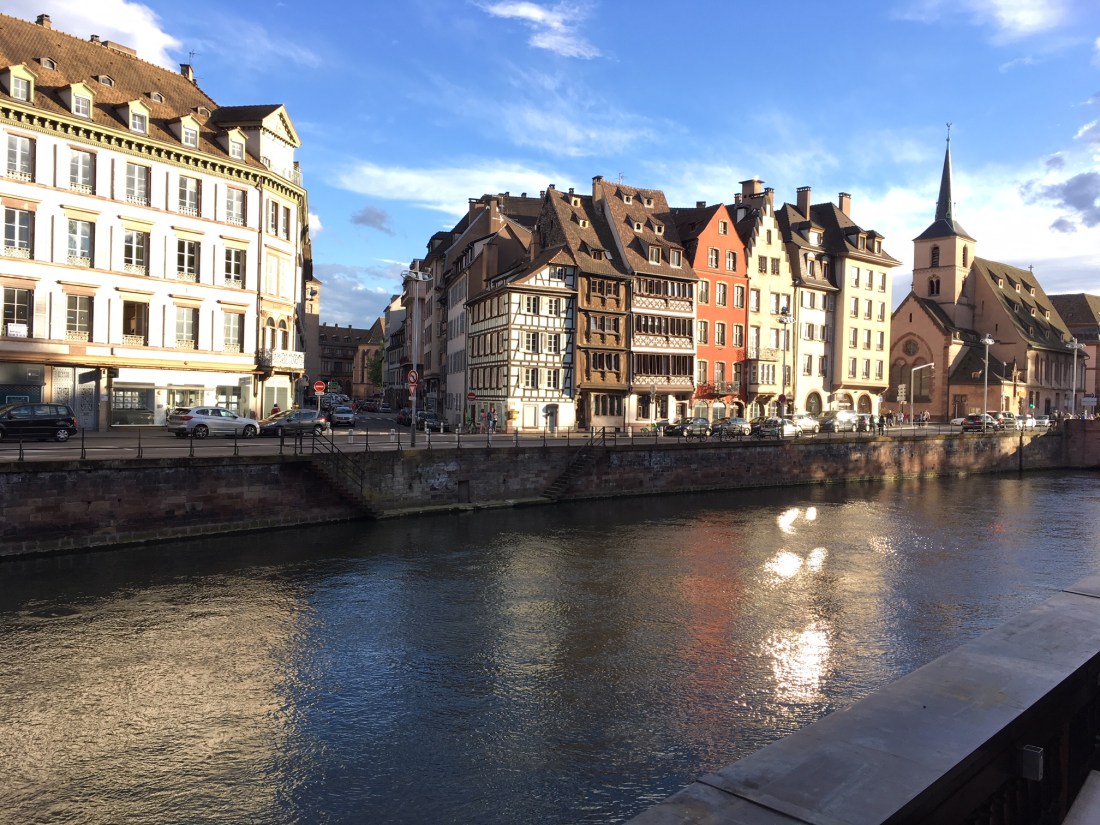
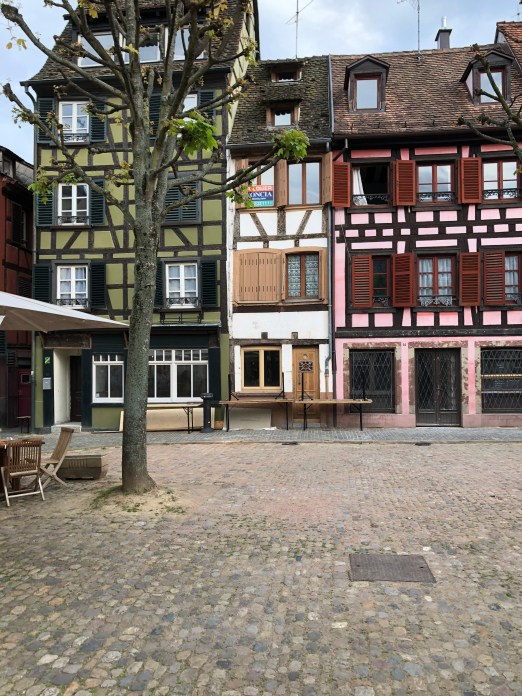
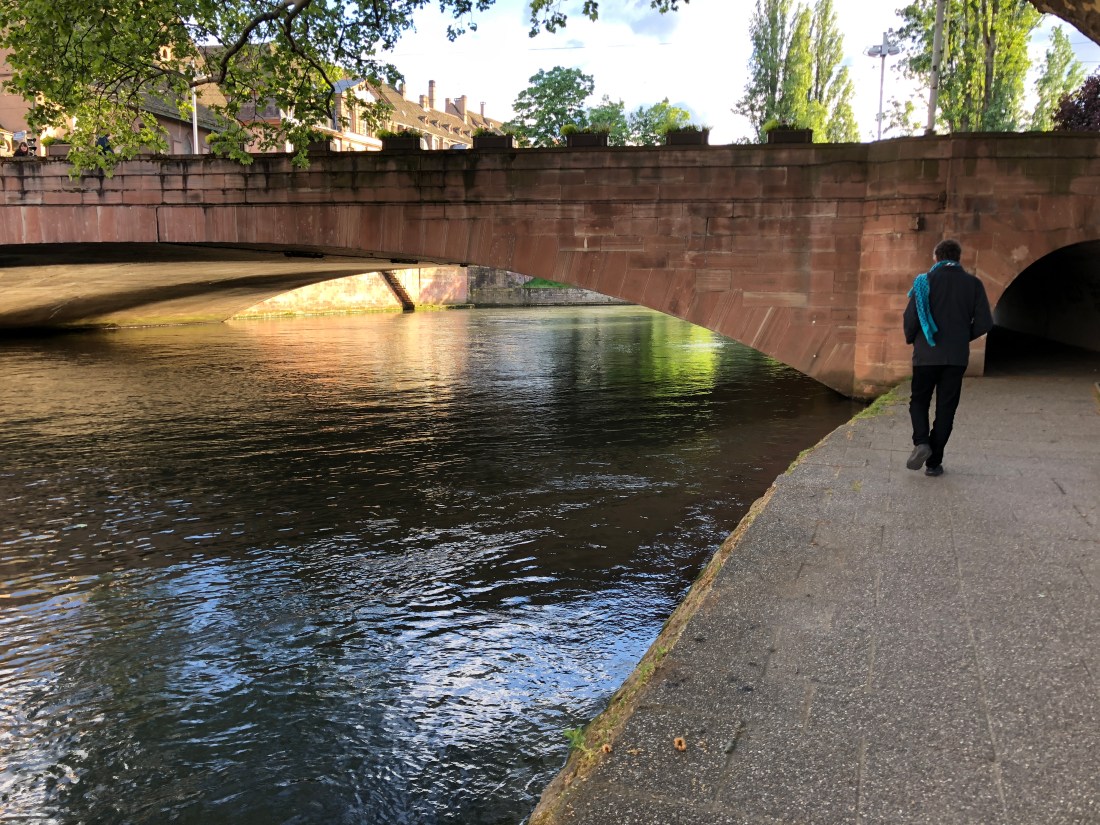
Back in Canberra our lovely friend Fiacre suggested we go to Strasbourg. Imagine Fiacre’s beautiful French accent: “I think you will find it beautiful and interesting, there are lovely old buildings, a canal and really diverse population.”
Fiacre you are right about so many things (including your choice of partner the beautiful and interesting Anusha).
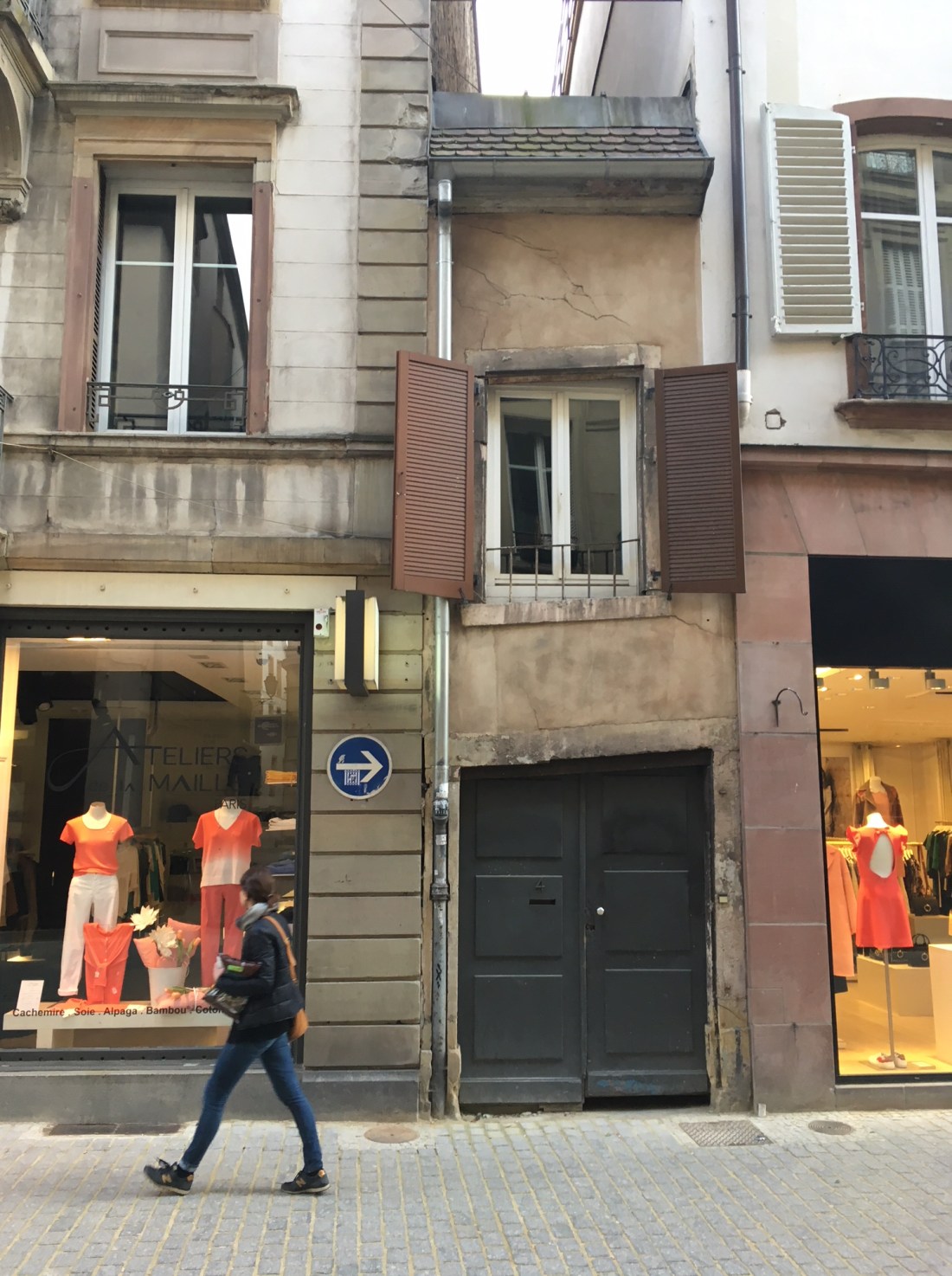
We decided to splash out and stay at the Cour de Corbeau which dates from the 1525. It began as an inn and hosted Prussian, French and German royalty as well as Voltaire and Alexandre Dumas. In 2006 it had fallen into a really bad state only to be renovated and turned into a fancy hotel. They have done a beautiful job.
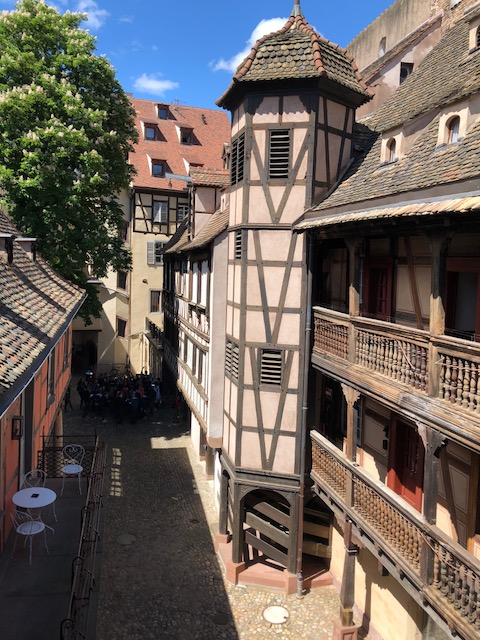
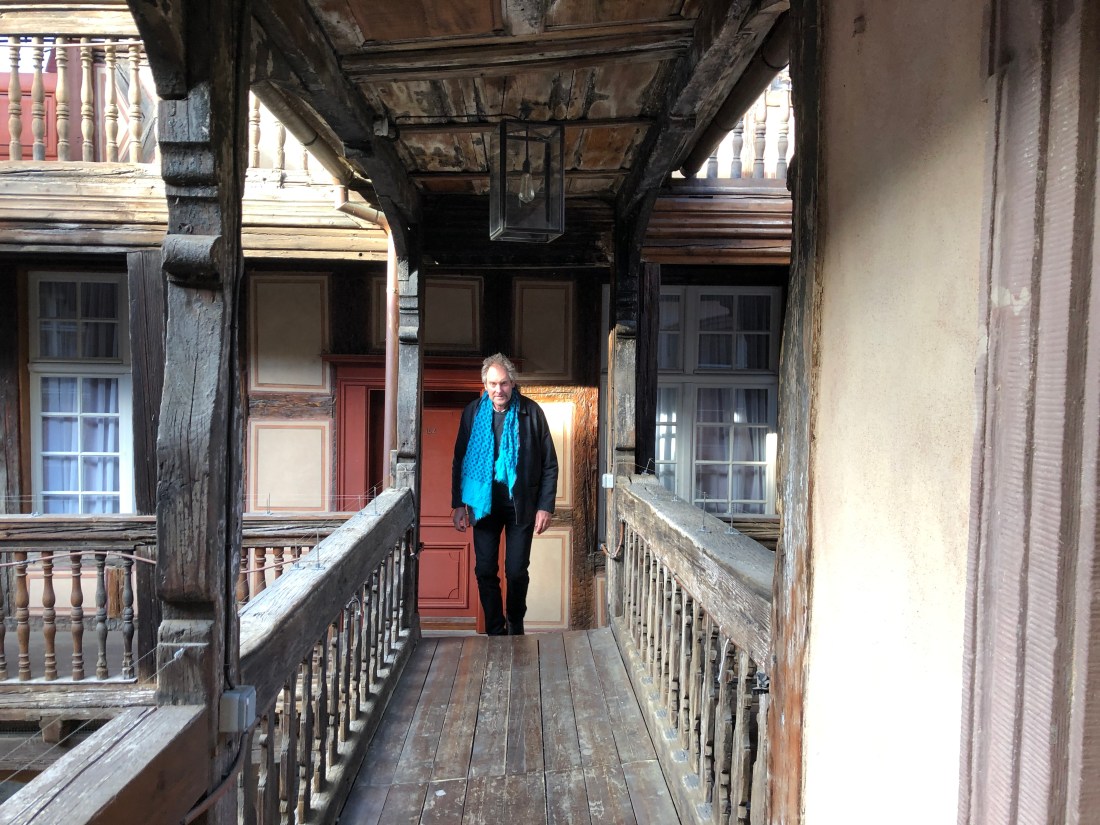
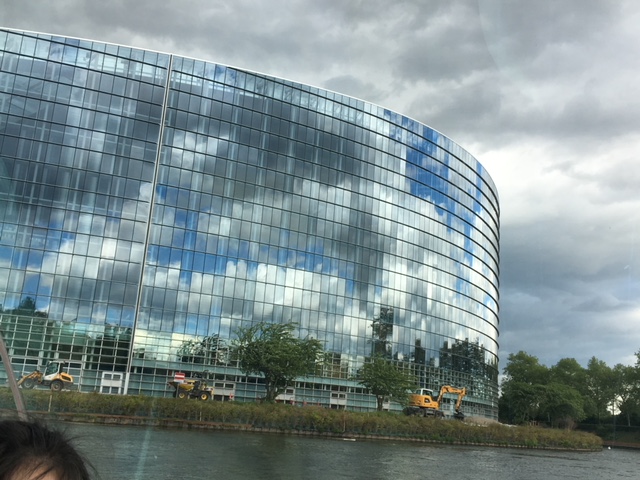
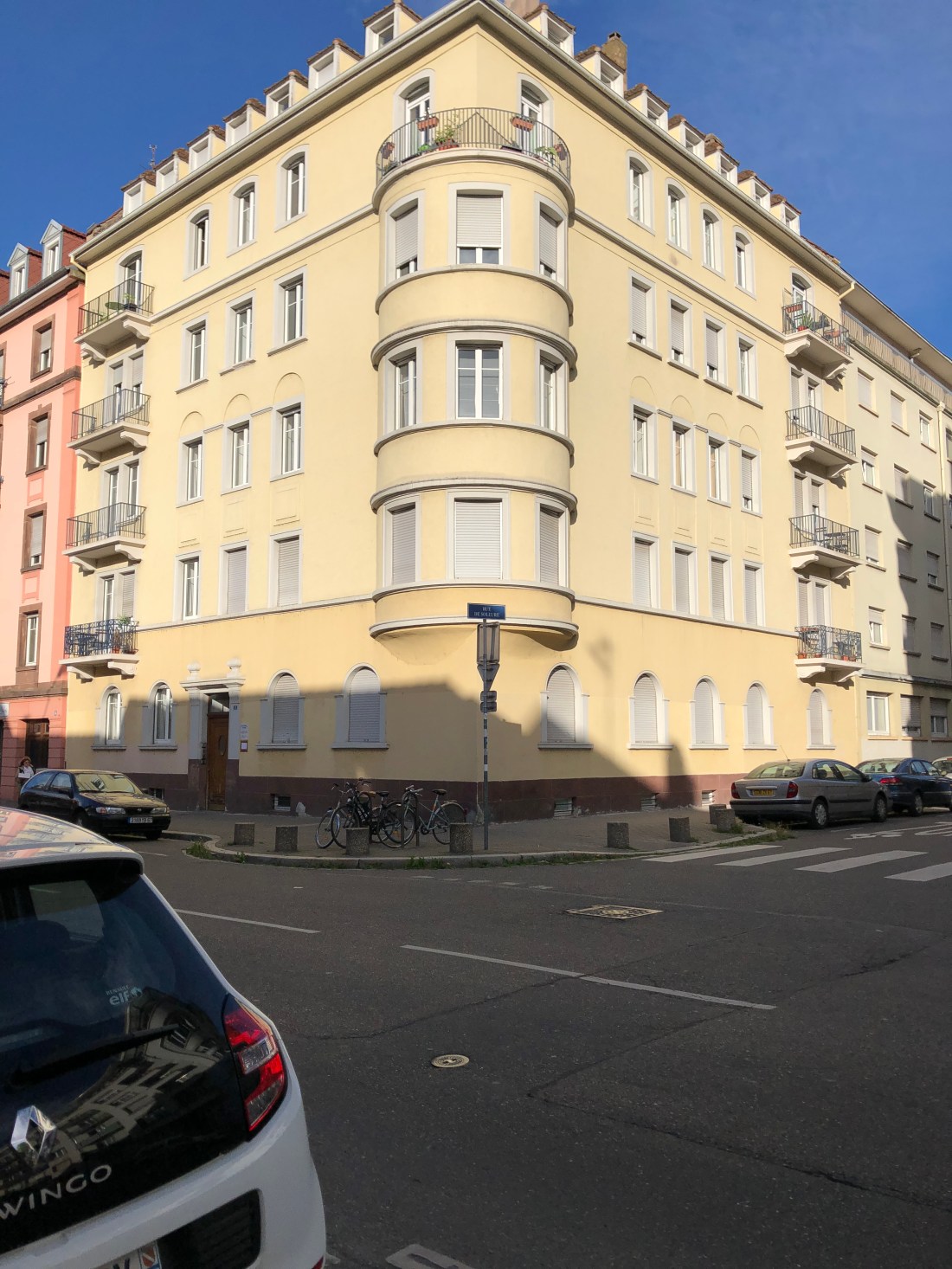
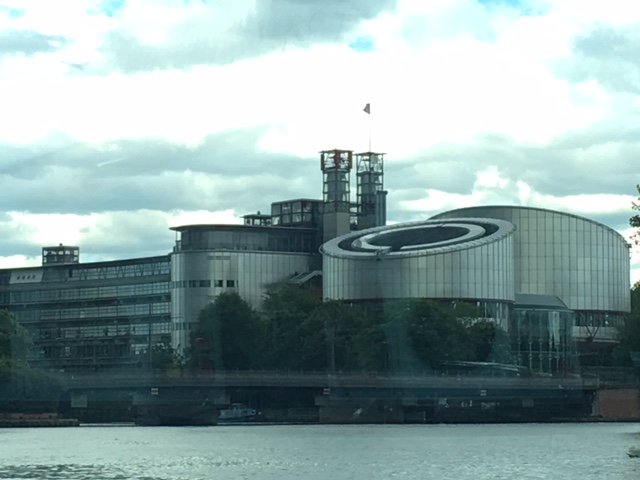
Strasbourg has a fascinating history. It’s been German, it’s been French, German and French again. It is distinctly Alsace too. It really is the perfect place to house the European Parliament “the capital of a reconciled Europe”.
It’s a very short trip (on 2 trains) to Freiburg. There are no border checks. And within minutes of crossing the Rhine, we stopped at a station and a woman boarded the train sat opposite us and quietly said “Guten tag”, we were in Germany.
Freiburg
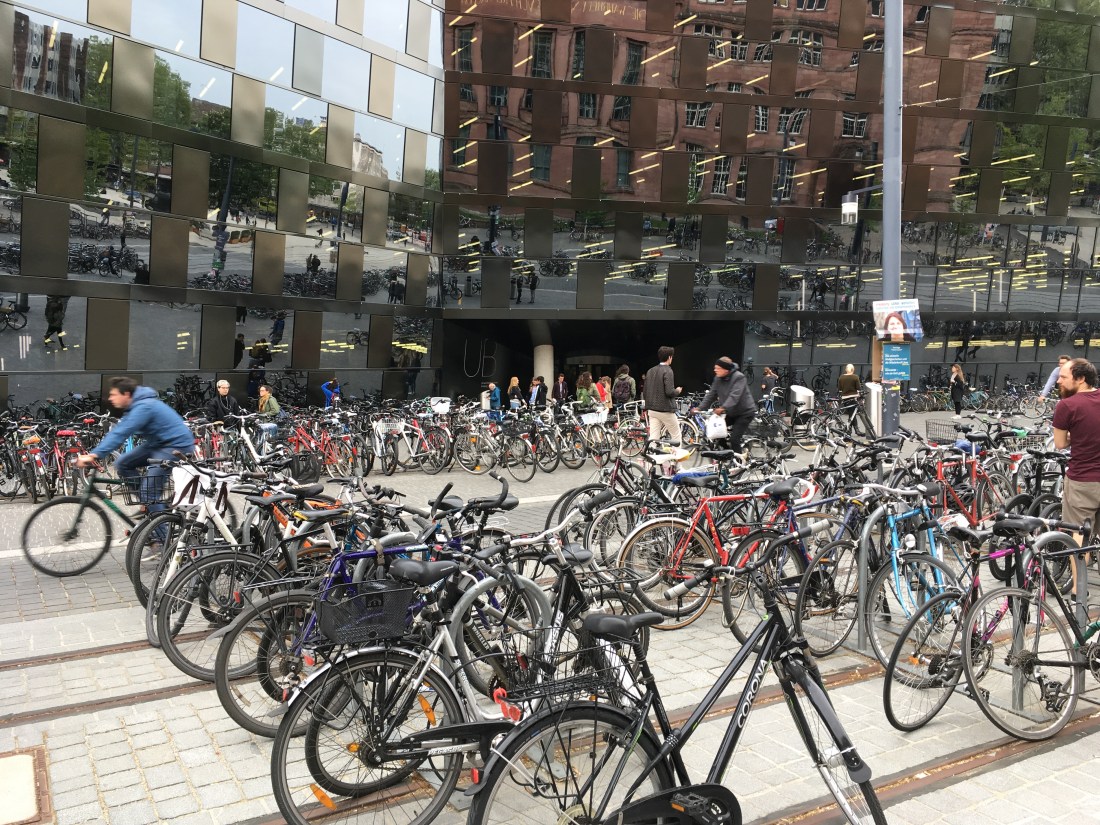
Freiburg has a reputation for being a leader in environmental sustainability. It has a beautiful old town centre, a great tram system and a lot of people getting around on bicycles.


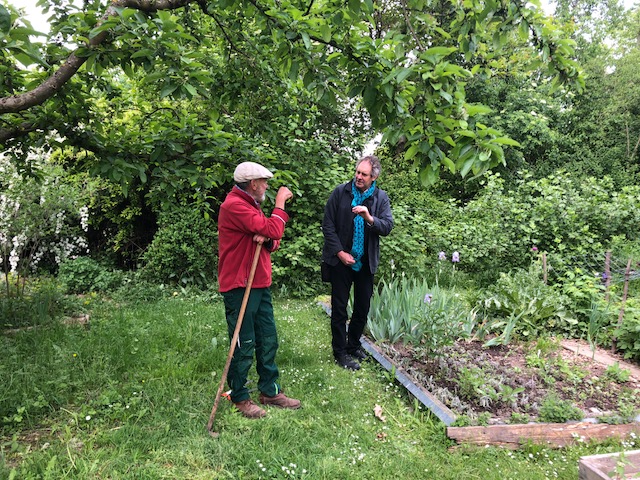
We caught the light rail out to visit the Okostation an environmental centre that plays an important environmental education role. We got chatting to Fritz the head gardner.
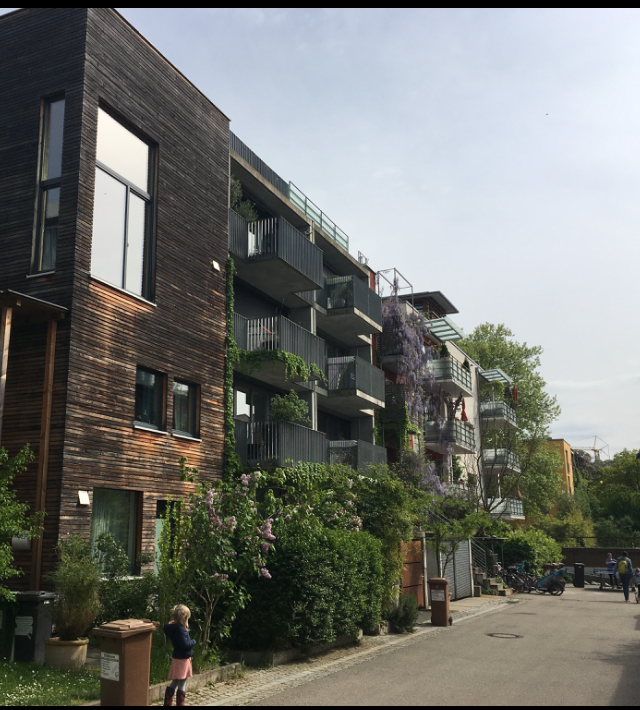
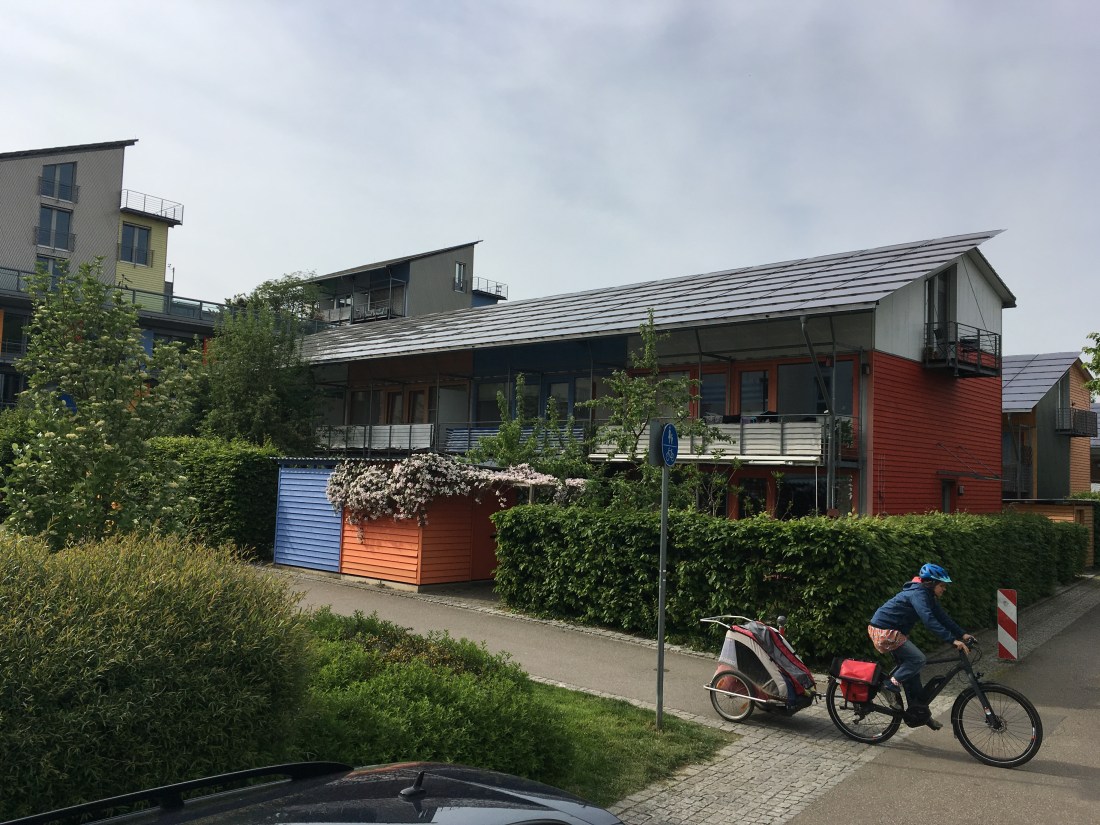
Also in Freiburg Rob went for a visit to Vauban, built as a sustainable model district developed since 1998. It is on a tram route and most people get around on bicycle, it was developed on a car free concept.
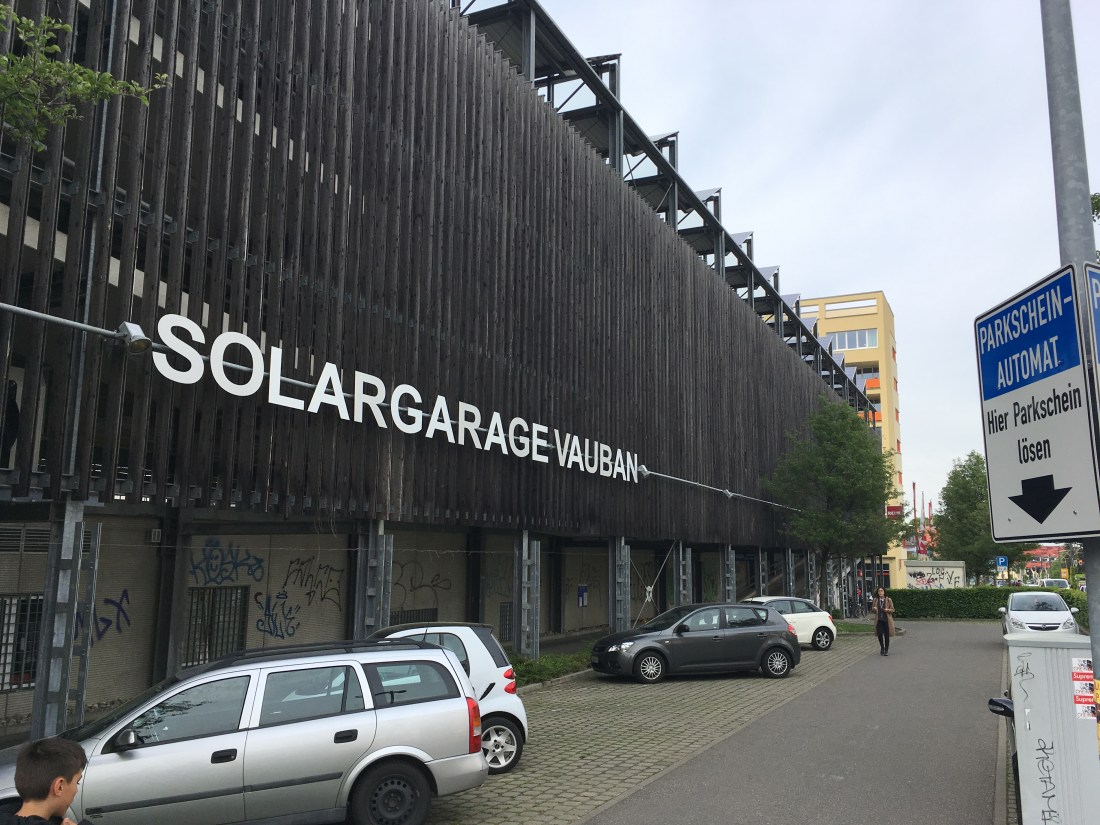
.Cars are permitted in to drop things off and then need to be parked in one of a number of car parks on the periphery. One is known as the solar garage and is covered in solar panels. People have to initially buy a car space and in addition have to pay rents.
I spoke with a number of people as I walked around and they all mainly ride and catch the tram. A few did have cars in the car parks but used them rarely.
Many of the individual lots were originally sold to Baugruppen (co-housing groups). People worked together with architects to build their housing developments. The district covers some 38 ha with around 6,000 residents.
All the roofs are covered in solar panels
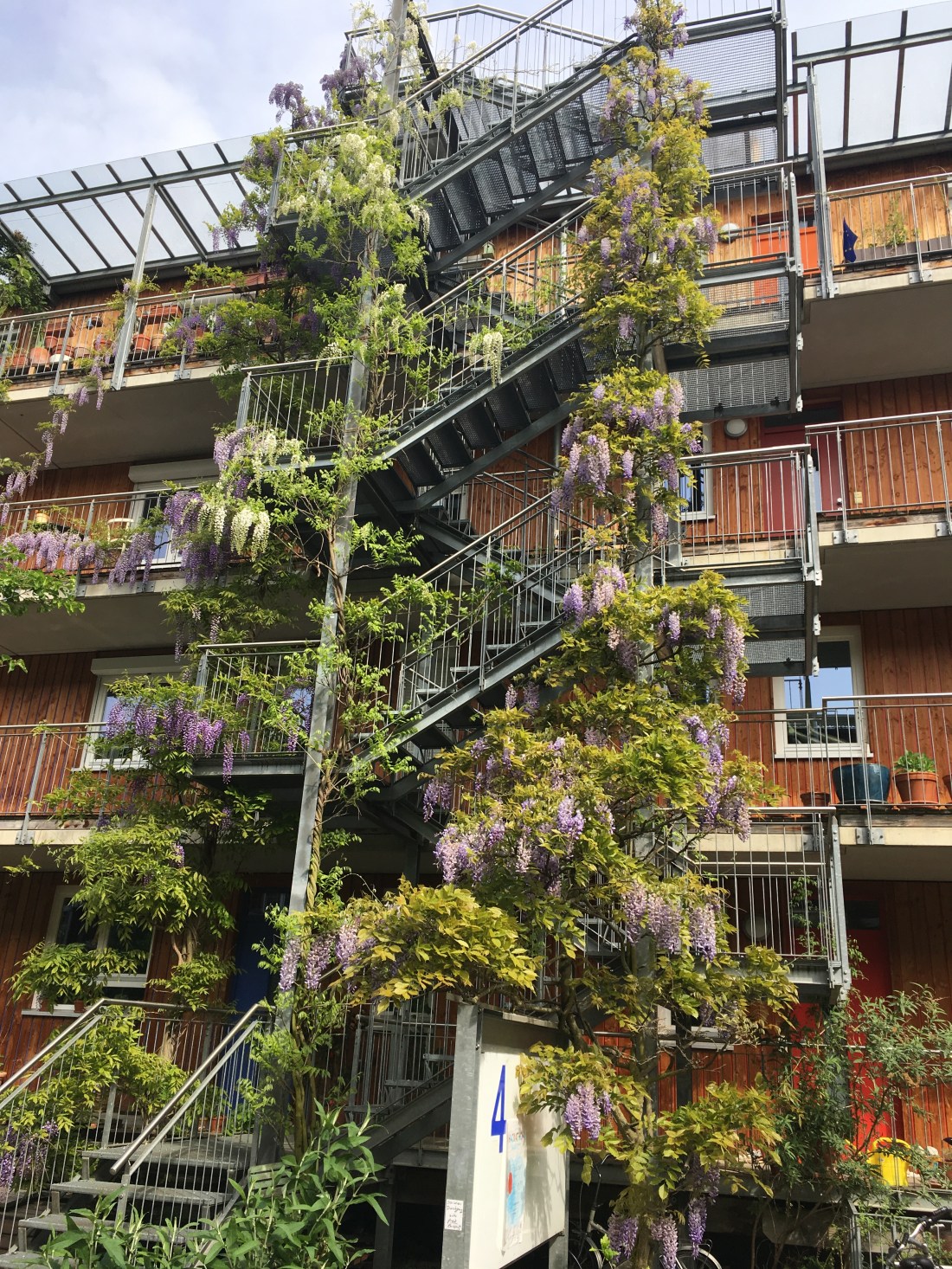
Between the buildings, which are generally 4 stories, are well developed greenspaces and playgrounds and many buildings are covered in vegetation.
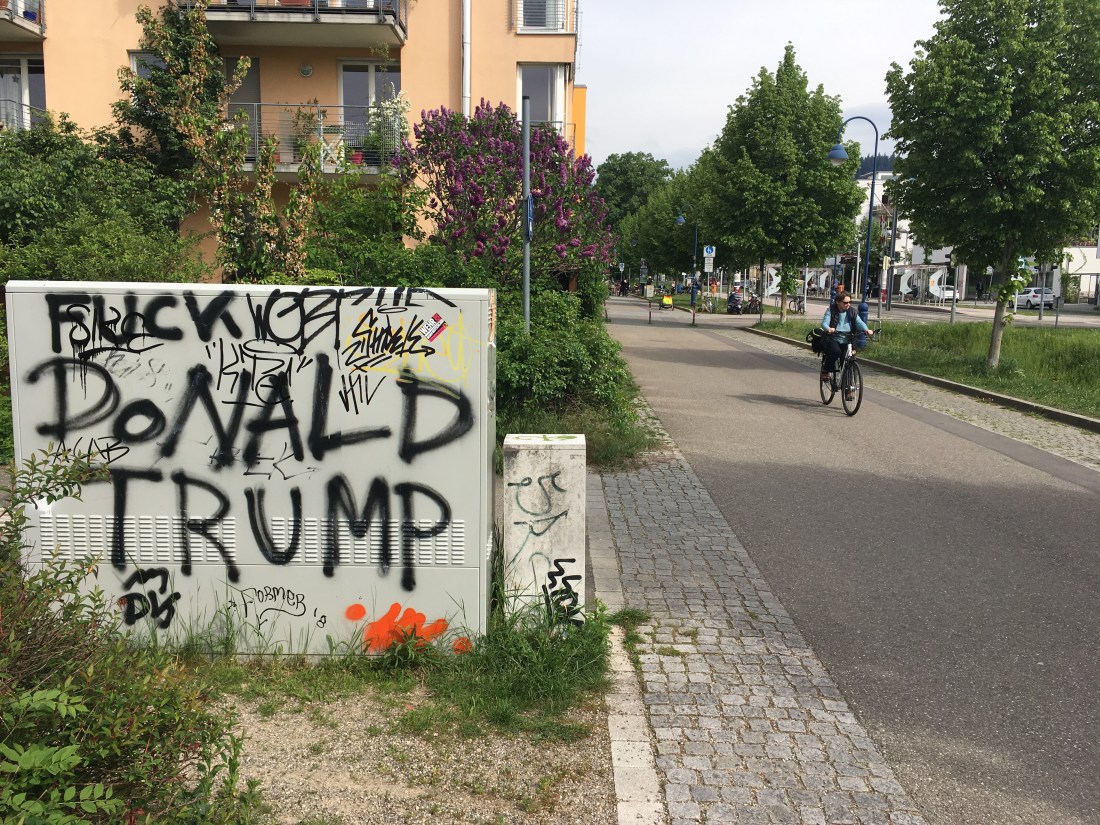
One of the challenges now that the development is complete, is that it is highly sought after and no longer affordable.
Tomorrow on the train to Italy
 Parental Gap-Year
another brilliant post, so interesting. Love the detail
LikeLike