
Warsaw to Berlin with our daughter Zoe. It was a long train journey, looking out the window on Polish then German farms, villages, towns and industrial landscapes. This, our 40th train journey via our Eurail pass. We have loved travelling by train. Observing the landscape, time to think, reflect, sometimes a unfolding transition from one country to the next. We have also met and talked with some really interesting people.
We arrived late afternoon at Berlin Hauptbahnhof, HBF. Zoe was leaving us to meet her friends at a hostel before their trip to the Melt Festival at Leipzig.
Given she was leaving us to really begin her solo travels, it was one of those moments when you know you should have some sort of ceremonial goodbye, “She’s away”. Instead we were trying to get her mobile phone operating, working out which suburban train to put her on. In the end she leapt on the busy train, the doors closed and she was gone. We felt so lucky to have travelled with her in Denmark, Sweden and Poland but now she was off, whoosh on a Berlin train. Auf Wiedersehn leibling!
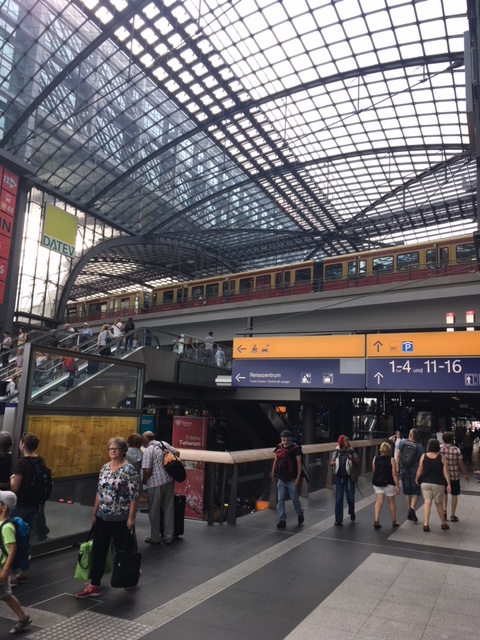
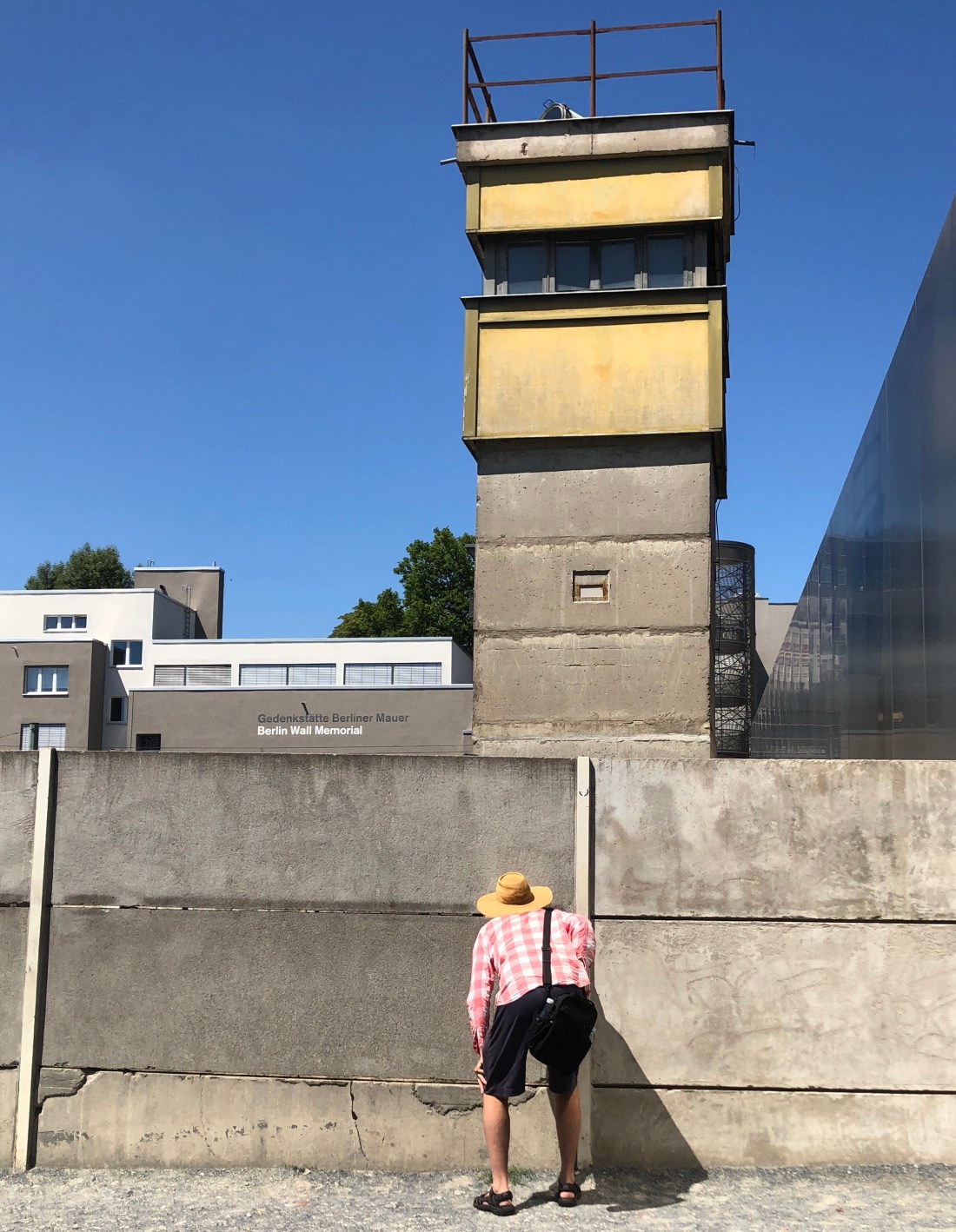
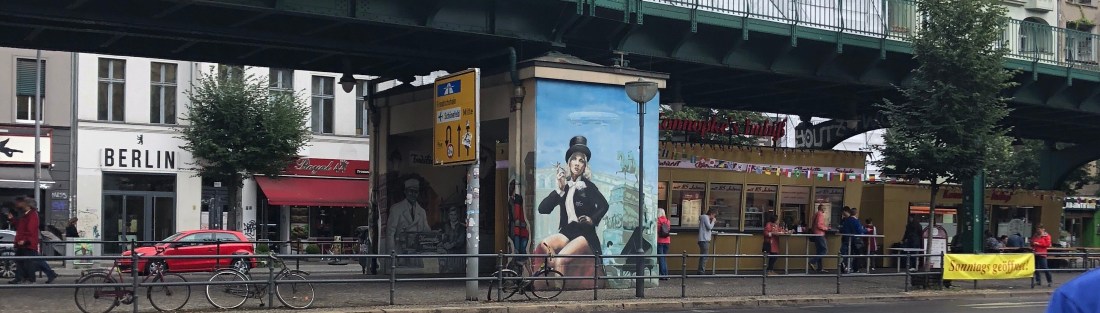
Our trip to our little hotel in Prenzlauer Berg was much less fraught. Out the door of the big train station Berlin HBF to the light rail M10, past remnants of “The Wall” and we were at our home for the next 7 days.
At Linnen Berlin we had a beautiful great big room in the 19th century building in the former East Berlin, above a little café in a great street. We were welcomed by the lovely Antonio (former Canadian) and felt right at home.
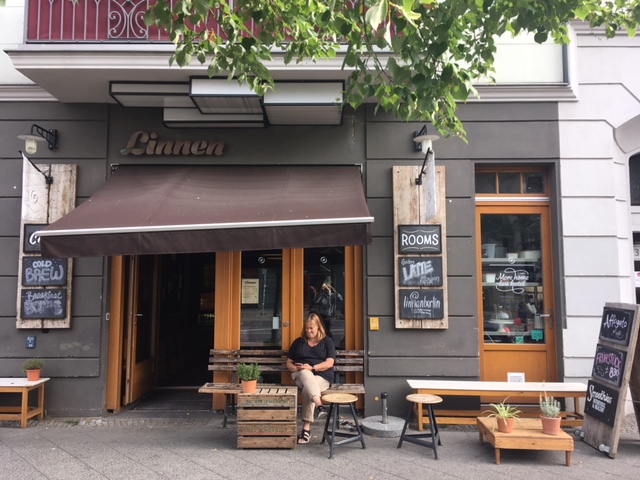

Our first morning was raining gently, it was cool and we felt it was OK just to relax and catch up. Perhaps a vegan icy pole from the shop just downstairs?

East Berlin kept their trams, and our home in Prenzlauer Berg is well served by trams. By contrast in West Berlin, in a push to make the city more car friendly, ripped up the trams. So, not forgetting a dark history, there were some long term benefits from the times of East Berlin, the trams and the fact that many of the older buildings were preserved, if only through neglect.
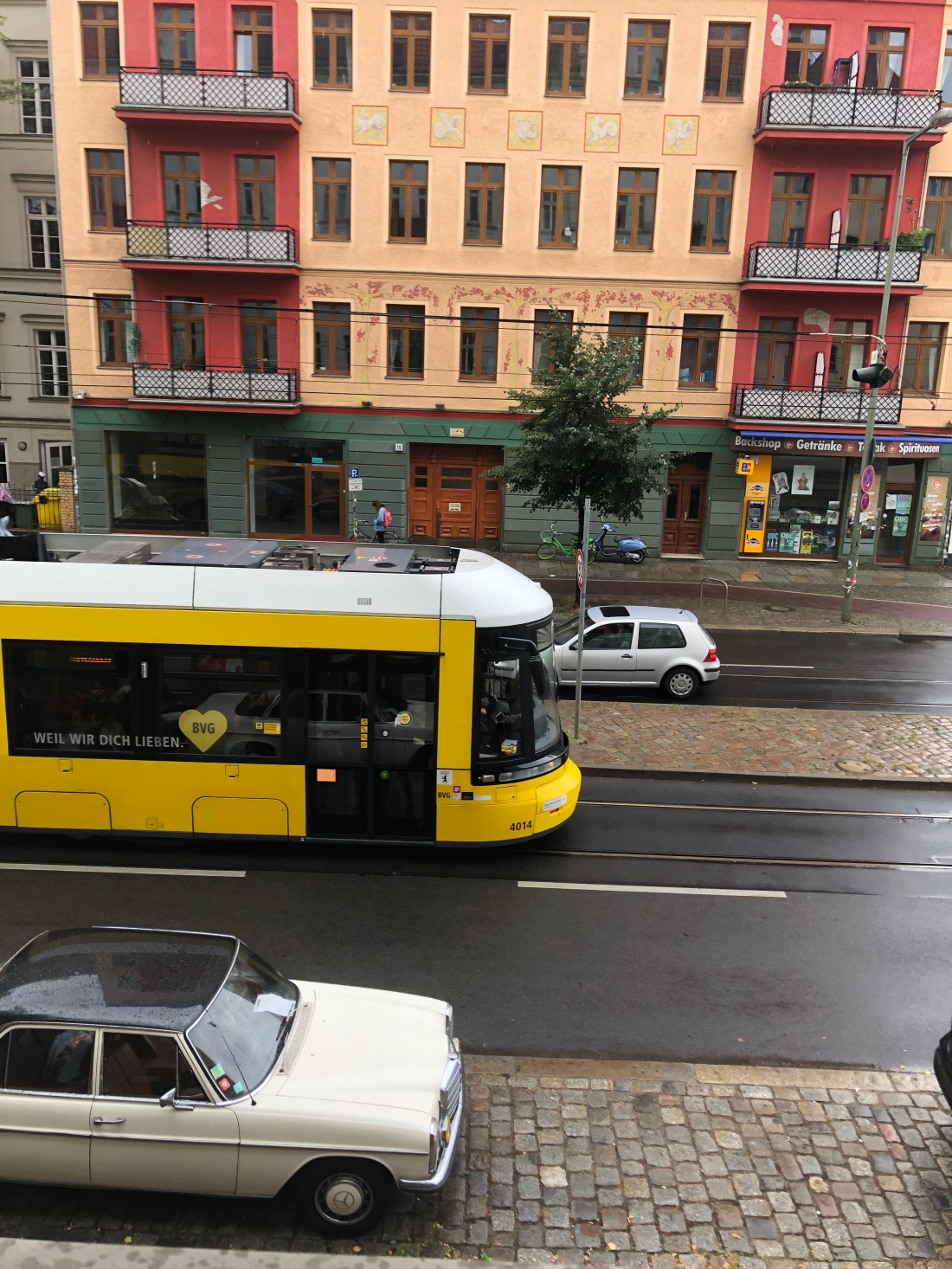
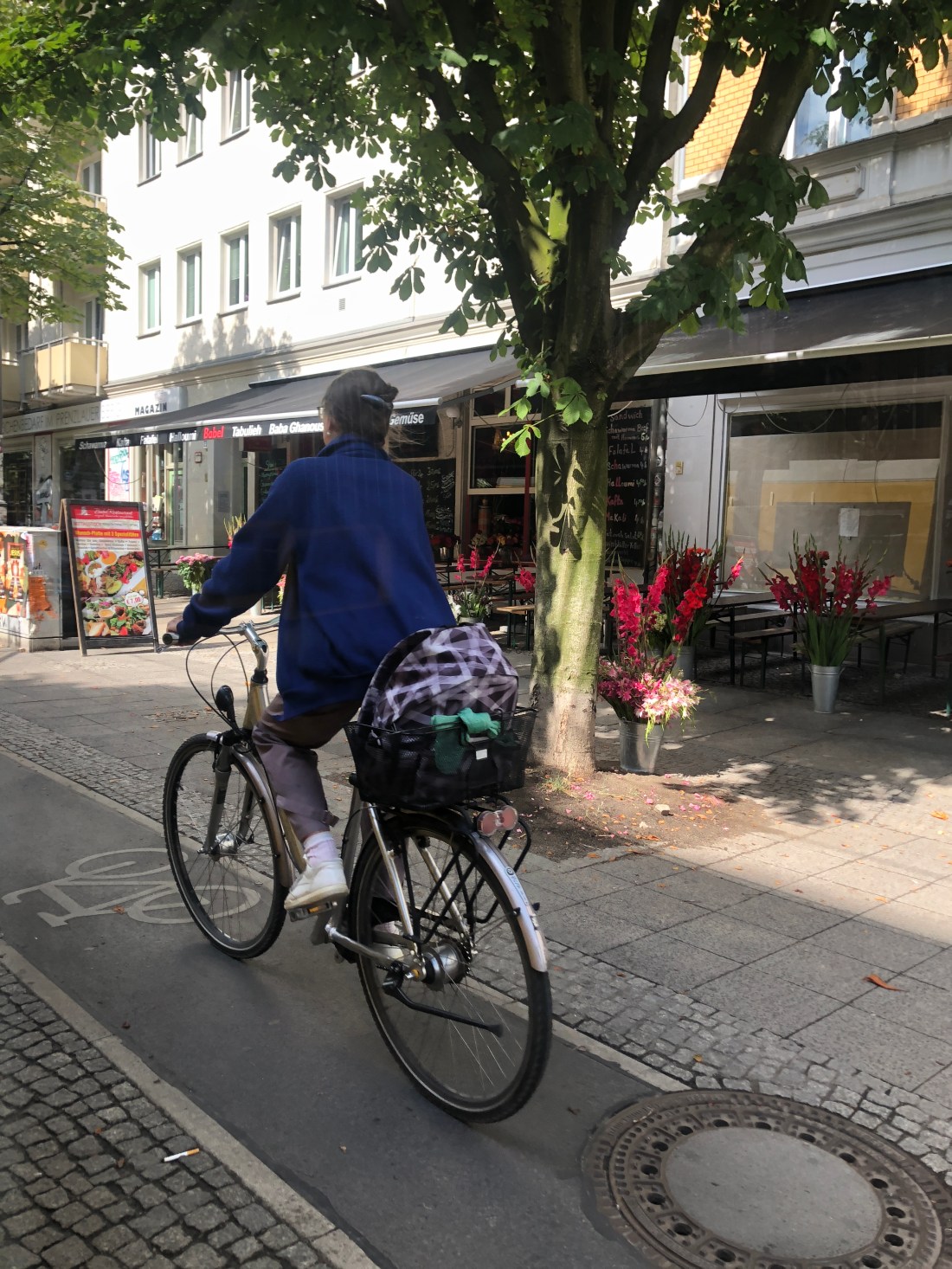
The public transport in Berlin is great, we bought a weekly ticket which gave us unlimited use of buses, trains and trams. Right outside our building we had the M10 tram which does a wide arc around the north of the city, the M1 into the centre, and a junction with the U2 train which connected us to the whole train network. There’s a good network of bike paths as well.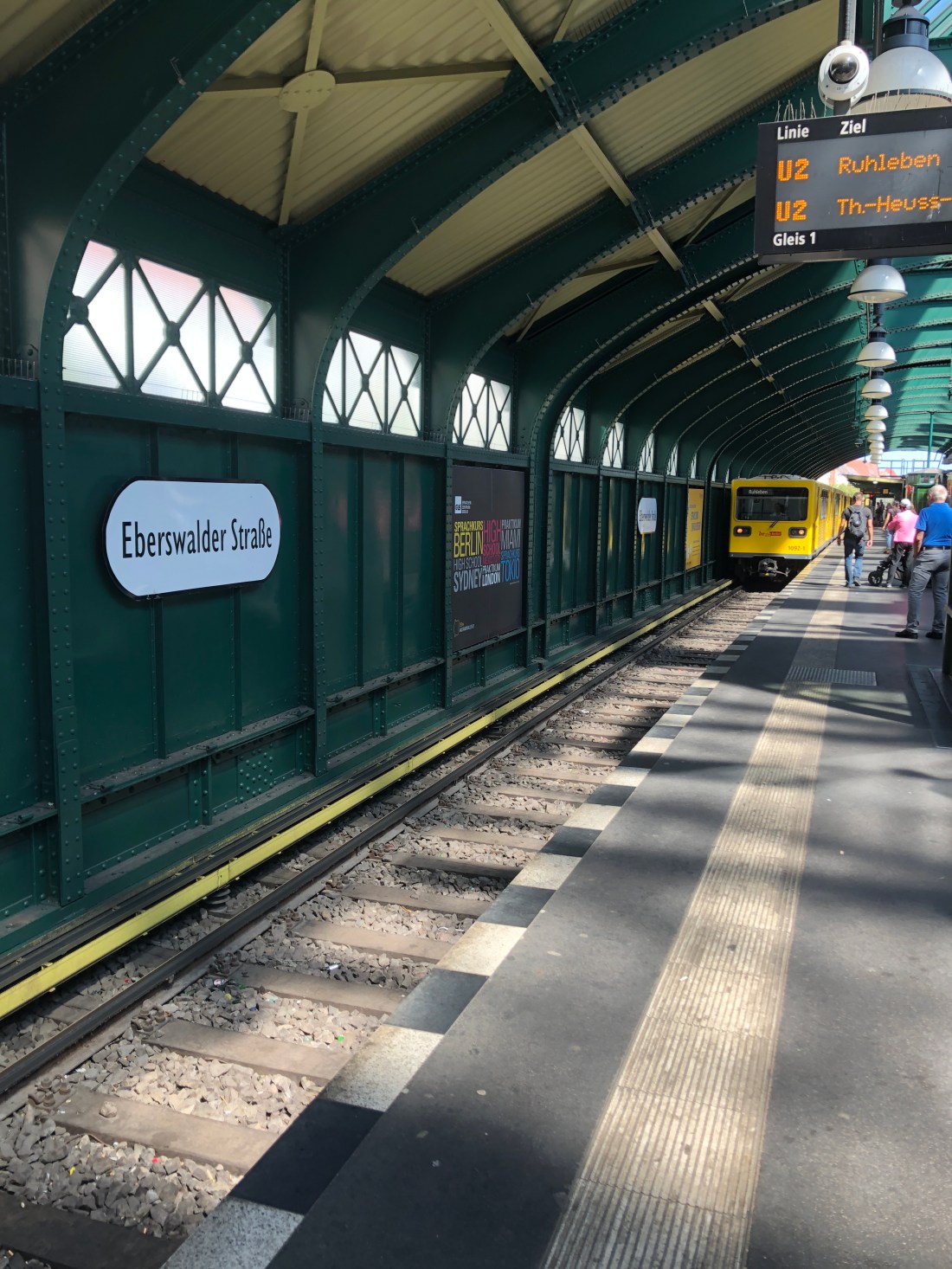
While we were travelling we had a number of “so close but yet so far” moments with our arty fabulous friends Deborah Clark and Gordon Bull. We had just missed them in the UK and France, where Deb had been doing research. At last we were able to arrange a meeting in Berlin.
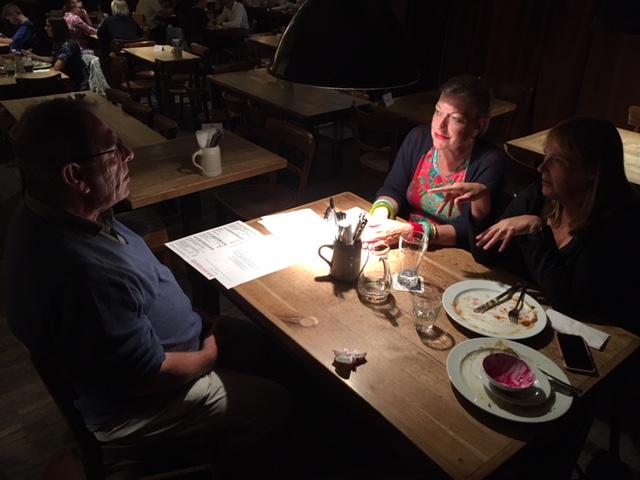
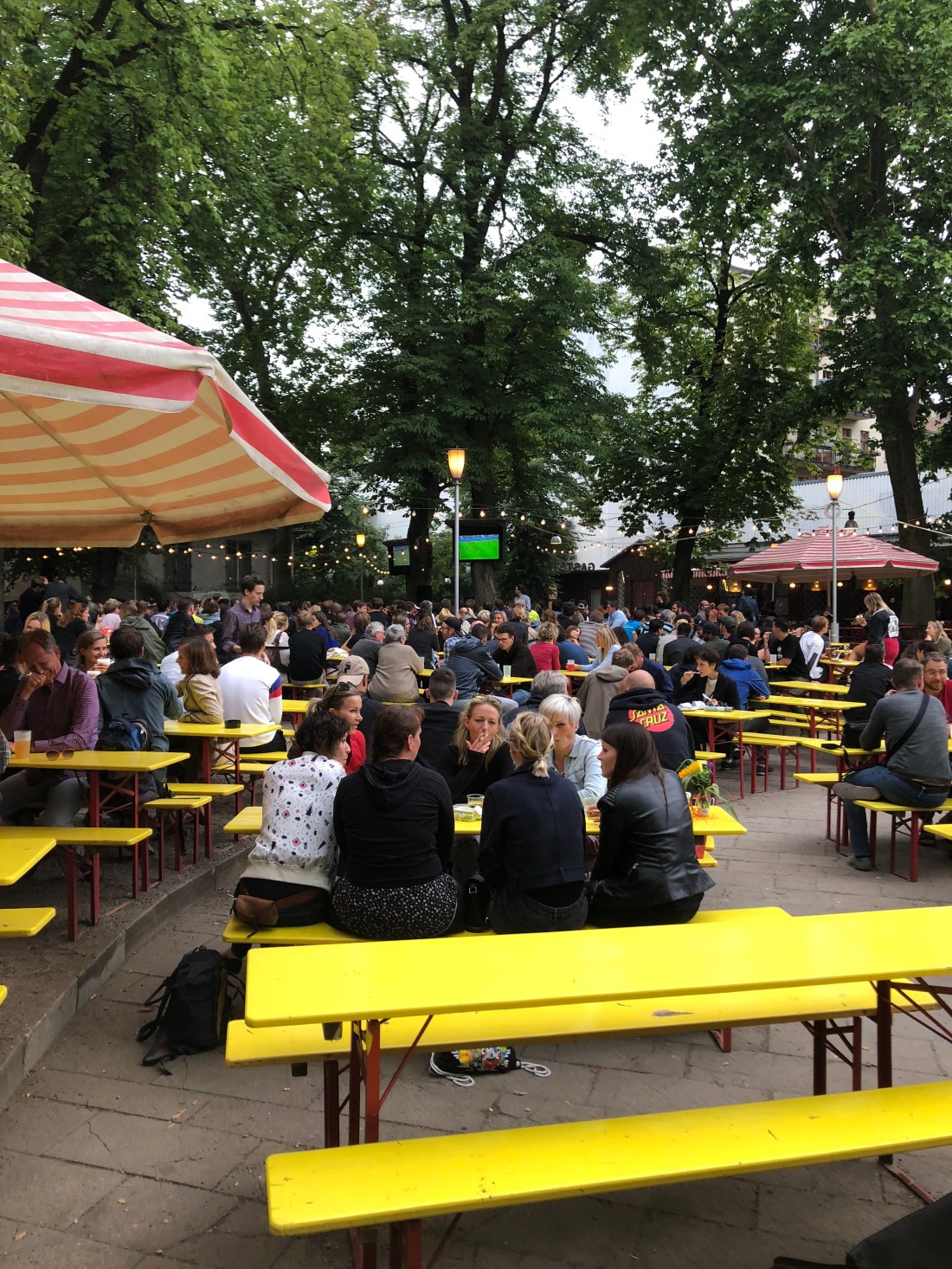
Where could be better than Berlin’s oldest beer garden, Prater Garten packed with people watching The World Cup. Fantastic basic wooden tables and generous German food.
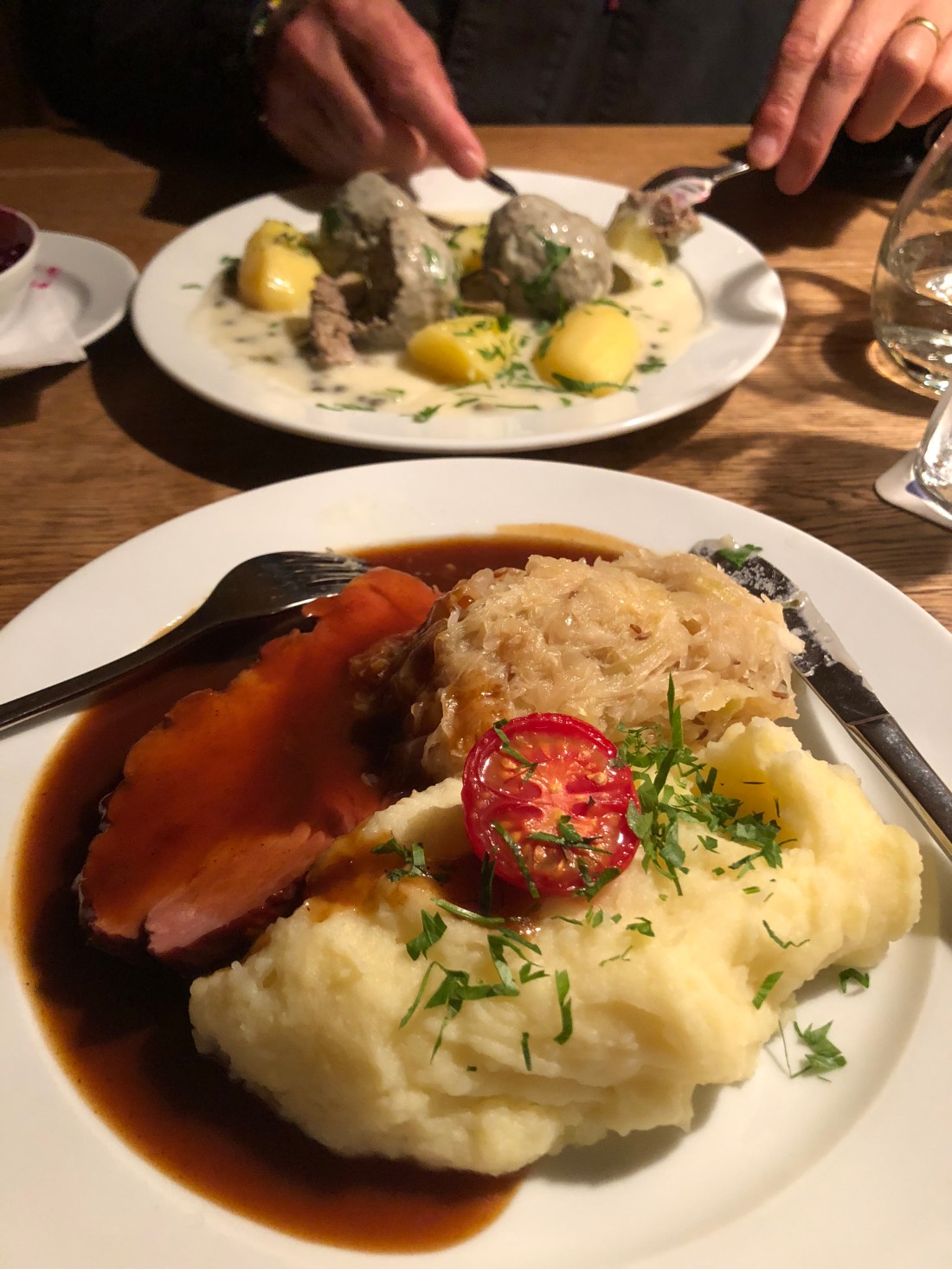
Wonderful to see them so well and happy and we jumped at the chance to visit Museum Island with these two the next day. Gordon, a former head of the ANU School of Art and Deborah, former senior curator with NGA and latterly the Canberra Museum and Gallery, including the acclaimed Elioth Gruner exhibition. They are a couple of Canberra art world legends, and damn fine company.
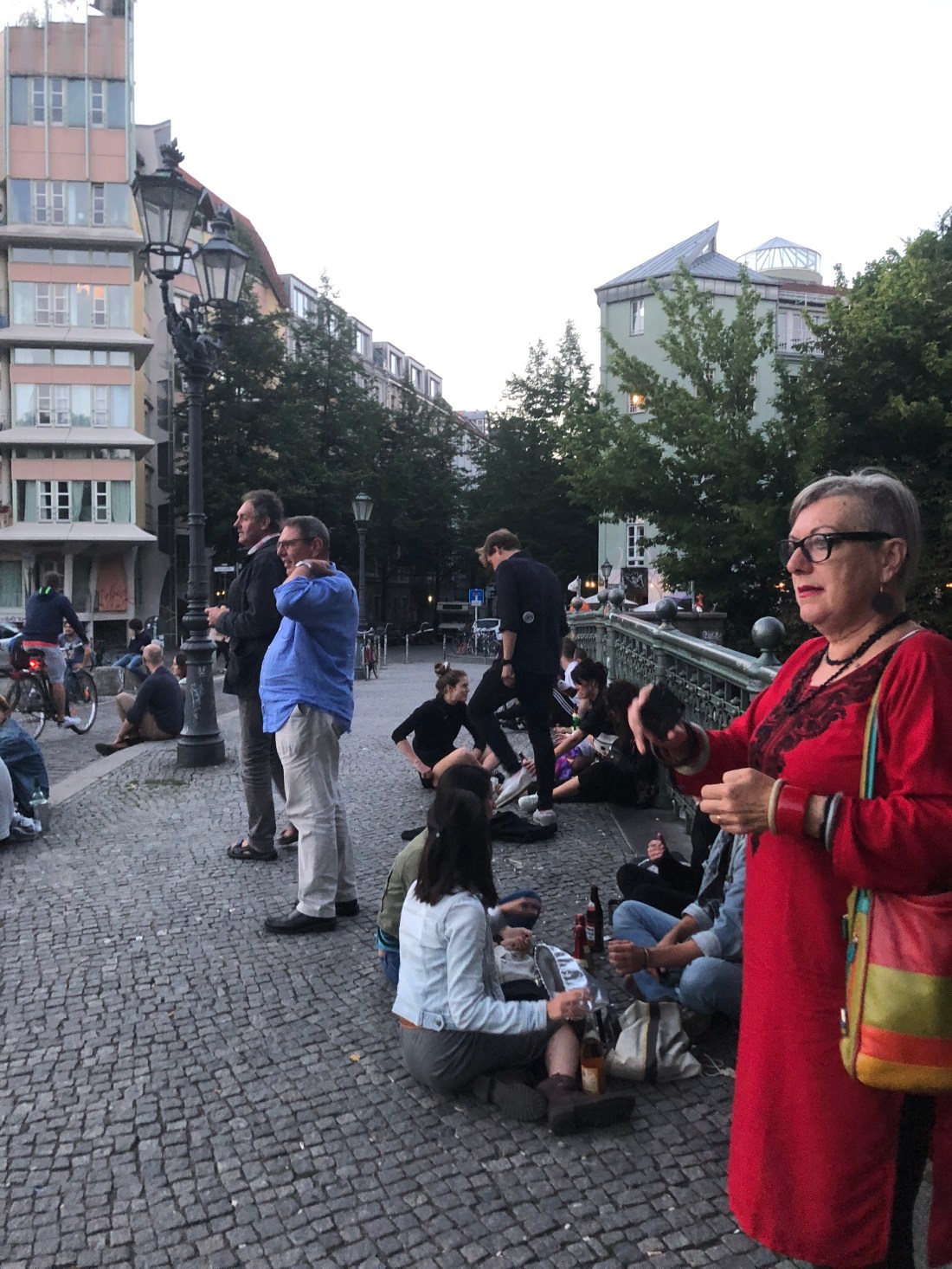
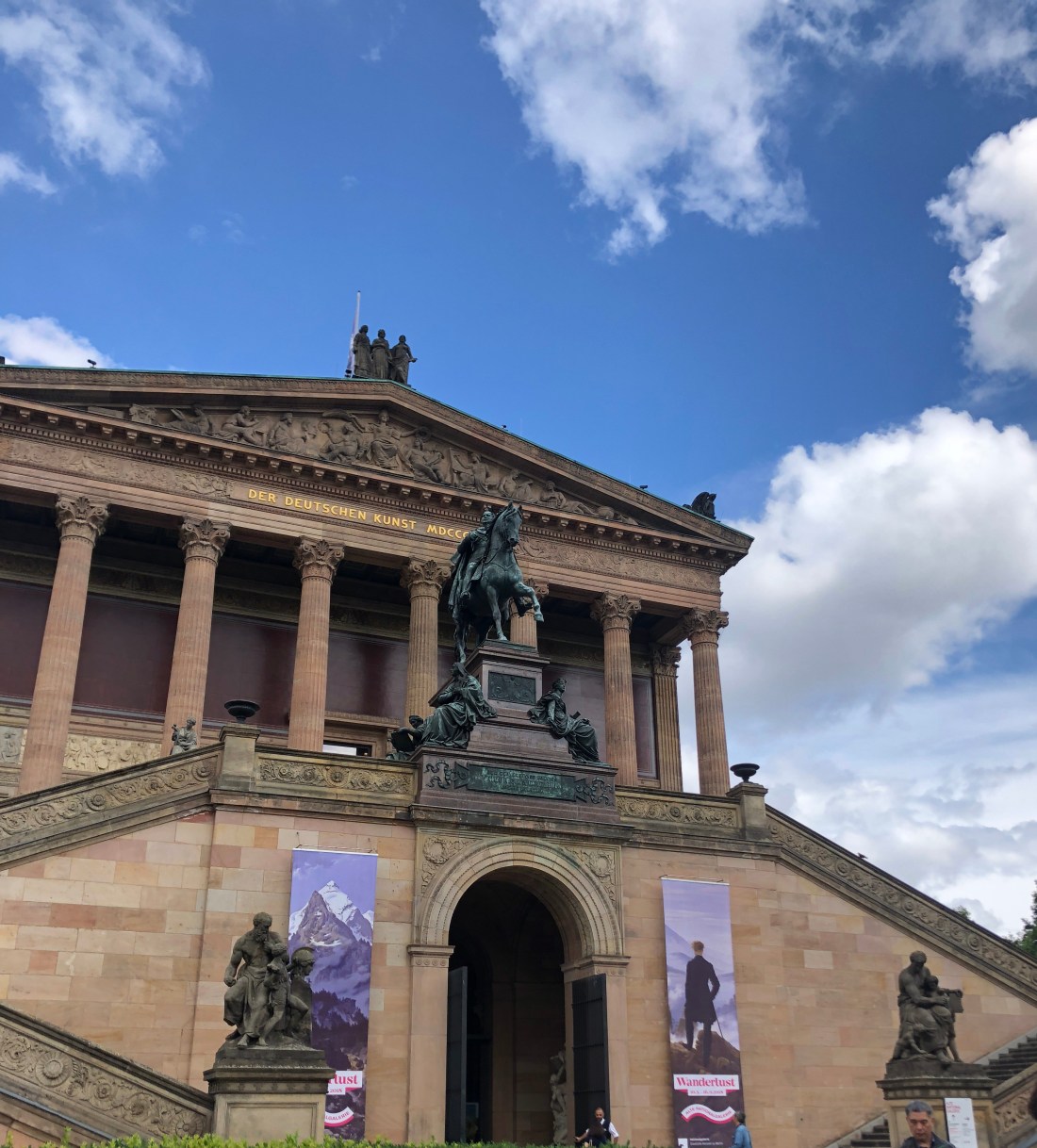
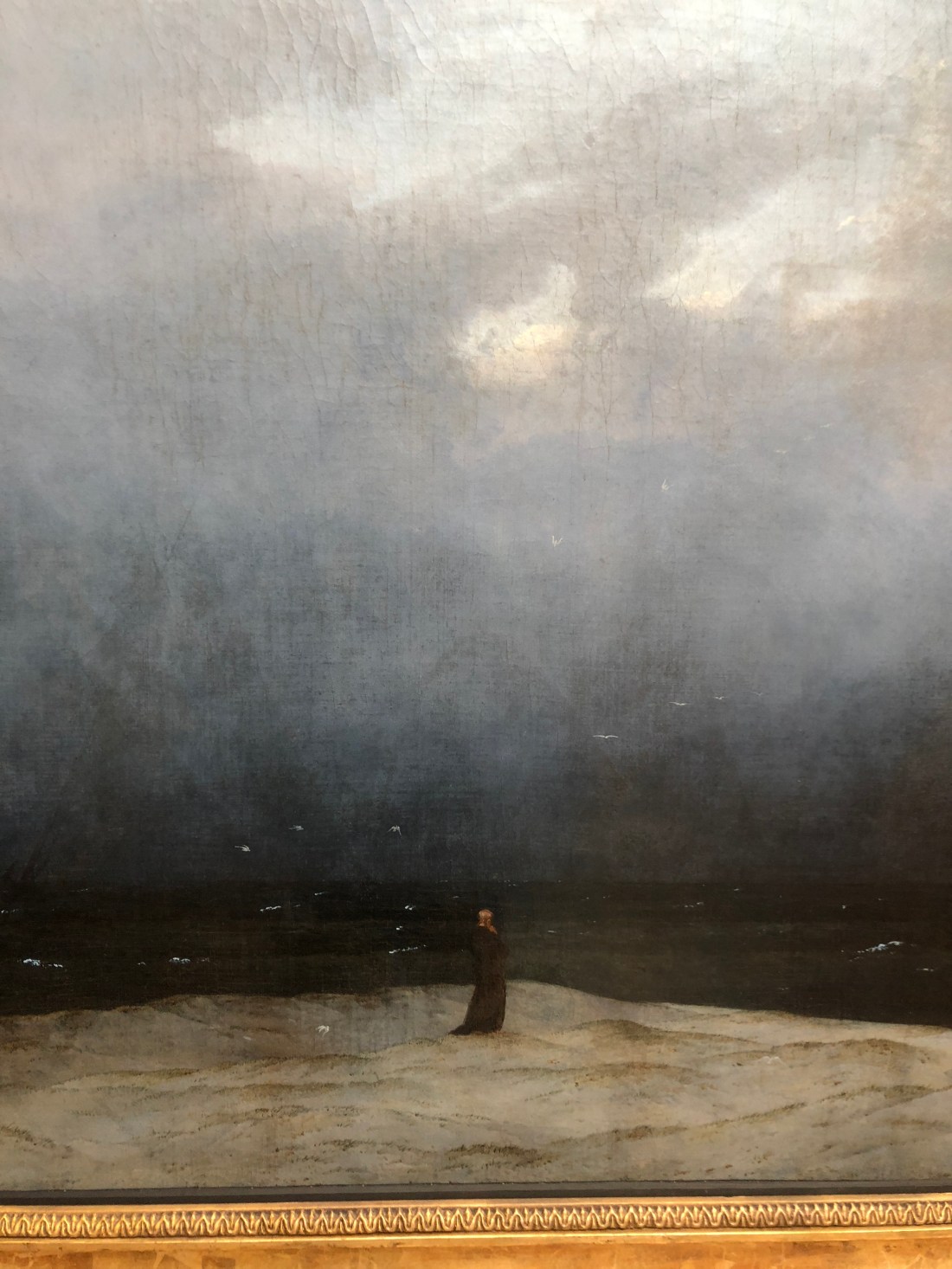
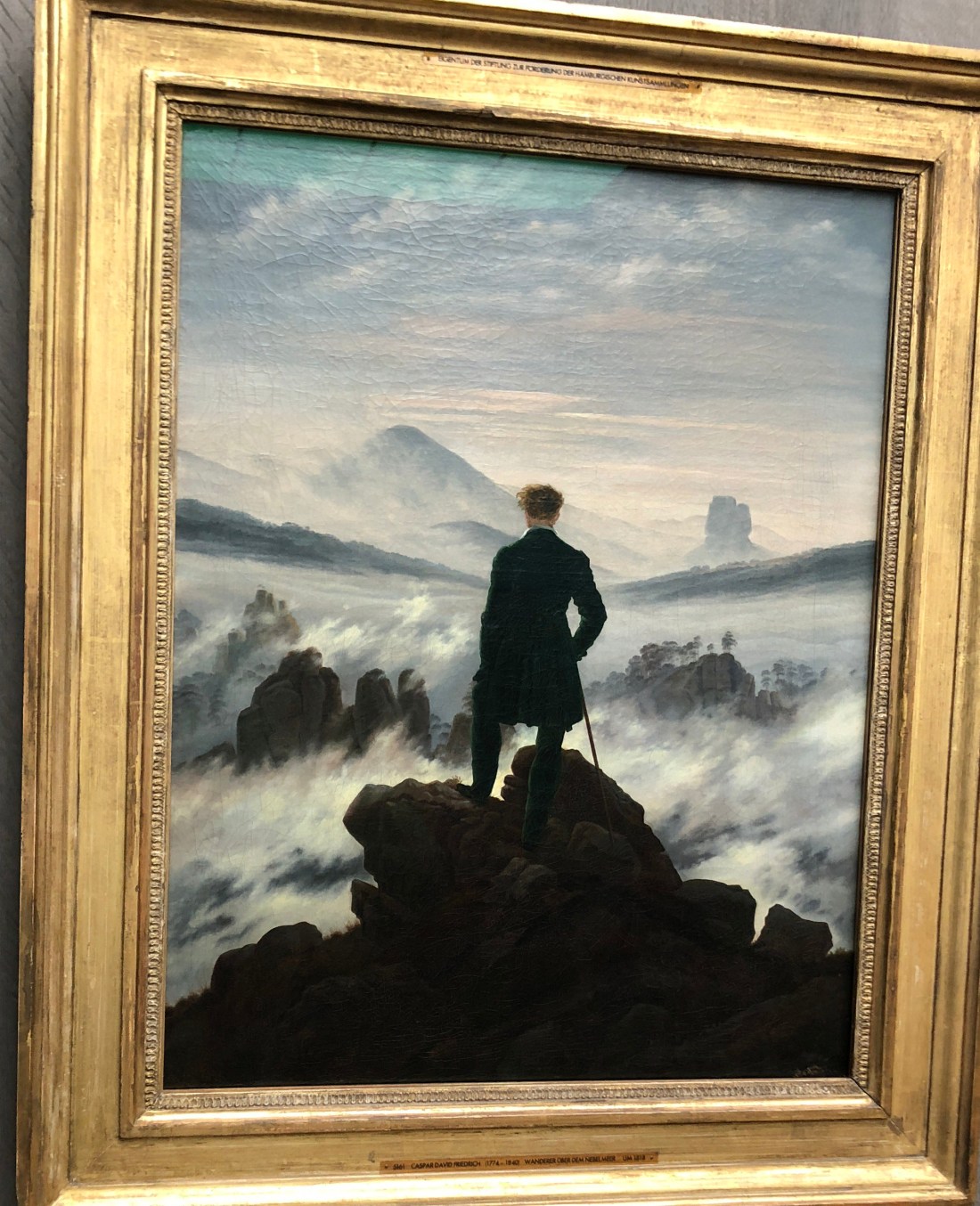
To see a major exhibition “Wanderlust” at the Alte Nationalgalerie with these two legends was a real thrill. “Divine to be in search of the Divine”. The work of Caspar David Friedrich and so many others held one thing in common “They show at least one person travelling on foot in nature – bringing to light the interest in wandering as a Europe-wide phenomenon. The longing to slow down, which led people in the 19th century to use their feet to get around. Walking as a contemplative act.”
So much about life’s journey. The wanderer’s journey as an allegory for the journey through life. Thanks Gordon and Deb.
Berlin seems to be a magnet for Australians who have based themselves here and we had a few contacts to catch up with.
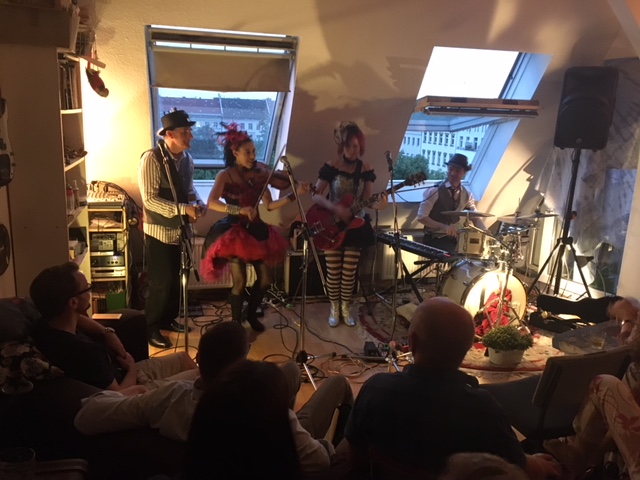
Rob Rayner who Rob knew from Sydney in the 1980s is a member of the Berlin based band The Beez. The Beez often tour Australia during the warmer months escaping the Berlin winter and we’ve kept in touch over the years. He and German partner and fellow band member Deta were hosting a house concert at Lausitzer Platz near Kreuzberg. Rob caught the tram and train and walked up the stairs to the top of their 5th floor apartment building. Their building is typical of much of Berlin’s traditional housing, a five story apartment building. The living room and kitchen were packed with people waiting for the show to begin. The Royal High Jinx from Melbourne, on tour in Germany were playing. I knew Sarah the lead singer and violist from a previous band at gigs at the Polish Club and National Folk Festival in Canberra. It was great to see them again and meet with some Berliners.
We also caught up with Peter from the Beez, originally from the US but resident here for many years now. We met for dinner on Friday evening near his apartment in lively Friedrichshain.
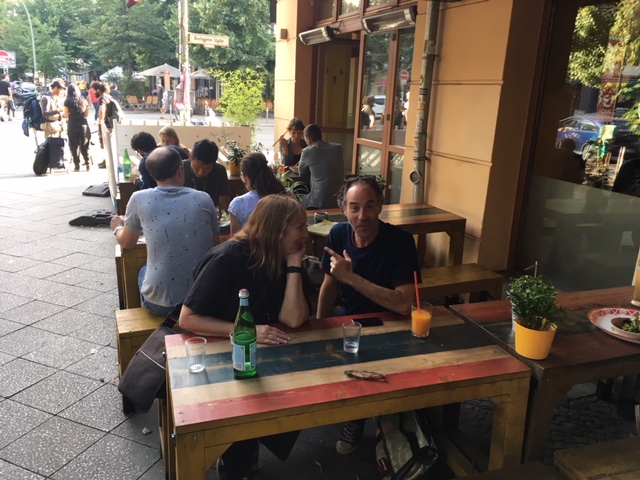
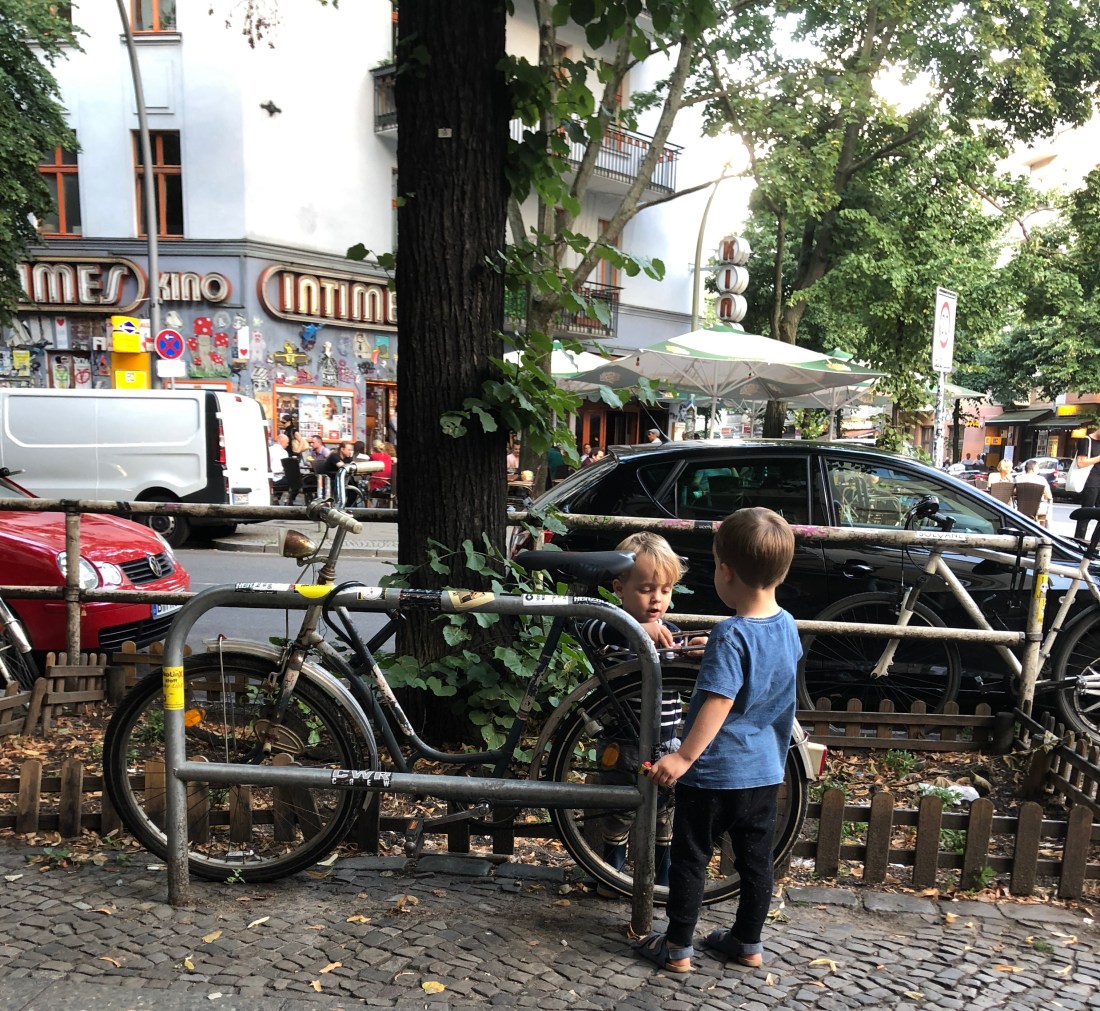
After dinner Alex caught the tram home to the peace and comfort of our home base and Peter took Rob on a tour. We started watching some blues at the Artliner, a smoke-filled room that reminded Rob of bars of old in Australia, like the Phoenix, where even a short visit would leave your hair and clothes reeking of smoke. Different local areas of Germany have their own rules on indoor smoking, Berlin has none.
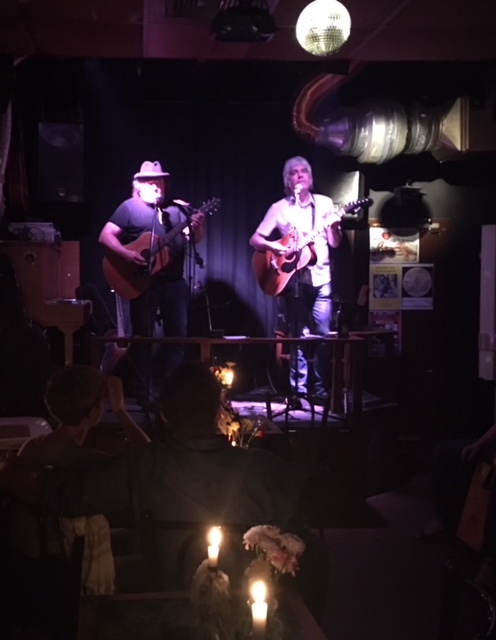
After the show Peter took me to a nearby complex of former industrial buildings that now host multiple clubs, it was around midnight on a Friday night and they were only just starting to warm up. Rob couldn’t help thinking, with all the apartment buildings going up, that this land will become too valuable to developers for it to remain as former industrial buildings. Peter said more and more clubs were starting in the area and it is becoming more popular but he agreed that other former sites for venues have been lost.
Graham Anderson was another Berlin contact. Rob knew Graham when they both worked within the Australian Greenhouse Office in Canberra in the late 1990’s. Graham was a consultant working within the AGO on carbon accounting in the heady days when there was serious funding and action to measure and reduce greenhouse gas emissions. Amazingly, looking back on it, John Howard was Prime Minister. He might not really have been that committed, but funds and action on climate change were part of an agreement with the Australian Democrats – as their price for supporting the GST. Ironically is was a deal that helped finish them off as a political party.
Since then there’s been less meaningful work in that field in Australia, at least nationally, and Graham has now been working in Berlin for the last 5 years or so with the Oko-Institut (Institute for Applied Ecology). They do consultancies around Europe, and one of Graham’s projects involves carbon accounts of member states for the European Union.
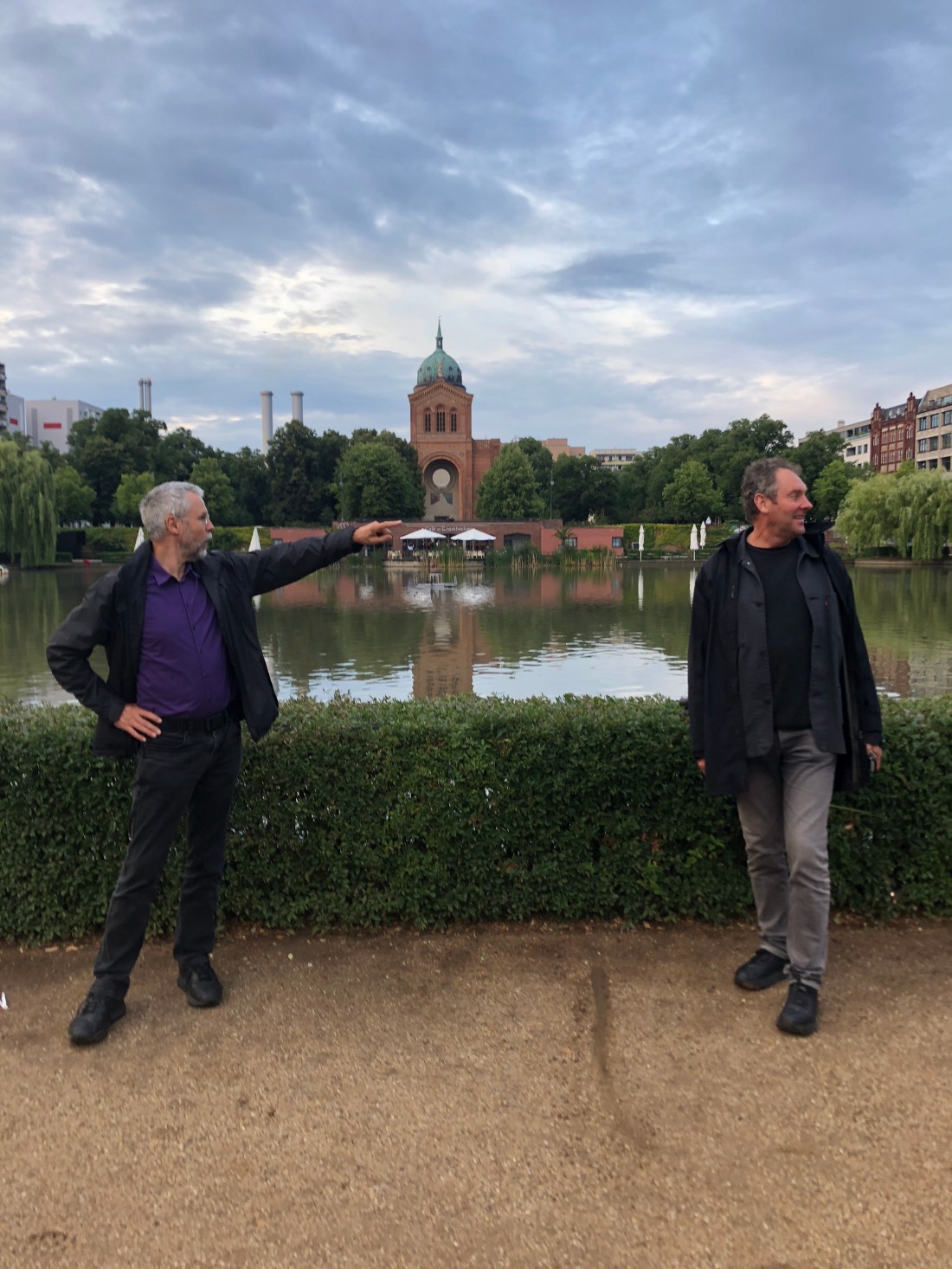
We met after work one evening and went for a walk to a site on the former Berlin wall, now restored to its former glory as a park.
Graham and Heather live in a commune and they kindly invited us over for Sunday lunch. They have their own space, but also share communal kitchens, a top floor sitting area and balcony, and spare room for visitors to stay. They get lots of Australian friends coming to stay.
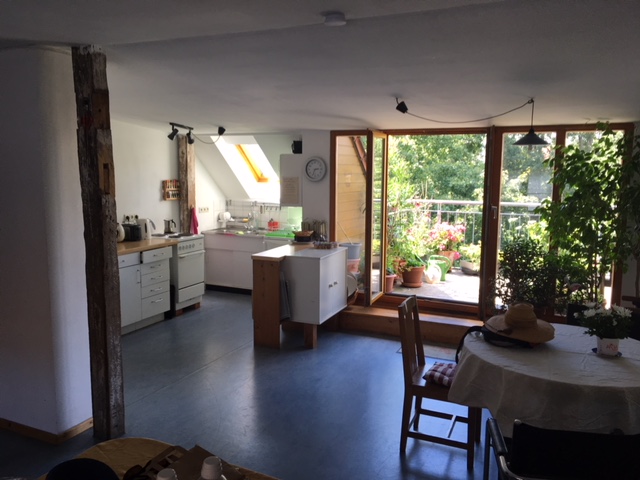
On the ground floor there is a theatre, child care centre and laundry.
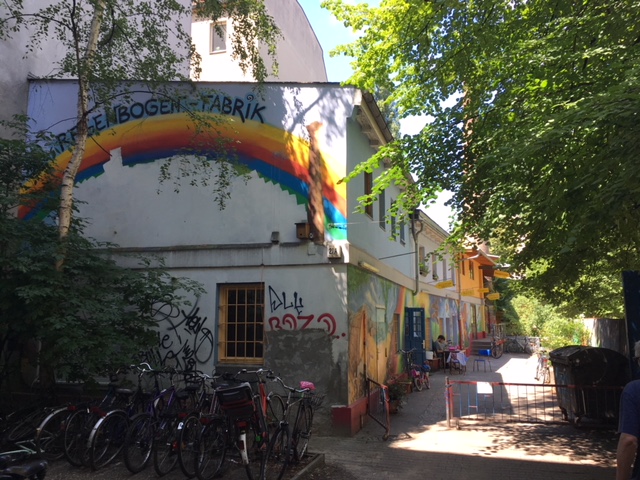
During the period that Berlin was divided into east and west, West Berlin was an island within the Soviet controlled East Germany, completely surrounded by the Berlin Wall.
Germans could not serve in the military in West Berlin, so many people moved there to avoid military service. The West German Government also wanted to encourage people to stay in the city so many people used support by the Government, including reduced rent, to pursue their artistic and social endeavours and political activism. There was no mandatory closing times for bars which led to a thriving night life.
Areas of no man’s land and unused spaces and derelict buildings also supported a range of activities and alternative life styles. This included squatters who established communes.
Some of these, including the one where Graham and Heather live still exist. There is now enormous pressure for urban renewal and gentrification and for local authorities to formalise arrangements in the communes.
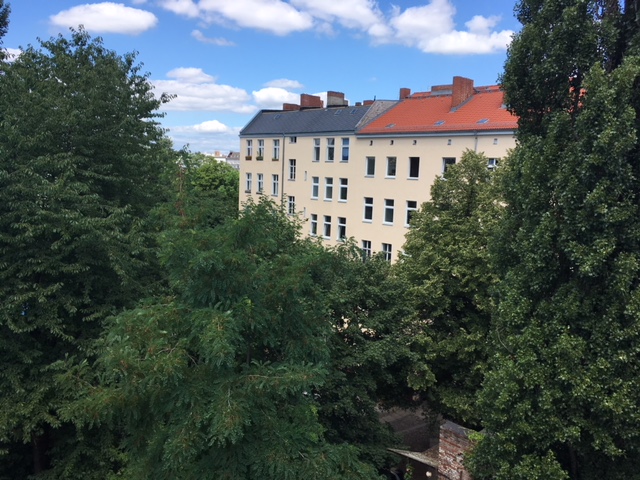
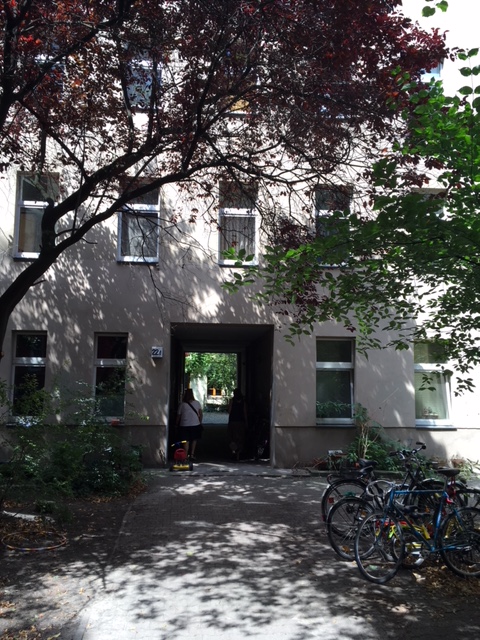
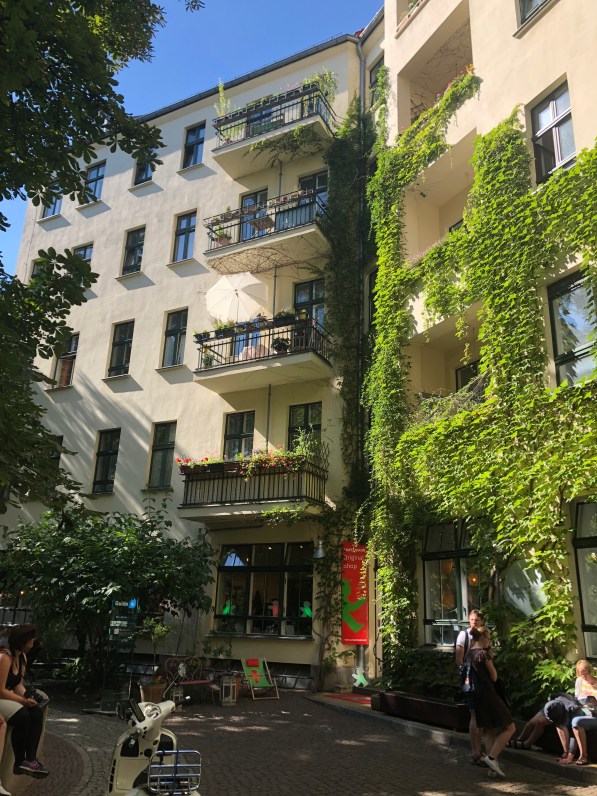
The commune was in a building typical of much Berlin’s traditional housing stock. Large city blocks with generally five story buildings fronting the street. Within these blocks are other buildings separated by courtyards with large trees, and with access ways through the buildings. This allows for spacious apartments with cross ventilation and access to sunlight and views into vegetation. It’s a housing style that still has a lot to offer.
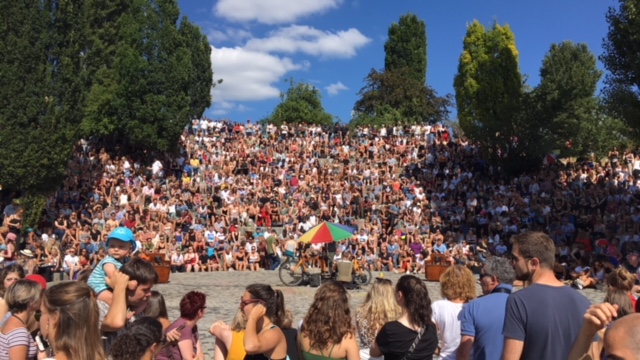
Georgia was another Canberra contact. She was a student at the ANU some years ago and used to turn up to some of the gigs at the Polish Club. She’s been living in Berlin for five years, performing and recording music, doing photography and also working to fully immerse young Germans in the English language. On Sunday afternoon Rob caught up with Georgia and some of her friends who, typical of Berlin, come from all over the world. We met in our neighbourhood at Mauerpark, at the massive flea market held there every Sunday. A big attraction is the Karaoke held in an amphitheatre.
We then headed to the Kulturbrauerei – an old brewery that has been turned into an event and bar space. It was World Cup final was on between France and Croatia and the place was packed.

So it was great to be able to meet up with people who are living in Berlin. We also did some touristy things like the hop on hop off bus and a river trip which helped put the city and its fascinating history into perspective.
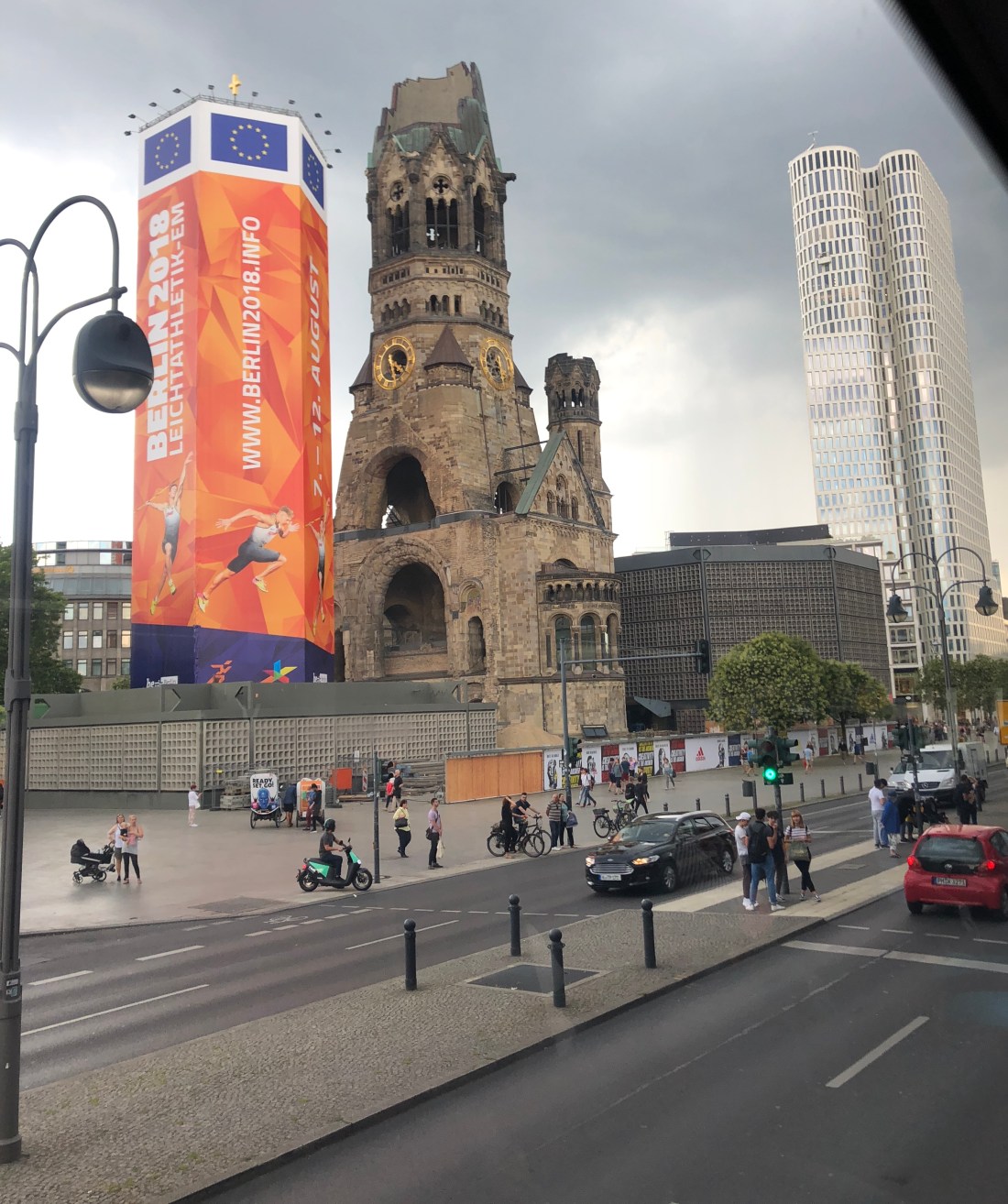
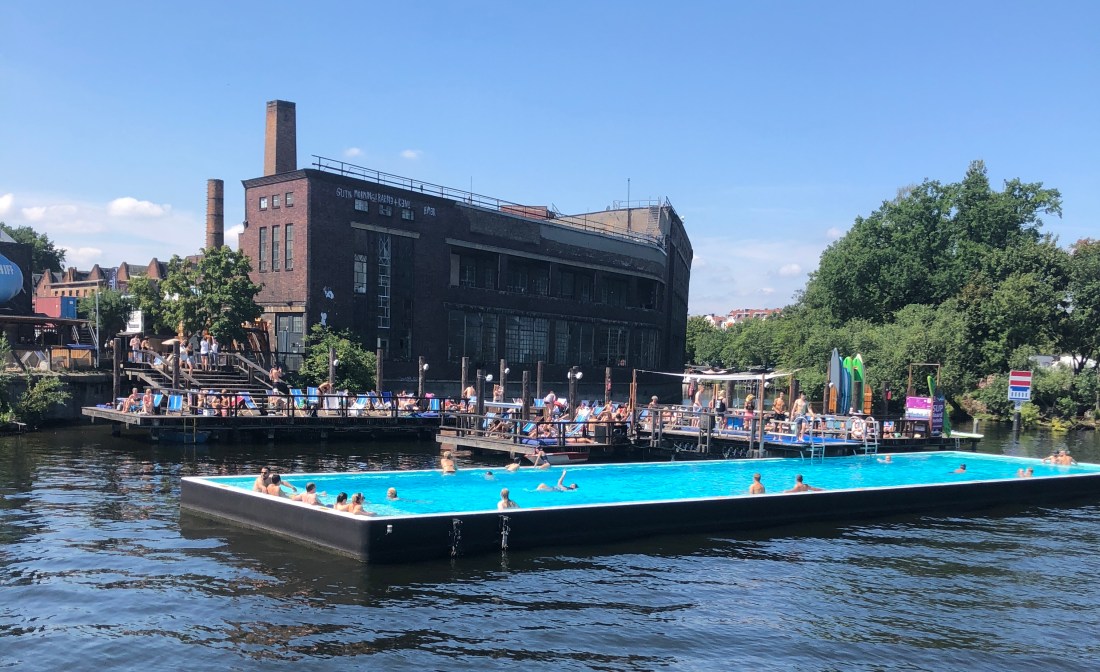
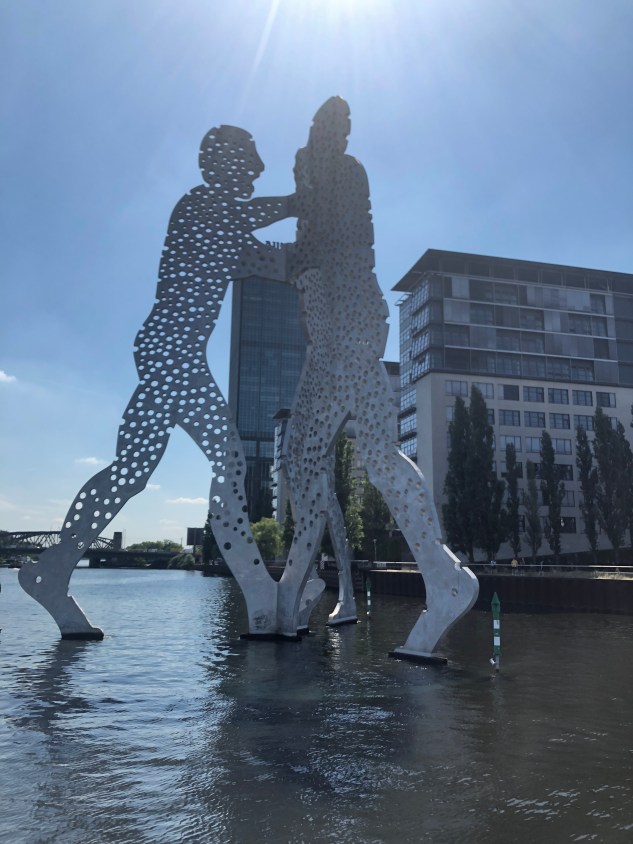
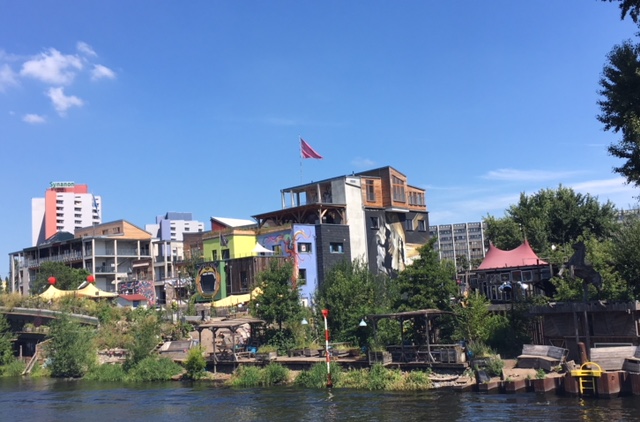
There’s a lot a construction of new buildings emerging, particularly in what would have been no man’s land around the wall. There’s new Government buildings and lots of new apartments.

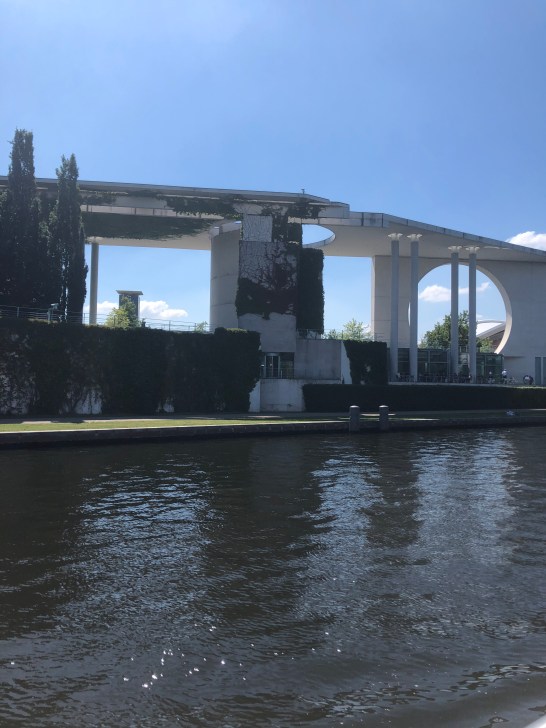
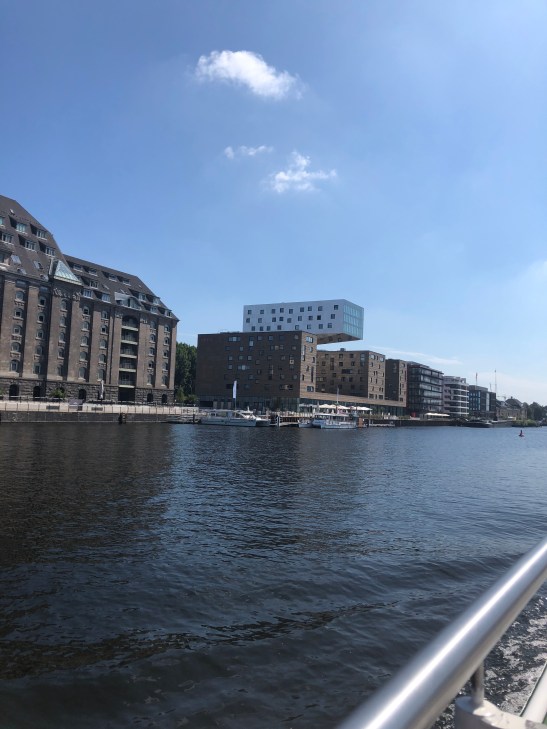
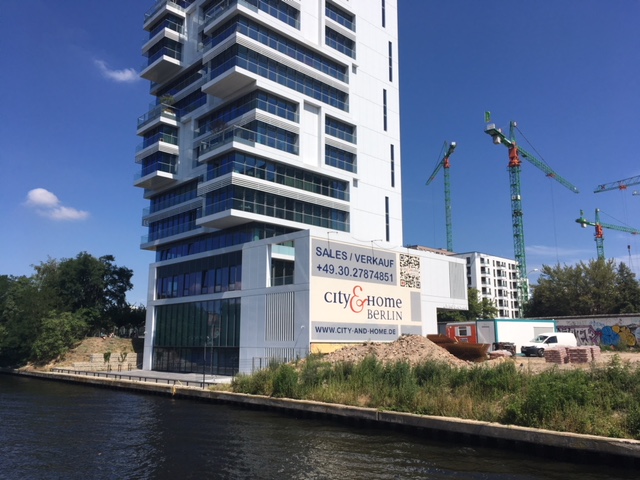
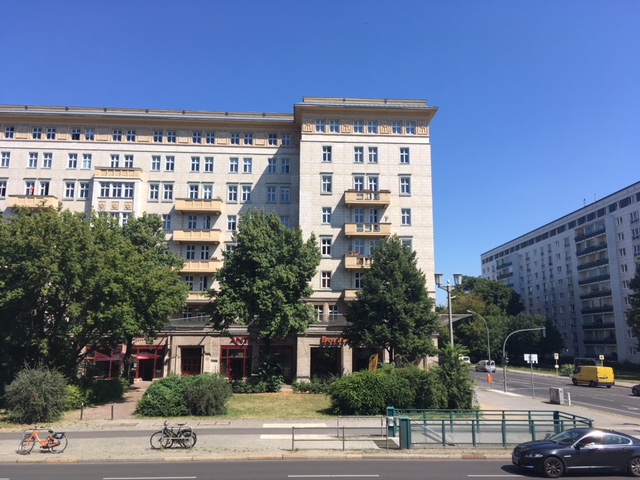
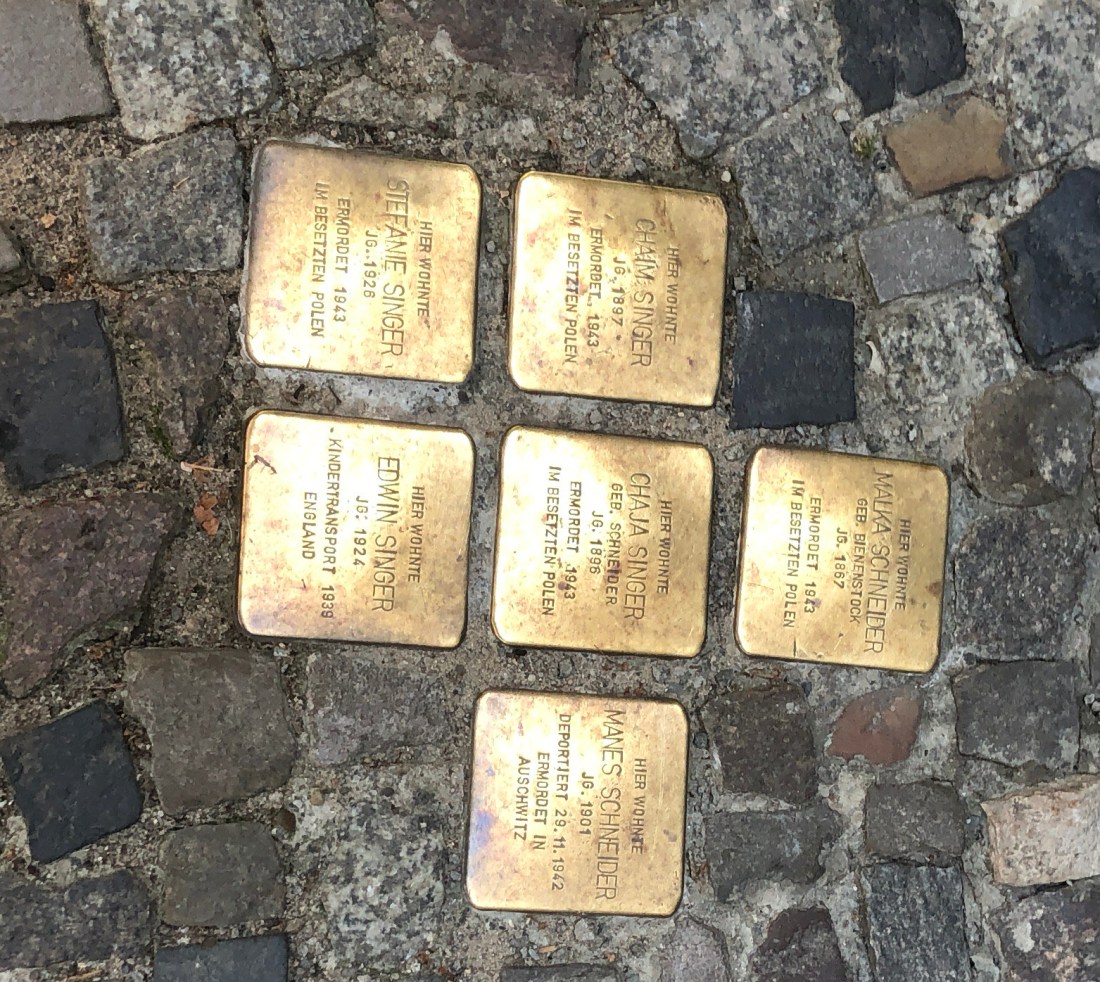
Sections of the wall remain as sites for art works, or moving memorials. It is amazing today to think that is would be possible to divide people here in such a way – yet we see history repeating.

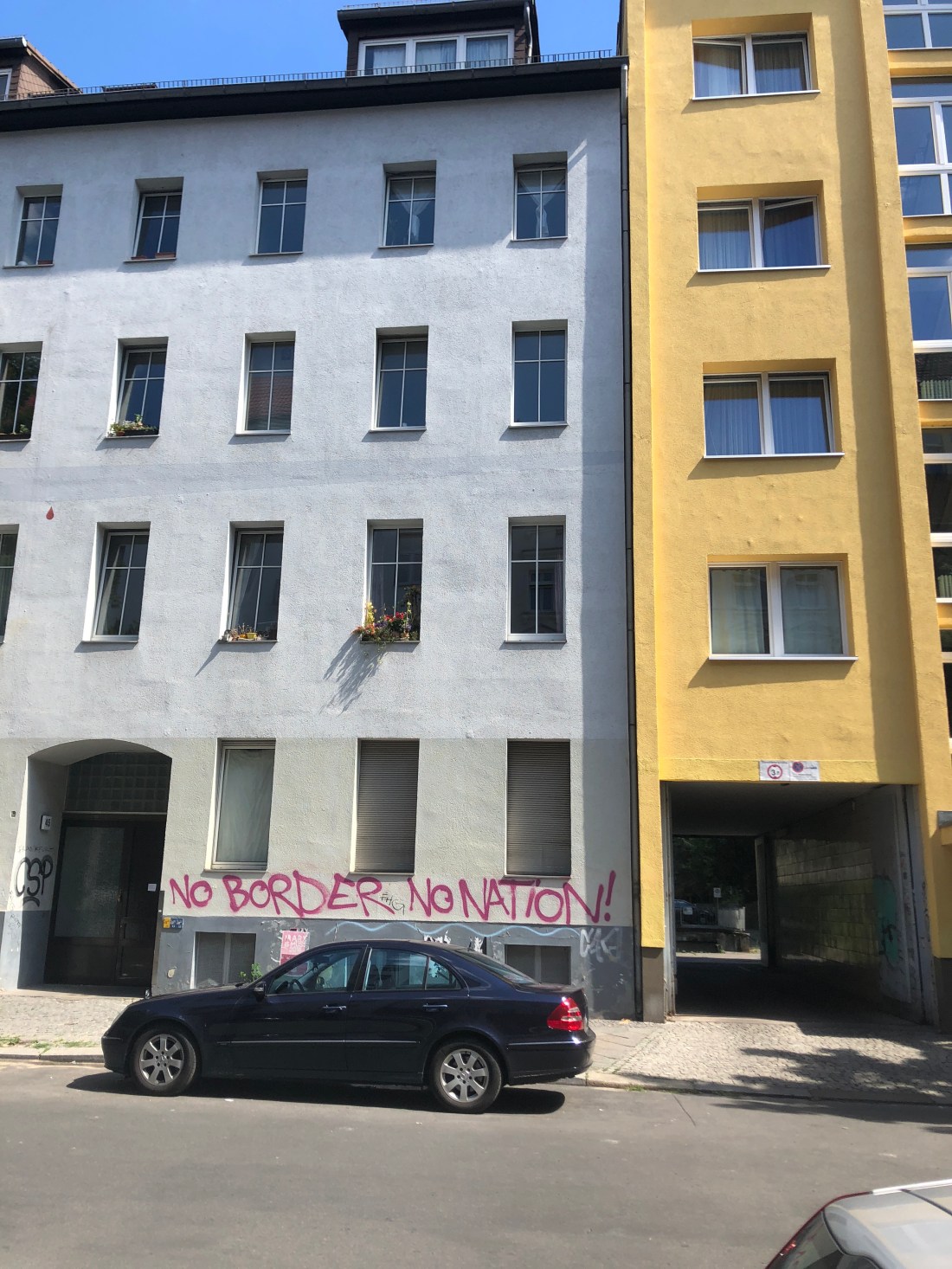
So while Berlin is going through rapid changes and becoming more gentrified there is still a slightly chaotic anarchic edge to the city.
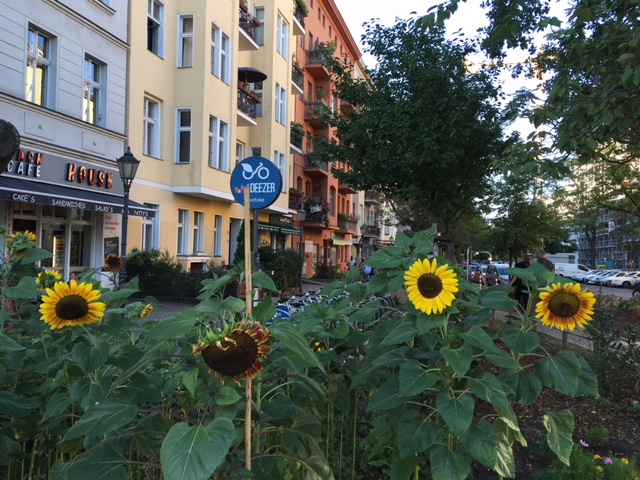
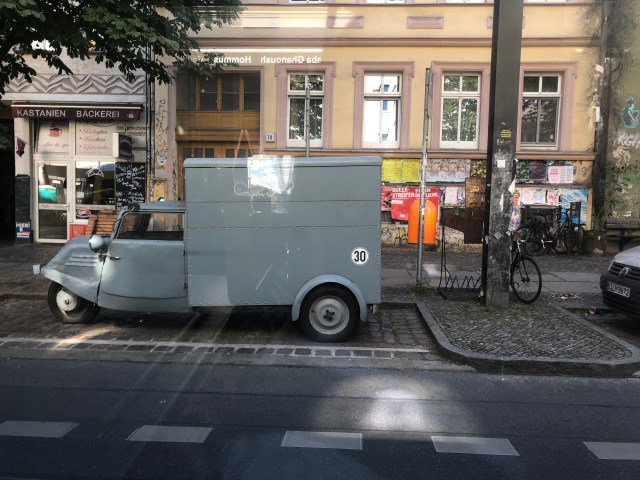
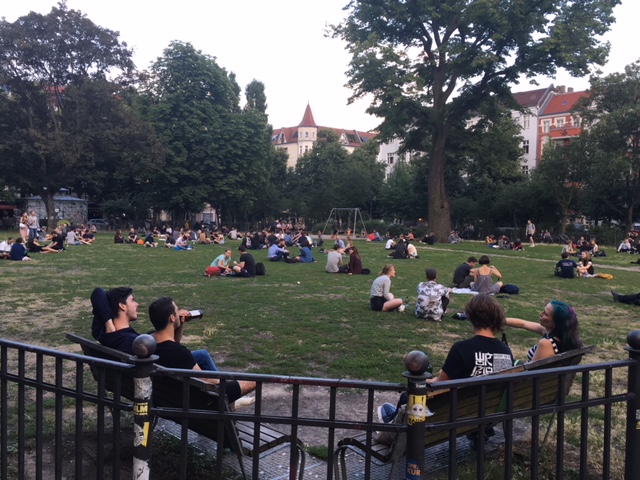
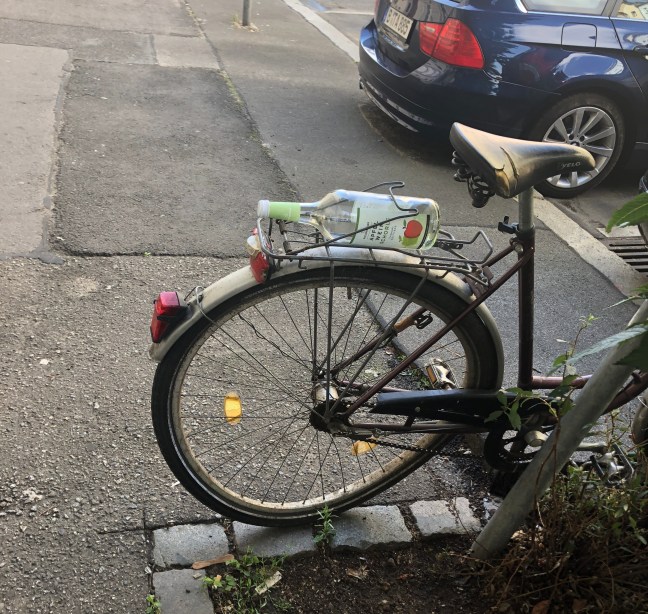
It was hot when we were in Berlin, and people were out in the streets and parks. There is a lot more public drinking in Berlin, in parks and on the trains (and on bicycles).
On our last night we caught up with Zoe and her friends after they’d returned exhausted from the Melt music festival. We met them for dinner near their youth hostel. The young ones have flown.

The next morning – a train to Amsterdam.
 Parental Gap-Year