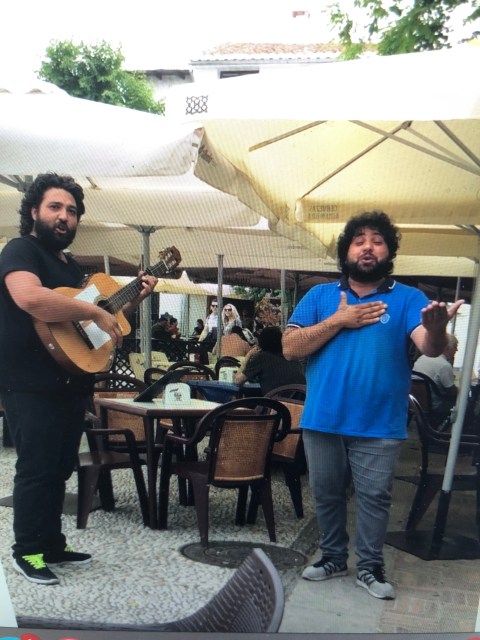
“I don’t know how good their singing is?” queried Rob as we were serenaded by Flamenco guitarists about 10 minutes into our visit in Granada. It was the wailing and sounds of despair that may have caused Rob to doubt. We were later to find out that this was classic flamenco. Visiting the museum in the Gypsy area of Sacromonte we read of “suffering, neglect, anguish, fear, pain, isolation”. Gypsies faced cruel and racist laws for many years – so had plenty to sing/wail about.
Kimberly, Hugh and Cesca Gordon had recommended Granada as having a great atmosphere with live music in the streets. Beginning with our first meal that was the case, music everywhere.
Albaicin
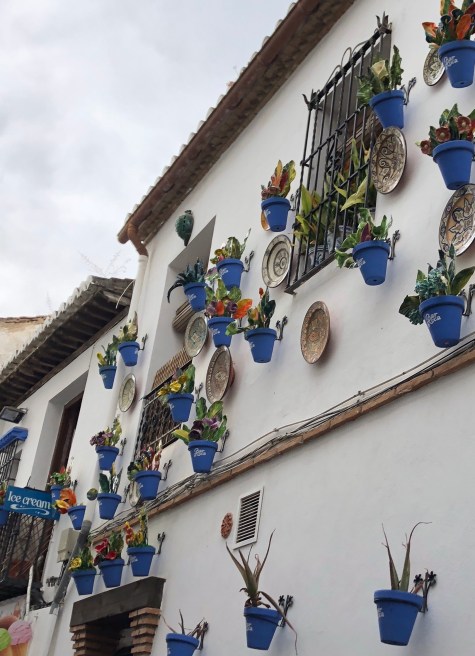
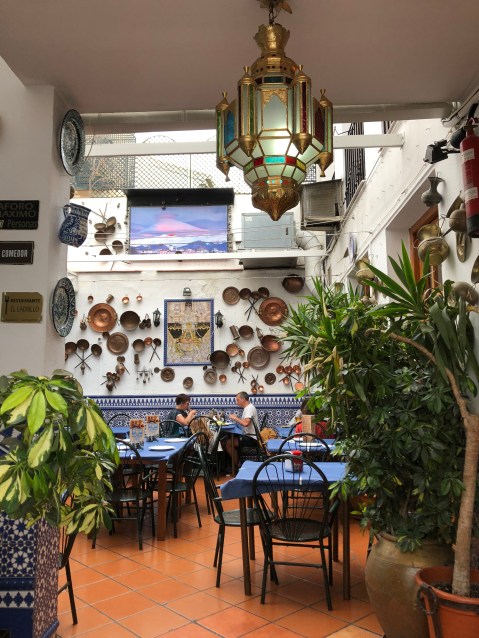
We stayed in the old part of town – Albaicin (pronounced Alb-eye-thin).
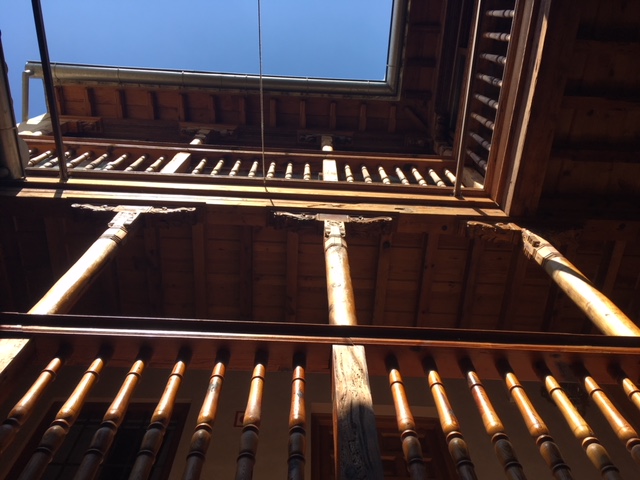
Our hotel Santa Isabel la Real is a restored 16th Century House. (Lovely staff, great breakfast but our room was on second floor – and really noisy, go for one on top floor with a window)
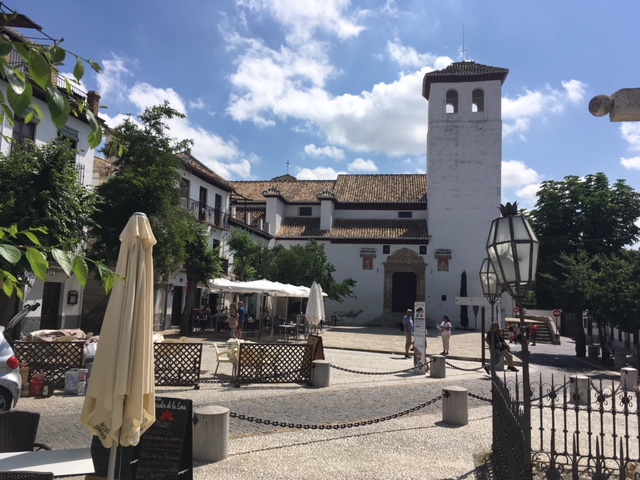
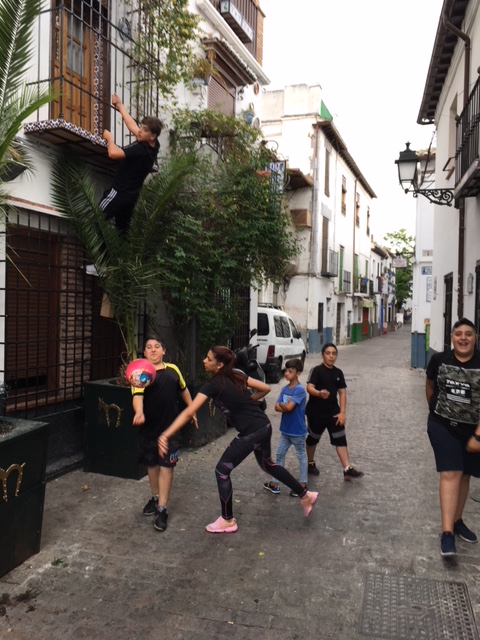
The local village square
World Cup time! These kids kicked the ball into the high vine and then mocked the kicker with the flamenco hand-clap. They really do clap like that.
Saromonte
Beyond Albaicin is Sacromonte, the gypsy village outside of the old city wall on the arid hot and dry side of the valley.
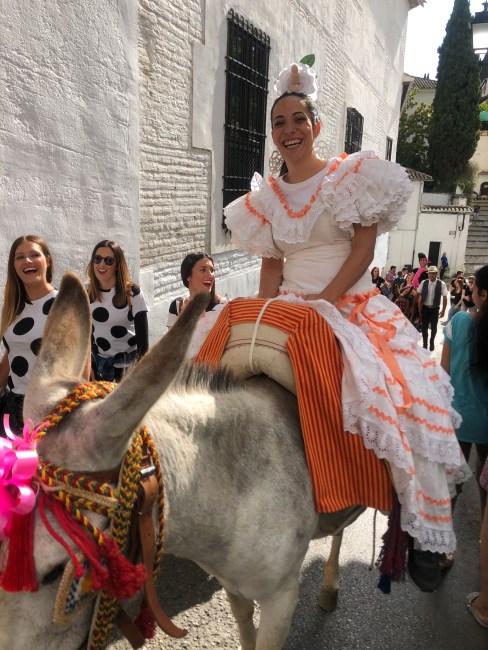
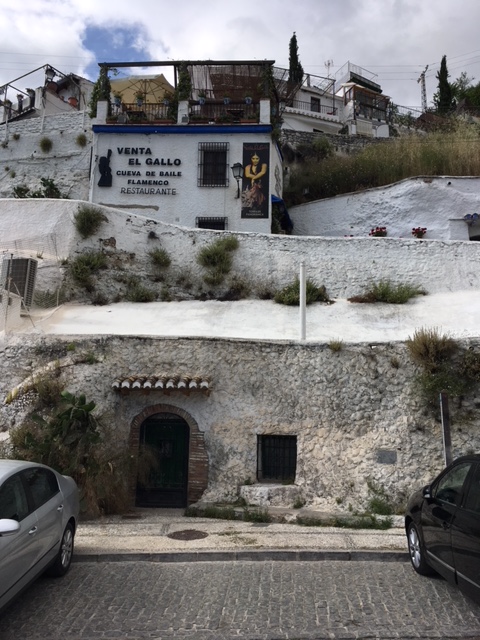
Sacromonte to the right on the hot, dry arid side of the valley, where the gypsies dug caves into the hillside. Alhambra on the other side on the lush side of the River Darro.Granadan tradition involving lots of drinking. Australian equivalent – hens night. Donkey later found parked outside a bar.
Flamenco
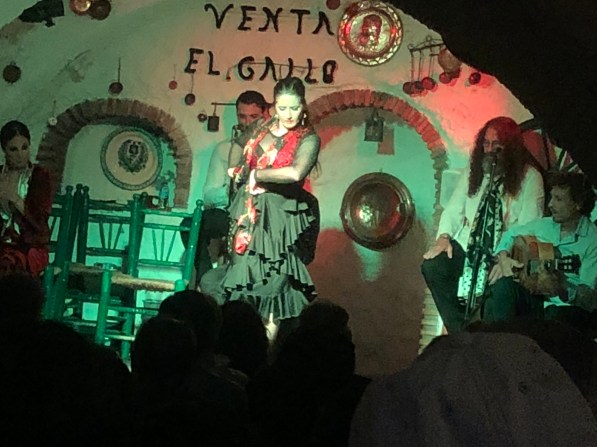
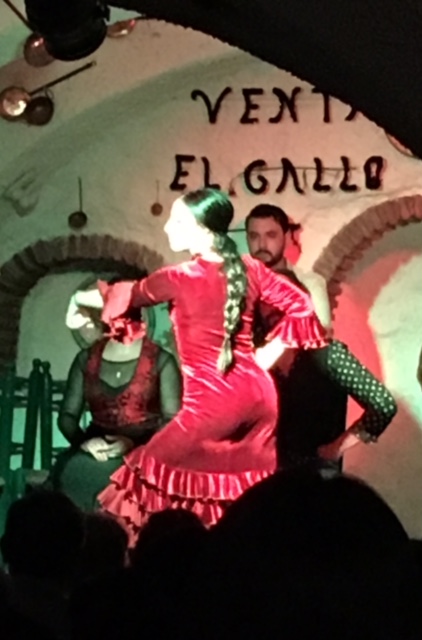
Here in the caves dug into the hillsides is the original home of Flamenco, a music and dance style with many influences including from the Arab world and from India.
Venta El Gallo where we saw a Flamenco show in a cave where it has been traditionally practised. This is the birthplace of FlamencoFlamenco in the caves of Sacromonte
La Alhambra
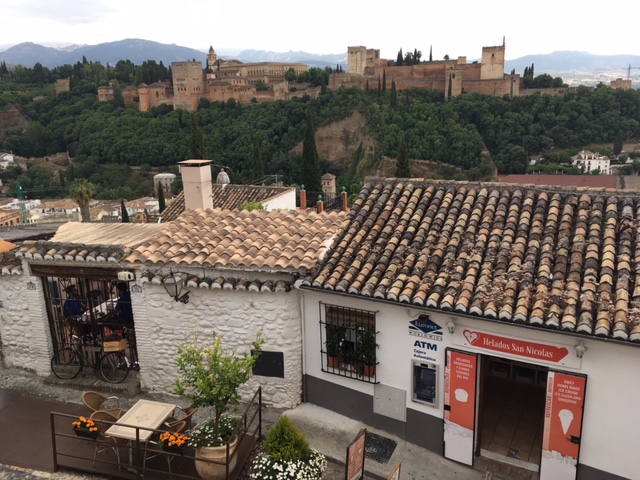
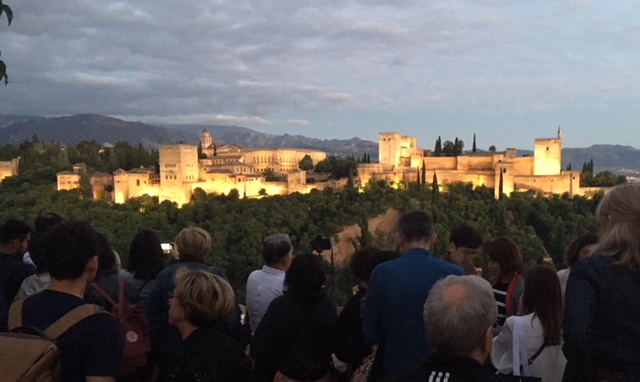
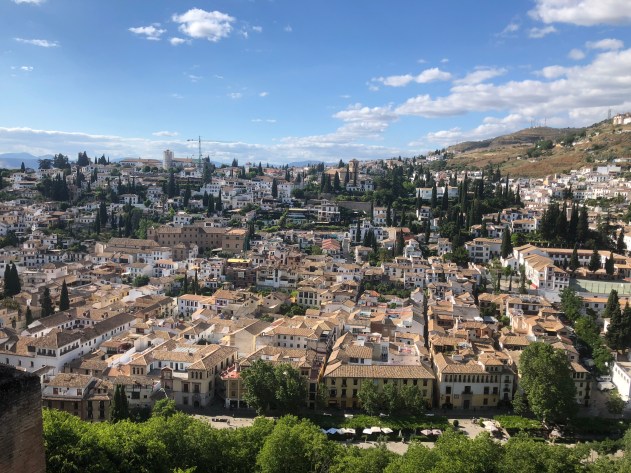
View of Alhambra from Mirador San Nicholas AlbaicinCrowds viewing Alhambra by night
Across the river, on the shadier and lusher side of the valley is one of the major tourist attractions in Granada, La Alhambra. Numbers of visitors are kept limited and we needed to book on a tour at a specific time some months in advance.
Built on the remains of a Roman fortification, it was rebuilt by the Arabs by the Nasrid Emir and later converted into a Royal Palace by the Sultan of Granada in 1333.
The Christians took over in 1492 and it became the Royal court of Ferdinand and Isabela, although they didn’t seem to spend a lot of time there.
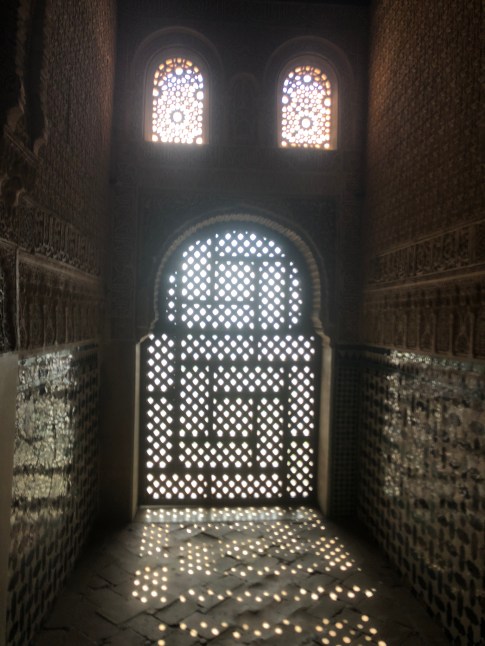
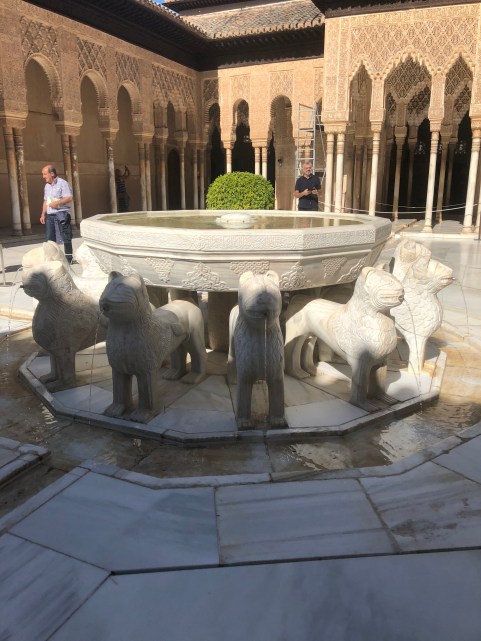
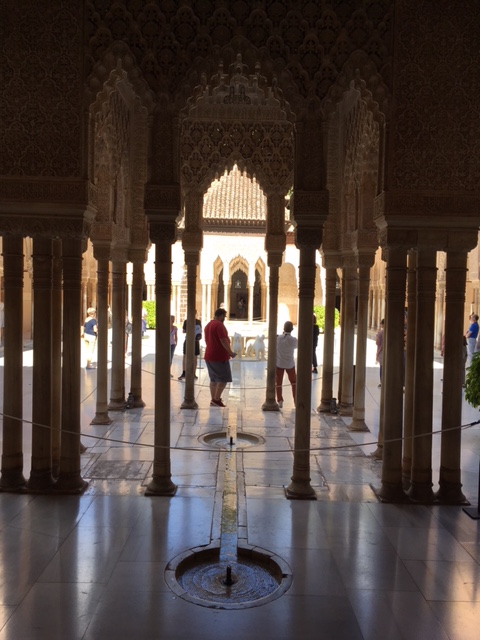
Designated a UNESCO world Heritage site in 1984 it is now one of Spain’s major tourism attractions and exhibits Spain’s most well known Islamic Architecture together with later 16th Century palaces and garden interventions.
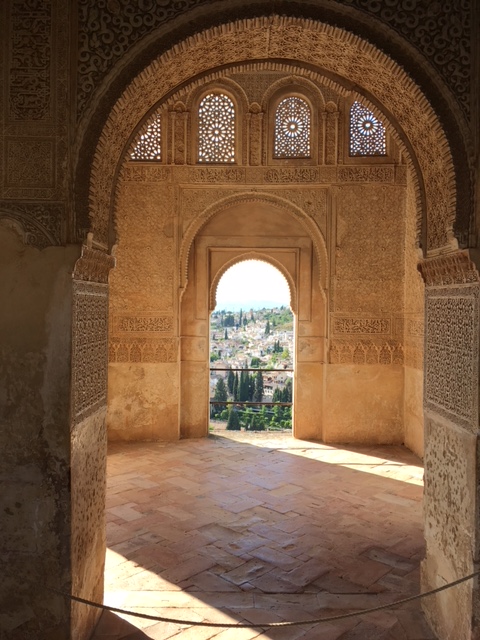
Alhambra arch series
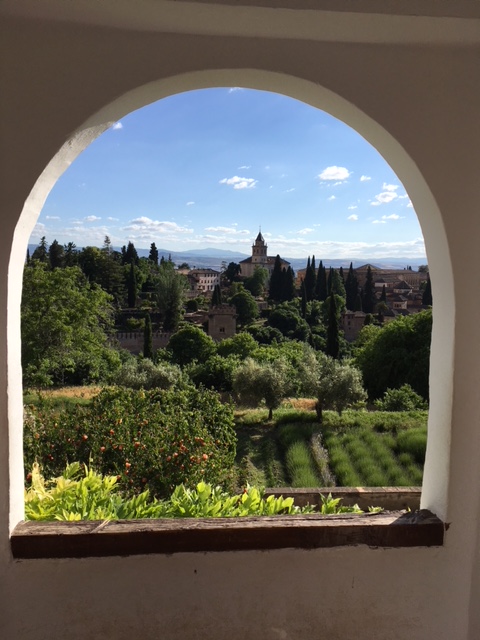
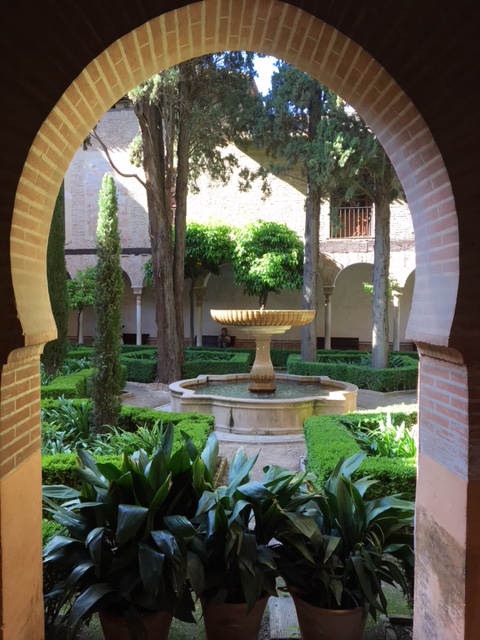
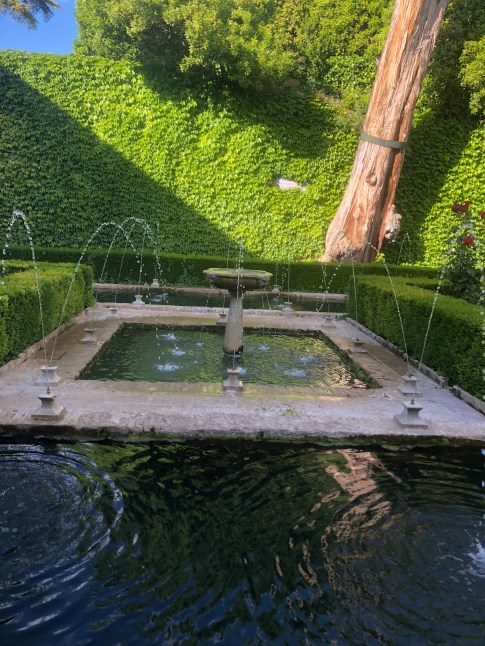
Alhambra gardens
Granada is is in a stunning location at the base of the Sierra Nevada, which still had snow covered peaks in the distance even though it’s now late spring.
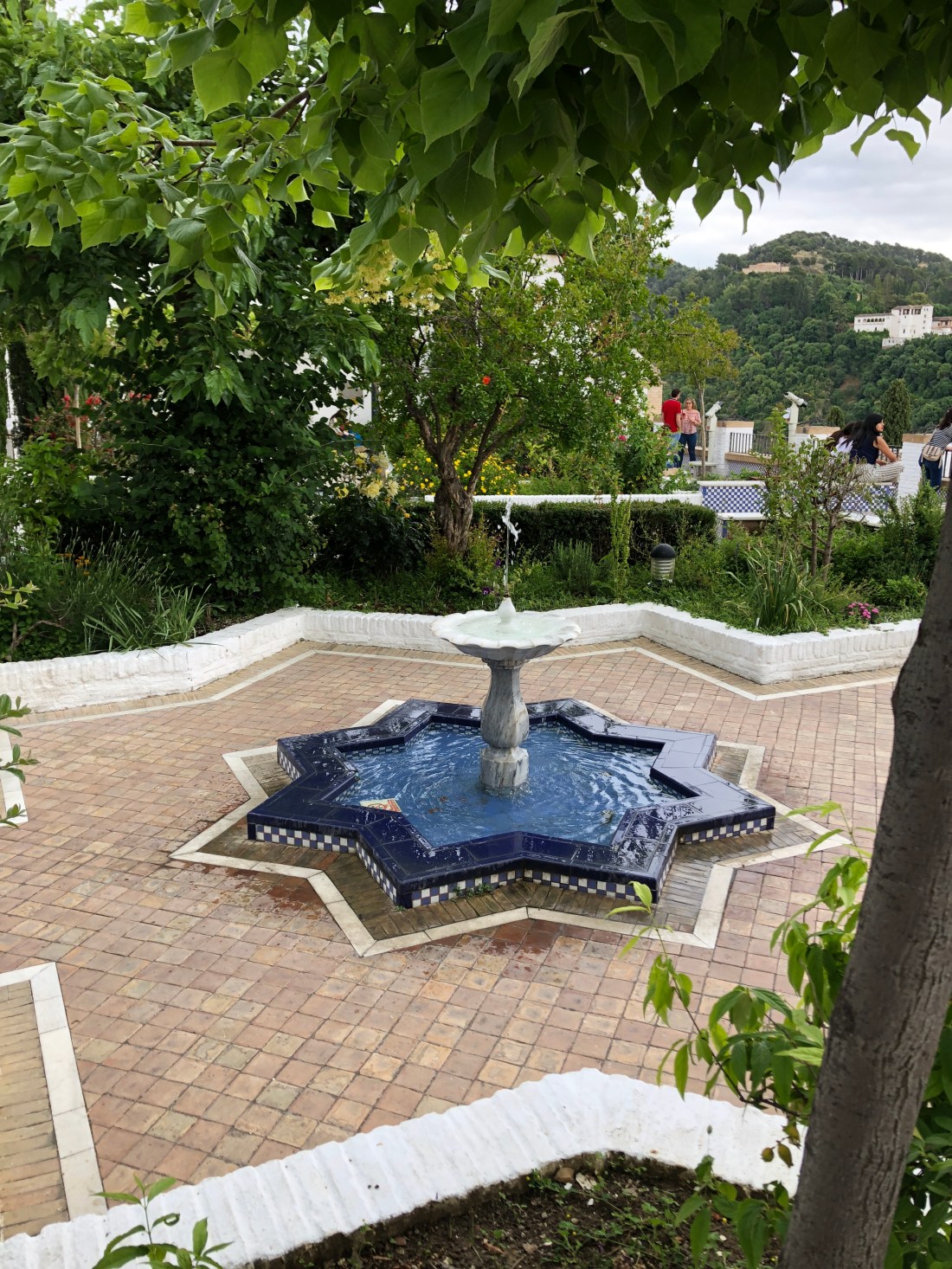
The water from the mountains allowed the Arabs or the Moors to introduce irrigation, delivery of fresh water for drinking and fountains and sanitation. Some of this infrastructure exists to this day.
The Arabs also introduced ceramics, and there was a flourishing of arts music and culture. Much of this was slowed down with the “reconquista” by the Christians.
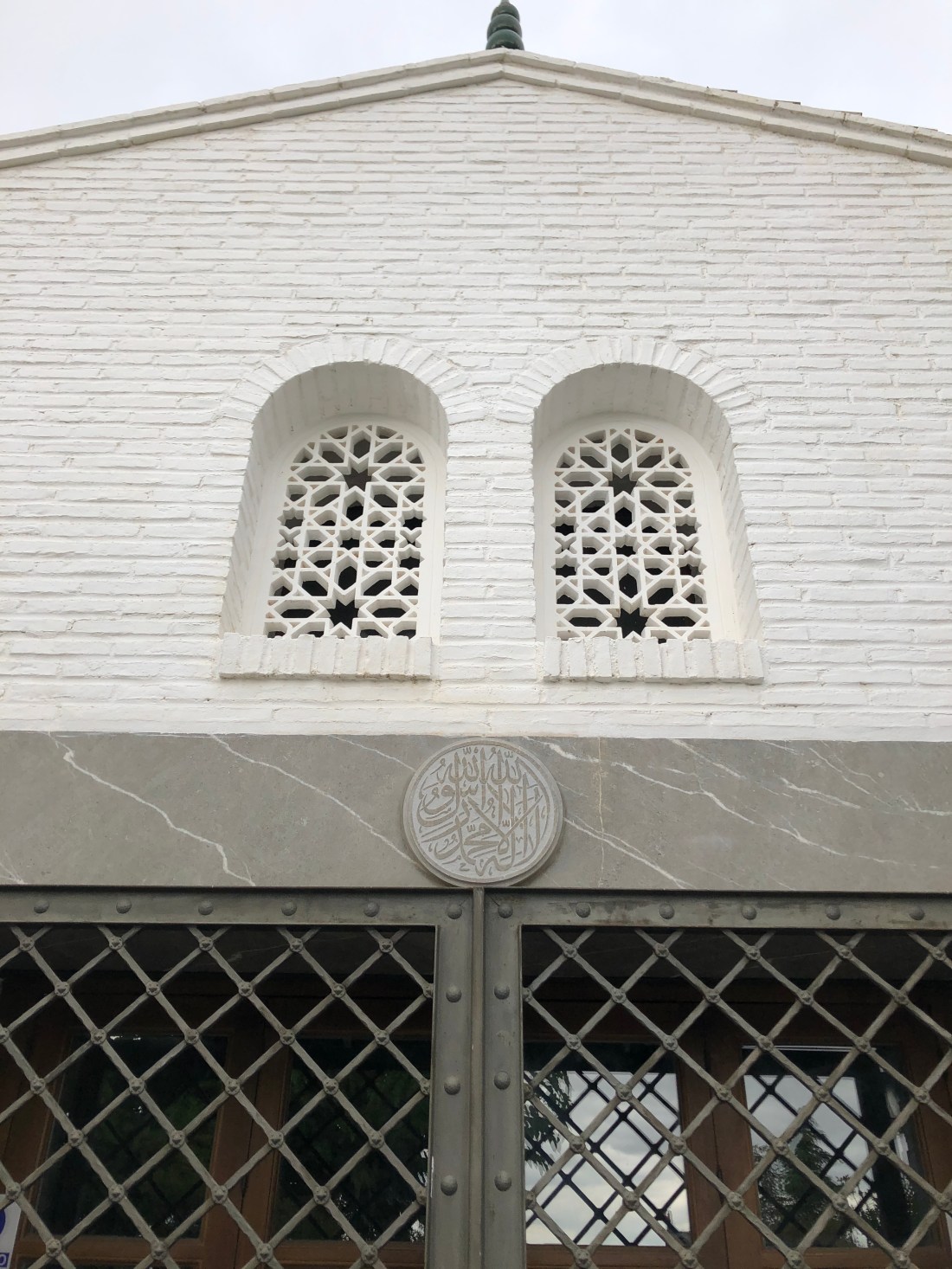
The Mosque – there is a growing muslim population in Granada
ROB RANT ALERT – It’s sad that despite the flow of beautiful water from the mountains, it’s virtually impossible to get a glass of water at a restaurant, without buying imported water in a bottle, usually plastic – not only here but across much of Europe.
While we were in Spain Rob was able to use his now rusty Spanish from traveling through Central America in the early 1980’s.
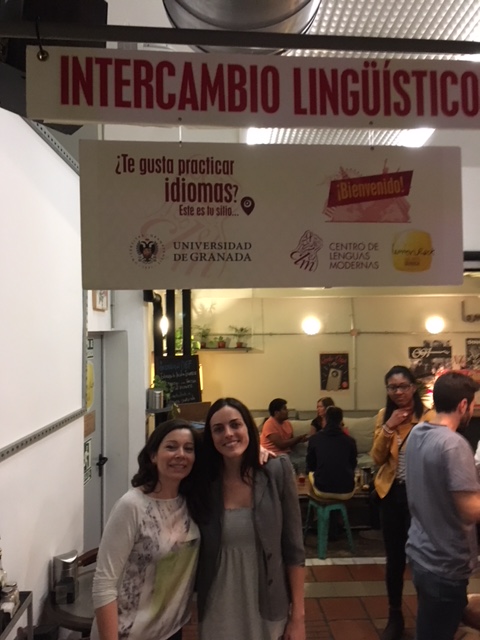
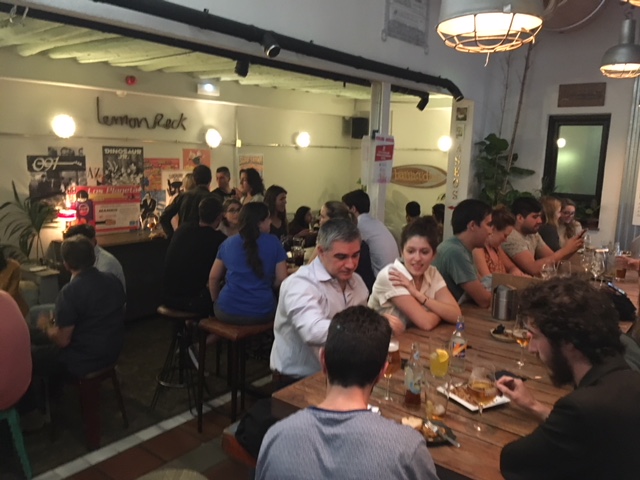
On the last night in Granada Rob went to Intercambio Linquisico at a local bar that also has live music. This has been set up to help people get together the practice and improve their language.
There were different groups in the room Chinese and Spanish, French and Spanish and English and Spanish. Rob ended up having discussion in broken English and Spanish about the current developments with Catalan independence and the new Spanish Prime Minister.
Sevilla
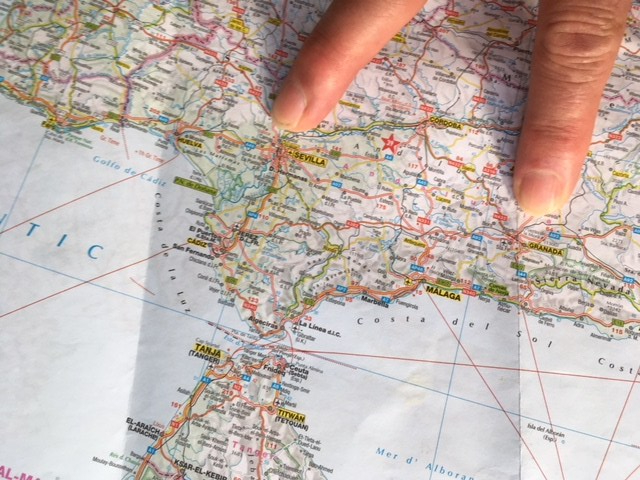
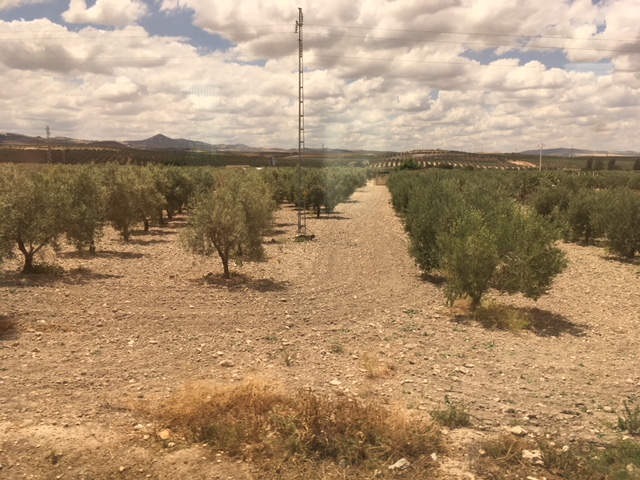
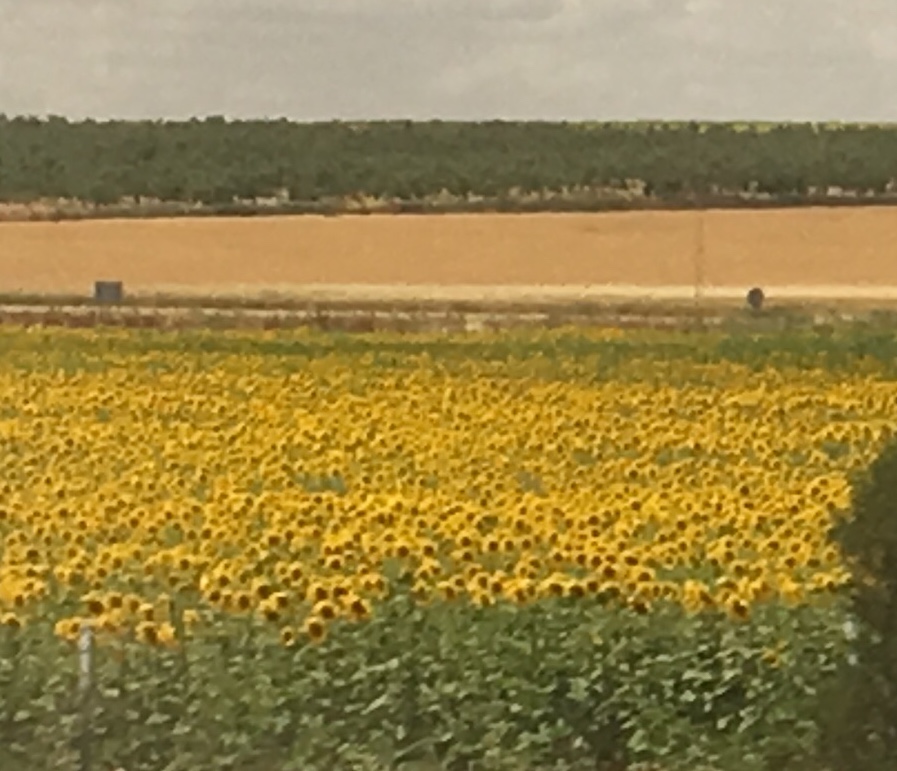
Looking out the train window at the Andalusian countryside it appeared that these were large holdings in a few hands. Huge areas of olives, sunflowers. Alex saw one farm which was clearly for breeding black bulls for bullfighting. All she could think about was Ferdinand the bull and felt sad about what these feisty little fellows would face in the future. Bull fighting still big in Sevilla.
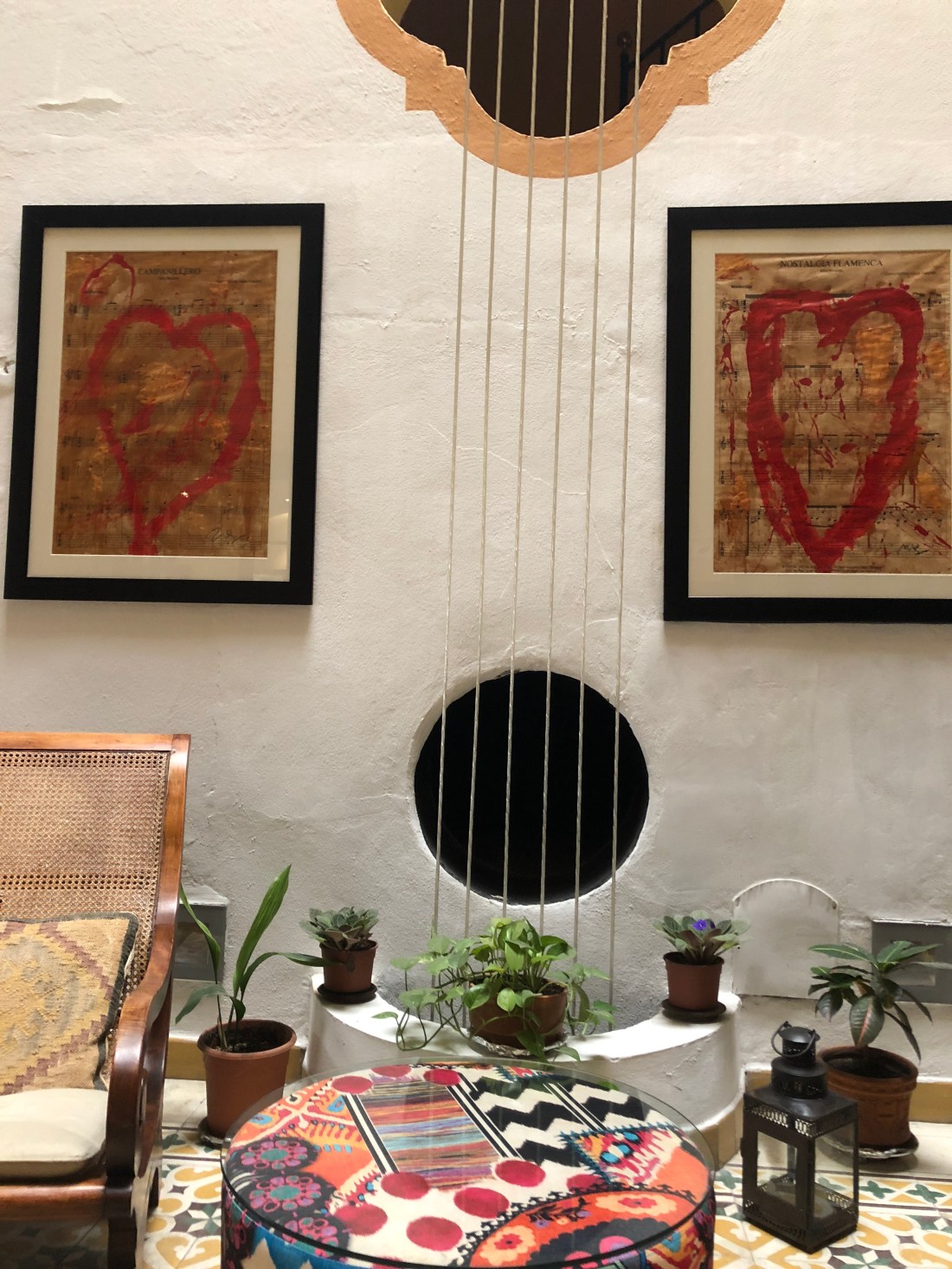
Our lovely little hotel La Casa del Maestro was the former home of Flamenco guitarist Nino Ricardo. Guitar motif dominating.
Great tapas at Bar Alfalfa (recommended by our friend Nat)
While Granada is still in the hinterland of the Mediterranean, Sevilla is firmly focussed on the Atlantic.
Although it’s inland it sits on the massive Quadalquivr River, which used to able to provide the harbour for the ocean going ships that brought back the wealth from the Spanish Colonies.
The Alcazar was build as a Royal palace by the Christians after they destroyed a Muslim fortress on the same site after their conquest of Seville. It is the oldest royal palace still in use in Europe
The Moorish influence is here, although perhaps not as strong as in Granada.
Alcazar gardens
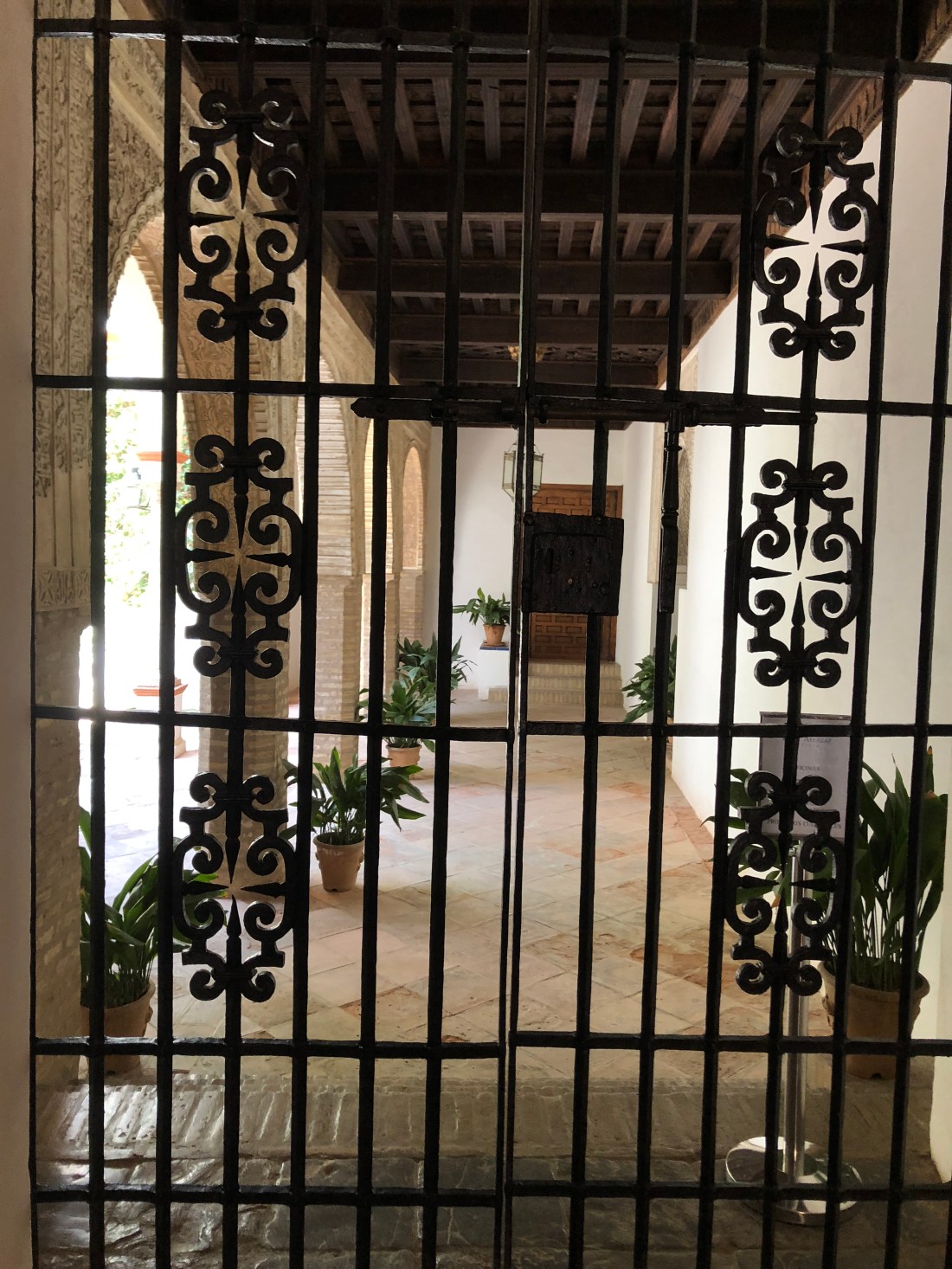
Just a random gateway along a street in Sevilla
The enormous wealth that flowed through the city, funded the construction of beautiful buildings and much of it went on to fund wars. Seville was a major centre of power in the world, but as the river silted up the port moved to Cadiz, and as the plundered wealth from the new world dried up to a trickle, the city lost it’s power and relevance.
Reminders of modern day parrallels – what will Australia look like when the minerals are gone and coal seam gas extraction has polluted our water and farm lands. What will be left then?
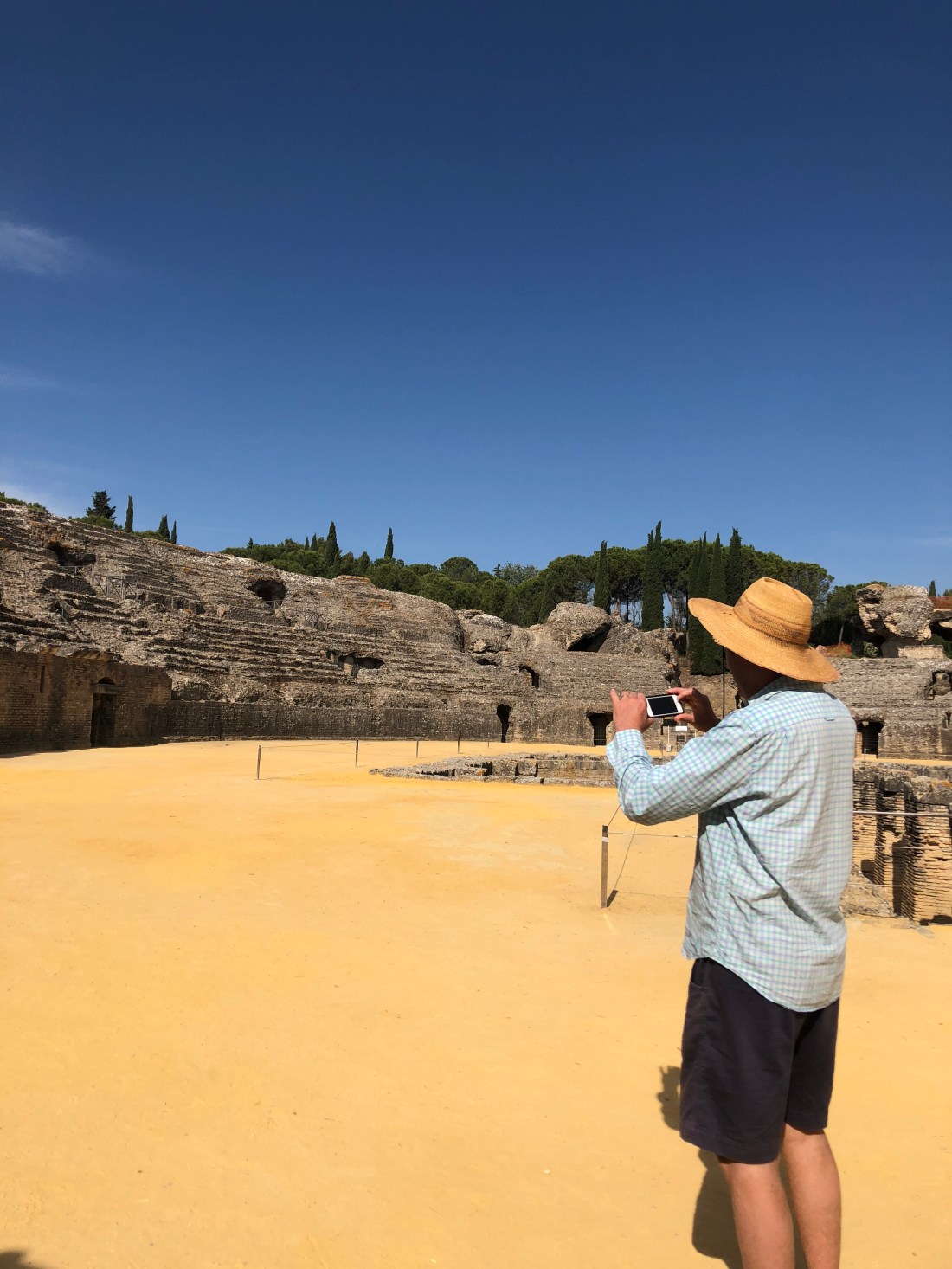
On the way out of Sevilla we visited Italica founded in 206 BC by the great Roman general Publius Cornelius Scipio (later given the nickname Africanus) to settle his victorious veterans from the Second Punic Wars against Hannibal and the Carthaginians, and close enough to the Guadalquivr to control the area. Italica is also the birthplace of Roman Emperors Trajan and Hadrian.
The area was originally quite fertile but as the Roman settlers cut down the surrounding trees the area became more arid and inhospitable.
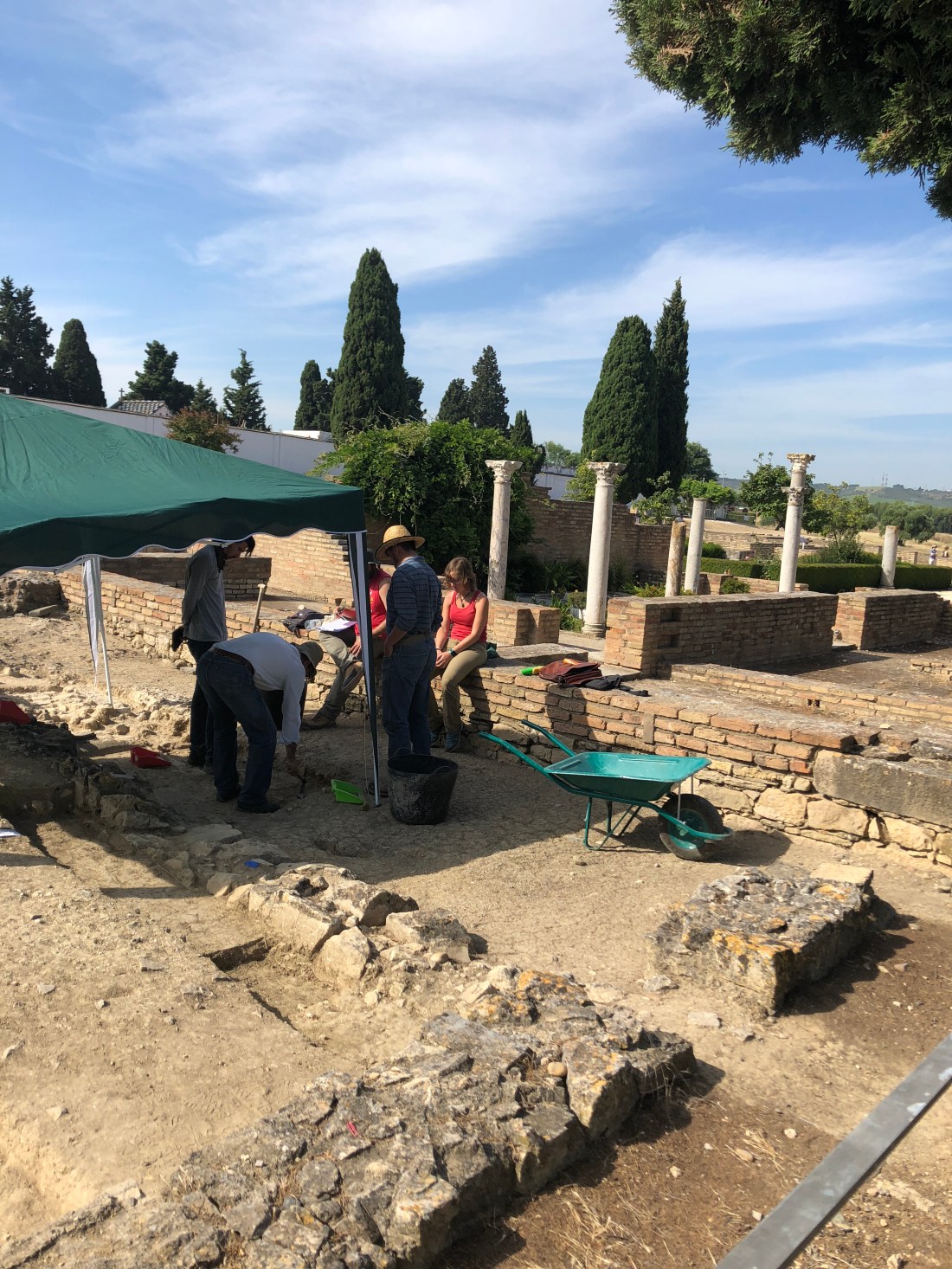
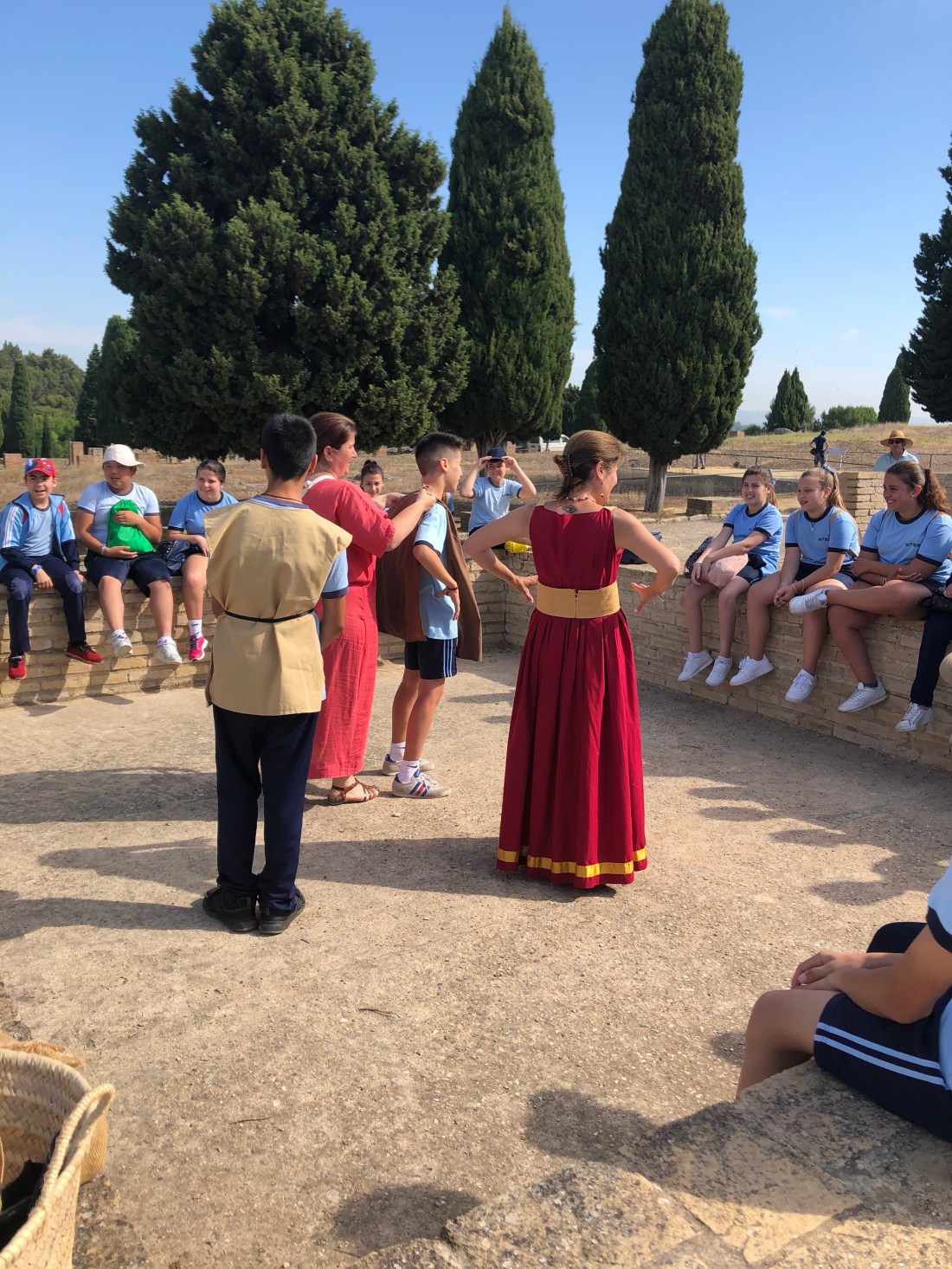
Rob walking the way of Emperors in ItalicaArchaeologists in Italica – streetscape in backgroundSpanish students getting a history lesson.
Europe, it may be “open borders” but telecommunications companies have got us well and truly tracked. We first knew we were in Spain when on the train from Marseille Alex received a sms on her phone saying: “Spain is an eligible Premium Plan roaming destination“. Hola Espagna!
We’ve been very proud of ourselves for not automatically catching taxi’s to our hotels, again through the help of the mobile phone we’ve been able to use google maps to either walk or catch public transport to our hotels. So at the huge Barcelona Sants train station we caught the underground L4, popped up at Placa Catalunya and found our way to Eco Hostal Grau.
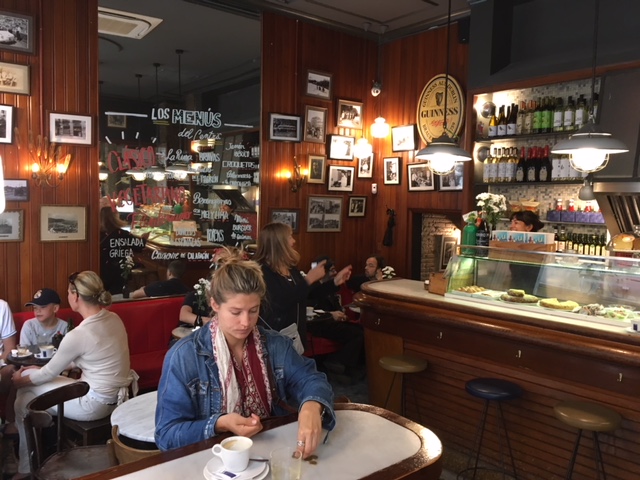
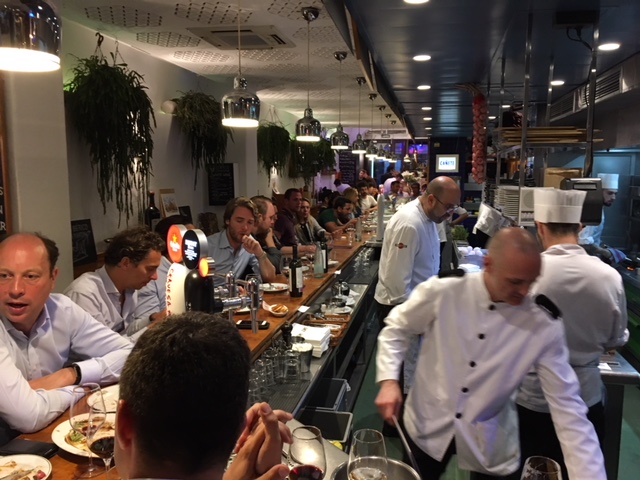
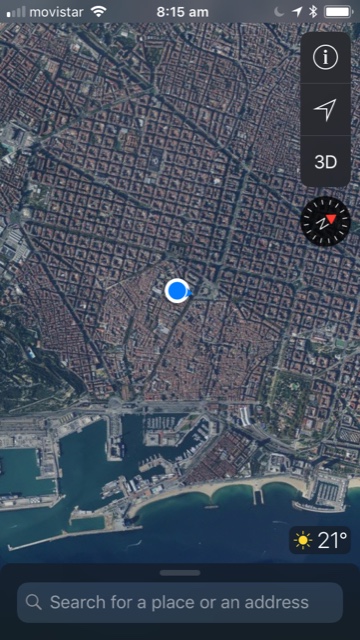
View from our hotel roomThe delightful Lydia. She was so welcoming and helpful. She has spent time in Australia. Also explained to us that a good night in Barcelona starts about 11pm and goes through until 6-7 am.The great tapas bar Centric right next our hotel. Great frittata in the morning.Great Tapas at CaneteThis screenshot shows the original density of Barcelona in what was a walled city. We were staying in the old city, and beyond that the city expanded according to a grid, based on the egalitarian principles, sunlight, fresh air and trees.
The lovely Karen Middleton hooked us up with her equally lovely first cousin Sharlene Halbert who has lived in Barcelona for nearly 10 years.
Sharlene, like Karen has many talents: musical, a born communicator, kind and ever-helpful. She really gave us a great insight why so many Australians fall in love with Barcelona. She speaks fluent Spanish, understands Catalan, teaches music and English and has now set up a business as a Personal Coach.
It was great to get an insight into Barcelona and Catalunia at this interesting point in history with the Catalan independence movement. Under Franco’s rule until 1975 the Catalan language was banned. Now the pendulum has swung and some of the young students she teaches only speak Catalan and cannot speak Spanish. Has the pride in culture and independence gone too far, is it actually disadvantaging kids in an increasing mobile world not to be able to speak Spanish?
It was really kind of her to spend time with us, especially as she was about to head off on a fundraising driving odyssey across Africa with her group Hot Chili Chicas. The Hot Chili Chicas are 4 women who live in Barcelona who are driving 9000km in 19 days across 7 countries in Southern Africa as part of the Put Foot car rally. They are fundraising to buy locally made and very durable school shoes in South Africa and will then deliver them to children in remote schools who, because of ill fitting shoes, often suffer feet infections or get parasites through their feet. Go Chicas!
On our first morning in Barcelona we set off on a “Gaudi Electric Bike Tour”. First time on an Electric bike led by the lovely Manu.
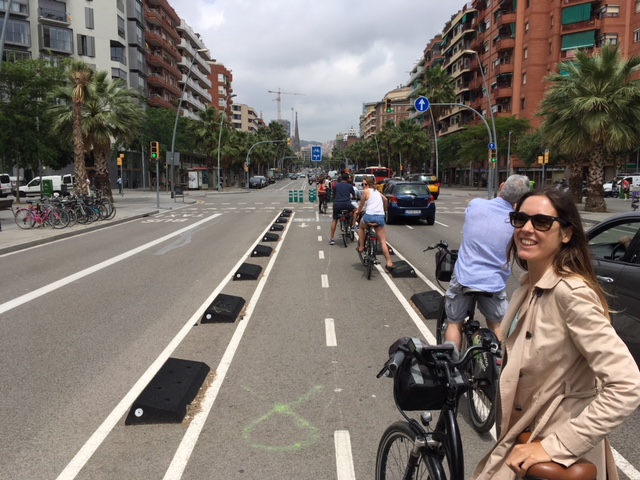
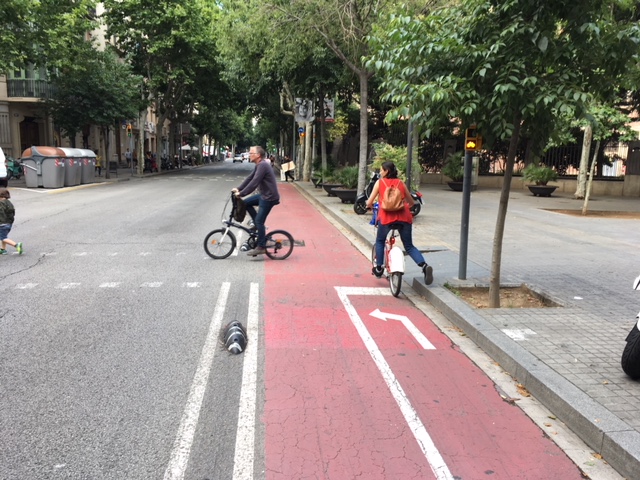
Barcelona has great bike ways. The current major Ada Colau comes from an activist background on affordable housing, and is a great supporter of bikeways
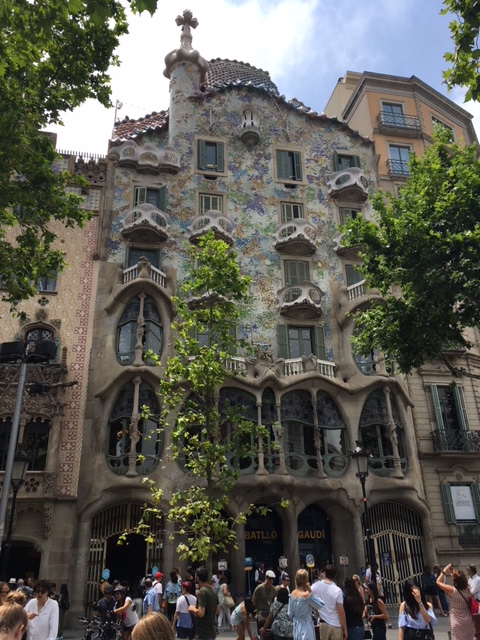
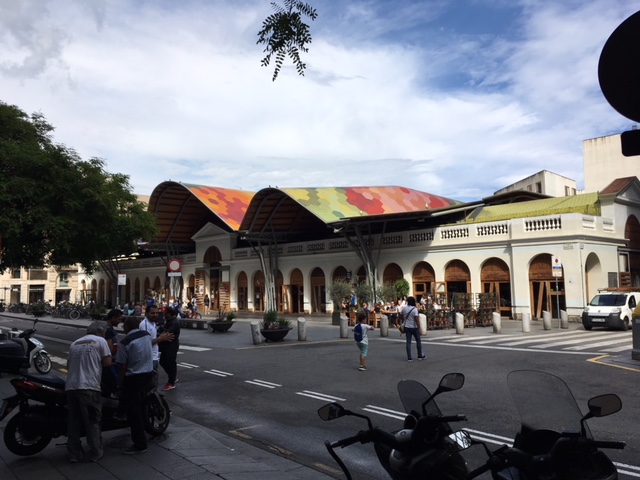
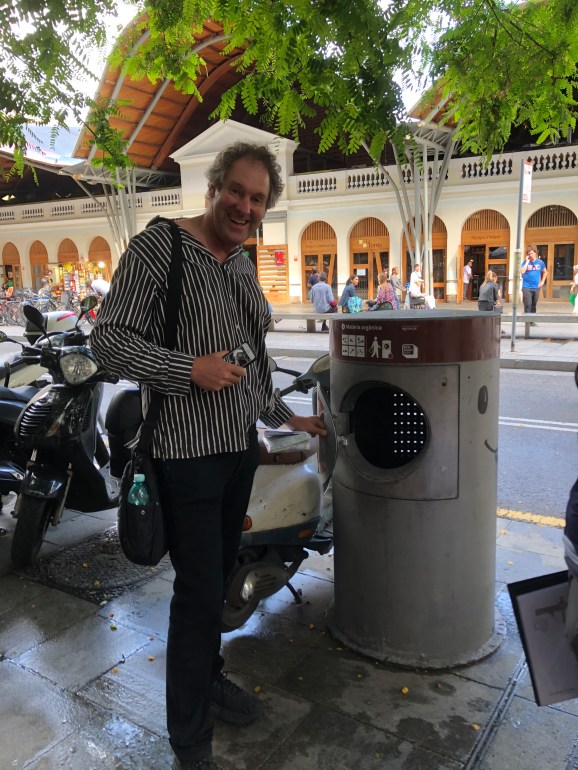
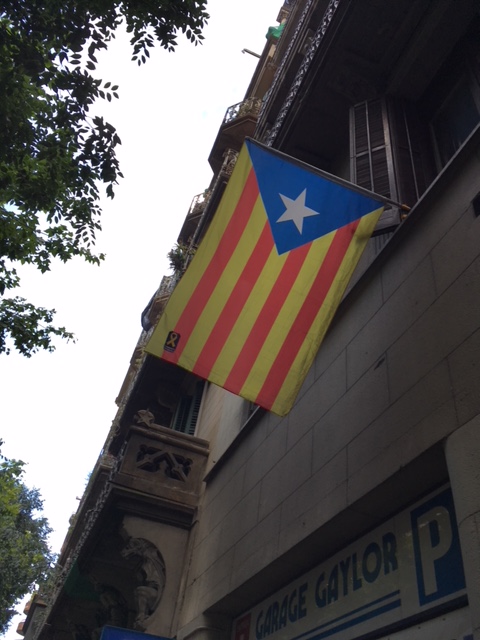
Gaudi’s Casa MilaCasa BatlloMarkets with Gaudi inspired ceramic tiles and roofline. In earlier times this site was a monestary but in true Catalan style was taken from Church and handed over to people in form of food markets.Rob delighted to see vacuum waste system just opposite the markets.Catalan flags fly from many balconies and windows
Barcelona’s grid pattern has allowed the development of superblocks which limit cars in favour of pedestrians, cyclists and trees.
The Barcelona grid has stood the city in good stead, and has guided the development of the city for over 150 years. It is currently allowing for the installation of IT infrastructure, light rail, bikeways and in some precincts shared heating and cooling and vacuum waste systems
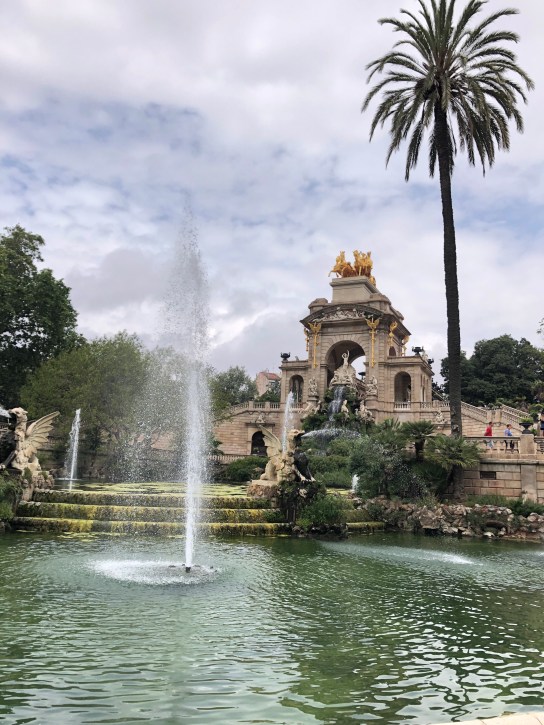
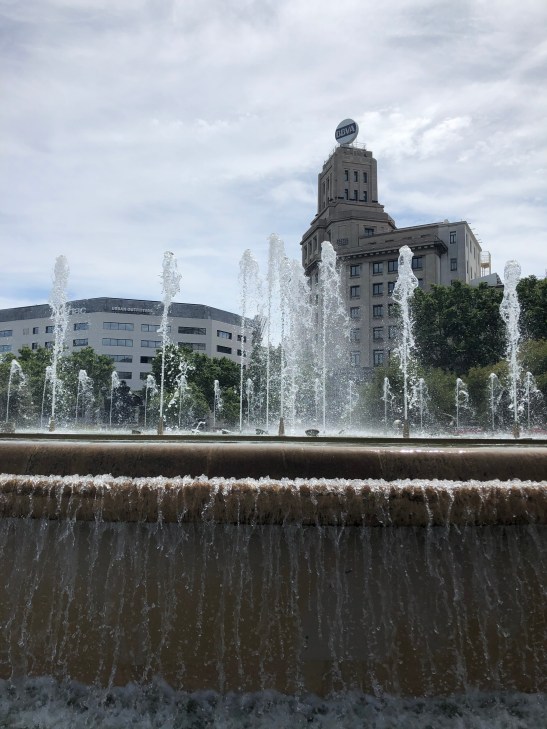
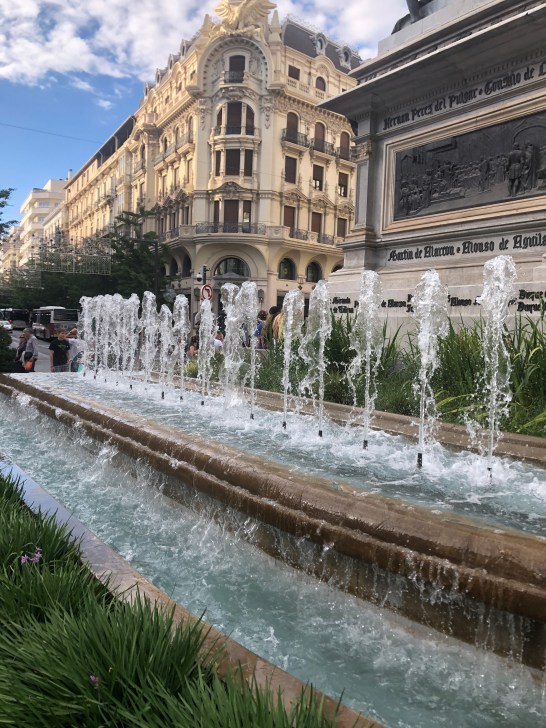
Alex was sad to leave the bells of Italy, but once in Spain has decided that “Fountains are to Spain what bells are to Italy”.
It makes sense. The late Janet Ker Conway, the girl from Coorain, remarked it would have been much better if Australian architecture had adopted the fountains of Spain, rather than Victorian terraces as it makes the streets and houses so much cooler and lovely. Coming soon to Toms Crescent Ainslie?
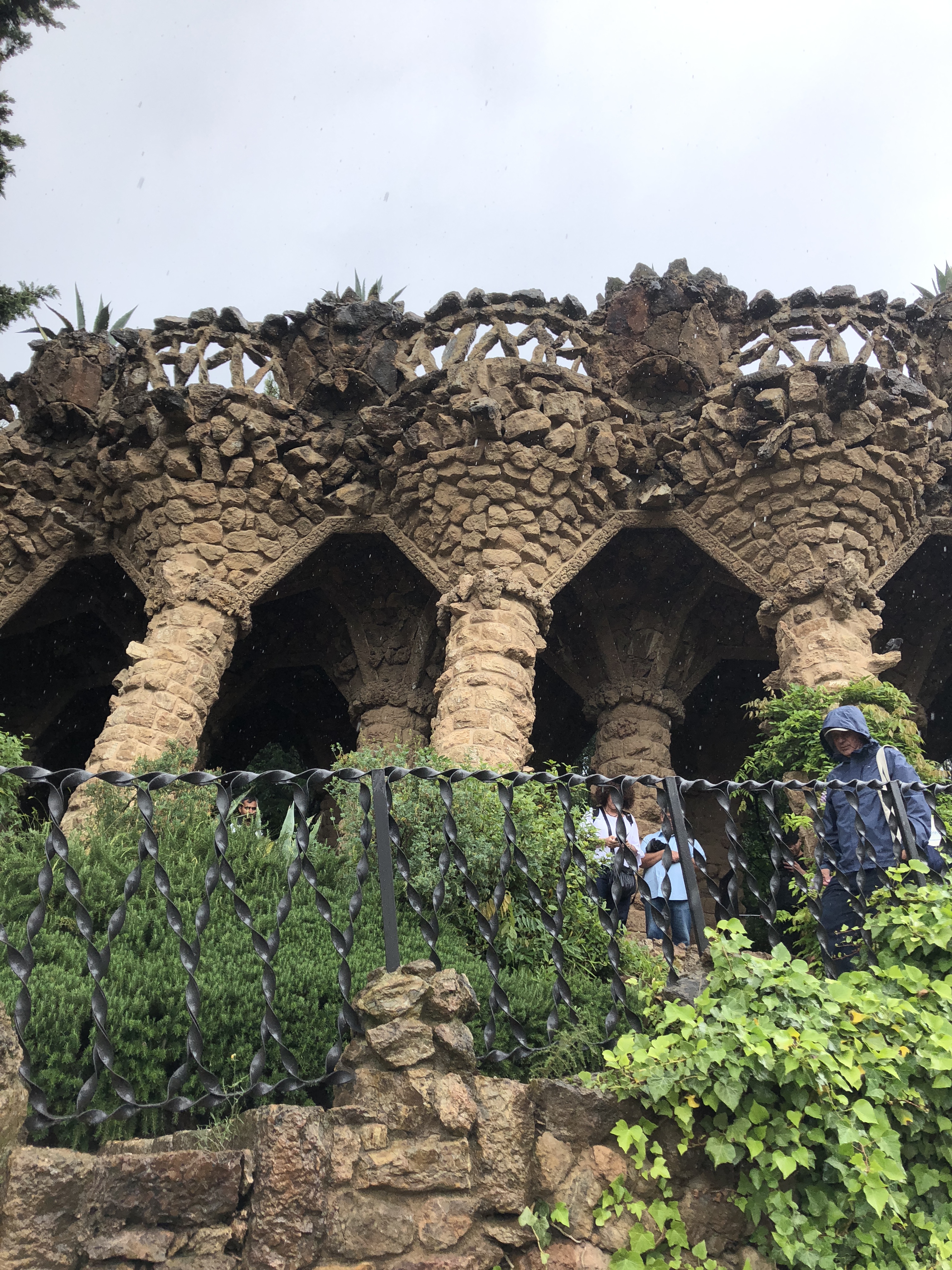
Park Guell
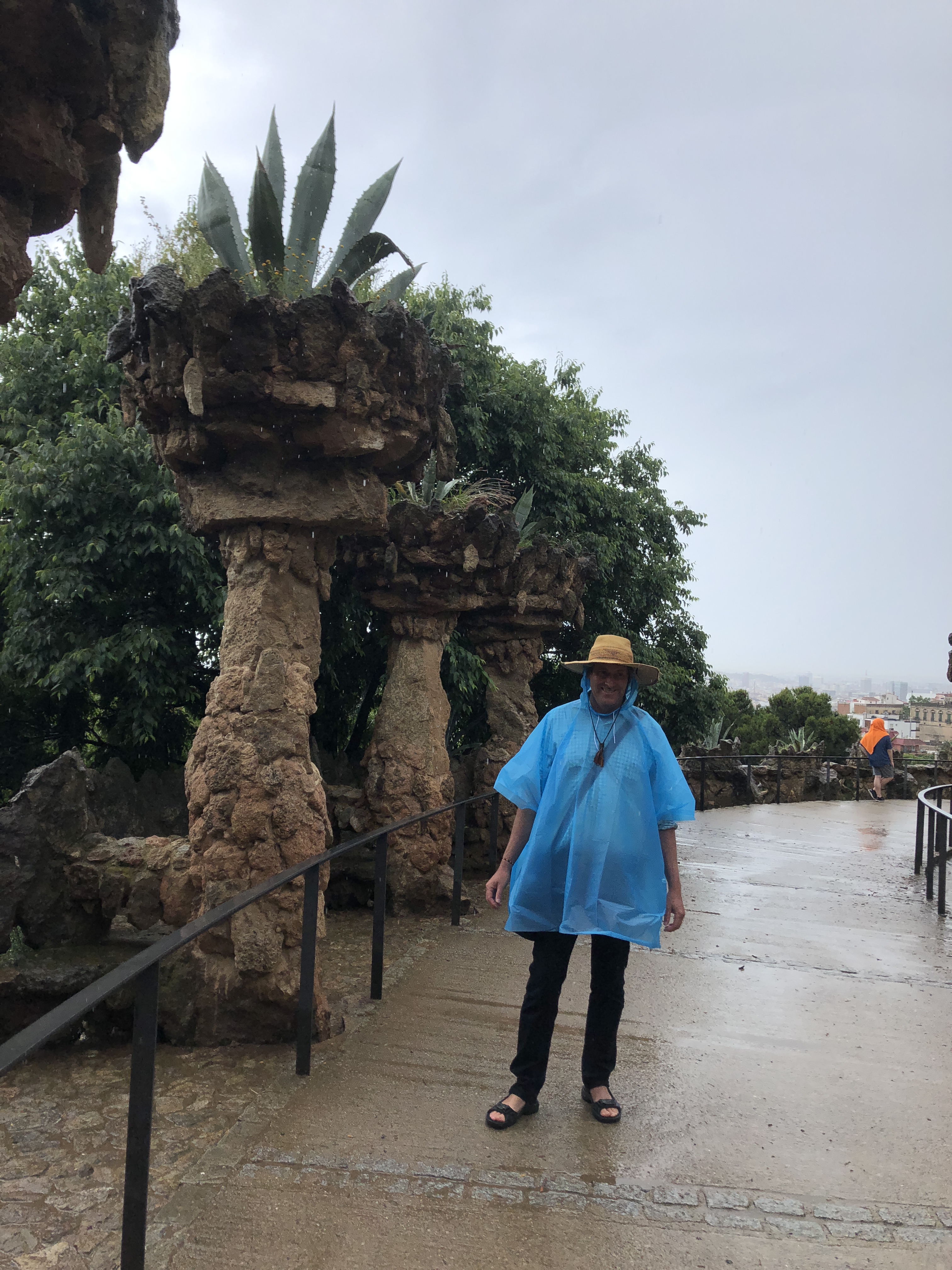
This is where Gaudi decided to turn his imagination to landscape and gardens. It was one of the few rainy days we have struck and we were caught without our rain jackets. Rookie mistake, but the enterprising street sellers had us in their sights, blue ponchos which may as well say “Hola Turista”.
We were well and truly warned about pickpockets. We’d passed what appeared to be a mother and daughter at the top of the stairs, the older woman struggling for breath, and the younger one assisting her.
But distracted by the rain and wanting to descend the stairs without slipping, Alex was holding the rail instead of her bag.
Who would ever think the ripping sound of velcro would be one we’d welcome? Alex turned on her personal pickpockets with fury, which shocked both the thieves and her. It happens, luckily we didn’t lose anything.
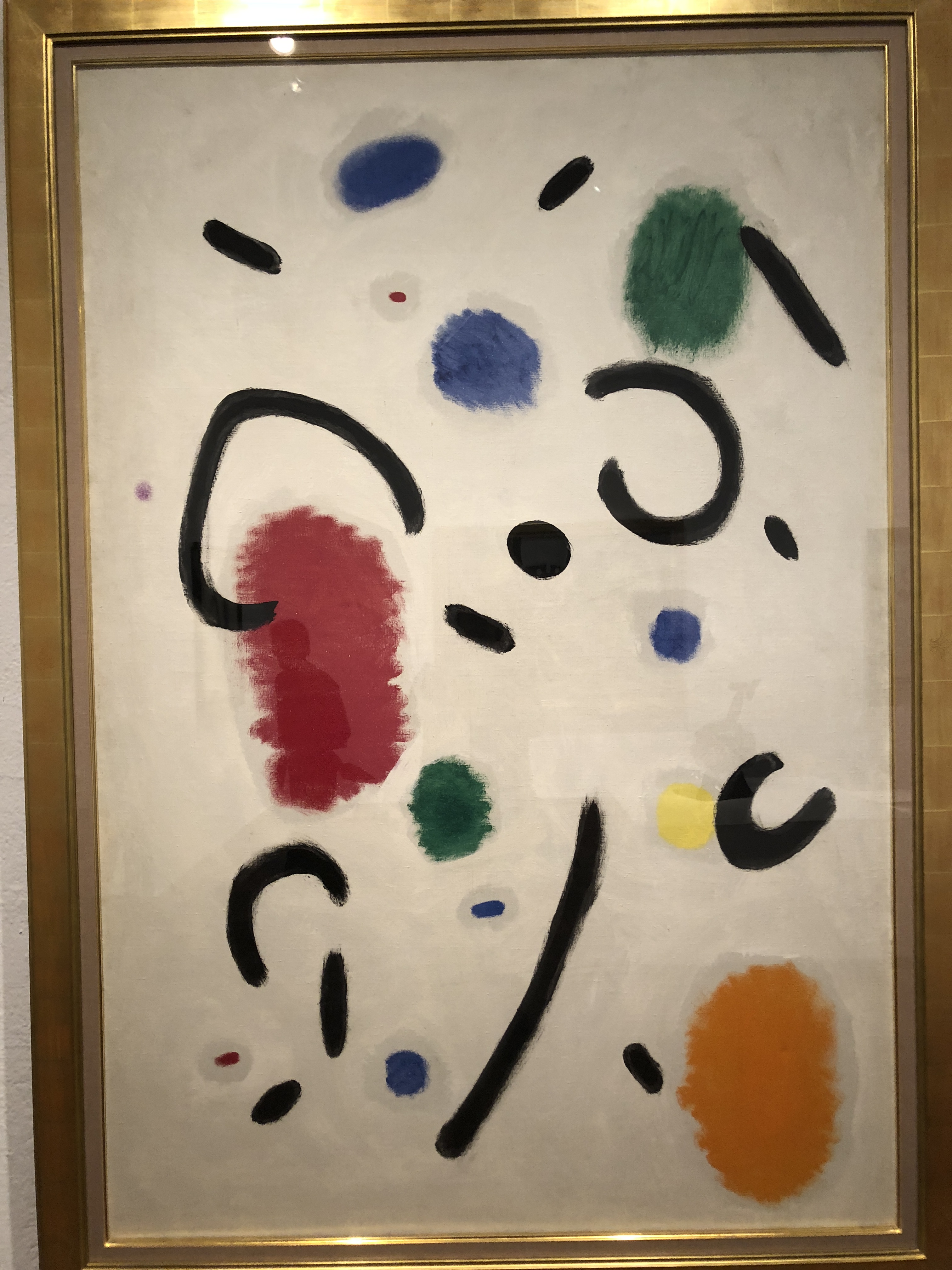
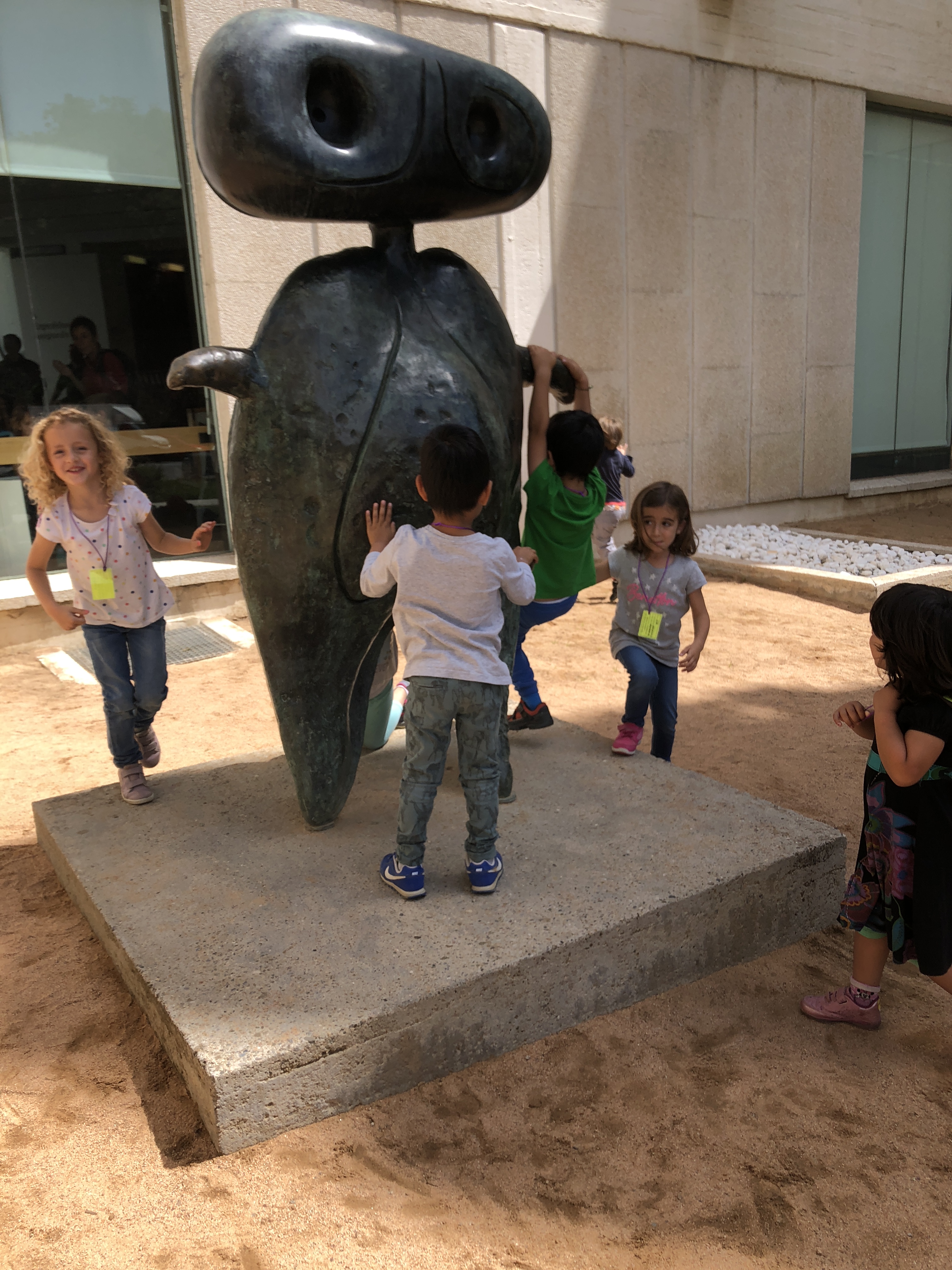
MIRO foundation
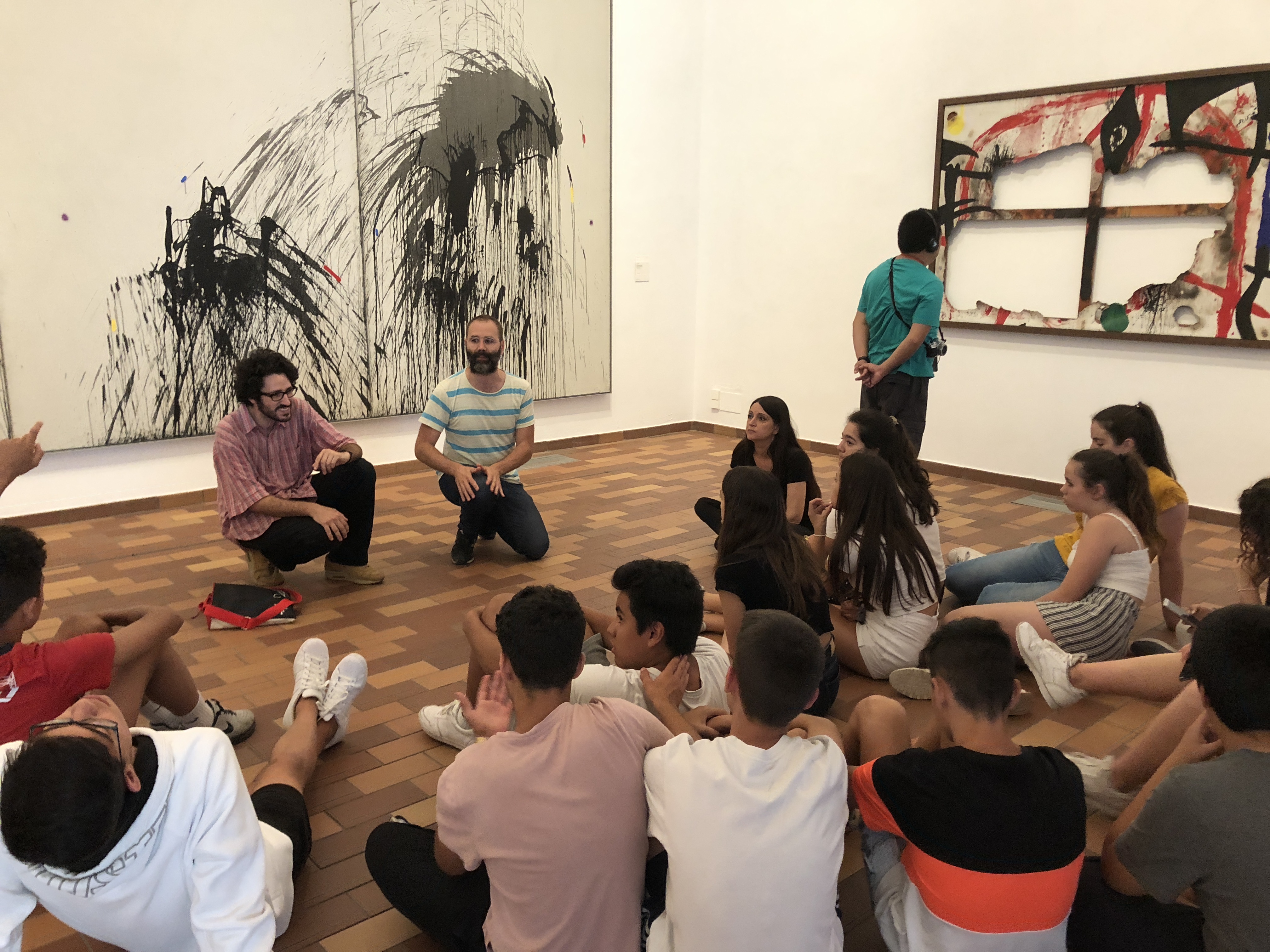
This beautiful building with views out across the city was built to house Miro’s collection. It beautifully integrates art and architecture with some of works of art and sculpture created to fill particular spaces.
Miro’s work spanned such a long period and was so influenced by the politics of the day Spanish Civil War, Franco, the rise of Fascism with parallels to some of what we are seeing today. He was fiercely Catalan, “His work may seem apolitical and pure, but he remained all his life a fervent Catalan (his notebooks are in Catalan or French, but not in Spanish), and he made his left-wing sympathies clear during the Spanish civil war and under the Franco regime. He had many friends, but, despite a connection with the surrealists, he was a member of no group, and remained a deeply independent figure.” The Guardian
It was an inspiration to see kids and teenagers so engaged
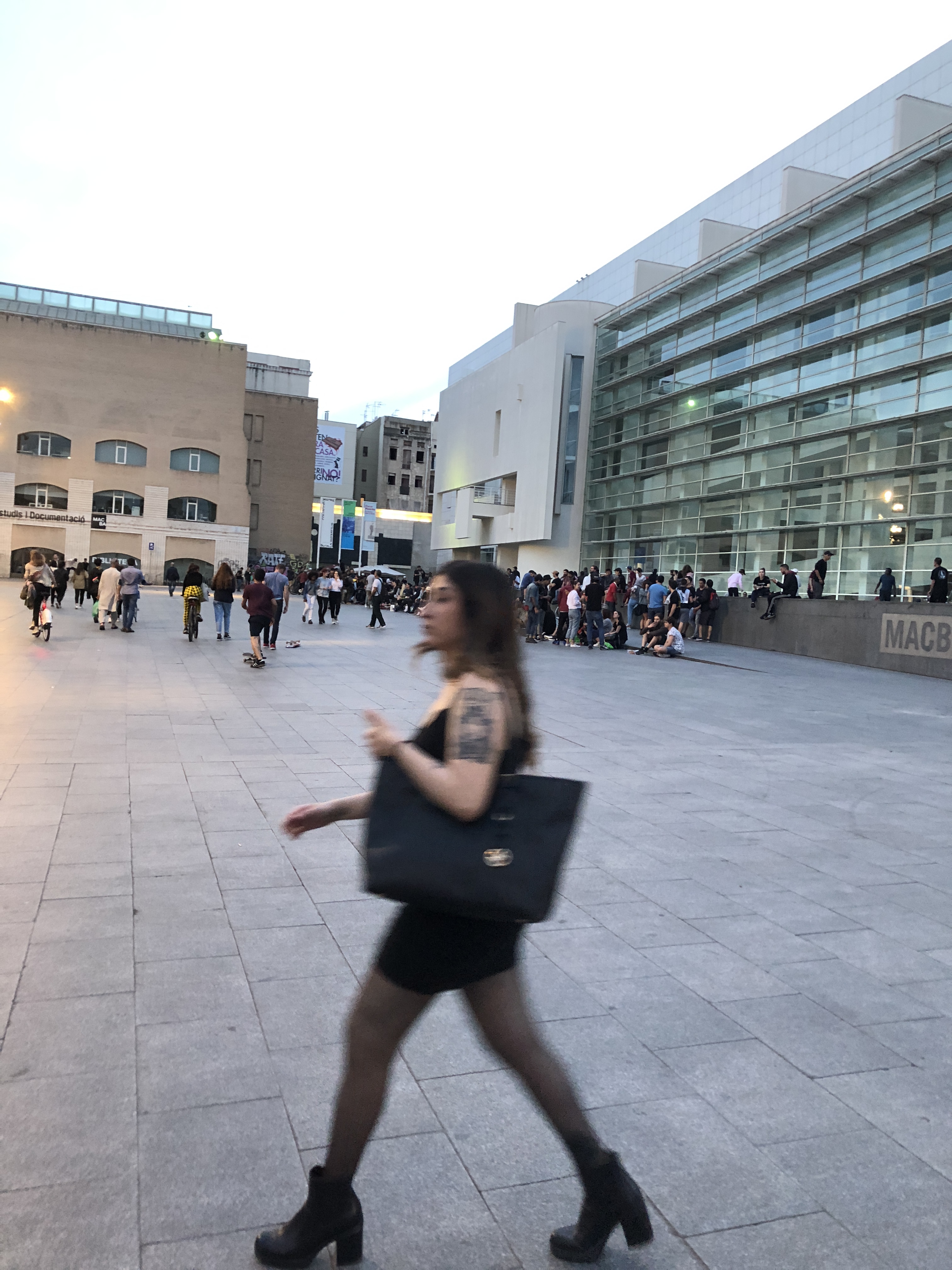
Museum of Contemporary Art
Just round the corner from where were stayed on a courtyard packed with skateboarders and university students. Continues the edgy artistic expression with a series of more contemporary exhibitions including one by – Oscar Masotta exiled from Argentina found refuge in the artistic community in Barcelona.
Frithy and Franny
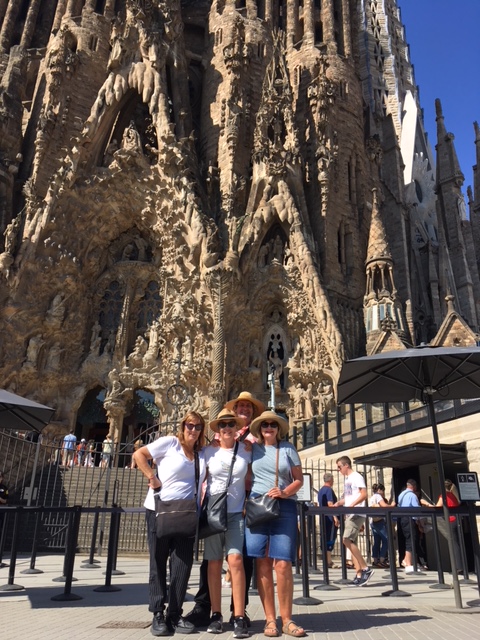
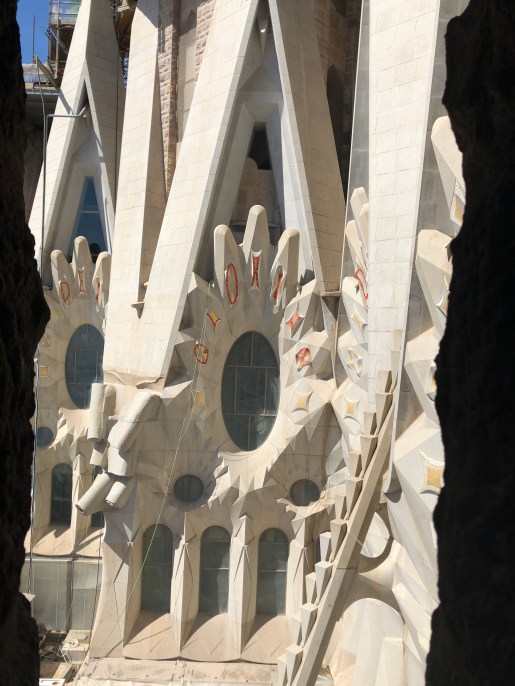
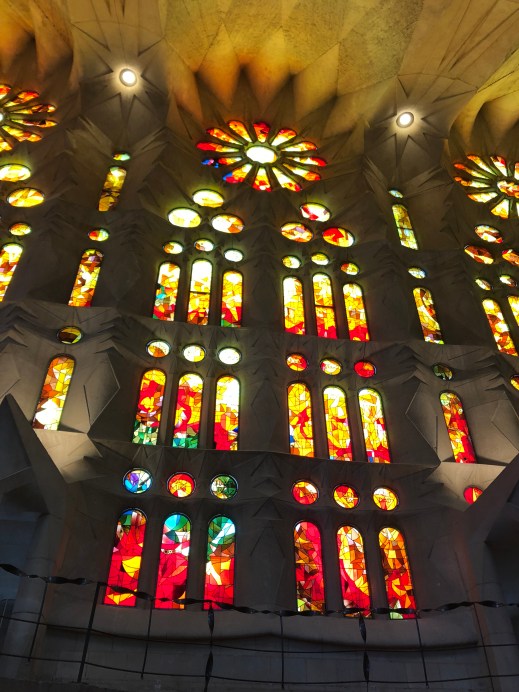
Great to catch up with old friends from Australia who happened to be in Barcelona for a few overlapping days. Toured the La Sagrada Familia together.
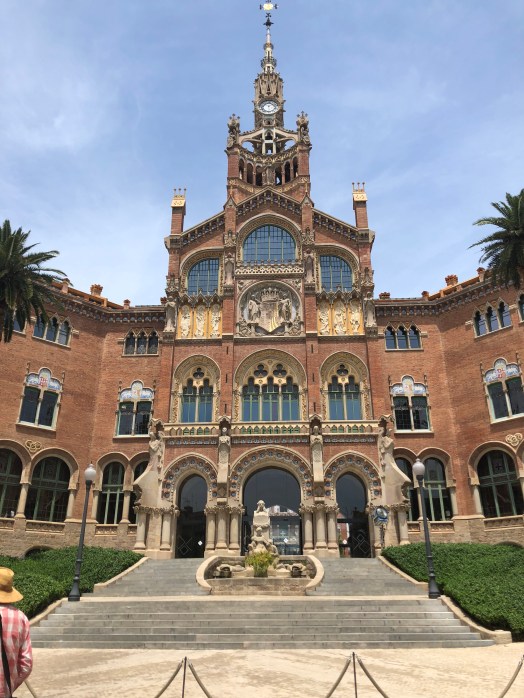
Hospital Sant Pau
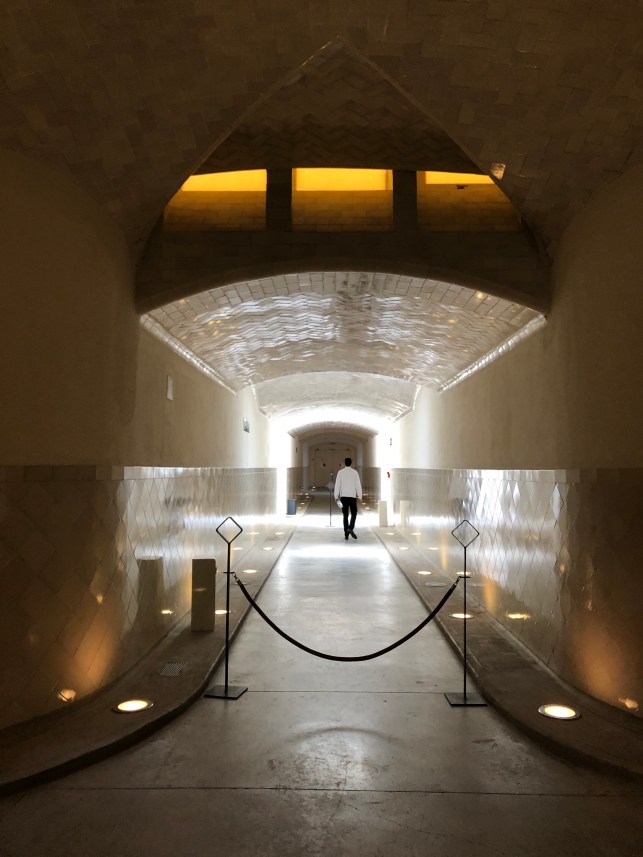
This incredibly beautiful Art Nouveau Site, is one of the foremost work of Lluís Domènech i Montaner, one of the most important architects of Modernisme, the Catalan Art Nouveau, and the product of one of the most outstanding rehabilitation processes of recent years. Sant Pau’s focus was to be a beautiful place for healing. You walk though white tunnels which look like imagined “pathways to heaven” to emerge to beautiful mosaic rooms, some with stained glass. The gardens too were versions of paradise.
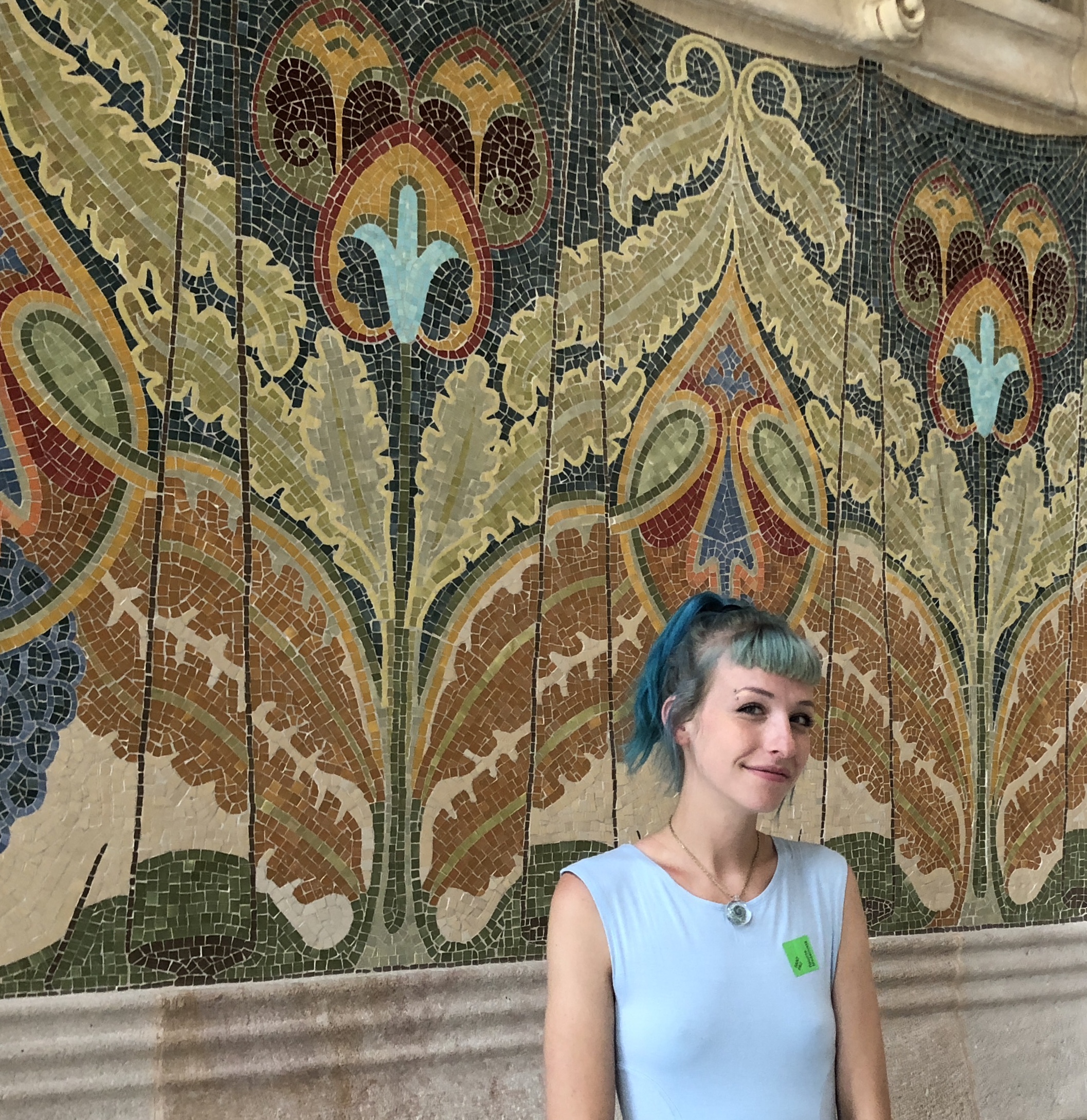
Couldn’t resist taking a photo of Maddie “the girl in blue”.
We flew from Malta to Genova back to the north of Italy for our last Italian adventure.
The plan was to change planes in Rome but for a number of reasons we didn’t make the connecting flight (the connecting flight didn’t exist even though we had paid for it and had seat allocation). A Lebanese business man on the shuttle bus across the tarmac told us that every Alitalia flight has a story. “You know what Alitalia stands for? Always Late In Take-off Always Late in Arrival”.
Once we got to Genova we had a Taxi driver who is in a ZZ Top cover band. With the heavy metal of ZZ Top blaring and the lyrics sitting next to him on the passengers seat for practice, we headed to the train station bound for the Cinque Terre.
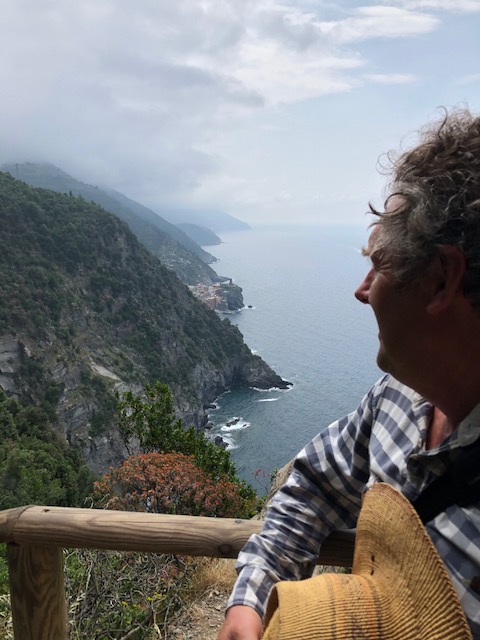
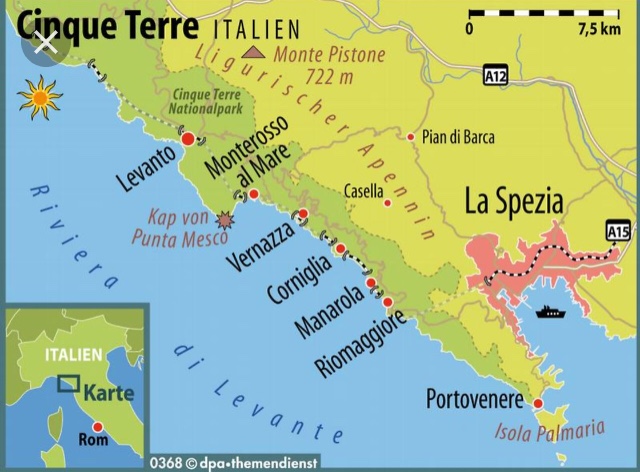
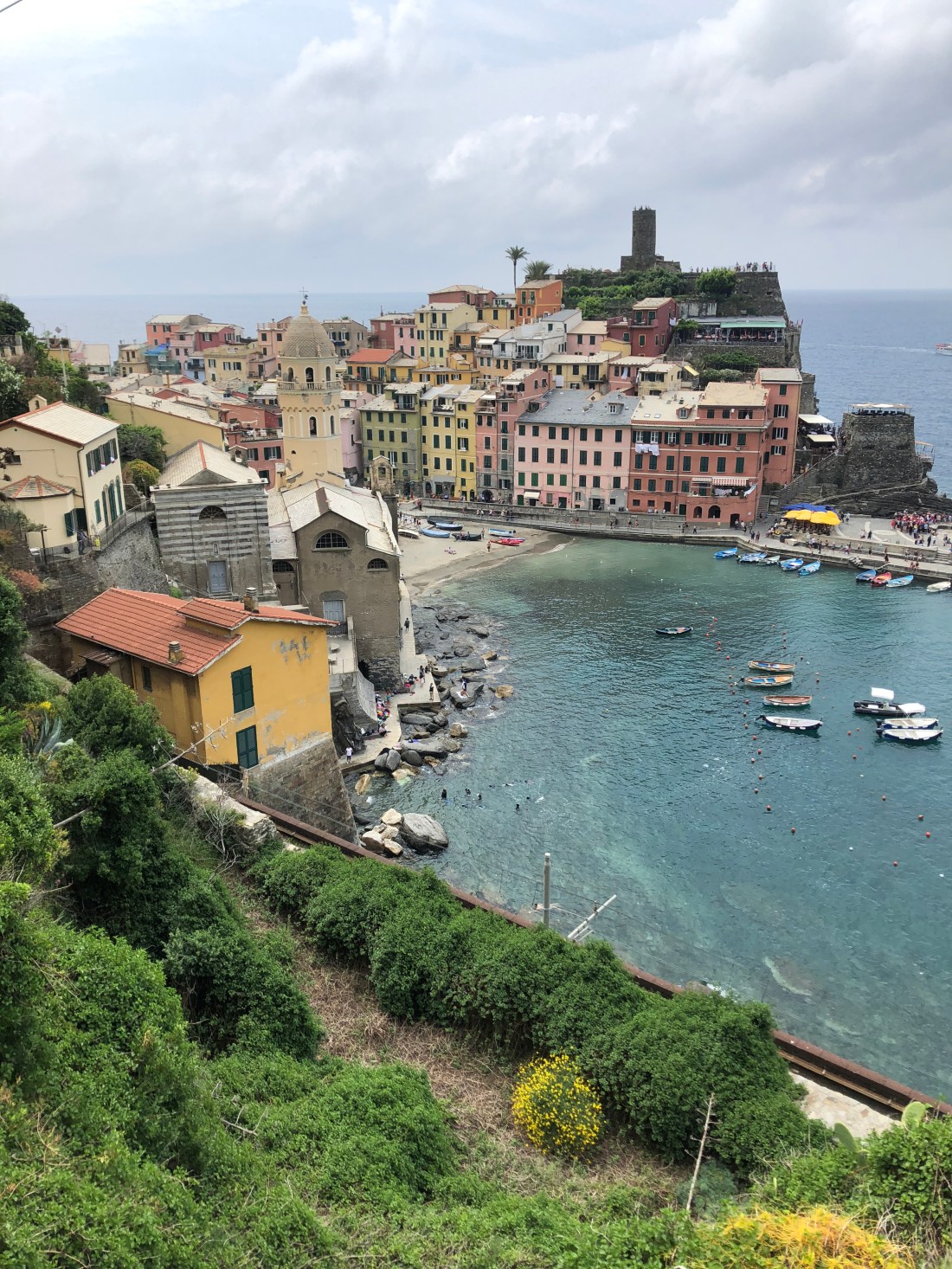
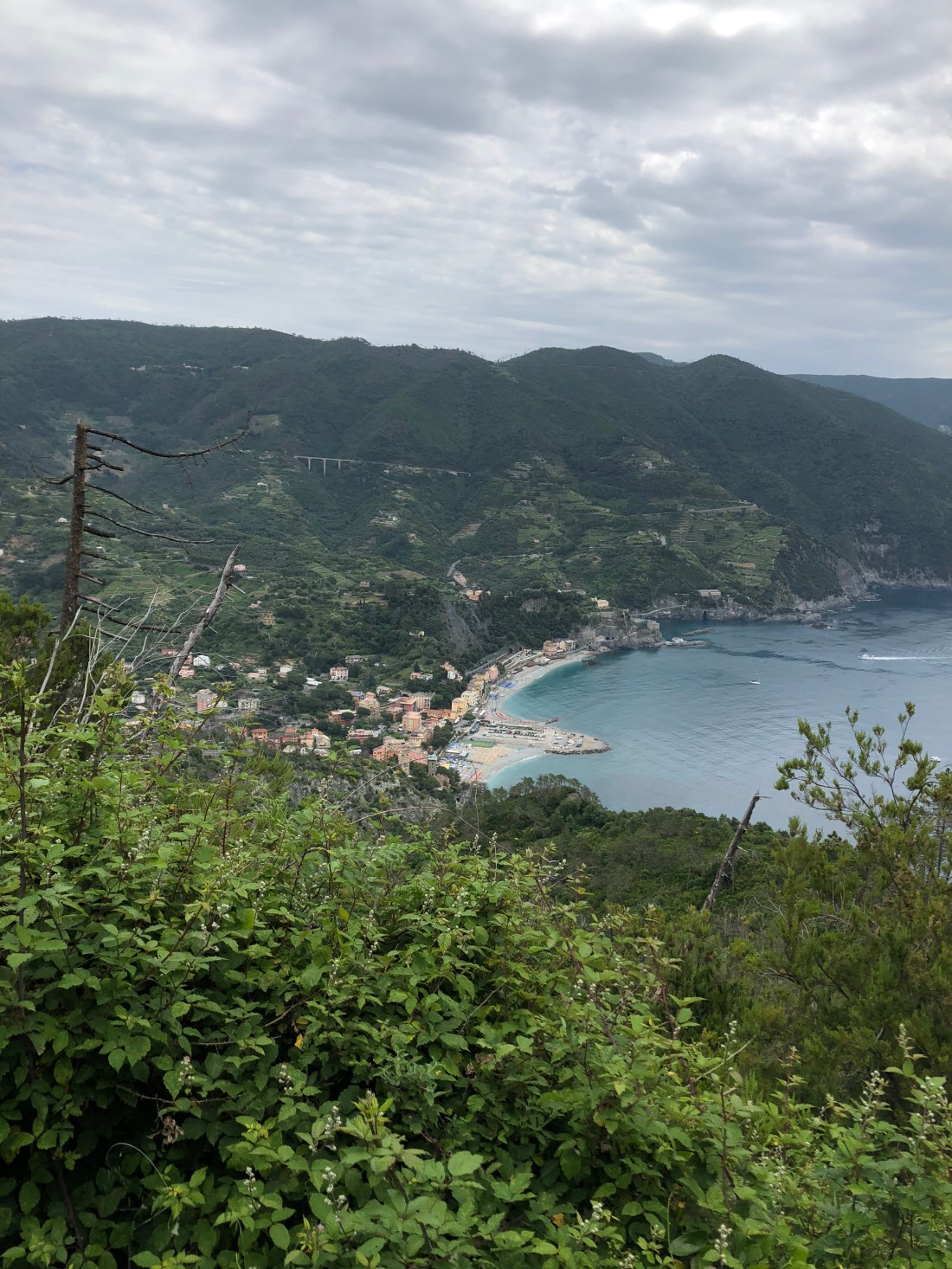
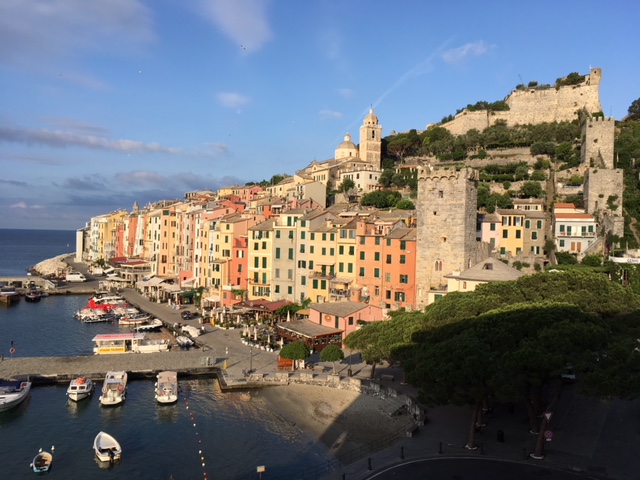
The five towns of the Cinque Terre – from Monerosso to Riomaggiore. We also spent a night in both Levanto and Portovenere, while not technically in the Cinque Terra. Portovenere was our favourite of them all.
The second of our two walks organised by Oxford based company ATG was on the Cinque Terre.
The Cinque Terre consists of five tiny, pretty pastel-painted coastal villages in Liguria, between Genoa and Pisa.
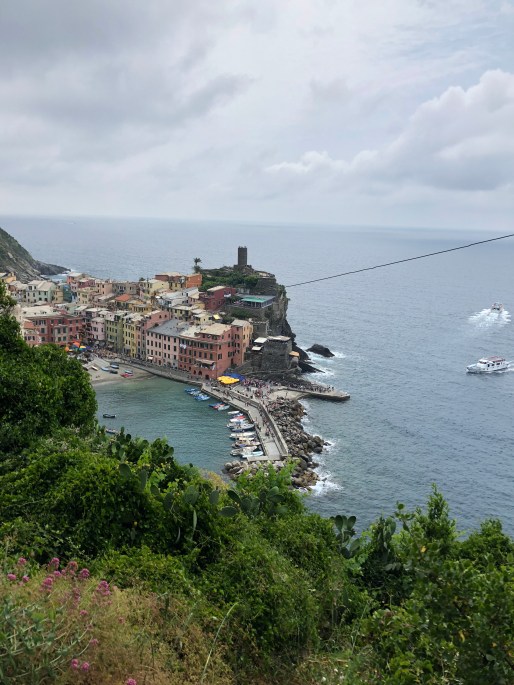
Venazza one of the five villages
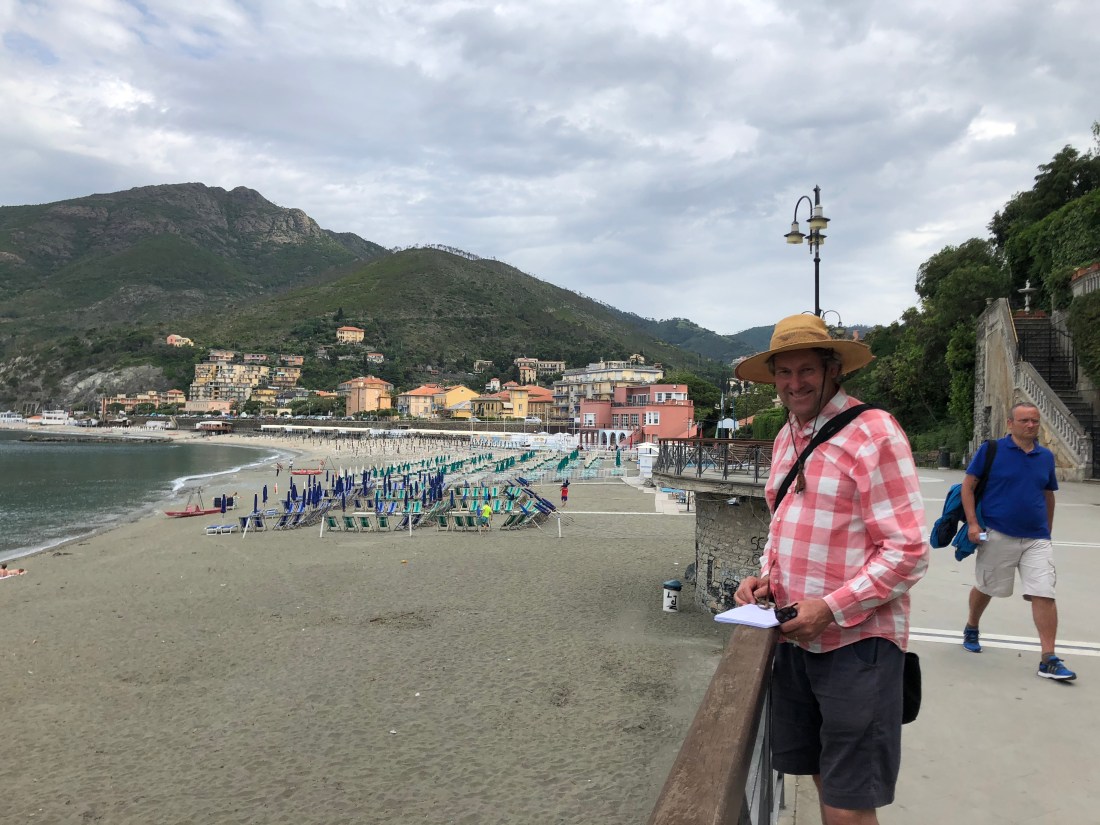
We began our walk in Levanto, walking to Monterosso.
Levanto main beach
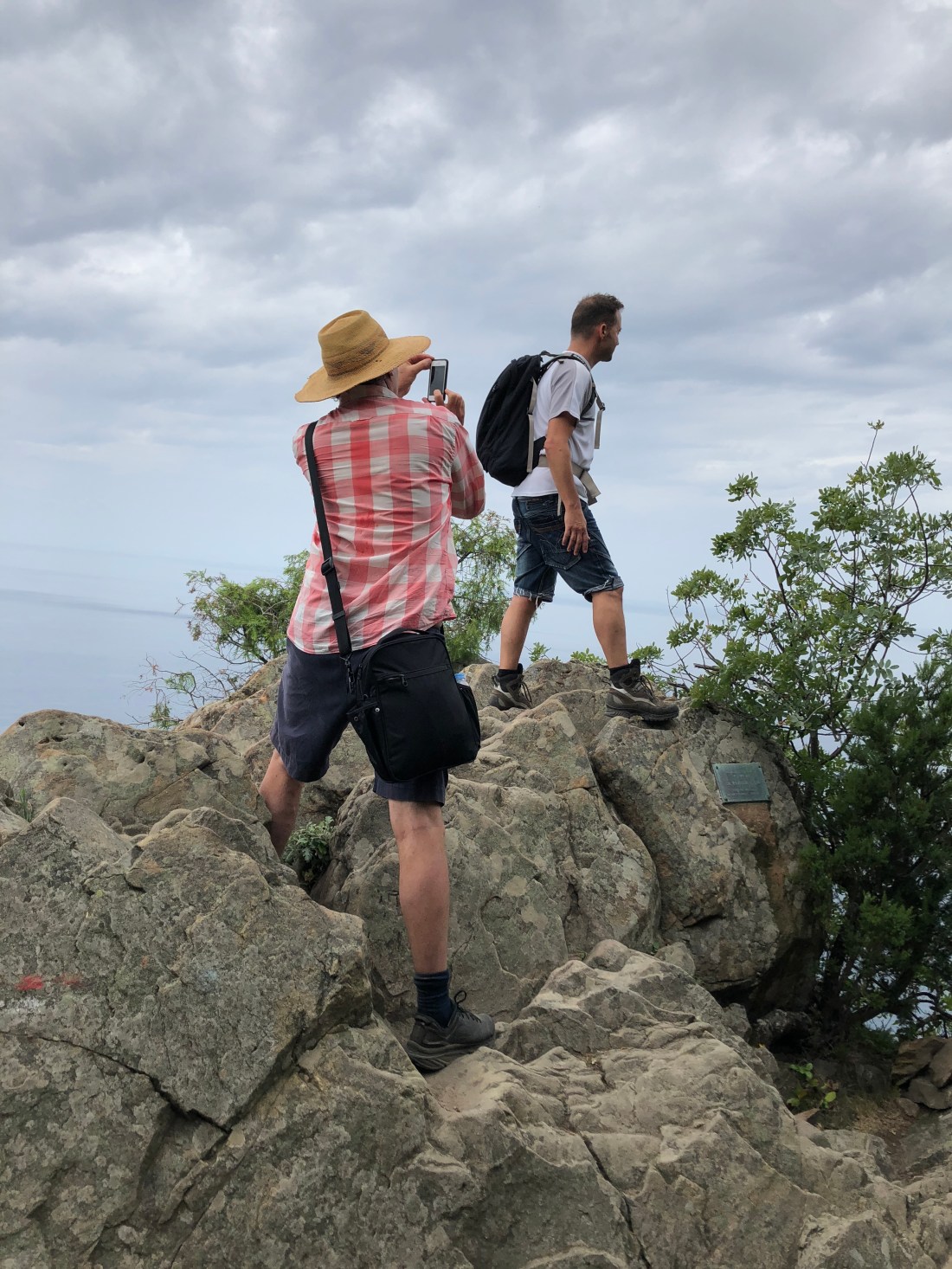
On the path we met Leo, Danish but living these days in Zurich. As we climbed we got to quite a high spot which included a rock with a plaque to a German Professor from Freiburg. Rob and Leo perched themselves on the rock for a better view and then on the way down Leo translated the German “Professor… died at this spot”. Alex is insisting he fell to his death.
Leo and Rob getting a better view, note plaque on Rock
Rob calls this “Sloanie skipping along” (Sloanie says “it’s bloody tough going downhill)
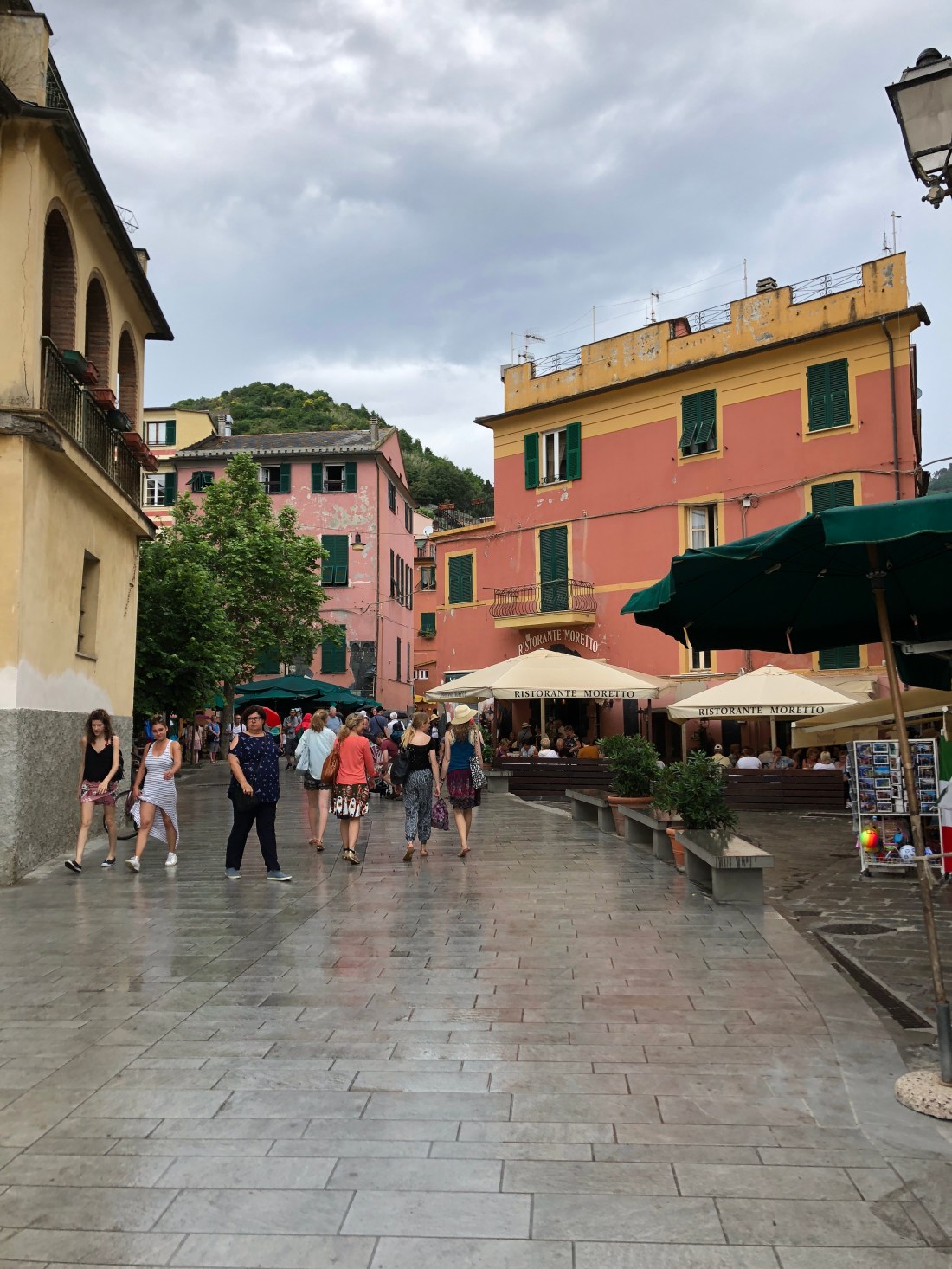
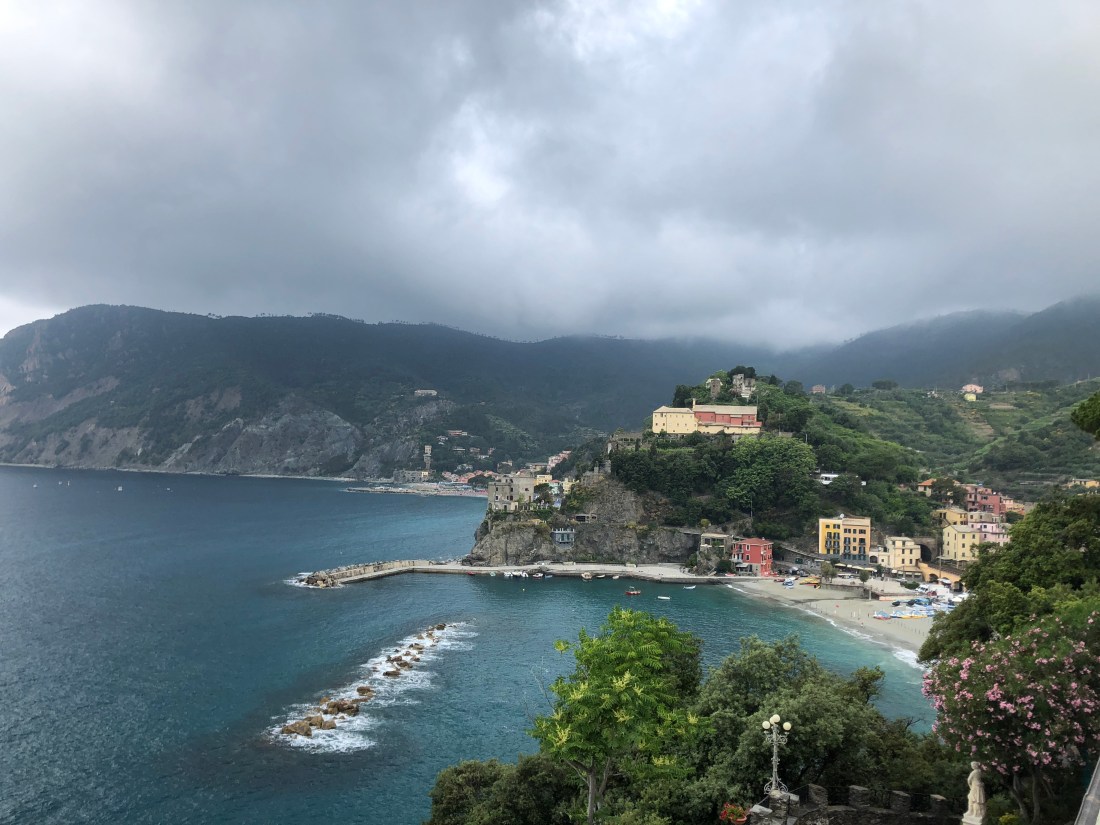
It was lightly raining as we walked into MonterossoMonterosso – view from our hotel
Monterosso by moonlight
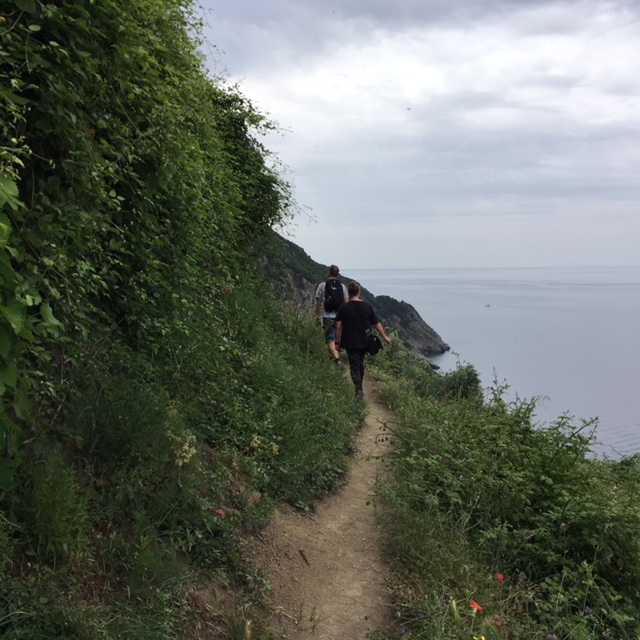
Back on the track Monterosso to Venazza.
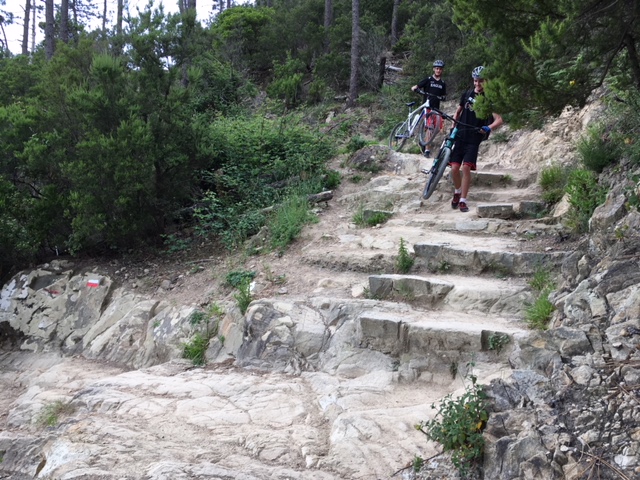
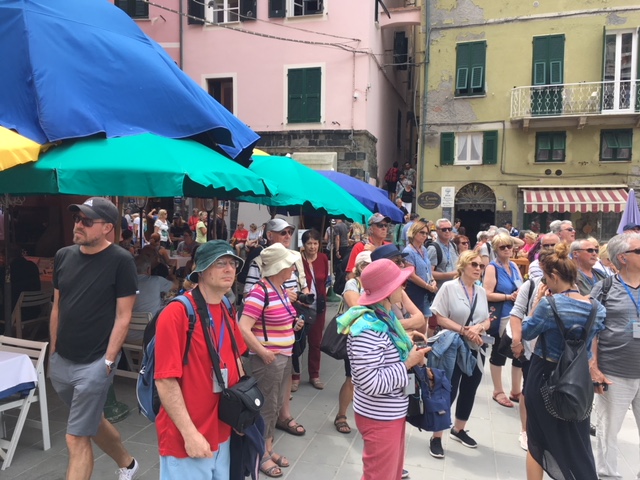
Mountain bikers on the path. When we asked them how much cycling they were getting in: “10% cycling, 90% carrying”Venazza – pretty as a post card at a distance, as the ferries come inPretty crowded on arrival – and this isn’t even peak season yetAll five towns are on the rail line, and also served by ferries which drop thousands of visitors each day into the villages
In 2016 there was an article in London’s broadsheet Telegraph newspaper:
“Today, from April to October, the villages, while still beautiful as a distant prospect from the ferries that ply the coast, are a heaving and thoroughly unpleasant experience at close quarters. Each village’s handful of streets — all too small for cars, bar a few in the most northerly village, Monterosso – teem with people. Every restaurant is packed, every bar jammed.
The Cinque Terre are cheek-by-jowl at the best of times, and barely have the room or facilities for their own inhabitants, let alone a flood of visitors: there’s just a few shops, a handful of restaurants, some rooms for rent, and the odd hotel, none of which, except in Monterosso, have more than a dozen or so beds.”
This is pretty much our experience. In fact once we got to Venazza we jumped on the train to Riomaggiore, so we missed Corniglia and Manarola. While the Telegraph review is referring to the huge crowds in the towns, it’s really busy on the walking track too. Some complete idiots, including one guy in bare feet.
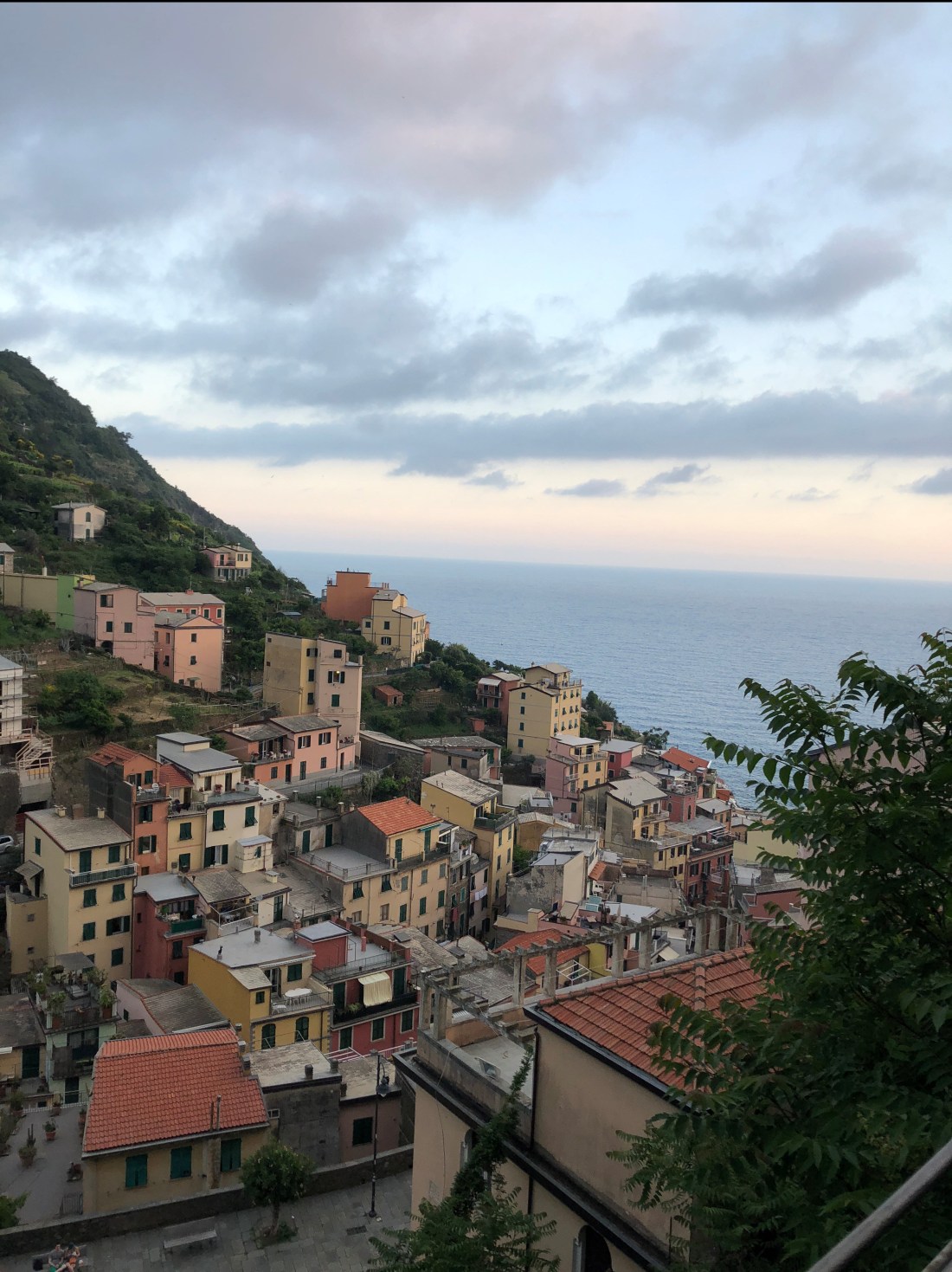
Riomaggiore
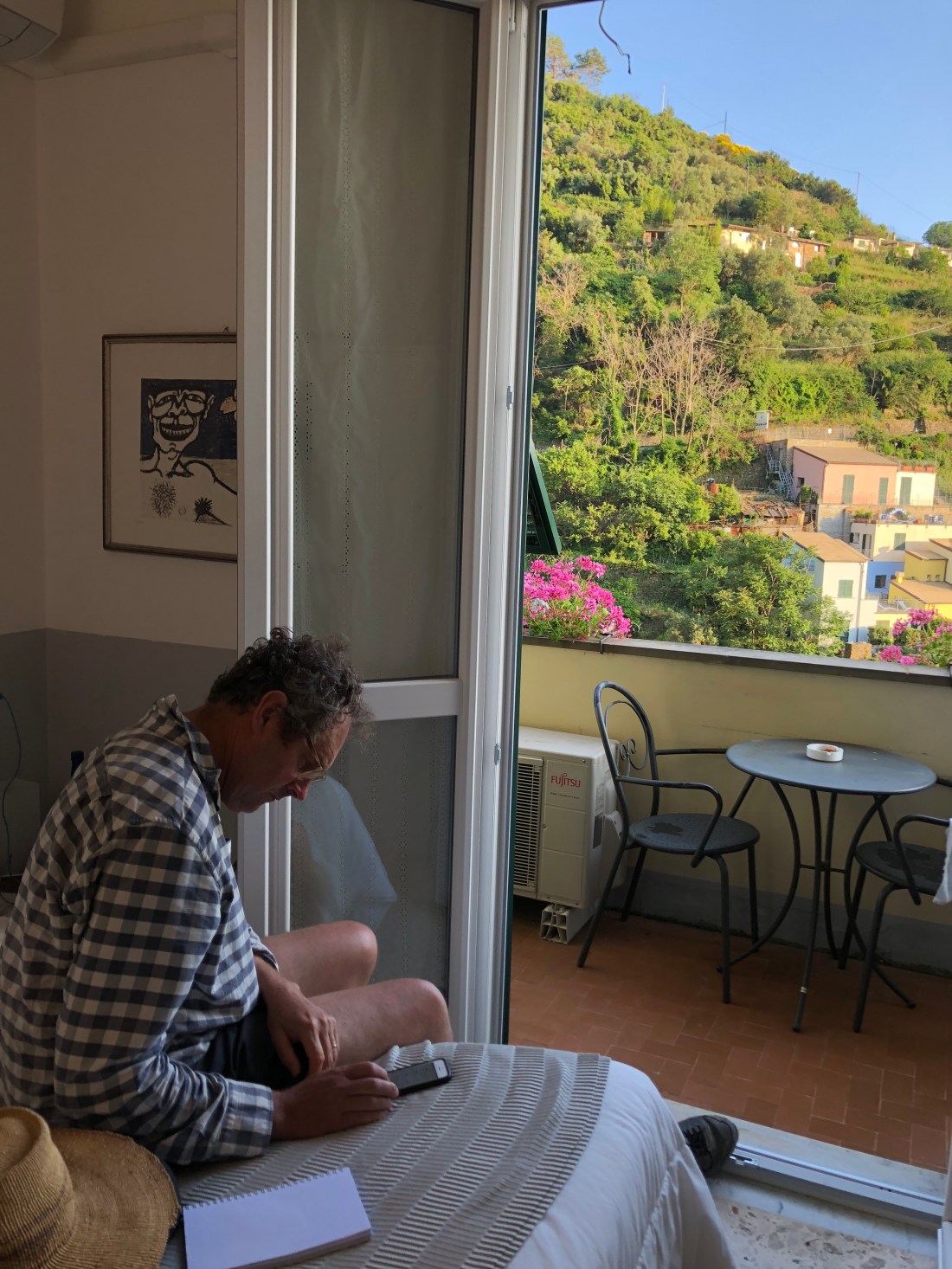
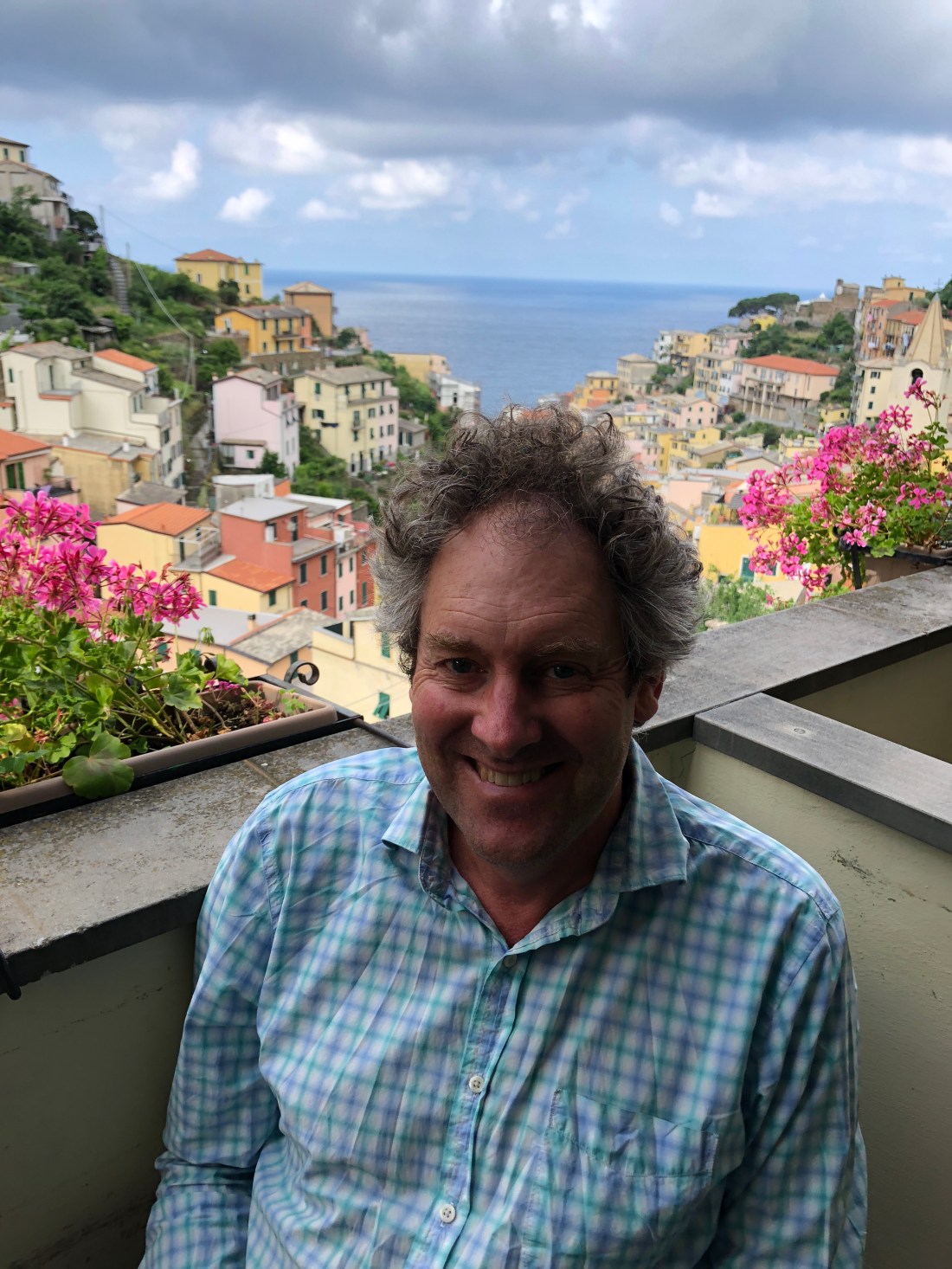
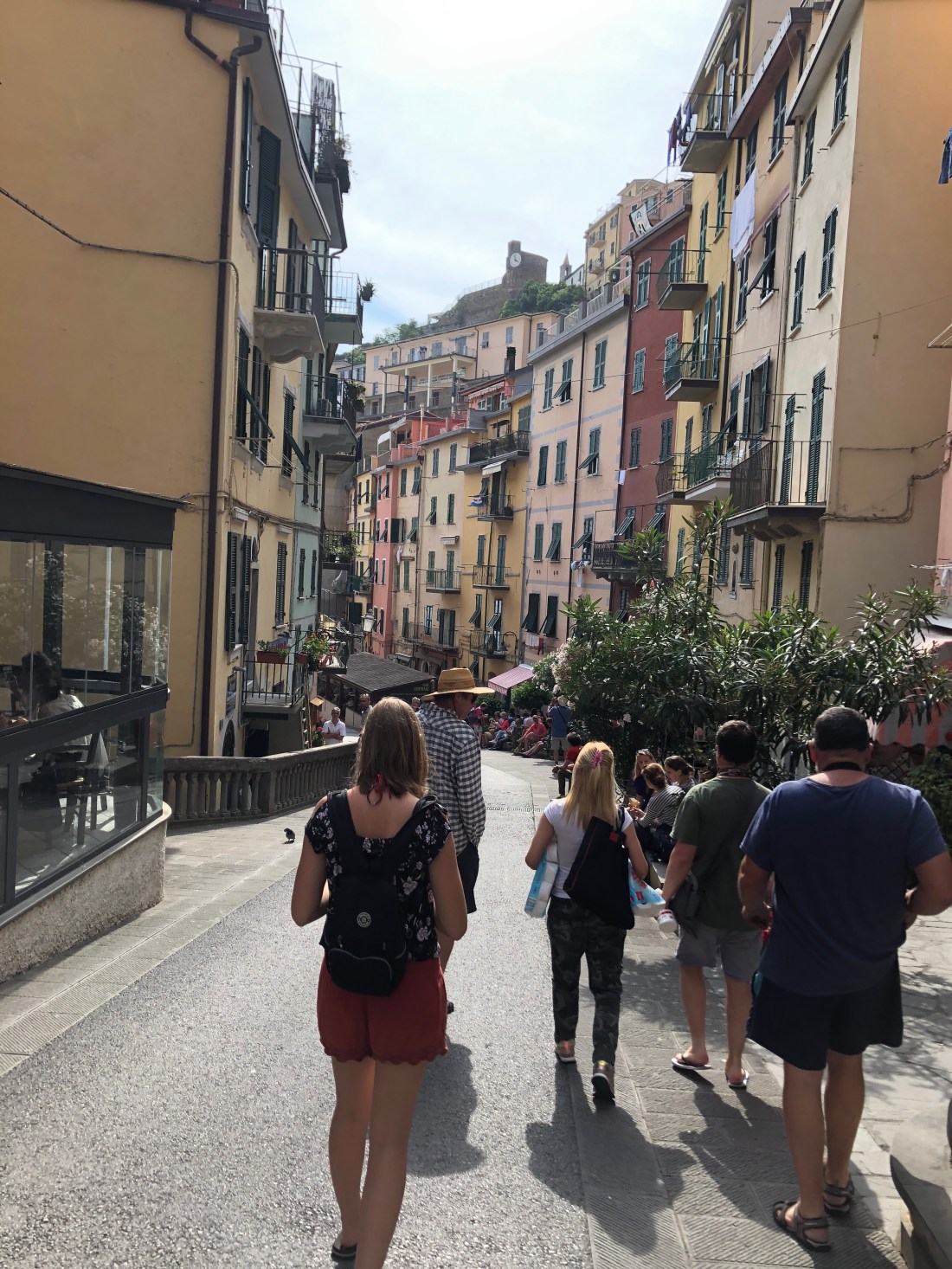
Kramer, Geraniums & RiomaggioreRiomaggiore’s main drag
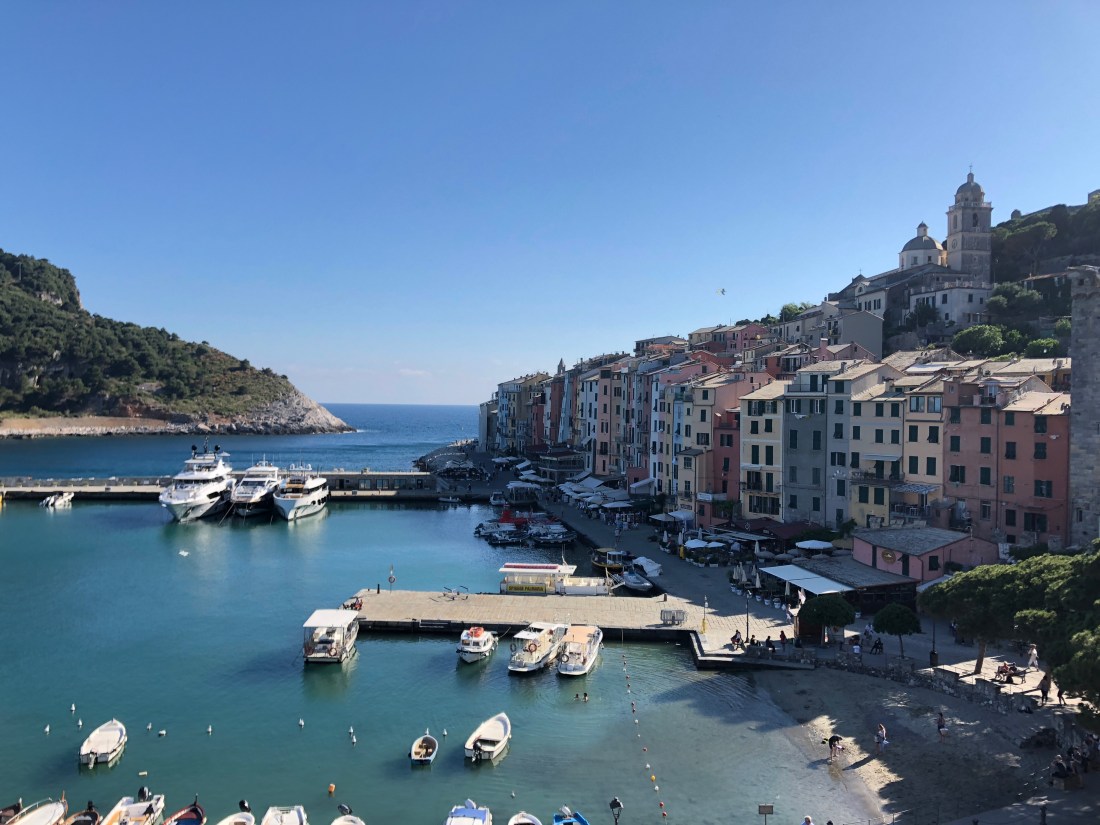
We had done our fair share of hiking so on the last day we gave ourselves a break by catching the ferry and had a wonderful day in Portovenere, just wandering around without being completely exhausted.
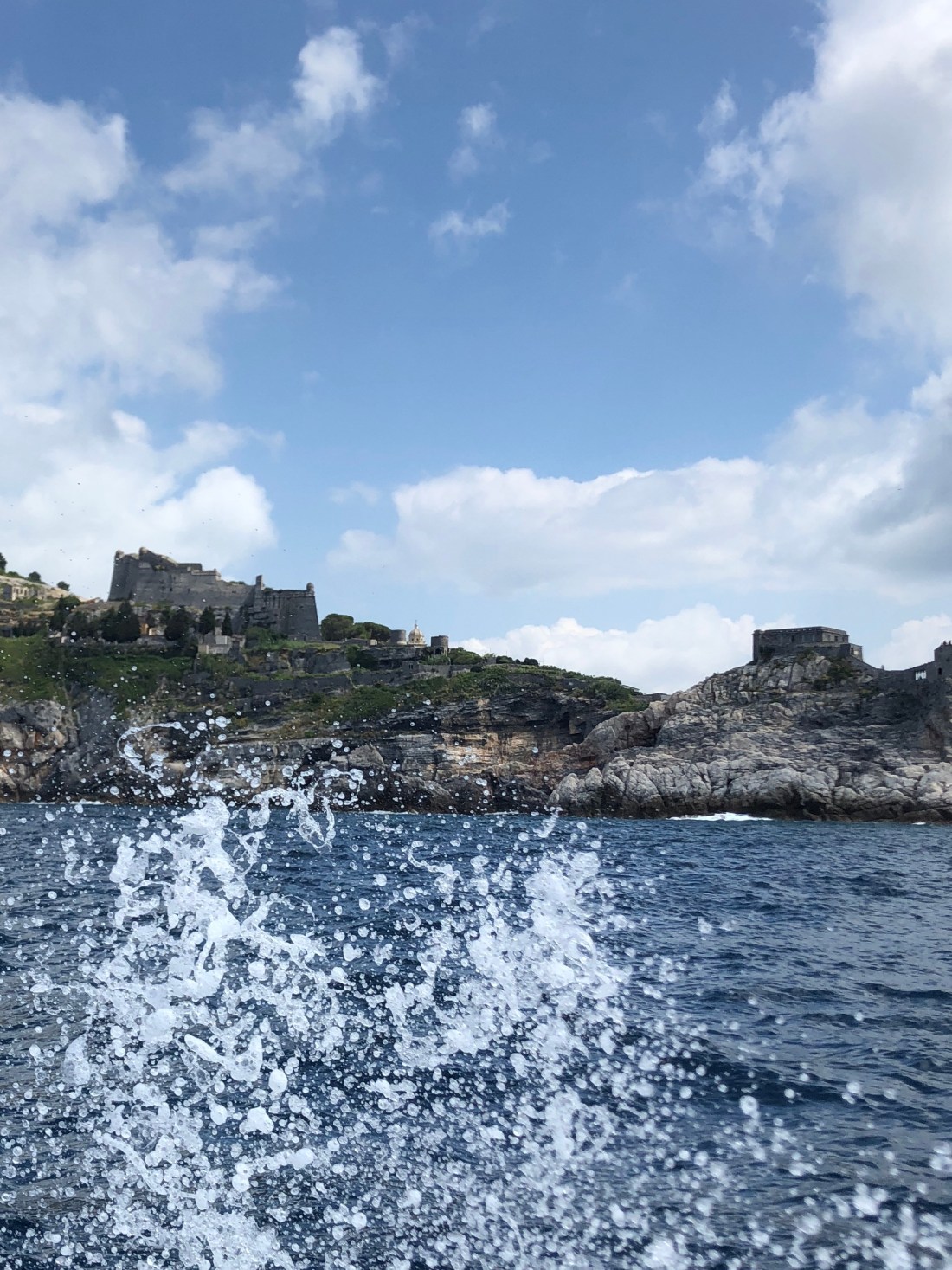
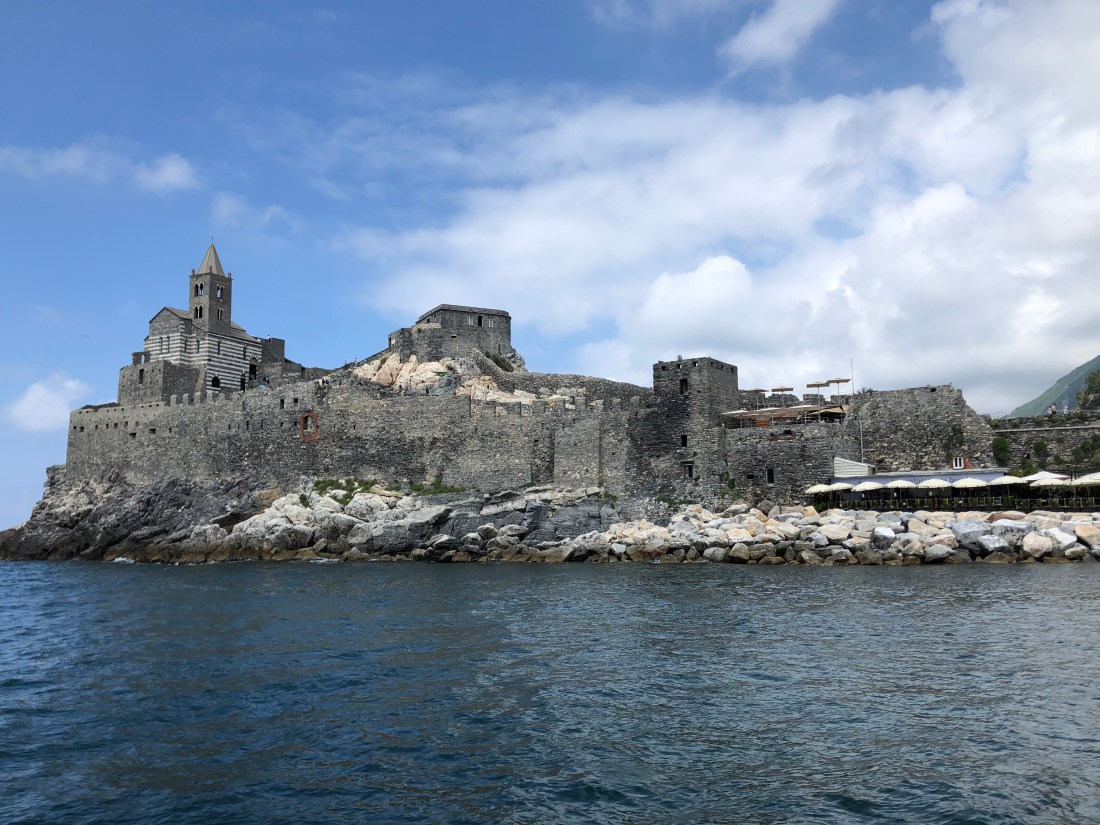
Ferry from Riomaggiore to PortovenereWild fabulous ride on the ferryEntrance to the Portovenere harbour
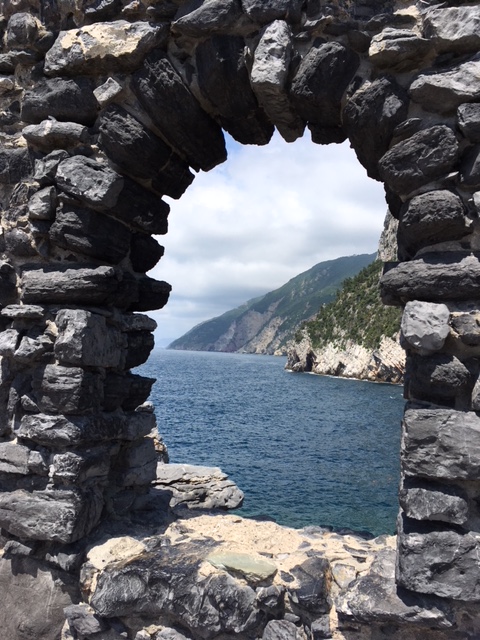
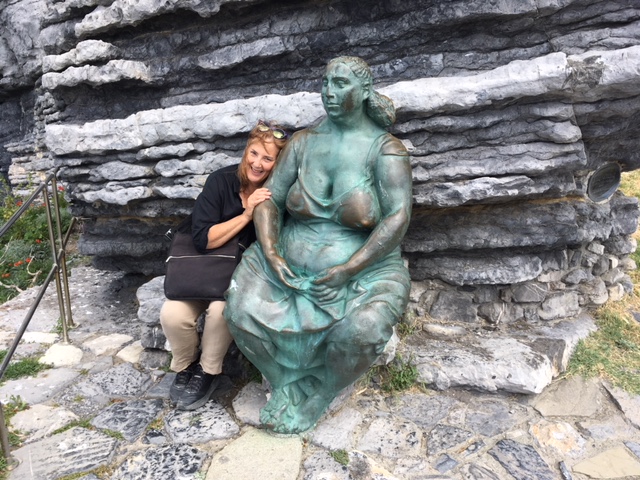
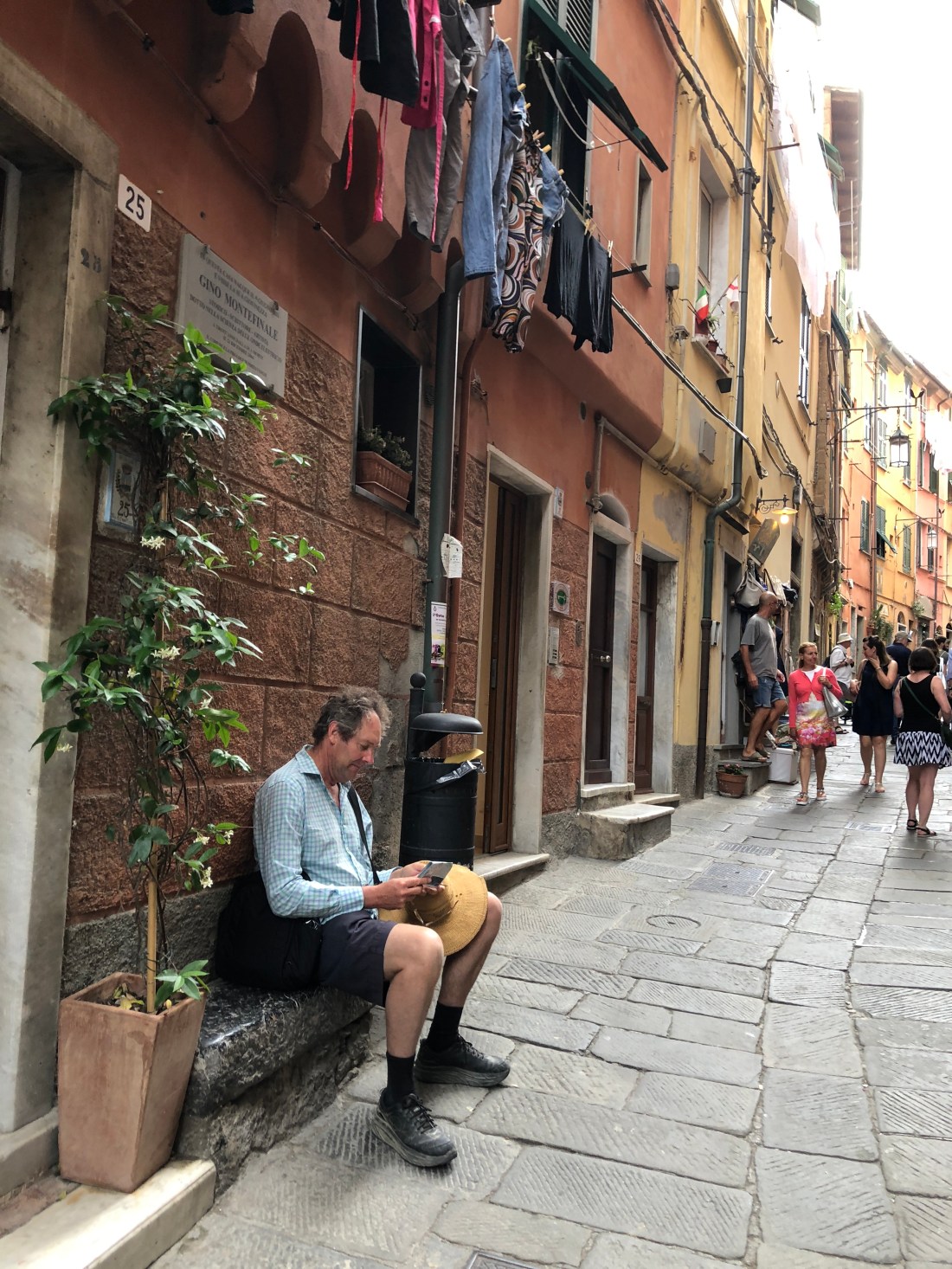
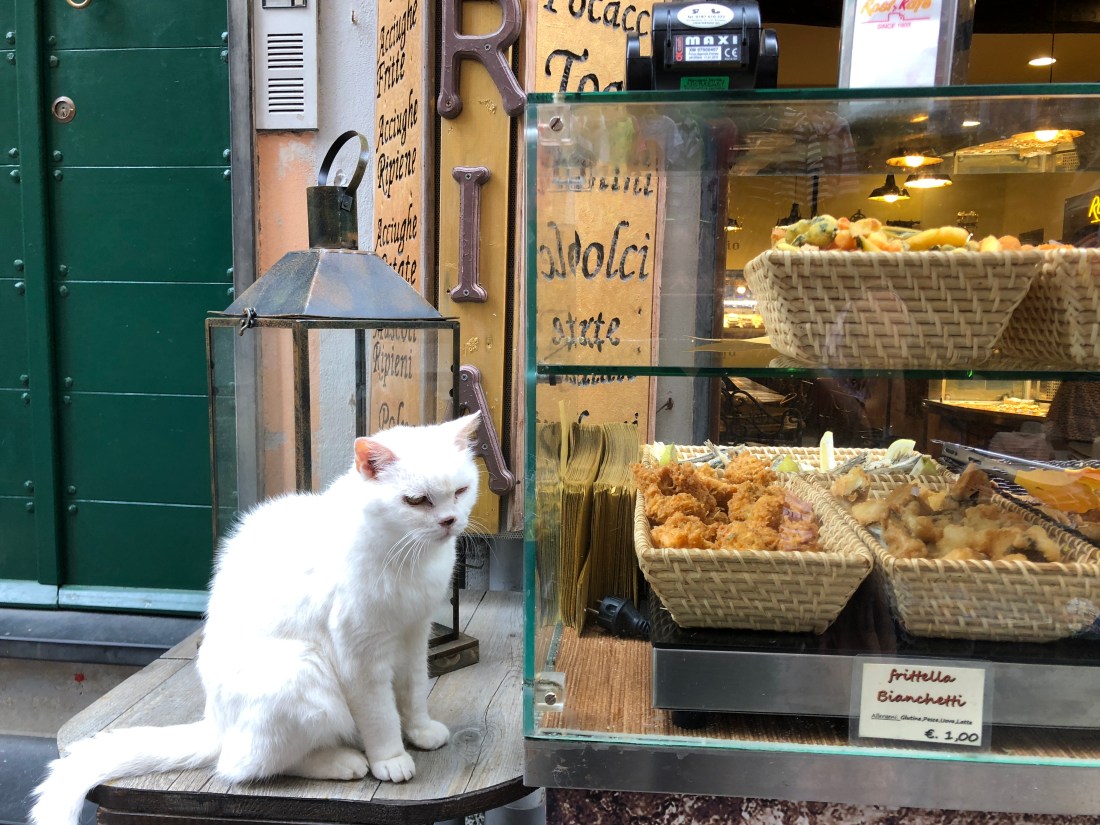
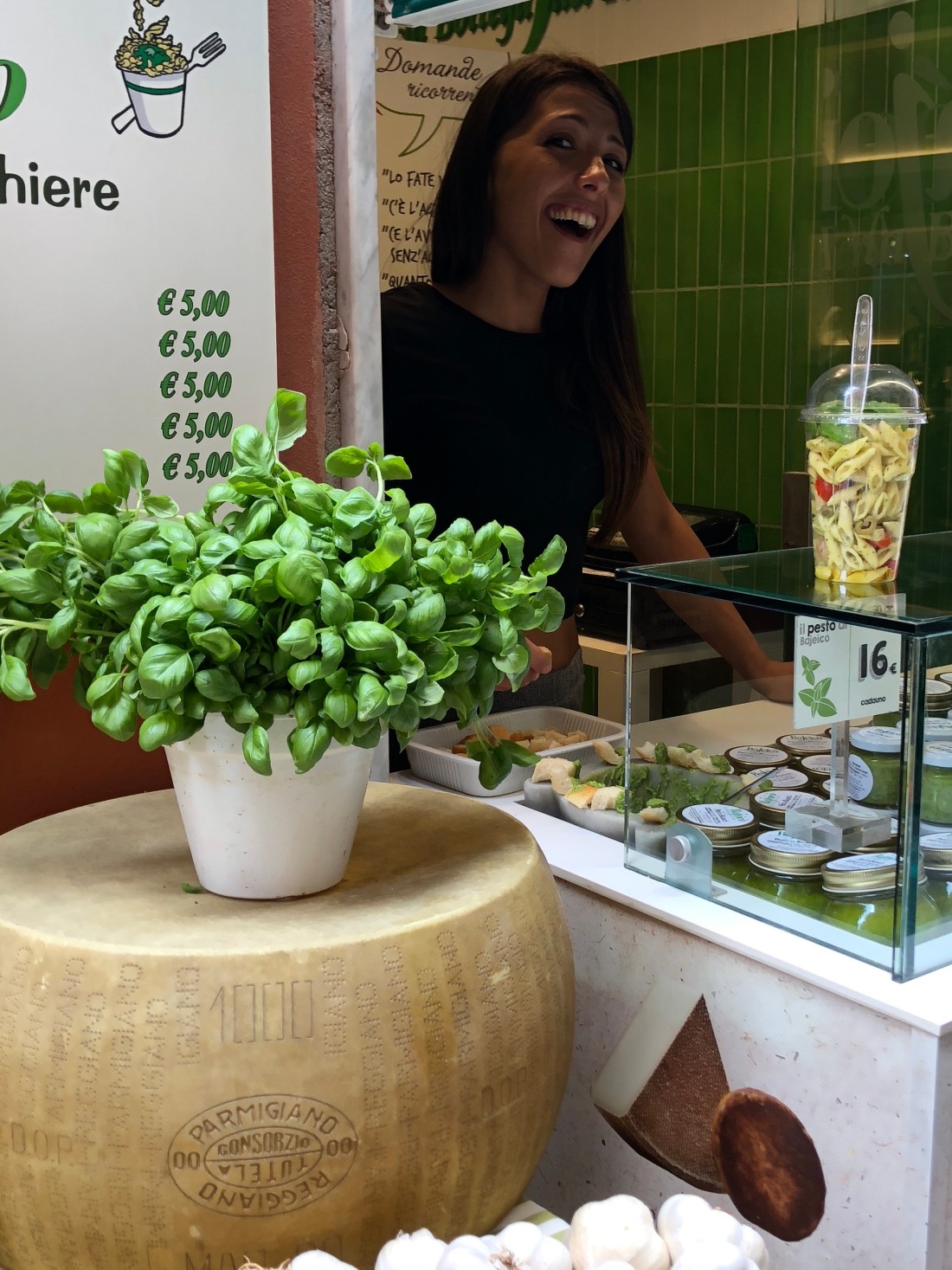
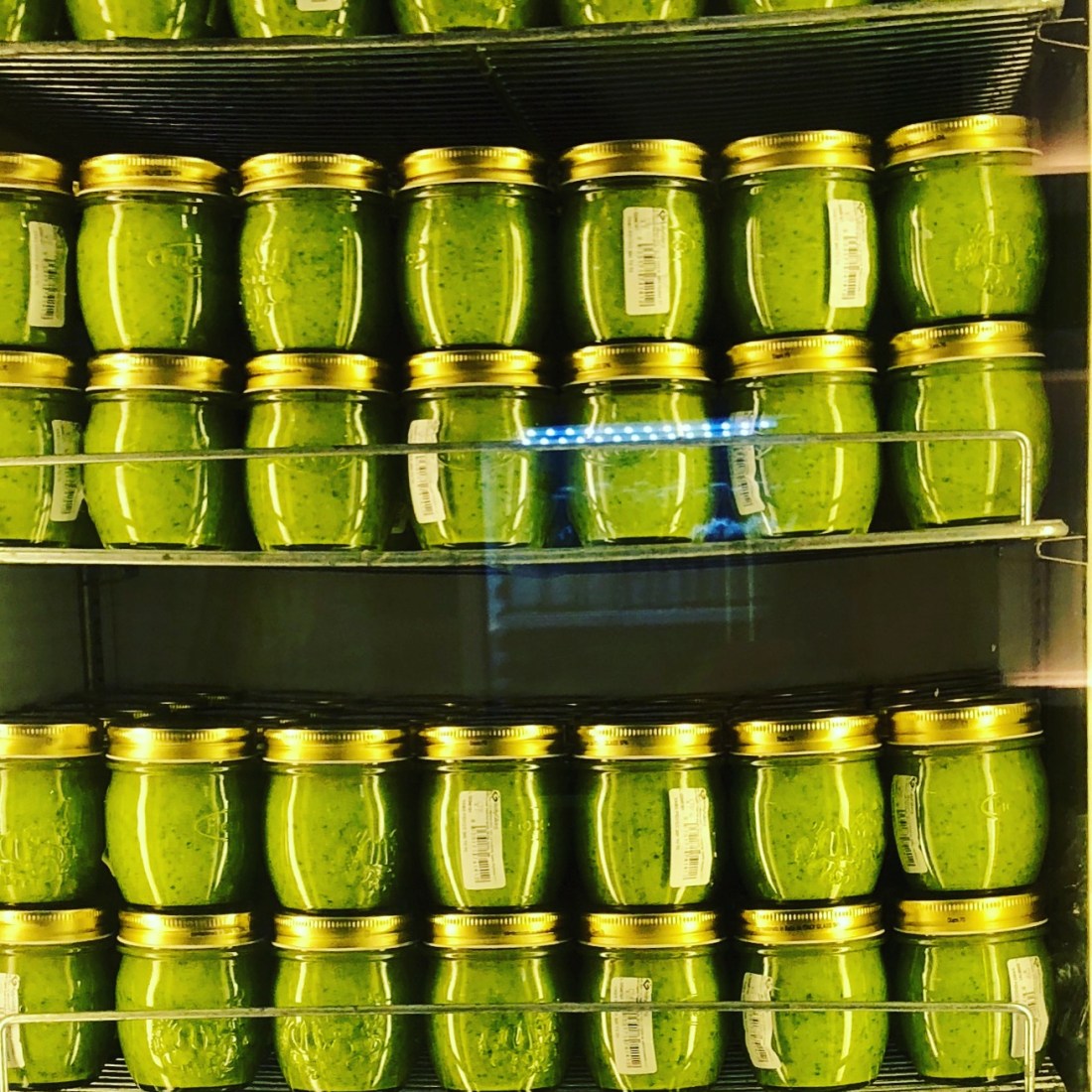
Arch seriesMother Nature (and something in bronze)View from our hotel windowRob with some of his favourite things: rubbish bin, street seat, washing drying in the sun (and a map)“I’d like mine with anchovies on the side”One of Portovenere’s Queens of Pesto
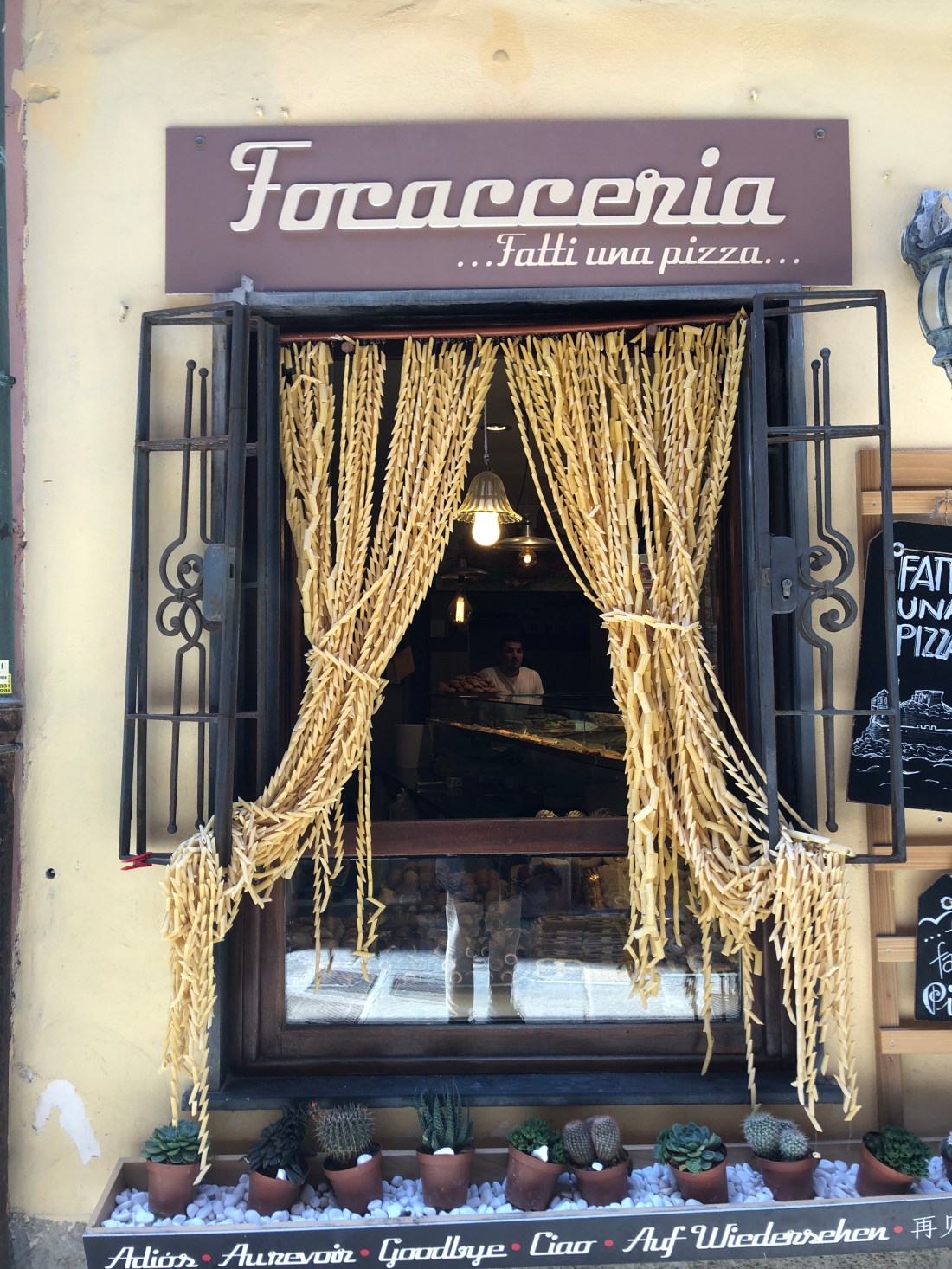
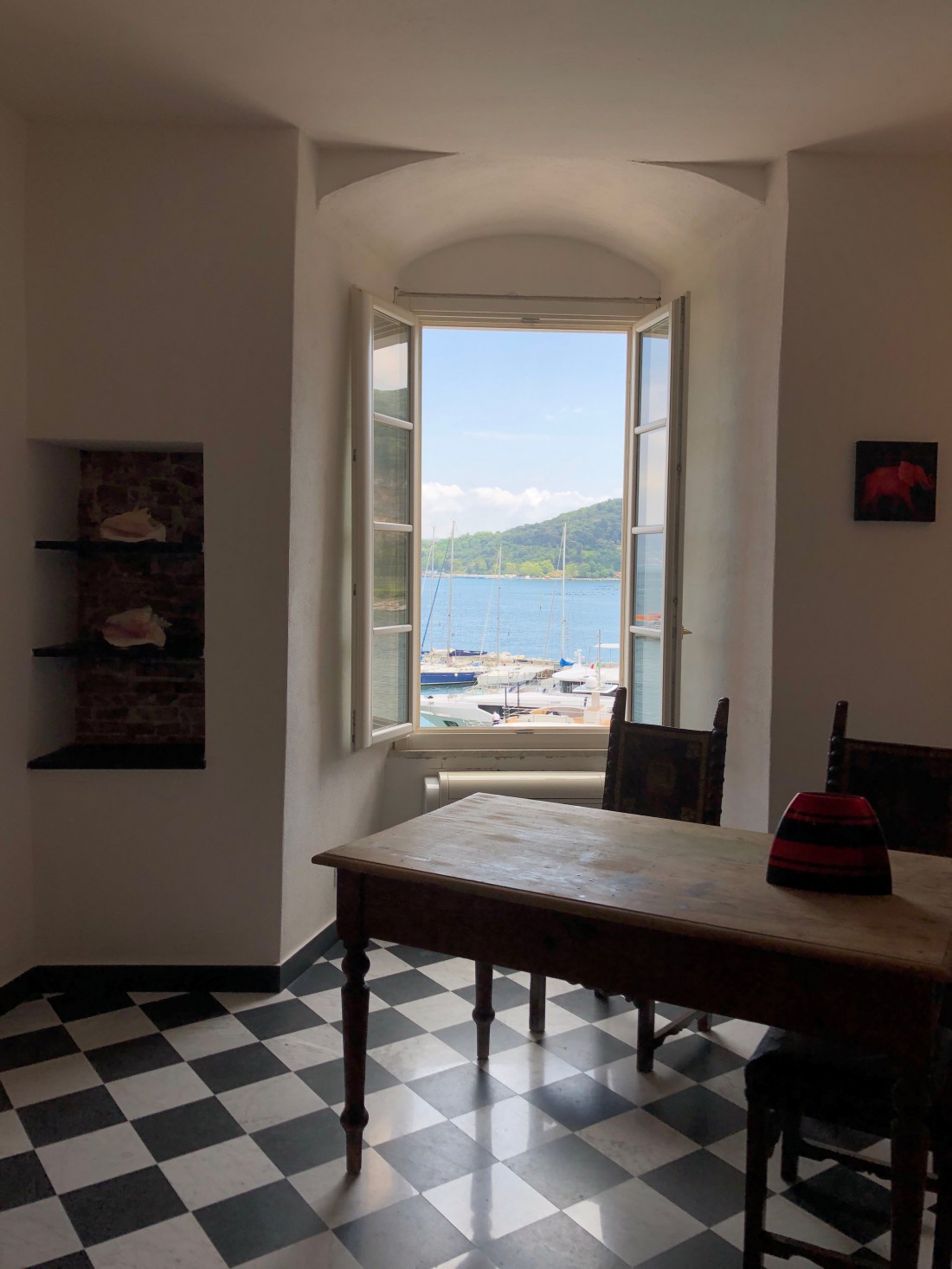
Always wanted a curtain of pastaElegant Portovenere (gallery former meeting room of Communist party)Final view of harbour from our hotel window. Love Portovenere
This was almost goodbye to Italy. We stopped for one night in Savona, on the Italian Riviera.
Goodbye Italy, it’s been wonderful. On to Spain, via Marseille.
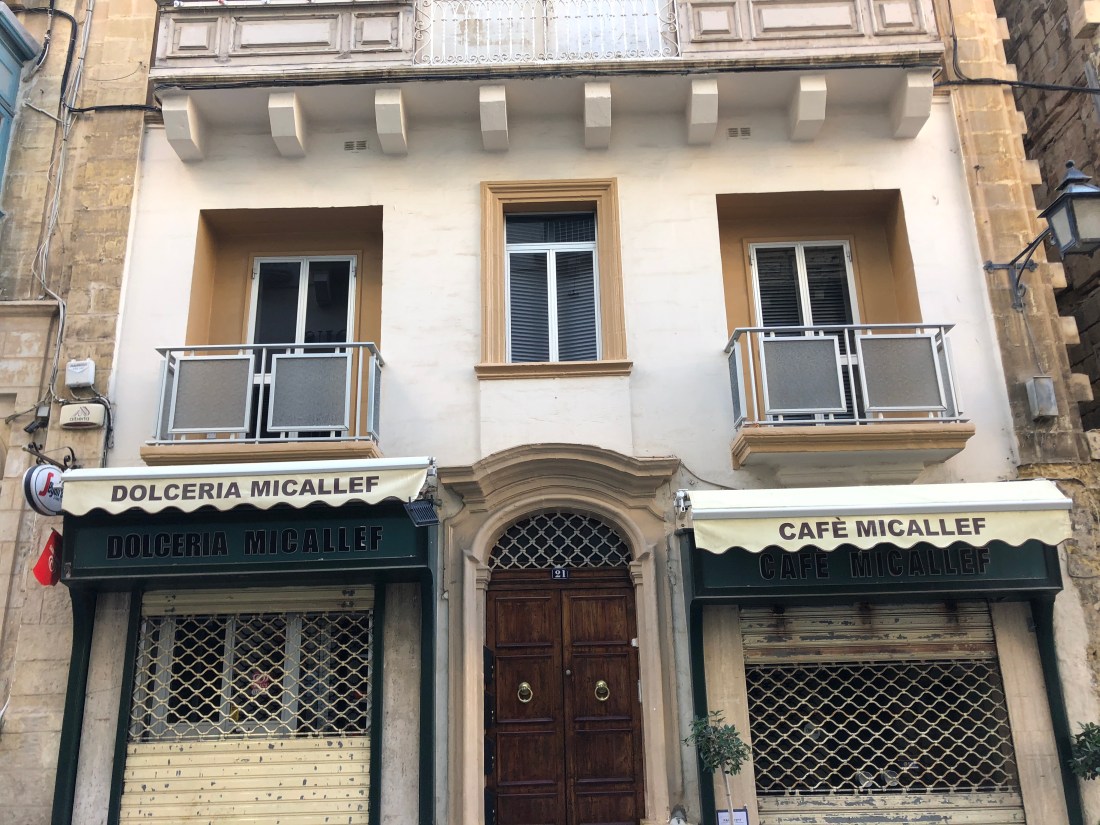
“You know more there are more Maltese people in Australia than in Malta”, that was a common refrain in Malta as soon as we said we were Australian. So whether it’s accurate or not, certainly there were many familiar names: Camilleri, Azzopardi, Tabone, Galea and Micallef.
It was Alex’s sister Helen who encouraged us to visit Malta. Helen and Bob Clegg visited last year and loved their visit. So given we were in Sicily and Malta was just sitting there in the sea, why not?
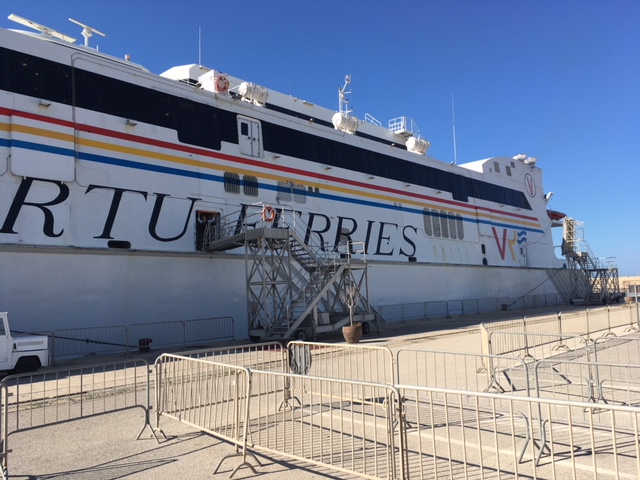
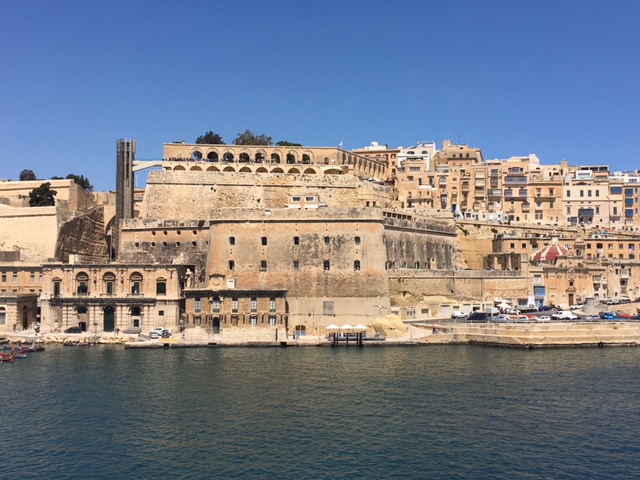
It was also great that we could catch the ferry from Pozzallo Sicily to the incredibly beautiful Valetta harbour. That link made in an Australian built catamaran ferry.
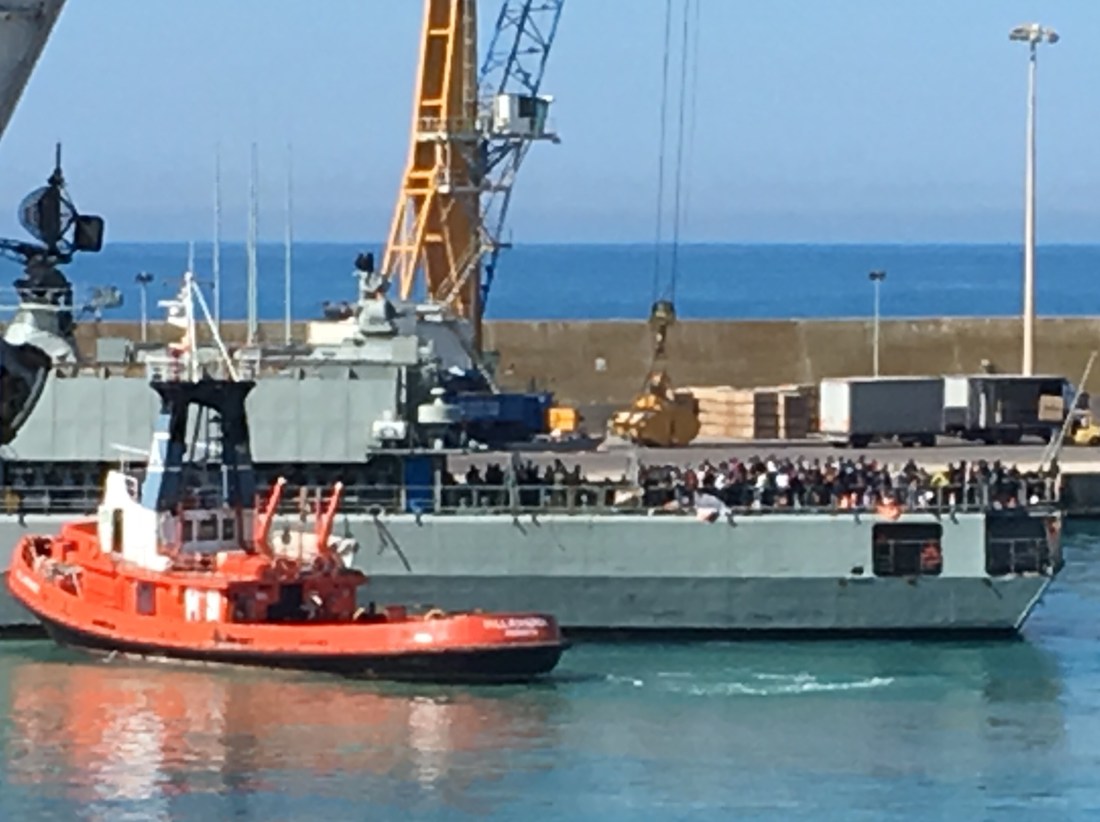
Our trip was slightly delayed by the Italian Coastguard. We looked across and saw the reason why. It was really sobering to see what was obviously the latest arrival of people fleeing the worst of times, while we were experiencing some of the best.
Good on the Italians for picking these people out of their rickety boats at sea and bringing them safely to the mainland.
So our pride in things Australian, ie the Ferry was given a bit of perspective.
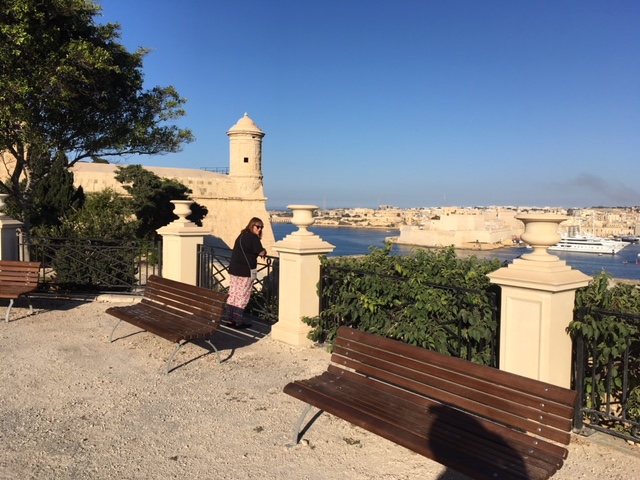
As we approached the Valetta harbour, a lovely friend Nina sent a message to say she had just taken out Maltese citizenship. “We love Malta”. She and Craig have two small children and an eye to the future.
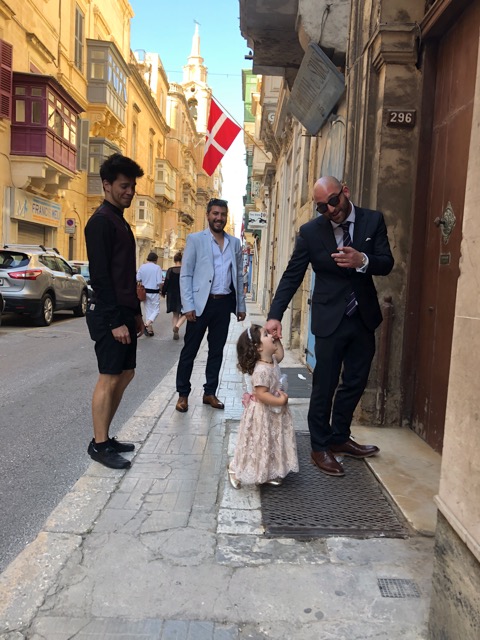
View as we came into the harbour at VallettaIt was “Communion Month” when we visited, some keener than others.
Despite it’s proximity to Sicily and some shared history there’s a stark difference. Malta’s language is mix of Italian and Arabic, and having been a British colony for a long time, many people speak English.
The first thing that strikes you is the colour of the rock, the dryness, lack of trees and the intensity of the light. The rock which is also the main building material sheds a pale dust, and the water has an earthy, mineral taste.
There is so much history in Malta with evidence of occupation during the Neolithic period, (we visited the Hypogeum, with underground structures dating 3 thousand years BC, thanks Helen Clegg), the Phoenicians, Romans and Arabs among others, the Normans and then The Knights of St John who ruled over Malta for several hundred years. Then came Napoleon for a brief time, then the British until it became independent in 1964. More recently in 2004 Malta joined the European Union which has triggered the major and rapid transformation that it is currently going through.
The City of Valletta is the European Cultural Capital 2018.
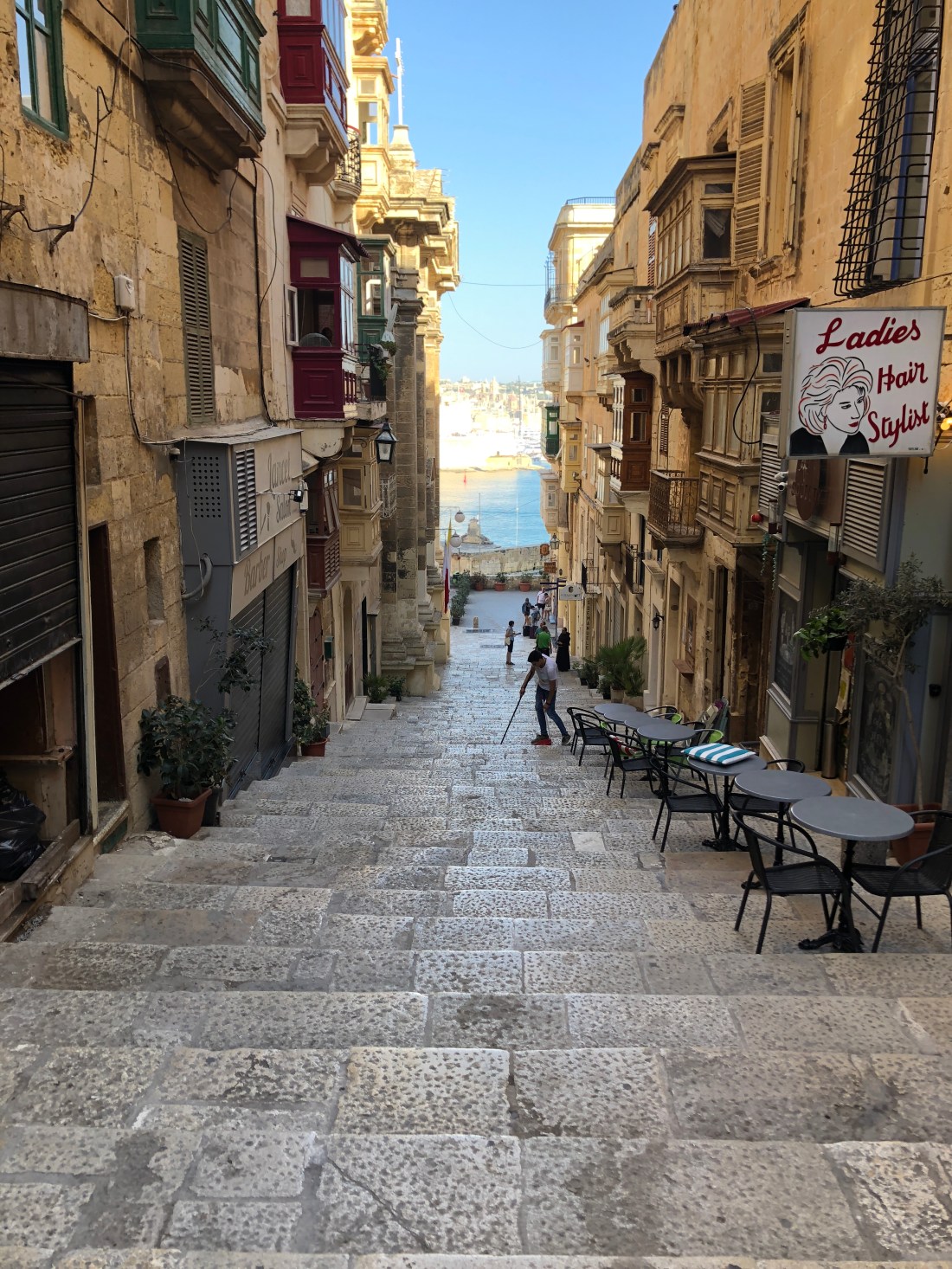
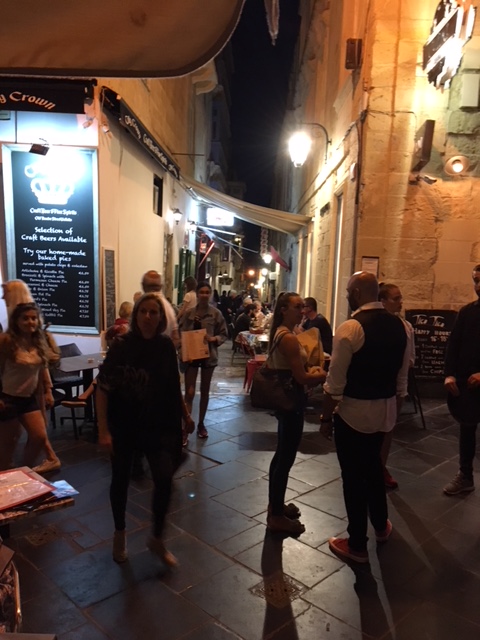
Straight Street
Straight Street is an example of the transformation that is taking place. It is becoming a hub of social life and creative activity, with an active program of restoration and regeneration. In places only 3.5 meters wide, it is Valletta’s narrowest street.
An Artistic Director has been appointed to oversee the organisation of cultural events and artistic activities. This involves venues such as bars, restaurants and street hubs, with interested potential partners including the University of Malta, the School of Art, School of Music, museums, theatres, the Malta Philharmonic Orchestra and new emerging popular culture. Activities include exhibitions, theatre productions, seminars, talks, street theatre, jamming and network sessions with artists.
Could we follow a similar model to try and liven up the centre of Canberra?
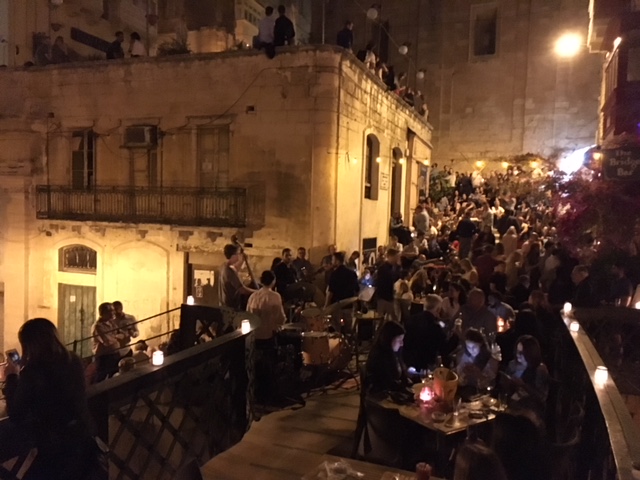
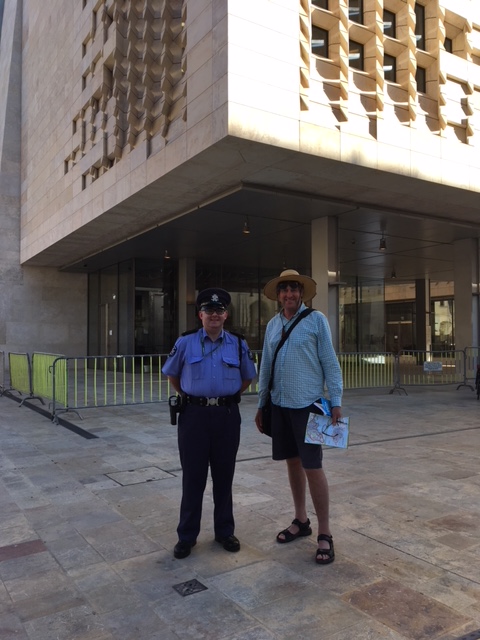
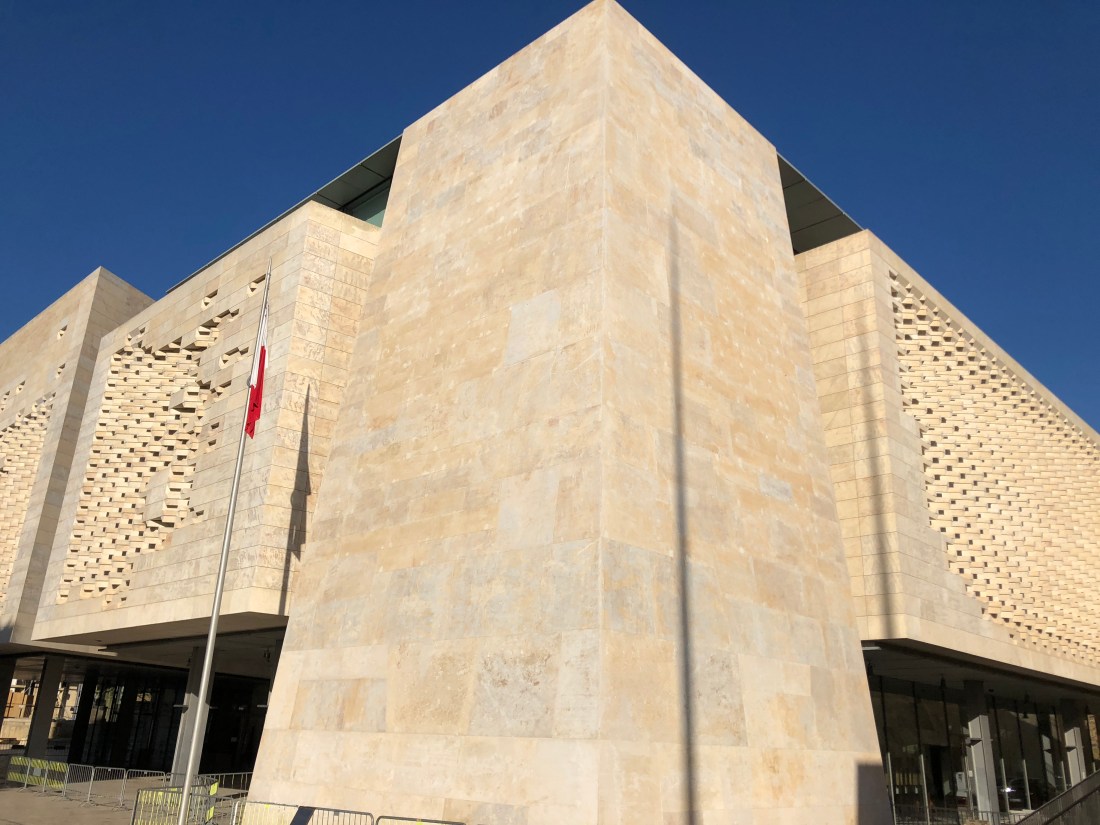
Friday night Jazz on a bridge with people sitting on steps in all directionsLocal Policeman Jean Paul very keen to provide tourist information. Standing in front of Renzo Piano’s Parliament House
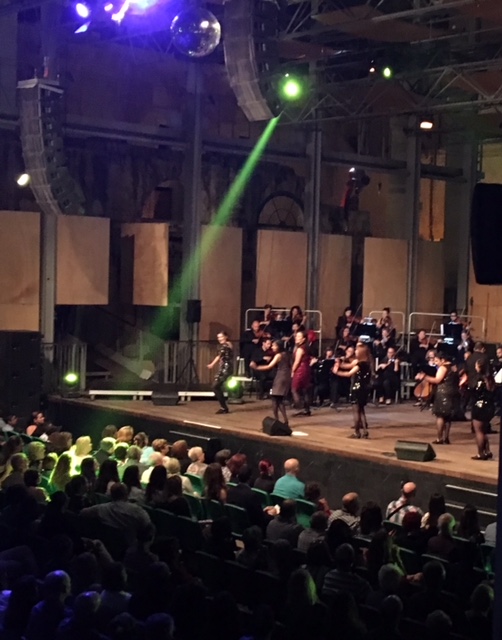
Malta is the “European Capital of Culture for 2018”70s & 80s night with the Malta Concert Orchestra in Pjazza Teatru Rjal the outdoor Opera house which is an old ruin, bombed in World War 2. The concert was daggy delightful and sent us home happy.
Natalie
We met Nat on the train in Sicily and found we’d also be in Malta at the same time, so we caught up and explored a bit of Malta together. Nat comes from Atlanta in the US and has been travelling for her two weeks leave through Turkey, Tunisia, Sicily and Malta. She has a website and has been posting stories and fantastic photos of her travels. Check out her website.
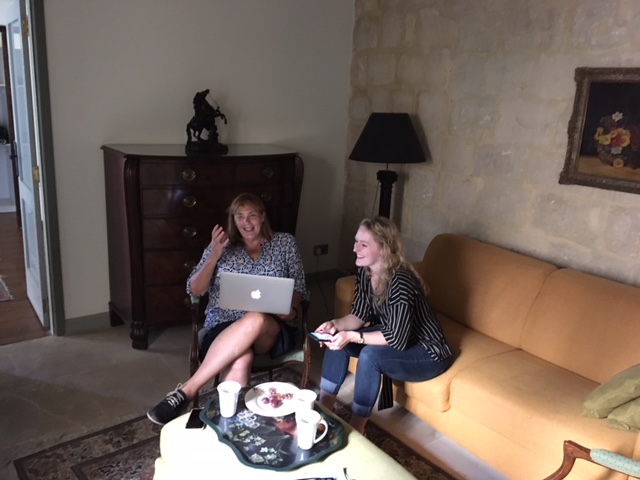
We ended up in a very spacious apartment in an old Palazzo. Taking time out from the heat and glare of the day, Natalie helps Alex with some computer problems.
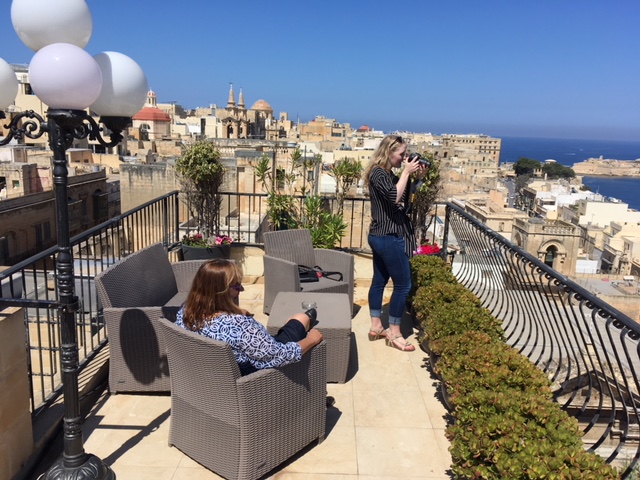
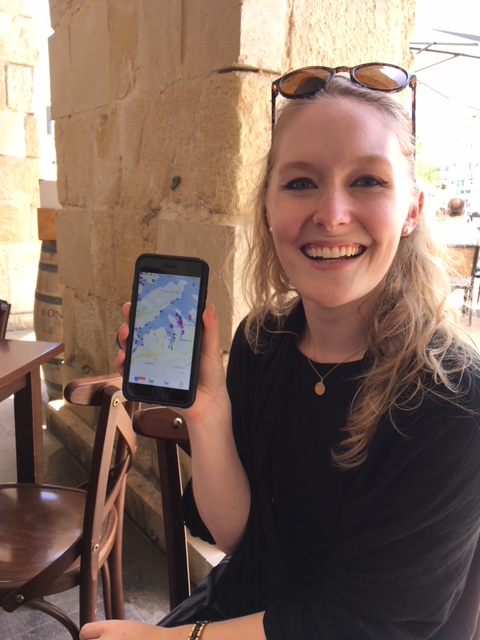
View from our rooftop terraceNat is the only person we’ve ever met with a Vessel Finder App which will show you all the ships in harbour from oil tankers to fancy sailboats with details on which country they’re flagged and where they’re going
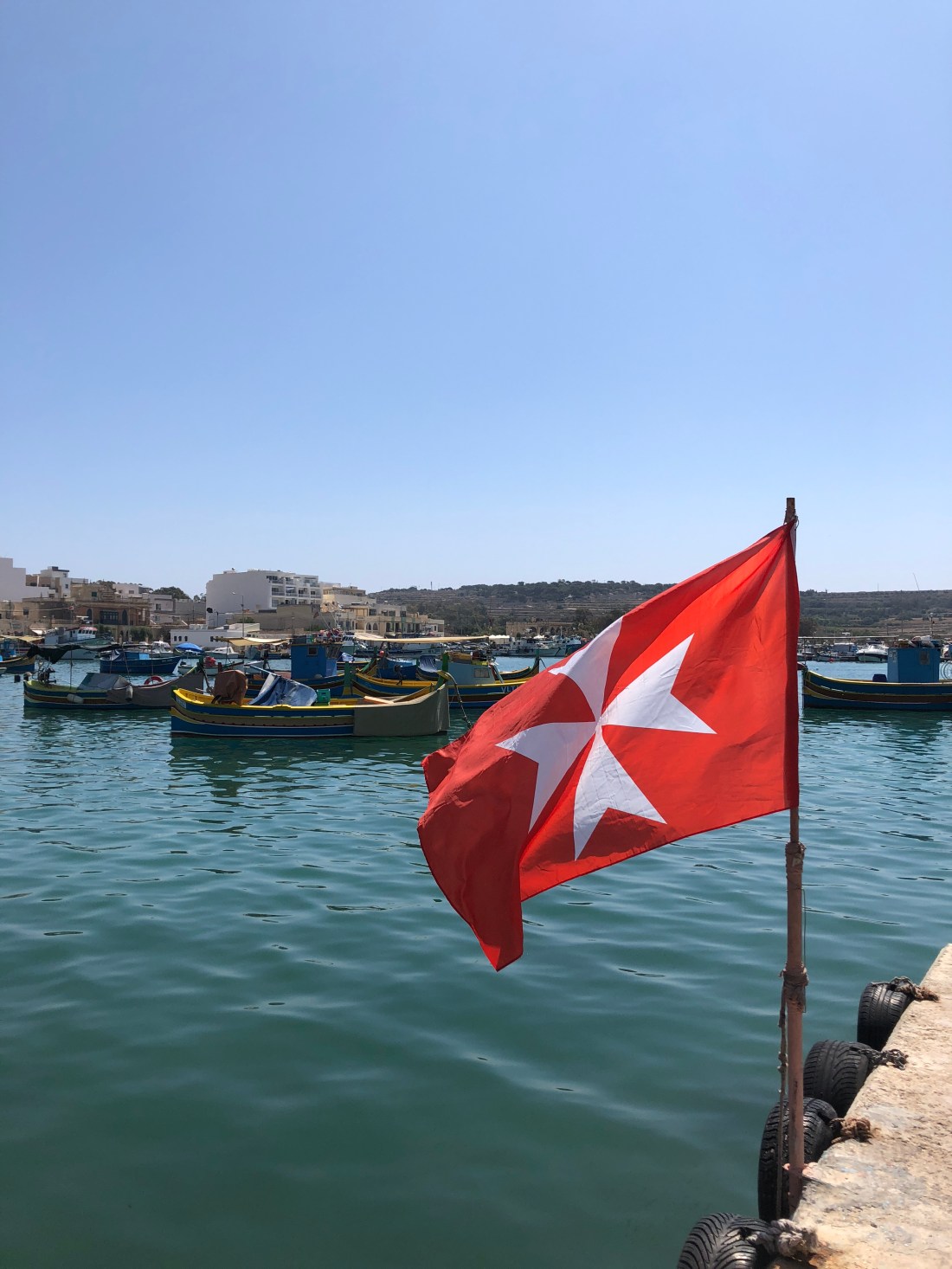
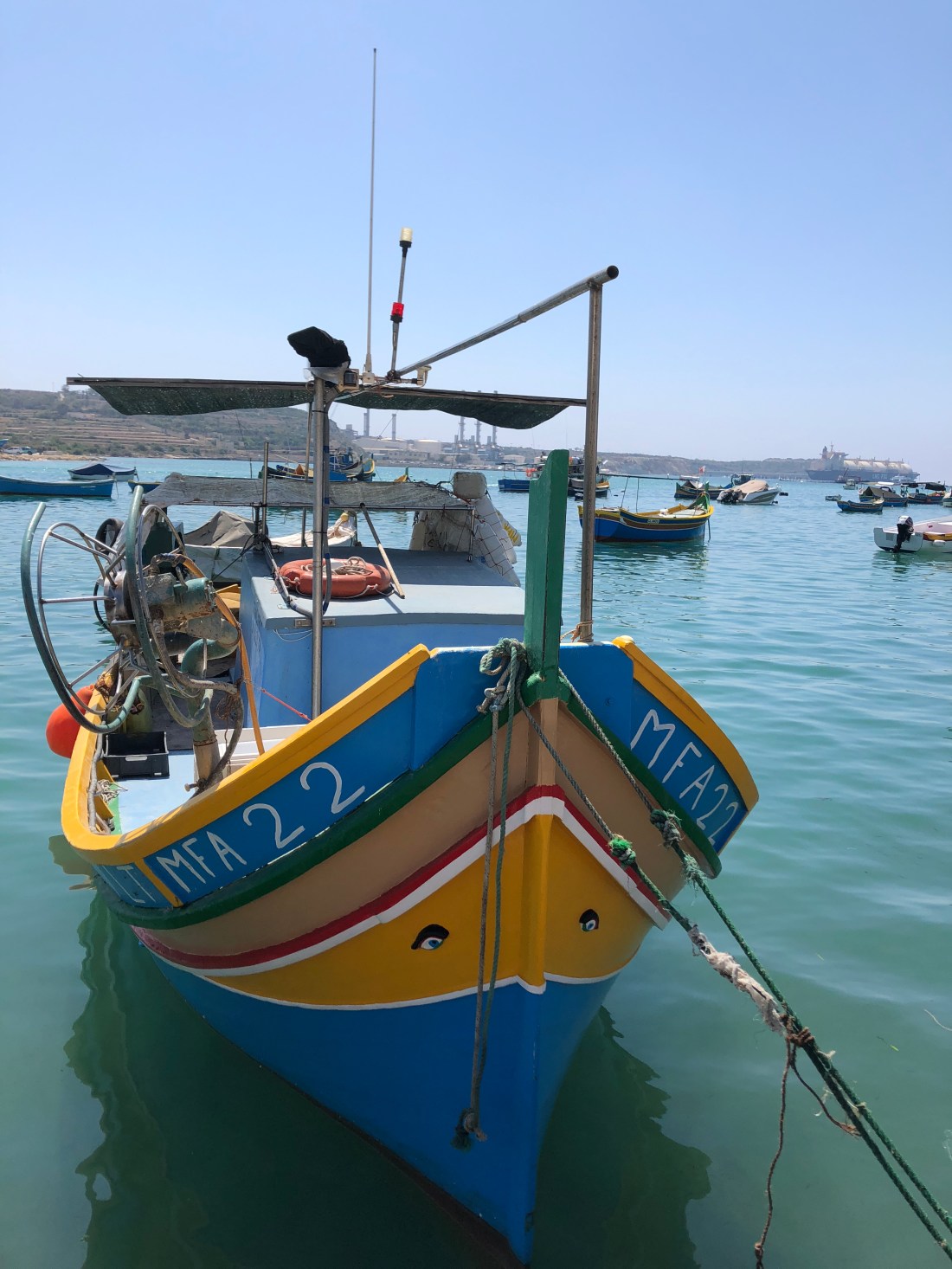
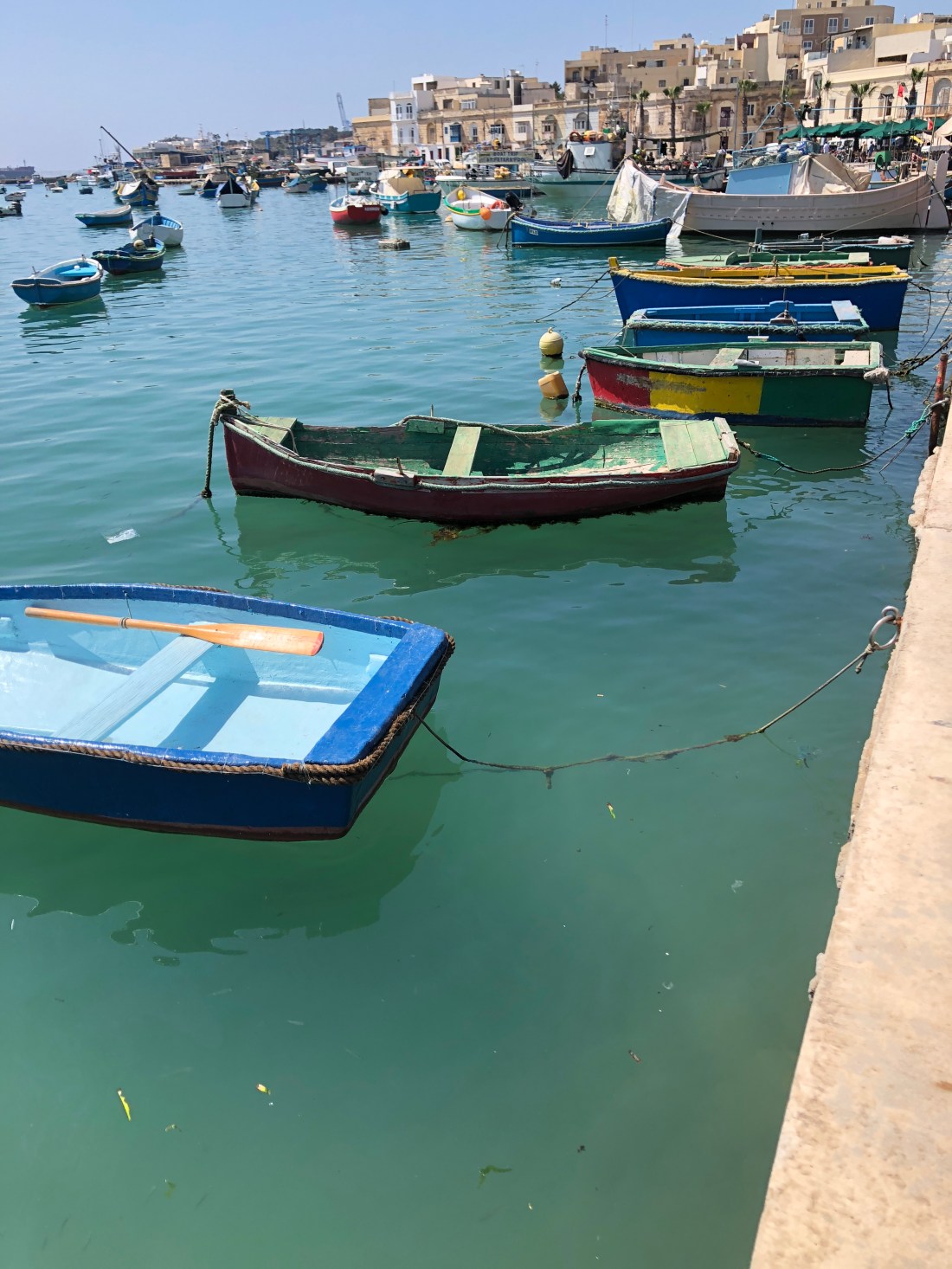
Colourful boats at the fishing village of Marsaxlokk
Martin
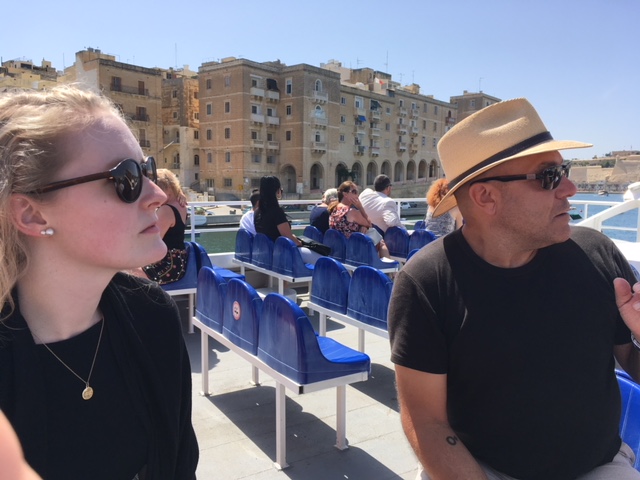
Waiting for the ferry back from Birgu, one of the three cities across the harbour from Valletta, we started chatting to Martin. He grew up in St Kilda in Melbourne with Maltese heritage. He’s decided to come and live in Malta, it’s easier from him to be based here as a freelance photographer than work from Australia. He provided us with some detailed history as we crossed the Harbour and we ended up having a coffee at his favourite place in Valletta, also run by an Australian of Maltese heritage.
So many people seem to be moving to Malta, we met Bulgarians, Romanians, Ukranians who have come to live and work here. We saw signs in many shops and restaurants that staff were wanted.
Tourism is certainly a major driver, but joining the EU has been the catalyst for major change. There’s been an influx of people and investors, some of who are using Malta as a way to get into the EU. While it is bringing opportunities for Maltese, there are also some downsides. Property development is booming but housing is becoming very expensive, and with the free movement of people there has been a loss a control of who is coming in. Some of the new arrivals are involved for example in the gaming industry and the undesirable aspects that brings.
In recent years there has been pressure to silence investigative journalists, including Daphne Caruana Galizia who was killed by a car bomb.
The Taxi driver told us as we drove to the airport that last year there were 2.2 million visitors last year for a population of around 420,000. Malta is changing.
“So how does the train get to the island of Sicily?” asked Tom Gordon one of Rob’s work colleagues while we were still in Canberra. Answer: “On the Ferry“. It was a new experience for both of us and the whole palaver took about 2 hours, added to a 8 hour train journey. So while interesting, hardly efficient. Why not end one train journey at the Ferry and begin another on the other side? We’ll go to one suggestion later.
It’s a lovely train journey from Salerno near the Amalfi coast, to Palermo in Sicily, following the coast, if you can get a seat on the right hand side you’re looking at the seaside most of the journey.
Sicily. One of Alex’s regular facebook friends, and veteran traveller Martin Corben says it’s the real Italy for him. There was a great moment when we were waiting for a boat trip and there was a lot of yelling going on, Alex looked with slight concern and bewilderment (and let’s remember Alex comes from a pretty rowdy lot), the woman selling tickets caught her eye and shrugged her shoulders saying: “He’s Sicilian.”
Al Pacino is ageing well?
The moment we got off the train in Palermo it felt less touristy than other places we’d been in Italy, a bit edgy.
First night in Palermo in the street of our B & B
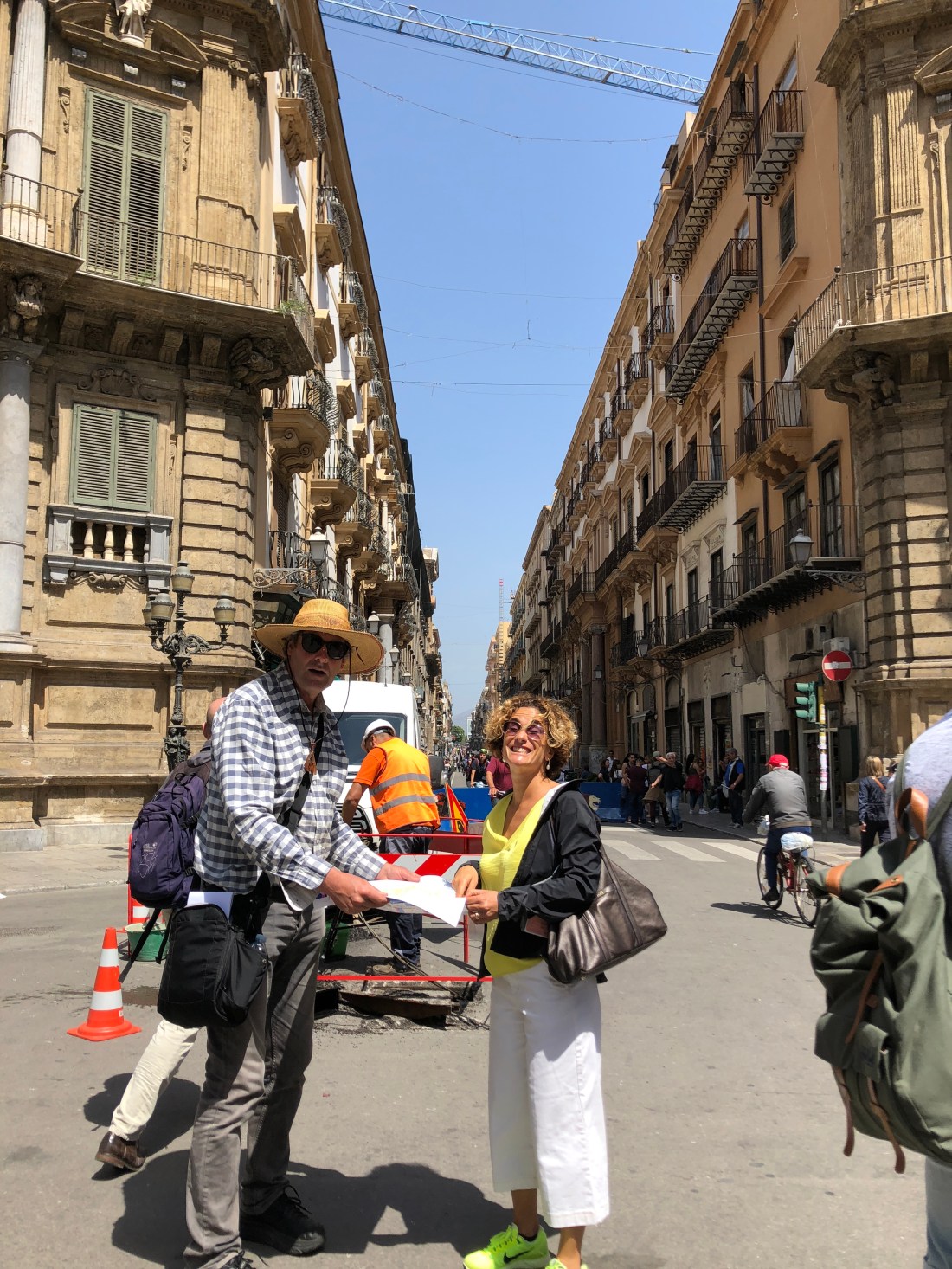
To explain Palermo to us we decided to enlist the services of guide (to the stars as we later found out) – the wonderful Marcella Amato www.marcellaamato.it.
We spent the day with Marcella who is Sicilian born and bred with degrees in politics, history and fine arts.
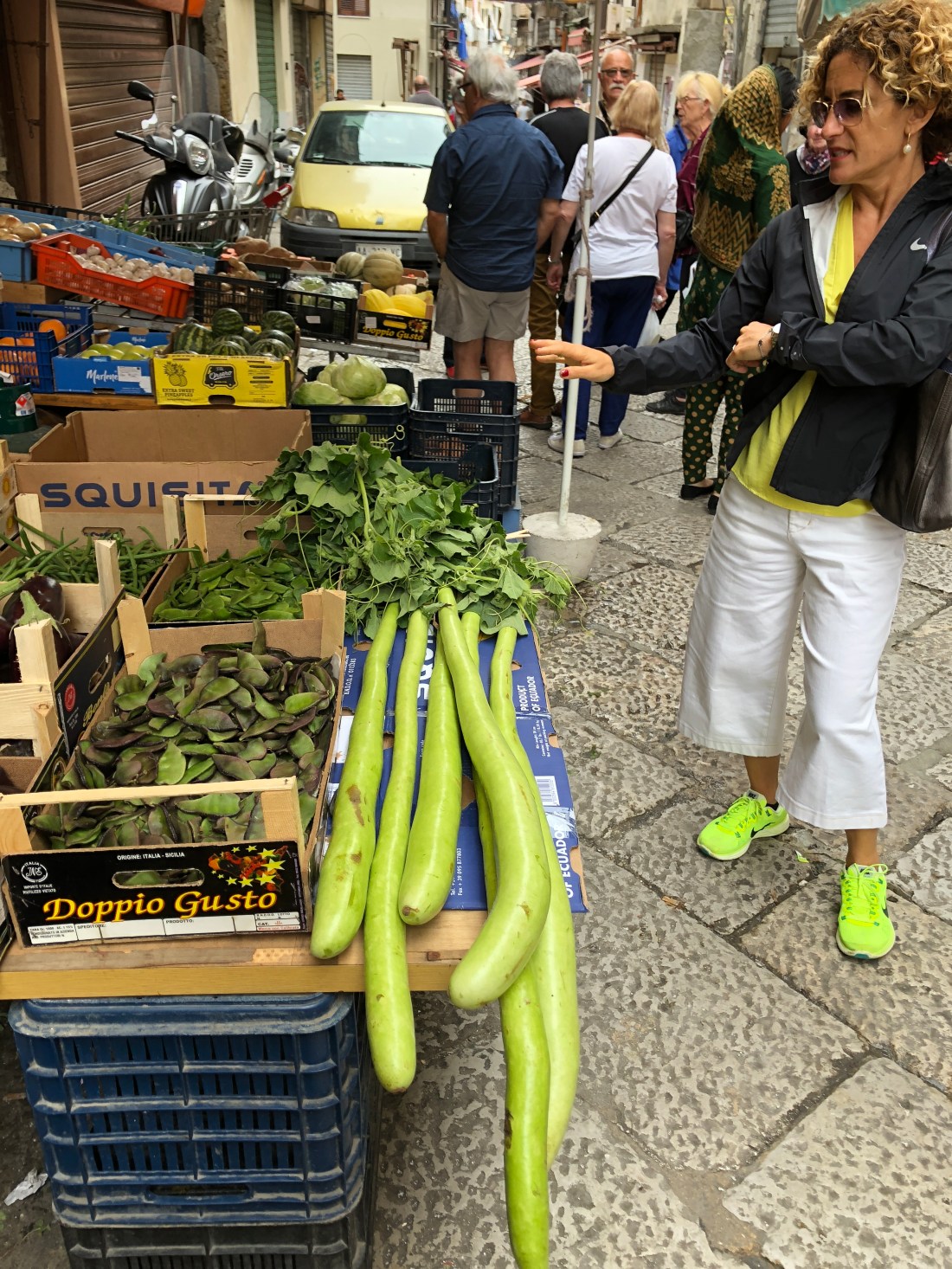
Marcella helps get Rob oriented. Some of the key roads in Palermo are now ZTL (Zona Traffico Limitato) with limited car access. Although resisted at first by some businesses, they’re now extremly popular clearing the air and bringing people on to the streets.Love it that these vegies match Marcella’s shoes
Marcella
Marcella our guide showed us some incredible buildings and great food. She described the 13 waves of occupation of Sicily which include the Greeks, Phoenicians, Romans, Arabs, Spanish, and the saying that goes something like “Everything changes in order to stay the same”.
The 25th anniversary of the killing of Magistrate Giovanni Falcone was being commemorated while we were in Palermo. On May 23 1992 6 people were killed in a massive explosion from under the road as his car and body guards drove across it.
Falcone fought against the Mafia knowing that he would be targeted. He viewed the Mafia as a human problem, and if the population stood together, they could not kill everybody.
Thousands of students were expected the next day to march in support of the principles that Falcone died for.
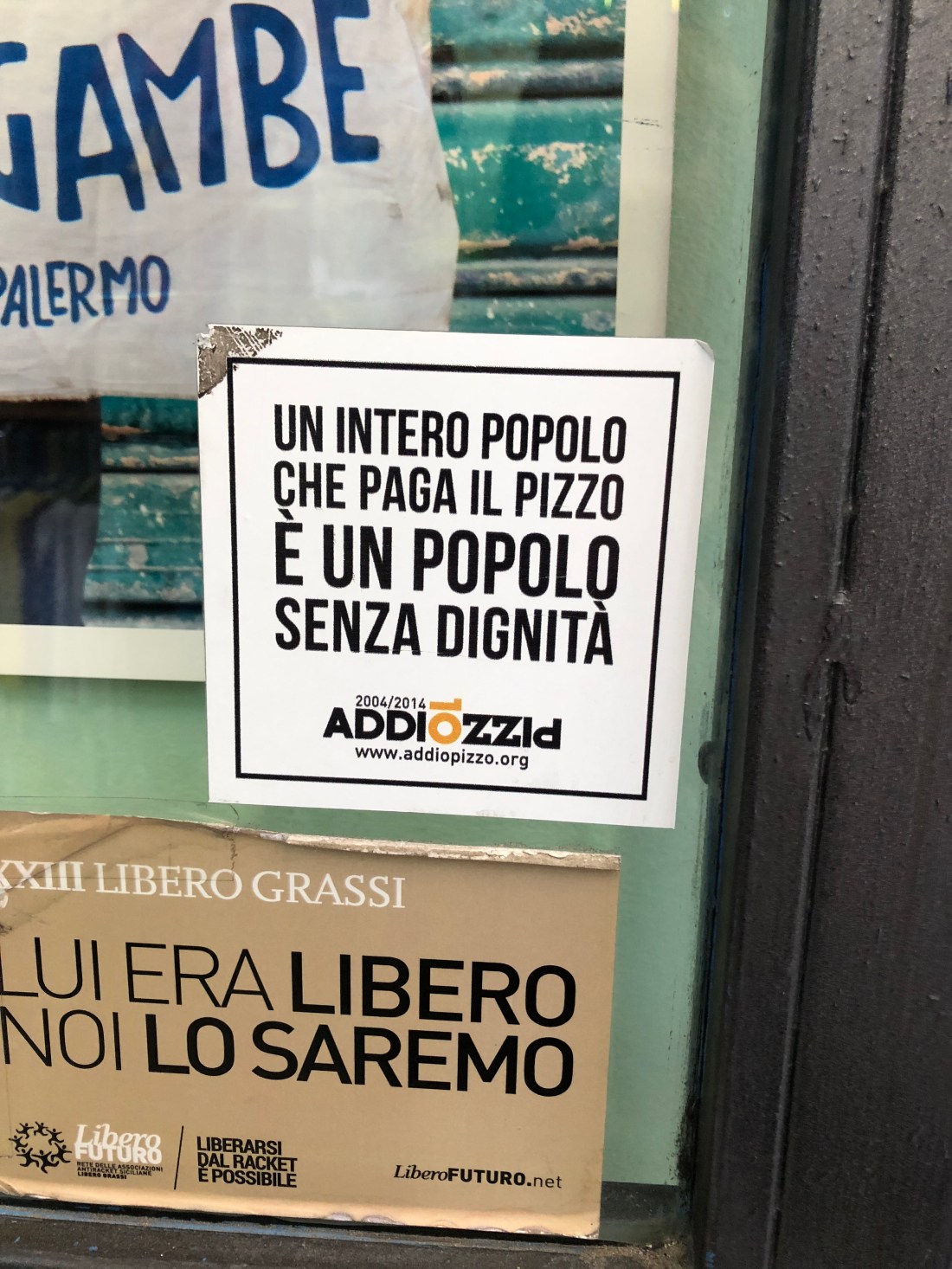
Marcella pointed out the signs on many shop windows that show that those businesses that are standing together and not paying protection money.
These shop stickers say ‘An entire population that pays the pizzo is a population without dignity.’
The ‘Pizzo’ refers to the €200 (£153) to €500 that up to 80 per cent of Palermo’s shopkeepers pay the mob monthly to avoid a smashed window, a mysterious fire, harm to family members, or a bomb under their car.
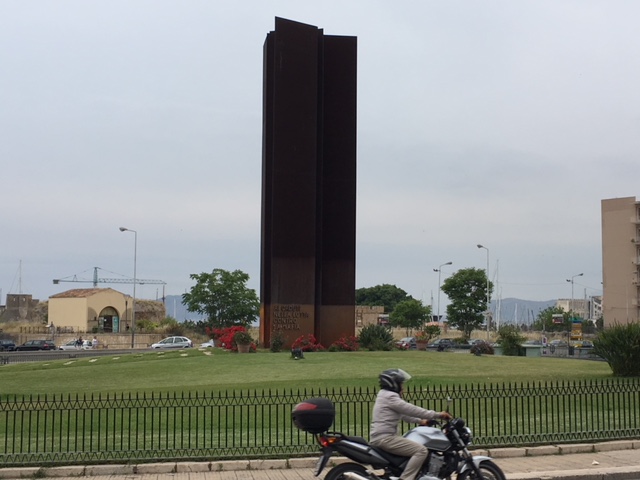
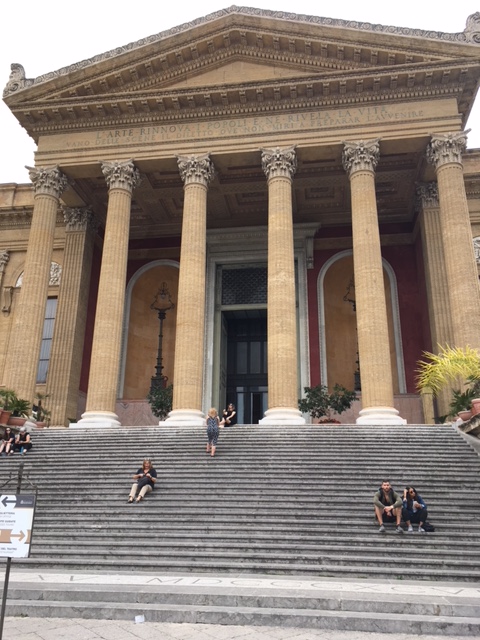
Monument to commemorate those that have died in the fight against the mafiaAlex on the Palermo Opera House steps, made famous in the movie Godfather III
Marcella spoke of the need to bring it out into the open. Although organised crime is a very serious and escalating issue in other parts of Italy, there is a feeling that the power of the Mafia in Sicily has weakened in the the hold it has over the whole community. Nevertheless, it is still a serious issue in parts of the economy for example in major civil contracts, and it is holding the economy of Sicily back. Few outsiders are prepared to invest, for example in a new bar, or new hotel. You don’t see major Hotel chains here. It was even suggested to us later in our journey that a possible reason for the inexplicably inefficient process of putting train carriages on to a ferry was that is was under Mafia control.
The area we stayed in is undergoing a regeneration with arts hubs, bars and cafes springing up in buildings that have until recently been abandoned. It’s at that exciting point when the rents are still affordable for creative people to be able to work, and just before it becomes too fashionable and they get driven out, as is happening in places like Braddon.
Marcella bumped into her brother Mauro who is also a guide – they were so delighted in each other’s company
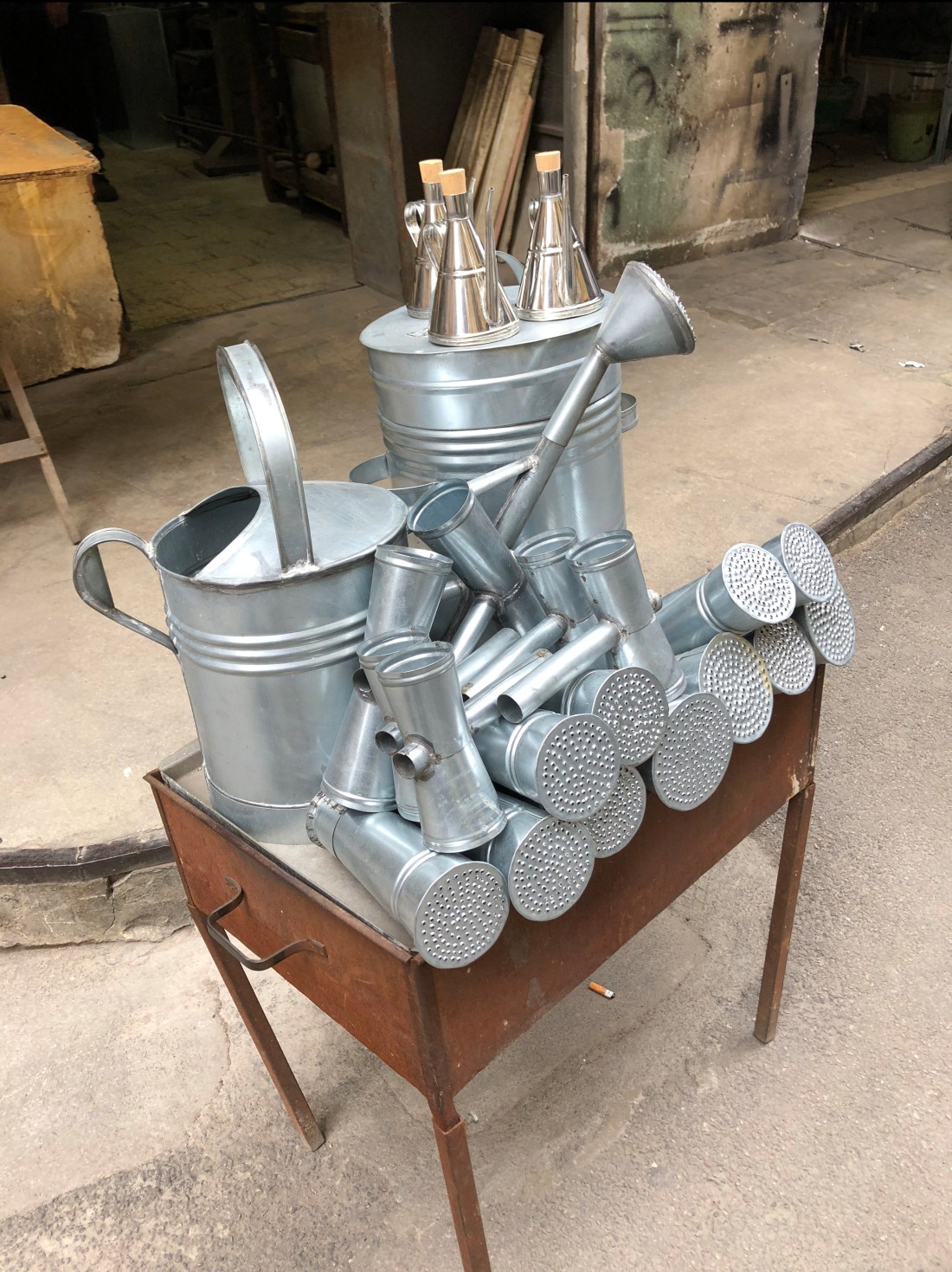
Still singing Marcella’s praises, it was like spending the day with a really good friend. Lots of laughter, passion, talk of sons and daughters. Towards the end we were walking down a street and she said “this is Calvin Klein’s favourite street”. It’s a street of iron wear, bbq’s grills, buckets. Turns out she’s guided for Hilary Clinton, Tony Bennett and Lady Gaga, Dolce and Gabbana. But she made us feel like we were her best clients ever. Ciao Bella Marcella.
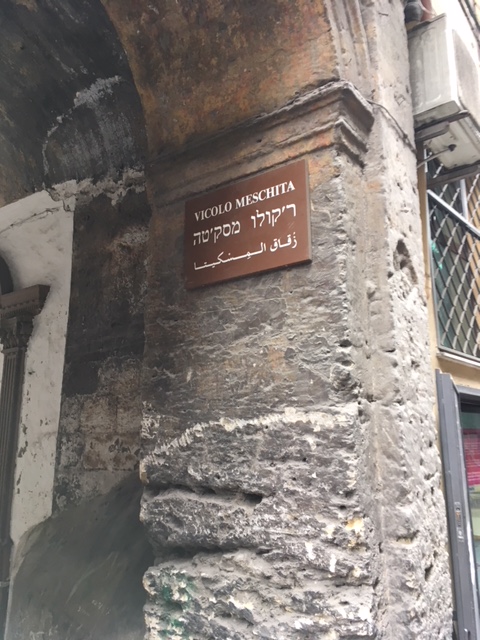
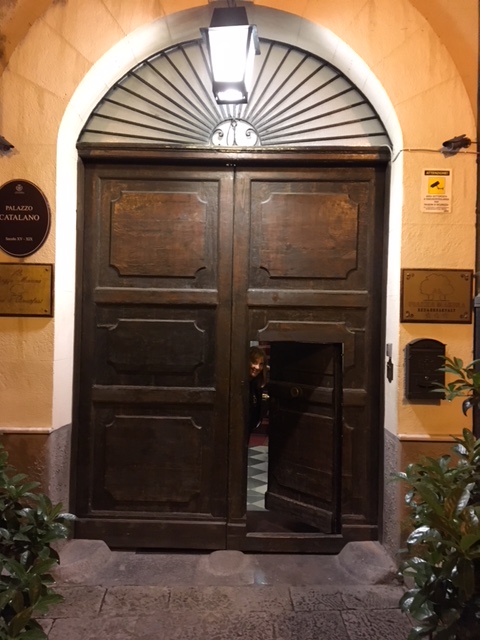
Street signs in parts of the City in Italian, Hebrew and ArabicAnother large door to our B&B
Our visit to Palermo was far too short, but we vow to be back.
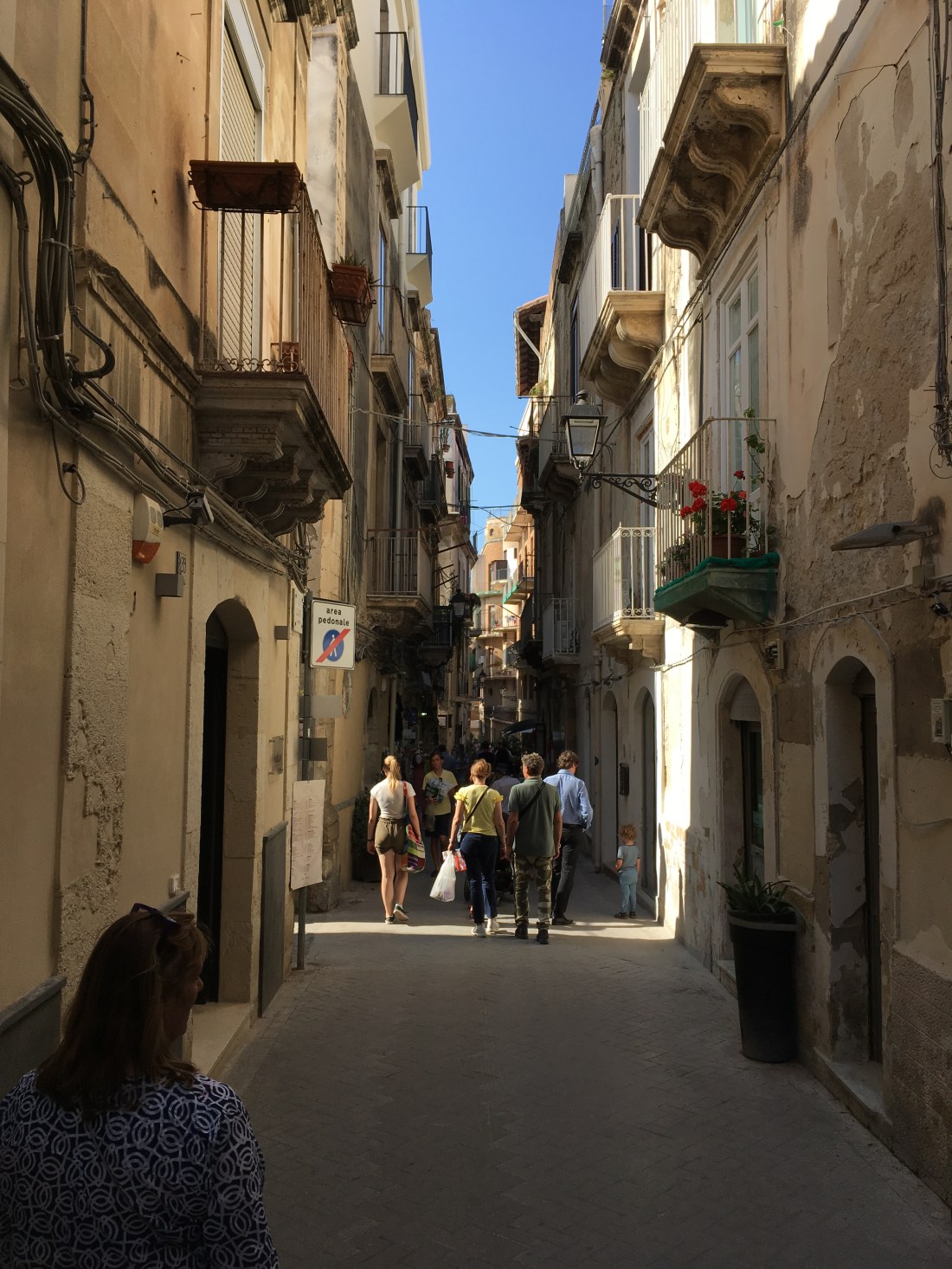
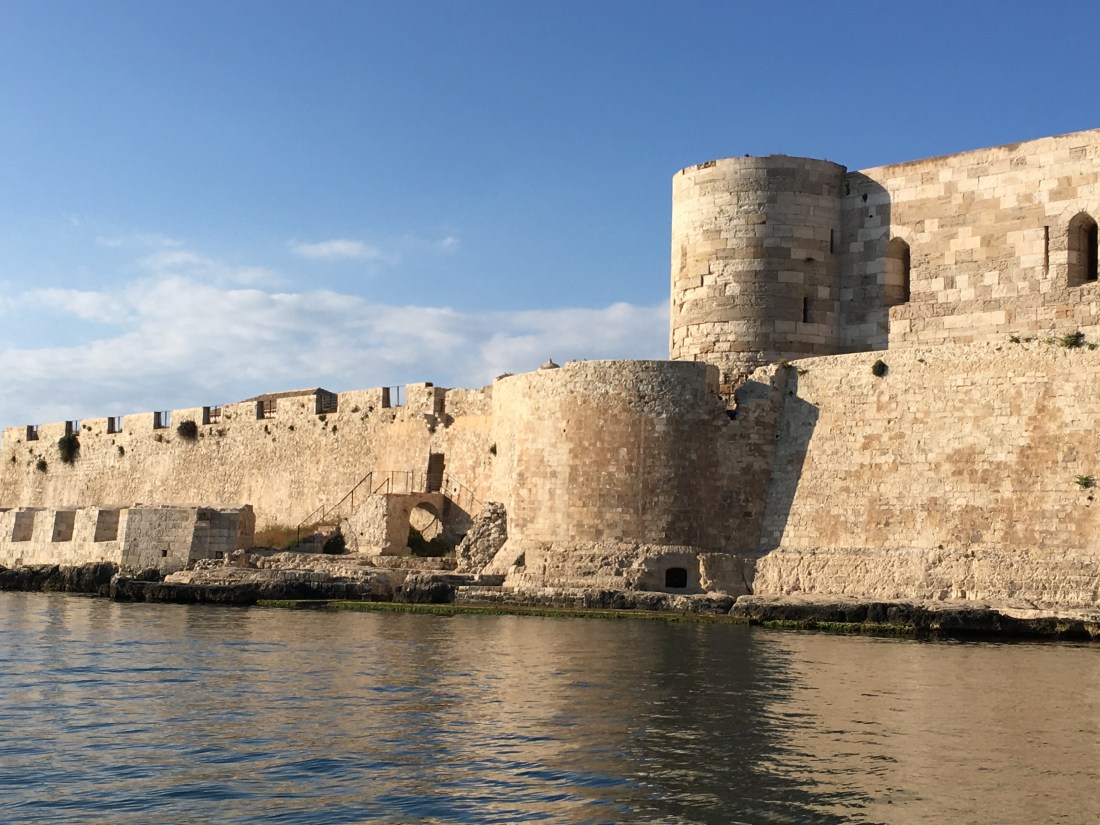
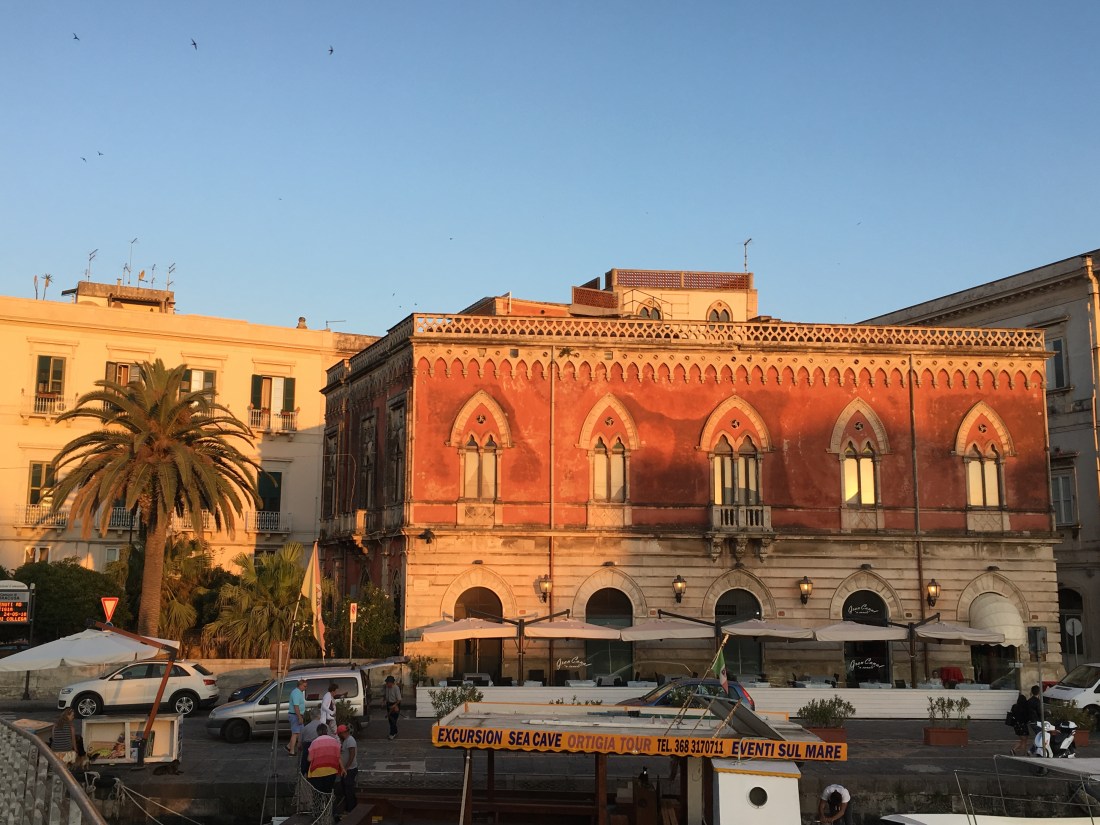
Ortiga, Siracusa
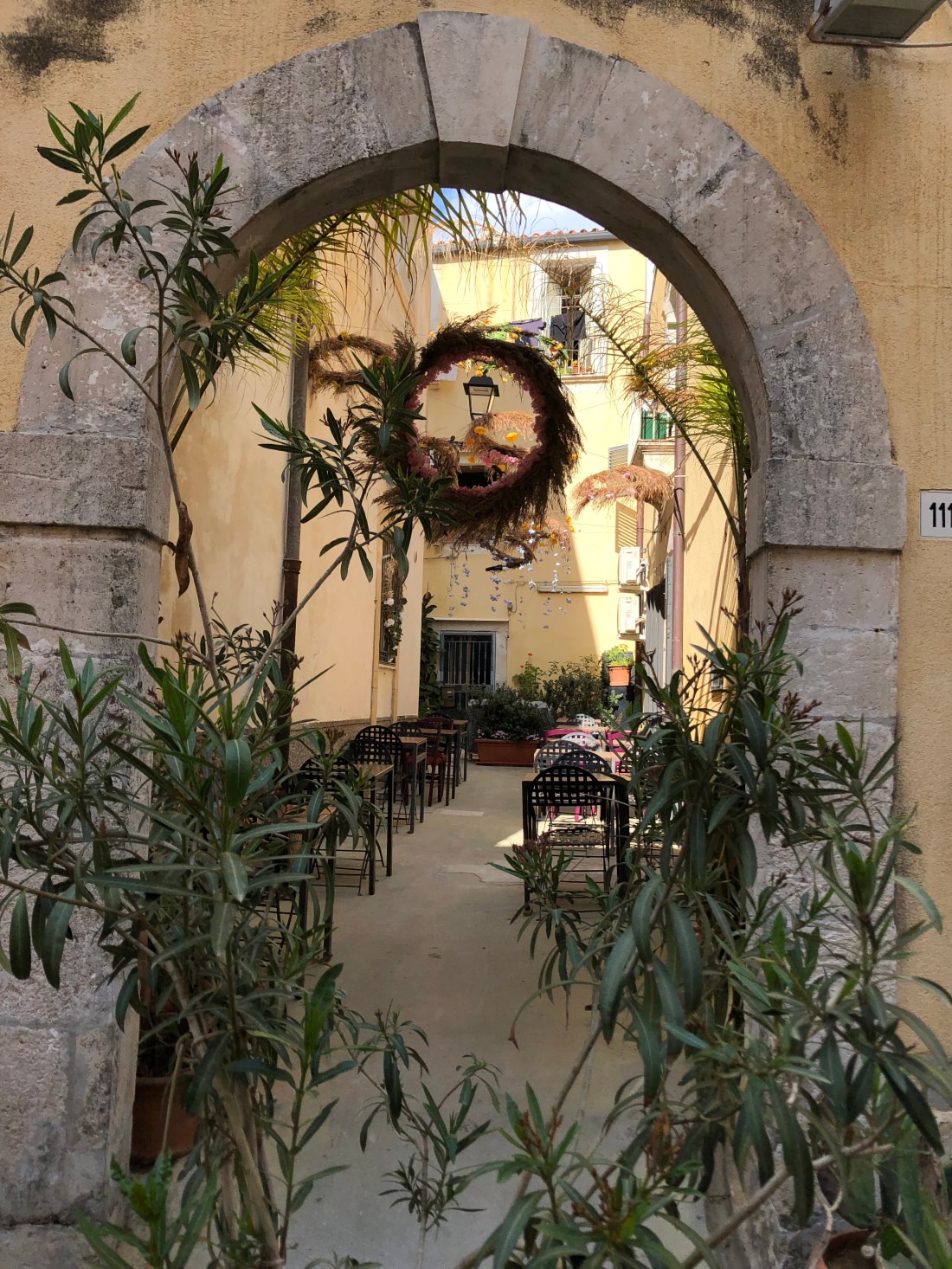
The incredible “Nat” – natgoesglobal.com 26 from Atlanta travelling solo to Tunis, Sicily, Malta and Turkey on her annual 2 weeks holiday. We met her on the train travelling from Palermo to Siracusa.Welcome to Ortigia, “We’re Sicilian”
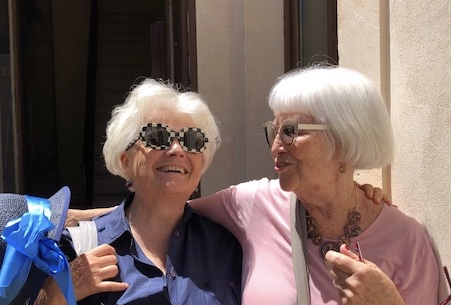
Amedea from Venezia and Doris from Roma, friends for 50 Years
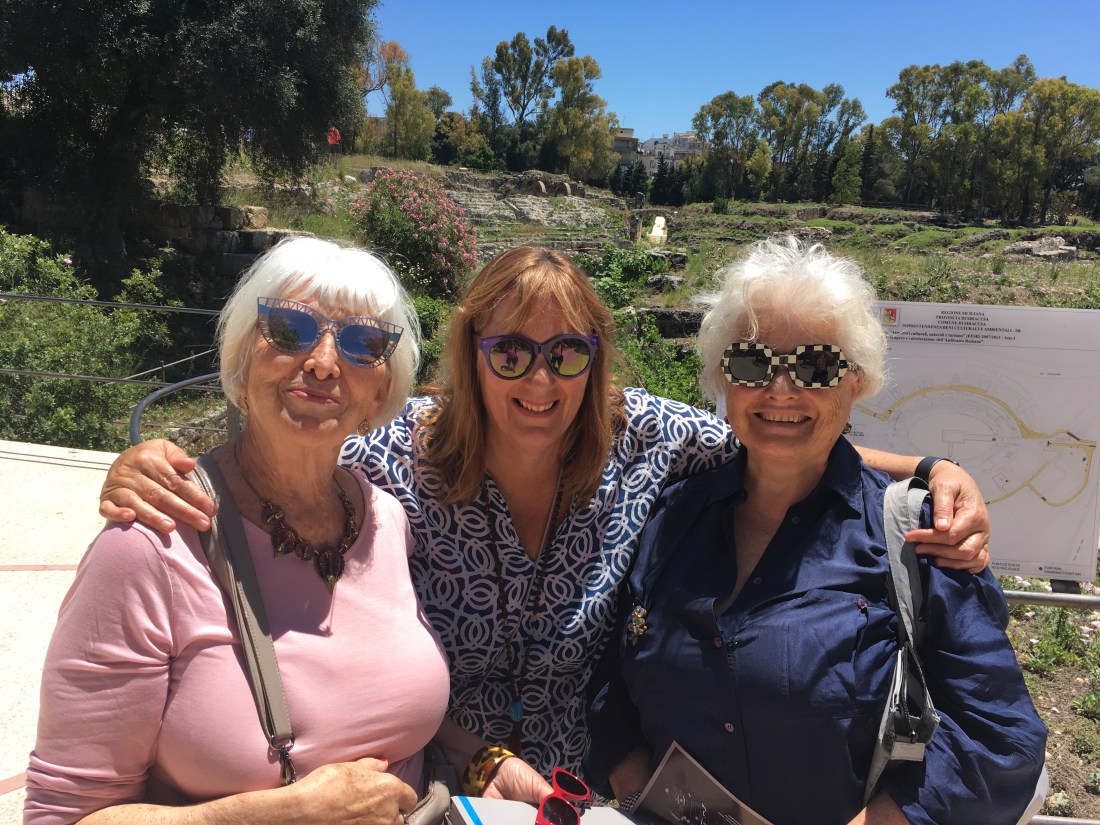
We met the fabulous Doris Mismetti in Roma over lunch in a beautiful Roman restaurant a few weeks ago where she engaged us by talking about food. Turns out she was heading to Siracusa at the same time as us: “We must have lunch”. We ended up spending a day with Doris and her friend Amedea. Two incredible woman, Amedea a psychiatrist, Doris who has worked for the FAO. There’s also been a documentary made about Doris, called Doris and Hong. Here’s the trailer, if you have time watch the film. https://www.youtube.com/watch?v=eGjFbNLbH00. The people you meet, it really is one of the special things about travelling. We can’t tell you how much we love these woman and we really didn’t want to say goodbye. You never know we may convince them to come to Australia.
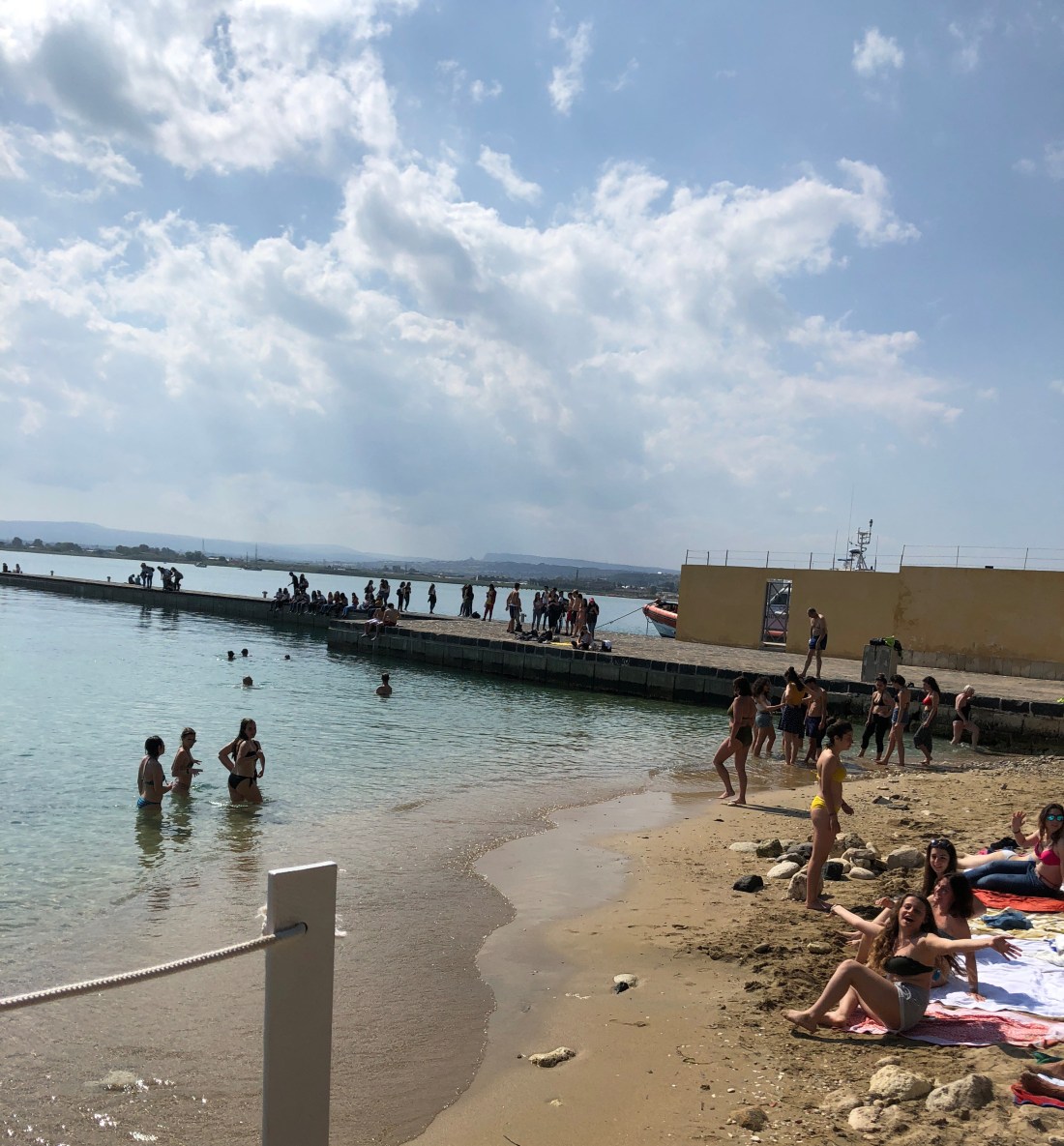
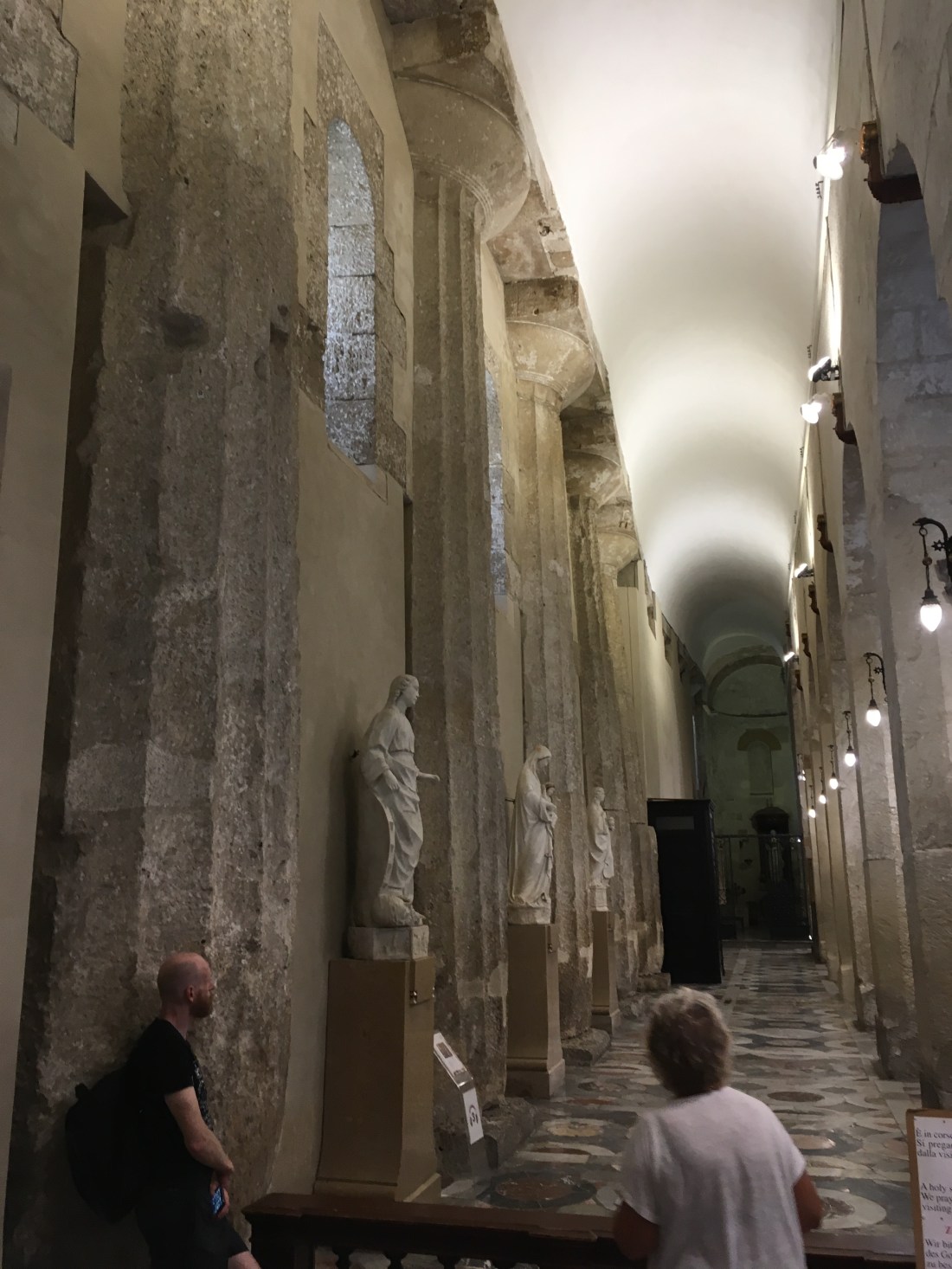
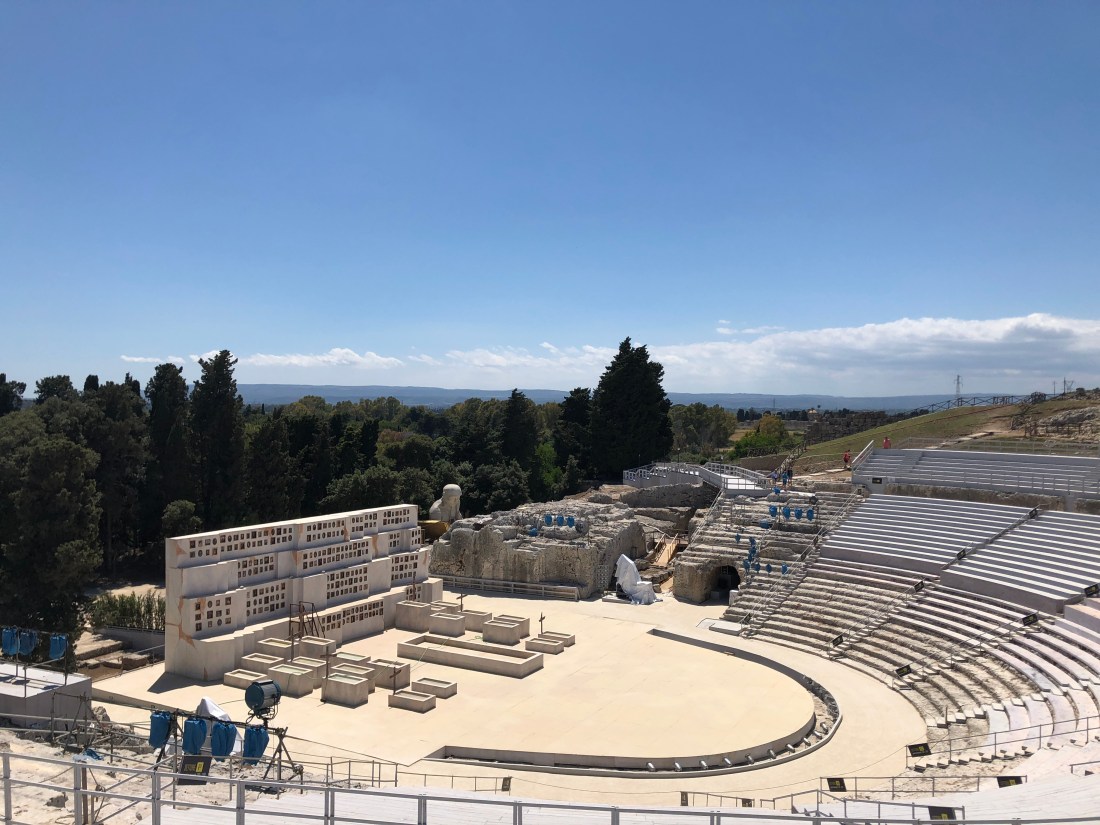
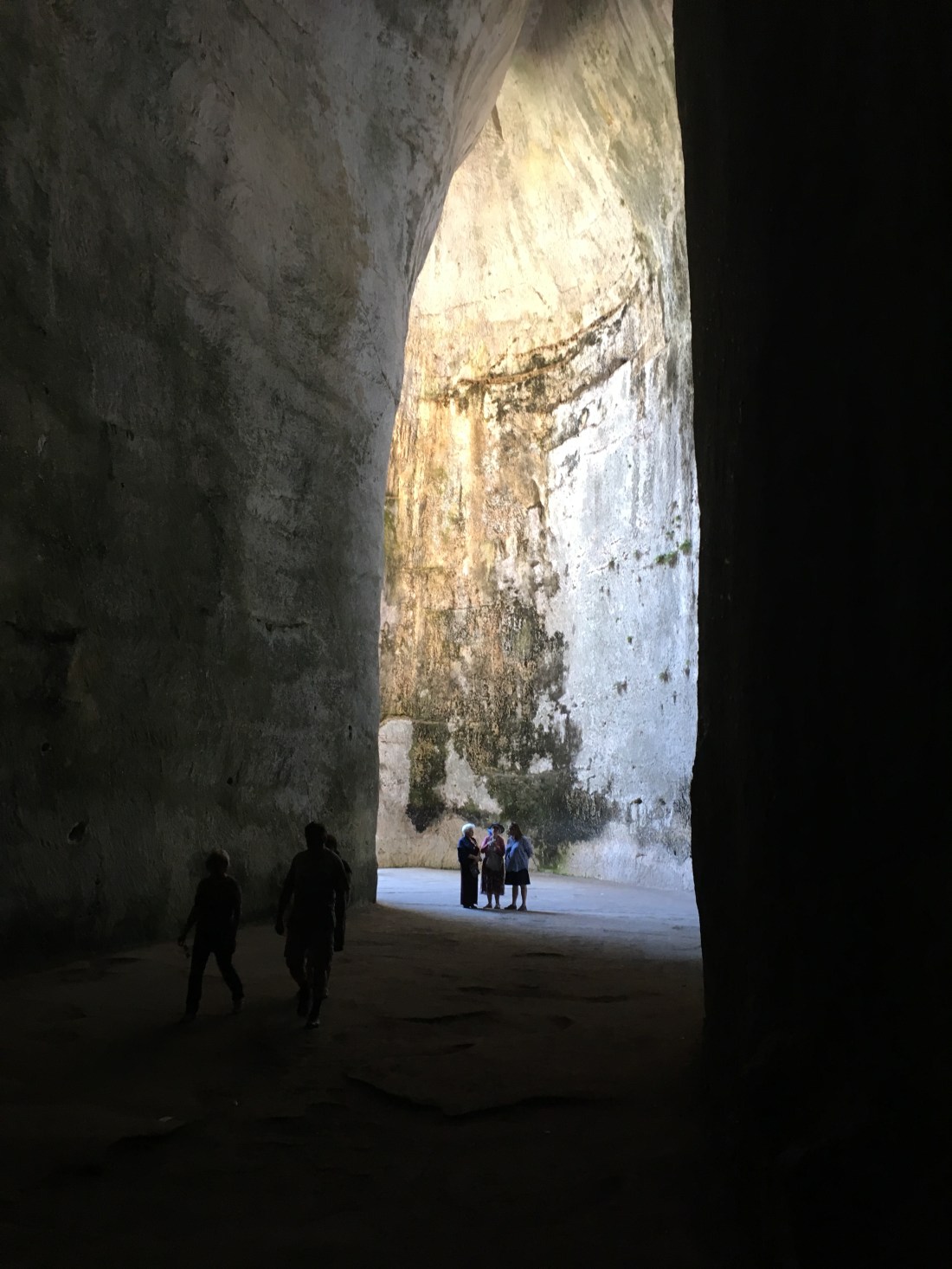
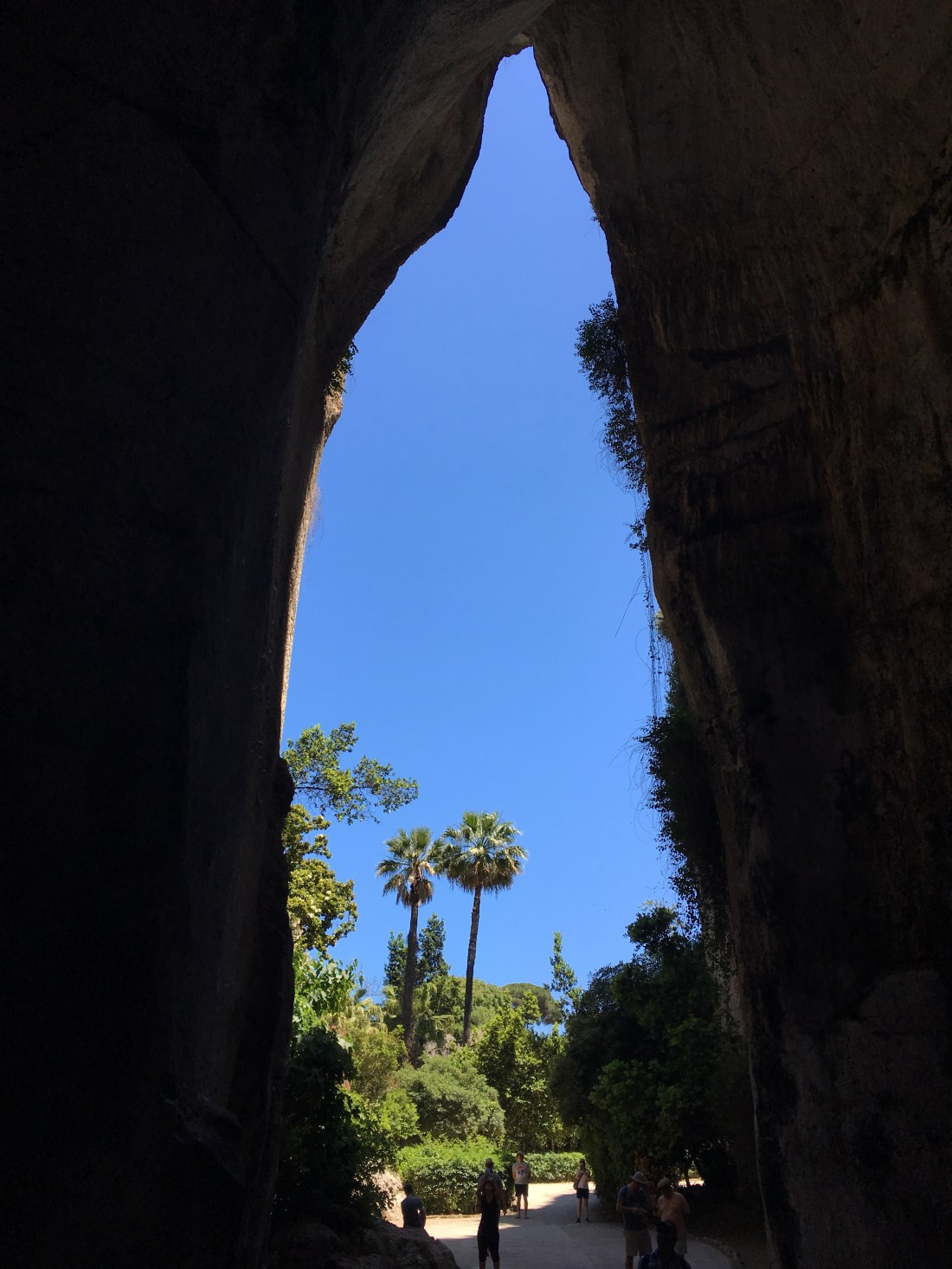
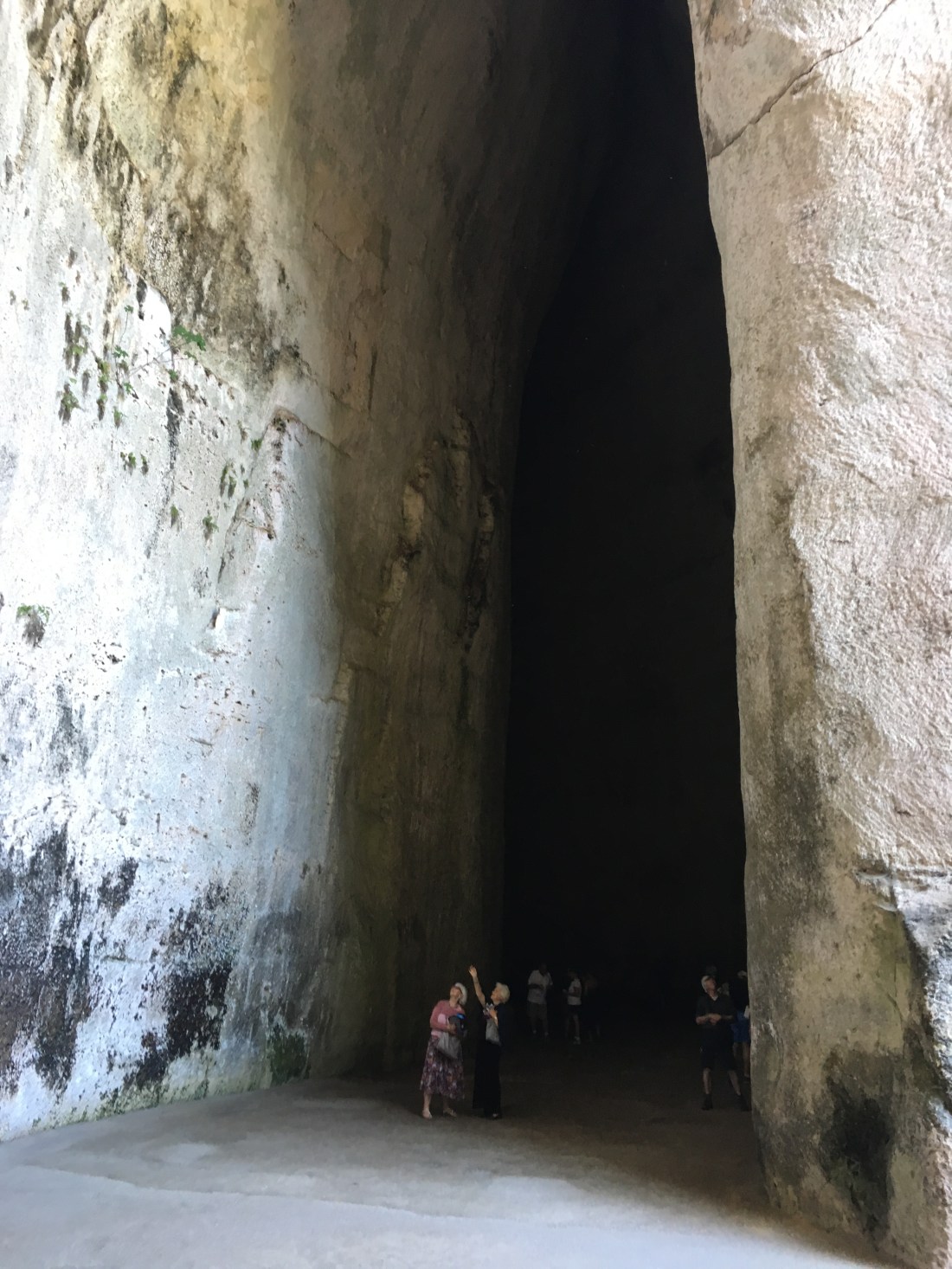
Doris & Amedea were in Siracusa to attend “Eracle” at Teatro Greco which is held in the ancient 4 thousand years old Greek Theatre. They said it was amazing.Orecchio di Dionisio (Ear of Dionysius) in the Latomia di Paradiso (Stone Quarry of Paradise) in Syracuse, Sicily –
Doris and AmedeaWe love our shades, Amedea’s are originals from the 60s
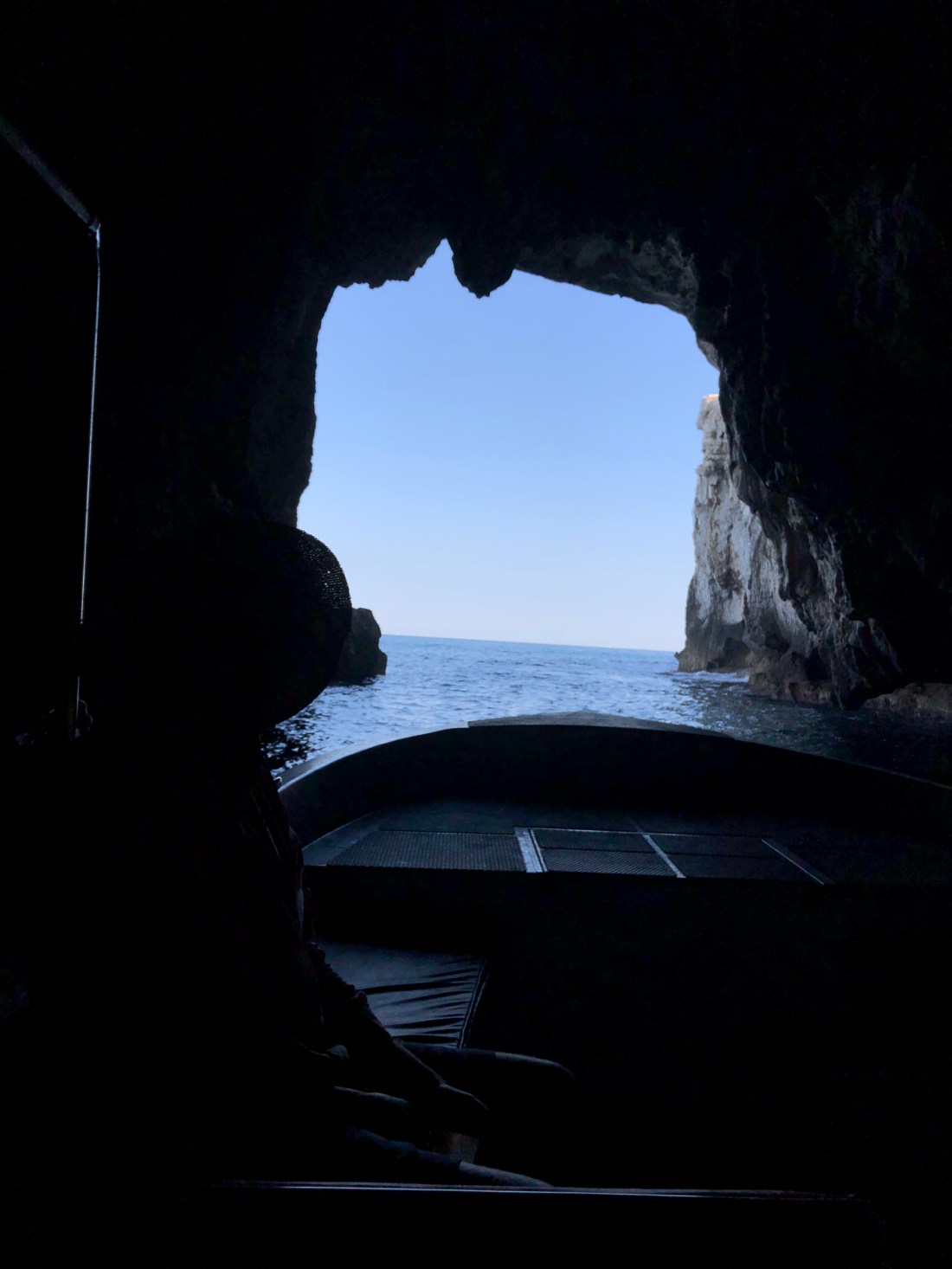
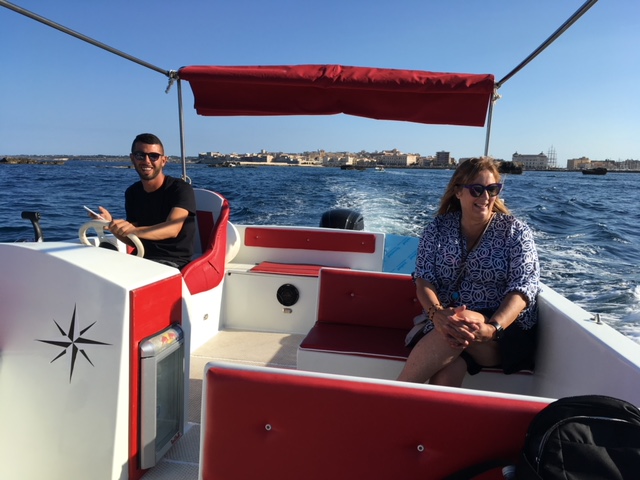
On our last evening we got talked into a boat trip. We knew it was touristy but we were tired of walking and the water seemed so cool and nice. It ended up being just us and Alessandro the 25 year old cool dude skipper. It couldn’t have been better. He played Italian love songs on the home leg.
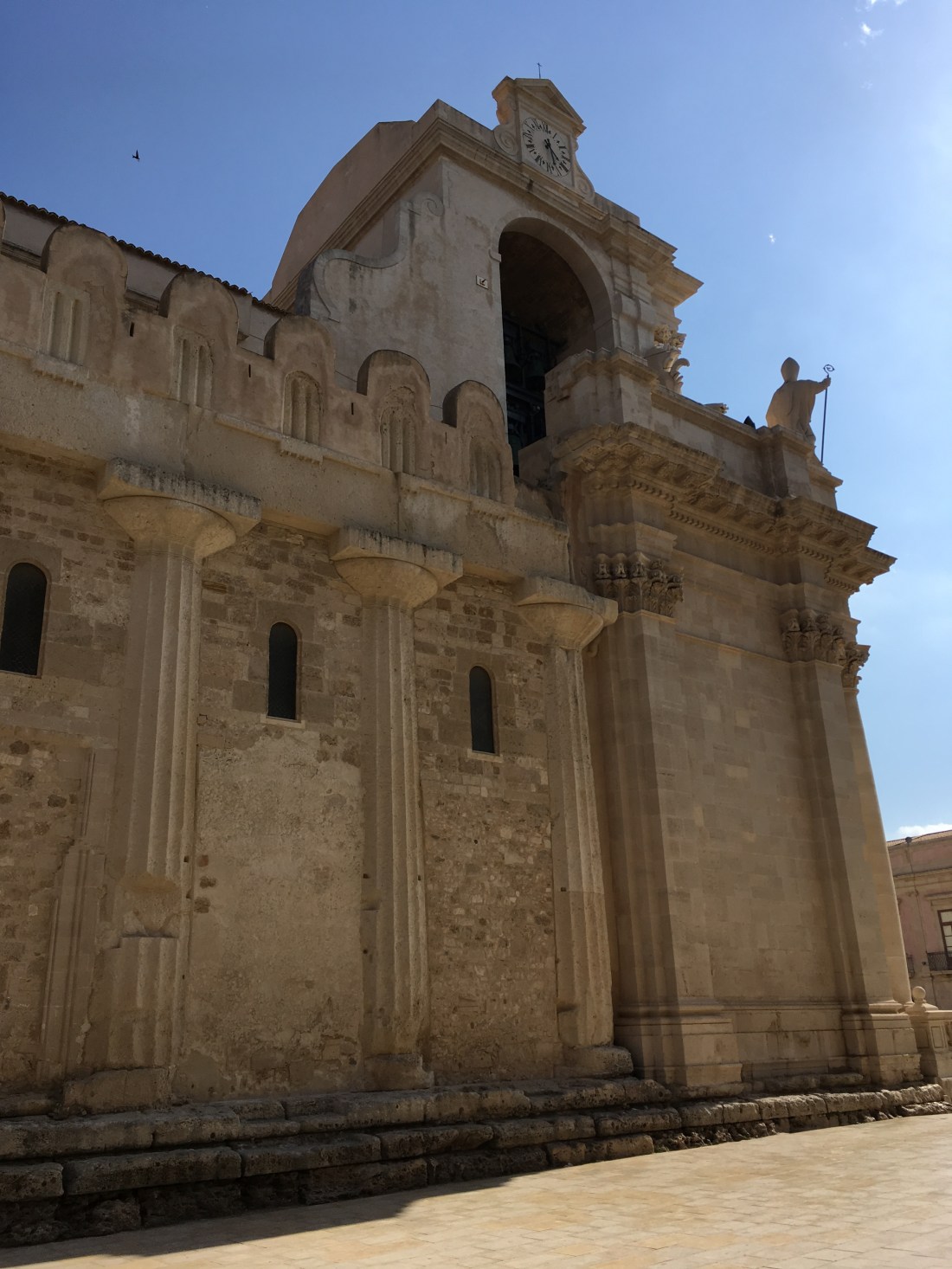
A shot you can only get from the waterThis building is a standout at the entrance to OrtigiaAlessandro and Alessandra
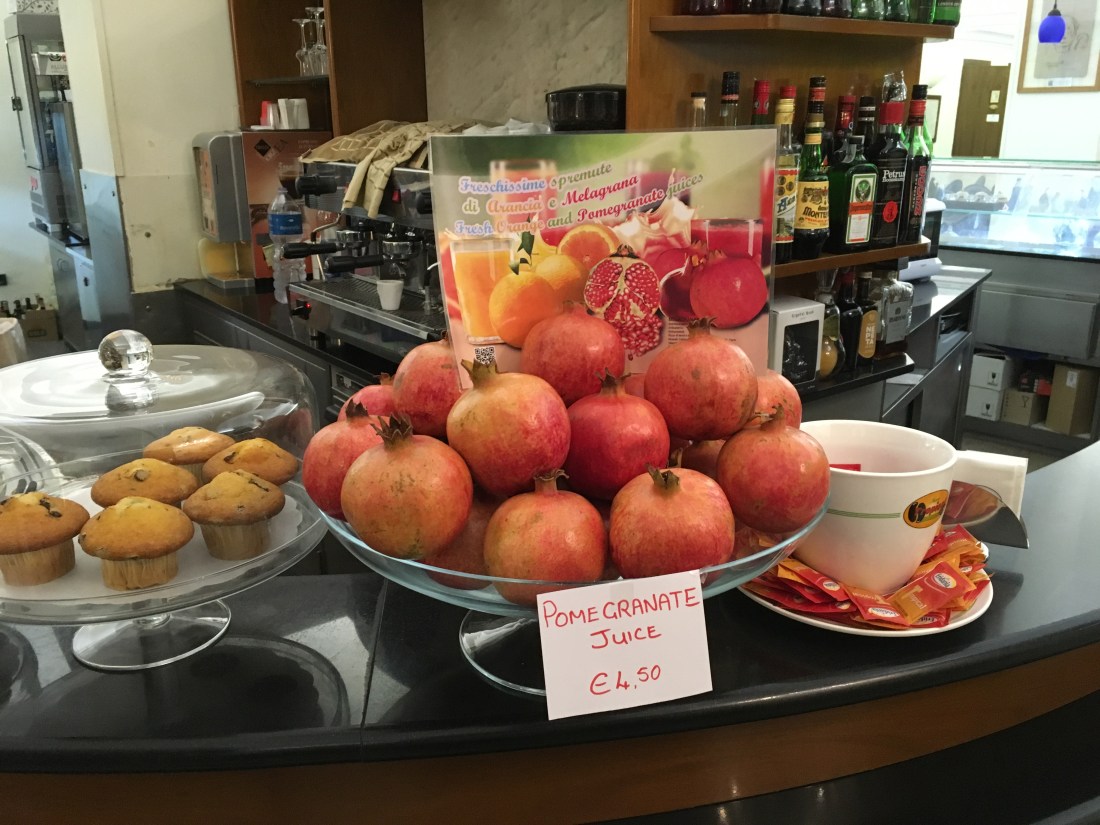
Rob ever the pomegranate fan, couldn’t resist a fresh juice.
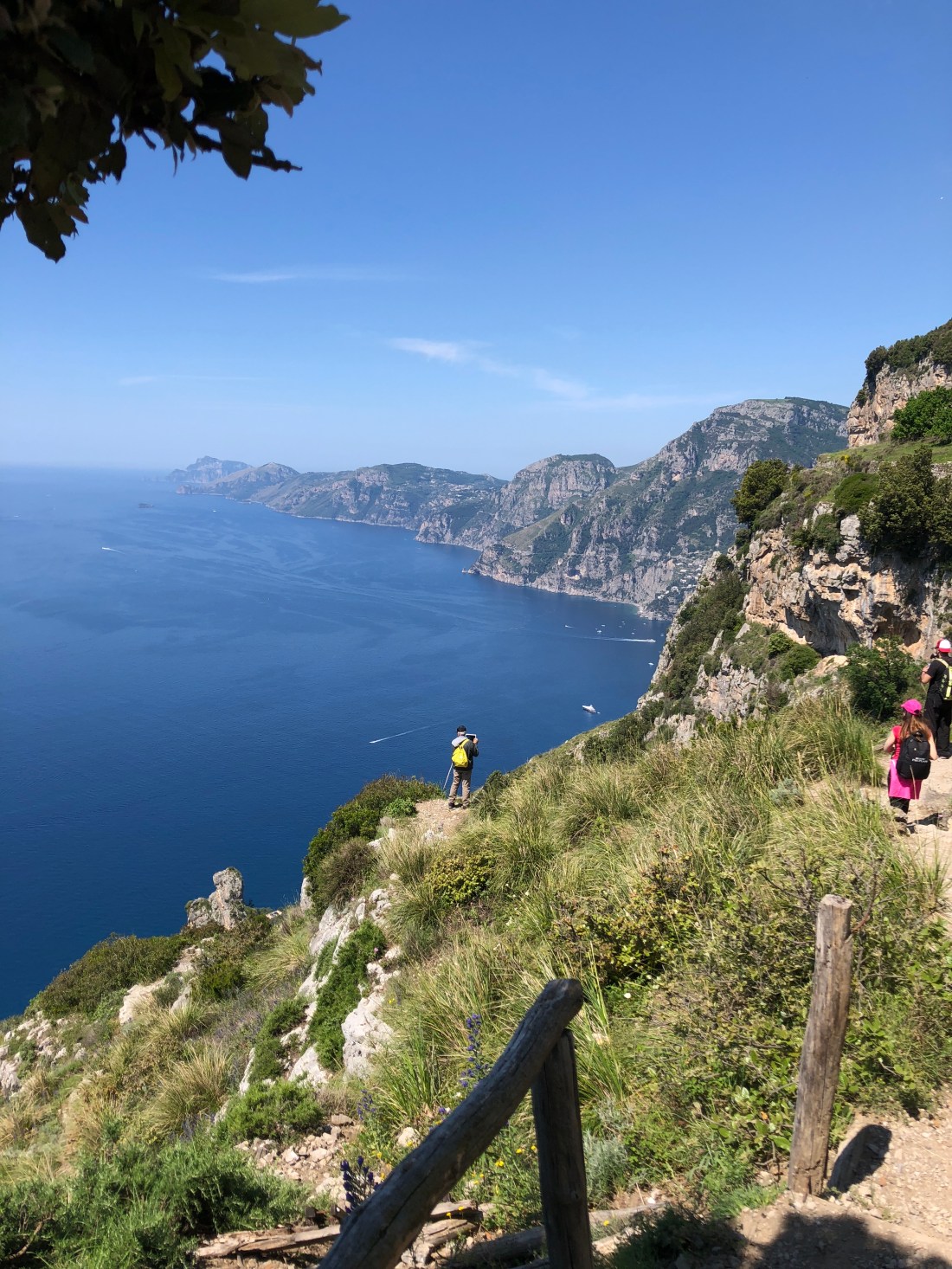
“I like to be encouraging”. Our “Route Manager” Stefano trying to explain to Alex why he said it was 500 steps up the from the Fjord rather than the actual 1000, this on a day that according to Alex’s pretty accurate smart watch, we walked 14.5 kms including an equivalent of 141 flights of stairs. Even Stefano’s beautiful Italian accent did not completely excuse his “encouraging” tactics! “Oh and by the way 4 people died on The Path of the Gods last year, 3 from heart-attacks and one from falling.” WHAAAT?
“Tour manager” Stefano and Alex at the Palace Murat the day after the end of our walk for our debrief
It was our friend Susie Beaver who suggested the walking and cycling tour company ATG, (Alternative Tour Group, based in Oxford). ATG organises walks in many parts of Italy. They book lovely authentic accommodation in beautiful places and then provide you with a guide book and Route Manager who is a local and gives advice on excellent resturants and local history and culture. They also take your bags are from hotel to hotel so we could just walk.
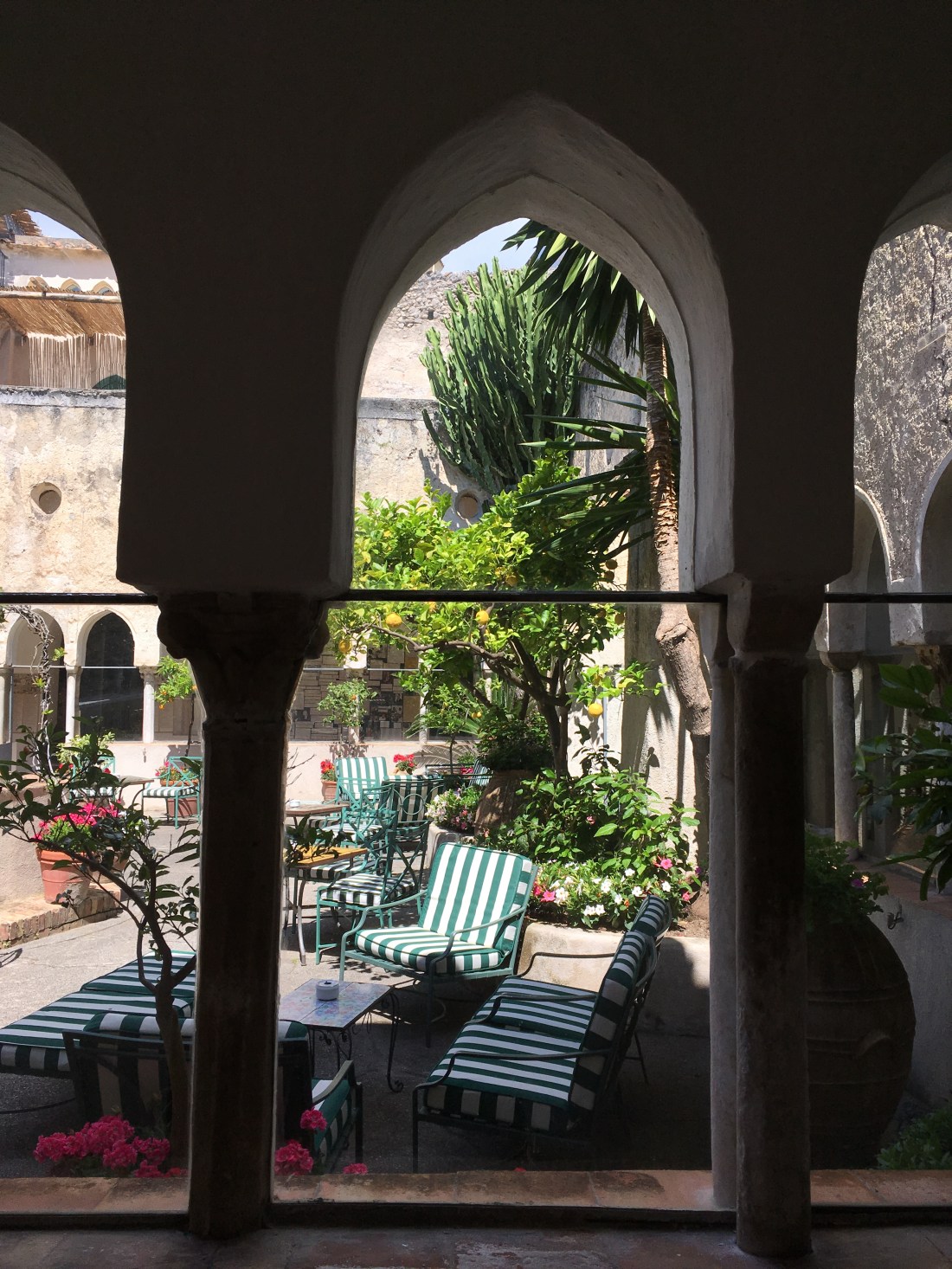
Stefano met us at our amazing hotel in Amalfi. The Hotel Luna Convento. The hotel, is a former monastery which St Francis of Assisi had a hand in founding in 1222. It has hosted guests including Wagner, Ibsen, Mussolini, Roberto Rossellini and Ingrid Bergman and now Rob Thorman and Alex Sloan.
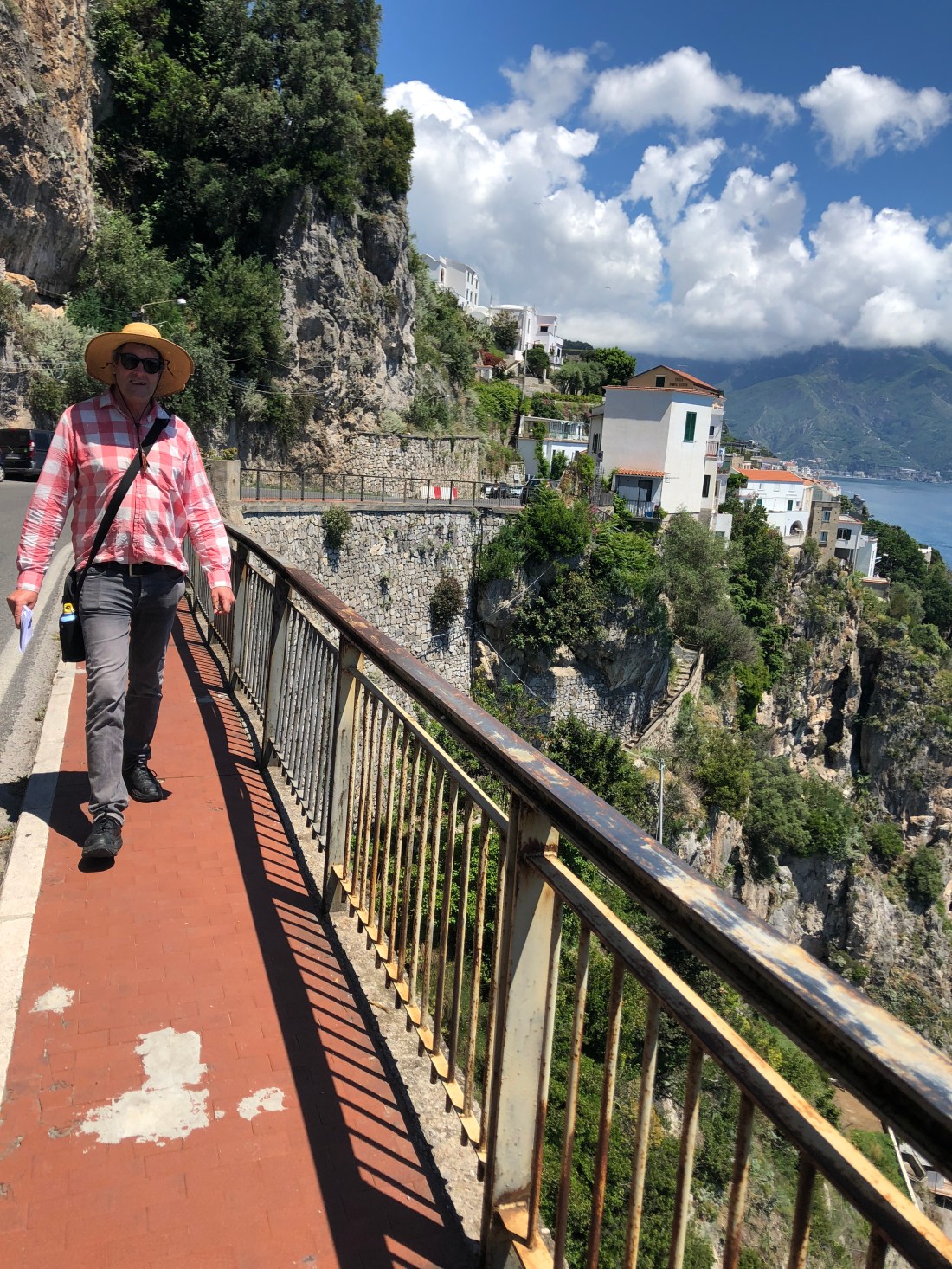
Courtyard of former convent Hotel LunaSlighly treacherous walk from Hotel Luna to Amalfi with occasional encounters with the very large local SITA buses
Stefano is Amalfi born and bred, the youngest of 4 brothers who all own and run a local restaurant. Stefano has a Doctorate in Economics and a Masters in Marketing and Tourism. He is erudite, charming and of course encouraging. “You will find the path very characteristic, full of flowers, fruit trees, it is very pretty”
We bought our panini and candied Amalfi Lemon Rind from a lovely girl who when she found out we were walking to Conca Dei Marini said “I think it would be better if you take the bus?”
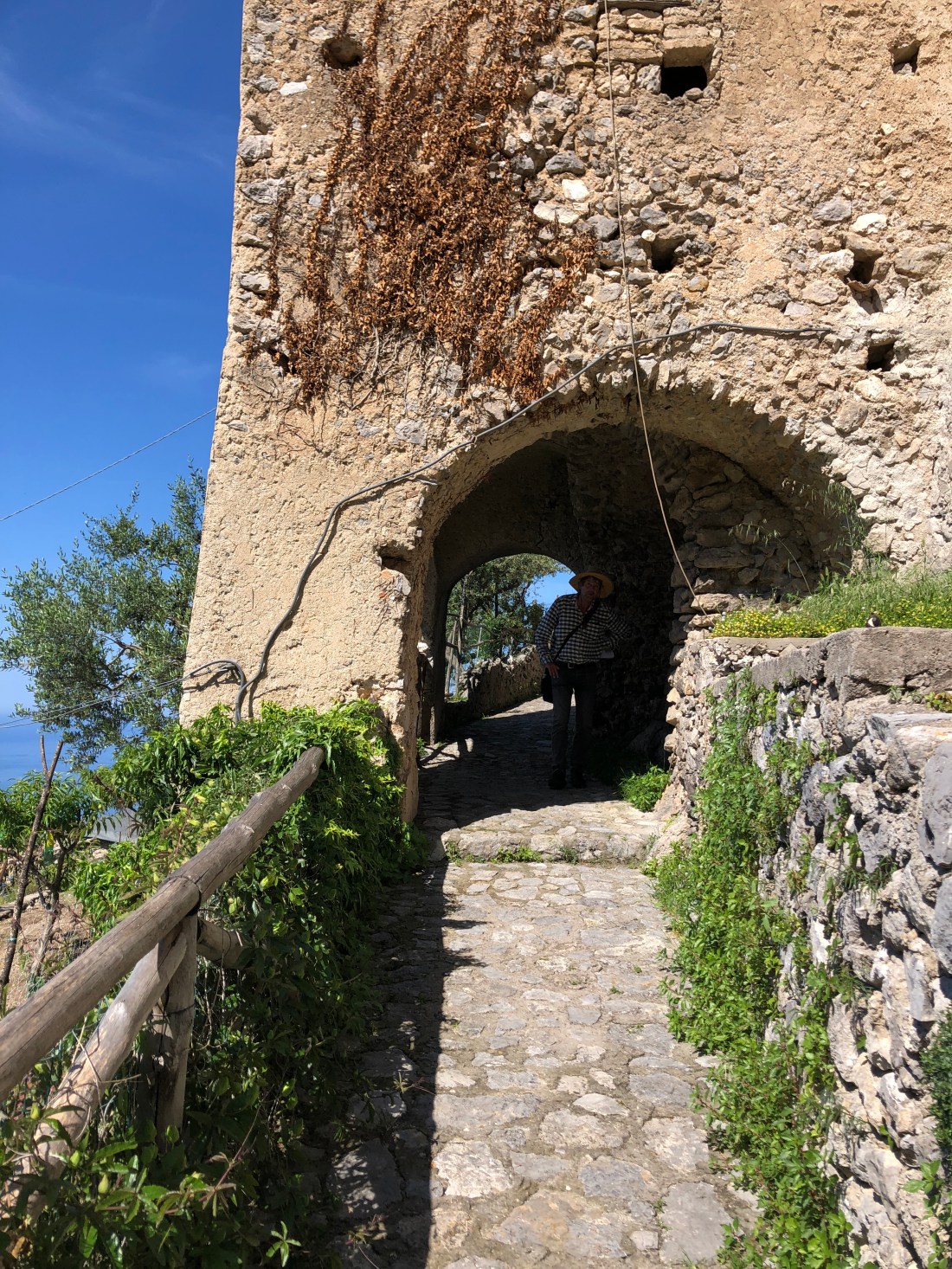
But Stefano was right, it was full of flowers, fruit and very, very pretty.
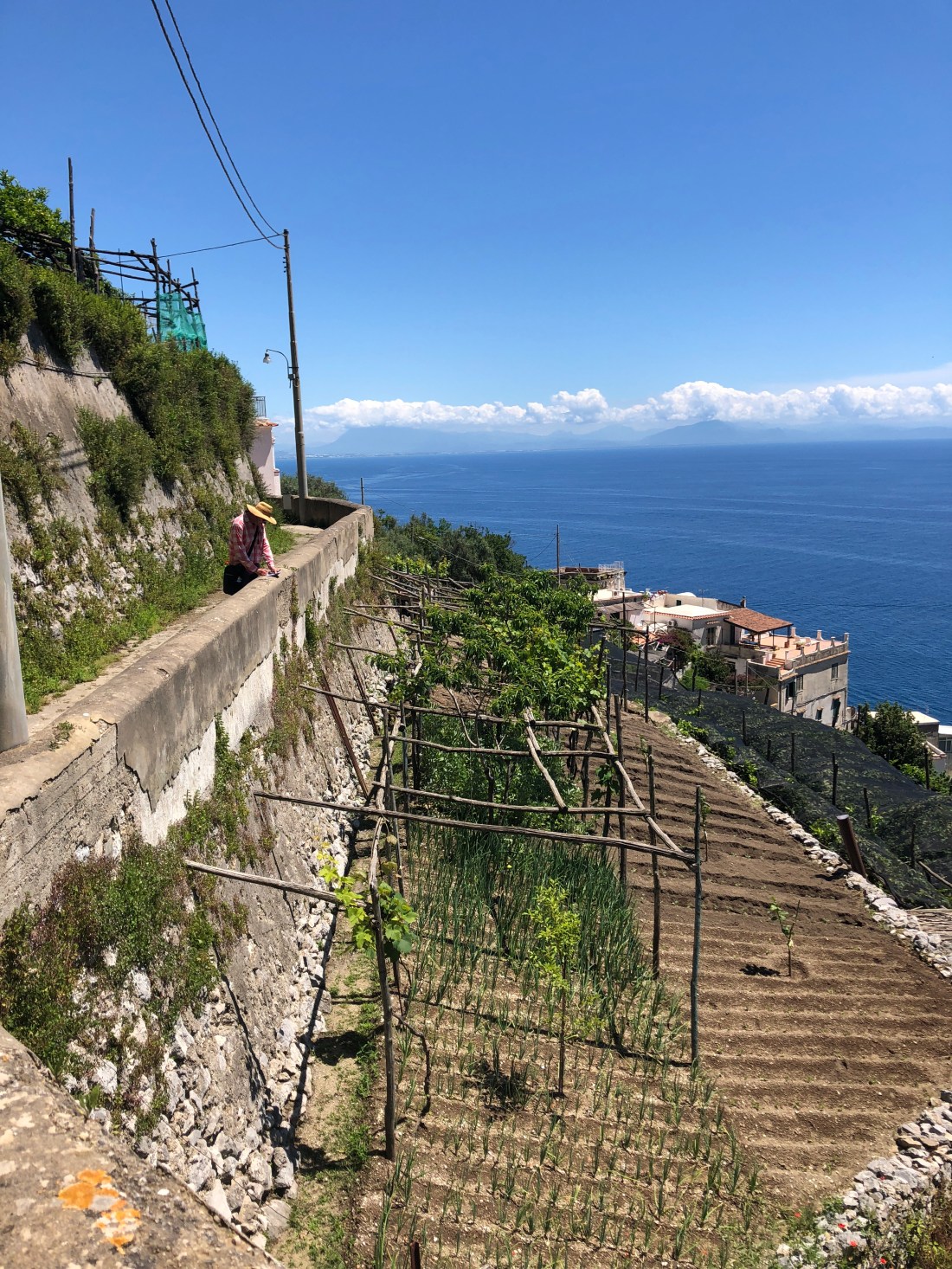
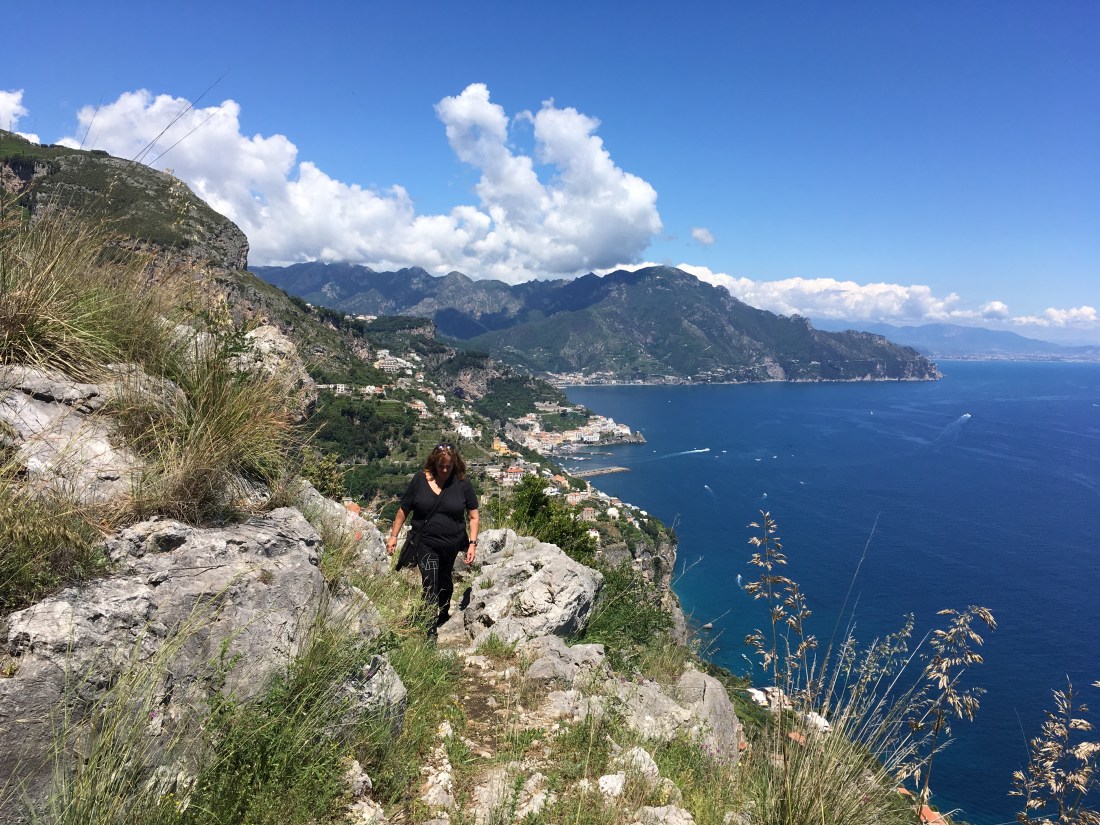
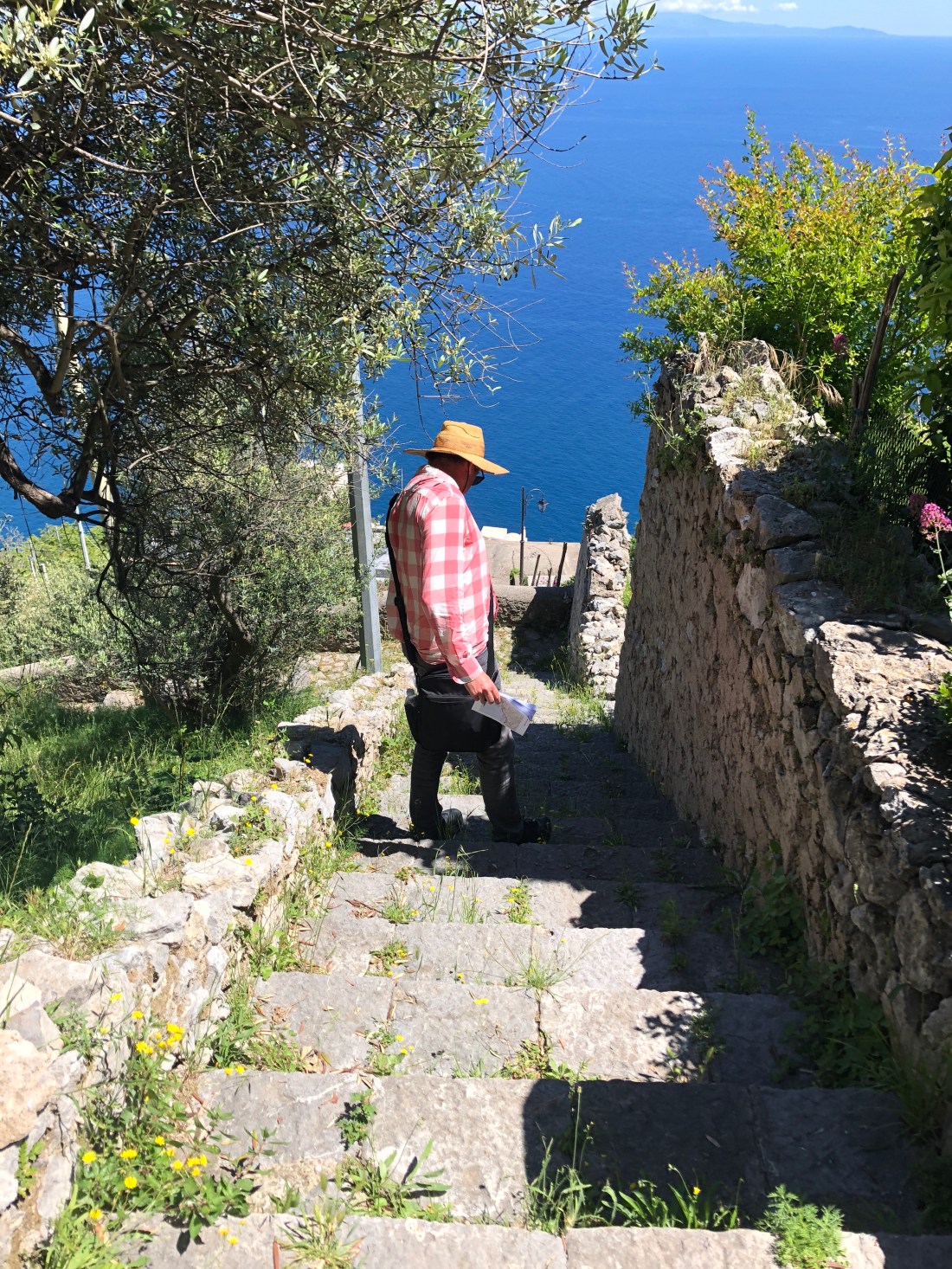
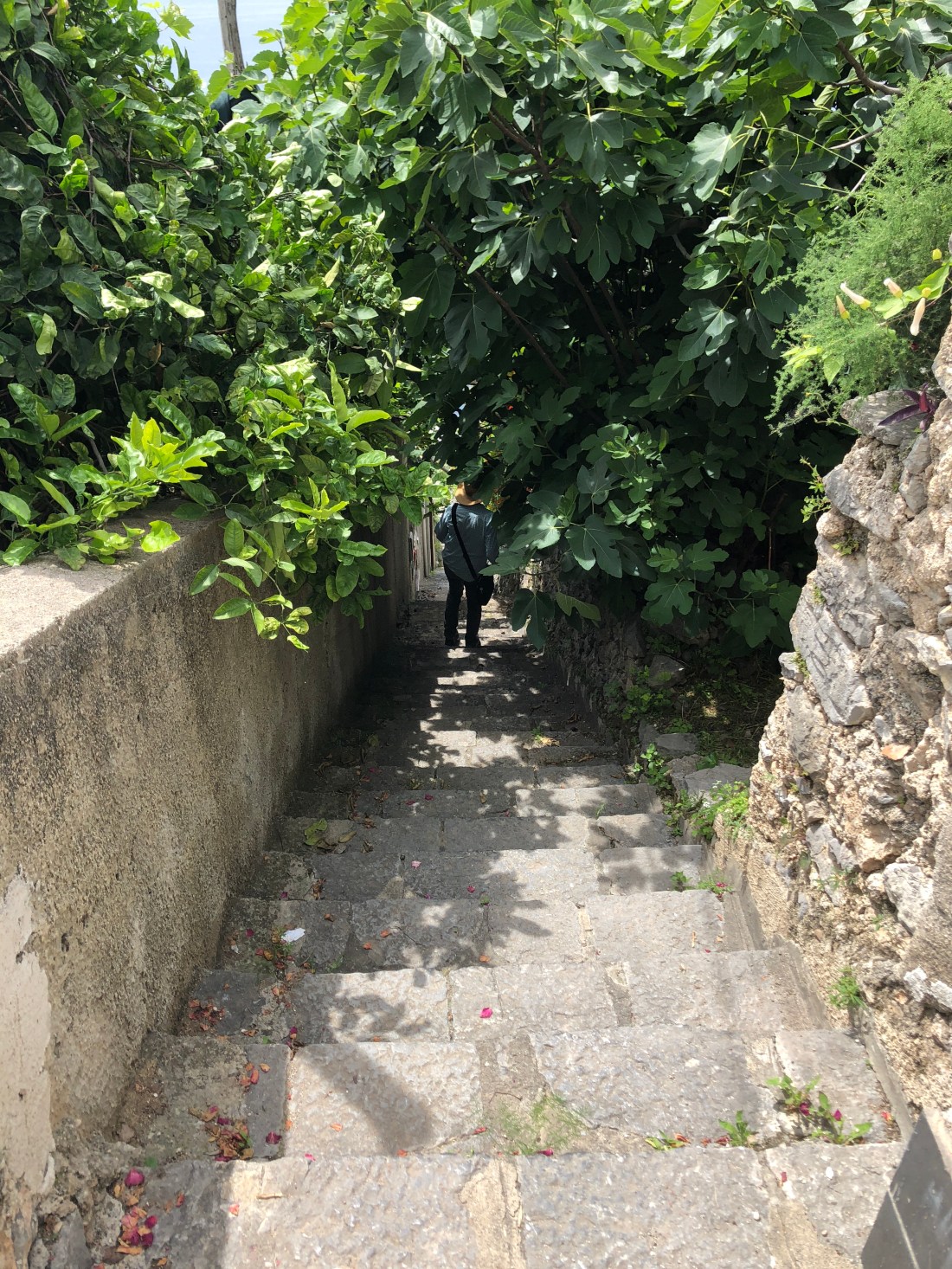
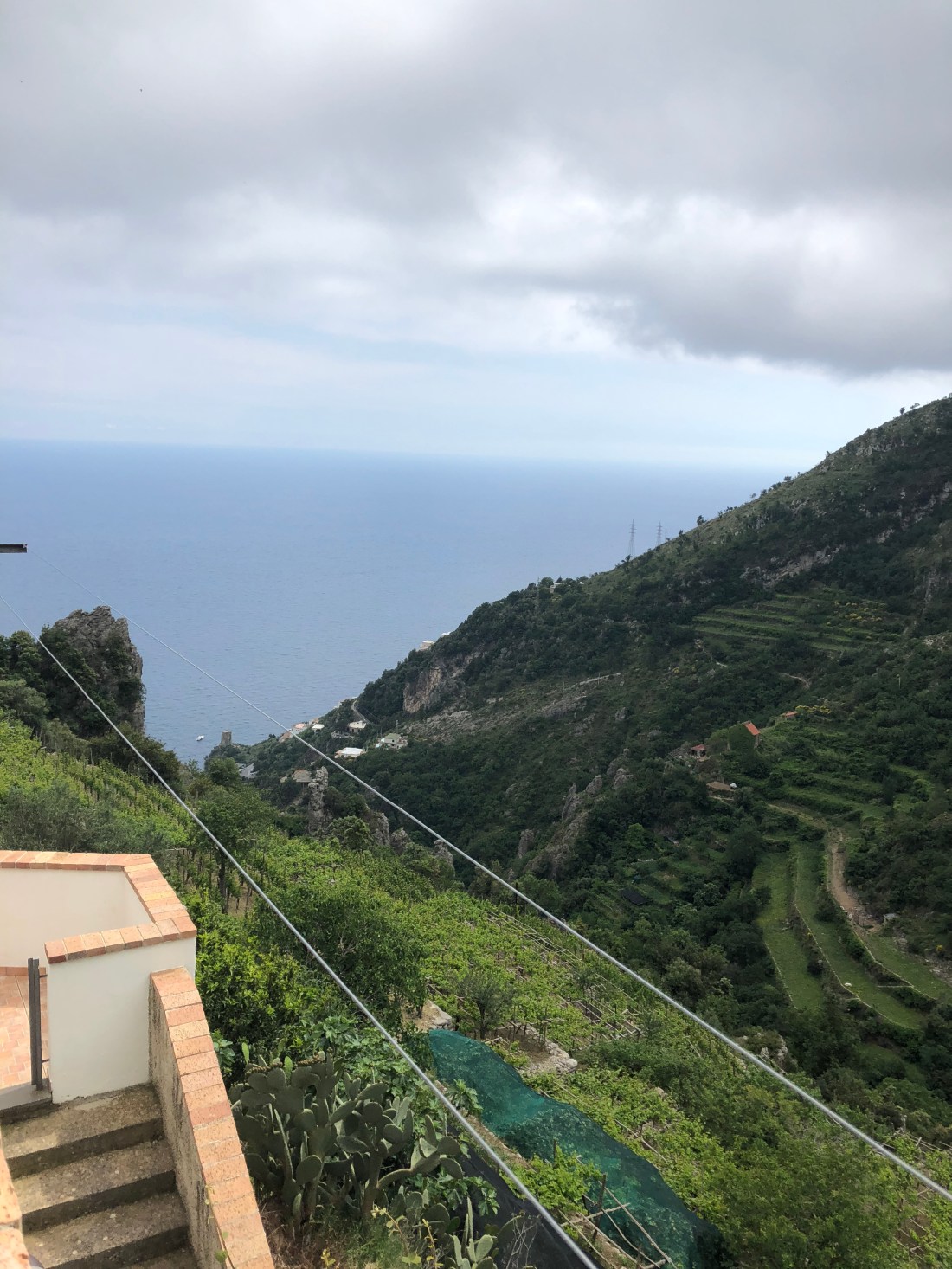
The path followed terrace gardens, with spring plantings of onions, broad beans, tomatoes, zucchiniOnce you get above the cultivated terraces the path gets a little rougher. The book warned: “brief sections here are a little vertiginous”For every step up there would be an equal number back down
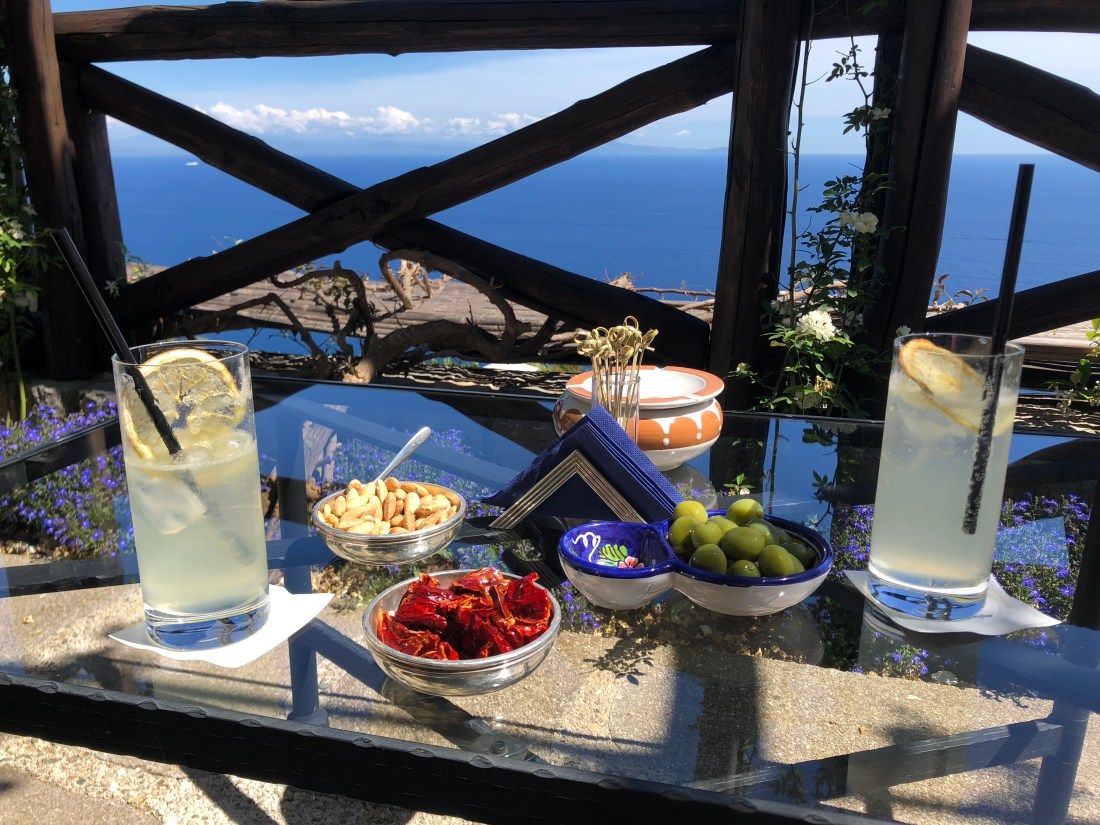
There are many many many stairs. But at the end of your journey an Amalfi Lemon Soda is there to bring you back from the brink. This one at a bar of another monastery, Monastero Santa Rosa, now a very expensive hotel.
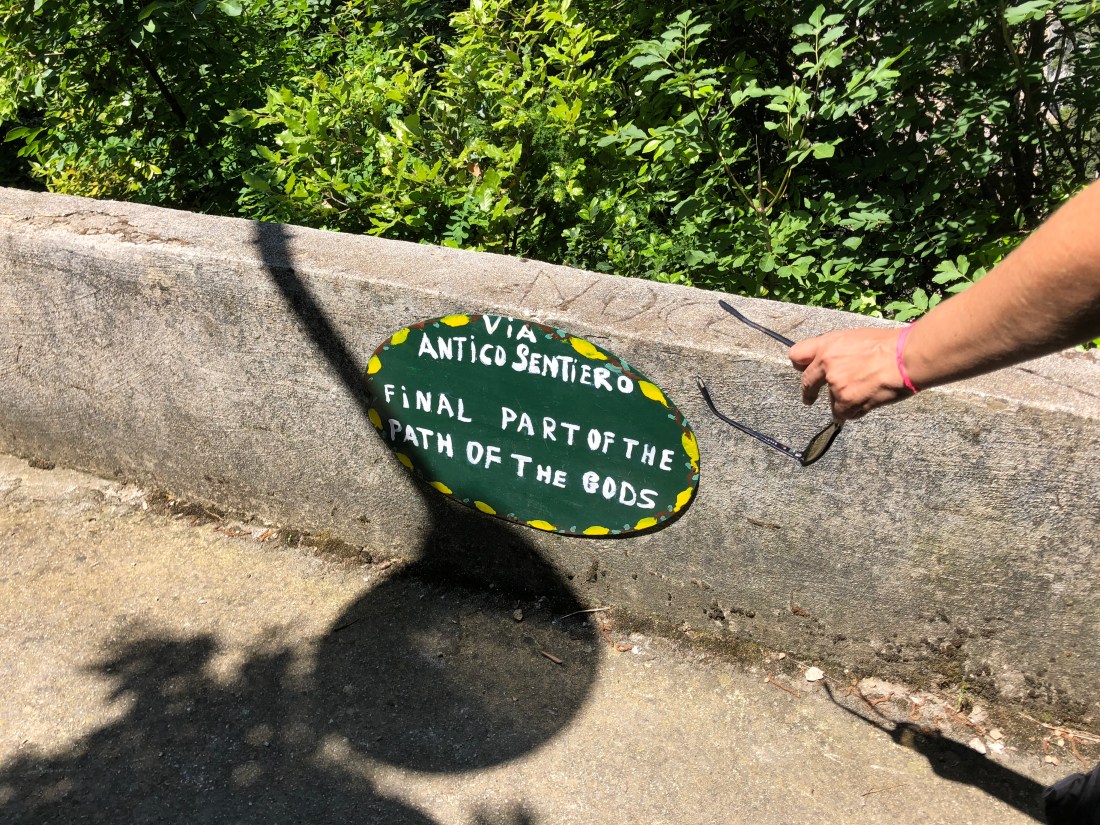
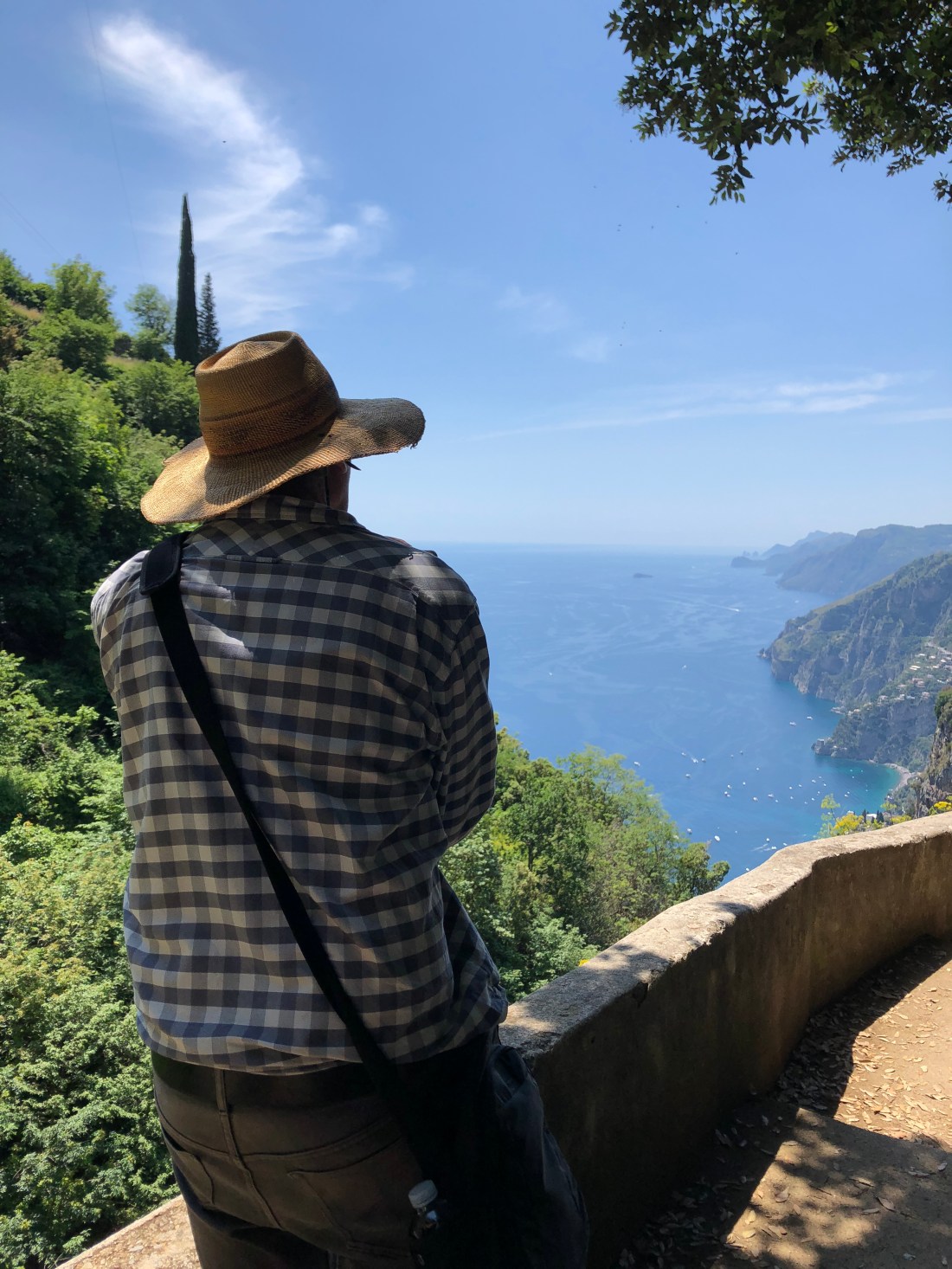
The walk Day 1: Amalfi to Conca Dei Marini, Day 2: Conca Dei Marini to Vettica Maggiore, Day 3 Vettica Maggiore, via Path of the Gods, to Positano.
For the first two days we really had the path to ourselves, walking past people’s front doors, gardens, and on to narrow over-grown paths on the sides of cliffs. We really were away from the crowds.
The further you followed the steps and pathways away from the roads, the more the beautifully constructed terraces become overgrown and abandoned
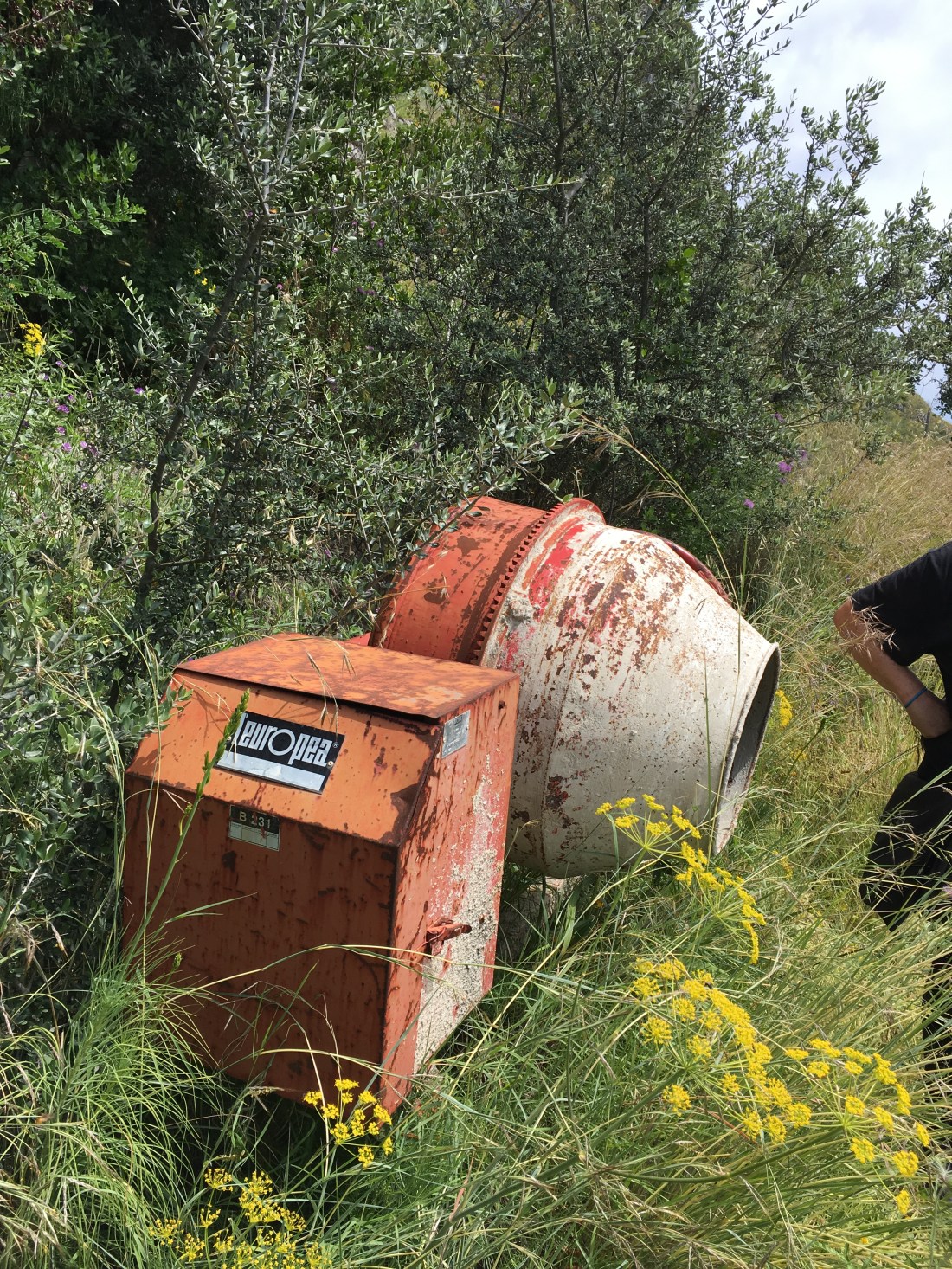
Evidence of former dreams of concrete on an abandoned terraceOn the second day of the walk we took the opportunity to stop for lunch at a lovely family run farm Serafina Agriturismo.
Stefano booked in advance for us to have lunch at Serafina Agriturismo and we were met by the lovely Rosa. She showed us their produce, from olive oil, dried tomatoes, olives, cured meats and salamis, cheeses, walnuts and various fruits.
We had a lovely selection of Bruschetta, cold meats and olives and thought we’d had a lovely lunch, then came a serve of Ravioli, and then a delicious dish of beef in a tomato sauce, all made from ingredients from the farm.
Rosa’s family is rare, they are maintaining the farming tradition and are diversifying, with a number of rooms available for a B&B and the arrangement with ATG which brings in a small number of visitors for the lunch that we enjoyed.
Rosa told us that many of the neighbouring farms were abandoned during the 50’s and 60’s with many people emigrating to Australia, Canada or Germany. With the farms now deserted and the climate changing, with more intense summer heat waves, fires are becoming a more serious threat. You can see evidence of the intense fires last summer that have also taken out some of the walking tracks.
Looking out at this beautiful cultivated landscape you do wonder how much longer it will last. How many young people will want to undertake the hard work of tilling the terraces, when they are all connected to the internet, many learn English at school and have options to live and work elsewhere.
Stefano told us that there is a growing awareness among young people about mass produced food and pollution and the value of healthy nutritious food, and many local young people are returning to the villages.
The Path of the Gods
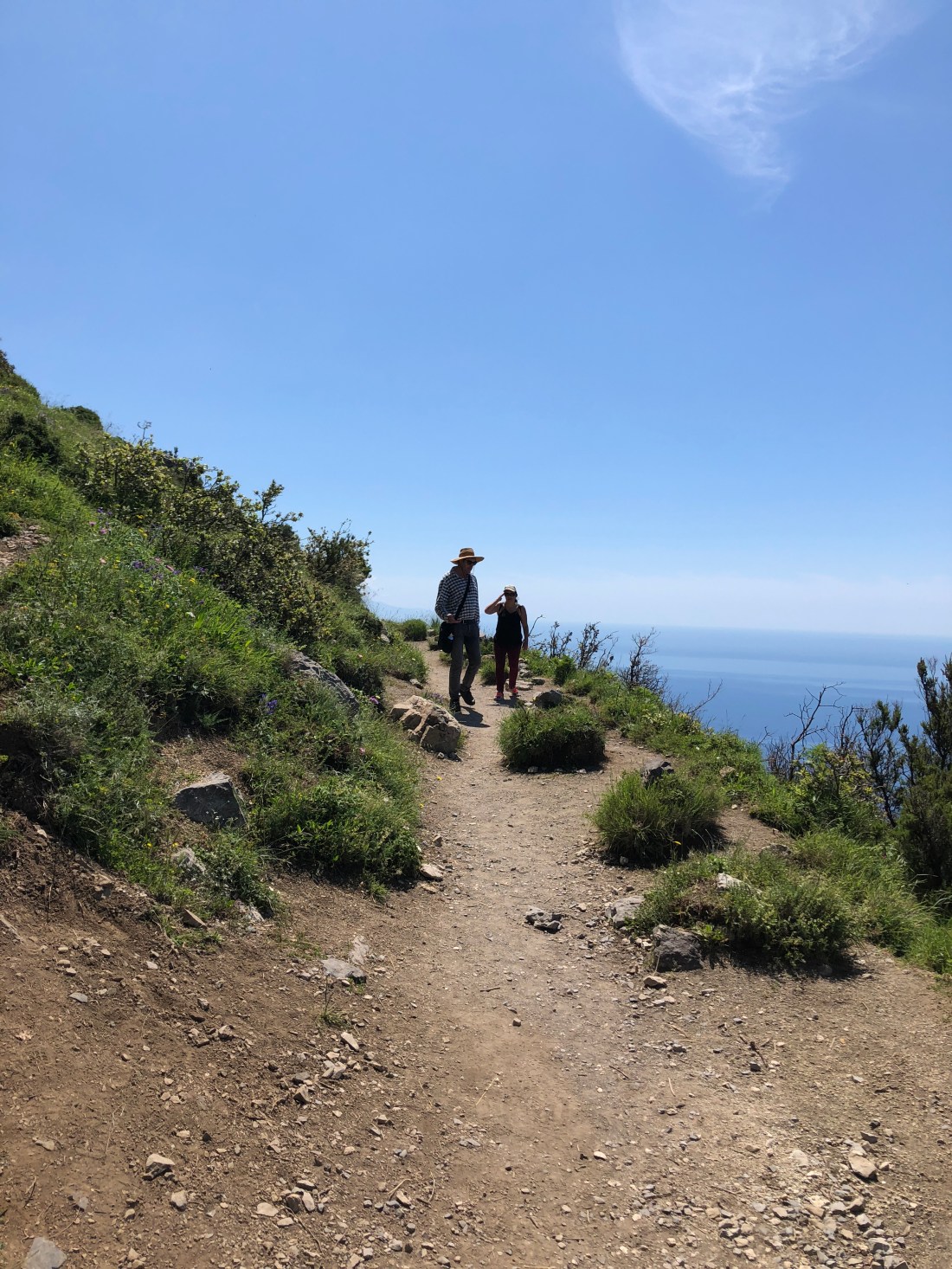
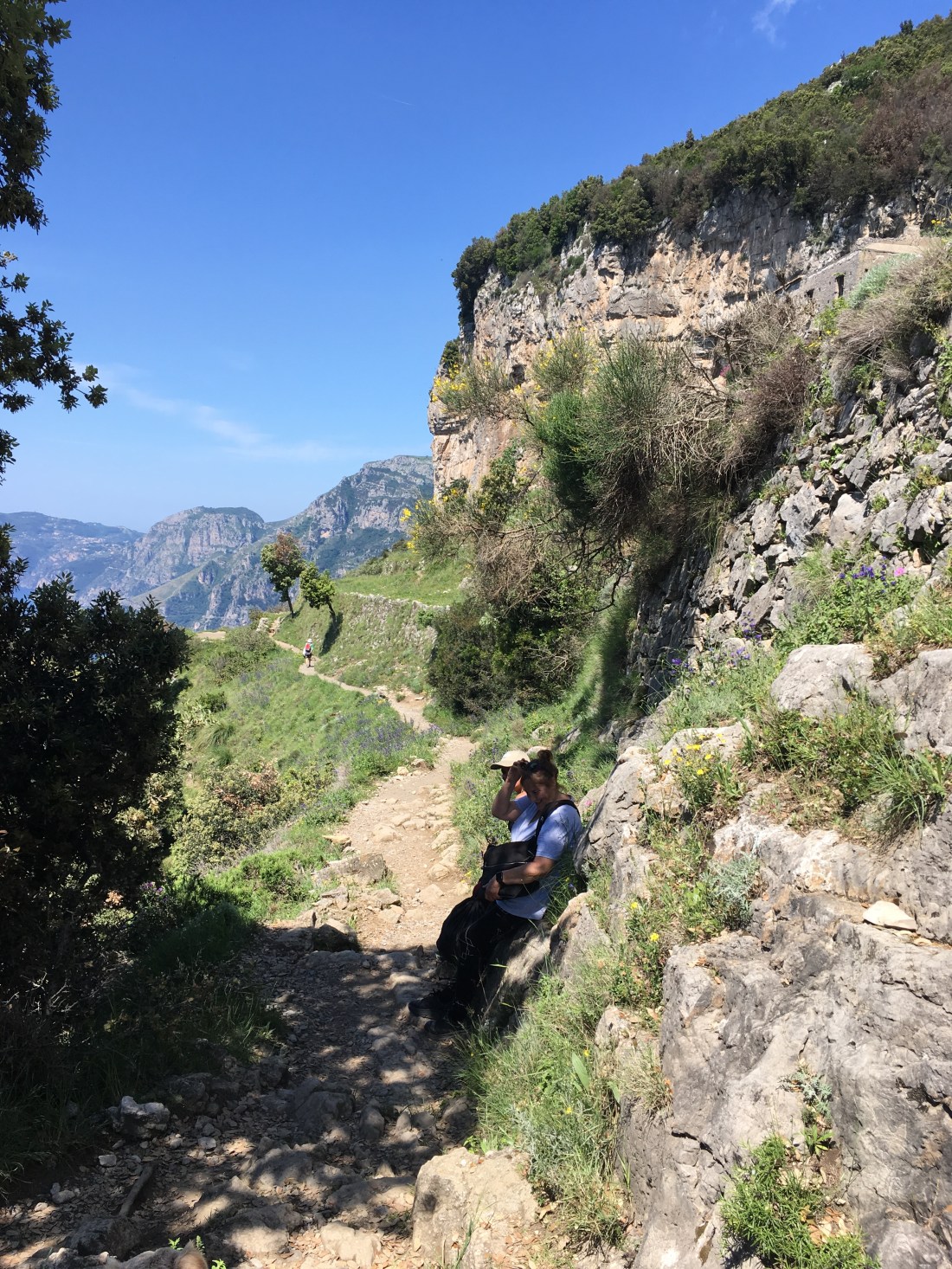
The booklet does give some indication of what we were in for on the third day – written in upper case NB THIS WALK IS NOT ADVISABLE FOR VERTIGO SUFFERERS NOR IN THE CASE OF BAD WEATHER. It didn’t mention the 4 people had died in the previous year, three from heart attacks and one falling off. Stefano only told us that after we’d finished the walk. (It would not have been “encouraging”)
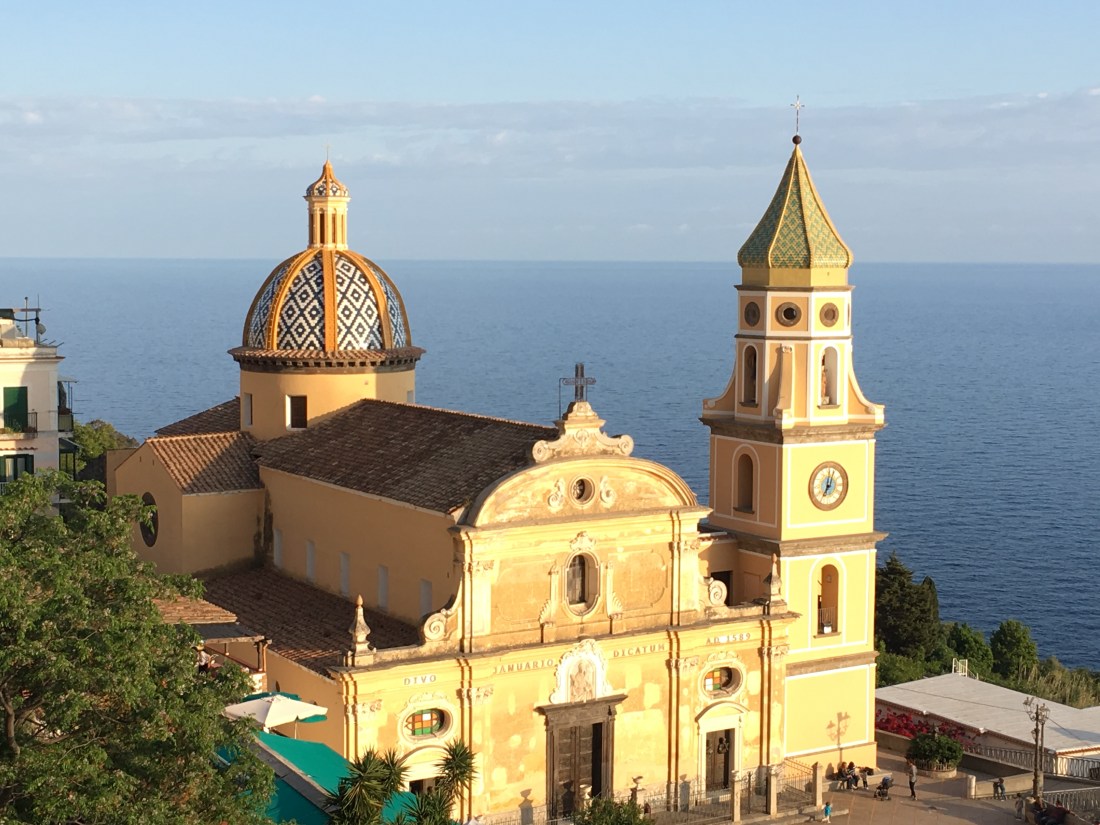
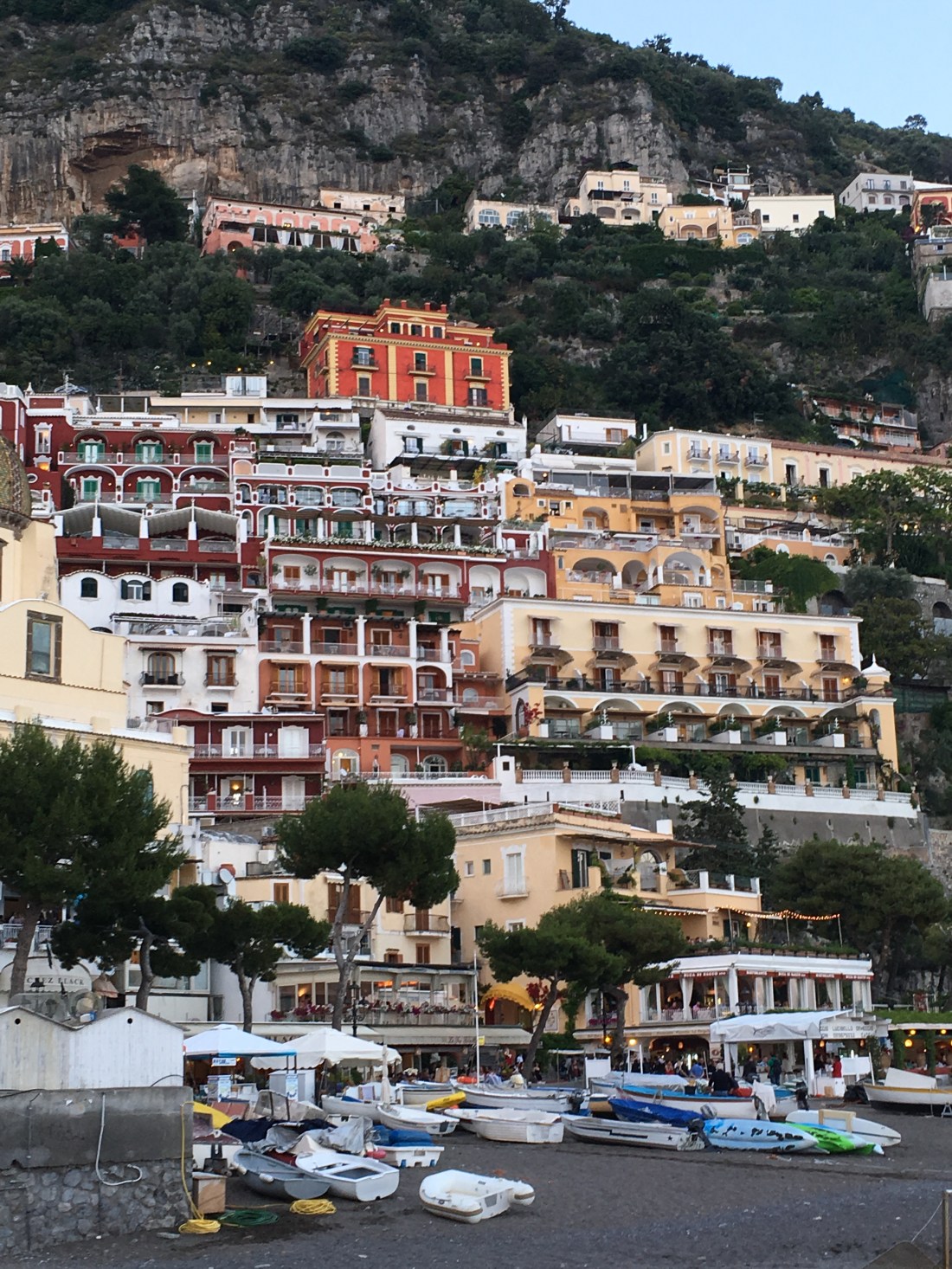
Positano
We arrived in Positano where we treated ourselves to an extra day at the delightful Palazzo Murat. It’s not peak season yet but Positano is crowded with tourists, including a lot of Italian weekenders. Tourism is having big impacts on the Amalfi coast. Stefano told us that 6 larges cruises came to Amalfi last week each with 5,000 passengers who come ashore. There are also 50 tourist buses that come in from Sorento and stop for an hour or two in a number of the villages. This is making it difficult for the locals to get around with congestion on the very narrow roads.
Affordability of housing for young people is an issue. People who own homes can rent then out short periods over summer at high rates. They will only rent them to local people over the winter. Then where do they go? back to live with their families for the summer? This is Stefano’s experience.
Sun sets on Positano
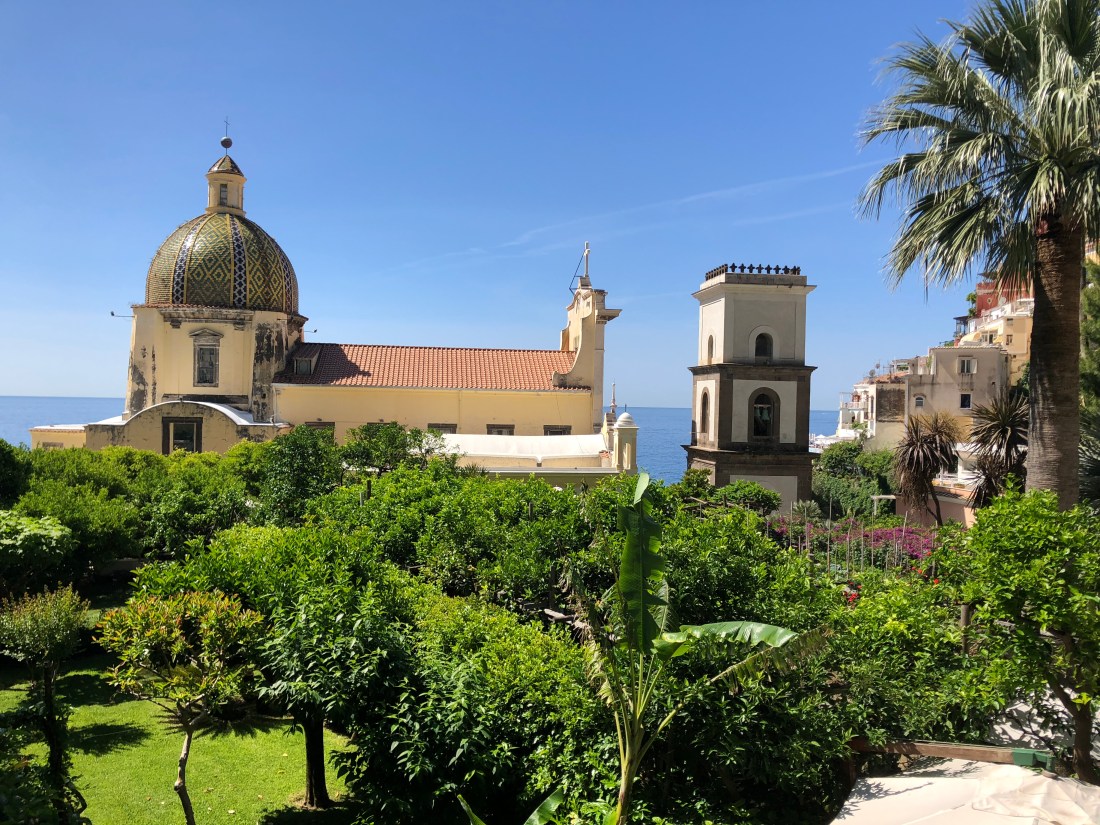
The view from our hotel window
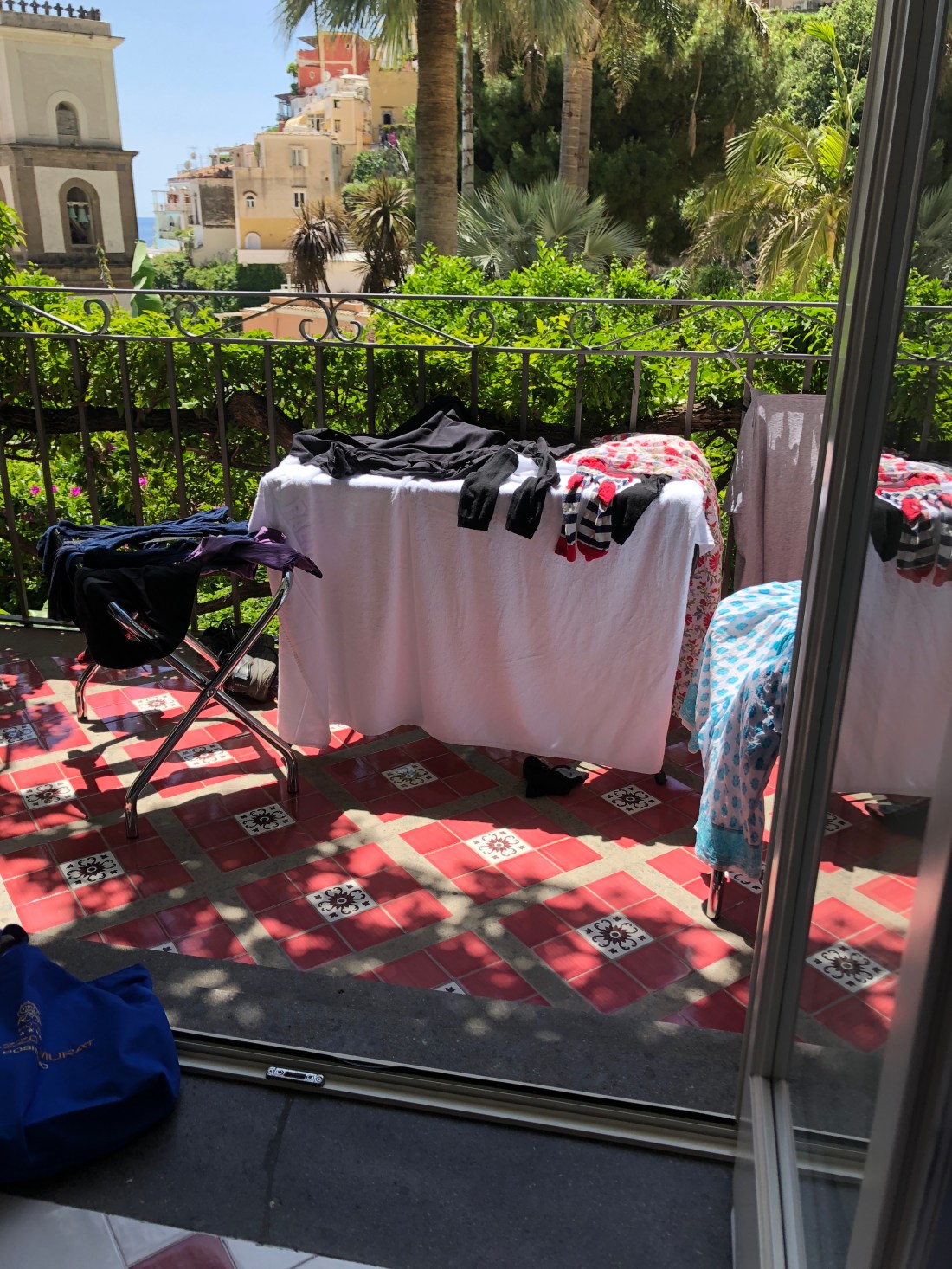
Washing Day and catching up on the blog
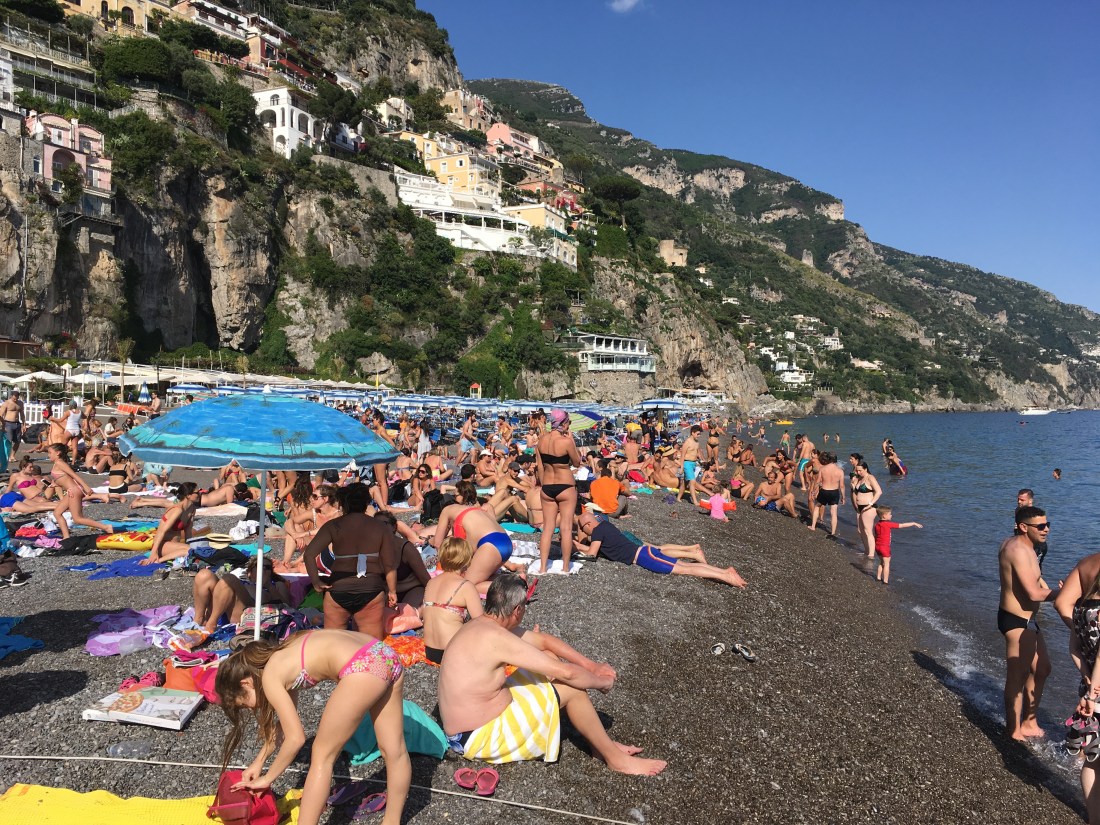
Rob has his first swim in the Mediterranean (see if you can find him)
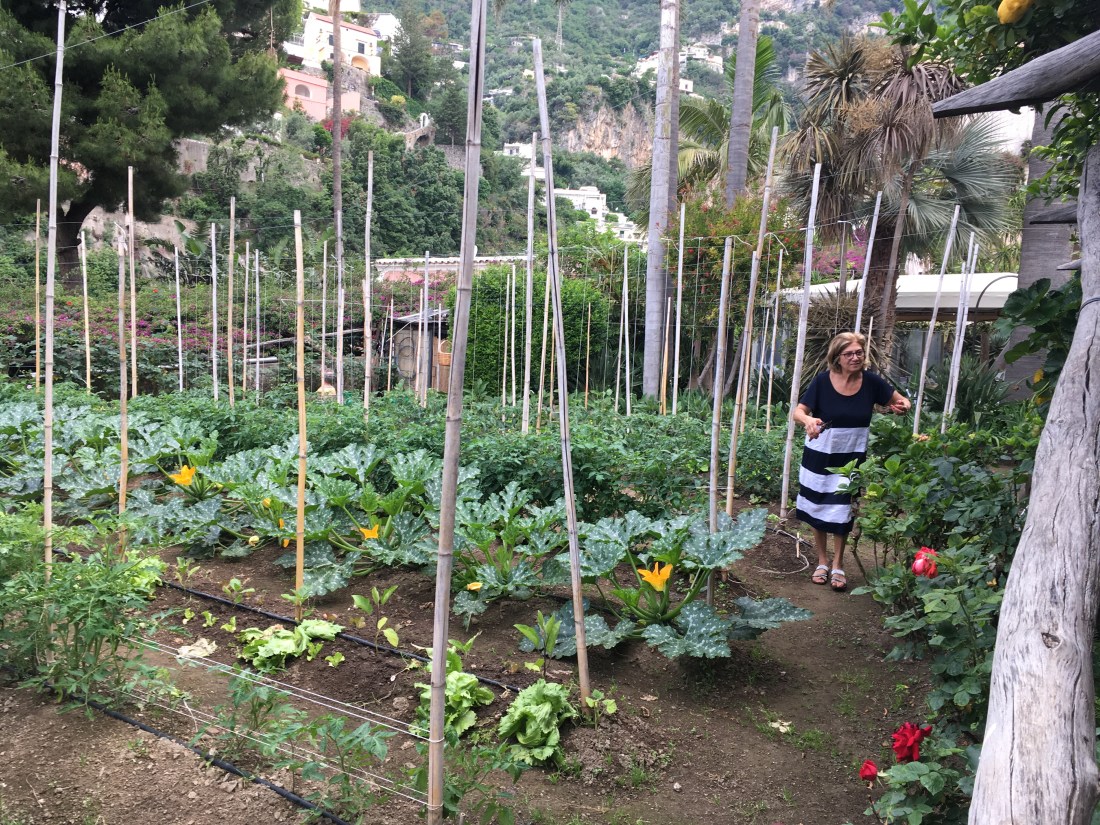
Our hotel vegetable garden, “this was my Mumma’s place” she picked us fresh strawberries on our last morning
The second slice of Italy. Fast train into Florence and on to Rome. Later the Amalfi coast.
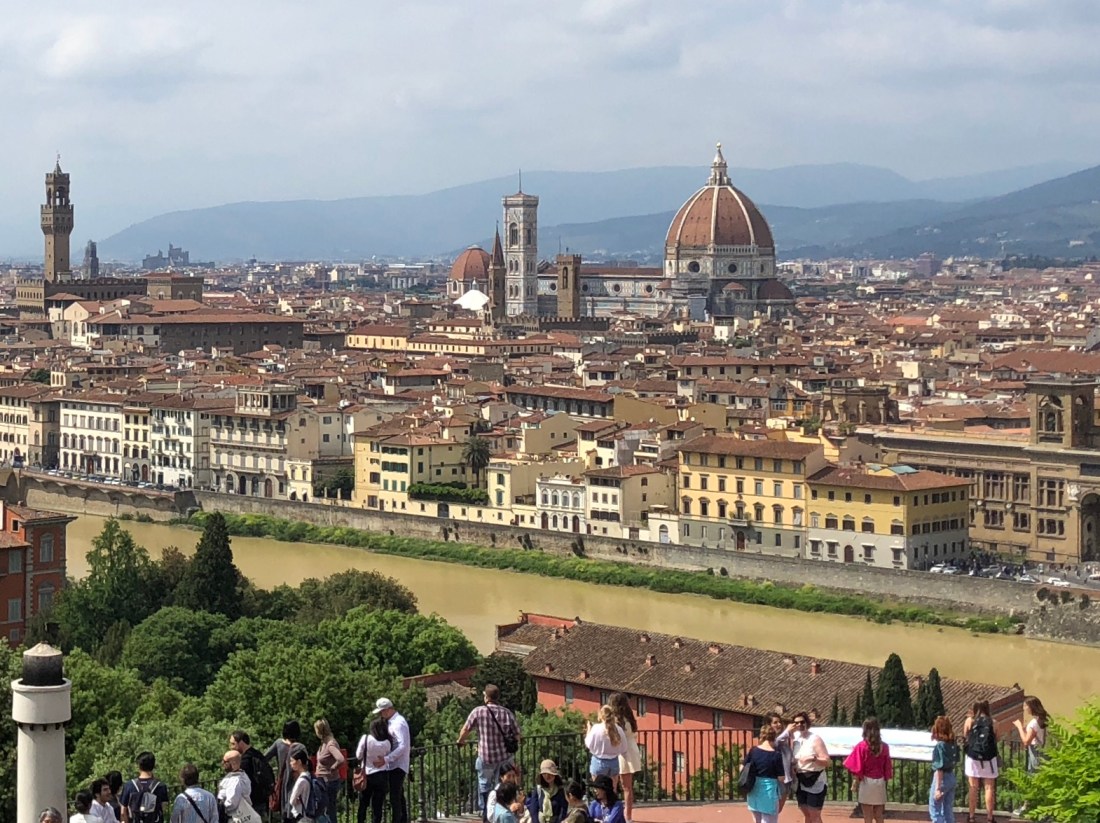
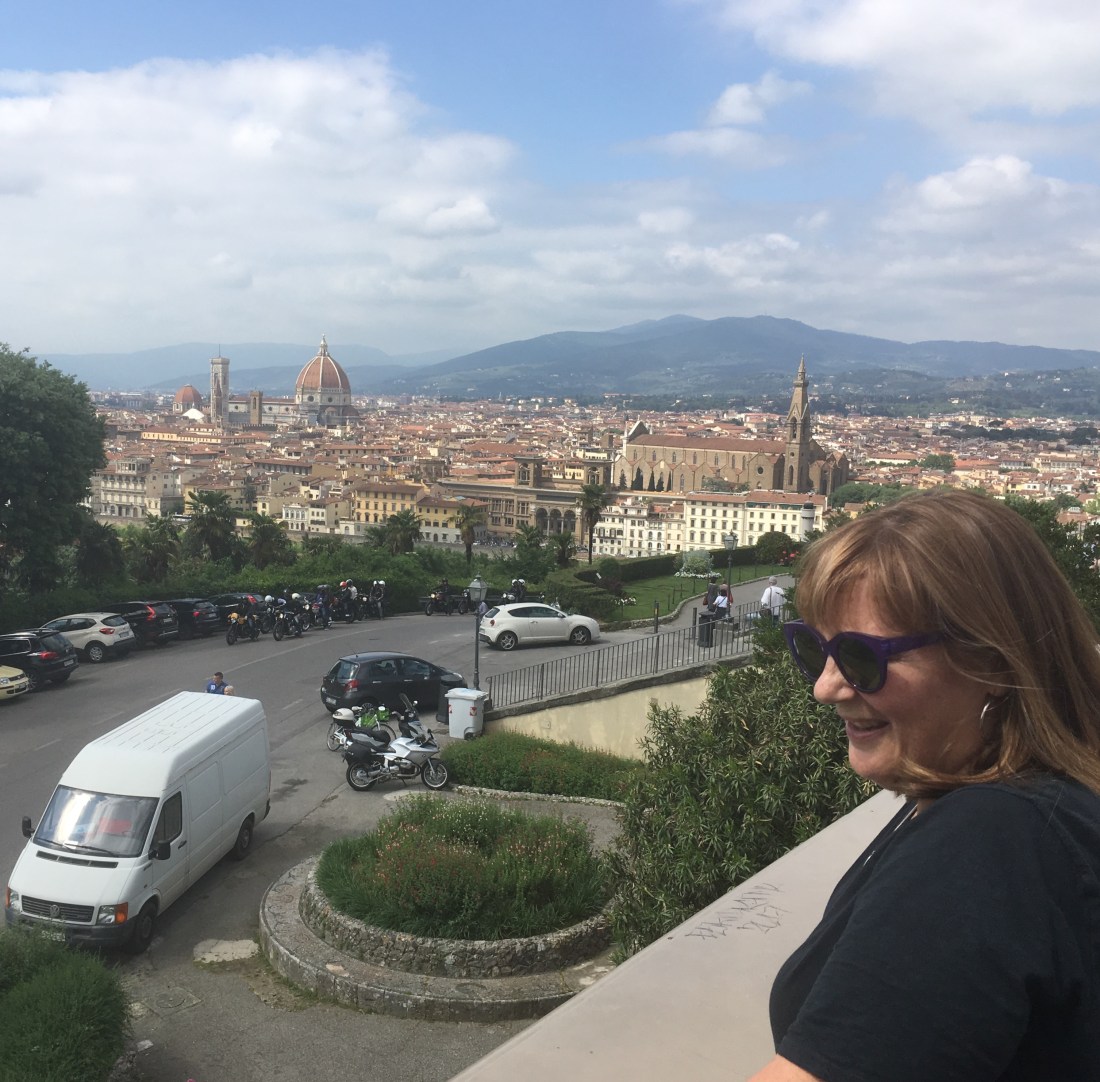
View of Florence from Piazzale MichelangeloAlesandra in Firenze
Firenze
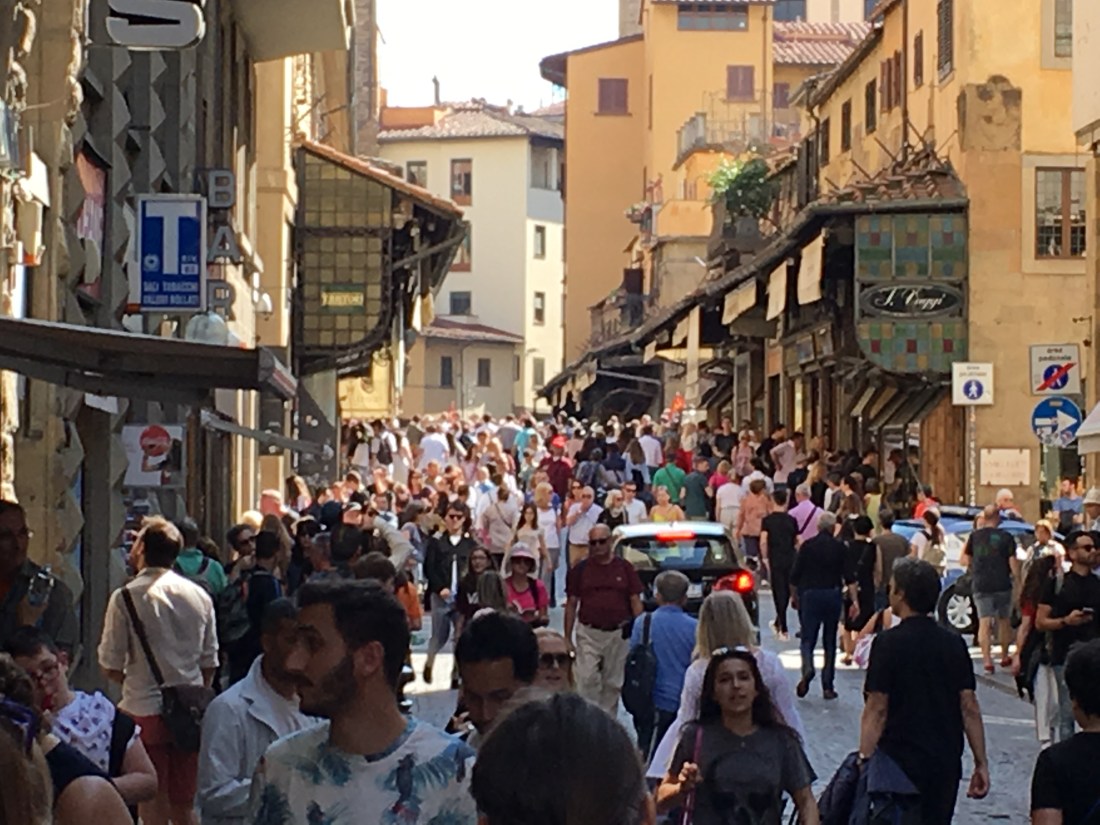
Beautiful Florence, full of people.
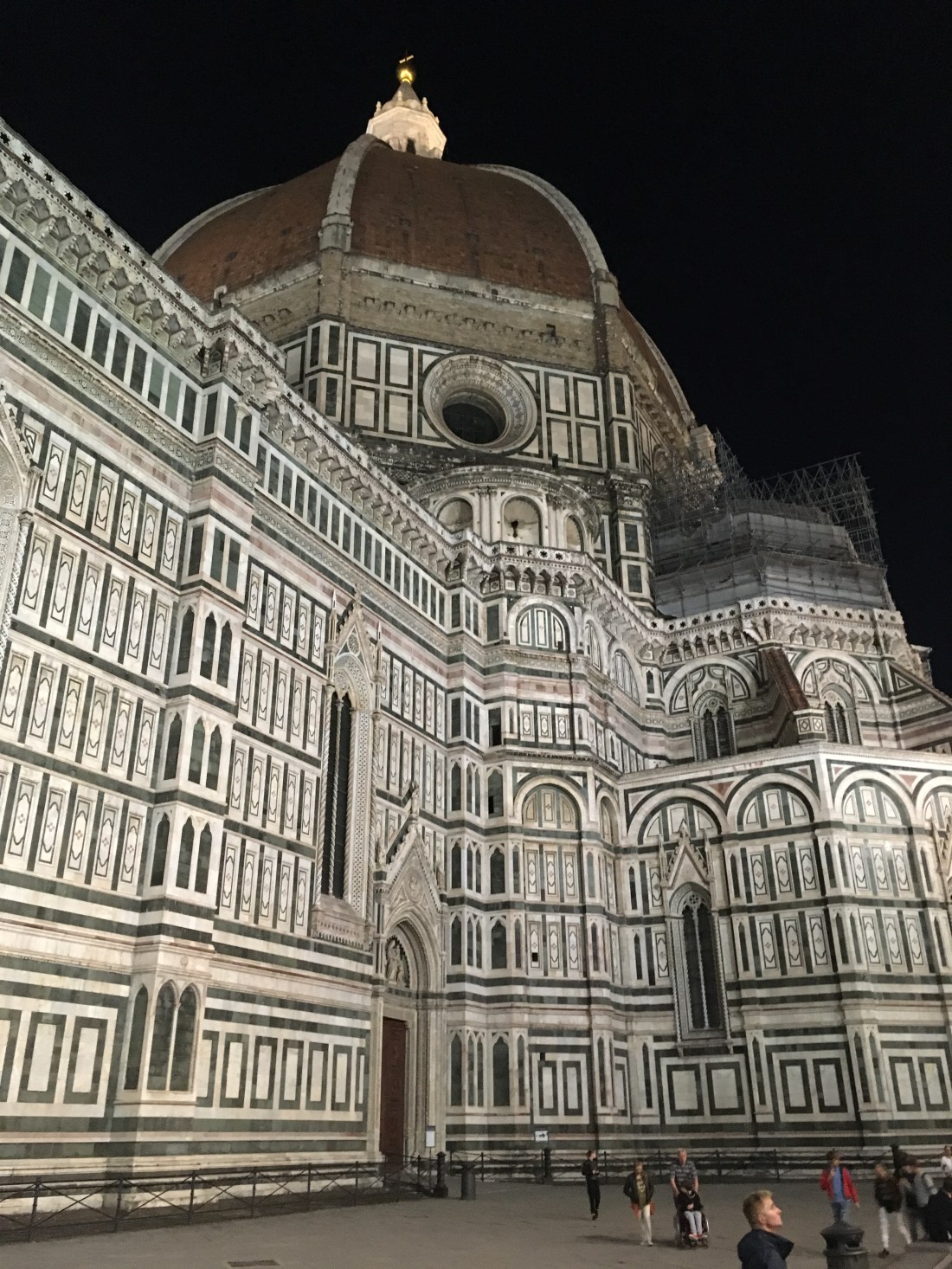
Trundling our bags (which are now a little heavier) we looked up to see Duomo. Despite the queues it’s incredible.
(Just on bags, on the train we watched two couples getting on each struggling with cases 3 times the size of our’s. One of the guys was grumbling a bit and Rob agreed “you’ve got a bit of stuff” the guy replied “Yeah we’ve been here for a long time” “How long?” “15 days” came the answer, Rob then replied “We’re travelling for 5 months”. I think Rob made an instant enemy.)
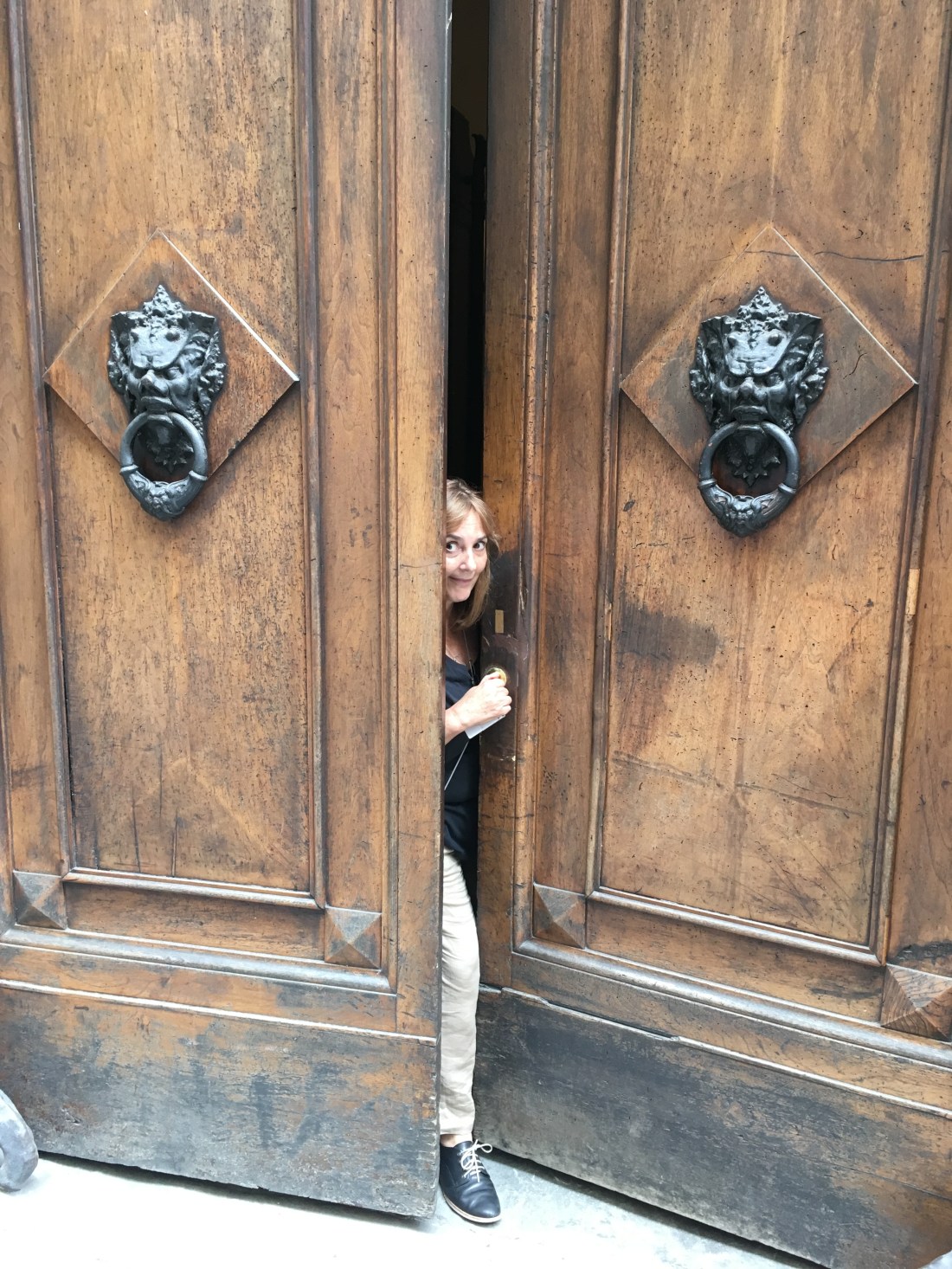
Our hotel was an odd arrangement, in a really central old building near the Duomo, we had limited hours to check in. We were then given the keys and told if we had any questions deal with the cleaner. It was 86 stairs to the top, so lucky for the small bags. But it did have beautiful giant old doors to escape from the crowds.
Discreet lodgings to escape the crowds but with 86 stairs (thank goodness for small bags)Crowds on Ponte VecchioDuomo at night, a good time to wander and avoid crowds
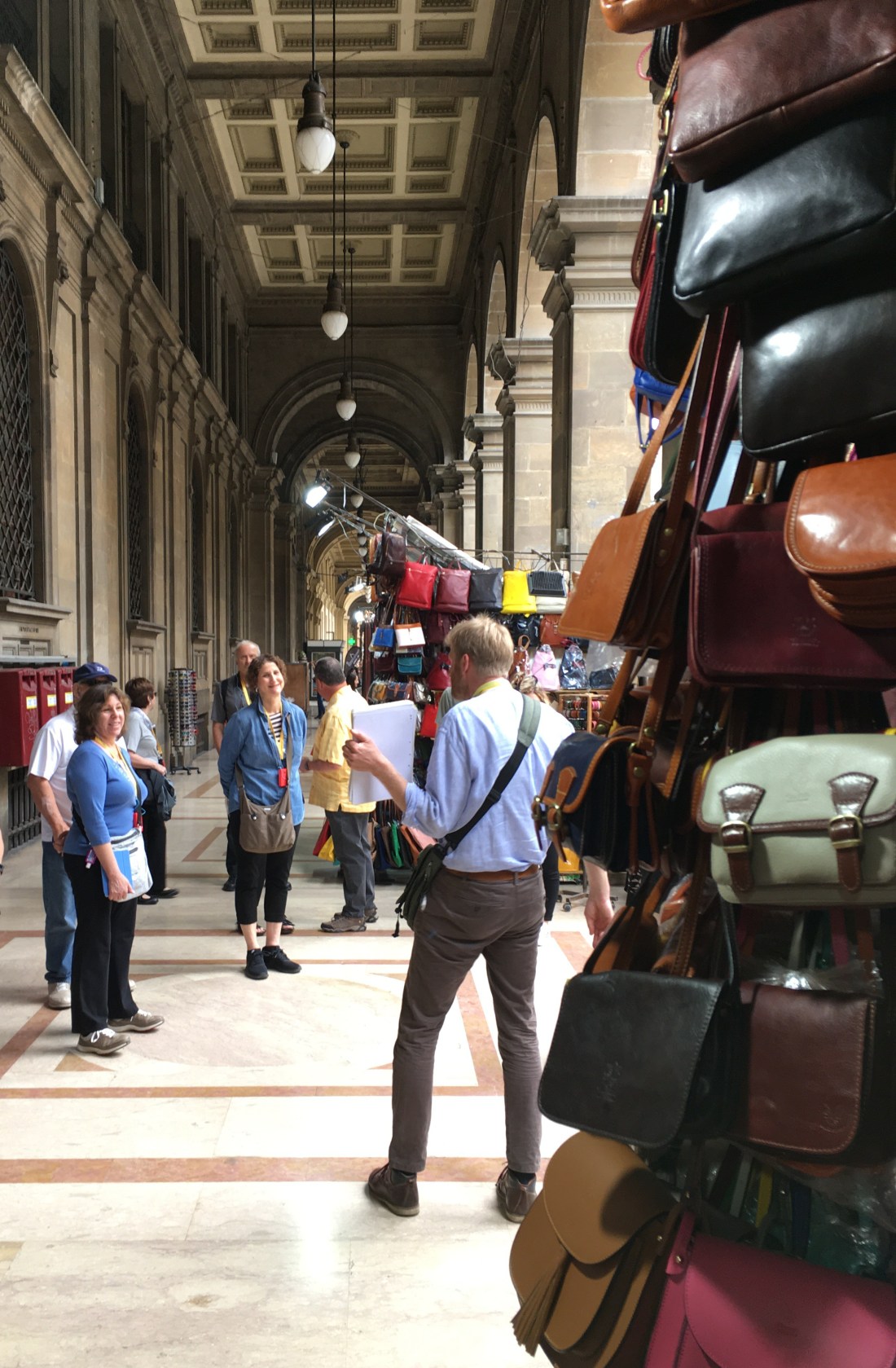
After our tight check-in we raced to meet our first tour guide, Veronica from “Florence for Foodies”, Swedish married to an Italian, for our Food and History Tour. We were meant to be part of a small group, but ended up being the only ones on the tour which gave us a great introduction to the layout of central Florence, it’s history and to food, including coffee. Not just the “don’t ask for a cappuccino after 11am” if you don’t want to be judged by Italians. But also, eat your pastry separately, savour your coffee after you have finished eating. Importantly, don’t buy takeaway coffee: Italians think if you haven’t got time to sit or stand at the bar to have your coffee then you have a problem.
Veronica “Florence for Foodies” helped us get our bearings and introduced us to some great food
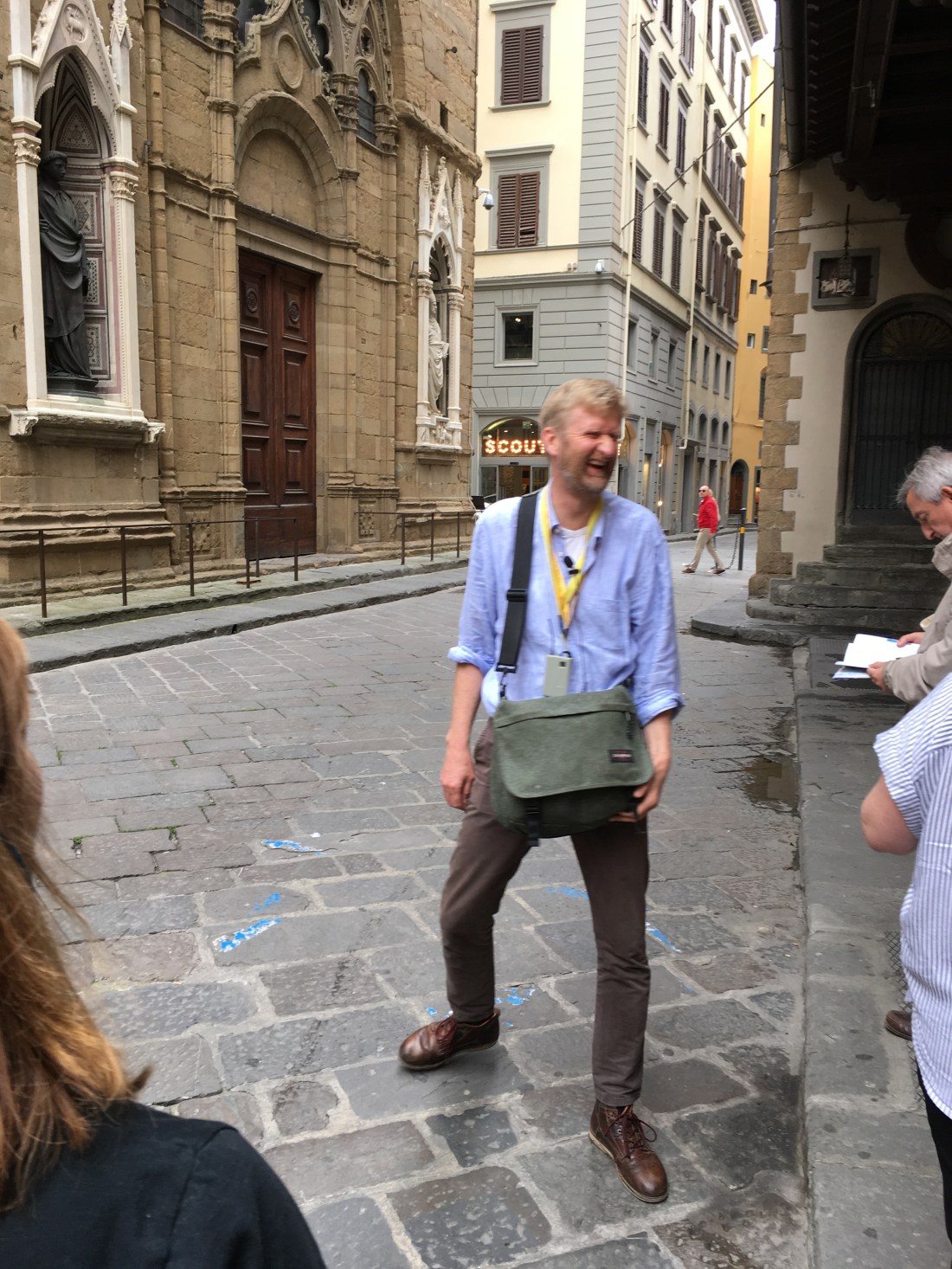
Our guide the next morning was also not a Florence native. Klaus, with “Artviva Tours” is Dutch but has been living in Florence for 20 years. His tour called “The Renaissance”, was outstanding. Klaus studied law, lasted one day as a lawyer, he also studied Fine Arts. He is an extraordinary communicator and philosopher. “You want to know why I live here? It’s the Renaissance and it happened right here!” Interspersing history with popular culture, he flashed photos of paintings of Cosimo de’Medici as well as photos of Dustin Hoffman playing Cosimo (in the pretty terrible Netflix series) we loved our time with him.
The marvellous Klaus. “I’m going to tell you about the Renaissance or ‘blowing the lid off'”.
In these places crowded with tourists there are also many beggars. It’s confronting and challenging. You look away, make sure you hang on to your wallet, harden your heart. There was a moment at the start of our tour, standing at the so-called “Belly Button of Florence” – the Roman centre – when our tour was interrupted by a beggar. Klaus gently greeted her “Ciao Maria”, he took her hand, then explained quietly to us, “this is Maria she’s from Kosovo, her life is very hard, it’s a tragedy, she has come to warn us that the pickpockets are very active today on Ponte Vecchio and the Town Hall square“. He treated her with love and respect. It was one of those moments. He also told us the real pickpockets do not look like gypsies, “they look like tourists”.
Klaus in full flight
Klaus was very skilled at bringing contemporary parallels to historic events in Florence. One of the biggest lessons is to share power. While those with power and wealth will try to “keep a lid on it”, eventually the lid blows, and often they don’t see it coming. Like the story of David and Goliath.
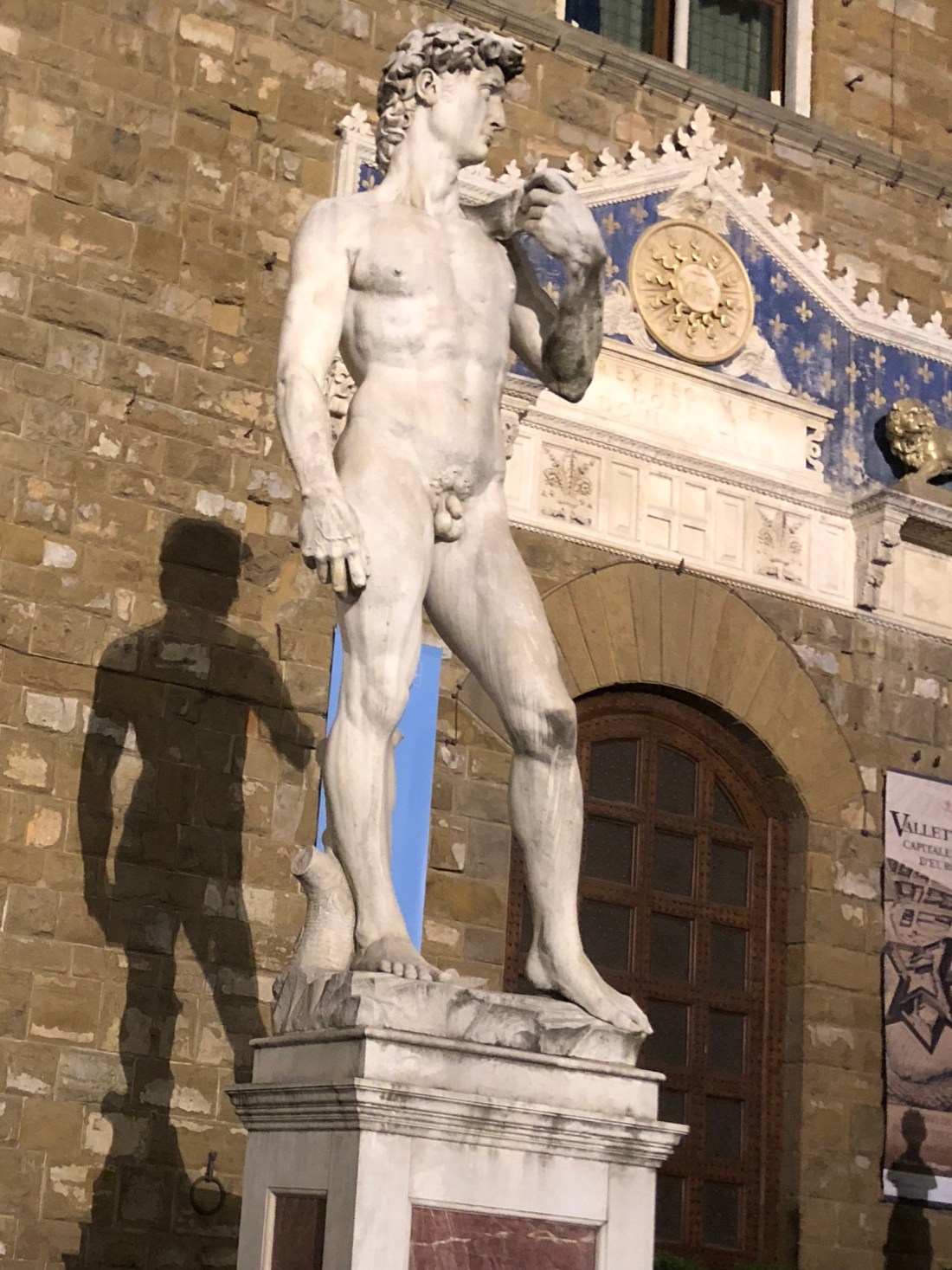
One of Michelangelo’s statues of David sits outside the City Hall – Palazzo Vecchio. This is to symbolise the power of the citizen.
This David is a replica, not a copy (Klaus very firm on the distinction) – so made by Michelangelo, and the same size. We were happy to avoid queues and look at this fine youth.
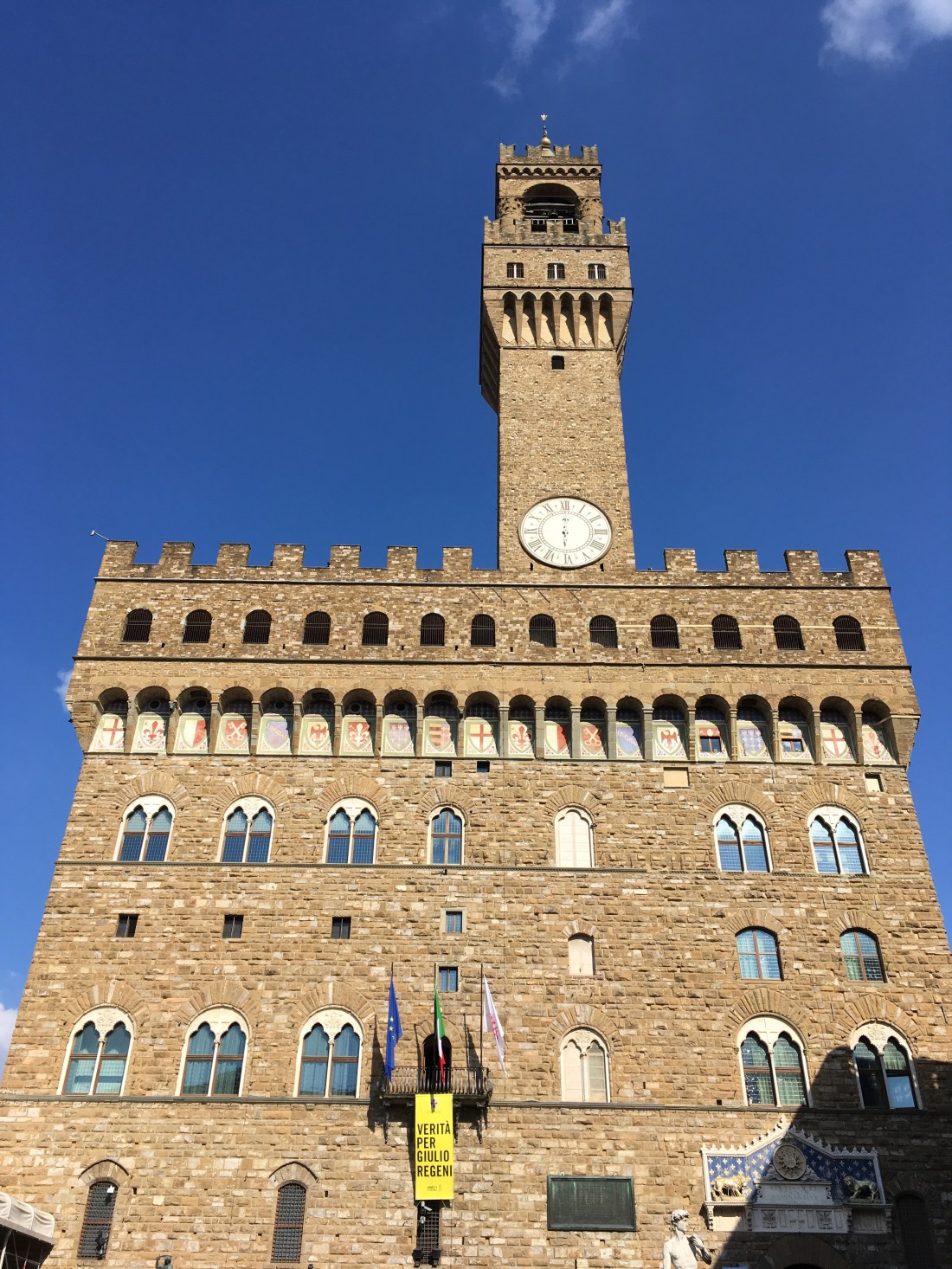
The banners and symbols on the Palazzo Vecchio acknowledge the role of the Guilds of Florence, its citizens, the powerful families, the church, and the state. Civilised society depends on agreements to share power and wealth.
Palazzo Vecchio with banners representing the various interests within Florence and symbolising the sharing of power
So much of the art and architecture of the Roman Empire was destroyed by the Christians in the period before the Renaissance. The Foundations of Temples to Roman gods were used to build churches, but it was the same people that continued to be involved. Klaus maintains that the Roman Empire did not actually end until 1929 when Mussolini confined the Roman Catholic Church to a piece of land at the Vatican. But more on that when we get to Rome.
One thing we did notice about Florence was that they seemed to manage their waste really well, certainly a contrast to what we found in Rome. Rob couldn’t help taking a few shots just outside our b&b as part of his “waste series”. Here, large containers sit under the various well ordered bins for the four different waste streams: organics, glass, other plastic and metal packaging and containers and residual waste. The full containers are lifted out of the ground and emptied into the truck.
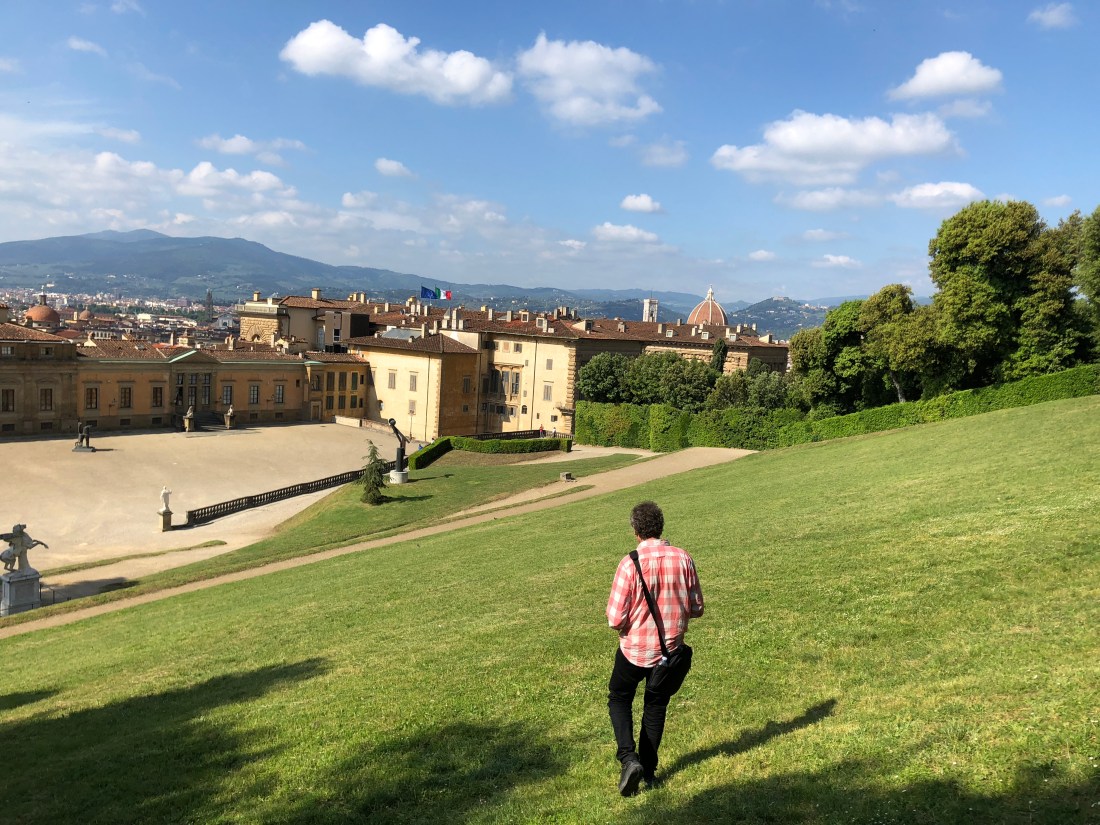
View from Boboli Gardens
Evening light on Florence
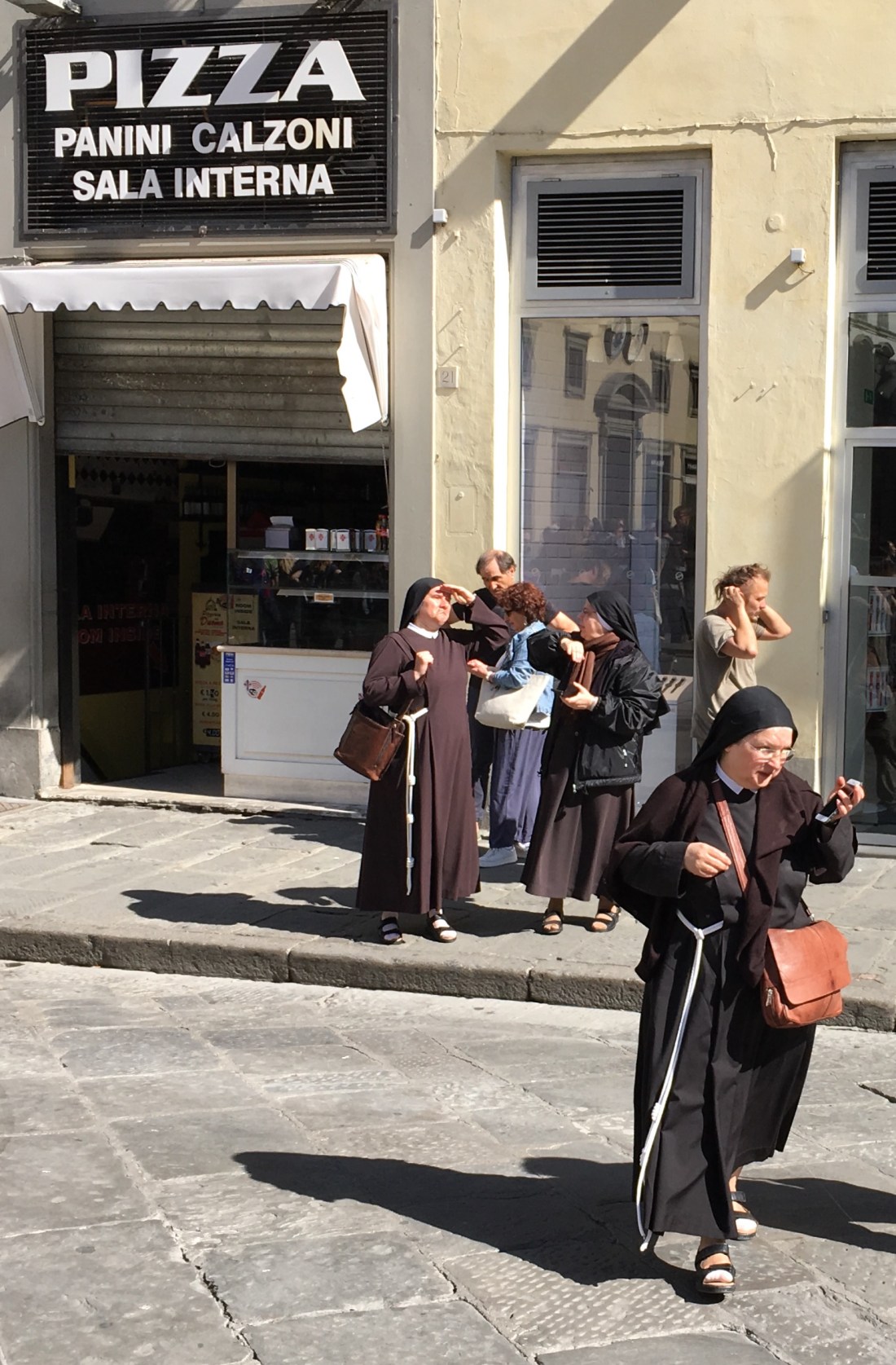
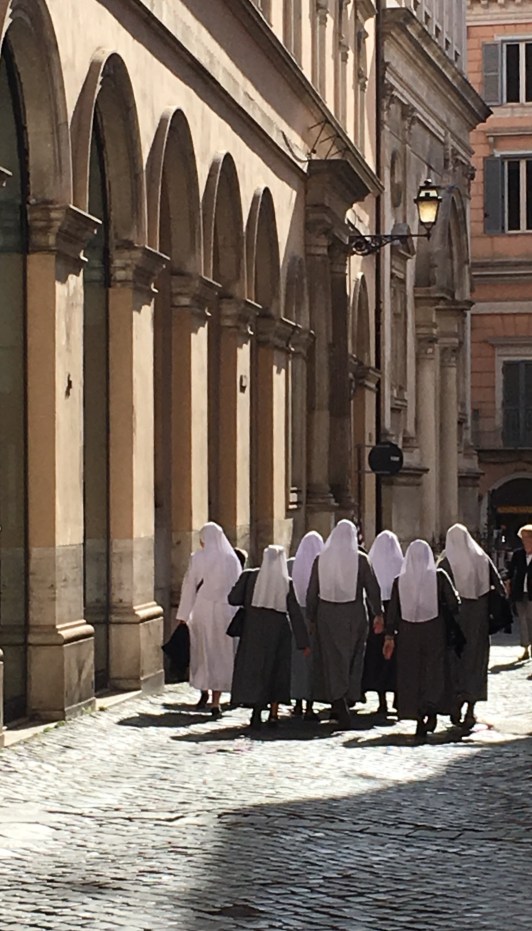
Sunday morning and even the Nuns take time to photograph Duomo “Nun Series”
Rome
Hotel versus Airbnb
All kinds of arguments for airbnb. Cost being one of them but there are still many advantage of hotels.
There is a Concierge or two.
The beautiful Alessandra and irrepressible Tommaso (don’t call me Tomato)
Compared to Florence, where we were thrown the keys are almost told “good luck”, here we were welcomed and advised by Alessandra and Tommaso. Tommaso drew us routes on the maps, advised of great places to eat, shortcuts etc. It means you have a conversation with someone from the city you are visiting, also a chance to practise your Italian. We think it’s a better way to contribute to local employment via tourism. Airbnb is no doubt the great disruptor, but has it now reached a damaging tipping point? As we found in Venice, locals can’t afford to live in their own towns/cities as rental housing is converted to short term accomodation for tourists. Local authorities, for example in Paris and Barcelona are already clamping down.
Parking is at a premium and the roads are congested, we were impressed by the small cars of Rome.
The well travelled Julian Abbott from ABC Canberra sent us on a mystery shopping expedition. Jane O’Dwyer (former resident of Rome) responded with: “Ah, Via dei Cestari. The 5th Avenue of the Ecclesiastical World.”
Walk with Pete
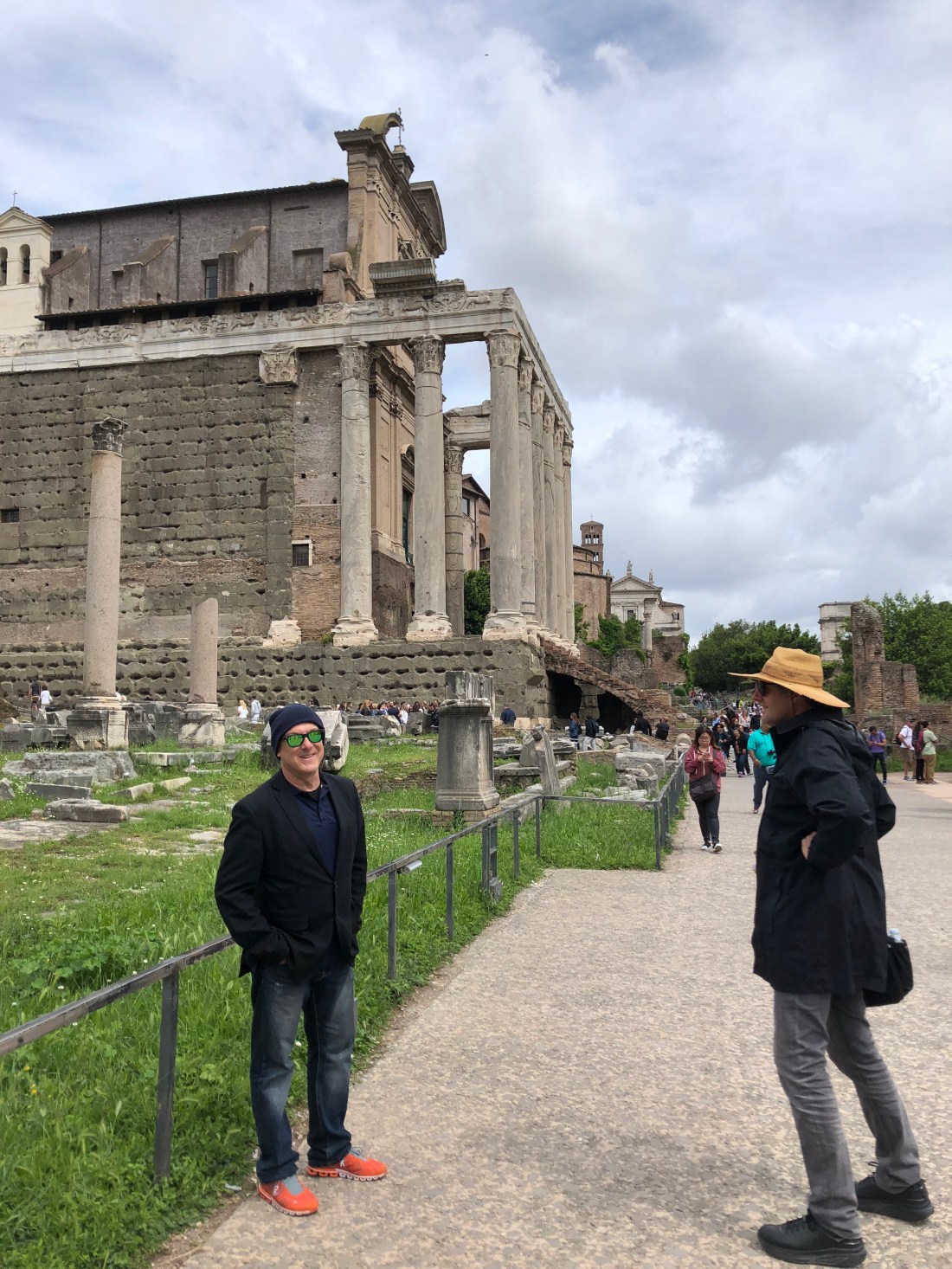
Pete and Rob at the Roman Forum
Thanks to a tip from work colleague Brooke Yates we arranged for a day walking around Rome with Pete. Rome is overwhelming with the layers of history, and the repeating pattern of leaders wilful destruction of the legacy of those who came before, to create their own mark (sounds familiar?)
The ruins of the Roman Empire
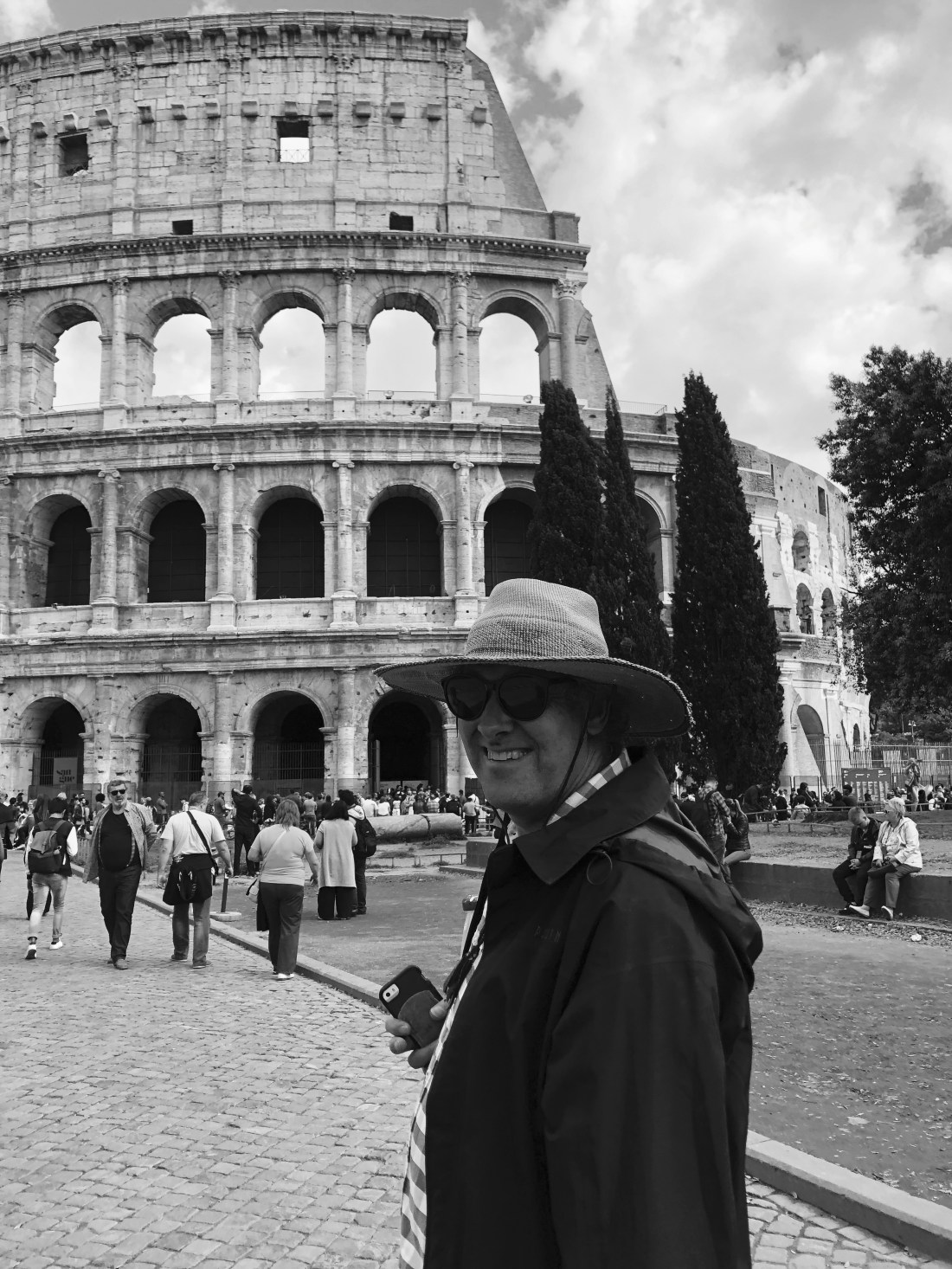
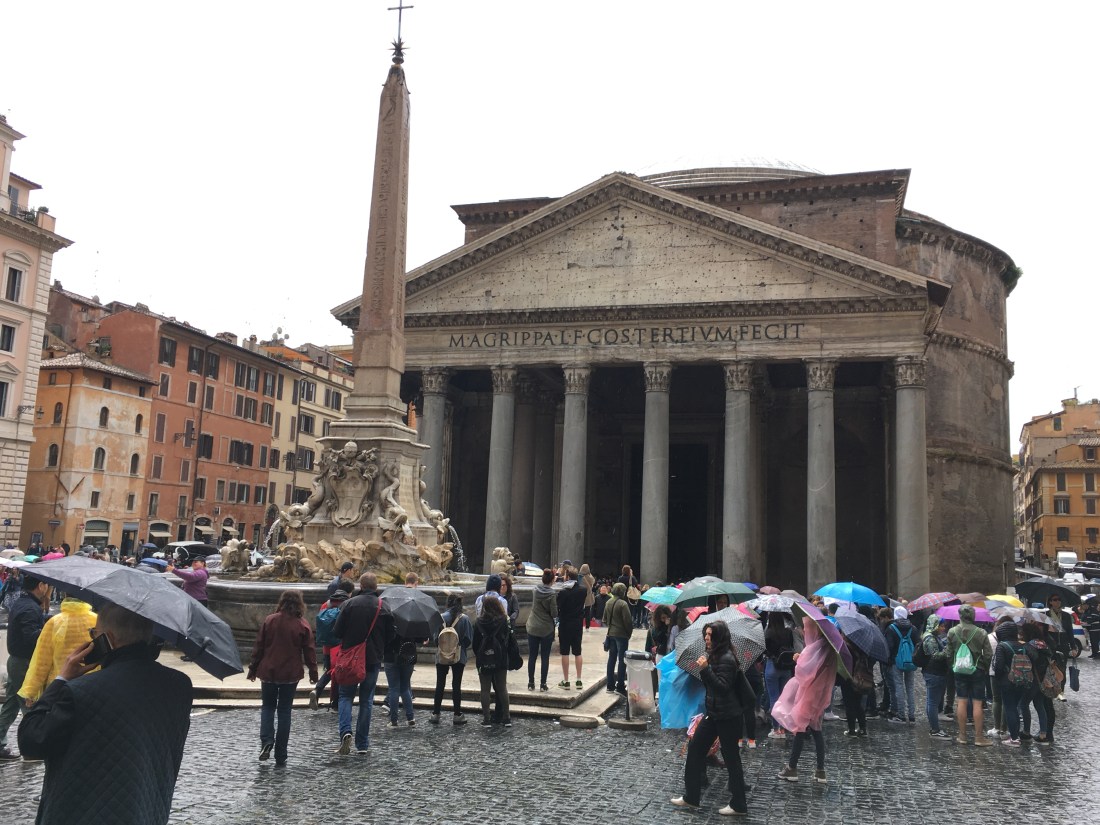
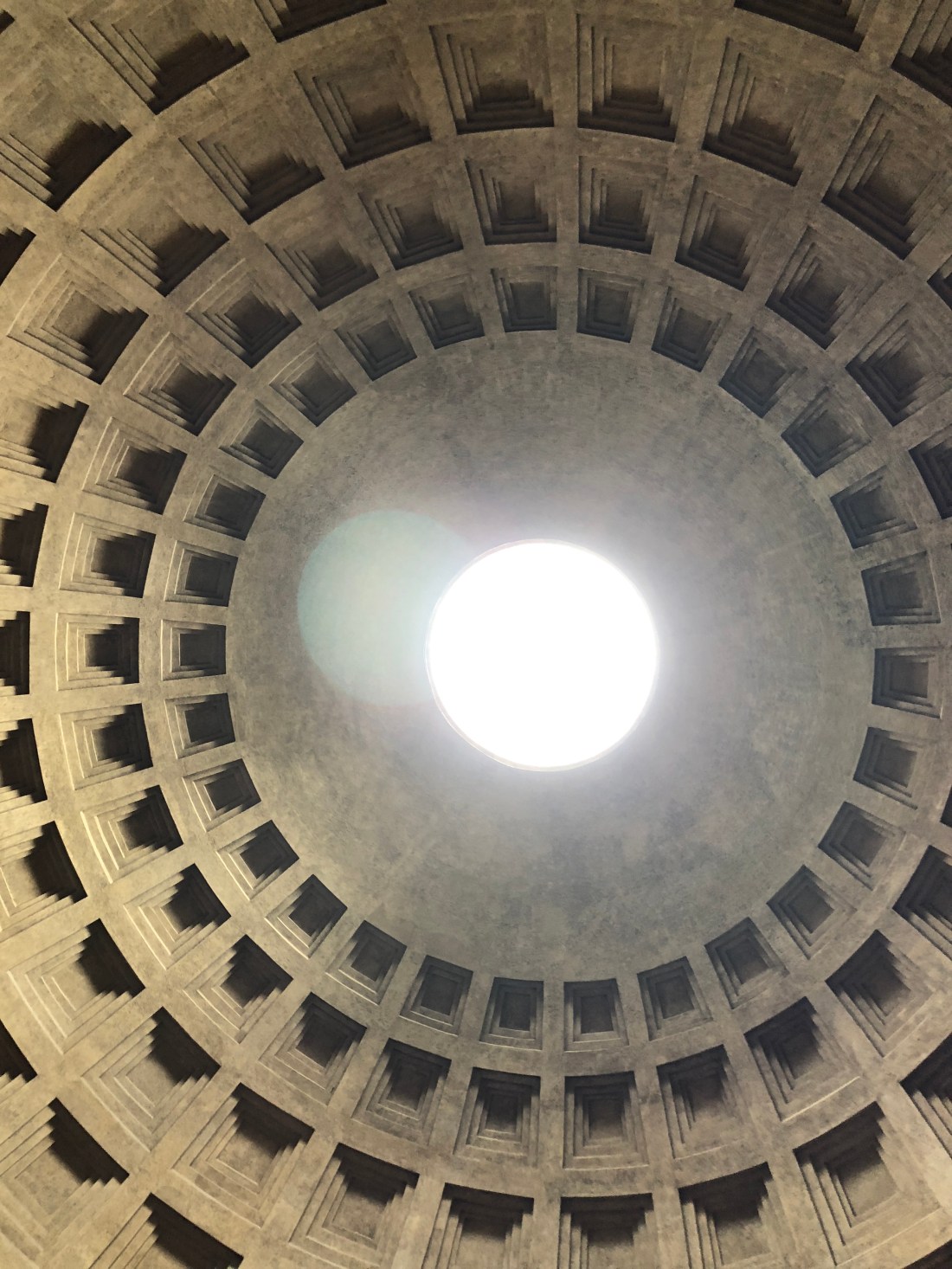
The ColosseumPantheon in the rainThe open top of the Pantheon, one of the few remaining buildings from the Roman Empire still intact. Survived Christian destruction as it was consecrated as Church
We walked for 8 hours with Pete and only touched the sides. You would need at least a month to get a feel for Rome.
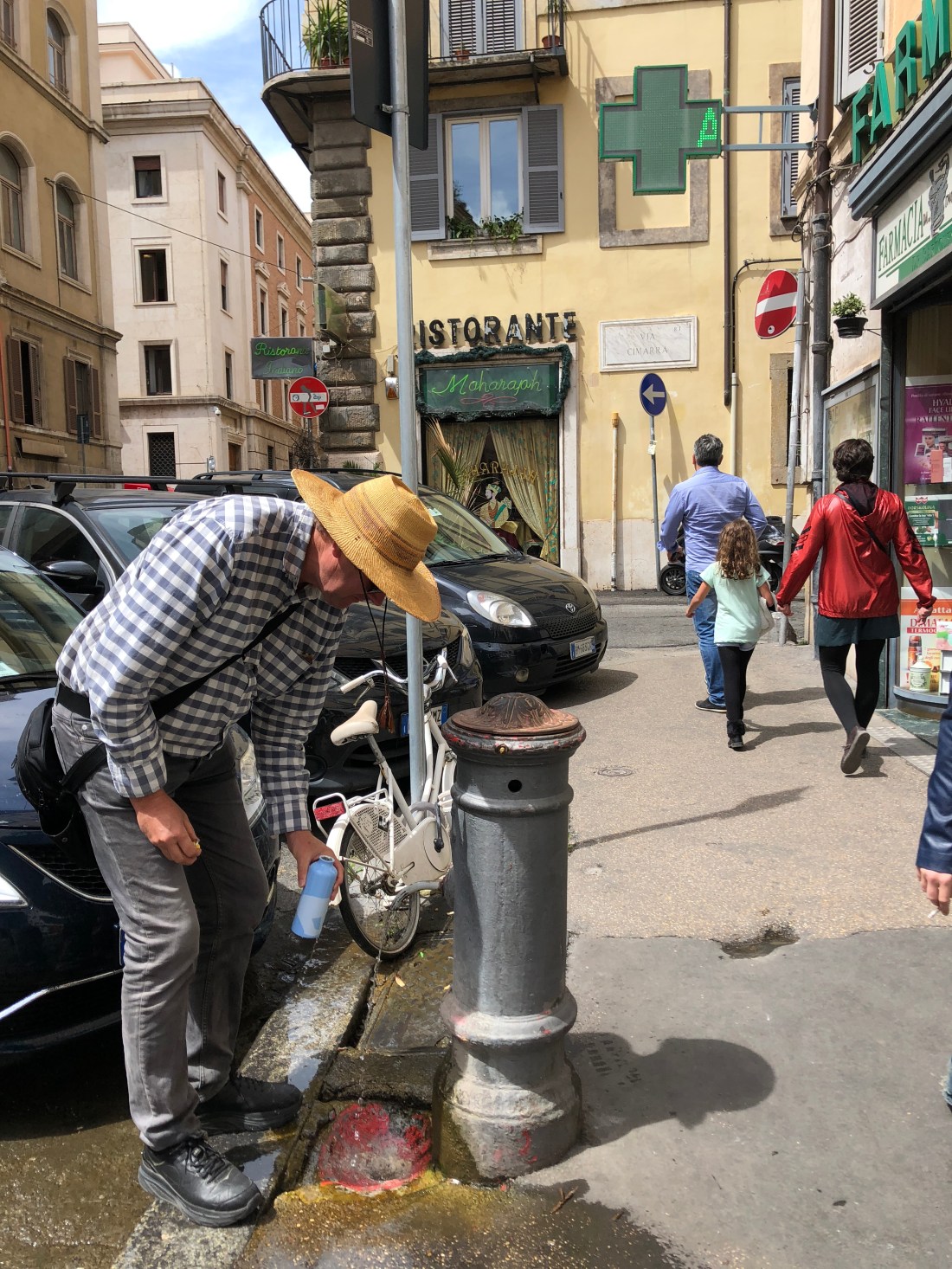
One of the many water fountains that flow throughout Rome
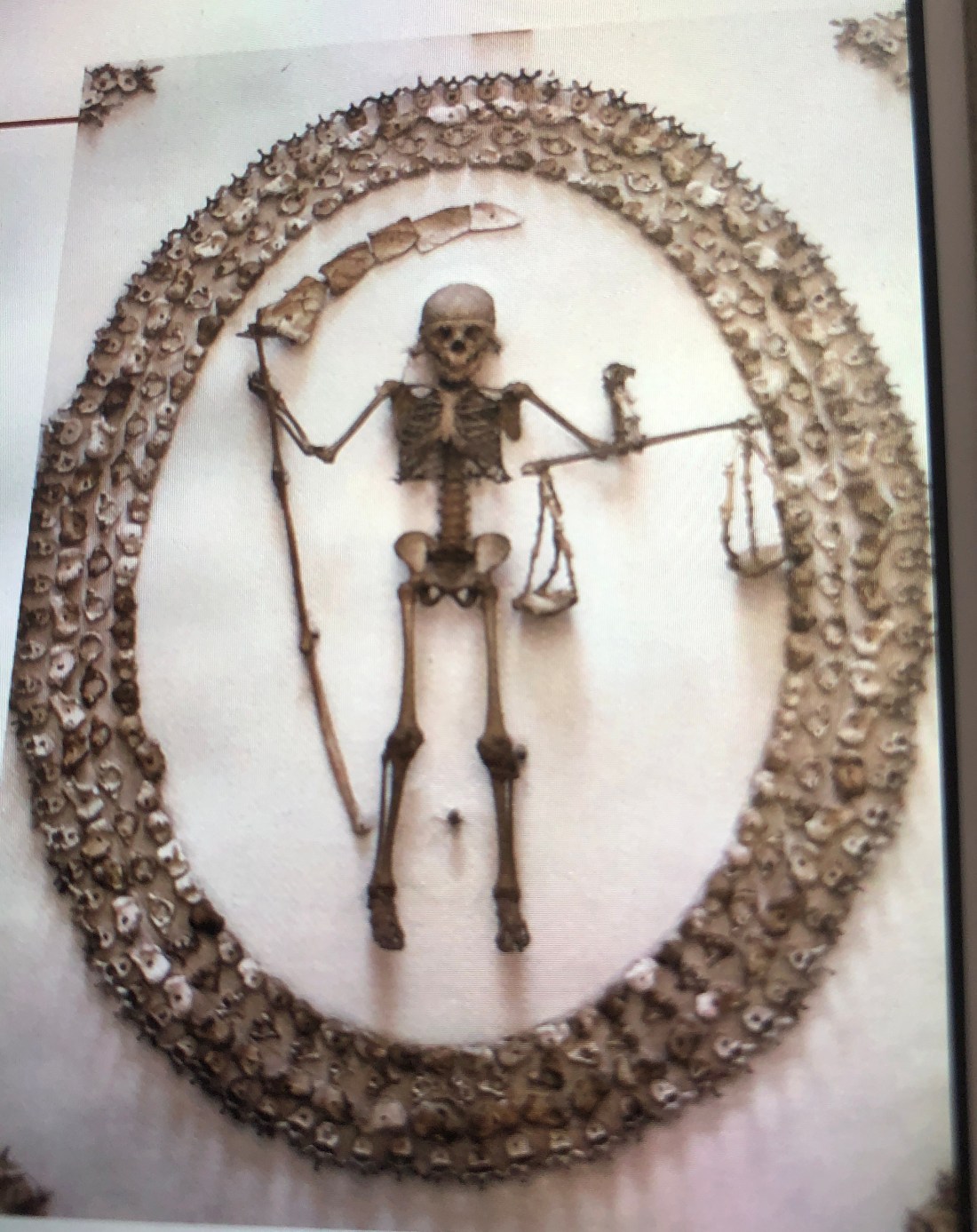
One little unplanned detour we took was to Capuchin Crypt – comprising seveal tiny chapels beneath the Church of Santa Maria Della Concezione dei Cappuccini.
This contains the bones of 3,700 bodies, of mainly capuchin friars arranged artistically. The display is not meant to be macabre, but a silent reminder of the swift passage of life on earth and our own mortality. Death comes to everyone – use your time wisely.
It was was a very powerful experience. No photography was allowed, you needed to just take it in. (Imagine the disappointment of not getting a selfie with the skull of a friar? Maybe in the afterlife?)
Skeleton of a teenage Barberini princess arranged with other human bones. A reminder that death comes to everyone – use your time wisely. Image from the poster outside the Crypt
It reminded us of why we’re doing this trip now. As we’re both approaching 60 we’ve been commenting that we’re unlikely be able to travel like this is another 10 or 15 years, lugging our bags from train station to hotel and walking up and down so many flights of stairs.
We’re just so fortunate to be able to travel like this while we’re fit and healthy and for such a length of time.
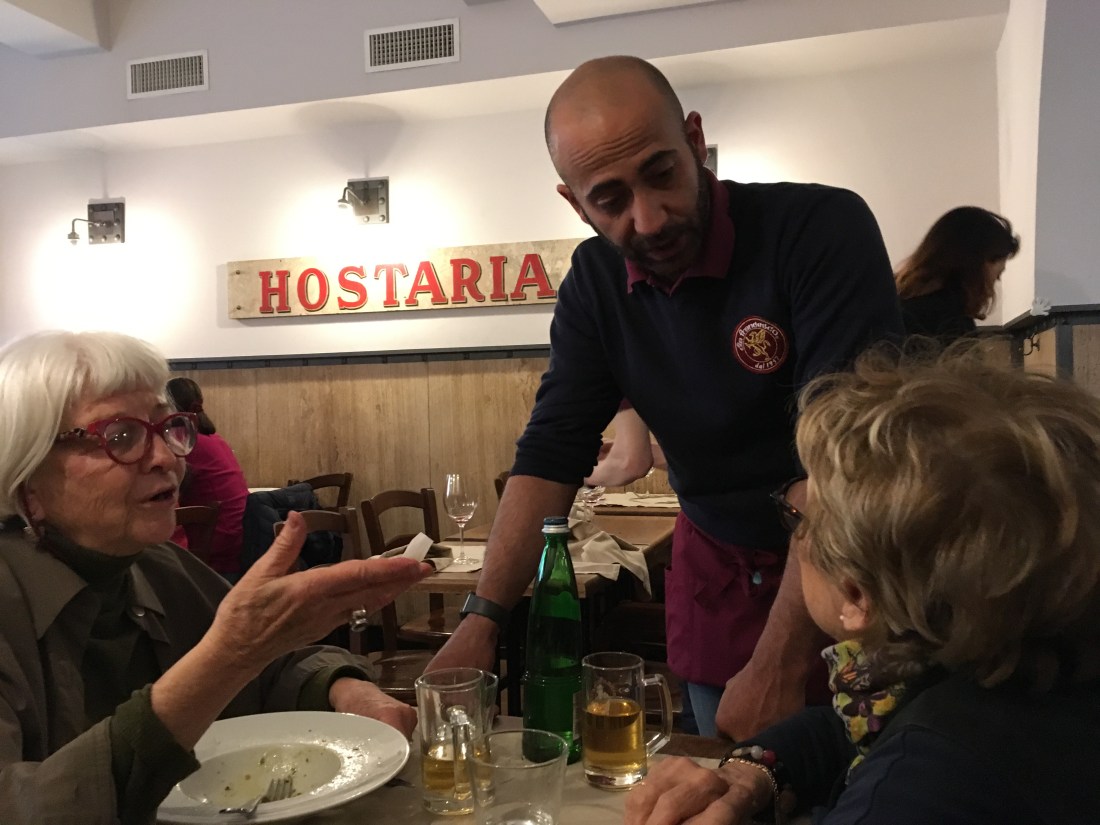
One of the great joys of Rome was meeting Doris and Gigliola at a beautiful restaurant recommended by Pete – Da Francesco. We sat right next to these elegant, fantastic women who started to engage us in conversation. We made an instant connection and later that day Doris wrote this to us in an email: “it was really a nice encounter…Sometimes one feels closer to somebody you have never met than longtime friendship, is’nt it? We are to meet Doris for lunch in Ortiga Sicily. We feel lucky.
Doris and Gigliola are asking the chef how he made the sauce for the pasta.Gelato O’Clock. It happens around 5 pm.
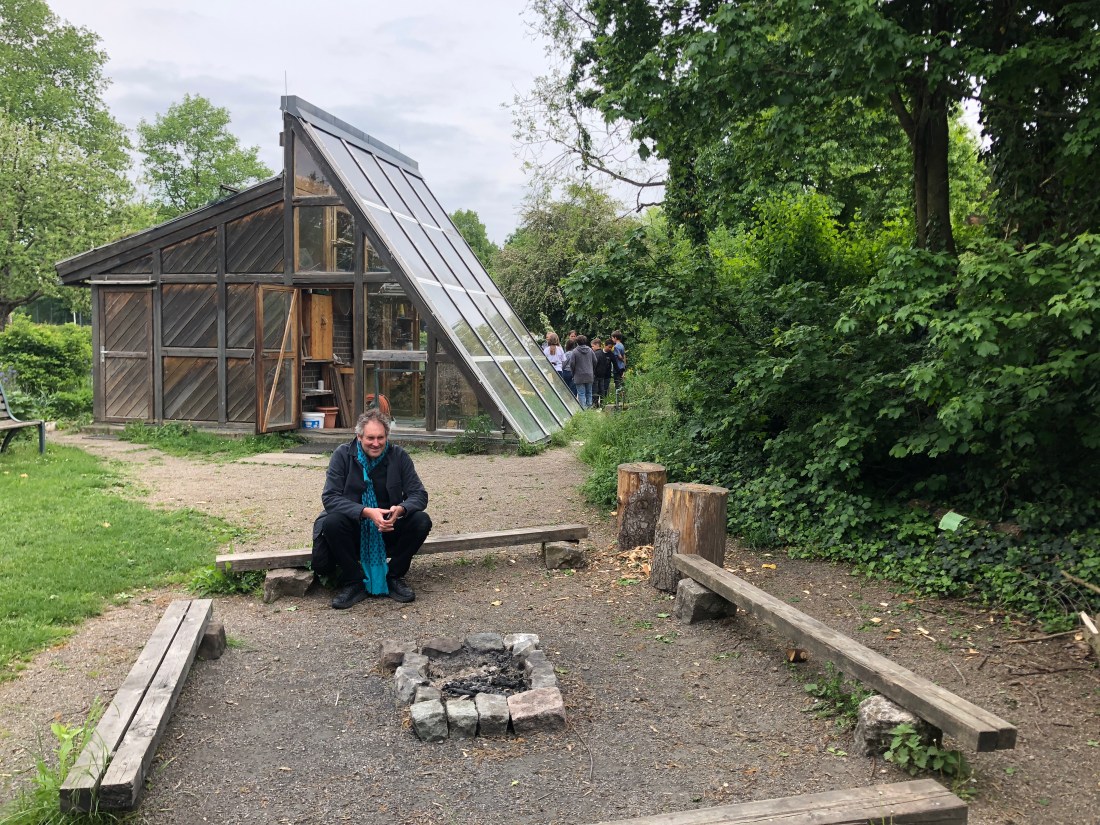
For the start of our 20th Wedding Anniversary we found a place where Rob felt right at home (the Okostation Environment Education Centre in Freiburg)And Alex too!
But the map called.
First slice of Italy
We are spending 28 days in Italy, so 4 times 7 days. So Pizza style this is the first of the Quattro Stagioni.
It was a long day from leaving the Hotel Alex in Freiburg. Four trains, from Germany to Basel in Switzerland and then through the Alps to the lakes in Ticino, Swiss Italia.
High speed tour of Switzerland viewed through the window of a fast train.
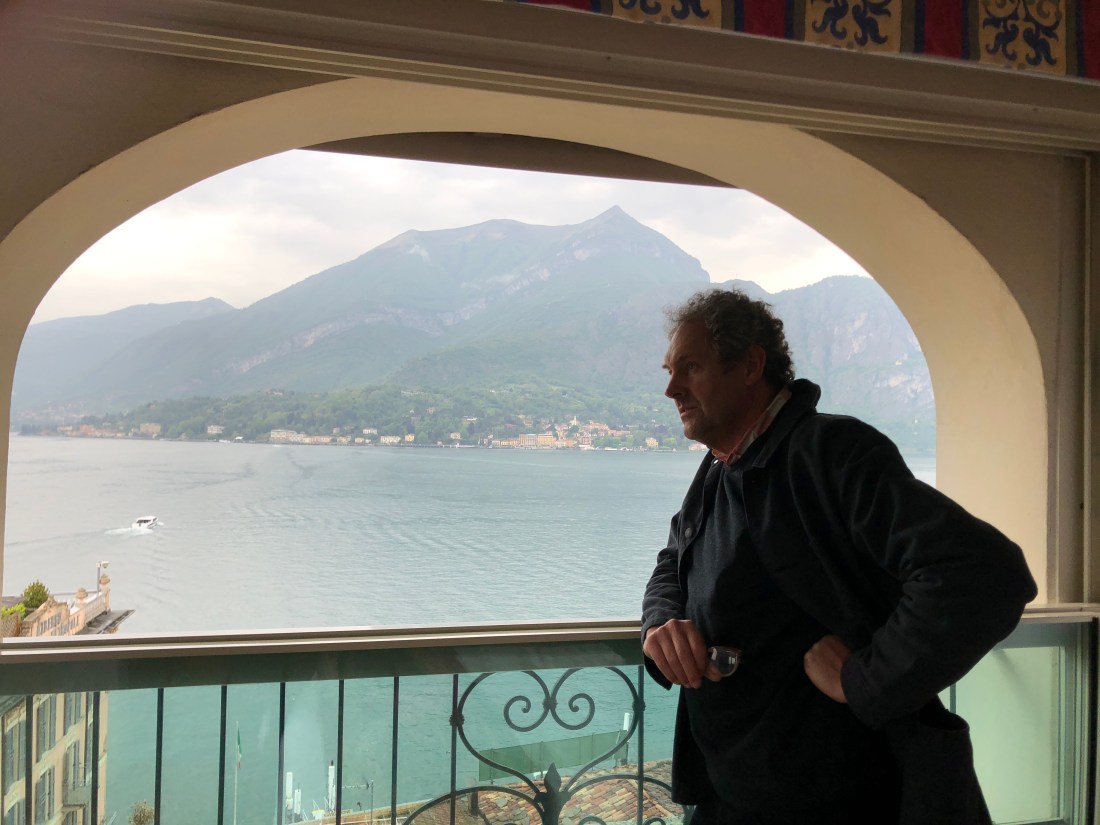
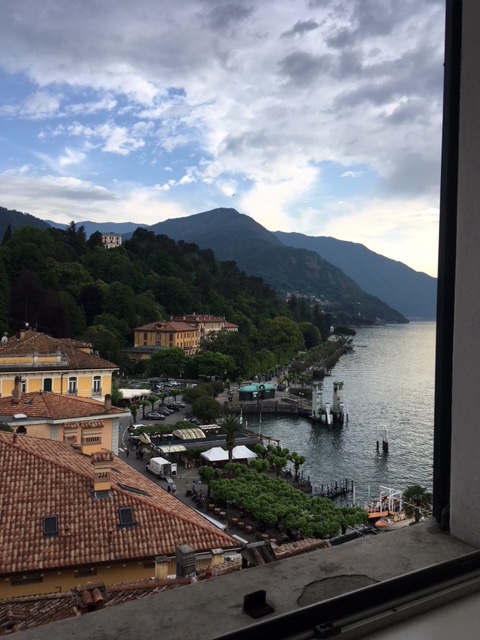
The last train was from Monza to Varenna on the eastern side of Lake Como and then a ferry to Bellagio.
We thank Michael from Sfolgia one of Rob’s lunch and coffee haunts in Dickson for convincing us to change our plans. We were to stay just one night in transit at Como on the shore of Lake Como. Michael’s advice was “Forget Como get on a boat to Bellagio” Beautiful Bellagio. We stayed for two nights at the modest but incredibly beautiful Hotel Bellagio and we scored the best room in house.
First taste of Italy
The mountains, the lake just take over, its overwhelming in the best of ways. Then the bells of the churches start to ring and more of your senses jangle (add gelato o’clock and another sense is on its way).
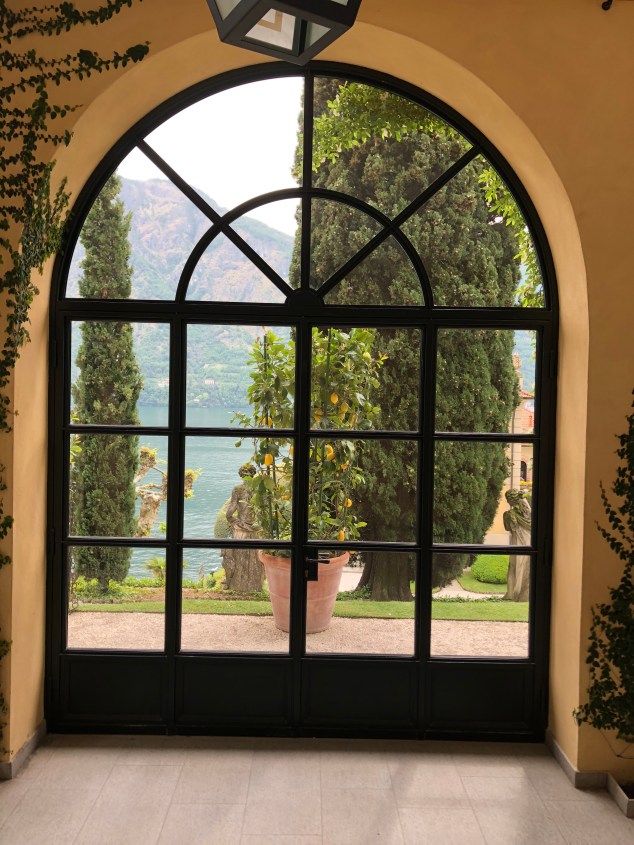
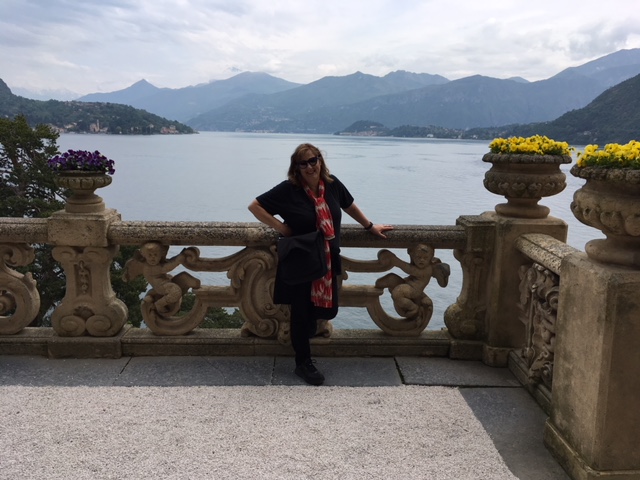
We headed out on the lake to Lenno a village on the other side to take a tour of the Villa del Balbianello. Right on a point on Lake Como it began in 13th Century as a small chapel for Franciscan monks, then bought by a Cardinal in 1785, and finally to businessman and explorer Count Guido Monzino (leader of the first Italian expedition to climb Mt Everest).
Due to assassinations and kidnappings in the 70’s and 80s by the Red Brigade. Monzino worried that he may be on their list, so he added a system of hidden passages, linking parts of the property.
We loved this – layers of history, from the humble monks with their vow of poverty to the uber wealthy businessman protecting himself with secret corridors. (In the end he didn’t protect himself from smoking and died at 60 – his desk in the villa still has his last packet of cigarettes and his pipes). Italy still sells cigarettes in vending machines.
Always love looking through an Arched windowAlessandra at Villa Balbianello
Hotel Bellagio is in the same family as Hotel Du Lac (Alex had read Anita Brookner’s novel Hotel Du Lac many years ago). It turns out the real story is much more romantic. Jane, beautiful 18 year old Welsh girl is travelling with her parents. Meets charming boy in Bellagio, 25 years later, 3 sons (one travelling in Australia) and Jane is integral part of family who run both Hotel Bellagio and Hotel Du Lac.
View from La Punta restaurant thanks Nicolo and friendsProbably one of the best views from a hotel toilet?
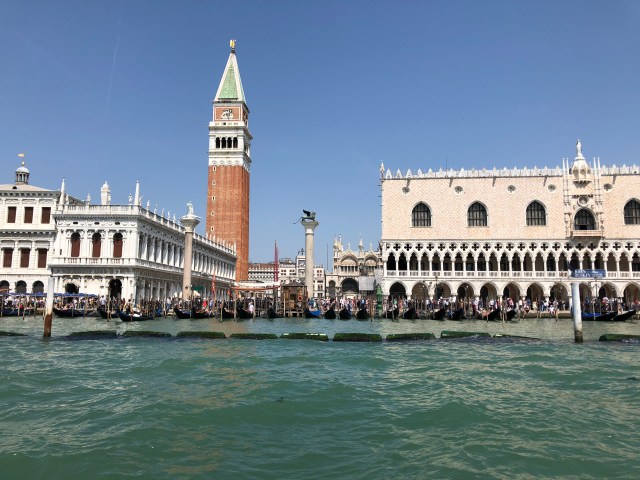
Venice or Venezia as the local say
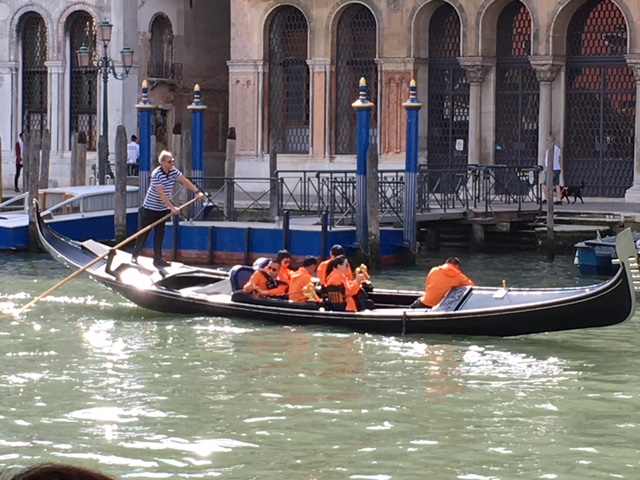
Rob says he is never going on a tour – especially if you have to wear orange suits. (this was the middle boat of 3, all wearing orange suits, all totally focussed on their phones)
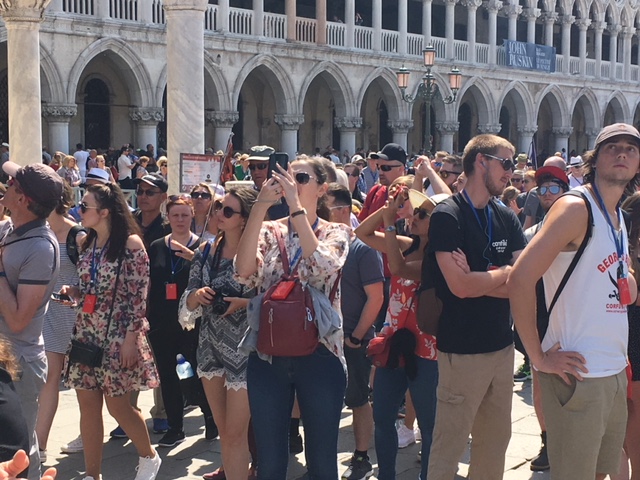
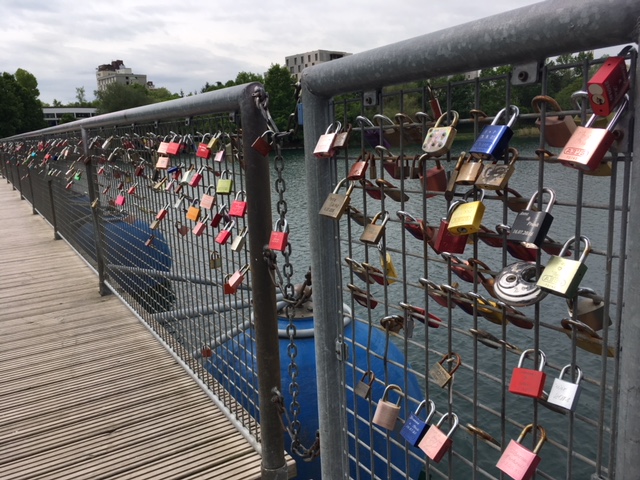
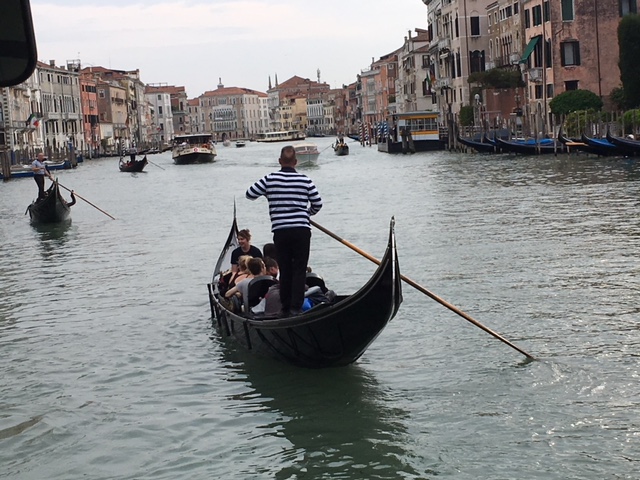
Alex spent time in Venezia 28 year ago and had warned Rob not to go into shock about the number of tourists. In the end it was Alex who was shocked. Poor Venice. Our first sight while on the crowded public ferry to our hotel was looking onto the Grand Canal to see a tourist sitting in the front of a Gondola just starring into her phone on a selfie stick. WARNING ALEX RANT. Don’t get me started on Selfie Sticks. Why do we have to insert ourselves into beautiful things? Why can’t something just be beautiful all by itself? They have been described in the New York Times as the tools of narcissists and psychopaths. Angus Trumble was early to ban them at the National Portrait Gallery in Canberra. RANT CONTINUES. Love Locks. Again just tell someone you love them, do not litter and damage beautiful bridges in Paris, Freiburg, Venice. I just wonder how many people return to remove the “love lock” once the relationship breaks down?
Venice is still beautiful. We had a great tour with Venetian Patrizia. She was brought up in Venice but can’t afford to live there now. She lives in Venezia Maestra, the city on the mainland. That’s the story for so many Venetians. They are being forced out by crowds, high costs and taxes. And of course Airbnb: renting out apartments for a fortune. The resident population of native Venetians has plummeted over the last few decades.
It is a very controversial topic in Venice, and a lot has been written about it. The large cruise ships that flood the city with tourists each day, that bring little economic benefit and have little cultural sensitivity. The cheap flights from all over Europe mean that a quick trip to Venice is open to millions and the growing number of Chinese who are travelling the world.
But how do you control numbers? Some cities in Europe are now clamping down on things like Airbnb to protect accomodation for locals. Do you introduce a permit system, or have to be sponsored – as was suggested by our Hotel concierge? On the big public holiday on May 1st this year the local government proposed that it would introduce gates to control numbers at two key pressure points, the Rialto Bridge and St Mark’s Square. This approach was met by protests by locals who viewed this as turning Venice into a theme park – like Disneyland where people have to go through a gate.
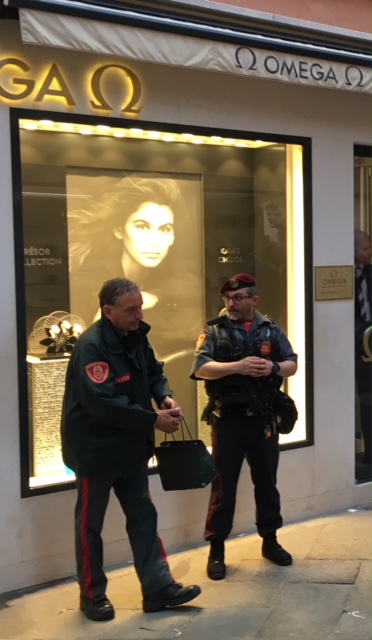
The shops don’t serve Venetians they are for the rich. Coming out of our hotel laneway we were greeted by Armani, Cartier, Max Mara, Gucci and standing in front a guard with a machine gun.
Security guards with machine guns
But putting all that aside we had a great tour of the Doge’s Palace and learnt about Venetian history. Venice was established on marshy islands in a lagoon as a refuge for protection as the Roman empire fell. Its isolation led to an independence from papal and feudal squabbles that were rife across mainland Italy. As an independent Republic it focussed on its own mercantile empire to the east. It was the most free and liberal state in Europe during the middle ages and was the worlds longest lasting republic.
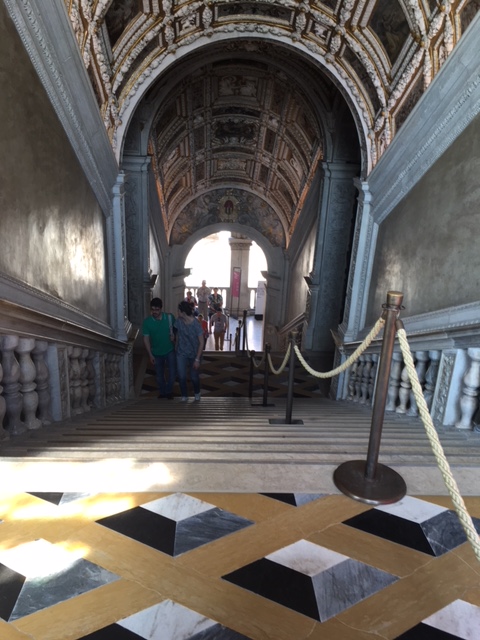
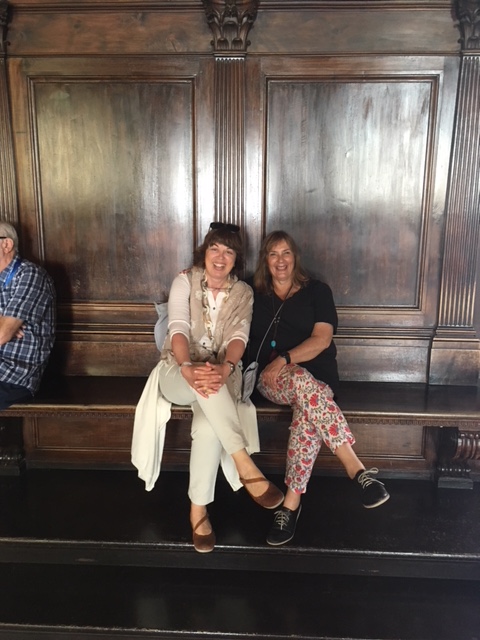
Stairs in the Doge’s Palace – check out the 3-D effect in the tiles on the landingIn Doge’s Palace (Patrizia and Alessandra discussing teenage daughters)
We found a haven at The Flora Hotel, right near San Marco, old fashioned Venetian elegance.
We look like we have gauze filters (no wrinkles here)
And if you get up early you can still find beautiful Venice.
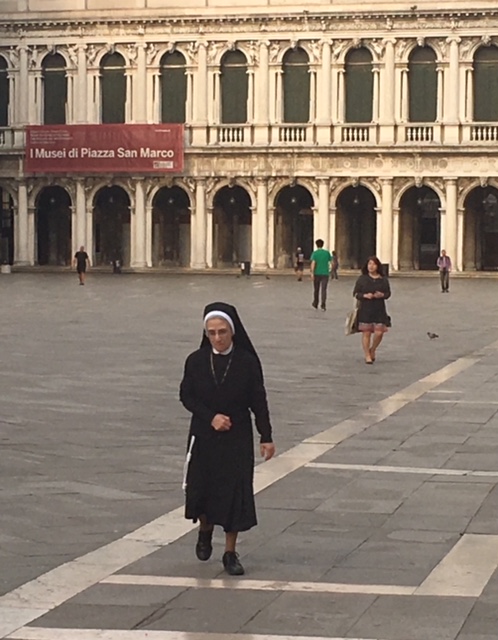
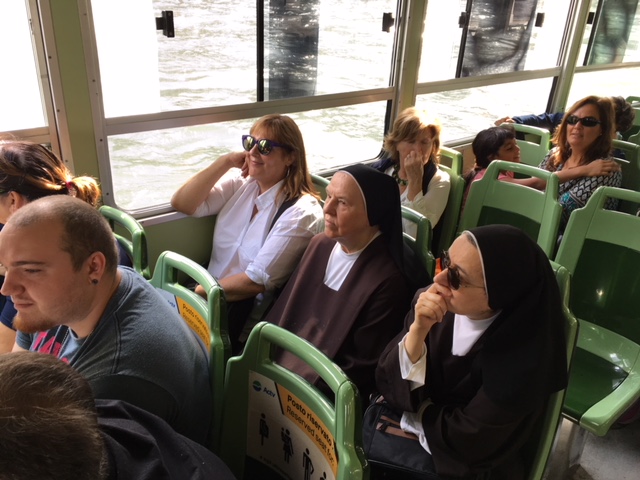
The Nun series
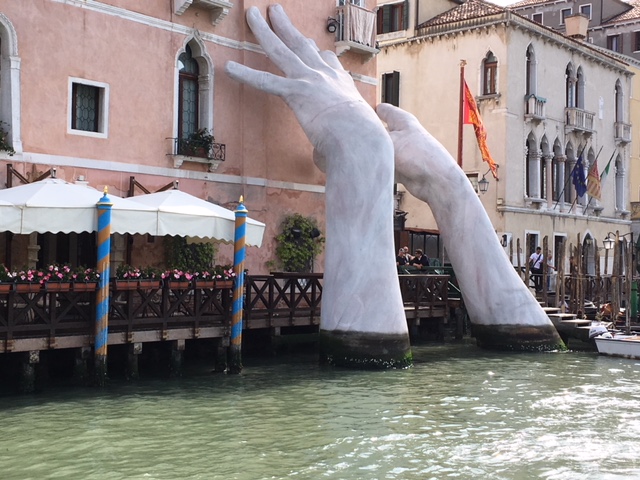
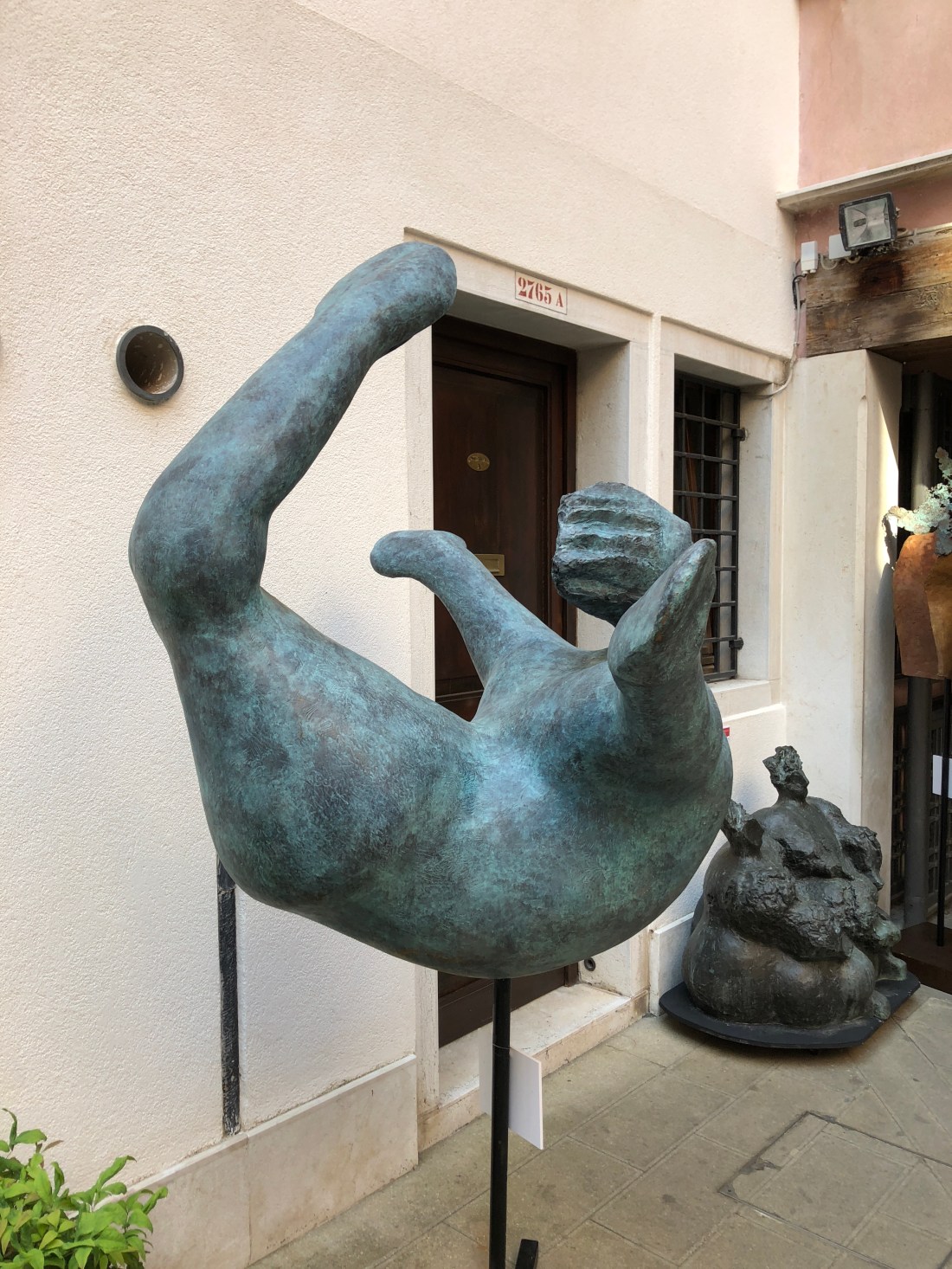
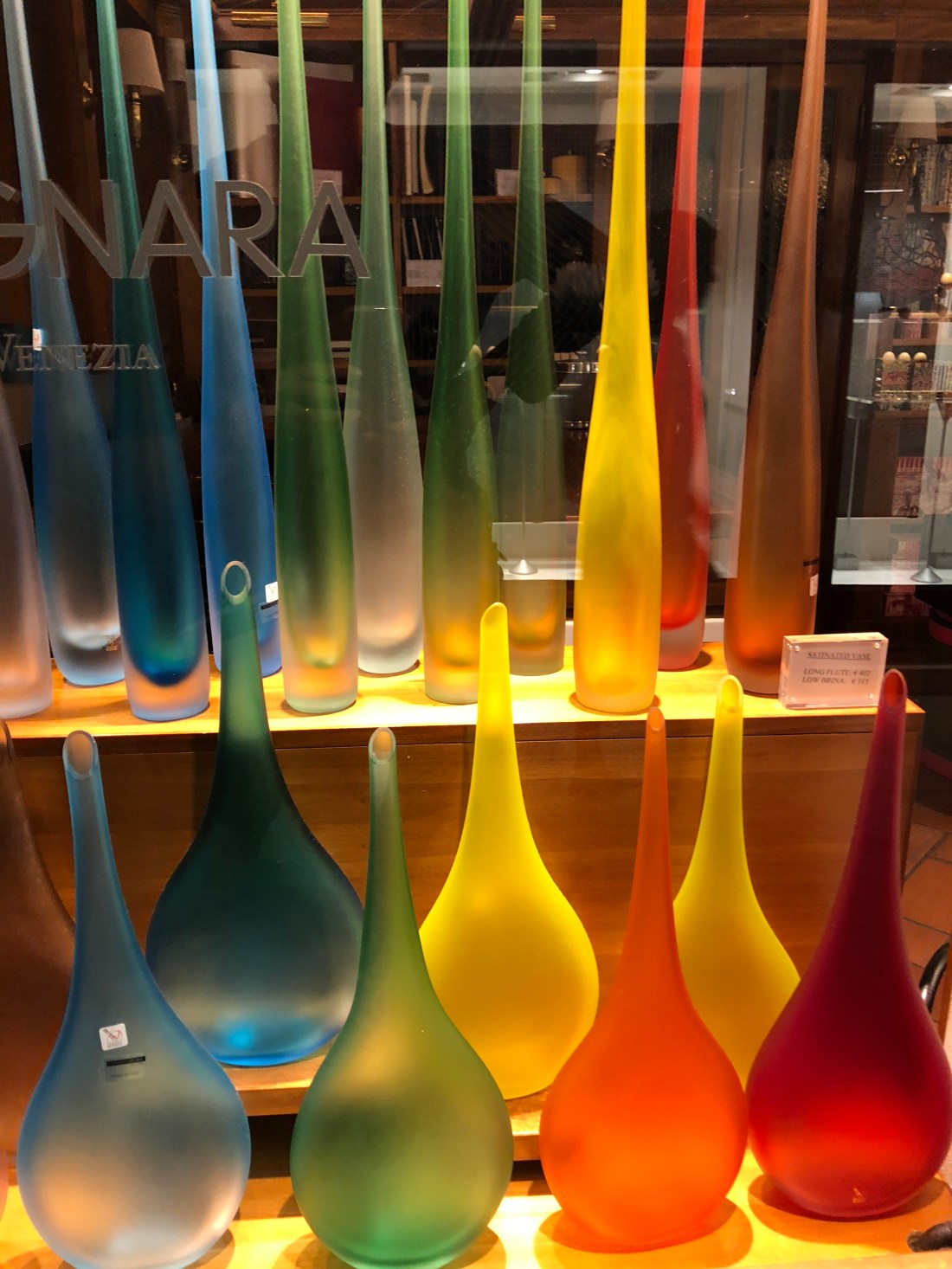
The Art
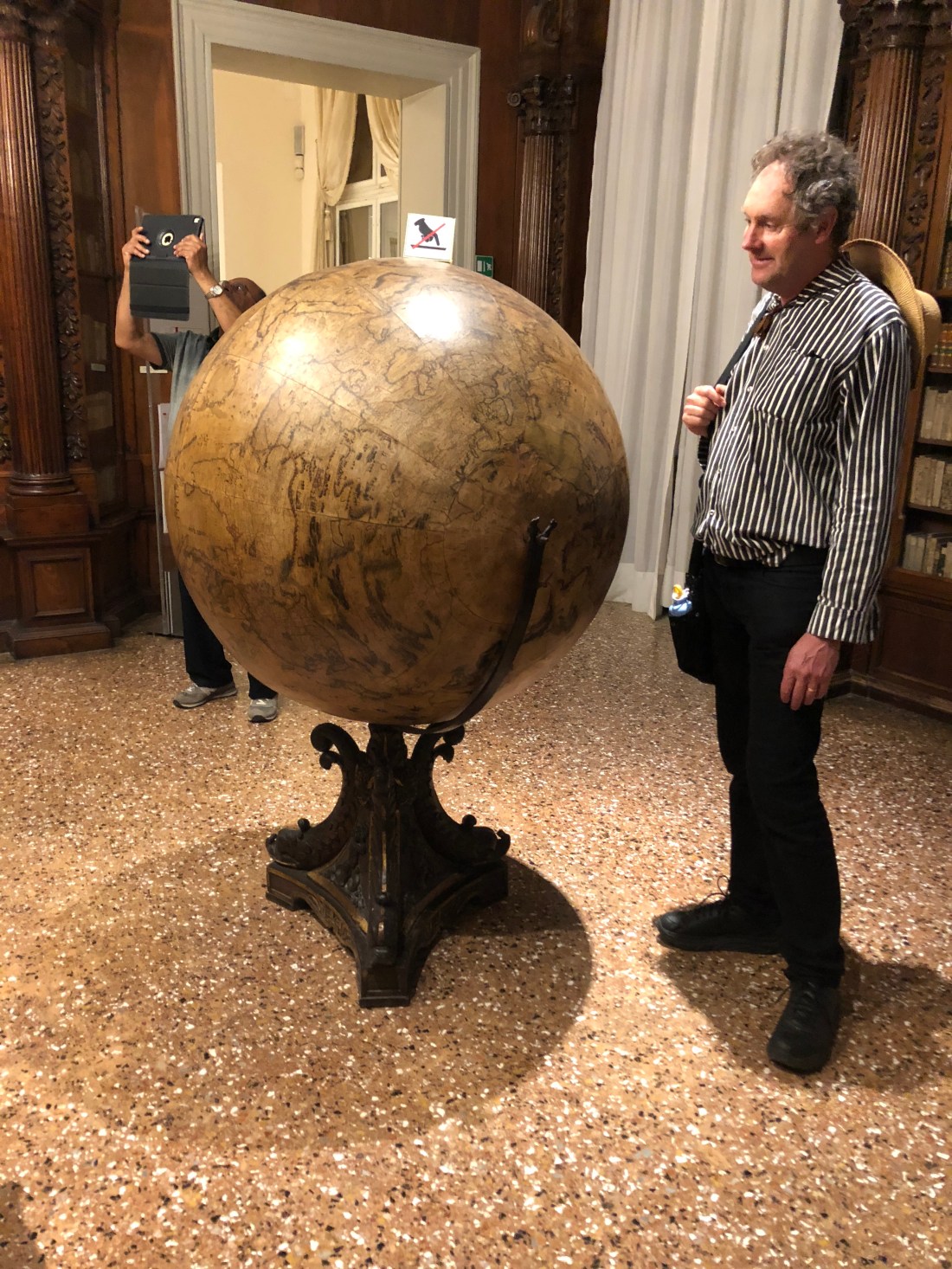
Now that’s a globe!
The train from Venice to Ravenna
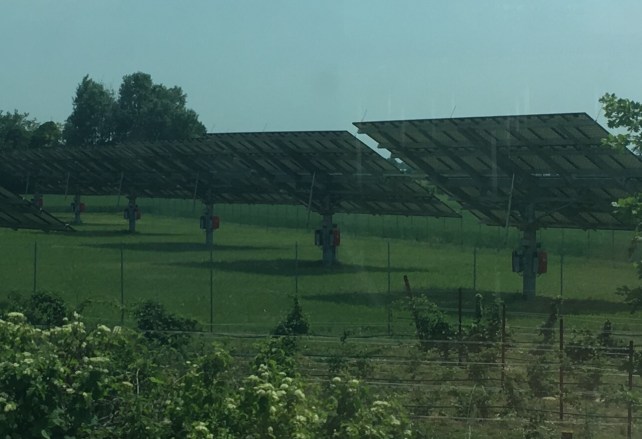
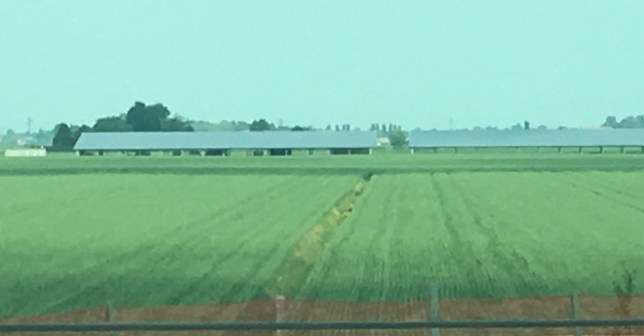
We travelled through a lot of flat and highly cultivated country and could see why the Italians had made themselves so much at home on the flat plains in the Murrumbidgee Irrigation Area – spring crops of wheat, rows of grape and kiwi fruit vines, stone fruits, and closer the the villages broad beans, onions and garlic. Red Poppies line the railway tracks and sometimes solar panels.
While we were in Paris we caught up with Marilyn Chalkley and Hugh Saddler. Dr Hugh Saddler is one of Australia’s key energy experts told us to look out for Solar in Italy: “They’re way ahead”.
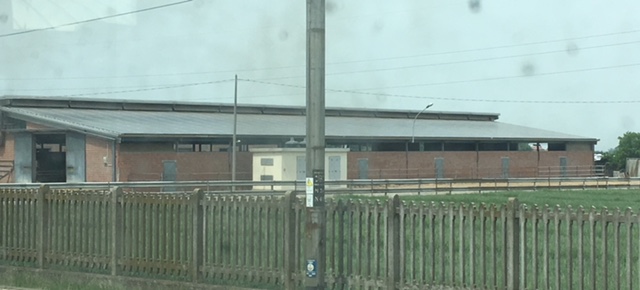
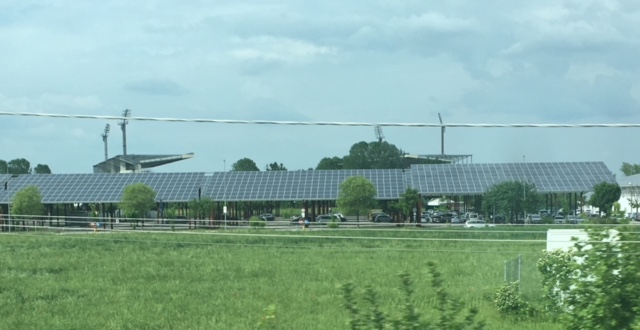
Here are few shots out of the train window (generally poor quality as taken through dirty windows at high speed). We found solar installations of all types in paddocks, on top of farm sheds, on top of factories, as car parks in sports stadiums and on houses. It was everywhere.
Solar installation serving as a farm shedFeed lot shed totally covered in solar panelsSolar panels creating carparks at a sports stadium. Idea for EPIC?
Ravenna
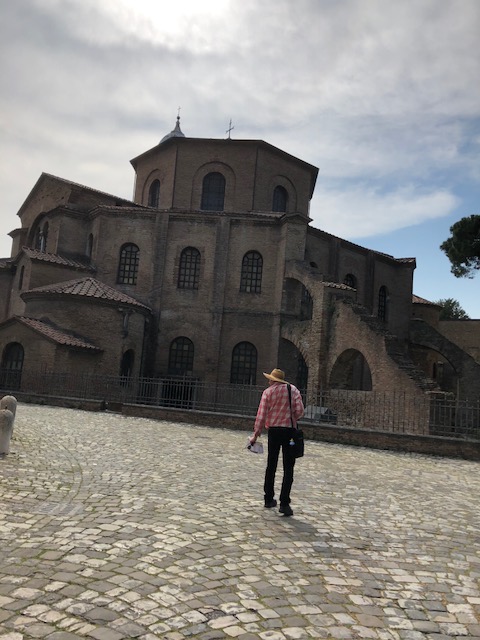
We had a strange reason for coming to Ravenna. We are so glad we did. Ravenna was for a period the capital of the Roman Empire, it has buildings going back as far as 100AD and 8 UNESCO World Heritage sites, with some of the world’s best mosaics.
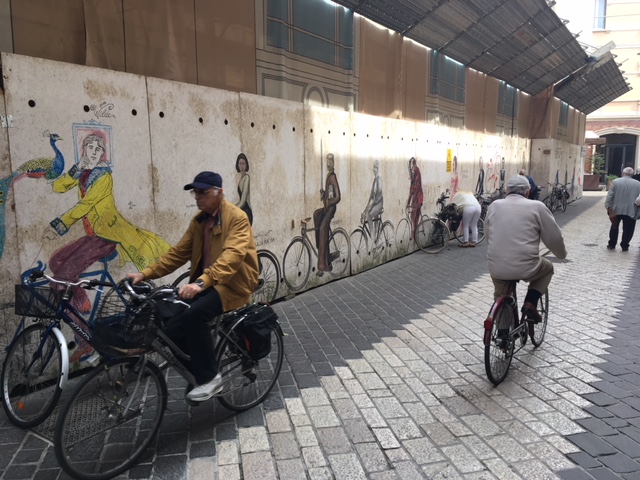
Ravenna today incorporates the old town, which other than taxis and delivery vehicles is car free. Everyone gets around on bicycles – people of all ages including lots grandparents with children on small seats in front of them. People have time to stop and talk as the move around the city.
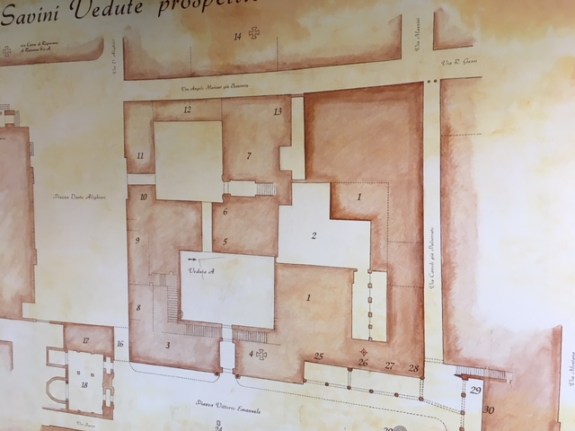
The network of small plazas, connected by walkways and arches between buildings that was designed over 1000 years ago still encourages huge social interaction. We saw people stop, lean on their bikes and talk.
The Basilica of St Vitale consecrated 547 or 548. One of the 8 UNESCO World Heritage Sites in Ravenna
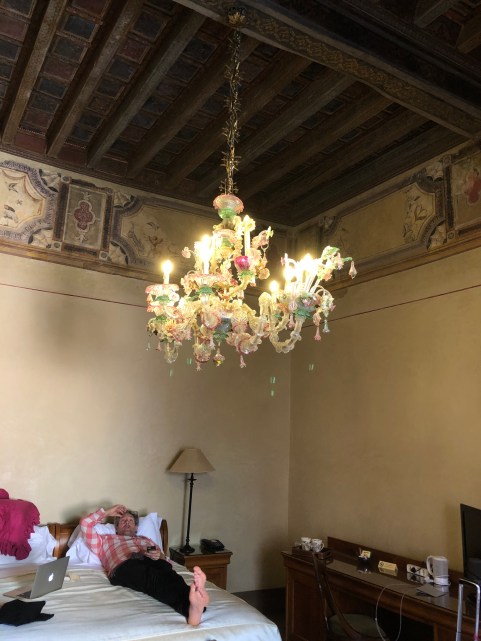
We found ourselves in a palace with original ceiling and frescoes.
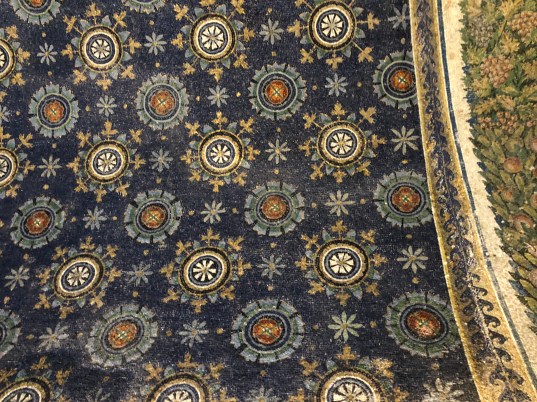
Closeup of Mosaics 500sPlan of the public square from around 900 AD – still working a treat
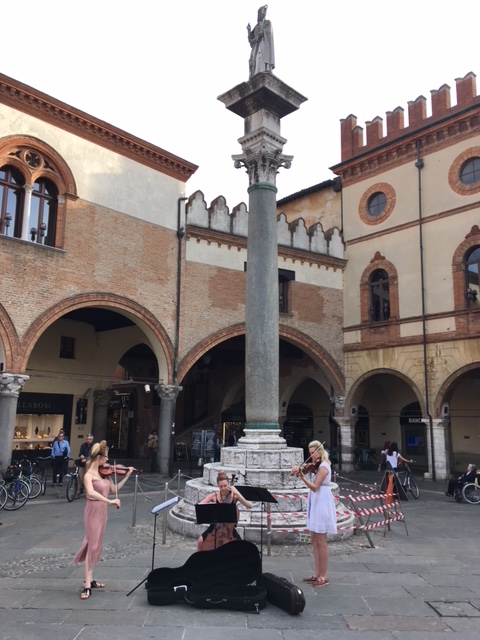
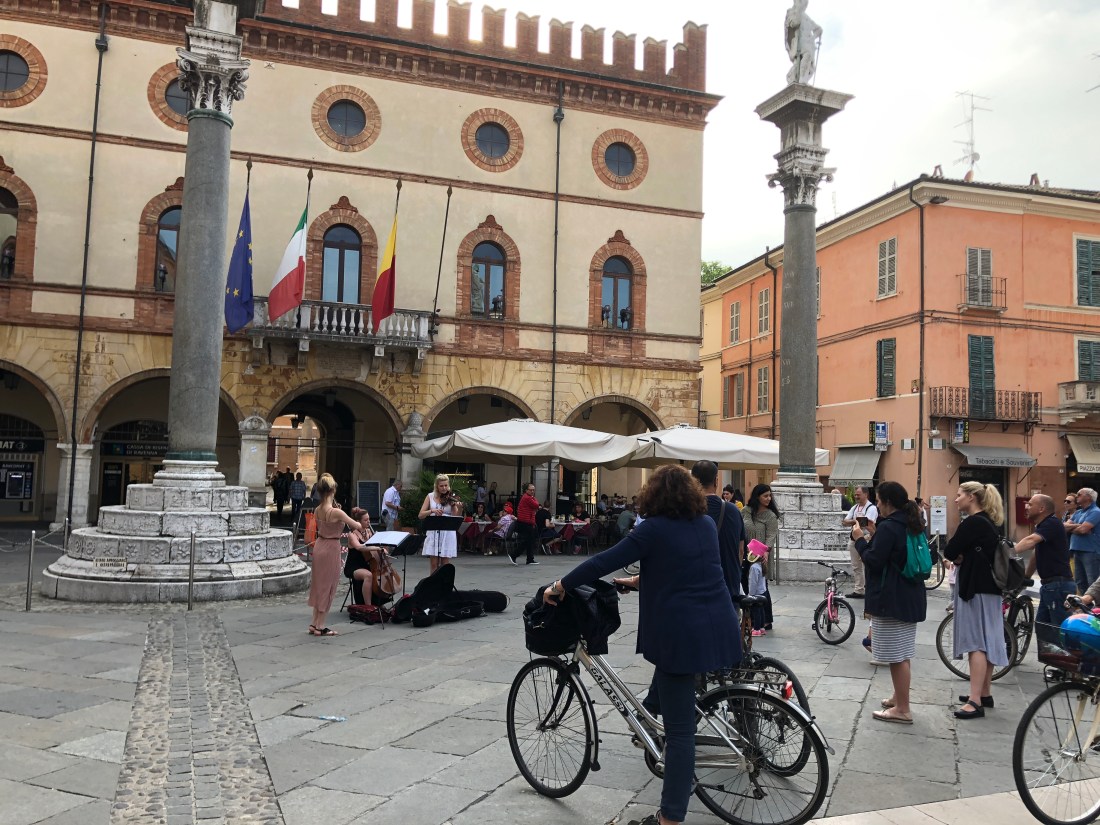
Piazza del Popolo. These musicians played for hours they played great popular classical music.
The network of small plazas create great places for people to stop and mingle
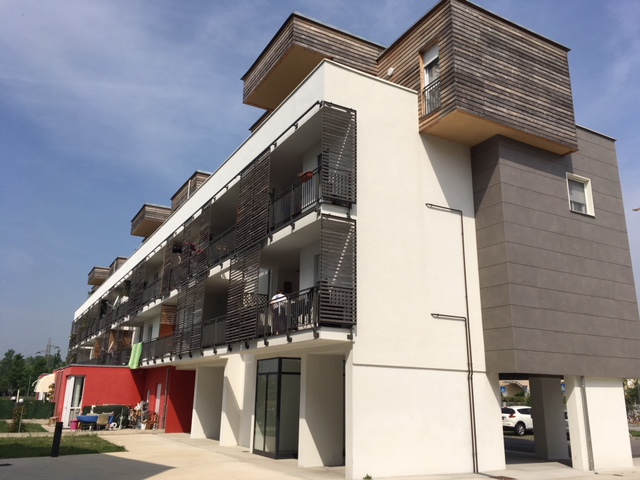
So, to the slightly random reason we originally chose to come to Ravenna. Rob gets a few online newsletters including some architectural ones. As we (Alex) were planning our trip last year a post came through about a Social Housing project in Romea near Ravenna. It was “the result of an international competition won in 2005 and completed many years later”. I flicked it to Alex, along with many other random posts at that time, and said maybe we could go here? She replied “Great! We can go there after Venice. Ravenna is on the way to Florence”.
I found it a bit hard to follow up on the project, the architects had moved on and people moved in, but I did locate it with the help of Google maps just on the outskirts of the city, but hadn’t done any more than that. In the end we had a few spare hours on the morning we were leaving Ravenna so we grabbed a Taxi and went out to the site asking our fantastic driver Liviana if she could wait while we had a quick walk around and took some photos. She ended up giving us an interesting guided tour pointing out the old Venetian Fort and various social housing projects. Like us, they are trying to reduce the concentration of social housing in single buildings and their recent developments are townhouse style houses with the Government selling most privately and maintaining a number of properties scattered throughout for social housing.
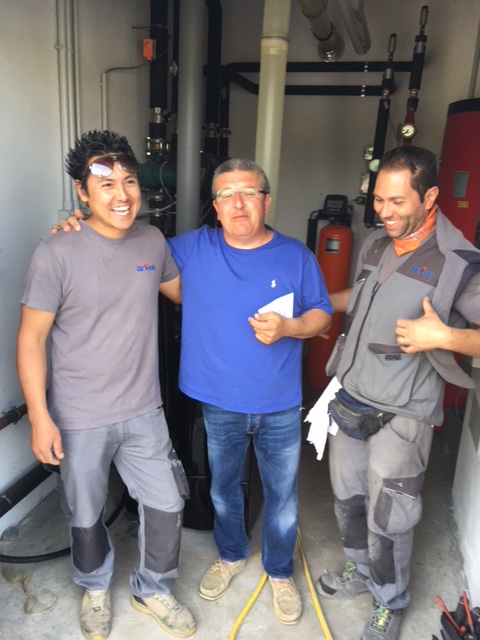
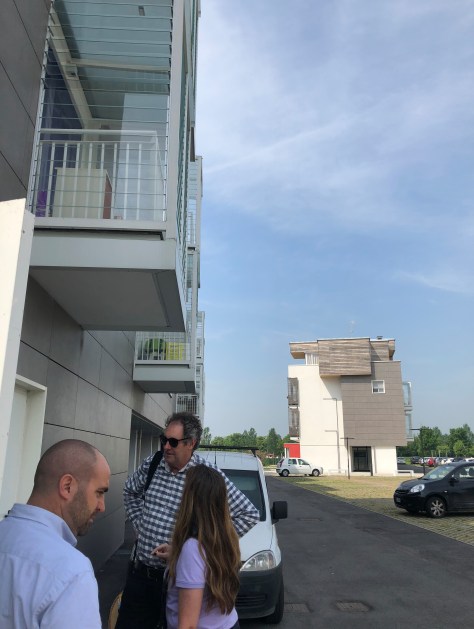
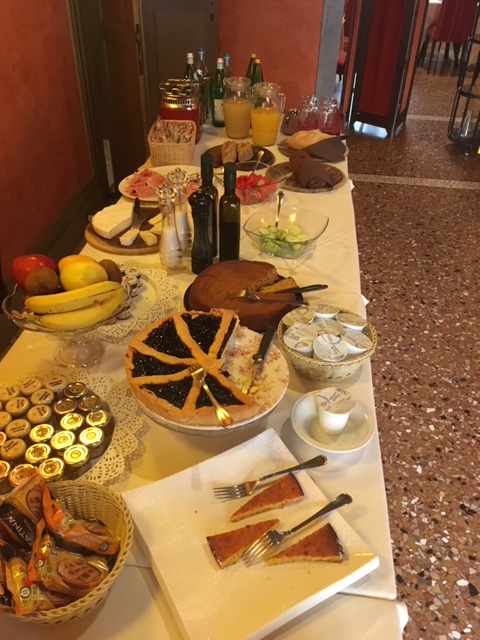
Social Housing in Ravenna by PICCO architettiRandom encounter with the guys spring cleaning out the innovative hydronic heating system, where water pipes transfer heat throughout the buildingOur taxi driver Liviana translating about the technicalities for Rob. She was a great character. When I asked if she was married she said “No. I am not a good woman!” and laughed. She is a great woman.The food in Ravenna is delicious. Breakfast at our hotel.
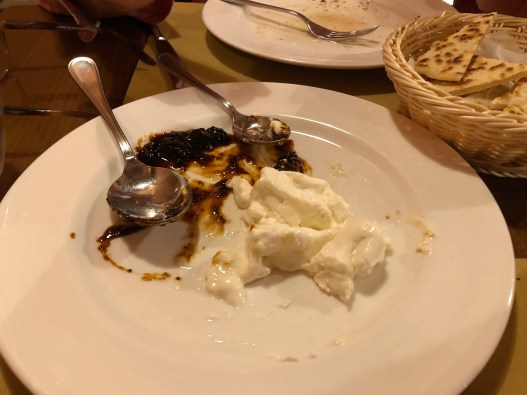
Local dish piadina bread, squacquerone cheese with caramelized fig marmalade. Grazie!
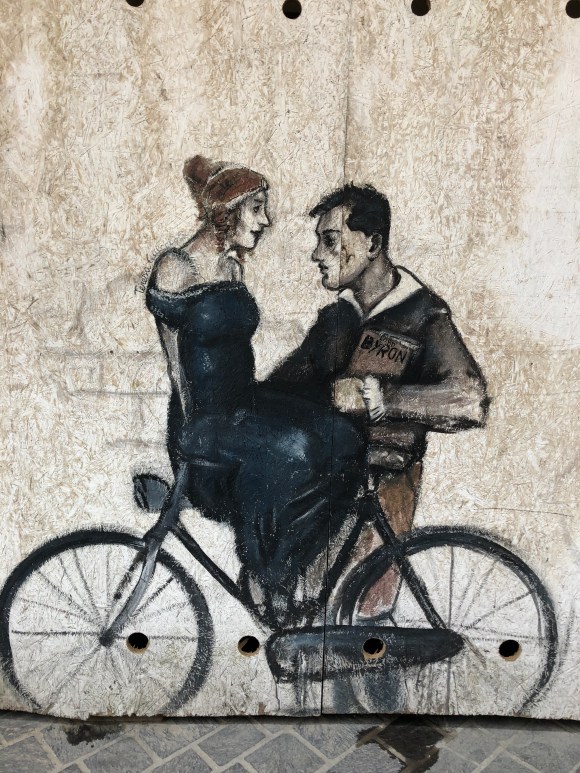
Lord Byron appears on temporary street art along with other famous people on bicycles
Italians pretend they are quite unmoved by the visits of the rich, famous and infamous. But the references to George Clooney and Lord Byron were frequent. Our guide at the Villa on Lake Como made references to him being in residence 20 kms up the lake. Without us asking (and really we’re not that interested) Patrizia got the water taxi in Venice to take us to the place where George married Amal. And Lord Byron lives on in the names of Hotels and in street-art. We did love that the street art in Ravenna depicted famous people from Dante to Fellini all on bicycles. Ravenna is all about bikes.
Reggio Emilia
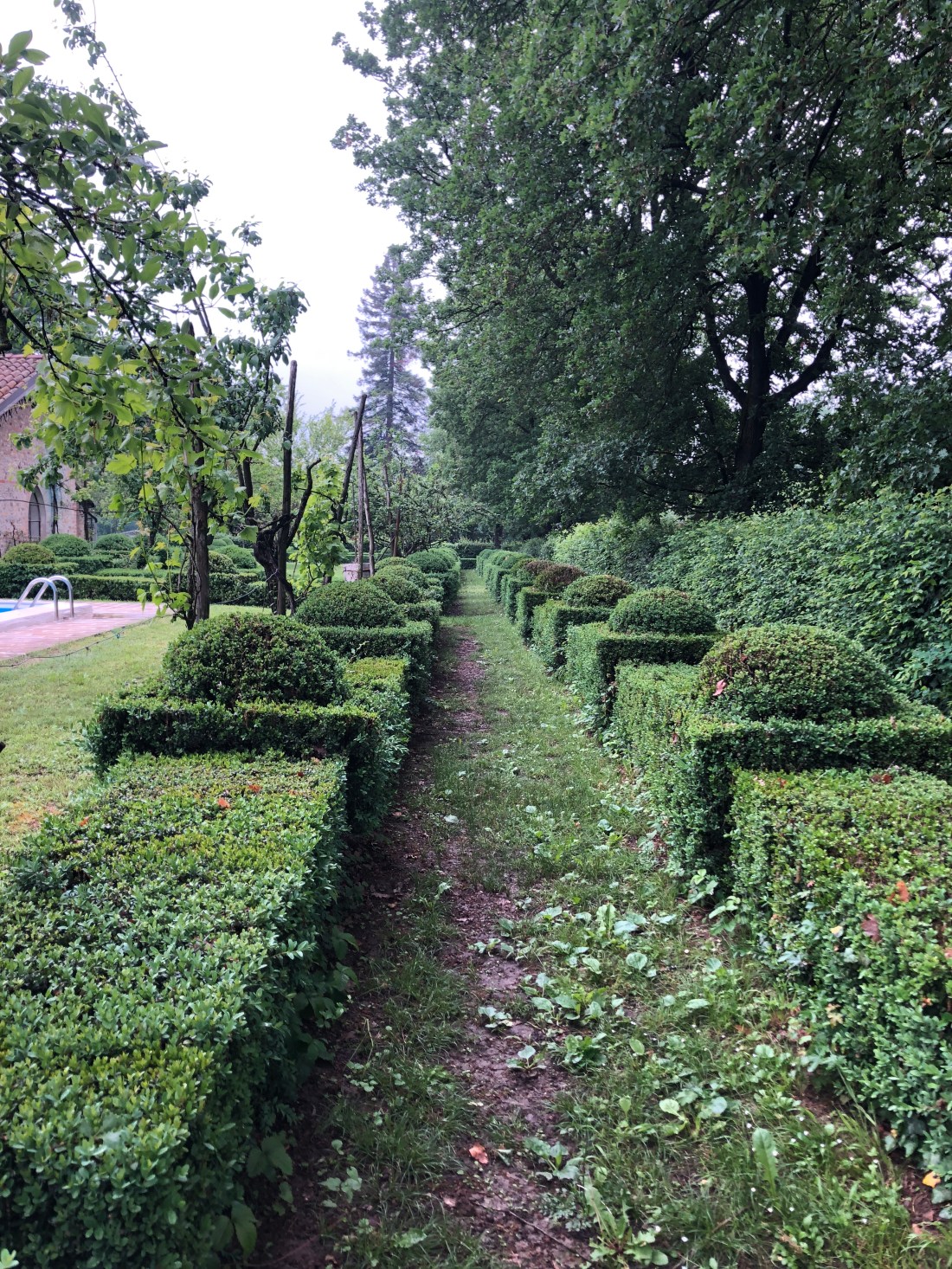
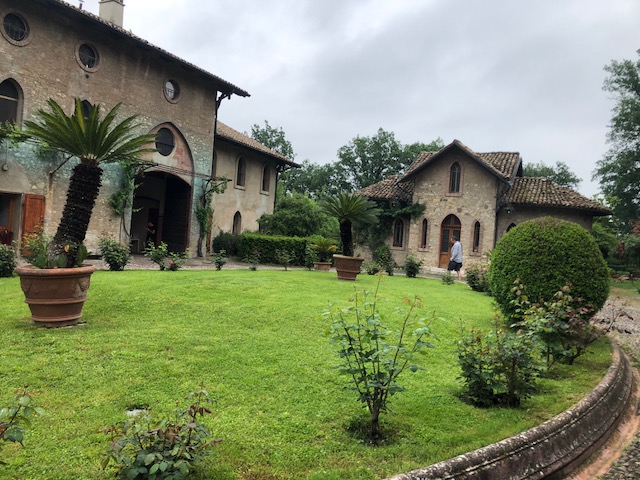
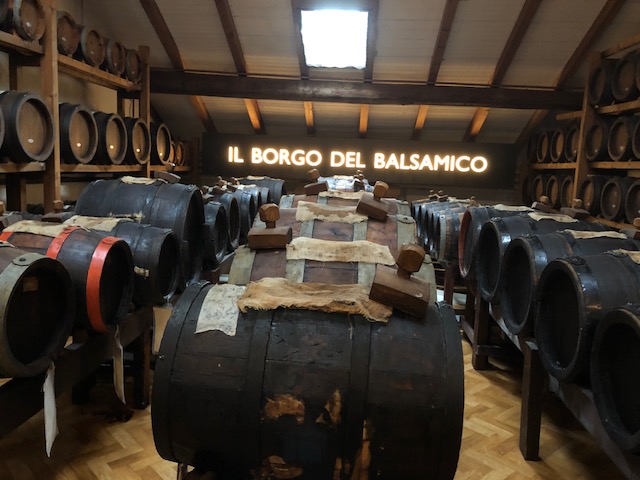
So, we have come to rest in a B & B outside Reggio Emilia. Le Dimore del Borgo is a cluster of 17th century buildings, home to 3 generations of the Crotti family who produce award-winning balsamic vinegar, aged in old wood barrels in a room high above we’re we are sleeping.
The rooms and the gardens are idyllic. In an ideal world you need to have a car because we’re out of town and to walk to the local village requires you to take your chances on a very narrow, very busy two lane road. Italian drivers whizz up and down and we found ourselves flattening against the hedge about 2 feet from the road’s edge. Terrifying.
And it’s lightly raining – so we find ourselves learning about true aged balsamic vinegar, doing our washing, writing this blog and soon pilates!
Ice Ice Baby. It took an ICE Train just 2 hours to whizz us out of Paris and into Strasbourg on the French/German border. This is a 5 hour trip by car.
Our itinerary read, Strasbourg, Offenburg, Freiburg, with dinner at the Schloßberg. So what is a berg? Not to be mistaken with Burg which means mountain, a berg is a word for any elevation in northern Germany – that can be as little as a metre!
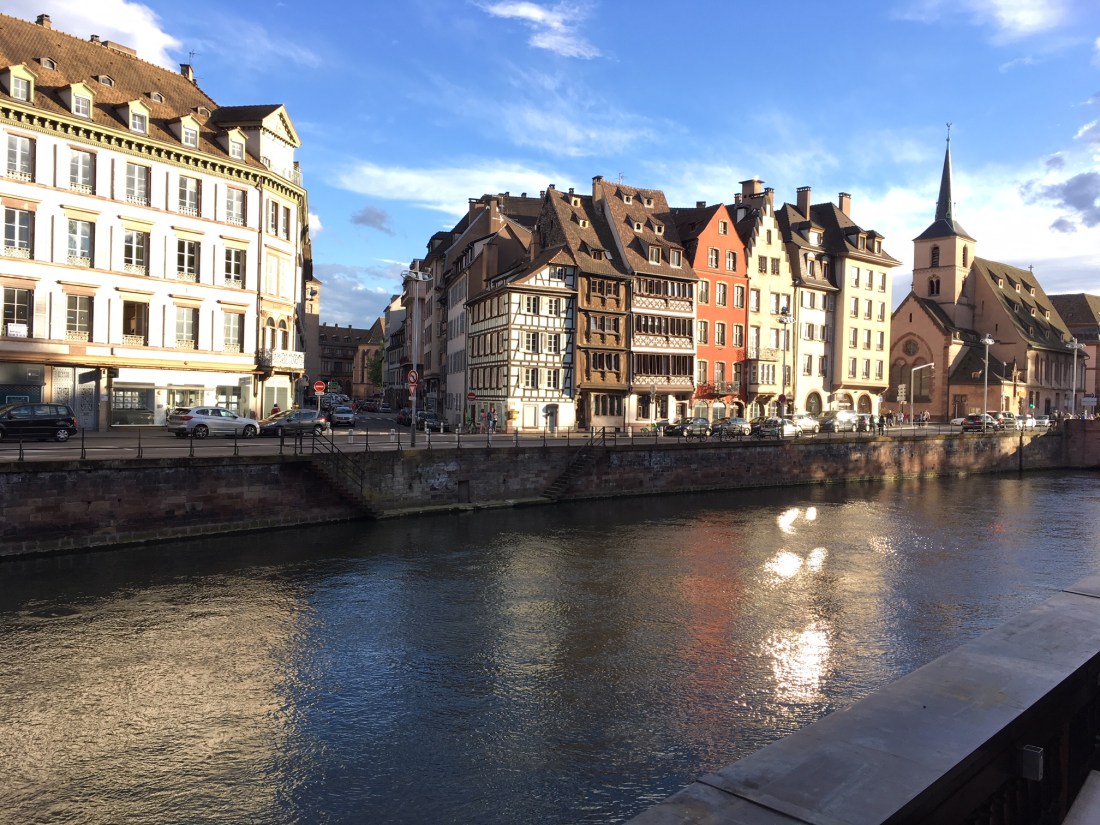
Back in Canberra our lovely friend Fiacre suggested we go to Strasbourg. Imagine Fiacre’s beautiful French accent: “I think you will find it beautiful and interesting, there are lovely old buildings, a canal and really diverse population.”
Fiacre you are right about so many things (including your choice of partner the beautiful and interesting Anusha).
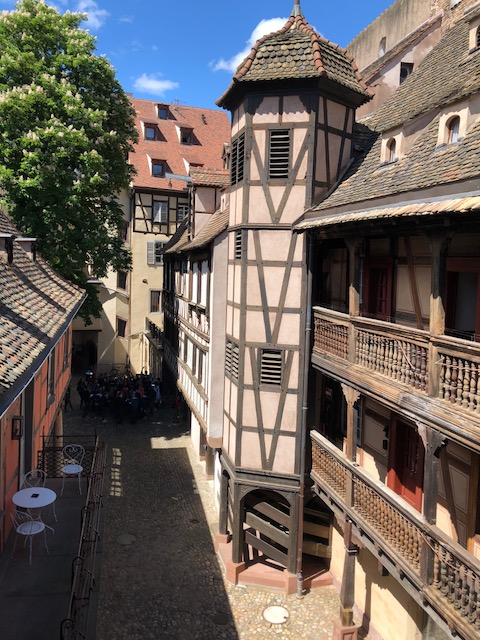
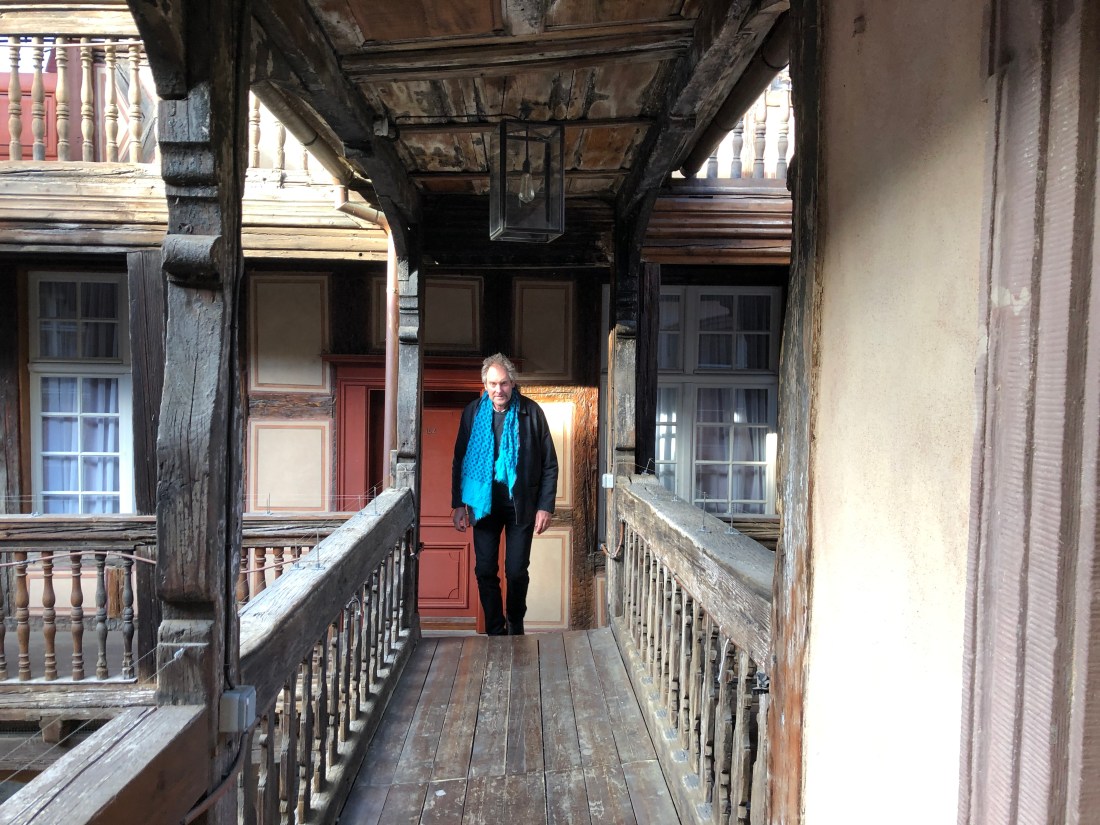
We decided to splash out and stay at the Cour de Corbeau which dates from the 1525. It began as an inn and hosted Prussian, French and German royalty as well as Voltaire and Alexandre Dumas. In 2006 it had fallen into a really bad state only to be renovated and turned into a fancy hotel. They have done a beautiful job.
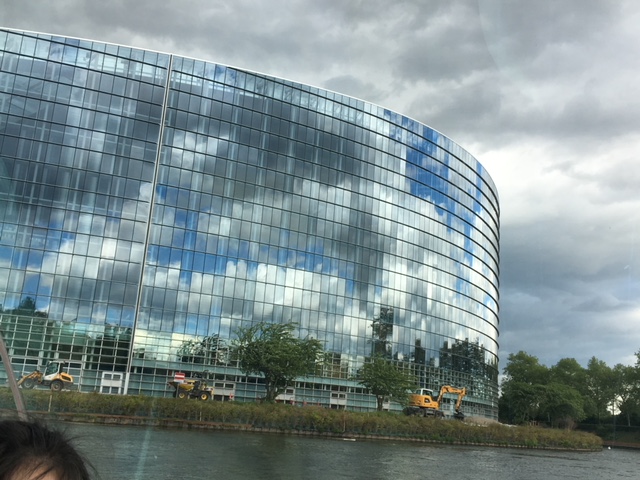
Strasbourg has a fascinating history. It’s been German, it’s been French, German and French again. It is distinctly Alsace too. It really is the perfect place to house the European Parliament “the capital of a reconciled Europe”.
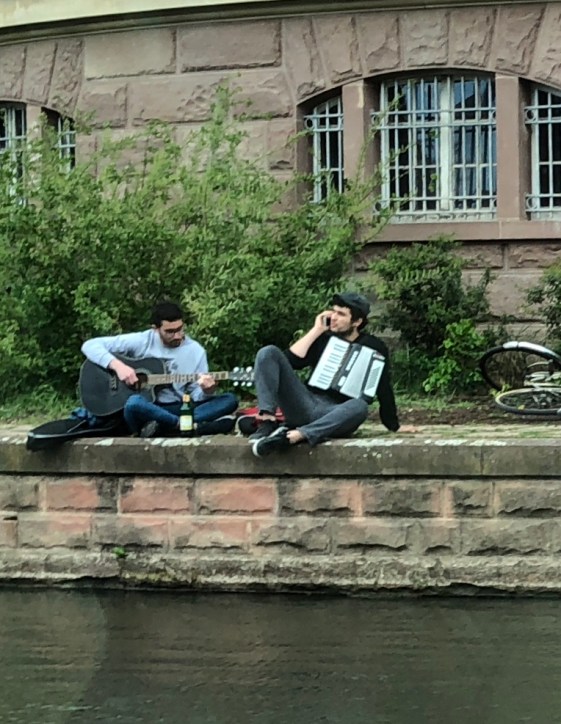
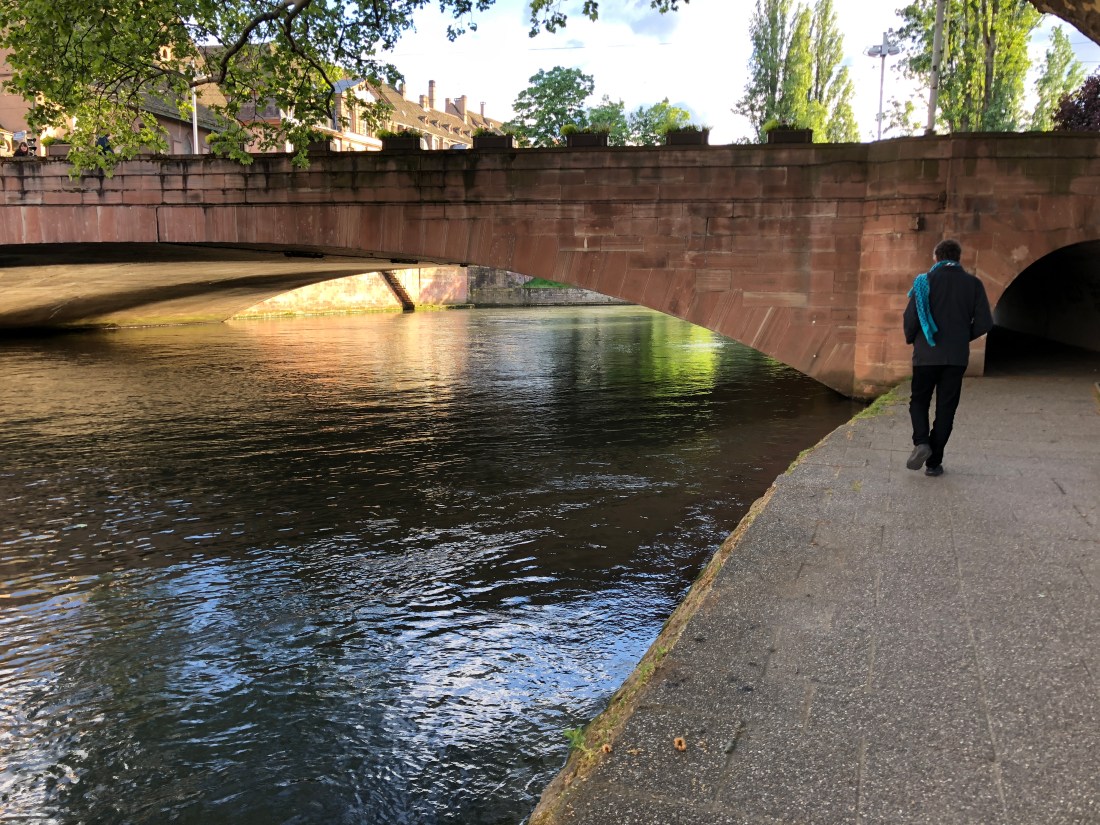
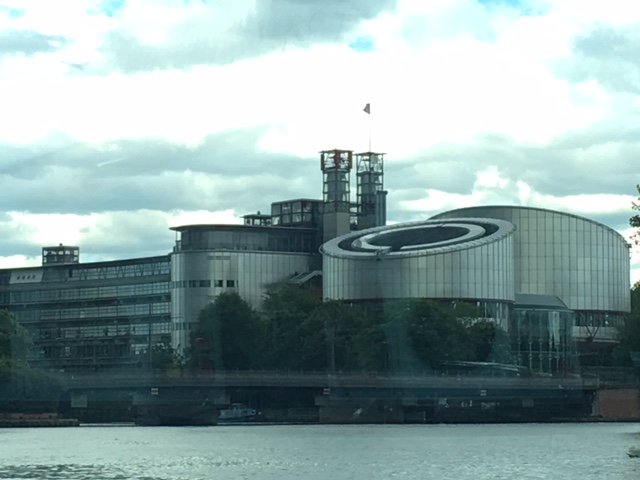
Part of the EU buildingsWhy not sit by the canal and play guitar and piano accordion?
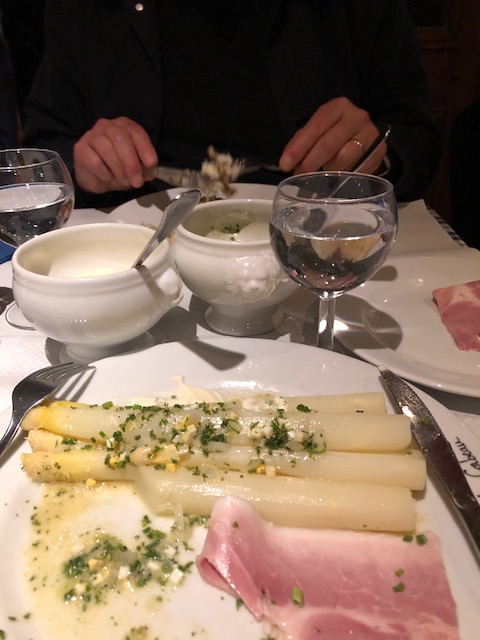
White asparagus in Season at Pont du Corbeau
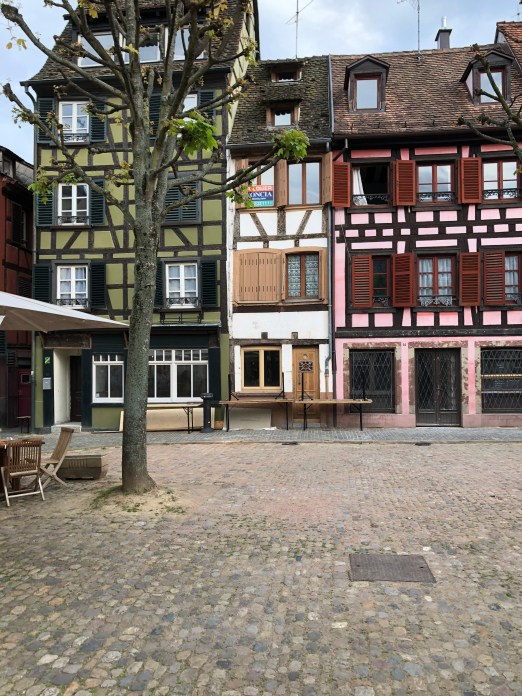
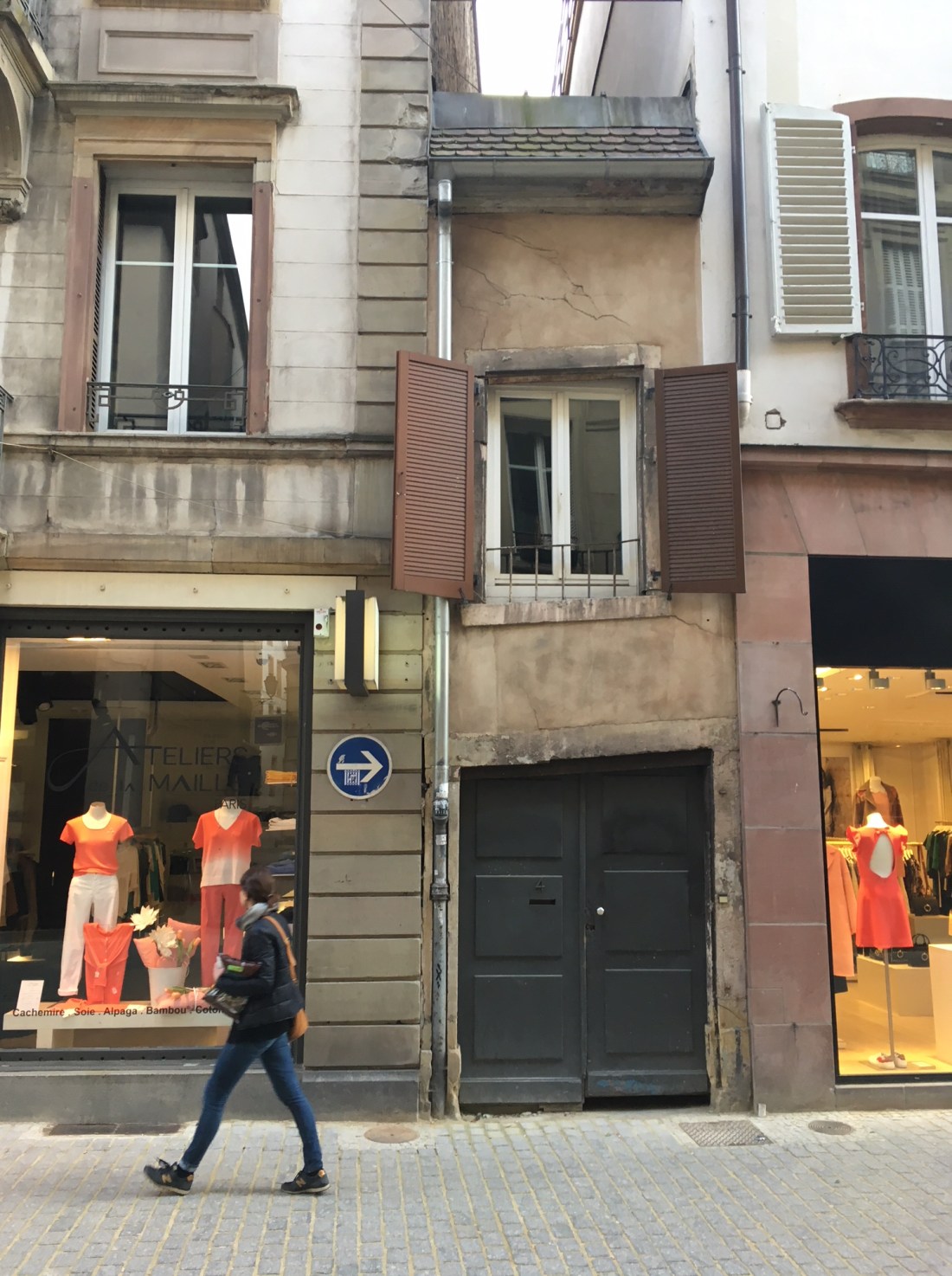
Architecture from another period of historyIs this Strasbourg’s skinniest house?The Human Rights building
It’s a very short trip (on 2 trains) to Freiburg. There are no border checks. And within minutes of crossing the Rhine, we stopped at a station and a woman boarded the train sat opposite us and quietly said “Guten tag”, we were in Germany.
Freiburg
Freiburg has a reputation for being a leader in environmental sustainability. It has a beautiful old town centre, a great tram system and a lot of people getting around on bicycles.
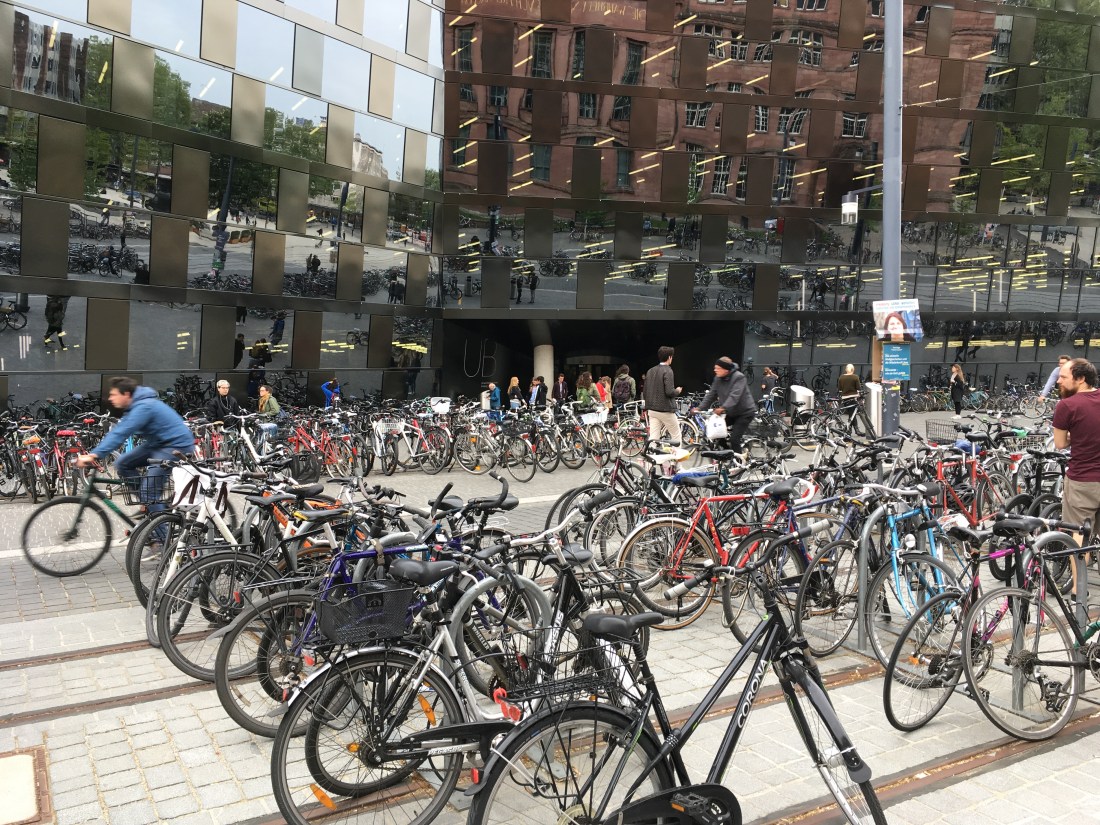
Bikes as far as the eye can see
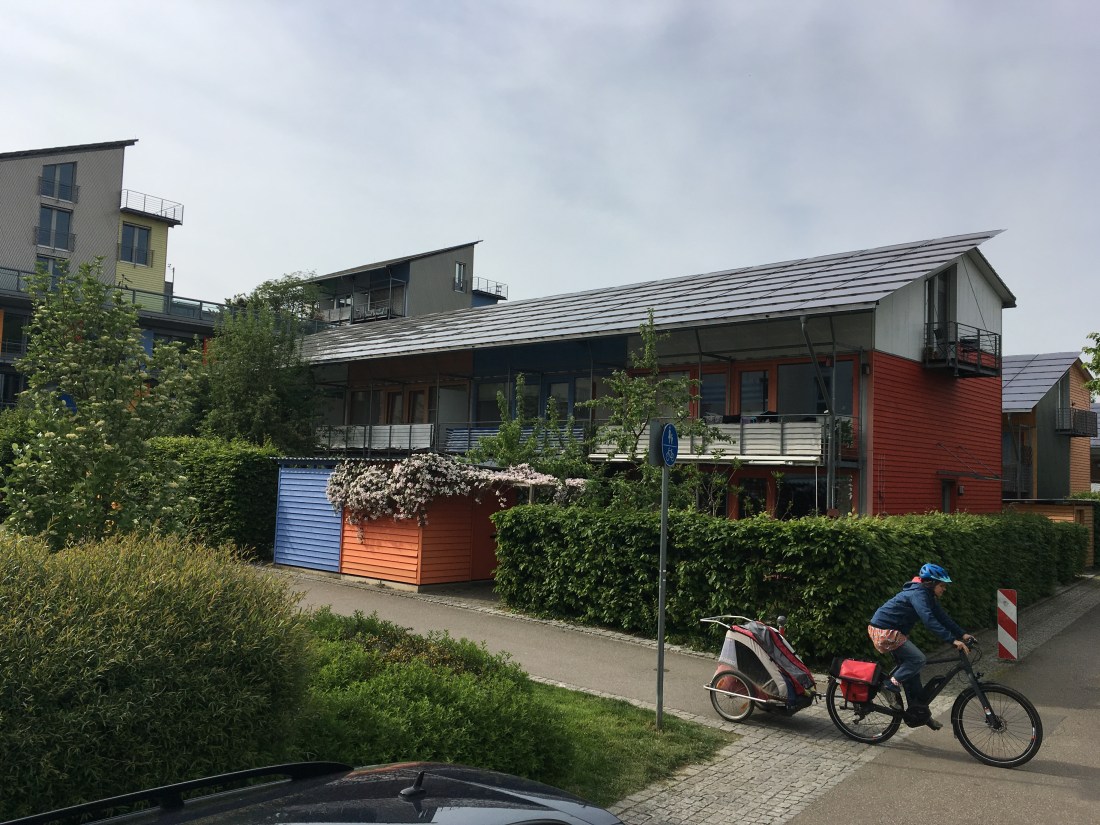
Light rail through the centre of FreiburgShowcase solar development, entire roofs as solar panels
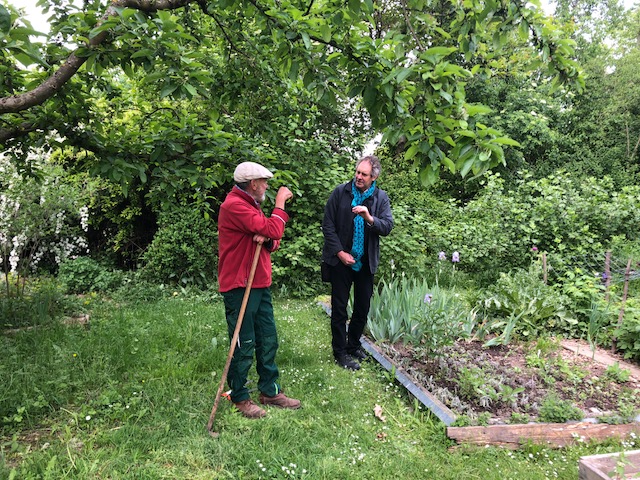
We caught the light rail out to visit the Okostation an environmental centre that plays an important environmental education role. We got chatting to Fritz the head gardner.
How big Fritz?
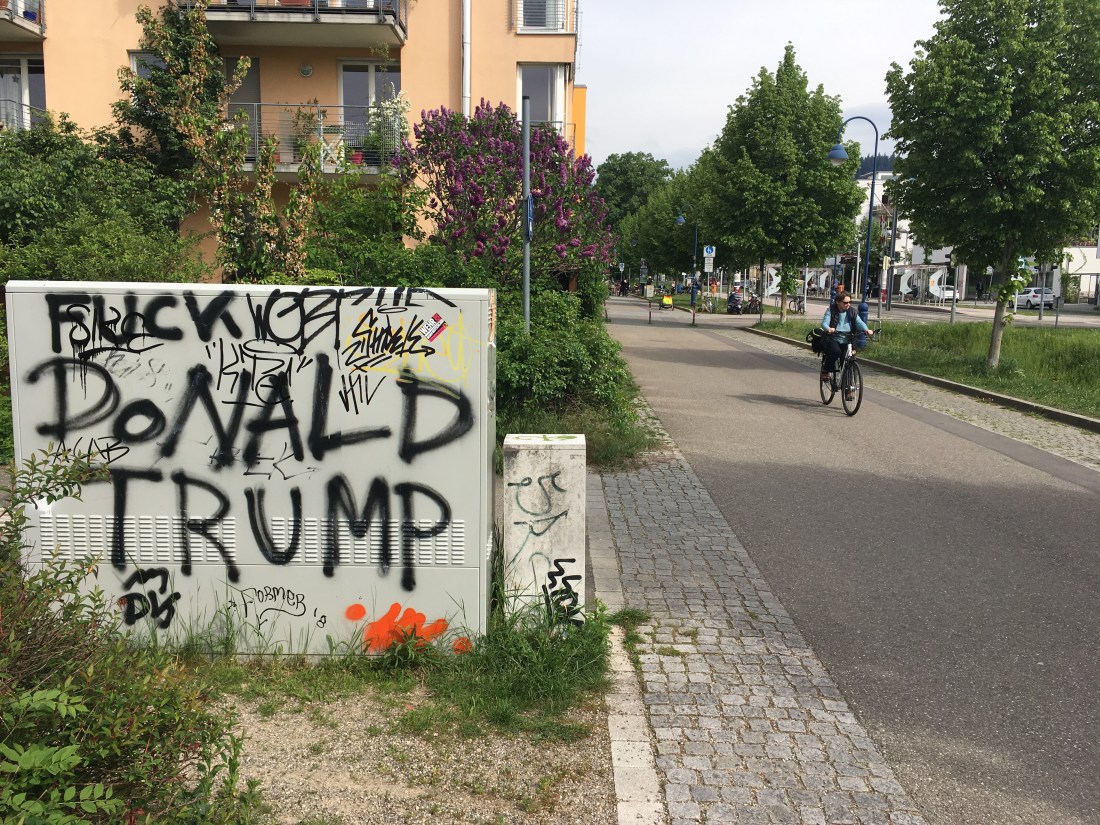
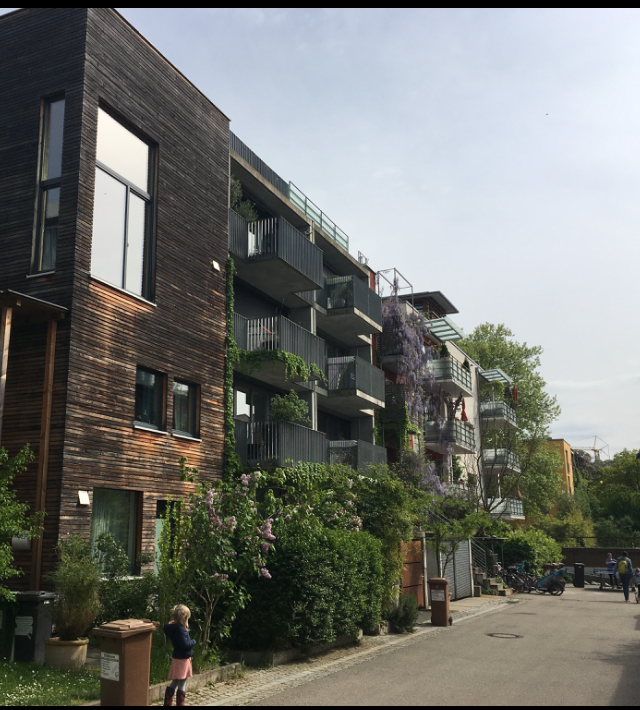
Also in Freiburg Rob went for a visit to Vauban, built as a sustainable model district developed since 1998. It is on a tram route and most people get around on bicycle, it was developed on a car free concept.
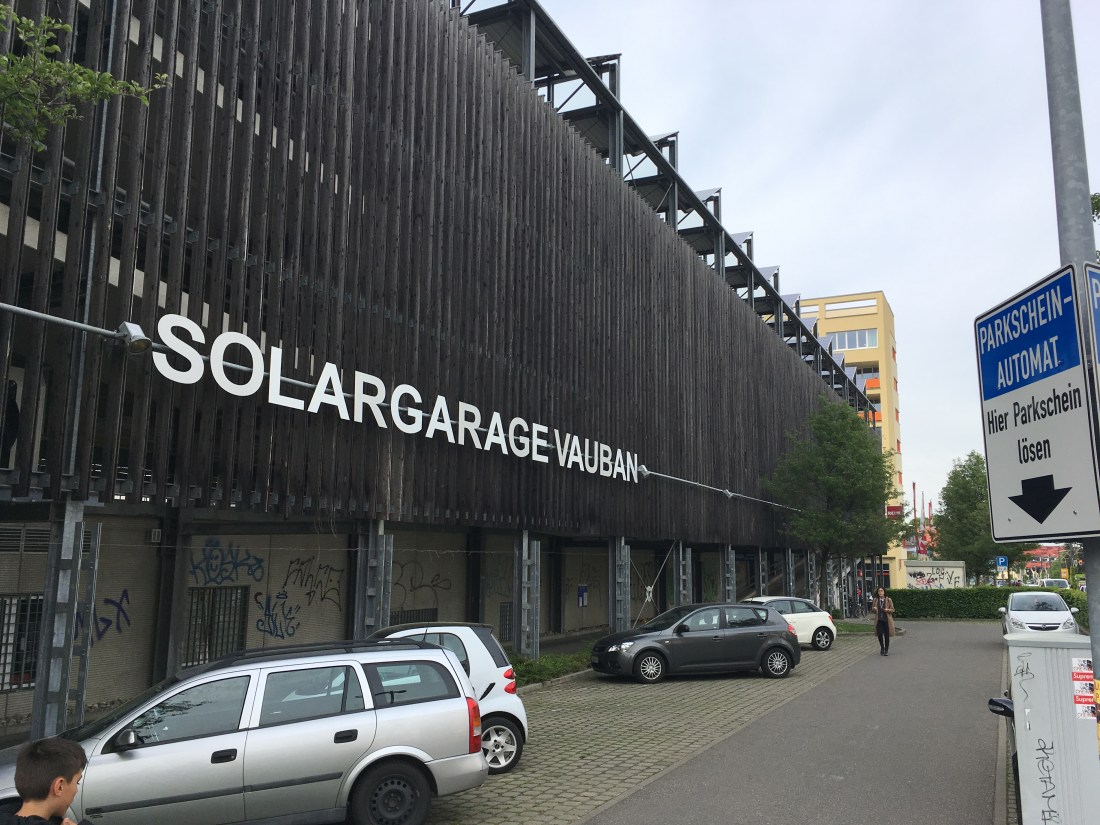
The solar garage, one of a number of carparks on the periphery of Vauban where residents leave their cars.
.Cars are permitted in to drop things off and then need to be parked in one of a number of car parks on the periphery. One is known as the solar garage and is covered in solar panels. People have to initially buy a car space and in addition have to pay rents.
I spoke with a number of people as I walked around and they all mainly ride and catch the tram. A few did have cars in the car parks but used them rarely.
Many of the individual lots were originally sold to Baugruppen (co-housing groups). People worked together with architects to build their housing developments. The district covers some 38 ha with around 6,000 residents.
All the roofs are covered in solar panels
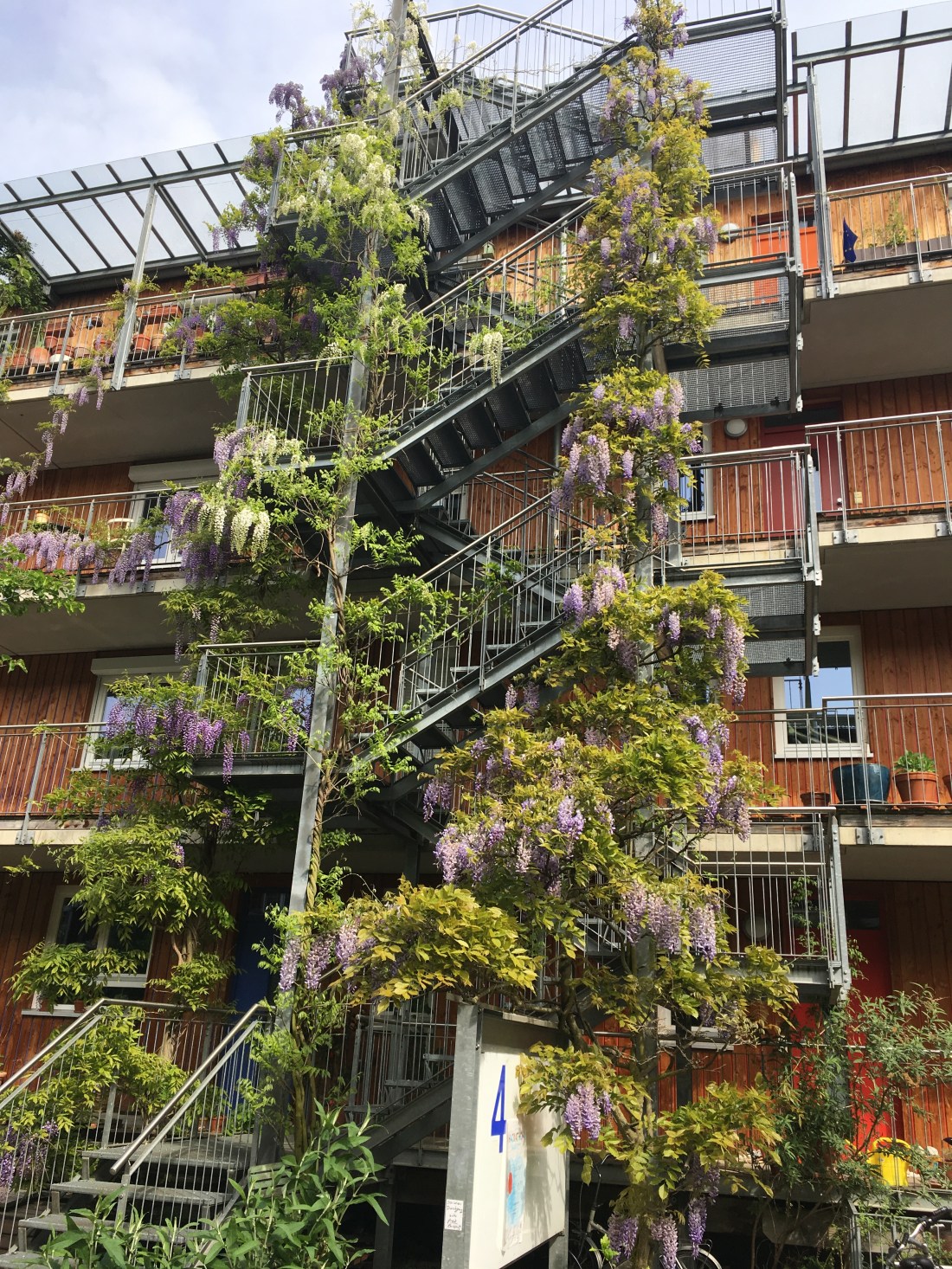
Between the buildings, which are generally 4 stories, are well developed greenspaces and playgrounds and many buildings are covered in vegetation.
Wisteria
One of the challenges now that the development is complete, is that it is highly sought after and no longer affordable.
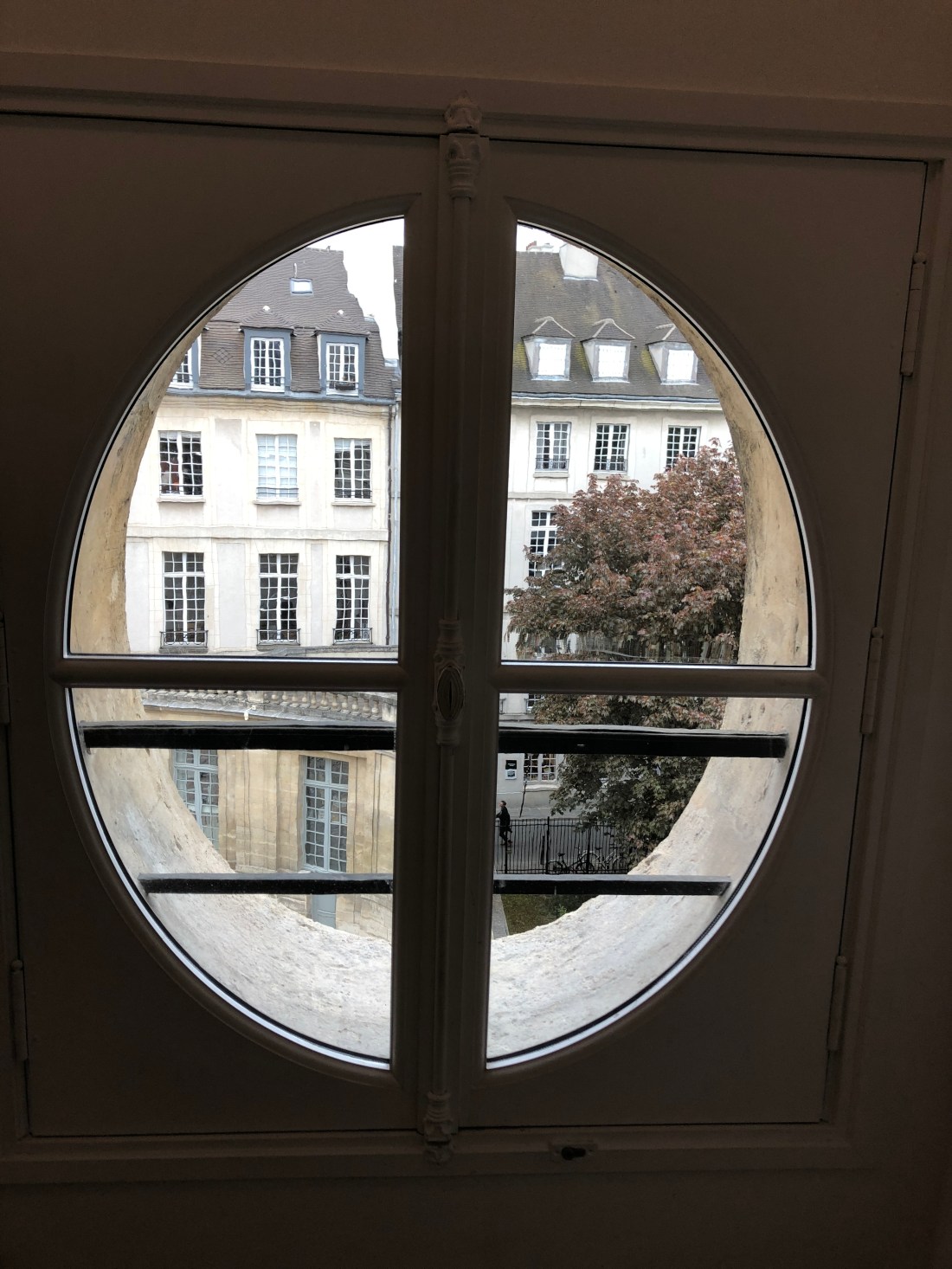
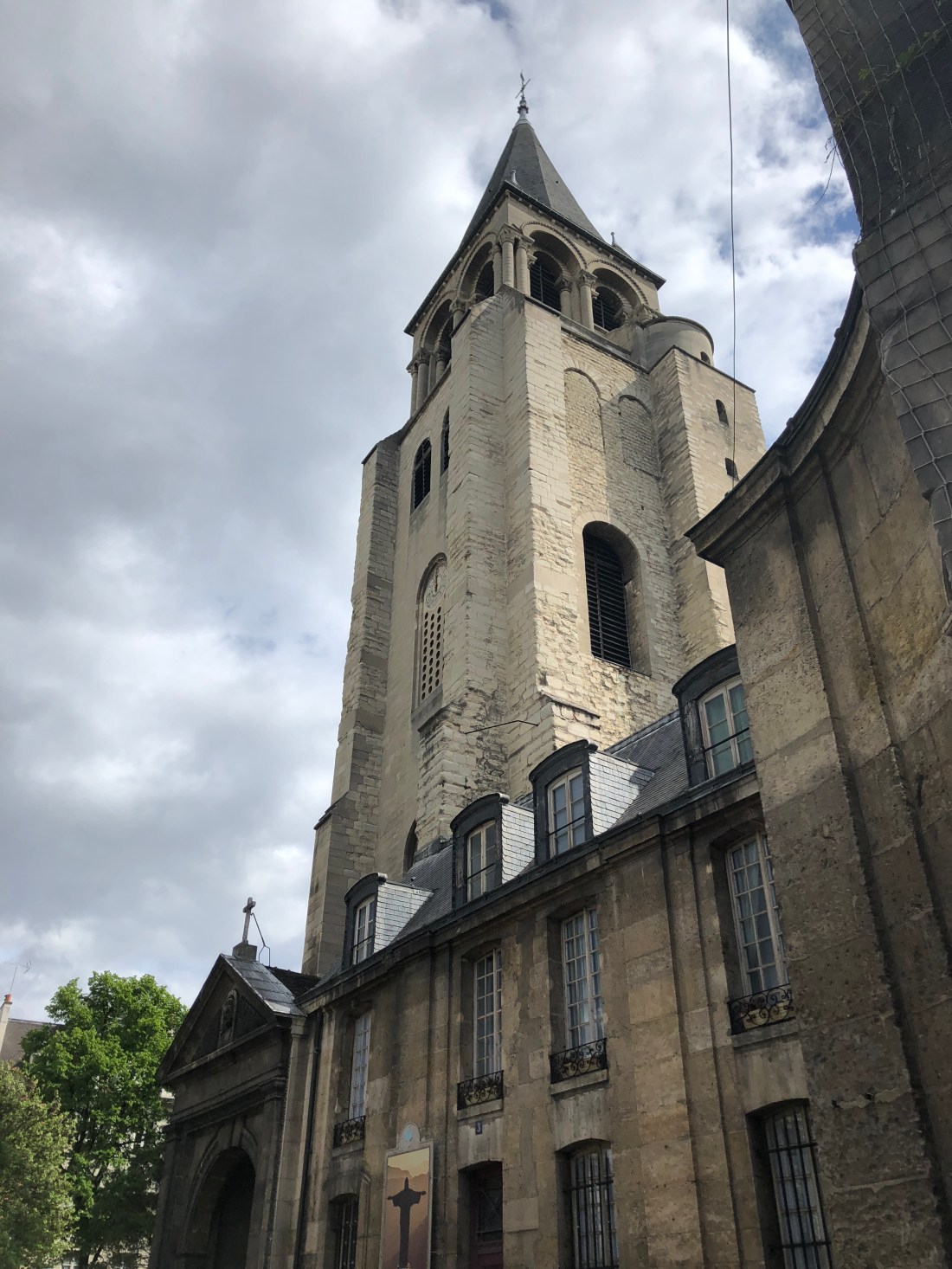
Picked the perfect place to stay for our five days in Paris. St Germain des Pres located around the church of the former Abbey of Saint-Germain-des-Prés.
Until the 17th century the land where the quarter is located was prone to flooding from the Seine, so open fields; Prés, which gave the quarter its name.
It was a beautiful warm afternoon when we arrived, so we headed out, crossed a bridge into the Jardin de Tuileries where Parisians and tourists were sunning themselves in the beautiful gardens. The grandness of Paris is immediate.
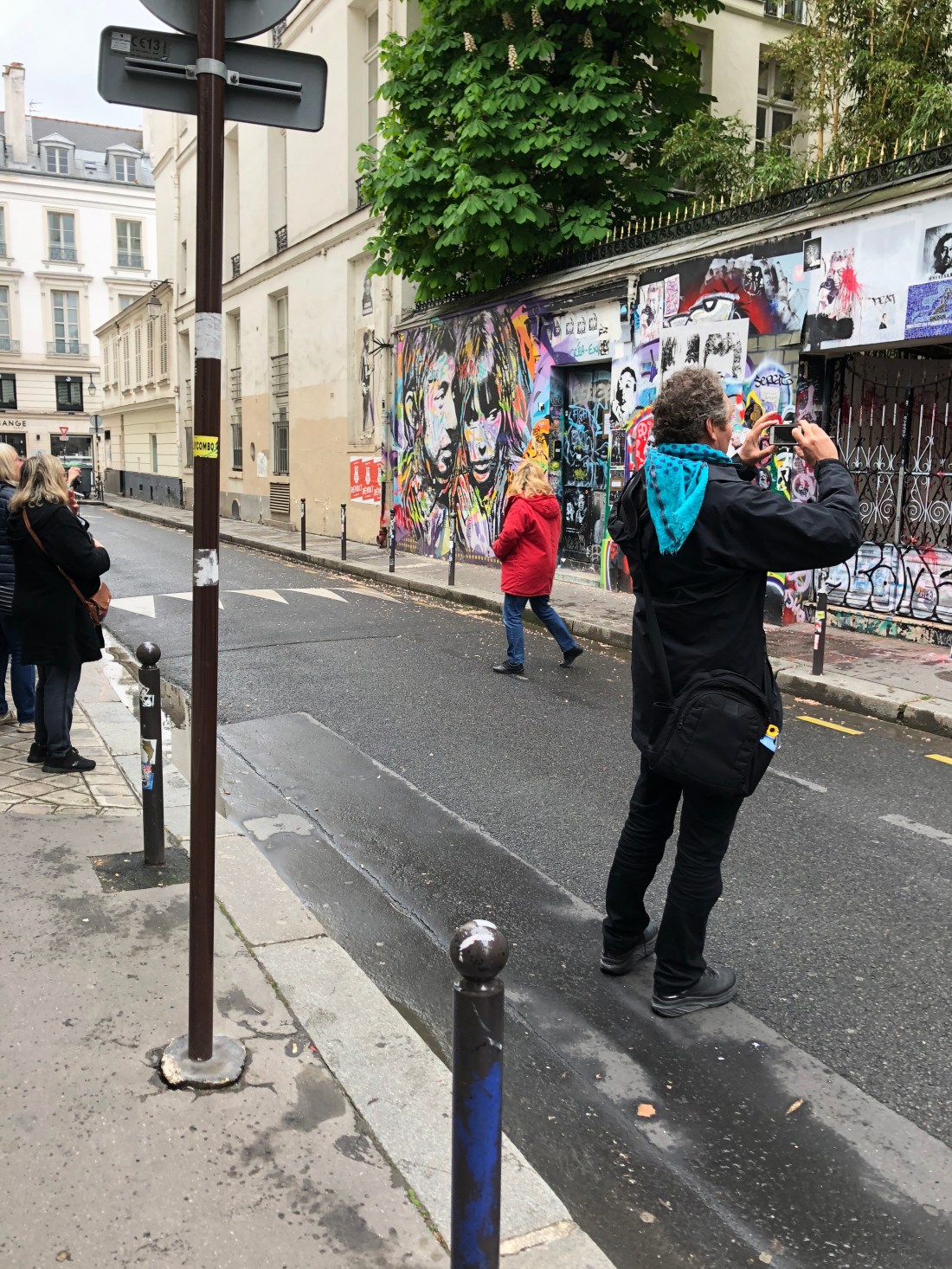
Our hotel is in a small narrow street is directly across from Serge Gainsborough’s house. People come to play homage and each night a homeless man slept there, though he was hosed away in the morning. The homeless make you think a lot, from Syrian refugees to those with a mental illness. Memorable for me: the man scattering bread for pigeons near the Seine and an older woman sitting in a pile of blankets with a pet rabbit. People were giving food to the rabbit rather than money to the woman.
Graffiti art of Serge Gainsborough and Jane Birkin “Je t’aime”
We deliciously woke up each morning to order our French “express” breakfast: coffee orange juice, croissant and baguette. Then to a big day walking. That’s what I have loved the most, walking and taking in as much as you can.
We are very glad we have sensible, daggy shoes. All hail the Hoka.
Just on the small suitcases. We would never have fitted into Christian’s small Blabla car with big suitcases. We are getting into a good rhythm of washing. Hail the small bag.
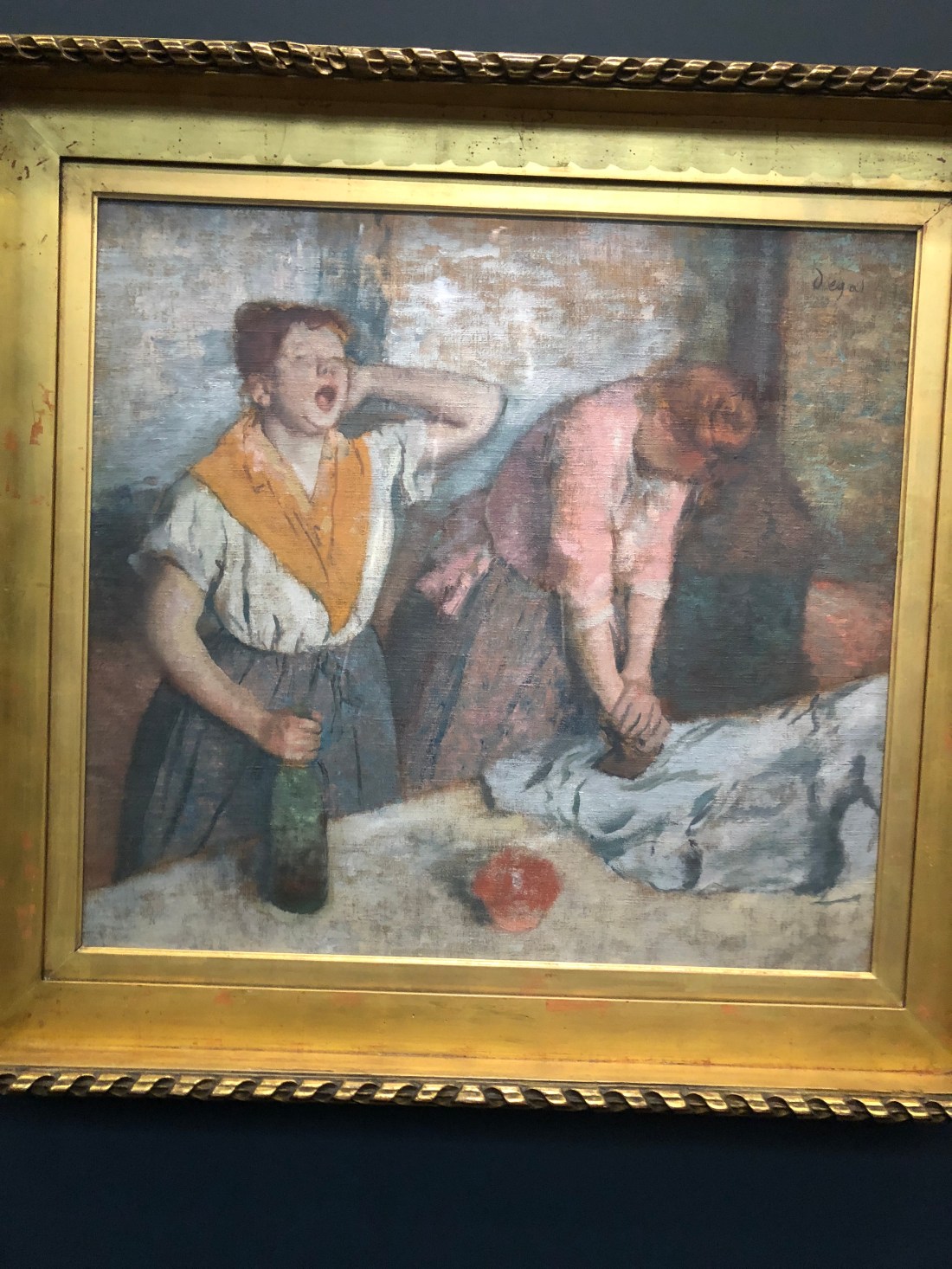
Degas Musee D’orsay, that’s Alex on the right
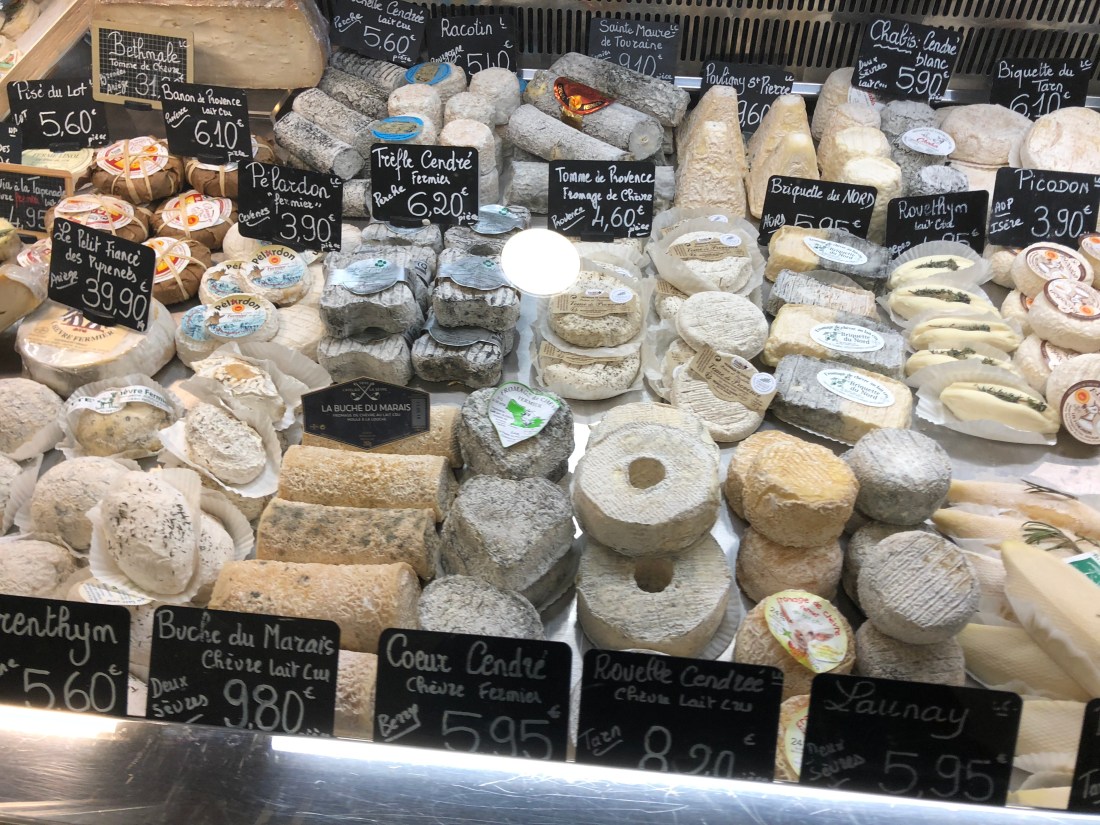
Highlights – Food tour with Lisa. Bread, explanation of the true straight croissant, olive oils, hot chocolate, macarons and of course cheese! (even better than Ainslie IGA)
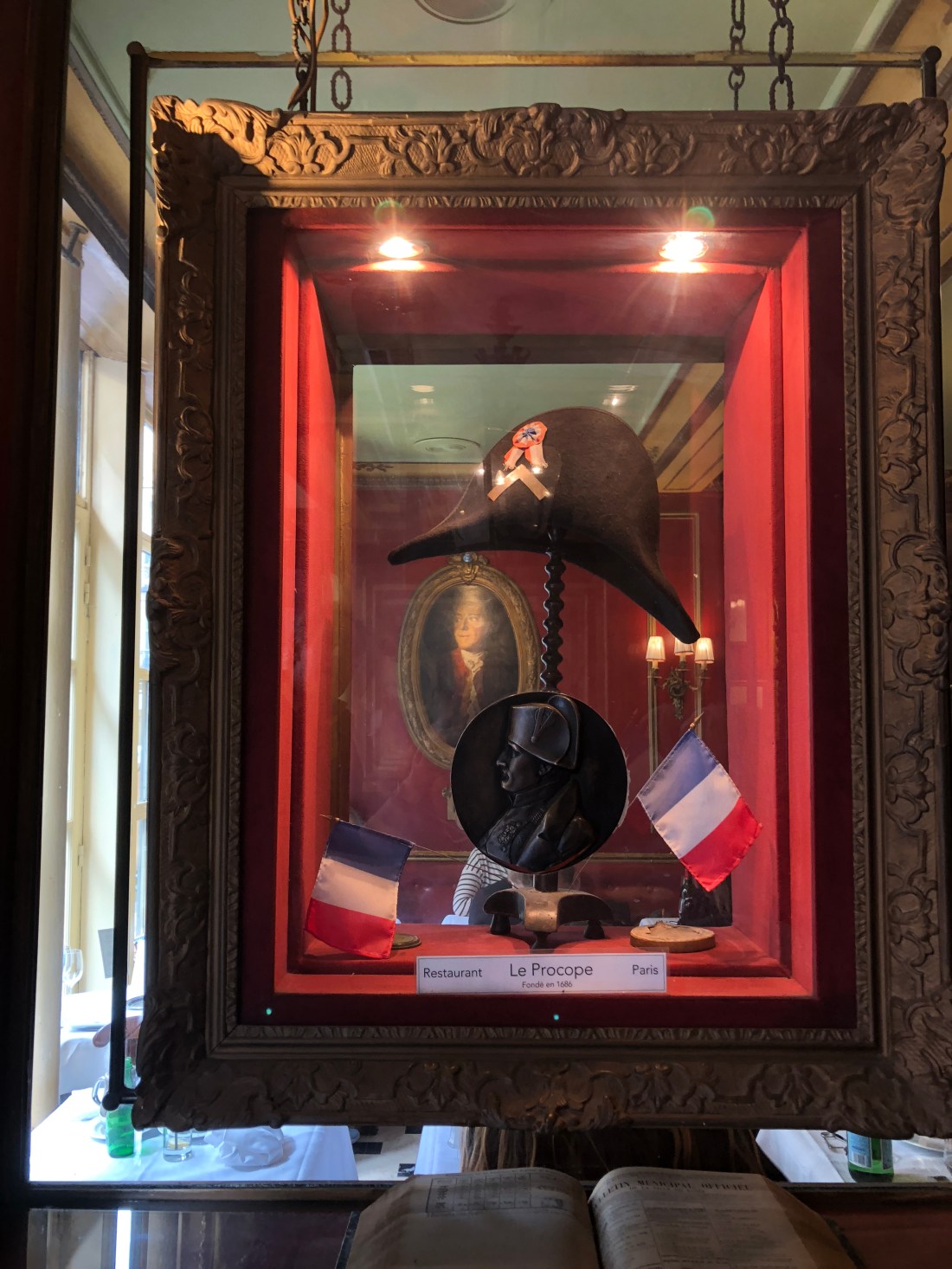
We also peeked into one of the most famous restaurants in Paris.
Legend has it that in 1795 Napoleon who was serving in the French army during the Revolution ate at Le Procope and was forced to leave his hat to pay for his meal. Le Procope is the oldest restaurant in Paris where Benjamin Franklin, as Amabassador to Paris, sat at a table writing the US constitution
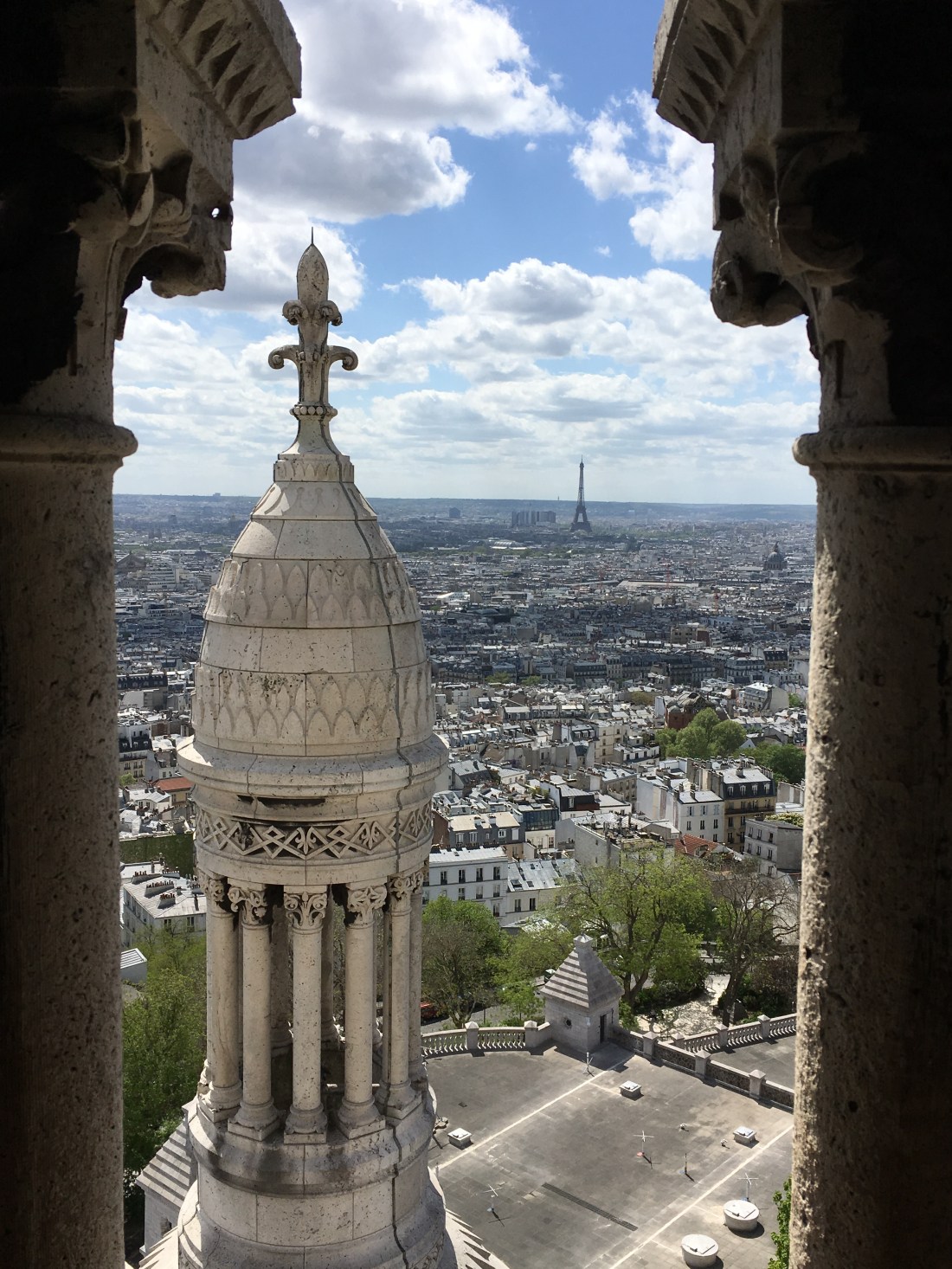
Other highlight’s include climbing the dome of Sacre Coeur. As we entered the dome we heard a rendition of Johnny Cash’s “Folsom Prison”. When we finally came down all those stairs the bells started to chime and we were in the most beautiful echo chamber – bells bouncing off one old stone wall to another. Ding dong dell.
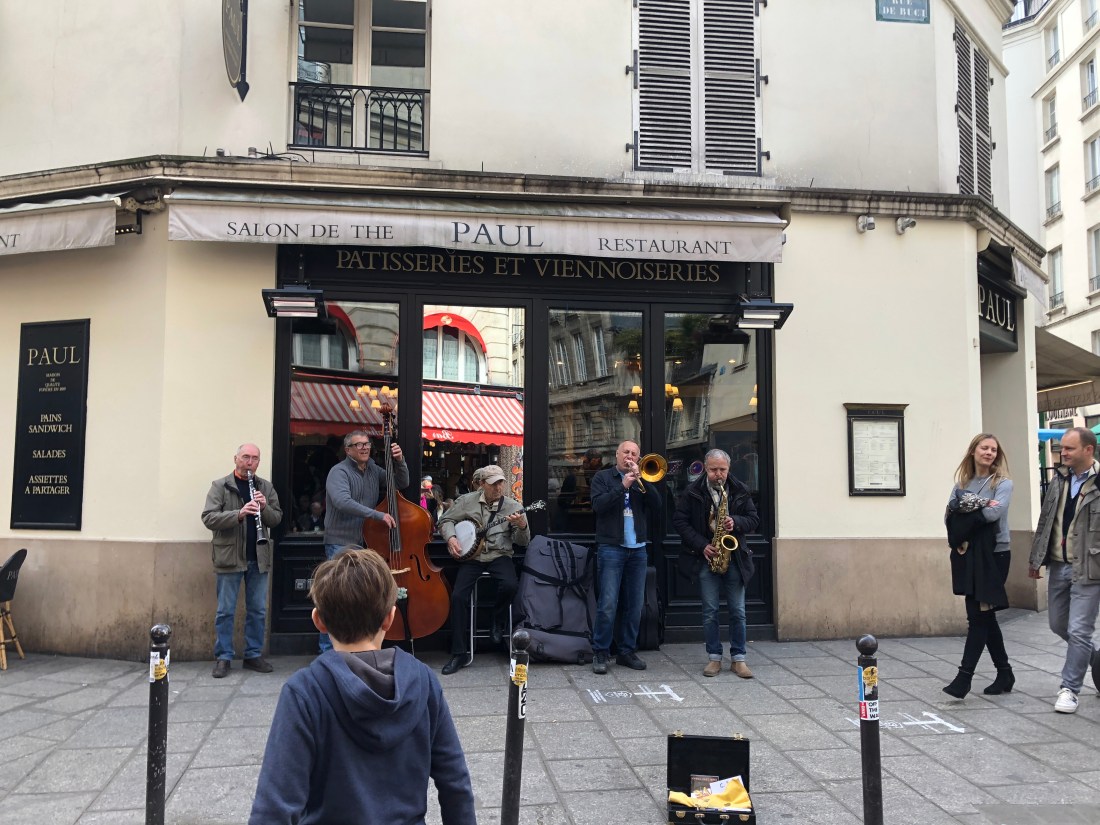
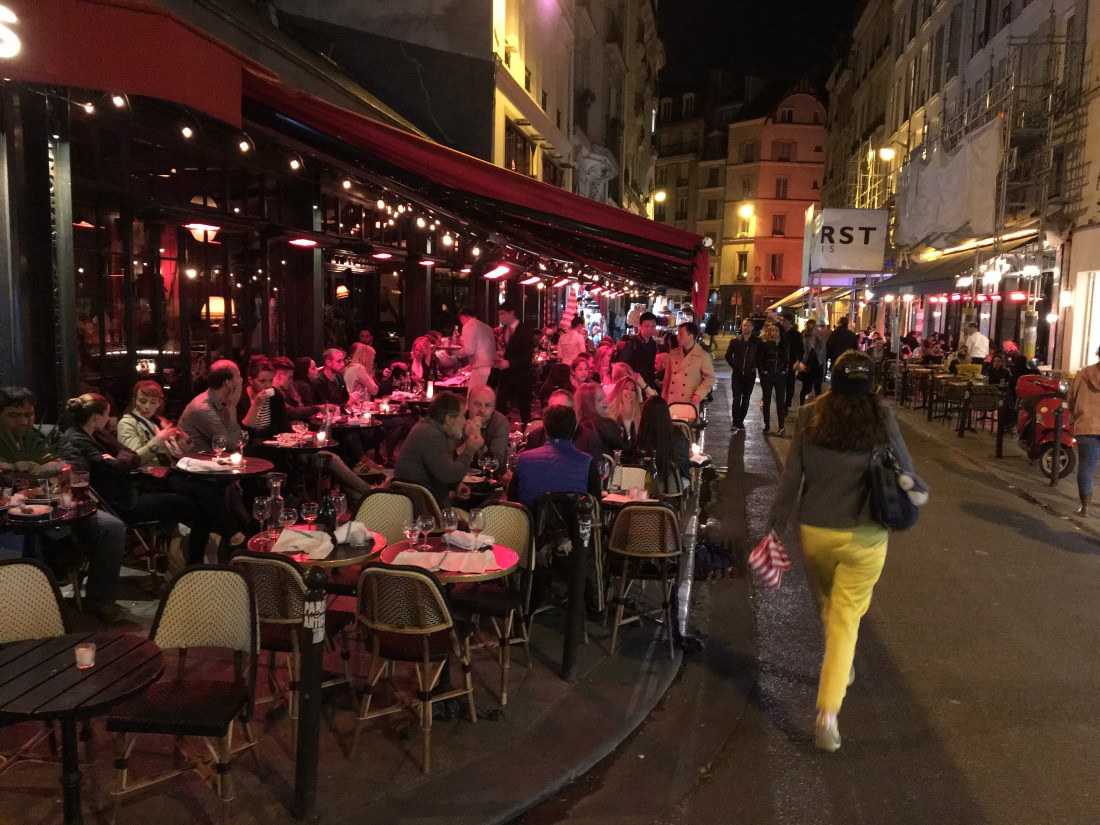
And almost best of all, walking finding beautiful French cafes and listening to live music, bringing together two great art forms: American Jazz and French food.
Other moments.
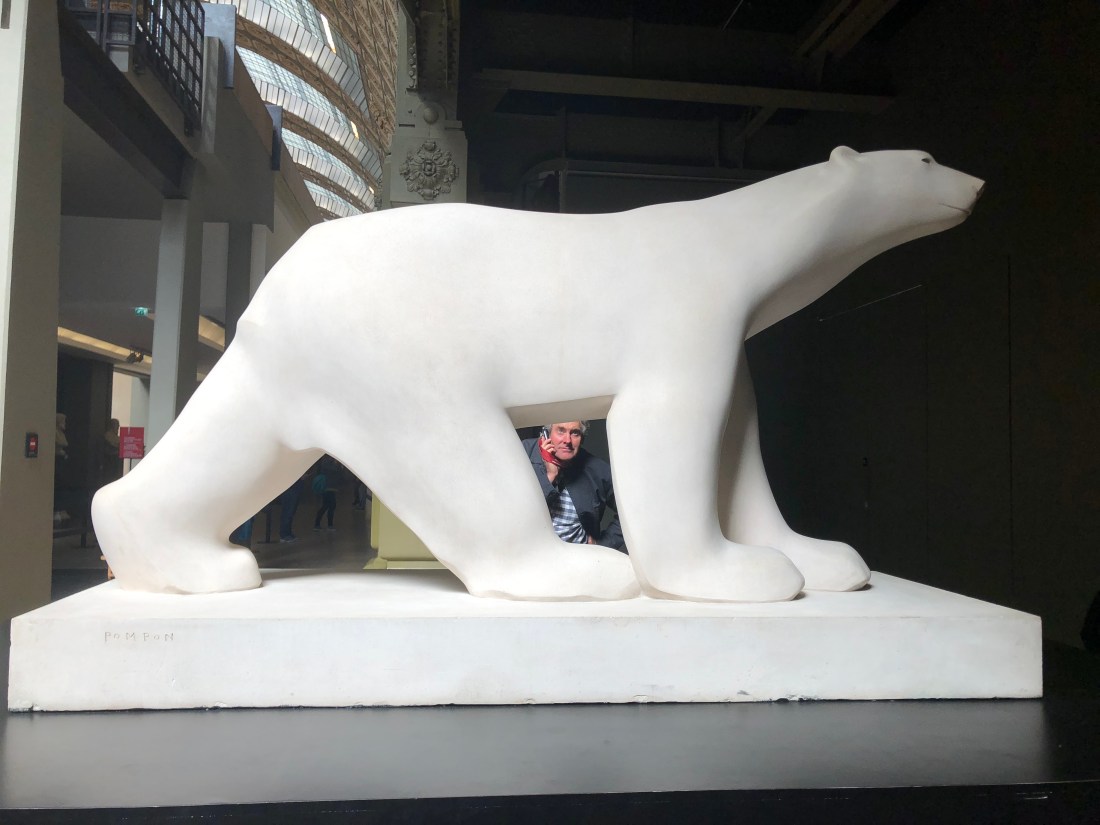
Pompom’s Polar Bear Musee d’Orsay.
It’s hard to keep the farm girl from Victoria’s central west away from a good hay stack. Painting by Monet, Bernard and Van Gough at Musee d’Orsay.
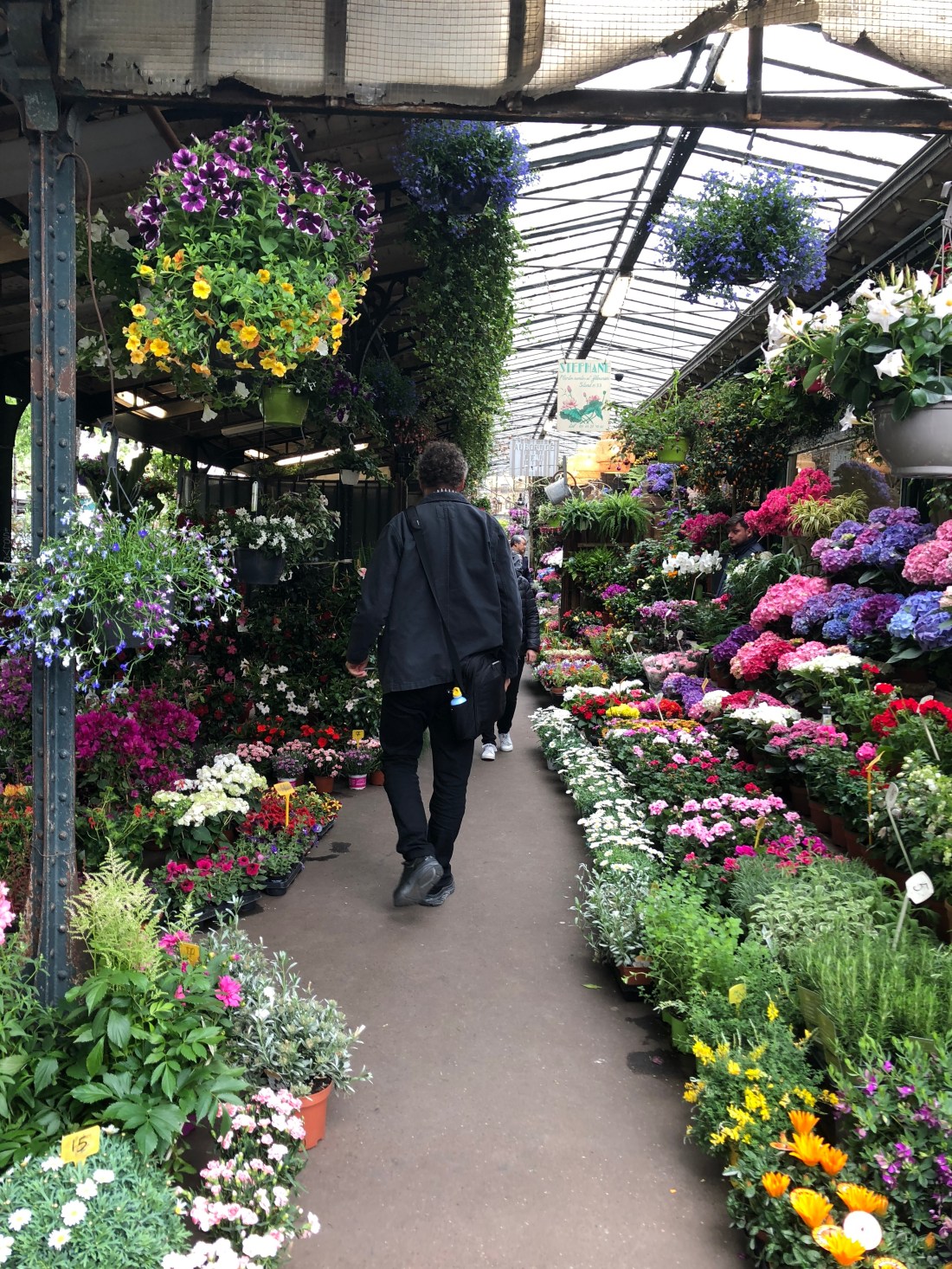
Rob at Marche aux Fleurs
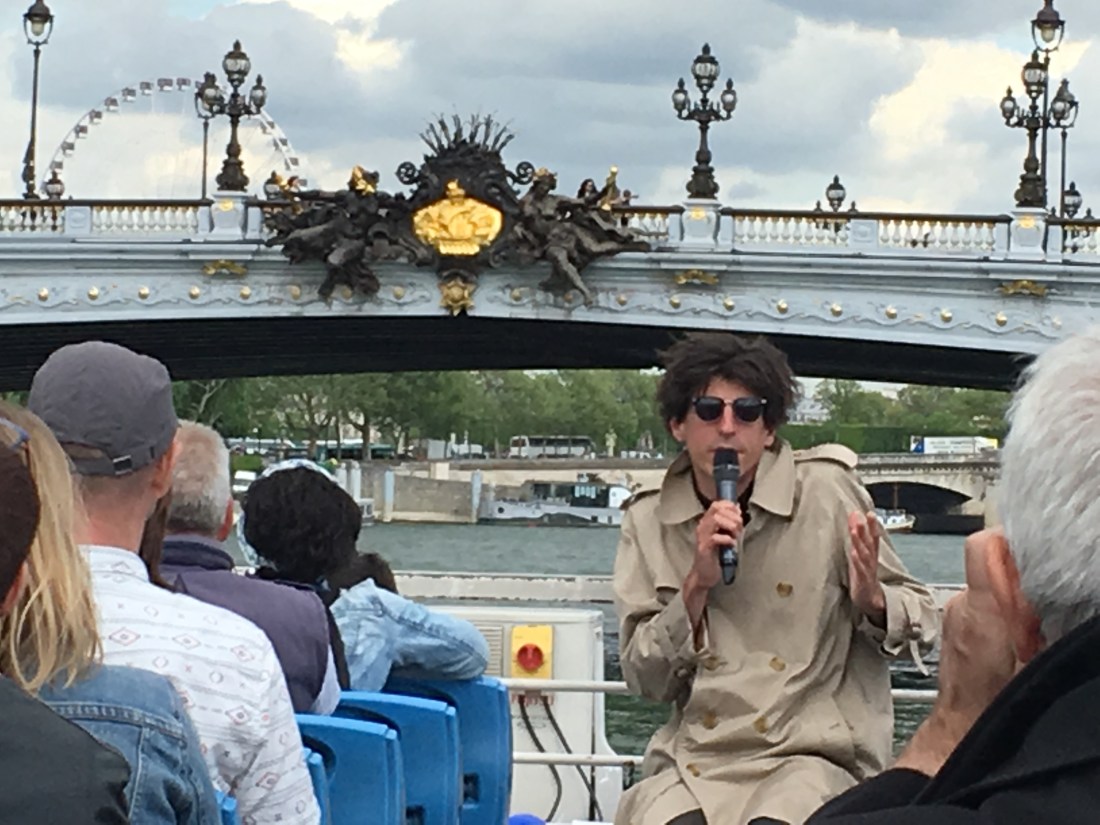
One of Rob’s interests on this trip is urban design, and a tour on the very touristy hop-on- hop-off-bus, is a great way to get an overview of the city and pick up some snippets of information and history (from now on I’m going to wave at those people on the tourist buses in Canberra who I’d always thought were a bit unfortunate).
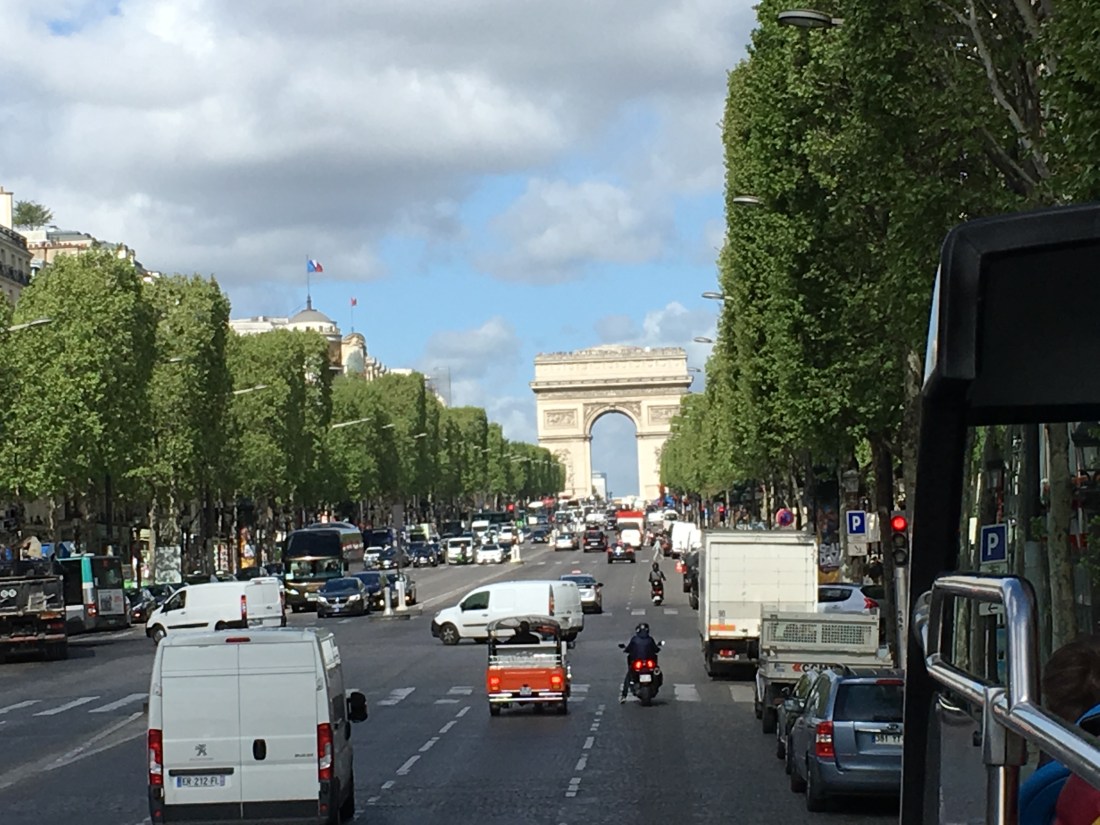
From the Louvre, we went around the major public square Place de la Concorde, where people used to lose their heads in public – travelling along the Champs Elysees and on to Arc de Triomphe.
We were told that construction of Arc de Triomphe started in 1810 when Napoleon entered Paris. However only the foundations were laid and the project was halted. Twenty years later in 1833 King Louis-Philippe recommenced construction and although there had been many different designs he insisted that it be completed according the original plans. This reminded me that cities take a long time to develop.
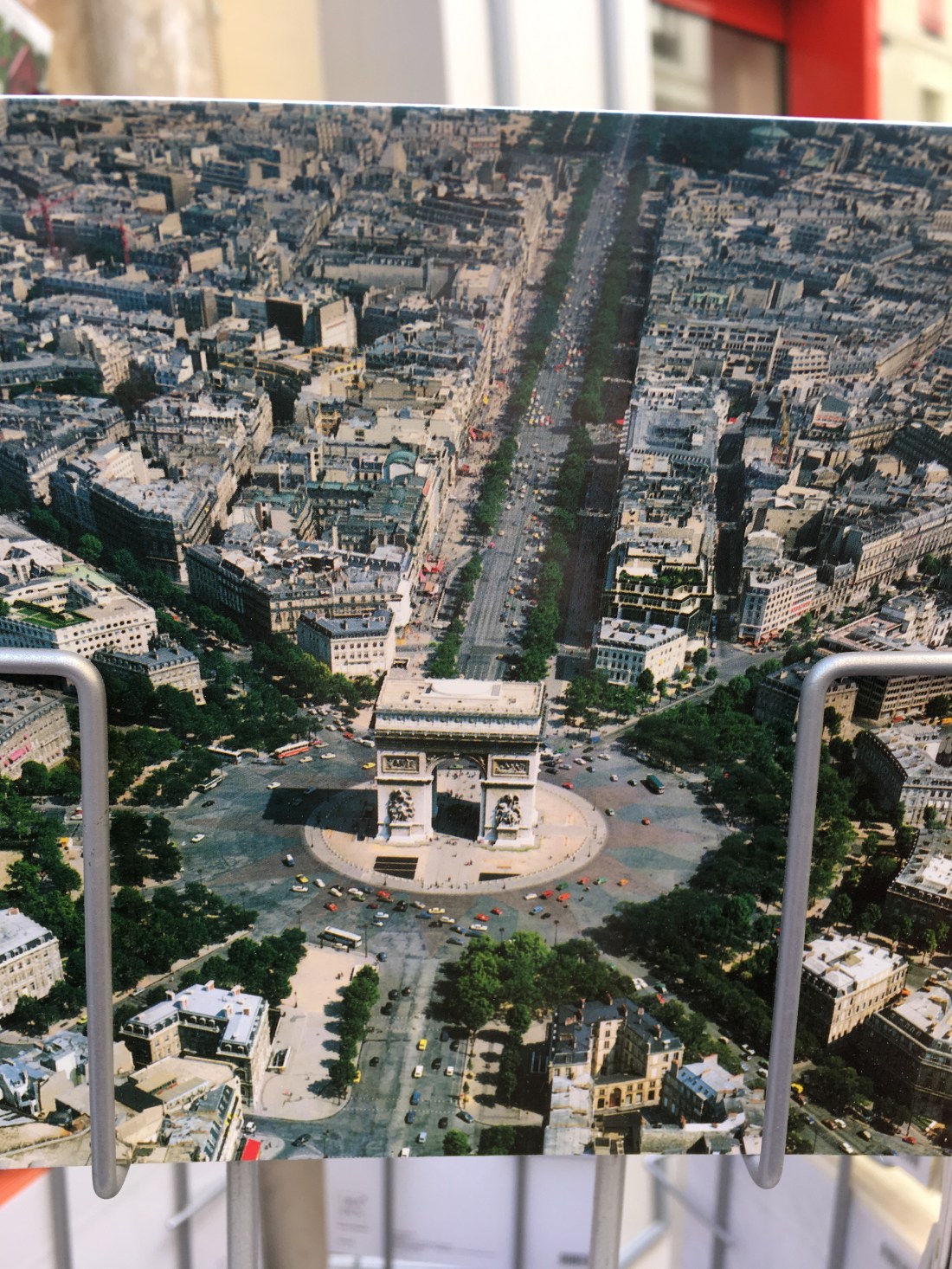
I couldn’t help thinking about Canberra – and the Griffins’ vision. Driving around the circle of the Arc de Triomphe I thought of the potential for the area around City Hill to be realised.
Post card of Arc de Triomphe, giving some hope for the future of City Hill. Imagine constructing the temple like building on the hill portrayed in Marion Mahoney Griffin’s exquisite water colours, with high density urban life radiating out from the circle?
The completion of Constitution Avenue has been a great step in the right direction. The proposal to extend Edinburgh Ave and replace one of the LA style clover leaves so rudely inserted into the Griffins plan is another. I have mixed views about the recent Law Court extension, which while bringing built form to the circle and helping to enclose it, it is further blocking views and access to and from University Avenue.
The construction of the Library into Civic Square has also created a barrier to City Hill. This has added to the damage inflicted on the City by the Canberra Centre, the abomination that in my living memory has playing a major role in destroying the way Civic works. The way that traffic, pedestrians and cyclist used to be able to navigate the city, and the loss of a significant Griffin axis with its sight lines and connection for nature between City Hill and Mount Ainslie. In the Paris spirit of grand city design, it would be great if we could at least have public recognition that this was – and remains a great mistake. Given that the life of a building is so much less than the life of a grand city plan, we may eventually be able to reinstate the significance of Ainslie Avenue linking City Hill to Mount Ainslie.
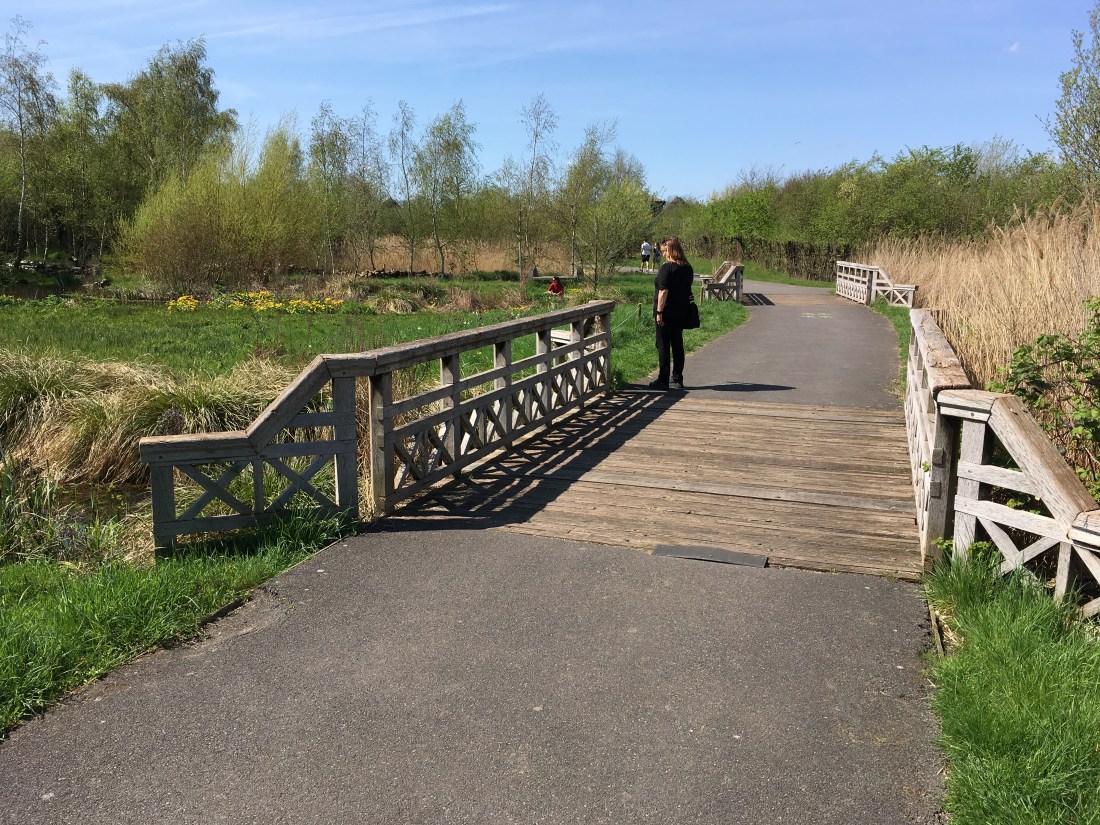
Likewise Paul Reid, author of the authoritative book:”Canberra Following Griffin: A Design History of Australia’s National Capital“, told me before he died that Canberra will never function as it was designed without the Causeway, the intended major north south connection between Hume Circle near the Kingston Railway Station to the point of the triangle at Russell at the other end of Constitution Avenue. Again, if we can retain a wider public recognition of this significant axis, we may be able to celebrate it, even if just initially with a creative installation using LED lights, a boardwalk and pathway through the wetlands like the ones we recently walked over at the London Wetlands, or a bike way connection. Over time a light rail connection or even a road constructed in a way that would minimise impacts on the wetlands values?
Ah, the strange passions a trip to Paris unleashes.
An example of the type of paths and bridges from our recent trip to the London Wetlands Centre that could be used to follow the Griffins Causeway axis across the Jerrabomberra Wetlands in Canberra
Another observation of Paris is the constant renovations of old buildings. They seem to have mastered how to insert modern features, like skylights and new bathrooms, without upsetting the fabric of the building or the view from the street.
Compare this to Canberra where we seem to take great joy in ripping down earlier architecture. In preparing for our visit to Berlin later in this trip, I have found architectural tours of post modern / post war buildings that are almost identical to the buildings we in Canberra have systematically neglected and are now tearing down like the Allawah, Bega and Currong buildings in the City. While other cities value and showcase these building we won’t even be leaving a trace of this significant architectural period.
Sure, the buildings individual merit may be questioned but if we don’t maintain a rich diversity of styles we will never have a city that develops character.
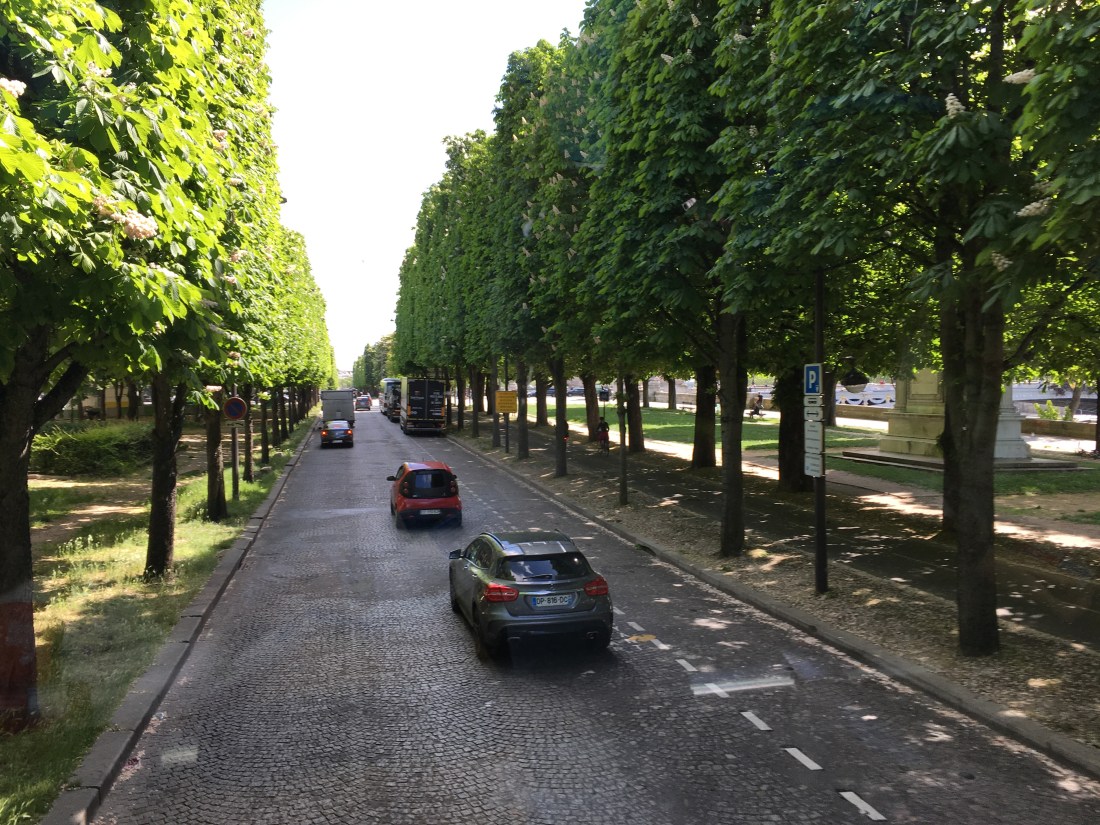
On urban design – this avenue along the Seine has 7 Avenues of trees. I thought of Antill Street Dickson in my dreams
Above a couple of tragic tourist shots, we’re looking pretty happy.
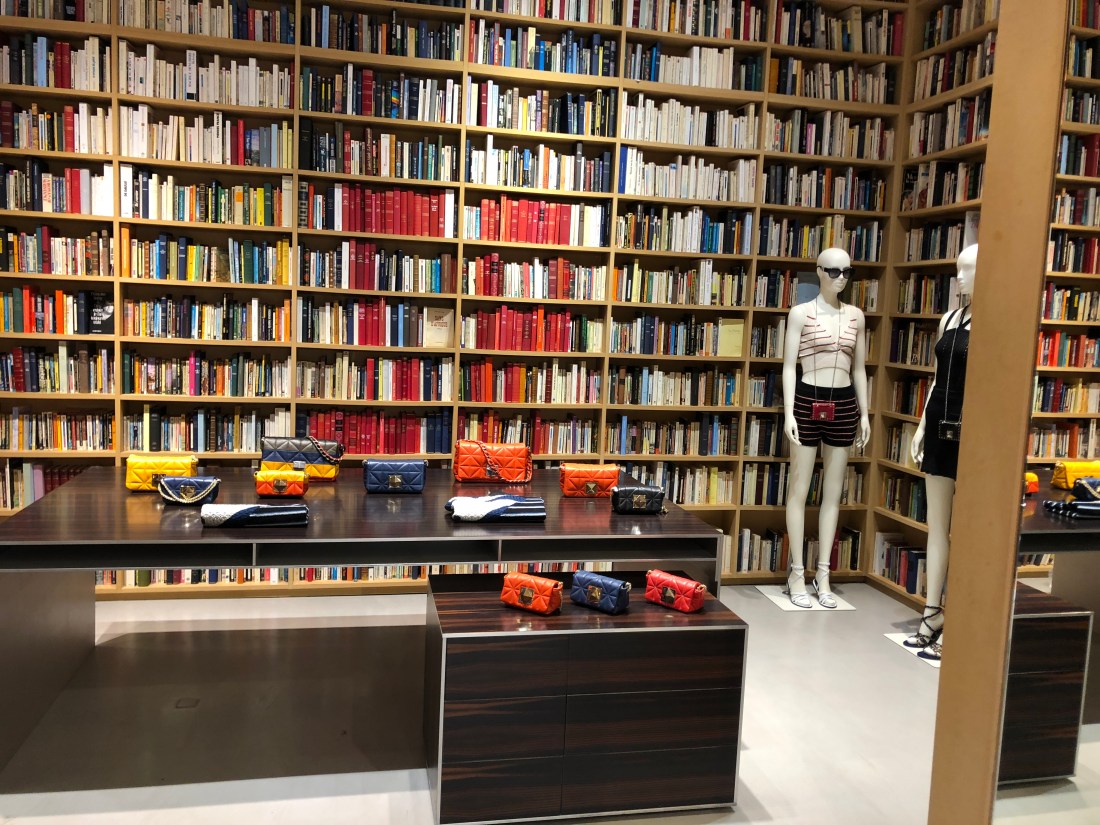
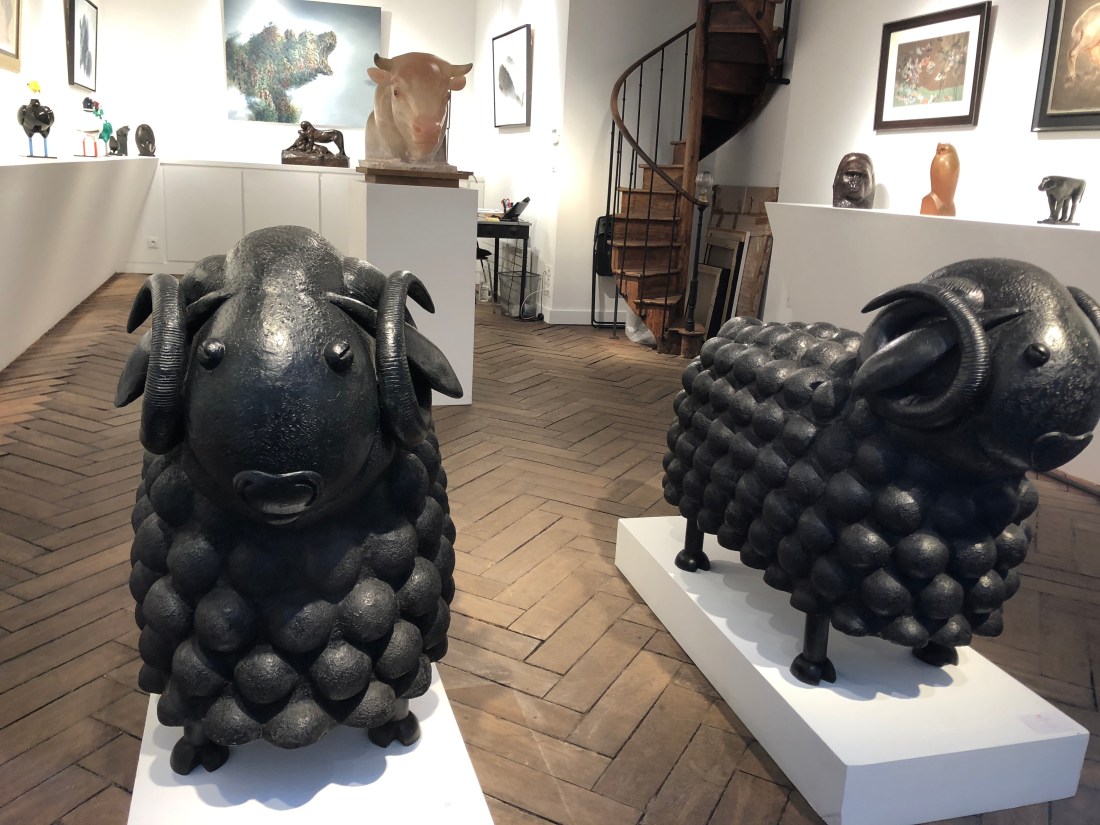
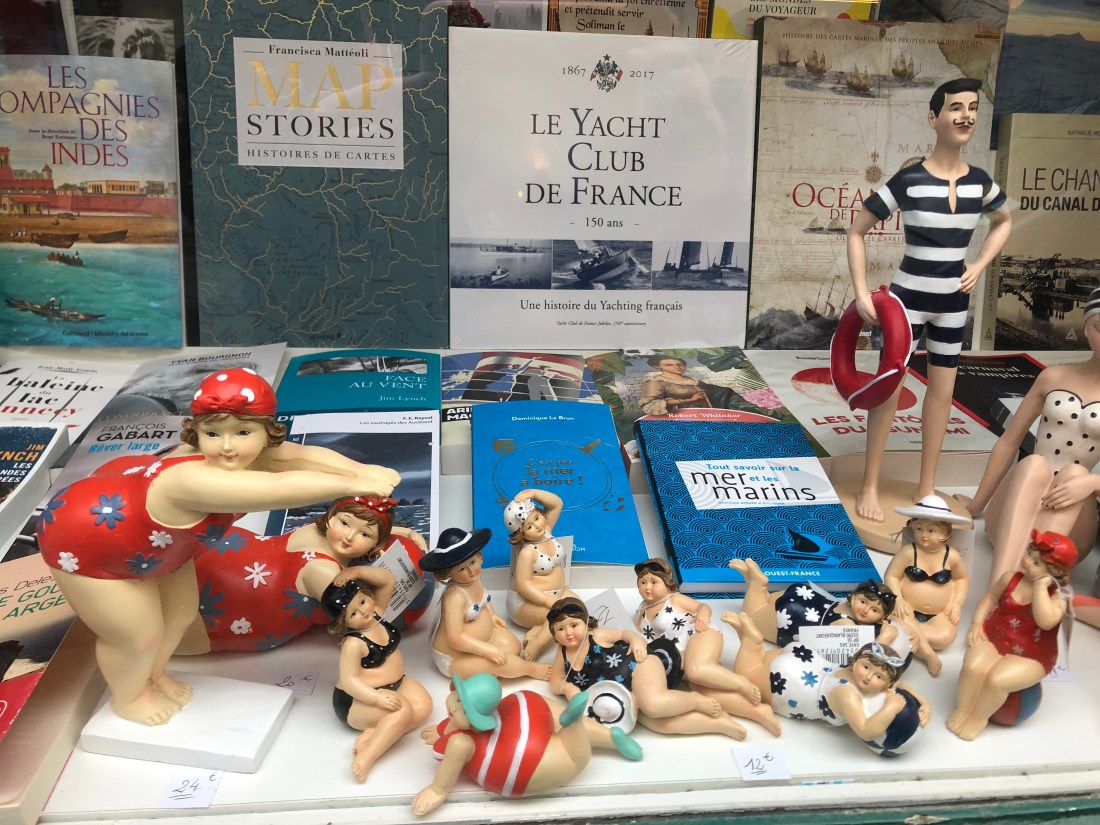
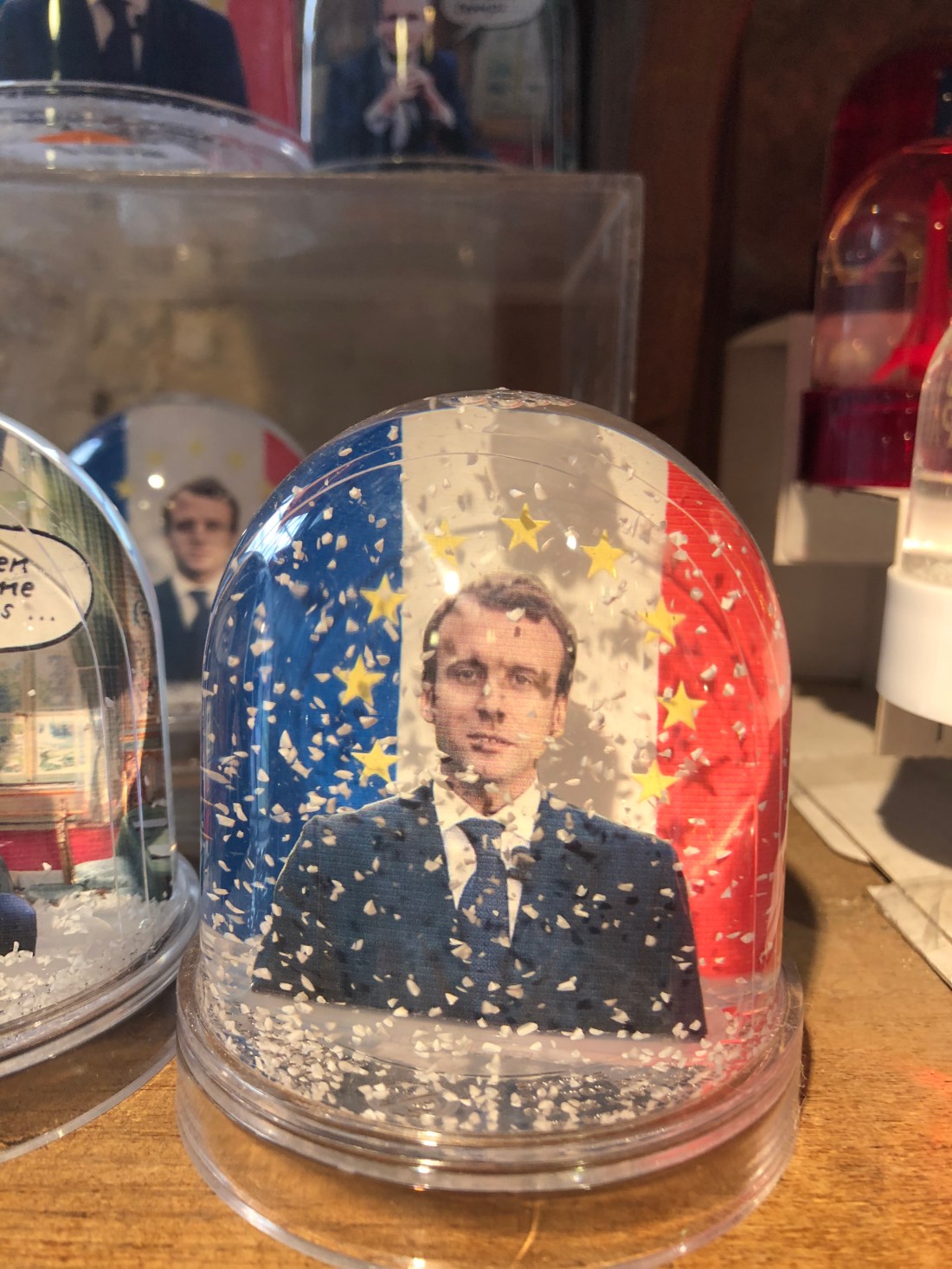
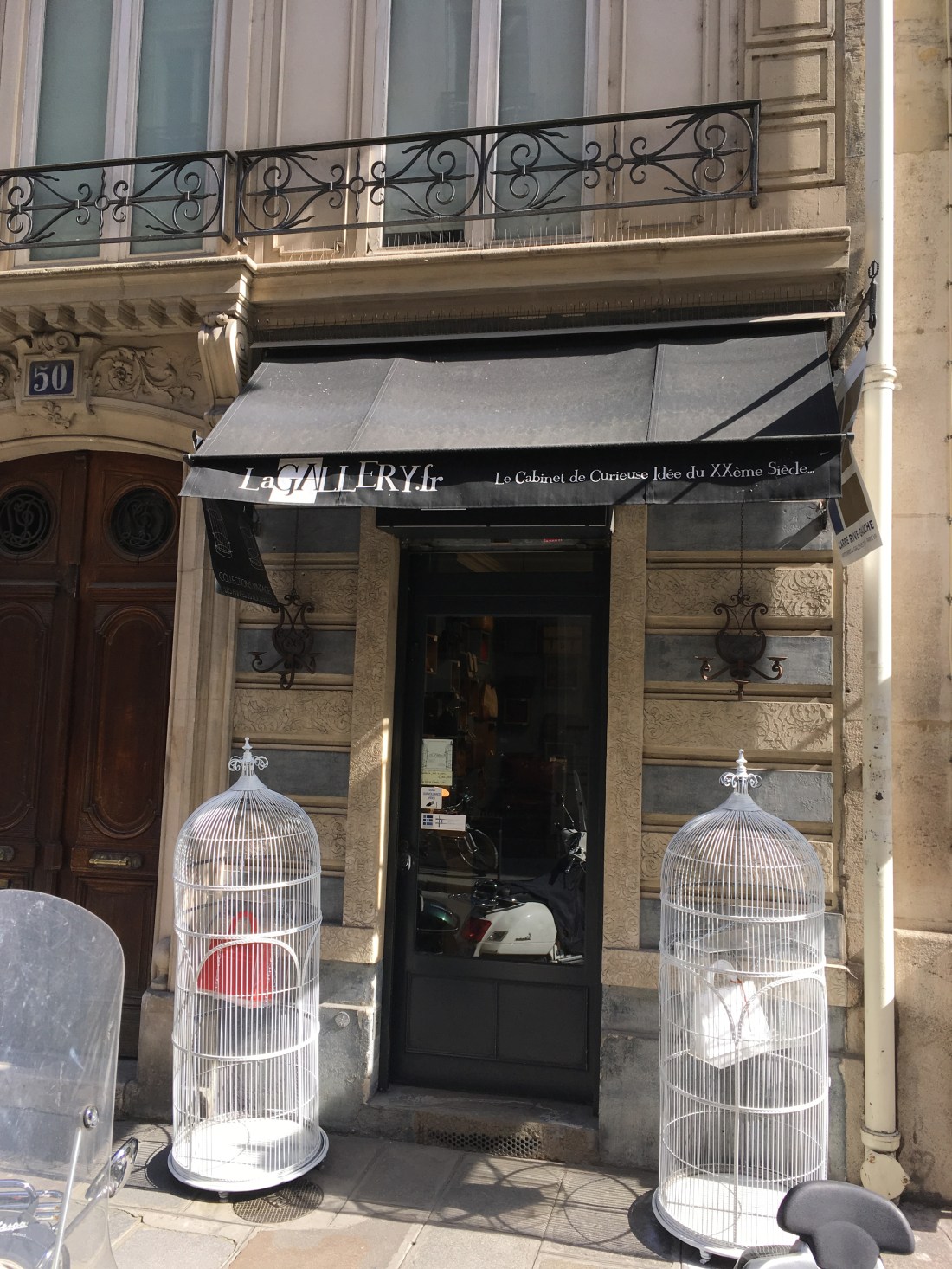
Shop and Window Photos
Books as a backdrop for selling handbags
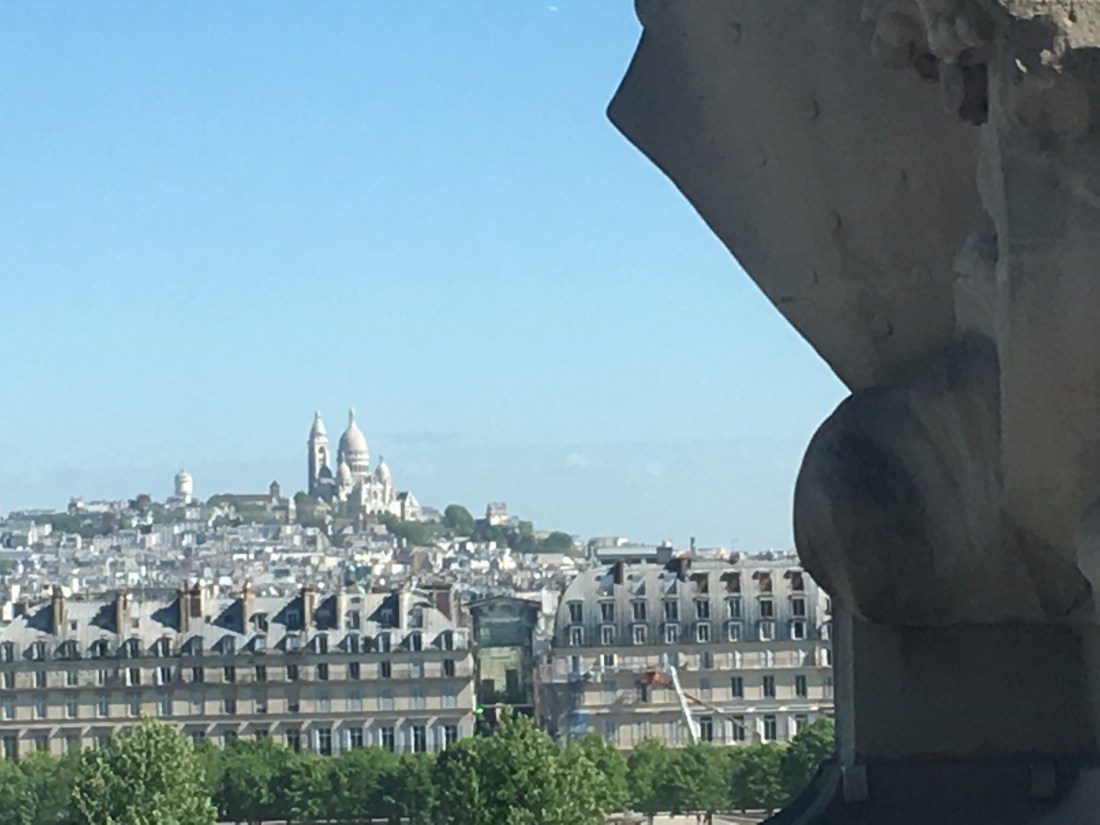
Our visit to Paris coincided with Macron’s visit to the White House and his address to congress “There is no planet B”View from Musee d’Ossay to Sacre Coeure where we climbed up that big dome later in the day
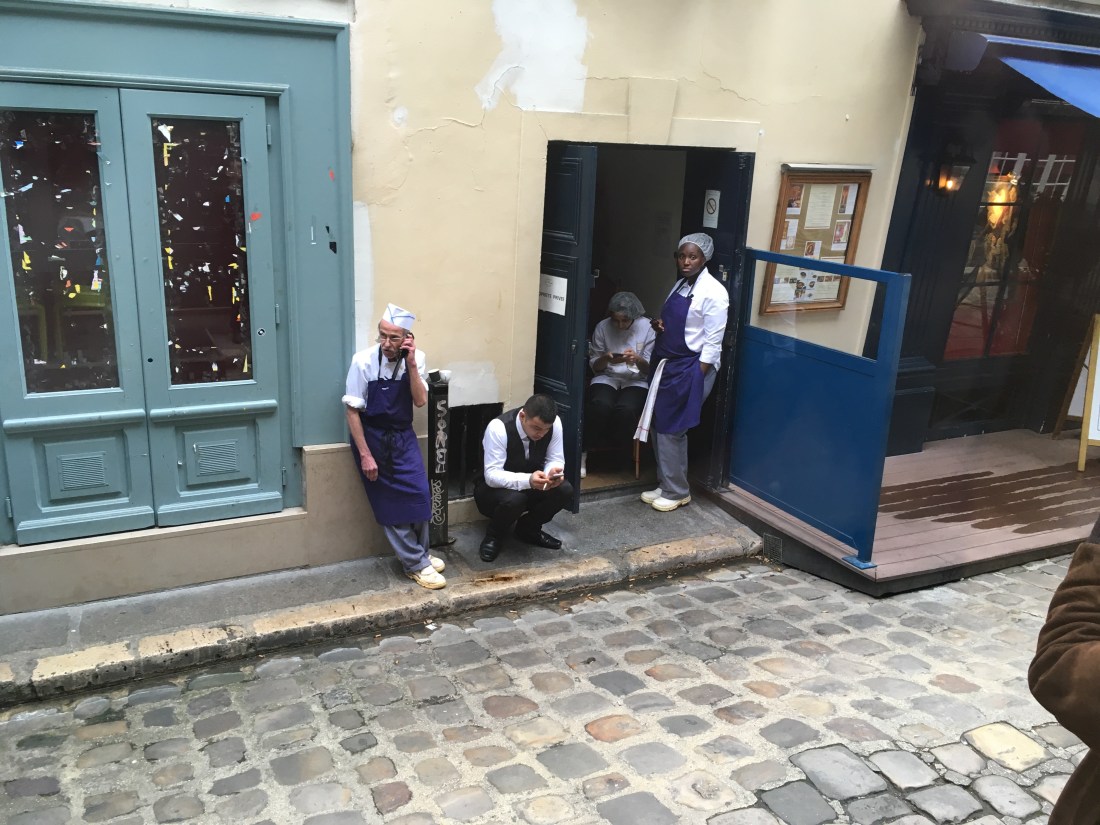
Restaurant staff taking a break – everybody seems to smoke here including the young girls.
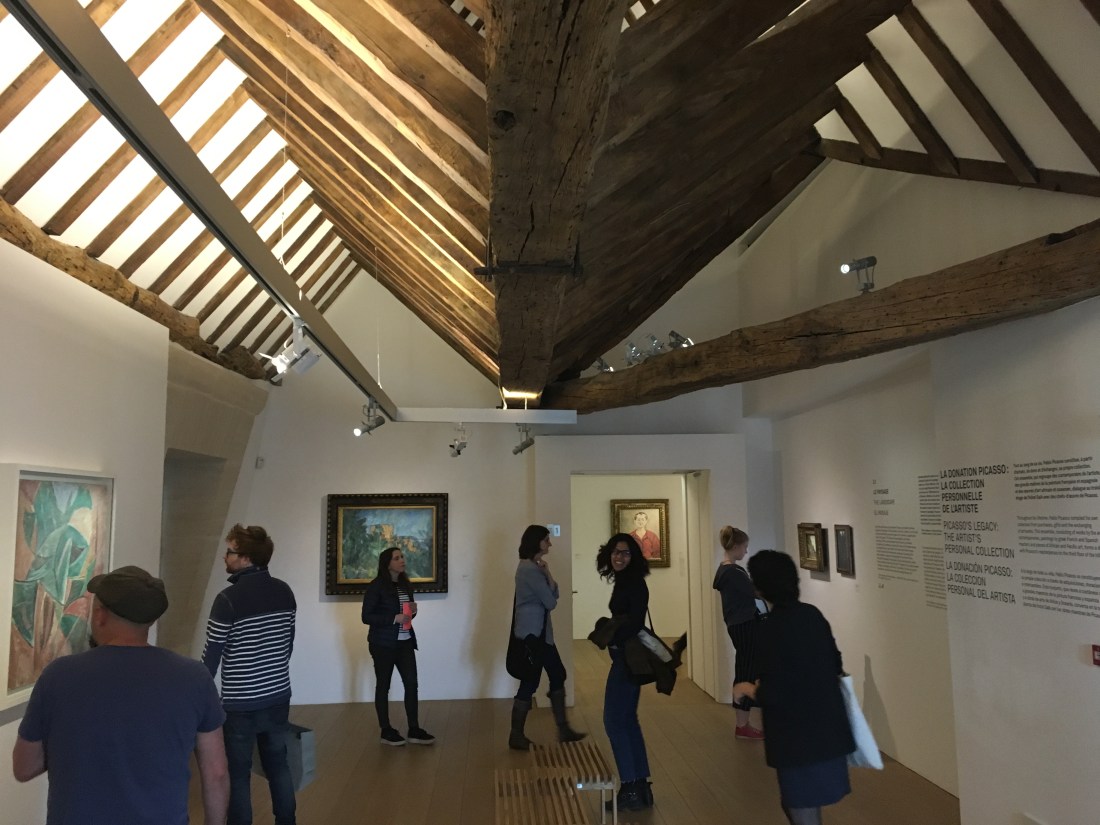
Musee de Picasso – fantastic modern museum in a very old building.
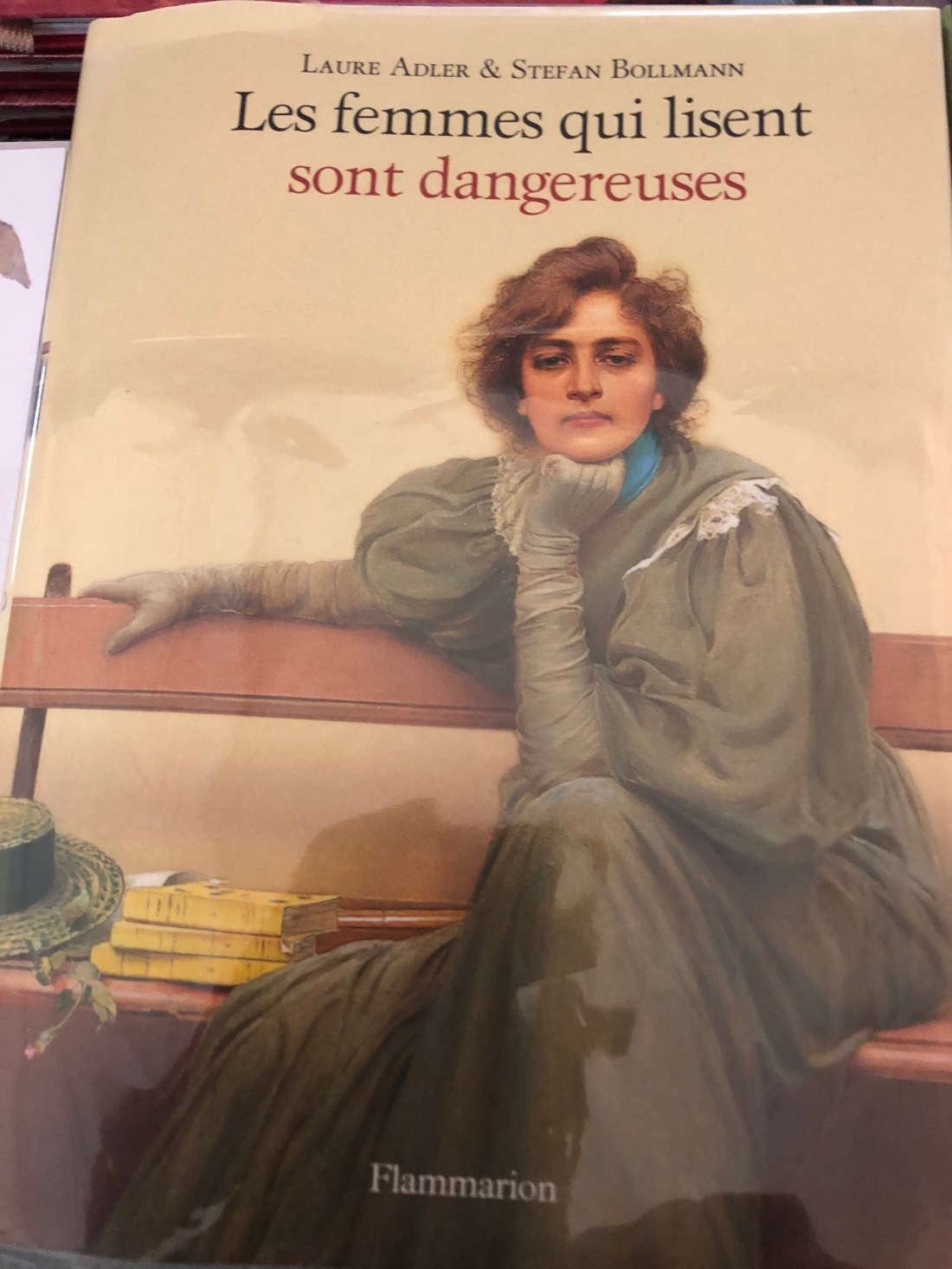
Book in the Window “Women who read are dangerous”
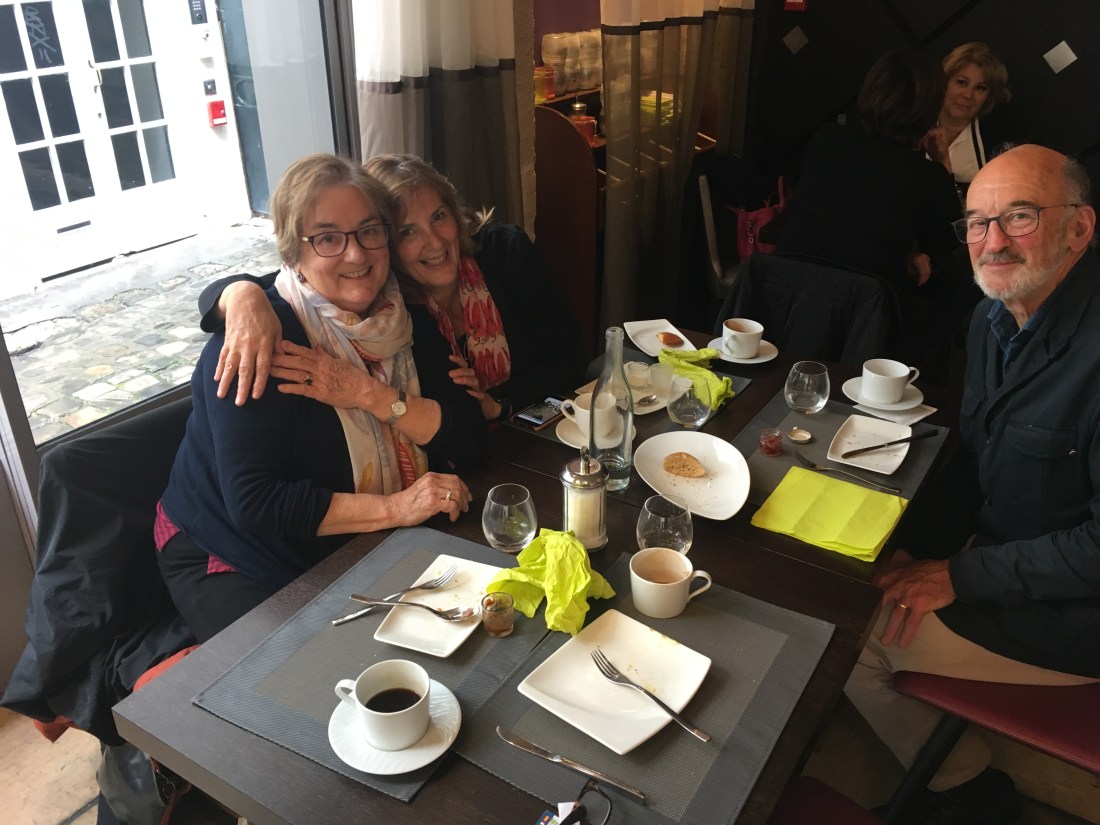
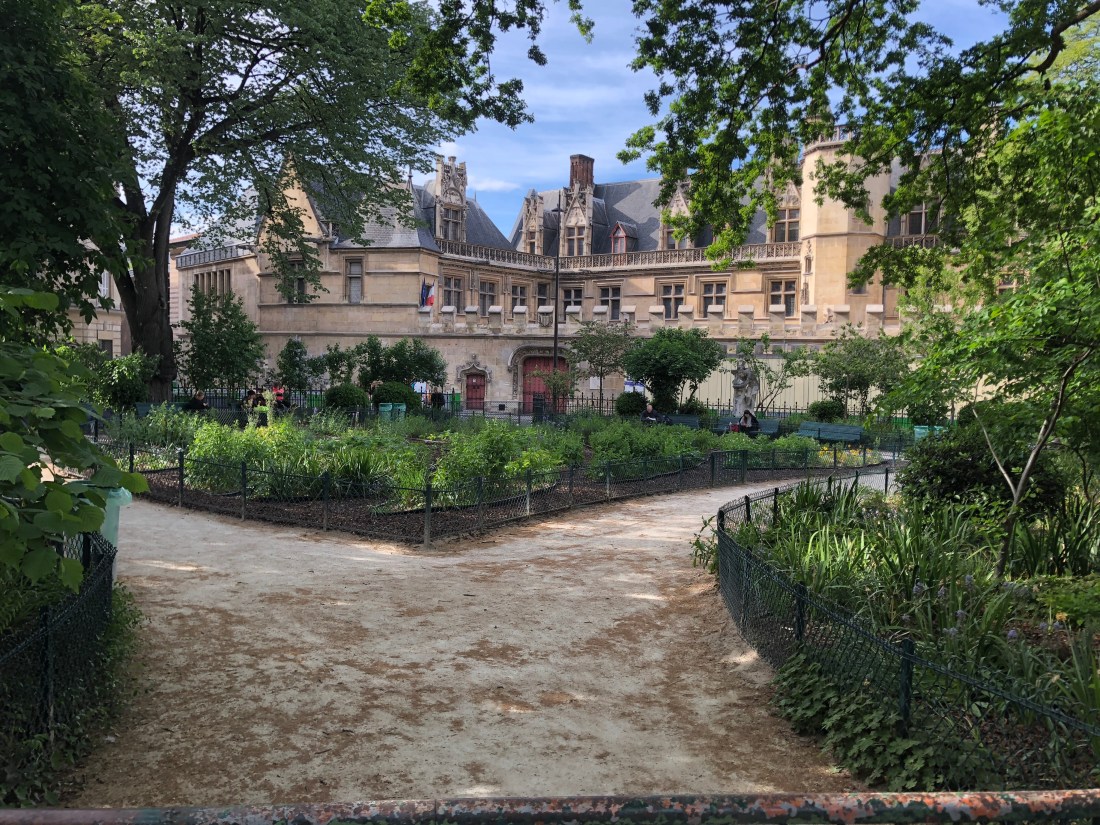
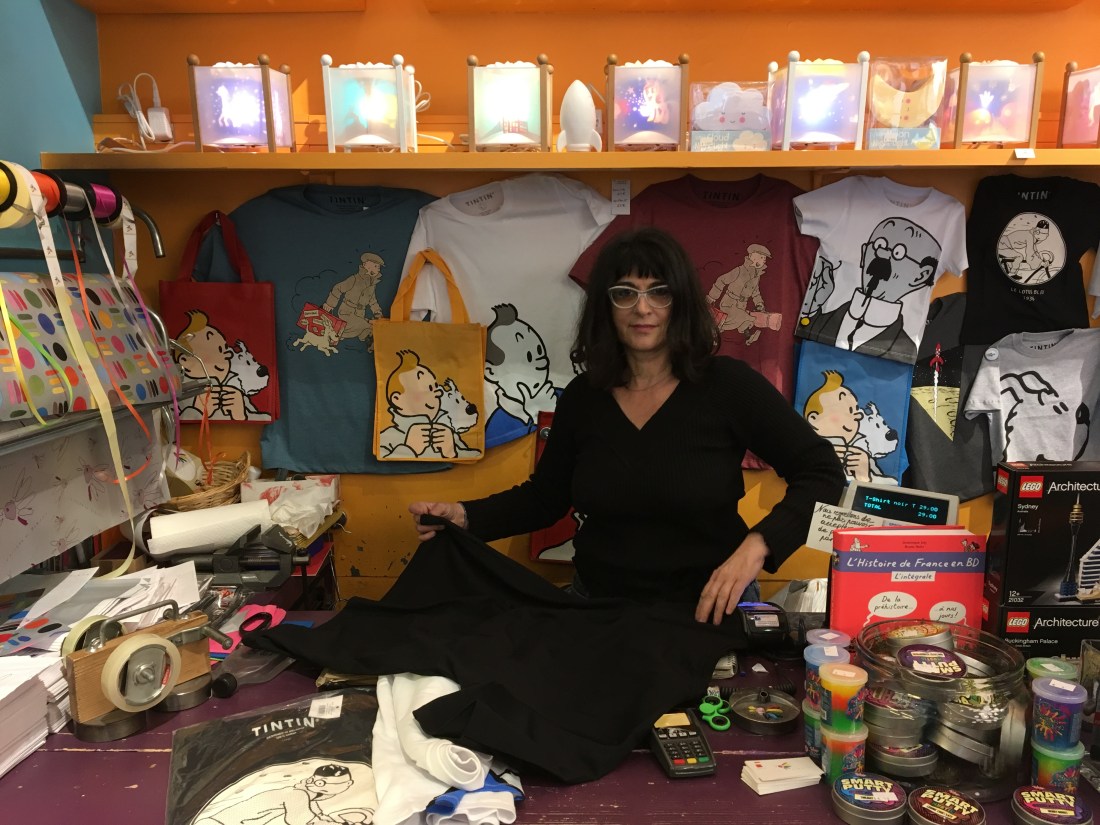
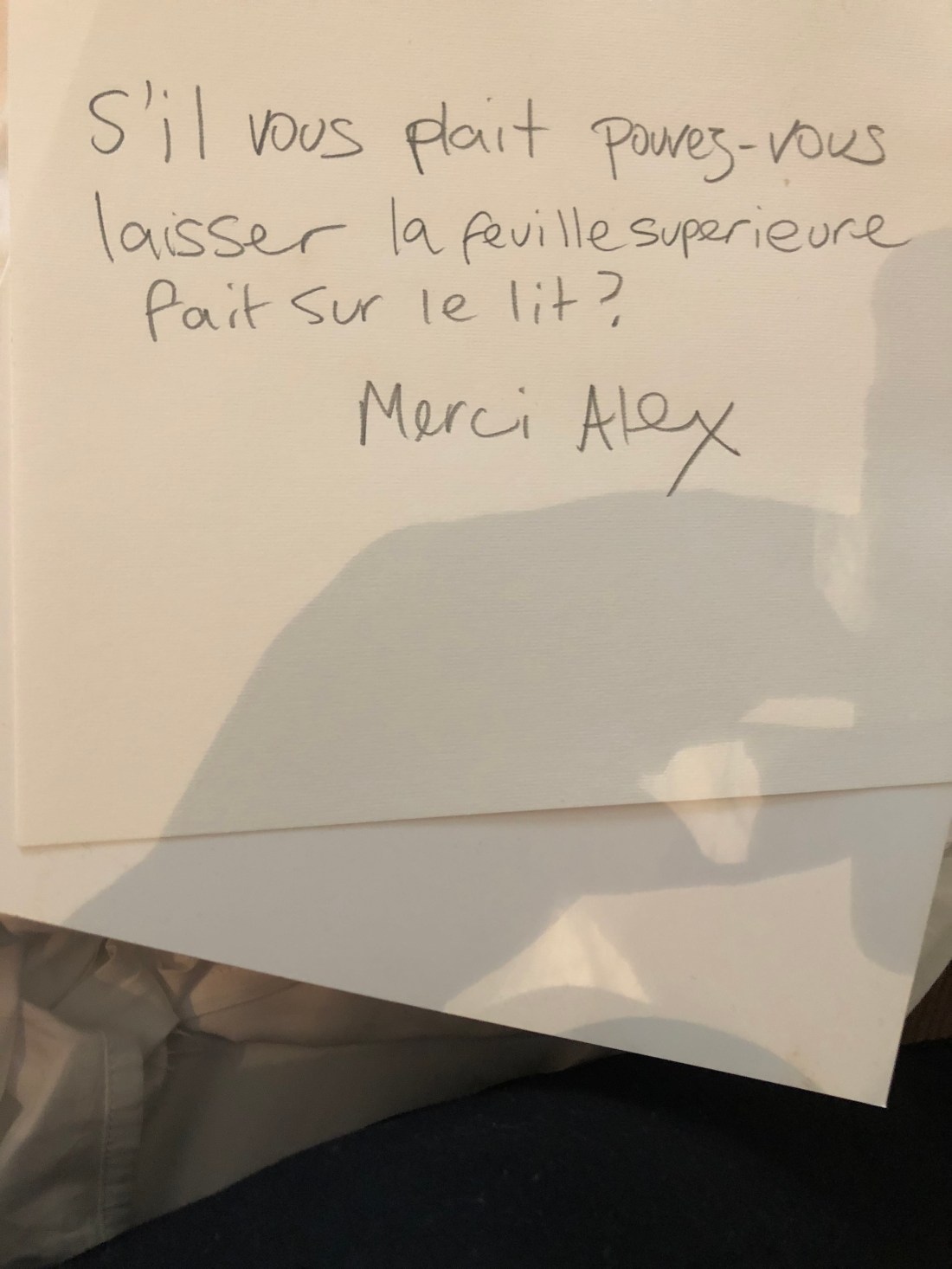
A long Sunday brunch with lovely friends from Canberra. Marilyn Chalkley and Hugh SaddlerAlex got lost one day and found herself in this garden opposite the Sorbonne University.Rob has a new TIN TIN T Shirt, straight from Boulevard Saint GermainAlex is still struggling with getting her Top Sheet!


















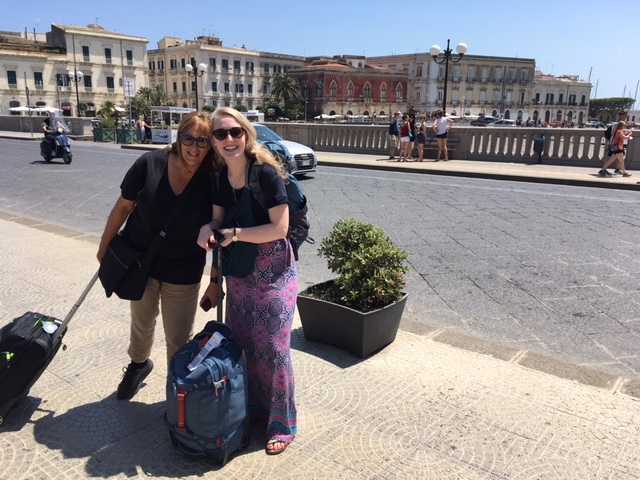
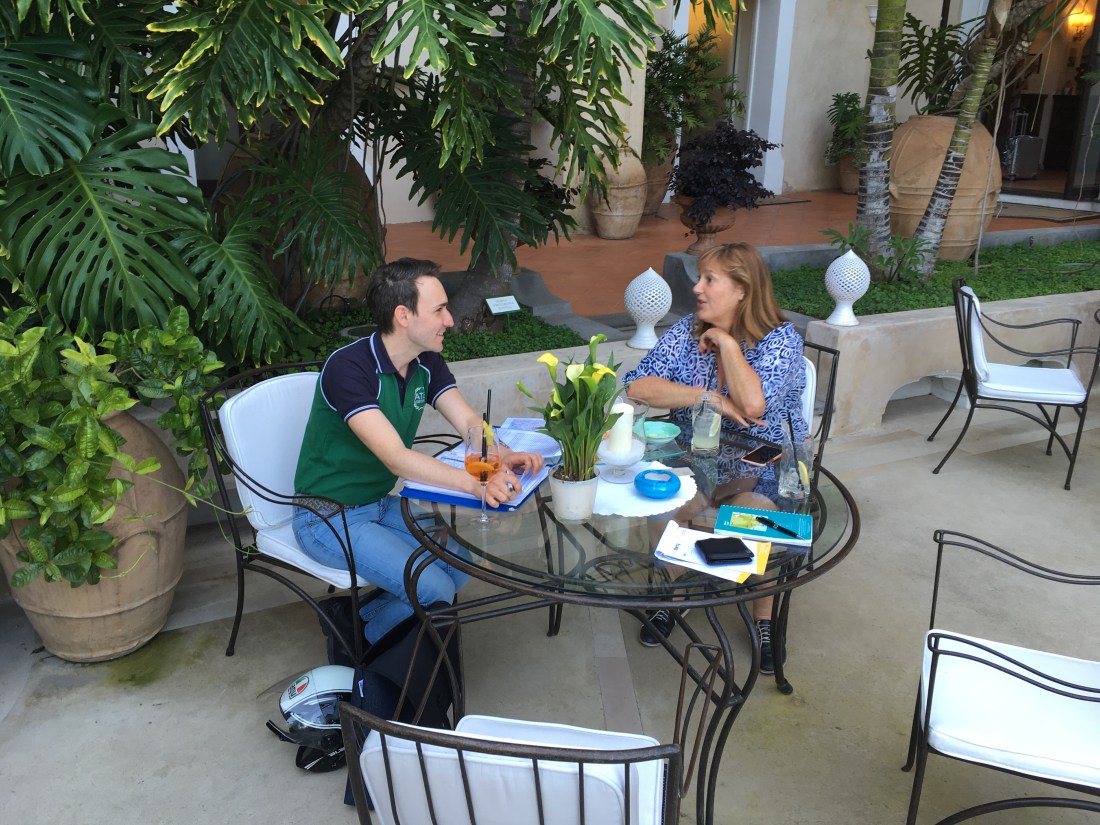
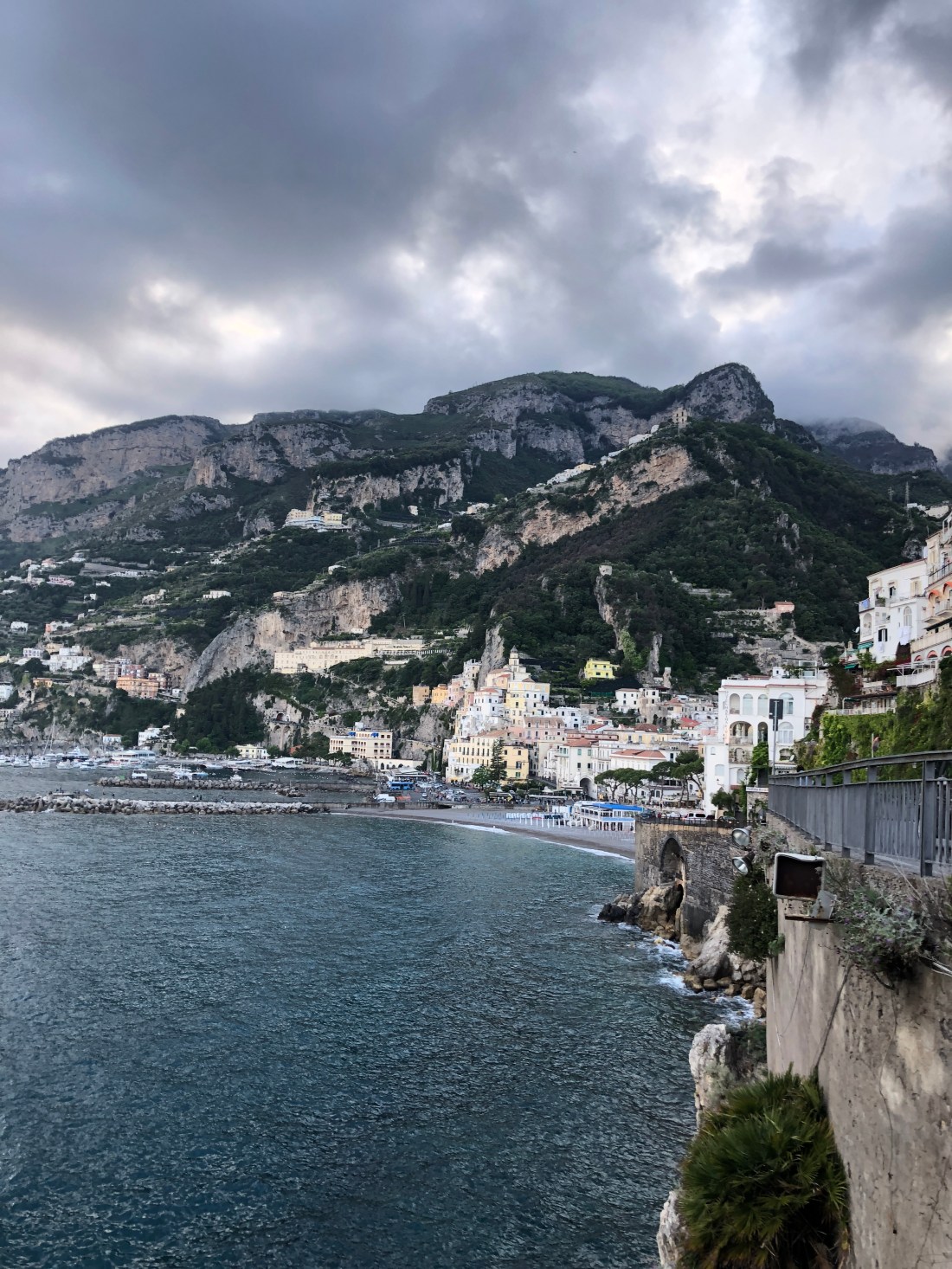

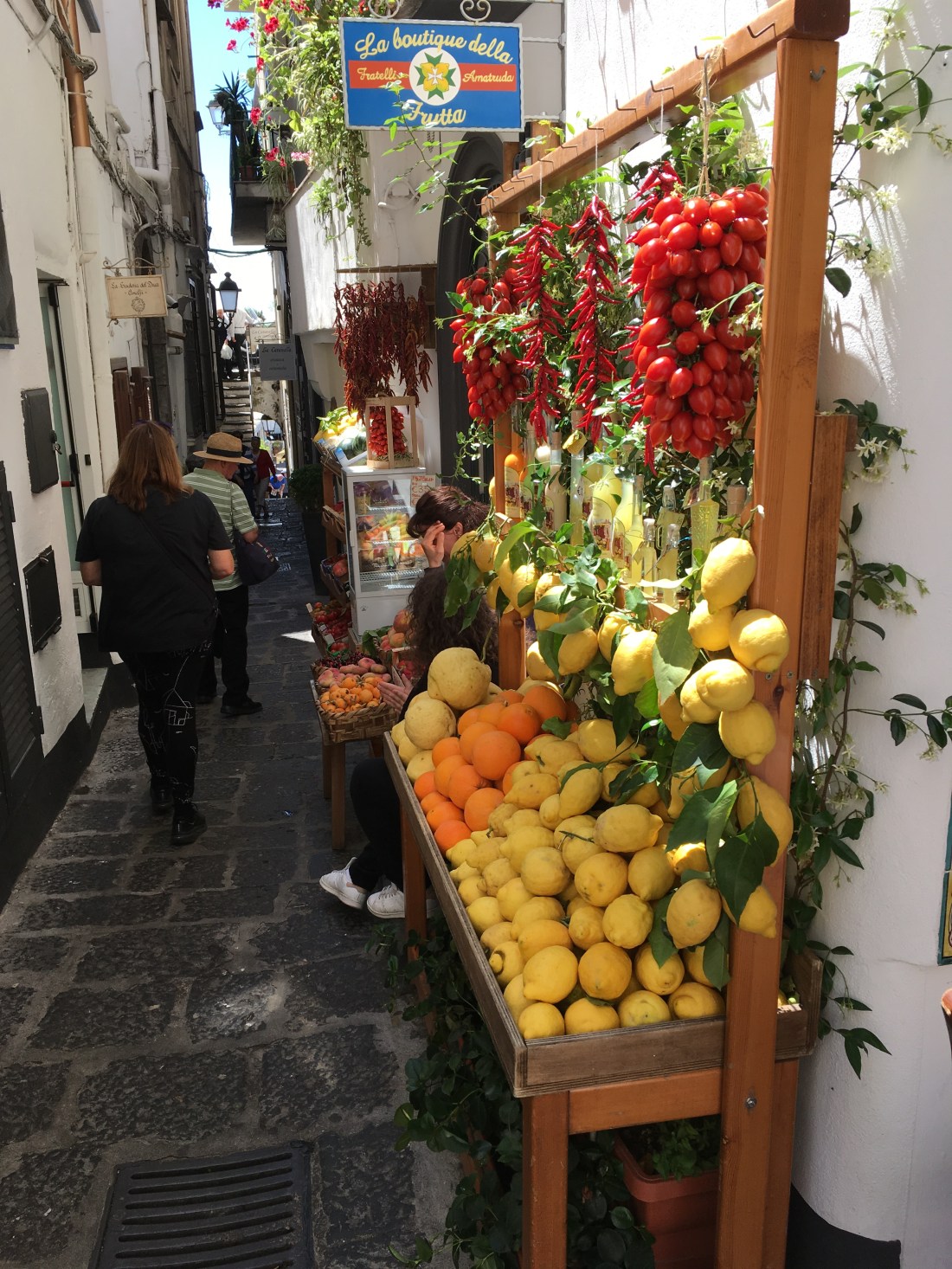







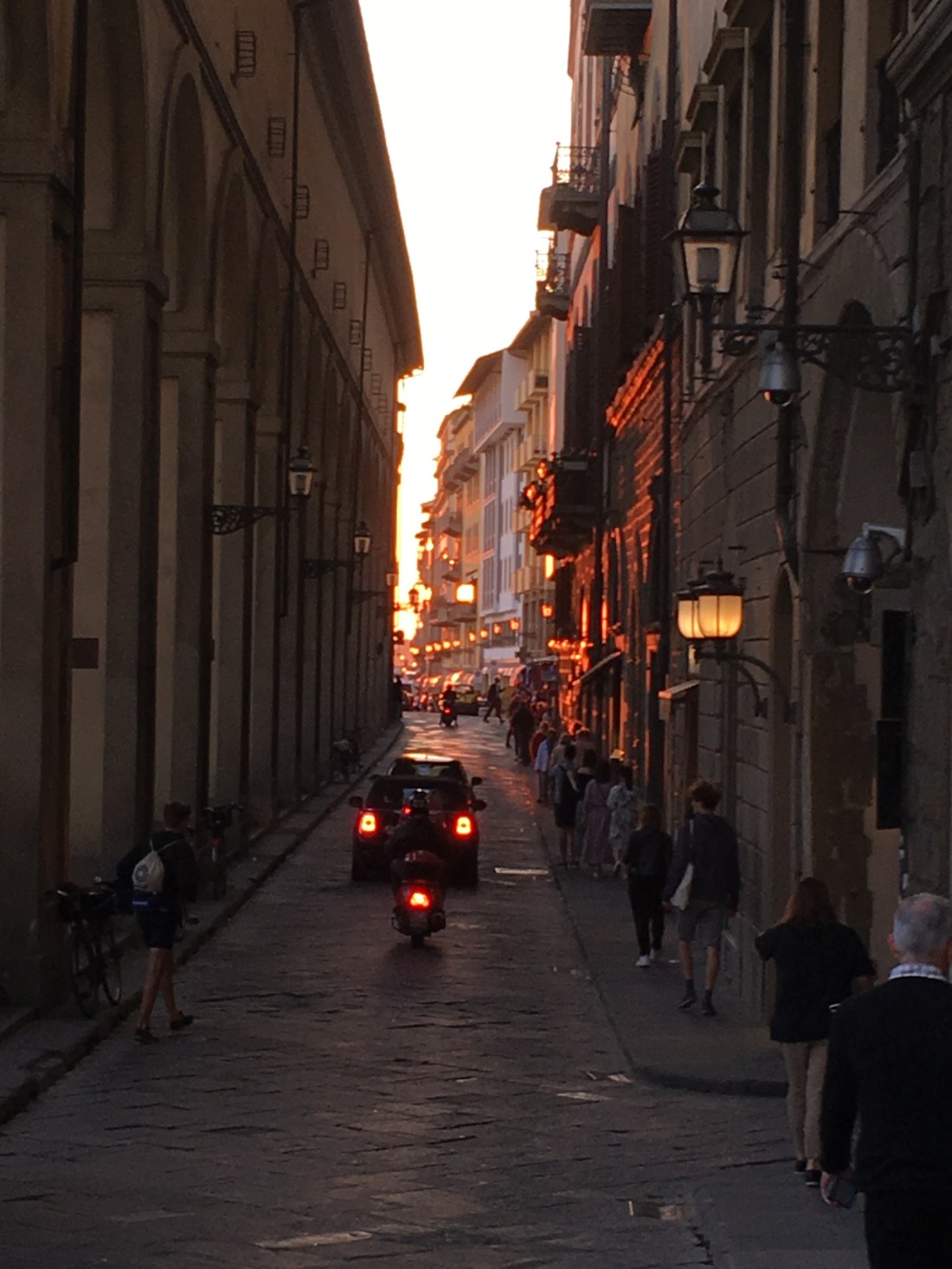










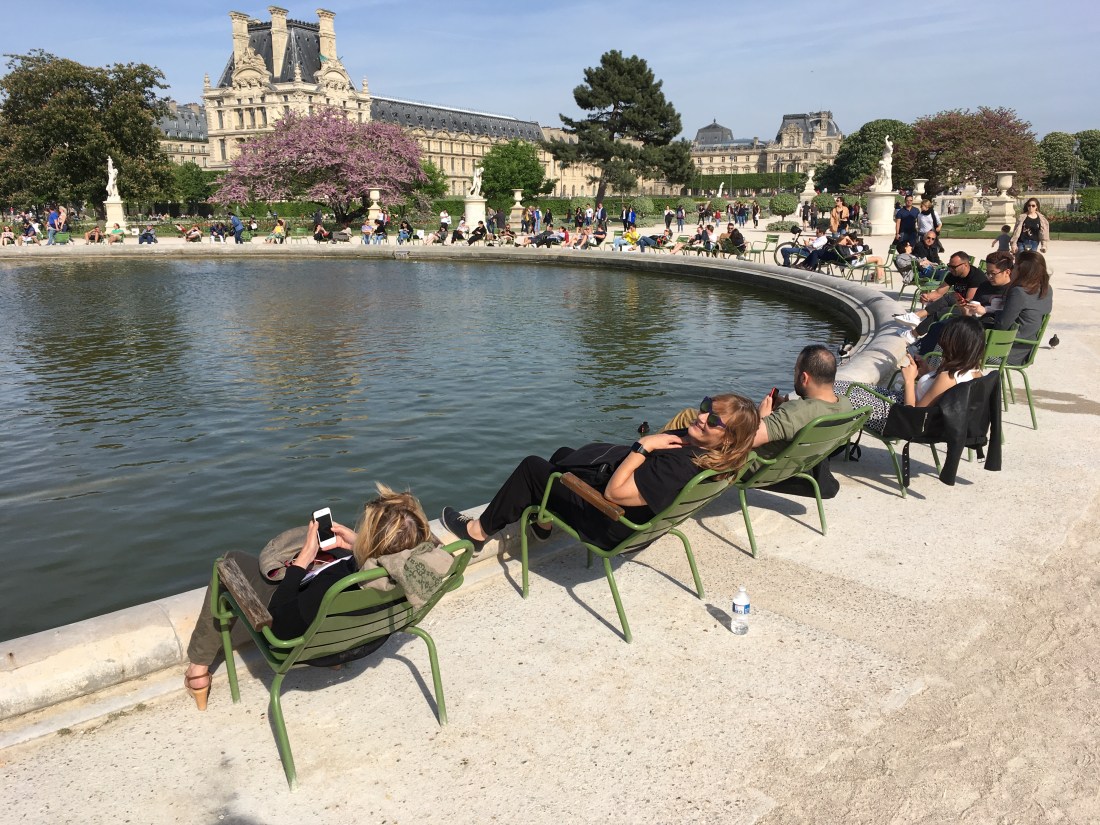 It was a beautiful warm afternoon when we arrived, so we headed out, crossed a bridge into the Jardin de Tuileries where Parisians and tourists were sunning themselves in the beautiful gardens. The grandness of Paris is immediate.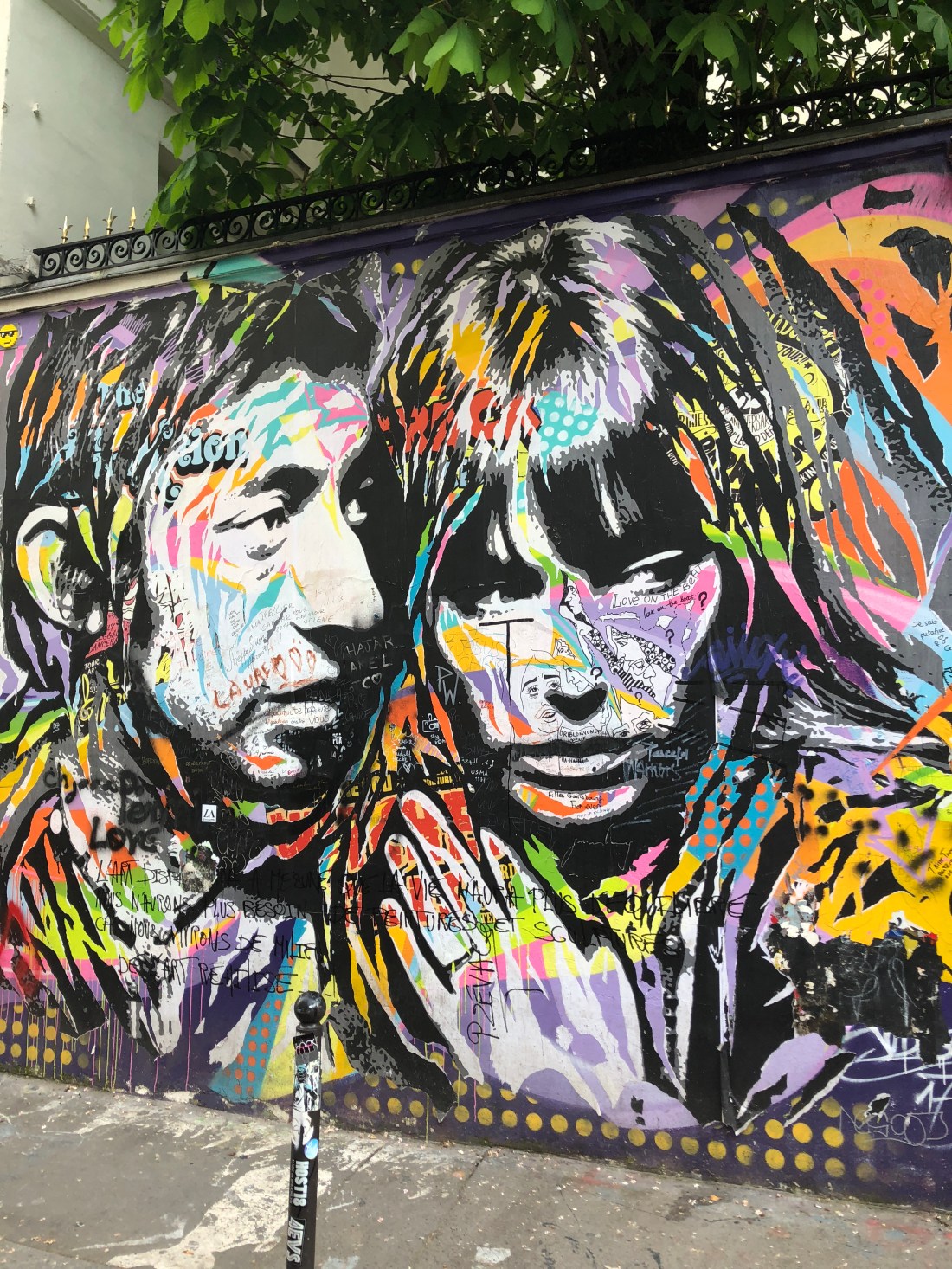
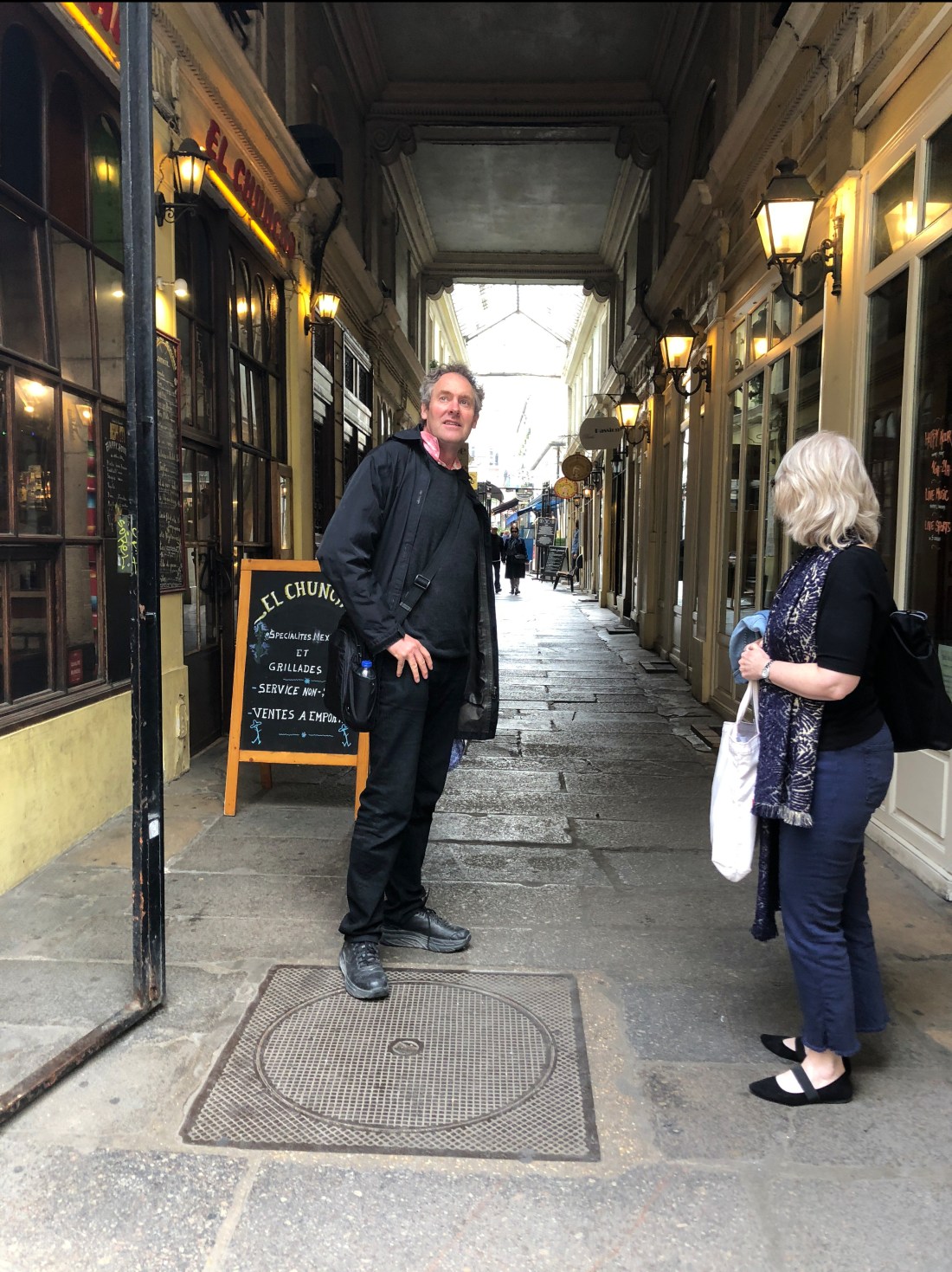 We deliciously woke up each morning to order our French “express” breakfast: coffee orange juice, croissant and baguette. Then to a big day walking. That’s what I have loved the most, walking and taking in as much as you can.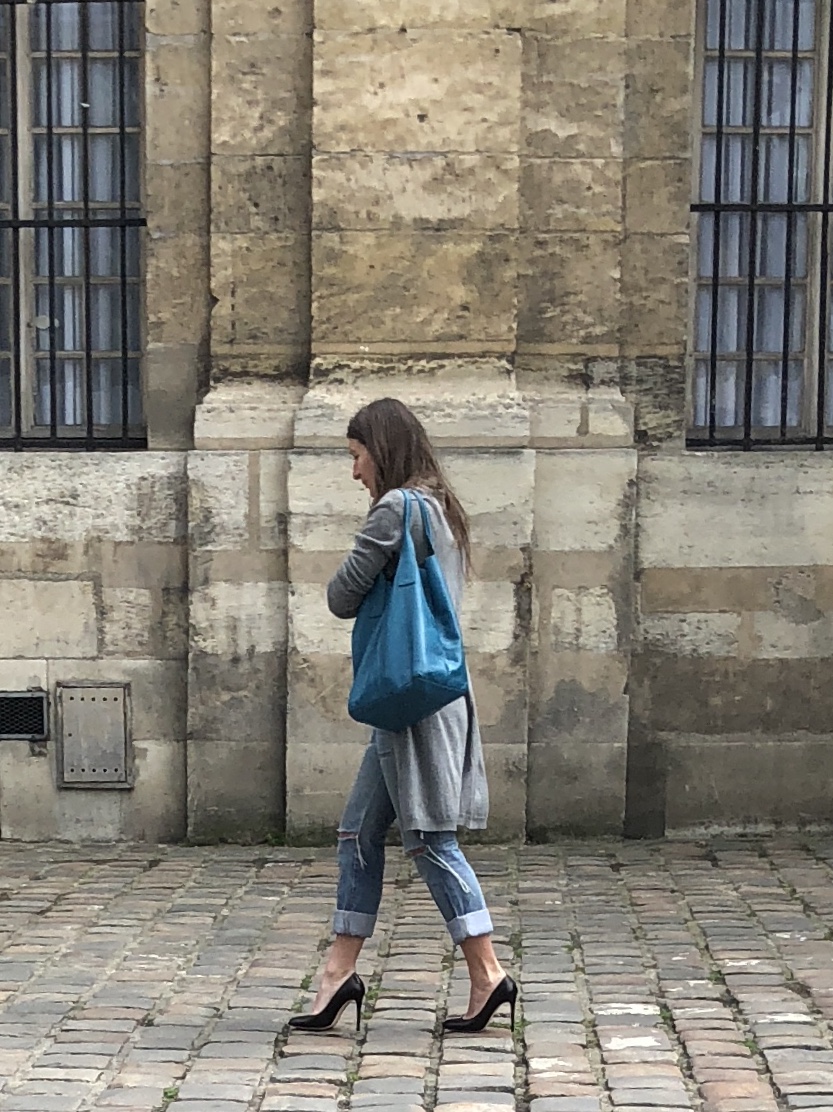





 Parental Gap-Year