London to Paris

Many people insisted we use the Eurostar to travel between London and Paris, the train in a tunnel under the channel efficiently delivering people from one city to the other within hours.  We chose a different route.

IMG_3087

Having been hurtled in a capsule through through the atmosphere into London, Rob really wanted to travel at a slower pace and to get the sense of leaving the UK and arriving on the European mainland.  We decided to catch the train to Dover, have an afternoon wandering over the white cliffs, stay at a village pub and catch the Ferry across the channel the next day.  We had been told many times that we would probably get sea sick and the cliffs would be shrouded in fog and we wouldn’t see anything any way.  (We’ll get to this)

You are whizzed out of London from the beautiful St Pancras Train station.
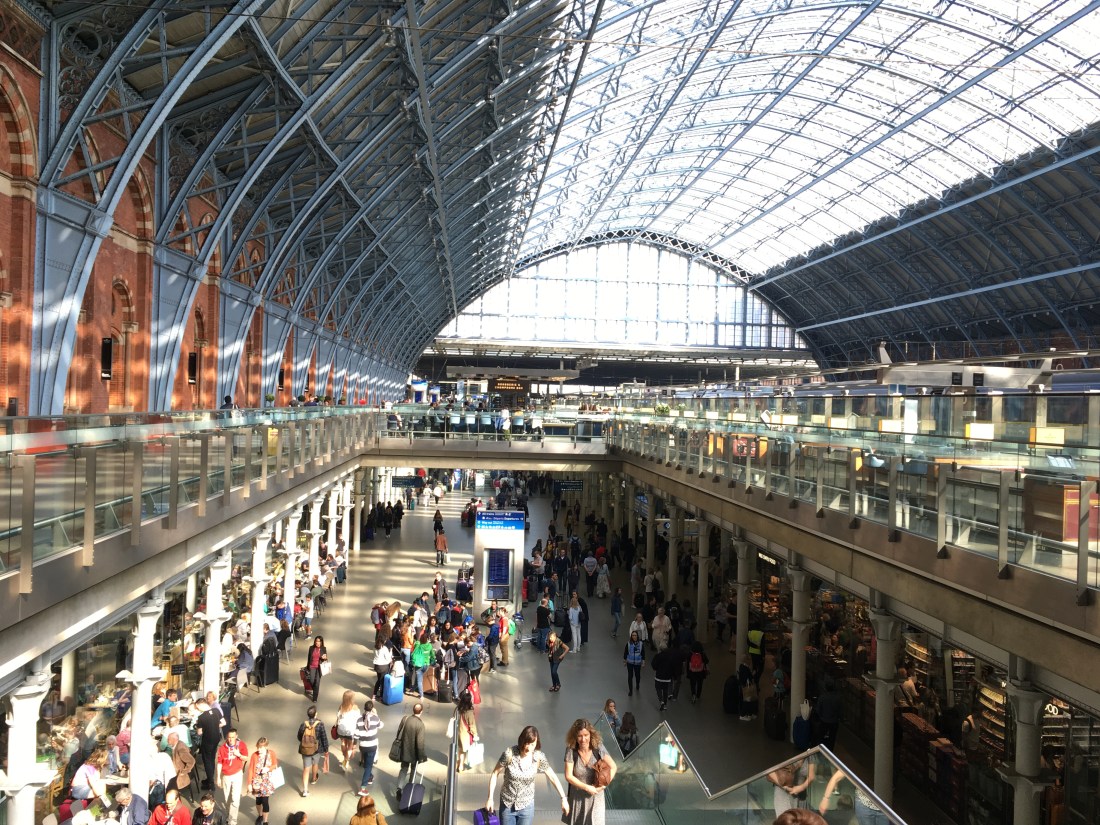
IMG_2935 The latest Tracy Emin sculpture is a huge pink neon sign in her writing saying “I want my time with you” her message on BREXIT.

Here is another sculpture about meeting and farewell: The Meeting Place by Paul Day
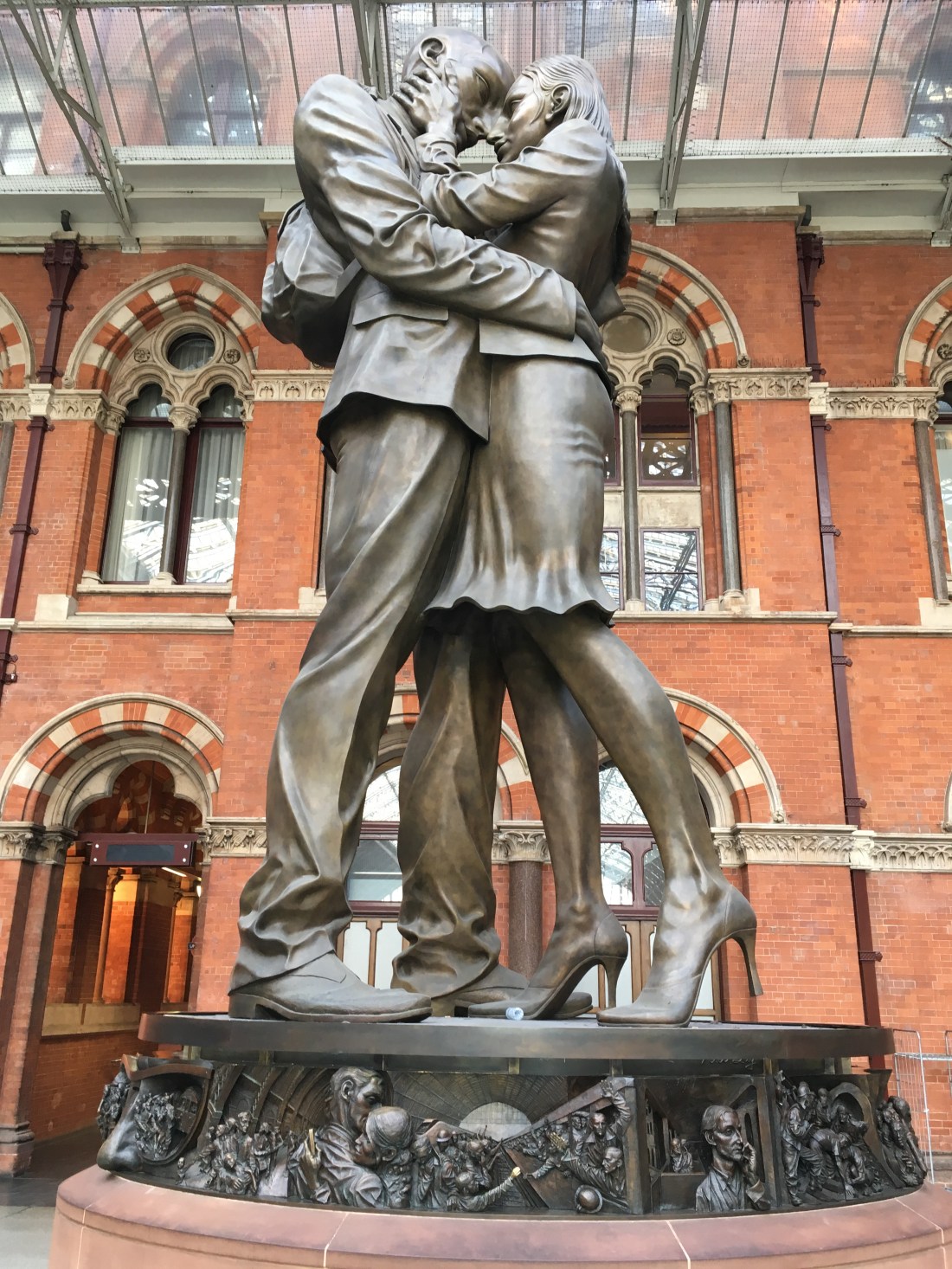
IMG_2932

Music too, via a piano, donated by Elton John, someone had stopped to play Queen’s “We are the Champions”.

Arriving in Dover, we were greeted immediately by the cry of the gulls, so familiar from the soundtracks to movies and TV shows set in coastal Britain, and completely different from Australian seagulls cry.
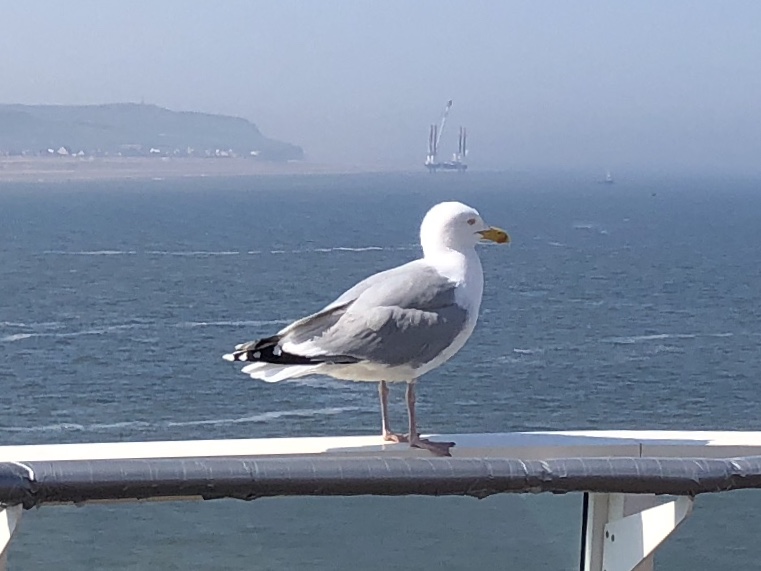
IMG_0715


The weather turned out to be perfect, clear and still and just a little cooler that the unseasonal hot weather of the previous days.

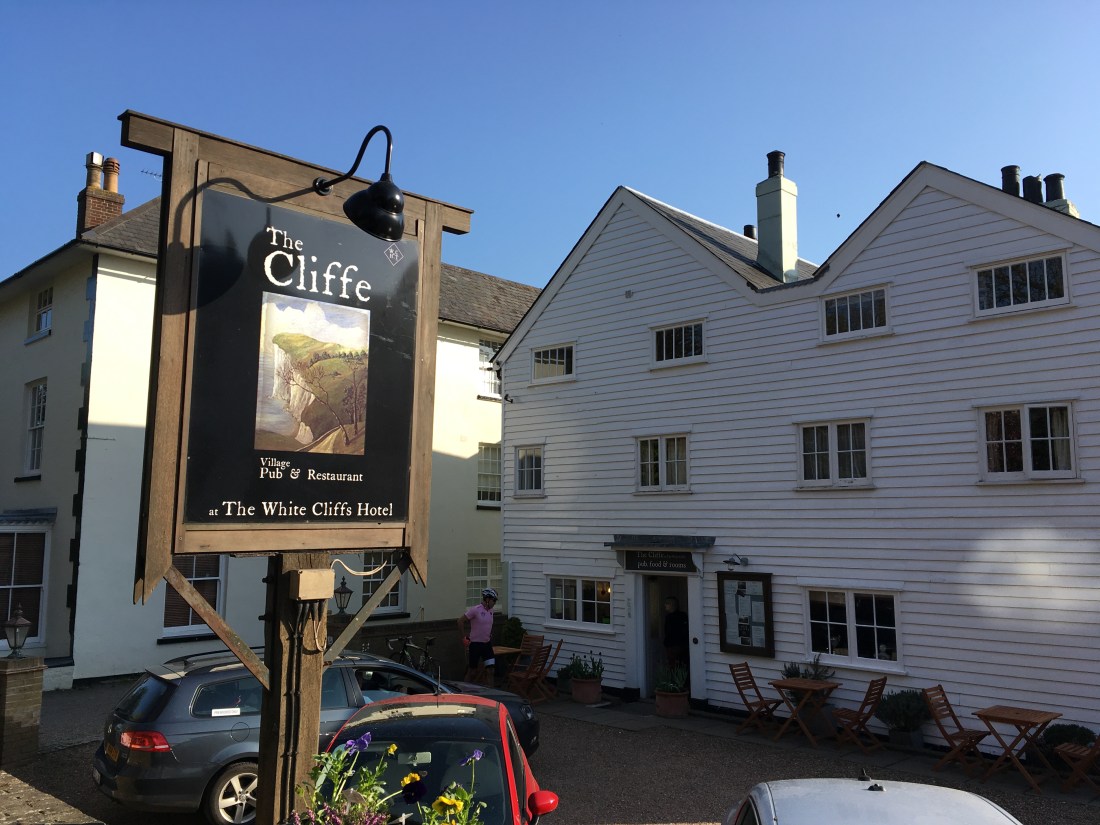
We came to see and walk on the White Cliffs.  We stayed in the village of St Margarets in the White Cliffs Hotel.  A really lovely family run pub.  It was a little Fawlty Towers, but without the rudeness.  Gavin, definitely not Basil, in fact he’s a MAMIL, heading out on Sunday morning  bike ride.  His lovely daughter in fact joked, “we’re a bit like Fawlty Towers”, but they couldn’t have done more for us.  (just on hotels RANT ALERT – why have people done away with the top sheet and just given you a very hot doona? – NO!, Also what is it with having the bathtub at the foot of your bed???  A bit splashy for my liking)
IMG_2947

We walked down to the beach at St Margarets, where Rob quickly dipped his toe in the water, there were people swimming, but he decided against the swim to France, no wetsuit.  The house behind Rob was once owned by Noel Coward who then sold it to Ian Fleming.


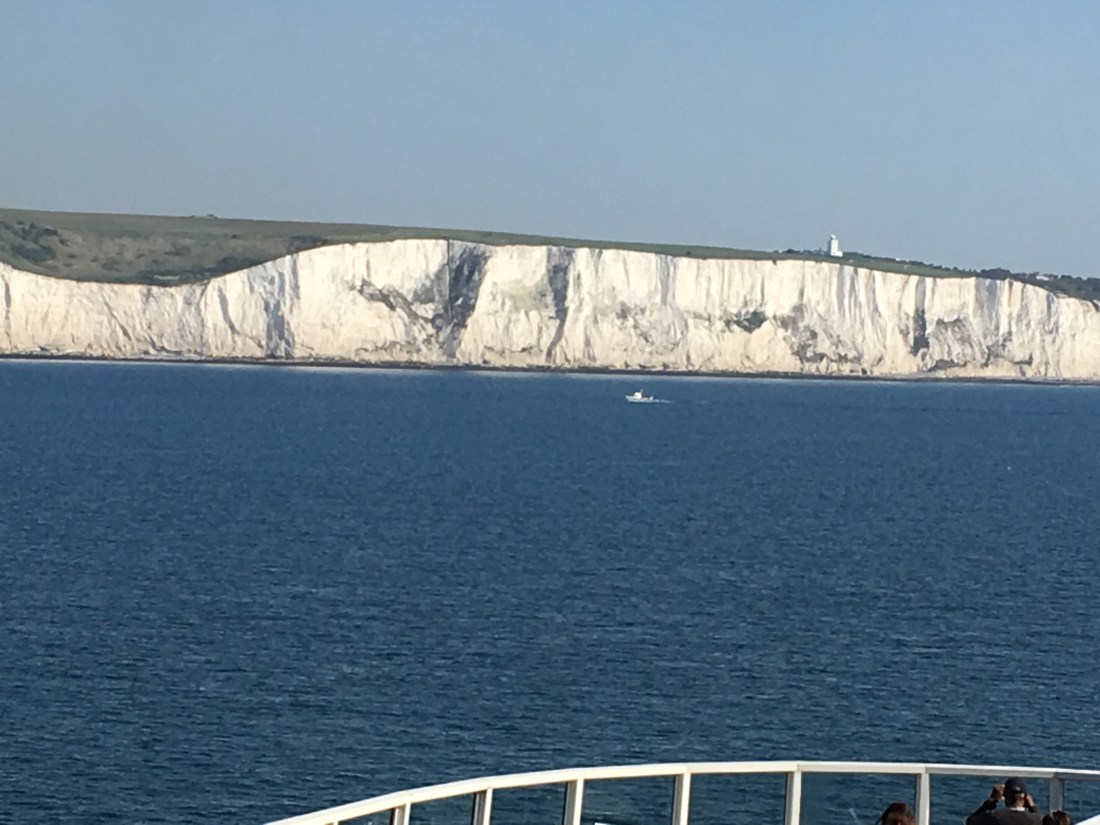
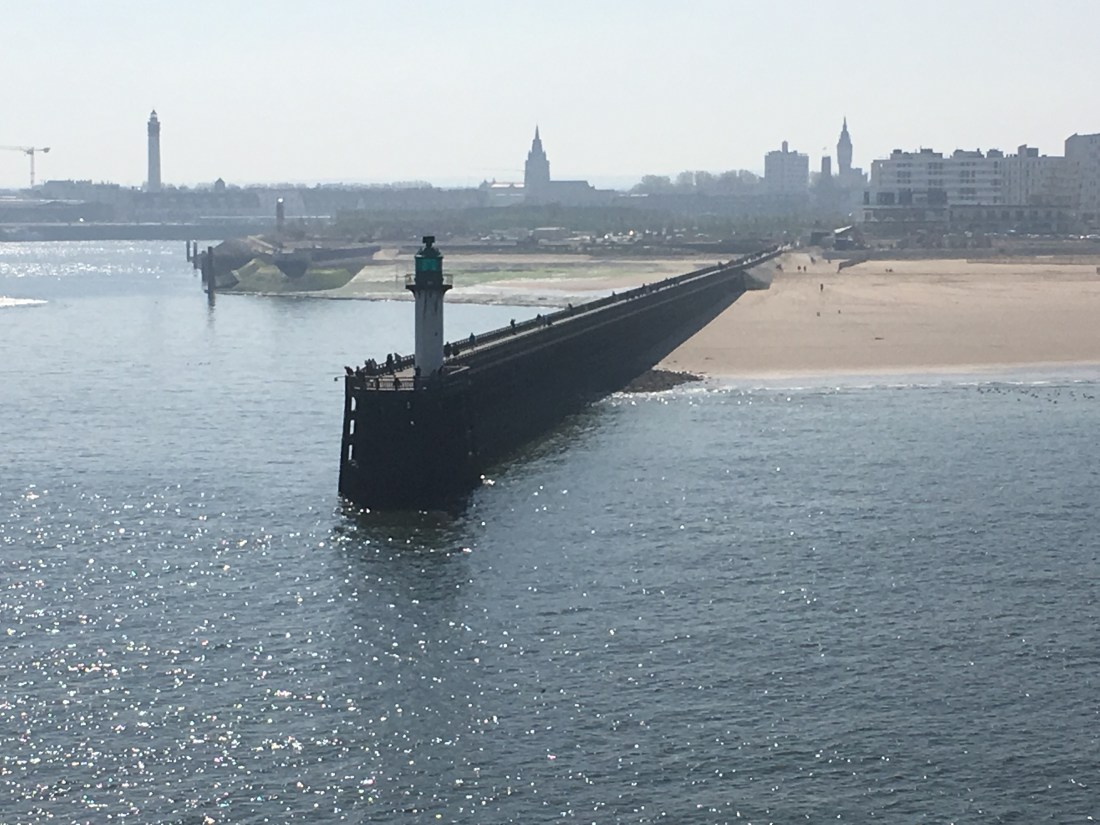
The views of the white cliffs of Dover were beautiful, and the sense of anticipation as we approached the skyline of Calais.
IMG_2961

IMG_2978

Since the Eurostar and the advent of cheat air flights throughout Europe, not many foot passengers use the ferry any more.  Most of the people we spoke with were taking their cars across the channel, often just to spent a day or two in France

Arriving in Calais was a strange experience, there is no longer a bus service to the train.  we caught a Taxi to a train station a long way out of town in the middle of nowhere.

IMG_2984

Our Taxi driver in his electric Tesla,  was keen to show us its impressive rate of acceleration.  It was a reminder to us how slow Australia has been in its uptake of electric cars. France way ahead.

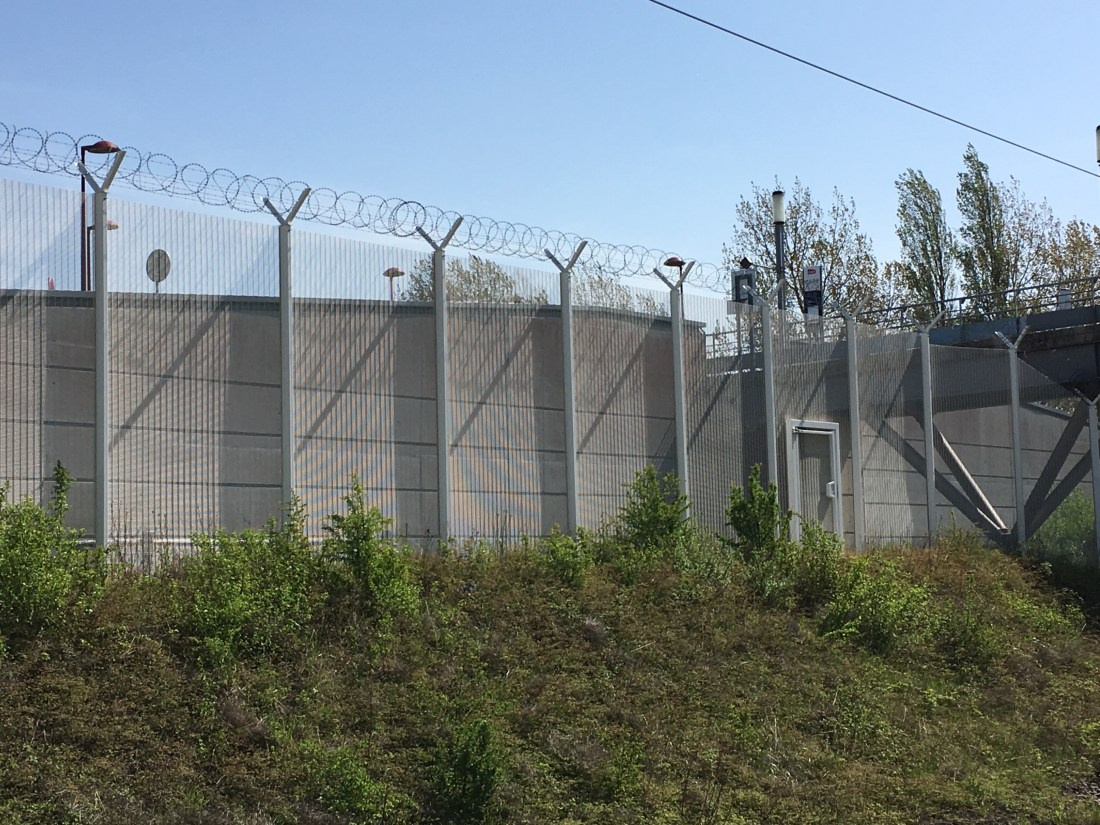
We also noticed the double line of fencing with razor wire rolled along the top, an immediate reminder of the refugees who have fled Africa, and the middle east trying to make it to the UK.
IMG_2985

Train trip to Amiens Am-ee-ah.  Very specific pronunciation.  Am as in I am…and ends with a sharp “a” .  I kept being corrected by the English who say Arm-ee-ons.  Not correct.

The train from Calais followed the Somme River valley through Boulogne-en-Ville to Amiens.

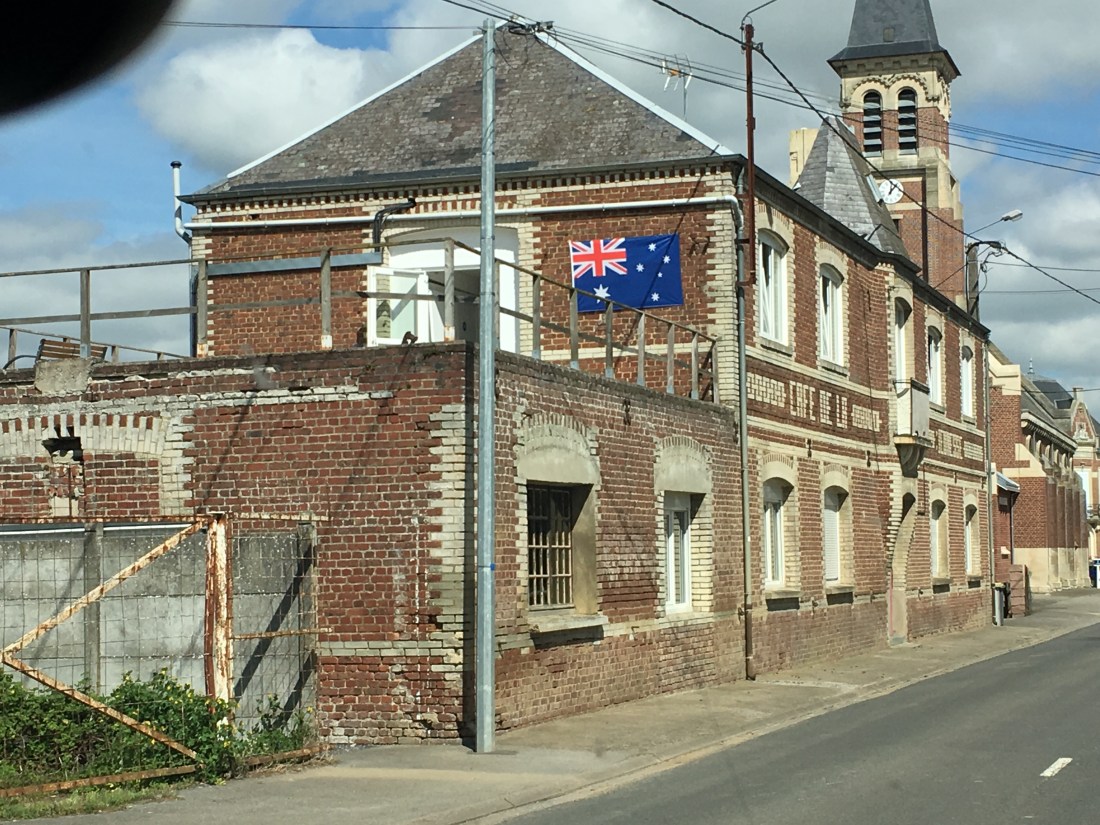
The first thing we noticed in Amiens were the Australian flags.


Before our trip Alex spent time  brushing up her school-girl french with Babbel online.  Many people said “don’t bother everyone speaks English”.  THIS IS NOT TRUE.  Checking in to our small “House in the Town” hotel, Michelle had very little English.  It took Alex’s pretty bad French and Michelle’s broken English to get through.  In fact in most cases in Amiens we needed Alex’s French.  Paris may be different but away from classic tourist areas, it’s good to have some French.  Luckily we have a distinctive description for Rob as a meeting point, look for “un grande homme avec chapeau”
IMG_0758

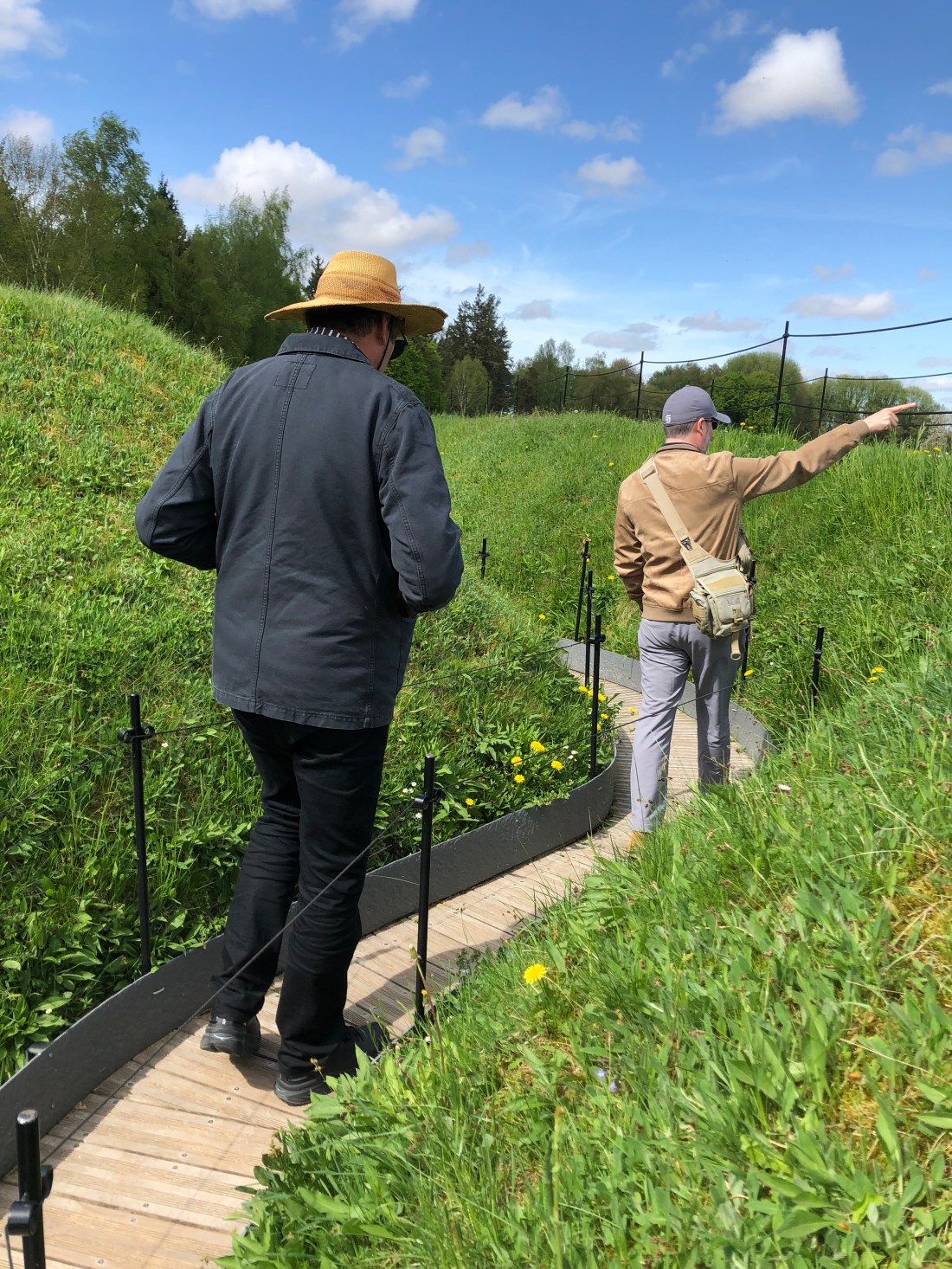
Our one full day in Amiens was huge.  In the morning, after a beautiful French breakfast, bagette, confiture, ham, cheese, coffee, warm milk, freshly squeezed orange juice, we set off on a full-day tour of the battlefields with Oliver of Chemins d’Histoire.
IMG_0727

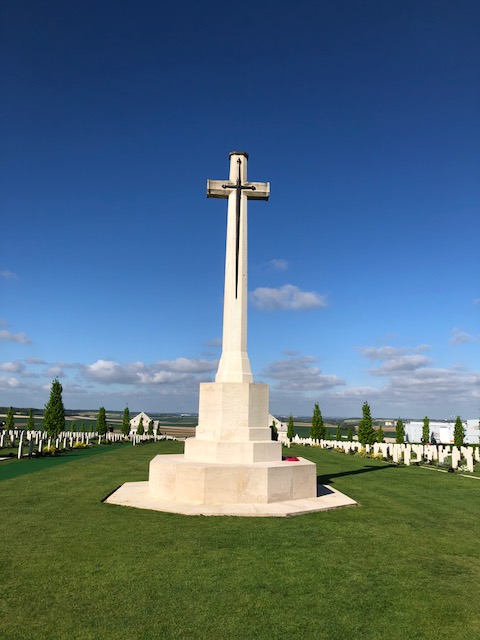
We cried when we arrived at the memorial in Villers-Bretonneux, the terrible loss, a place of tragedy in such beautiful countyside, rolling fields of wheat and the yellow canola in flower.  The Australian choir was practising for the ANZAC day ceremony, our tears started to flow.

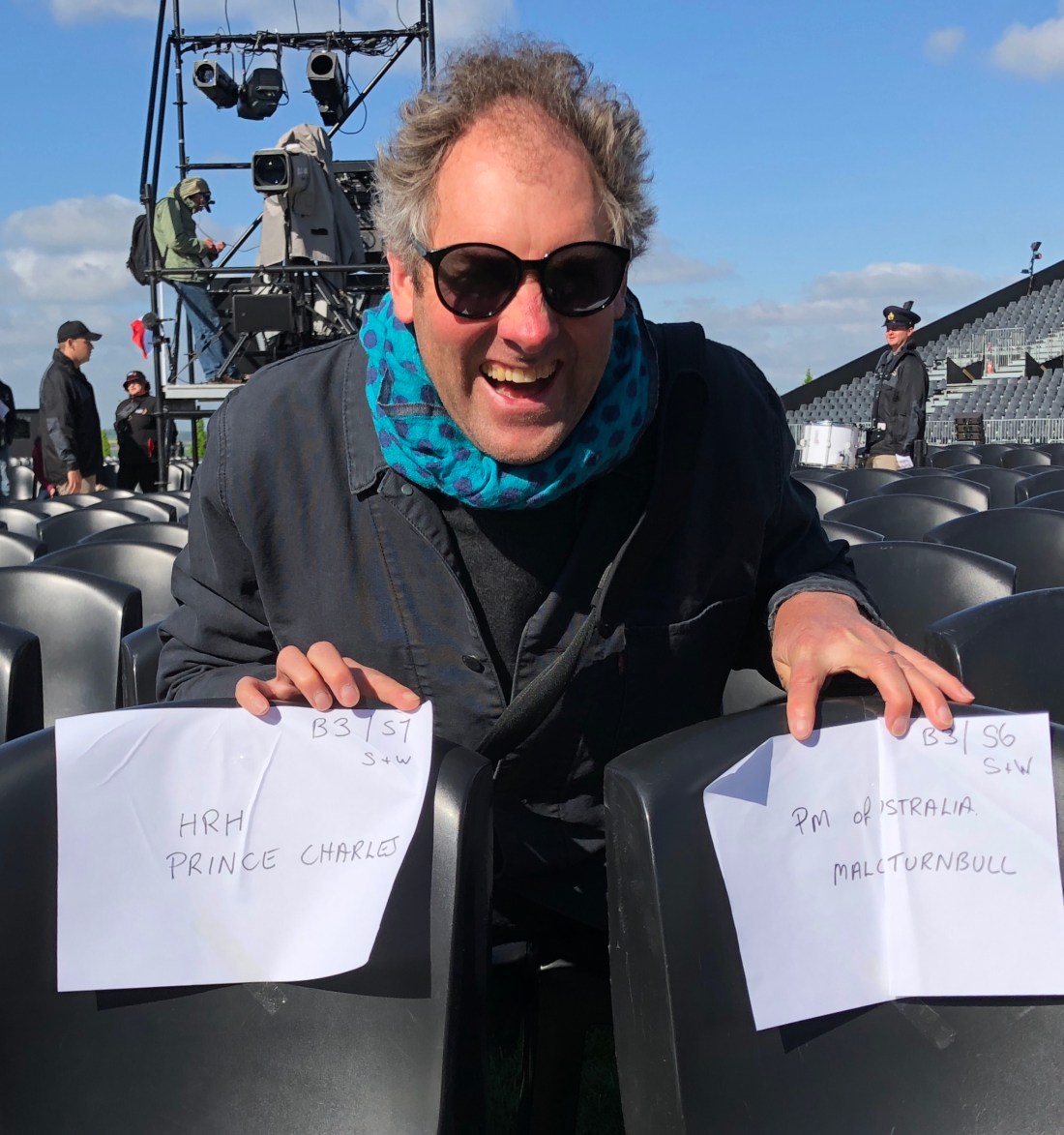
But we had some comic moments too.  Alex bumped into Stephanie Brantz, the MC and also Estelle Muspratt who works for Dept of Veteran Affairs screeched:  “Alex what are you doing here?”, I last saw “Stella” at the Ainslie shops.  And then we noticed the seating arrangements.
IMG_0738

Just along from this pairing  a seat for Tony Abbott.  We met Warren Snowden later who had a crooked smile about his seat: wedged between Abbott and Derryn Hinch.

But apart from this moment, it was a very sad day. A day of remembering and never forgetting.
IMG_0745

IMG_3006

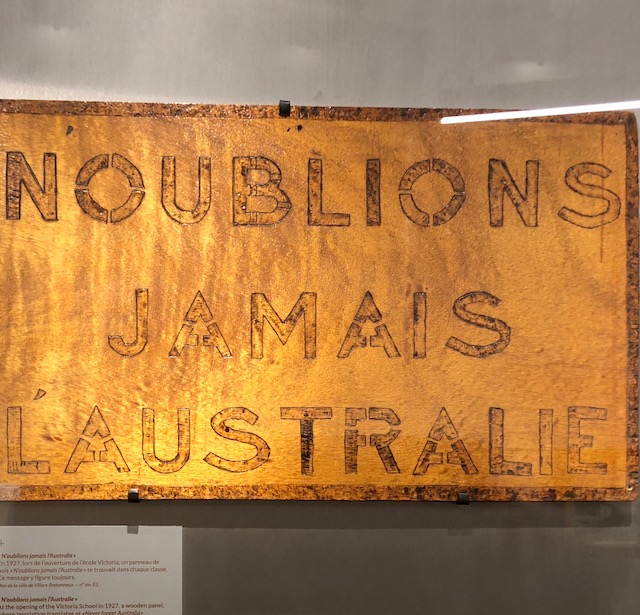
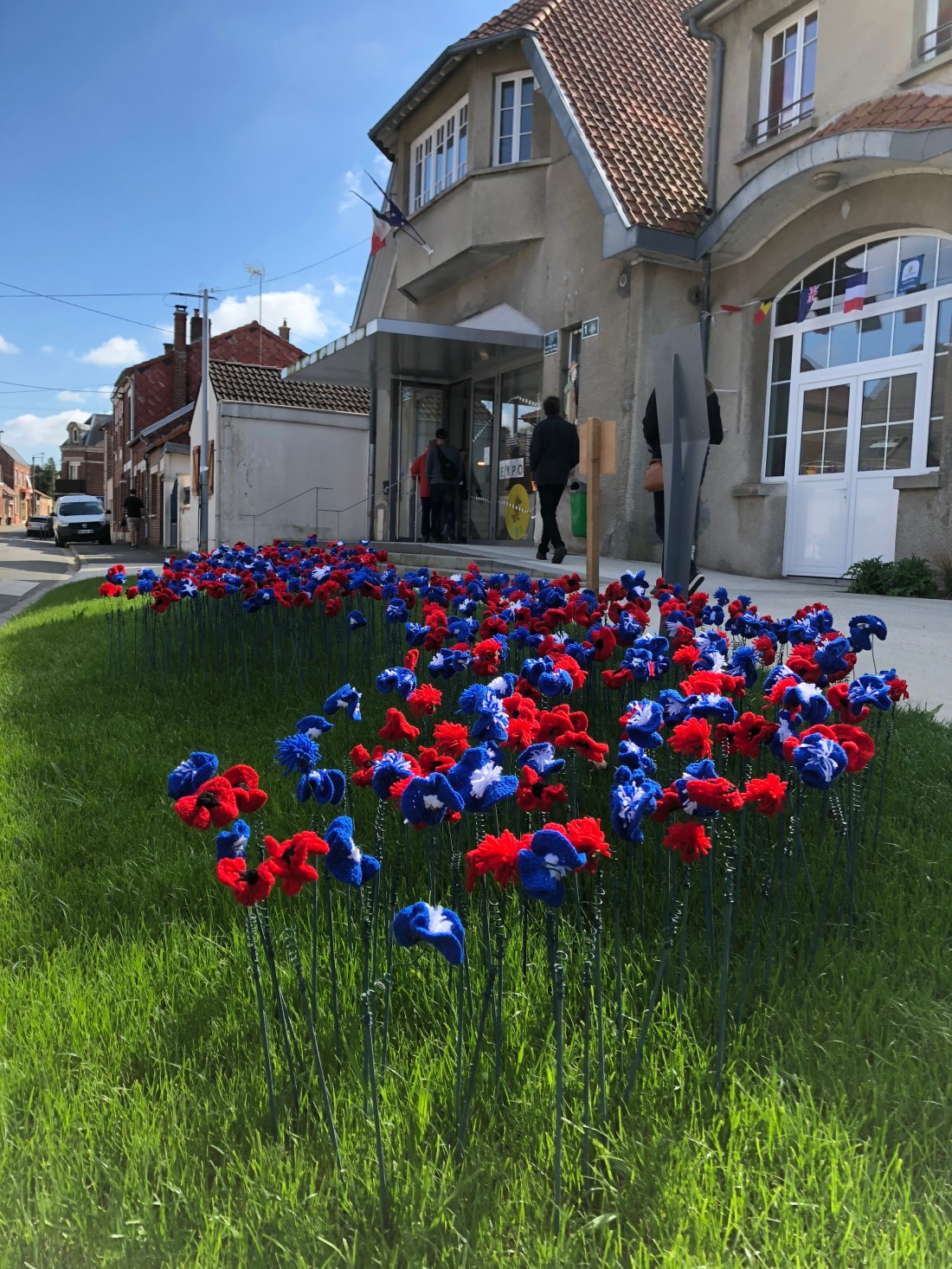
The small village of Villers-Bretonneux is described as the “8th State of Australia”.  Away from the formal memorials, the little school-house is really moving.  There was a modest exhibition by the local school students and that meant more to me that the $100 million dollar John Monash Centre (which we didn’t see as it was closed before the grand opening).
IMG_0744

Rob had some personal reflections

As a child I remember asking my Grandmother about a cross that sat amongst her various ornaments.  From my memory it looked like copper and brass.  It was always kept polished.  She told me it was made for her by my Grandfather who was away at the war. The horizontal piece was a bullet and the vertical piece a large shell, with a base that might have been the cap of a larger shell.

My Grandfather died just weeks before I was born, and my recollections of any stories by my Grandmother are vague, but I do remember the official photos of him in uniform and her saying that his feet were damaged by his time in the trenches in France.

Touring the battle fields does make it much more personal and I emailed mum who sent me details that he enlisted in September 1915 to the 10th Battalion, 14th Reinforcement. He was repatriated to London with “trench-foot” and pneumonia, and returned to the field in France.

The small museum at Villers-Bretonneux that had photographs of Australians that must have been similar to my Grandfather’s experience.

IMG_3002
Letters from home from photos from old school house at Villers-Bretonneux


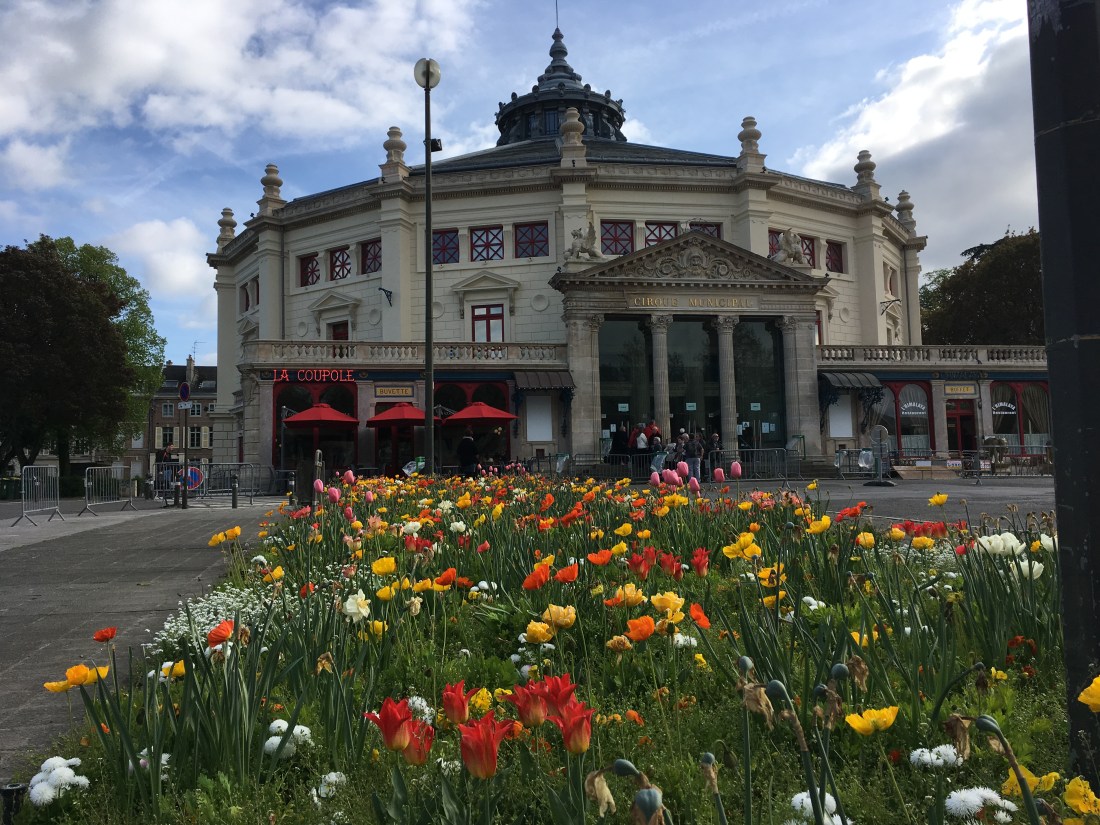
We were really in Amiens to attend Chris Latham’s The Diggers Requiem in the Cirque Jules Verne.
IMG_3018

This sell-out concert received a standing ovation and Chris, the orchestra and soloists were called back 5 times by the audience.  Here is my response I sent to Chris and three of the composers:

Being in the audience last night for The Diggers Requiem in Amiens was a hugely emotional experience.  Filled with beauty, sadness, memory it did what all great musical experiences do and that is to make us think deeply and feel profoundly. It really is music that takes us to these places and that’s what happened to us last night.  It was also incredible for Chris to ask us to sing.  It’s like we were aching to join in, to not just empathise but to be part of it. I who cannot sing well, loved the physical feeling of making music.  The mesmerising chant.
This was an unforgettable experience – full of love and honour.  Beautifully Chris talked about forgiveness – that is the way ahead.  
**Don’t miss The Diggers Requiem in Canberra on October 6.
IMG_3038 (1)
Standing Ovation at Diggers Requiem

In contrast to this huge crowd, a smaller but no less emotional gathering the next morning. (see below)

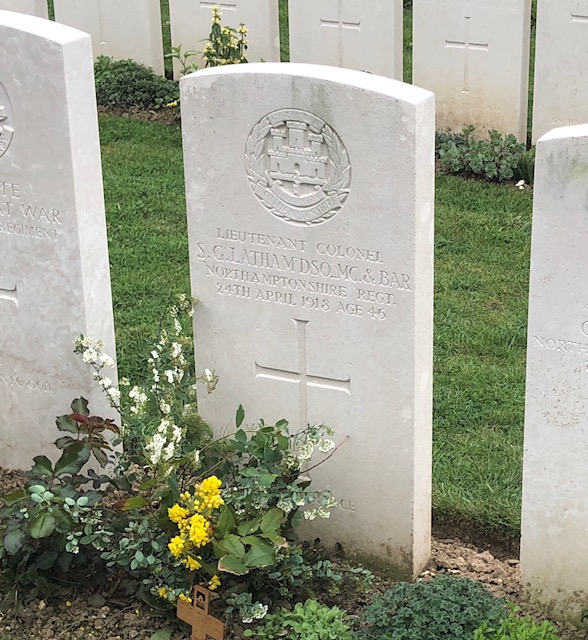
So many times we bemoan the evils of social media.  But Chris has been able to discover links to family, dead and alive, through the internet.   An Englishman called Bob had discovered a box of slides which showed a journey to France by a woman wanting to find the grave of her husband killed on the Somme.  Bob found the marker: S.G Latham and then put out a call on the internet – did anyone know S.G Latham?  It turns out it is Chris Latham’s great uncle.  He was Lieutenant Colonel S.G. Latham
IMG_0772 (1)

He was killed on the 24th of April 1918, which also happened to be his 46th Birthday.

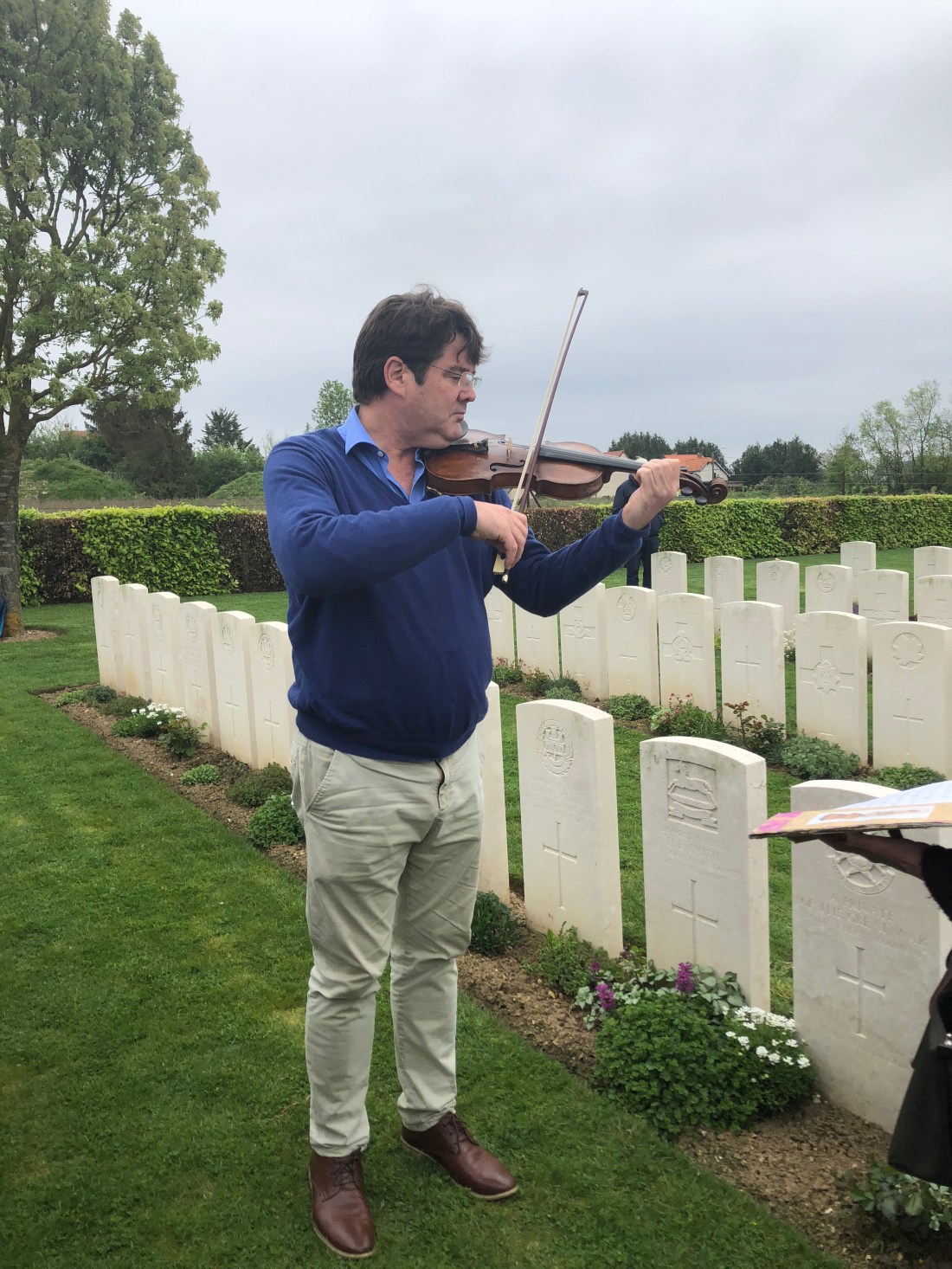
We gathered by his Graveside – the family, Chris, his newly found cousin Alan, Chris’s Mum, Bob and his partner.  Chris played a lament on the violin.
IMG_0774

Just to round off our visit,  I want to quote two of our great journalists writing this morning on this period in our history.

First David Marr:  The business of remembering is taken seriously up here, not least because the valley of the Somme looks the most peaceful landscape on Earth. In late April the country is covered in sheets of early wheat and canola in flower and patches of pale ploughed land waiting to be sown.”

On the new John Monash centre David wrote:

This is not a museum. It’s what they call in the trade these days, an experience. If you want to explain slavery and civil rights in America or the battles on the western front, this is what you do. Walls light up. Old photographs fade into freshly filmed live action. Actors struggle and die. Orchestras play. Howitzers blaze away. Gas seeps through the floor.

A few glass cases hold mementos of battles fought round here. There are guns and badges and rusted weapons, some dug up on the site. My grandfather Jack’s war diaries are beautifully preserved here, one held together with a safety pin as it has been for a century.

But the Monash Centre is not for scholars. This is entertainment, cutting edge and thrilling in its way, but entertainment. Crowds will no doubt come. Tour operators are already rejigging their itineraries to fit an hour or so for their customers in this dazzling maze.

David ends by urging us to go to a grave in the fields.  He’s right.

Also the marvellous Paul Daley about looking to tragedies on our own soil:

“And after walking past all of those blonde headstones in all of those foreign war cemeteries, replete with their militarily-clipped lawns and fragrant rosemary bushes, all of these places that dignify so many terrible deaths, I feel like I’ve learnt far more about what my country is by looking inward, by walking this landscape and determining what happened within it.

So, last week, in the name of remembrance, in the remote corner of a sheep station in central New South Wales, I visited the grave of the Indigenous warrior Windradyne, who led resistance against the British in the Bathurst war of the 1820s. We walked across a dusty, desiccated paddock, dotted with ancient scar trees and sprinkled with stone artefacts, to reach him.

This was an Australian battlefield. On this continent.”  Thanks Paul.

La Greve (The Strike)

Ahh, The French and their strikes.  We have a hit a period of rolling strikes for 3 months.  The French rail unions are facing off against President Macron who is not blinking.

So how to get from Amiens to Paris?  Blabla Car!  This is a ride-sharing system in Europe. So I signed up and found a ride with Christian.  He sent me a message:  “Sory, no spic anglais!!”  (YOU NEED SOME FRENCH EVERYONE.)  Christian is a jurist (lawyer) who commutes to Paris and likes to have someone to talk to in the car.  He got Rob in the front seat who doesn’t speak French.  He seemed to take a liking to Rob despite language difficulties.

We met Christian at the train station, I told him to look for me in “echarpe rose vif et mon mari un grand homme avec chapeau”   Five us squeezed into a very small car and off we went to Paris.  Luckily Pierre sitting in the back middle seat had just returned from Australia and acted as translator.  He was a lovely guy who helped us at the metro in Paris (in a pretty seedy part of town).  BTW small cases essential, we wouldn’t fitted with bigger luggage.

IMG_3064 (1)

Christian, Pierre, Alex and Emmanuella (who is from Cote d’ivoire and is studying law in Amiens).  Note Christian and Pierre’s sneakers.  They are a very big thing here.

Arrived to traffic in Paris, really bad because of the strike and witnessed refugees from Africa and Syria.  2 girls in hijab walking between cars Syria with signs saying: Syria SOS

Traffic so bad Christian dropped us at Porte de la Chapelle Station. to the north of Paris. How to get to central St Germain des Pres?  The lovely Pierre helped us buy metro tickets. Thanks Pierre!

3 nights after leaving London – we arrived in Paris in our very central hotel minutes from The Seine and Louvre and welcome Jardins de Tuileries.
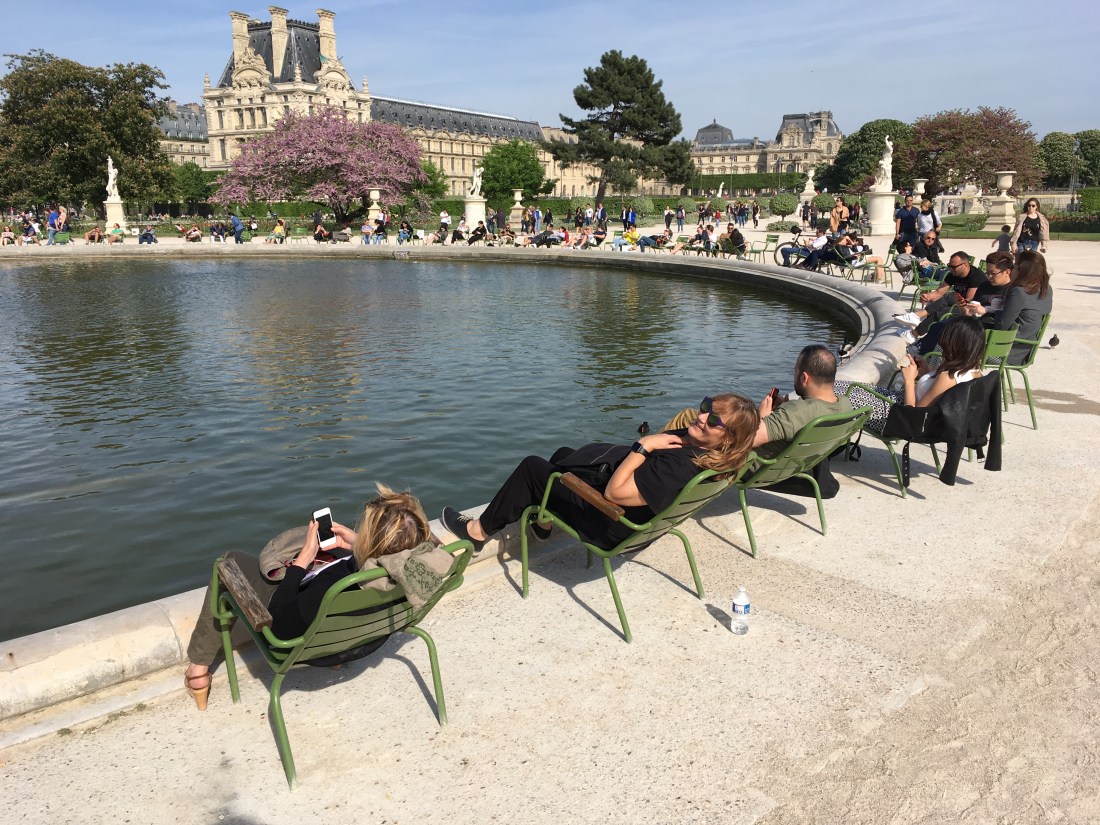
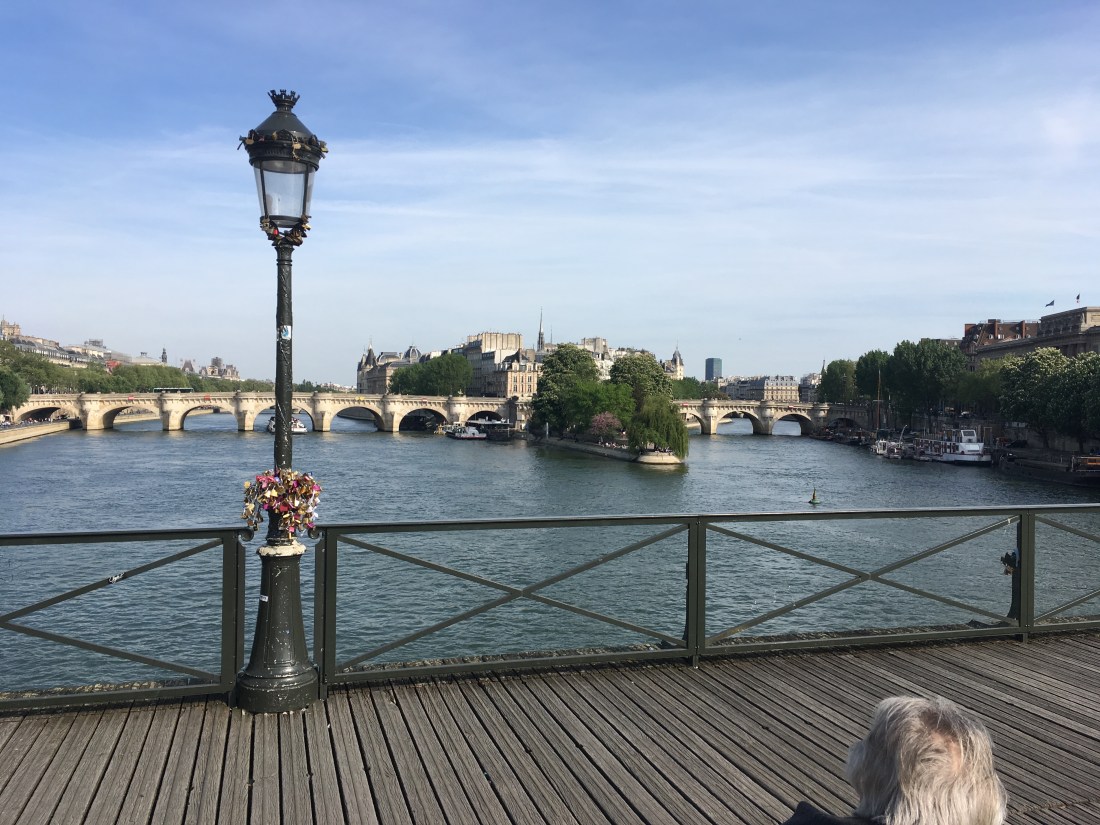
IMG_3069IMG_3079


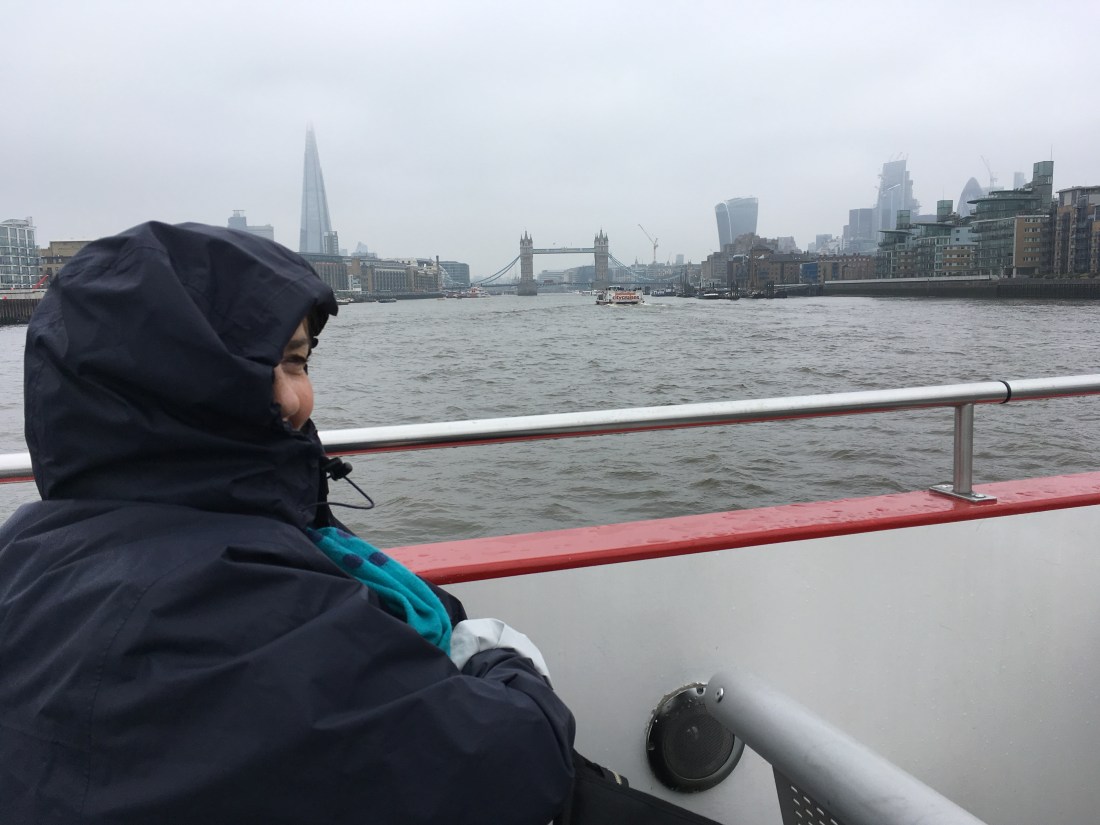
10 Full Days in London

We start by being very grateful to our generous, stylish, interesting friends, Sarah and Phil who have let us stay in their London pad which is just like them.

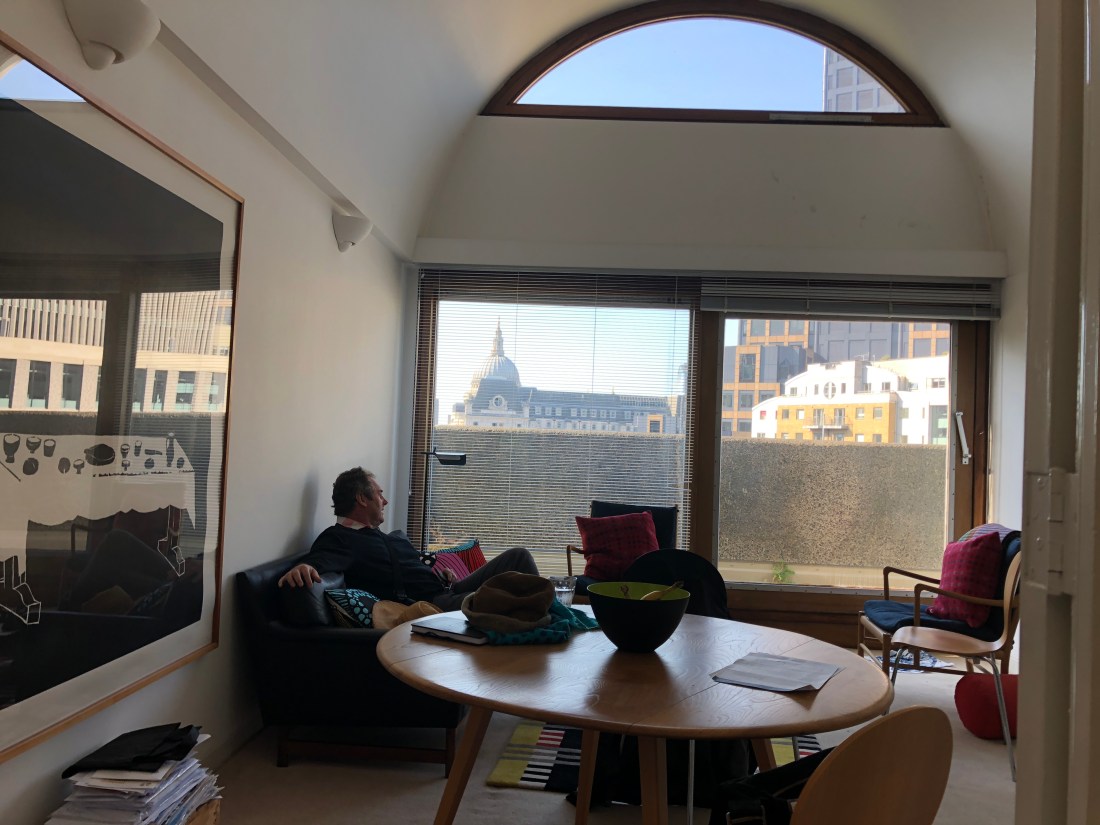
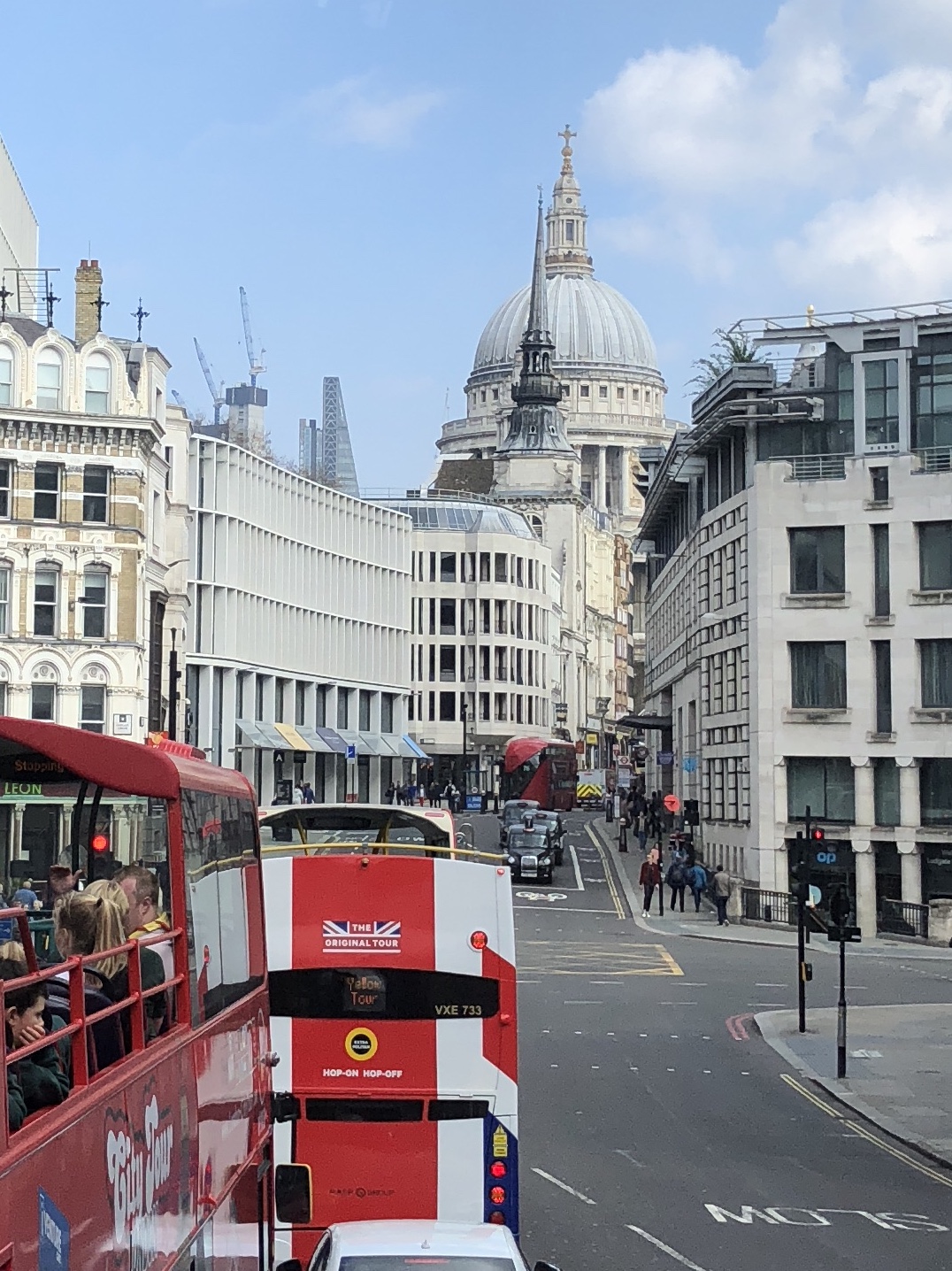
I’m writing this while looking at the view of St Paul’s Cathedral from their apartment in the Barbican.

IMG_0661
Rob takes a brief rest from constant walking

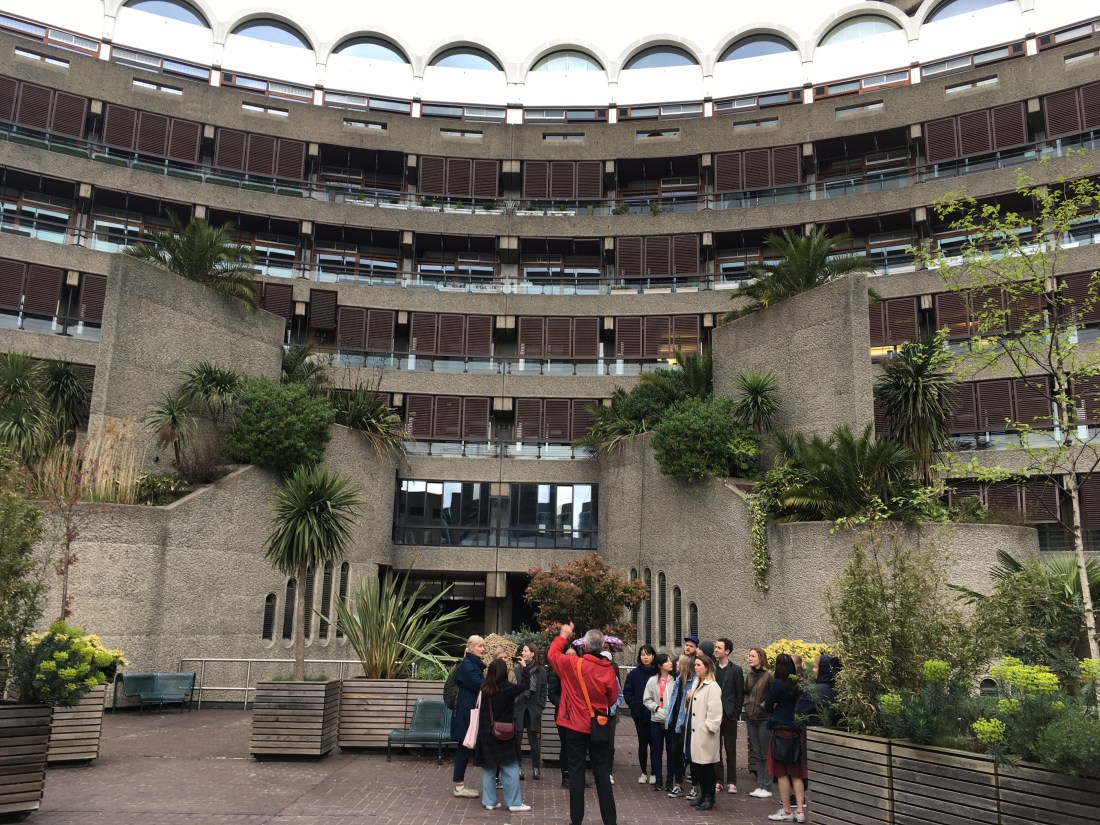
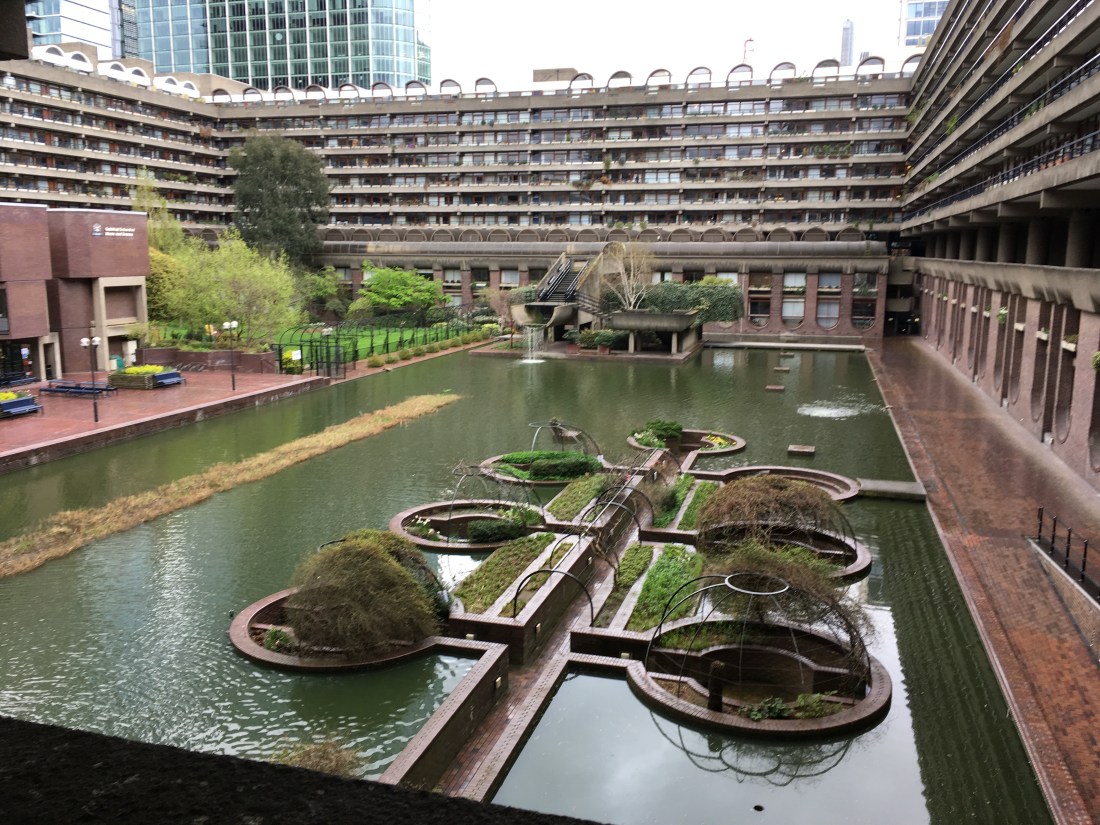
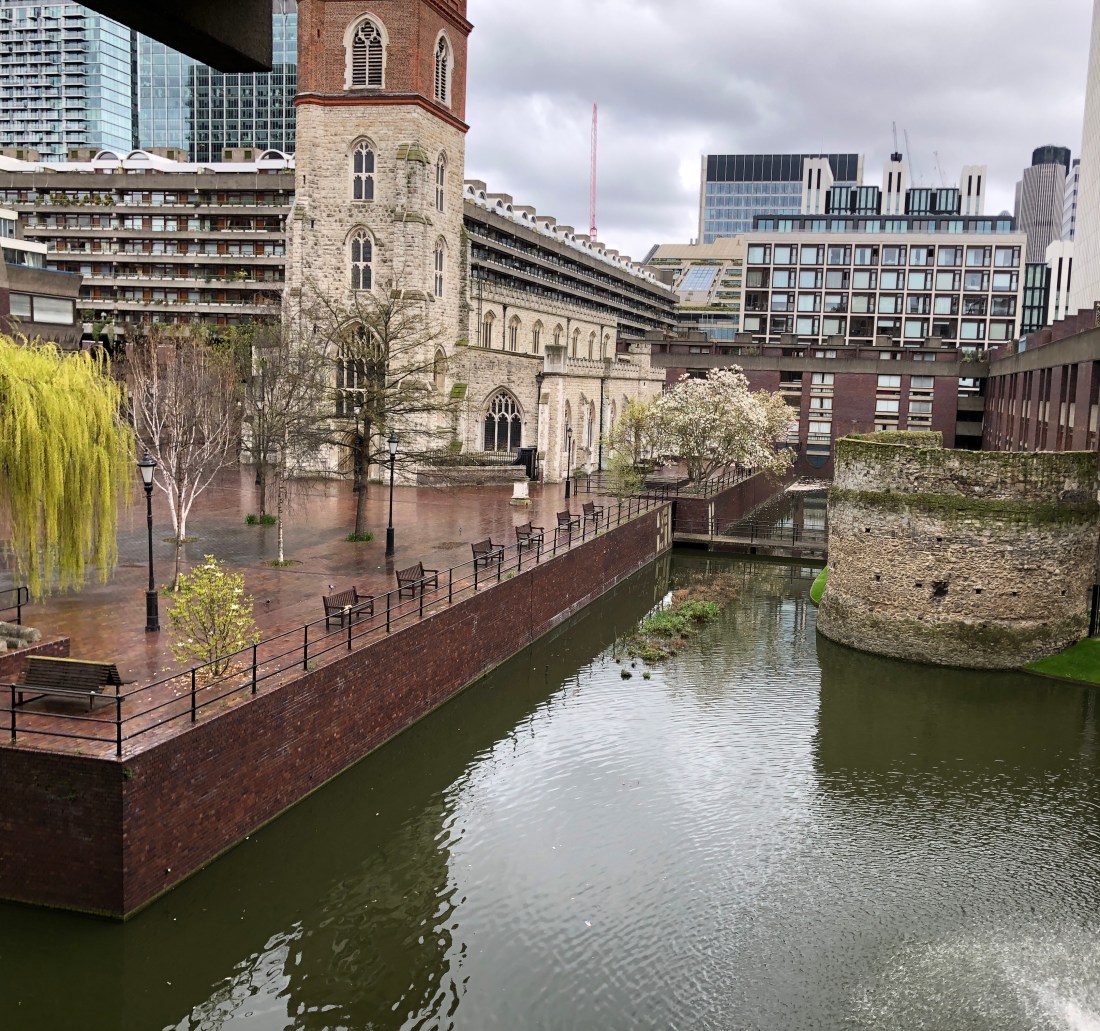
We are in the City of London’s only residential estate.  The Barbican described as a prominent example of British Brutalist architecture, it is also influenced by Le Corbusier.  It was built to house the middle-class in central London, including an arts centre, a kind of utopian paradise,  in an area just near St Paul’s Cathedral that had been bombed in WW2.  But that’s recent history.

IMG_2741
On an architecture tour of Barbican led by resident the lovely Hugh Smith

IMG_2751

What is a Barbican?  barbican is a fortified outpost or gateway, such as an outer defense to a city or castle, or any tower situated over a gate or bridge which was used for defensive purposes.

As you walk around the Barbican you see remnants of  The Roman Wall.   “From its earliest foundation the Roman city of Londinium was almost certainly surrounded by some kind of fortification. As well as providing defence, the construction of a stone wall represented the status of the city. Using the evidence of excavated coins, archaeologists have dated the construction of the first stone city wall to between ad 190 and 225. 

The wall was about 4km (2.5 miles) long, enclosing an area of about 134 hectares (330 acres); it originally included four city gates with an additional entrance into the legionary fortress at Cripplegate.

IMG_0638
Part of the Roman Wall and St Giles Cripplegate Church

We arrived in London, Alex’s first visit in at least 25 years, and Rob’s first ever trip to Europe.  We’d missed the worst of the “Beast from the East” – though we did strike a couple of cold days as you’ll see from photographs.

It was the week that Donald Trump and Theresa May announced they were going to send missiles into Syria.   The thought of missiles being fired  reminded us we are staying on a reclaimed bomb site from the second world war.

London feels so familiar, so many places and accents from TV and the movies, the children’s picture books and nursery rhymes, the history we’re taught, and the stories that come through the music that we have grown up with, not forgetting the Monopoly board.

It took reading the brilliant talk by Richard Flanagan at the National Press Club to remind us of our own history.  He was lamenting the terrible bleakness in our present National leadership but his talk offered hope:

And yet if we were to have the courage and largeness to acknowledge as a nation both truths about our past, we would discover a third truth, an extraordinary and liberating truth for our future, about who we are and where we might go.

We would discover that though this land and its people were colonised, a 60,000-year-old civilisation is not so easily snuffed out. And the new people who came to Australia, in their dealings with black Australia, were also indigenised, and, in the mash up, Indigenous values of land, of country, of time, of family, of space and story, became strong among non-Indigenous Australians. Indigenous ways, forms, understandings permeated our mentality in everything from Australian rules football to our sense of humour.”

https://www.theguardian.com/australia-news/2018/apr/18/richard-flanagan-national-press-club-speech-full-politics-black-comedy

Richard’s speech was beautifully timed for us as all the Commonwealth leaders descended for the CHOGM just around the corner at The Guildhall.

Modern London is such a mix of people from all over the world, we often hear more French being spoken than English.  The fabulous West Indian accent which has now melded with the London accent. It’s a wonderful multicultural town.

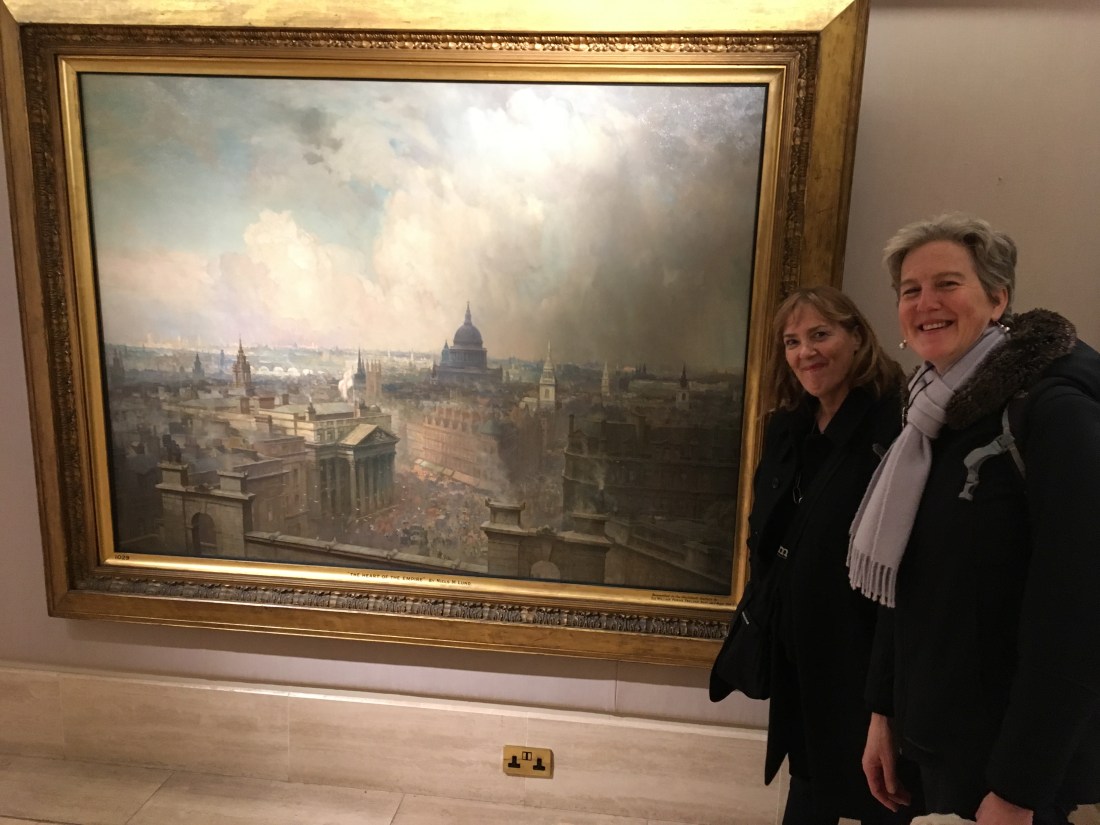
We took a “Secret London” Tour with travel journalist Sophie Campbell who met us at the Royal Exchange just opposite the Bank of England.  This 3 hour tour by Sophie really explained the workings and origins of London.  She pointed out the intertwining serpents, not the single snake seen in medical areas, but 2 snakes:  The caduceus which means trade and commerce.  She explained the guilds, or Livery Companies of London which still have enormous power today in terms of voting rights for the local City of London council. The City of London is the little square mile, about 7 thousand people, not Sadiq Khan’s patch who is Mayor of Greater London representing millions of people.


IMG_0564
The Royal Exchange
IMG_2673
On the secret London tour at the Guildhall which sits on top of a Roman amphitheatre. This area has always been and remains the financial centre.

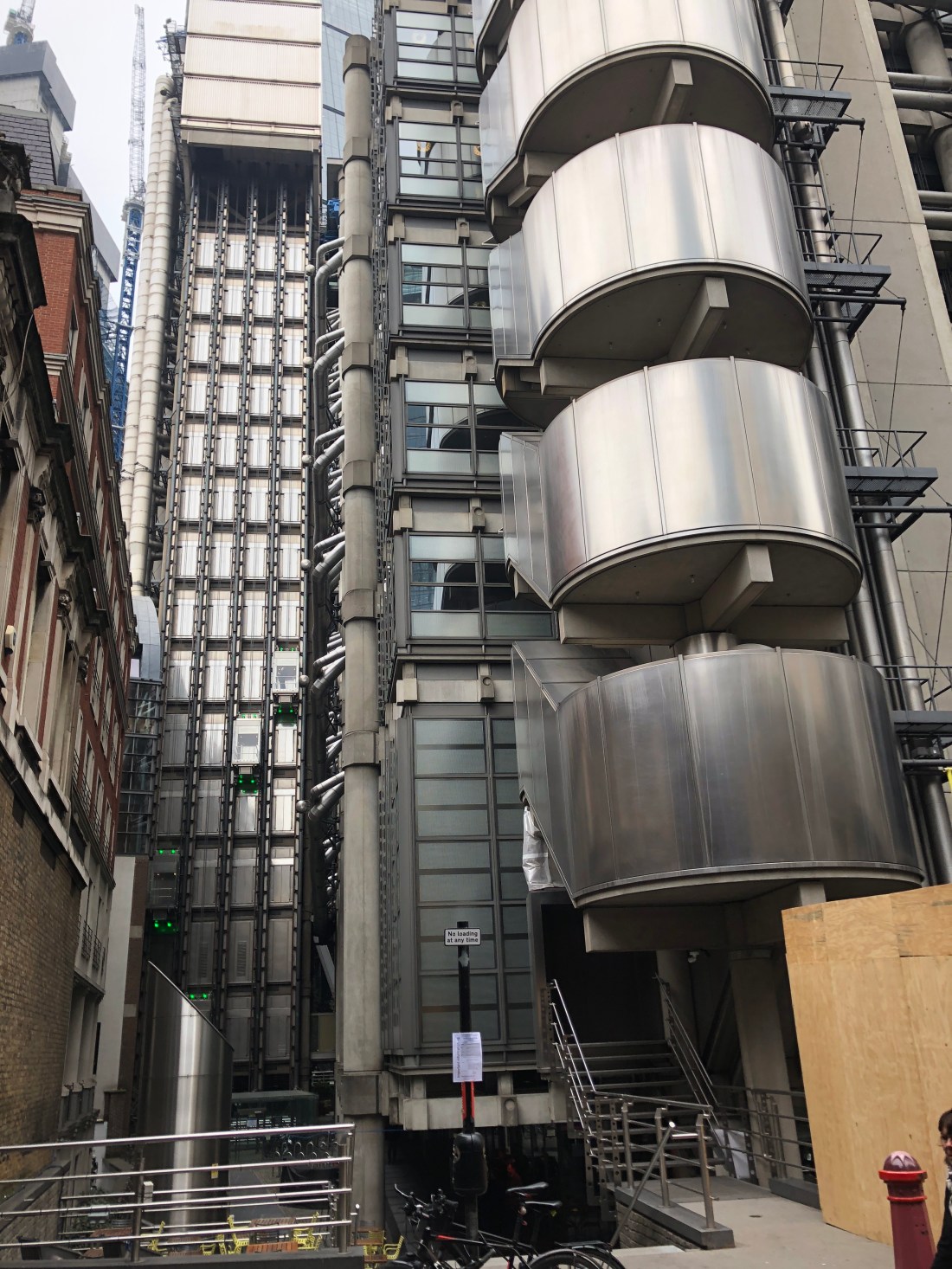
Sophie ended the tour by taking us to the modern money making centres: The Bloomberg Building (an outstanding example of sustainable design) also Rothschilds and Lloyds of London.  Her point:  this is the real power and heart of London, it’s not the royals, in fact symbolically the Queen must gain permission to enter the city of London.

IMG_0583
Lloyds of London Old Money New Architecture

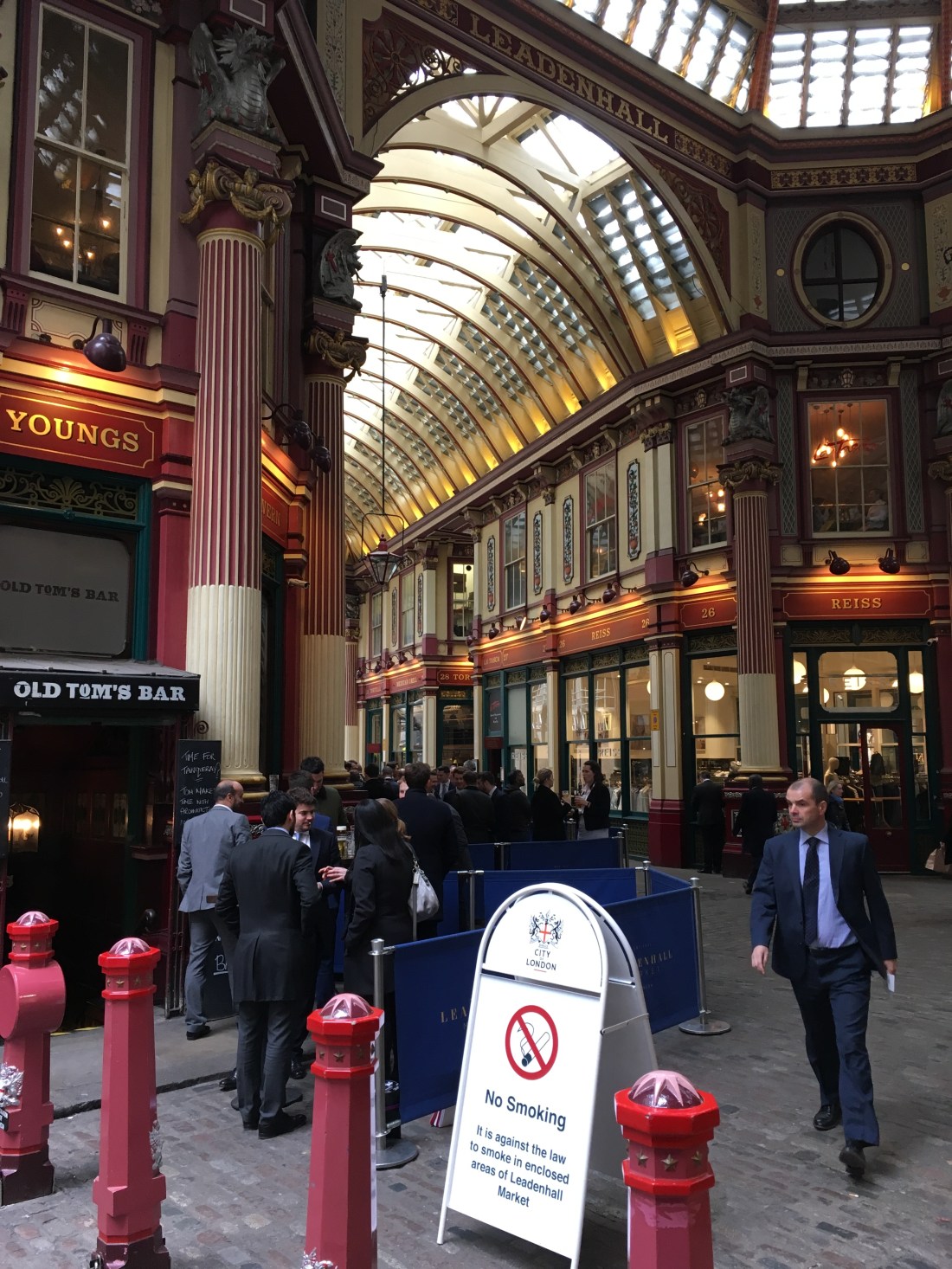
She left us at the Leadenhall Poultry market and the story of Old Tom the Goose born in 1797,  who had escaped slaughter by flying up into the rafters of the market place and refusing to come down – he lived to the ripe old age of 37. When he died of natural causes he was buried on the market site.

So beloved was Old Tom that he even made it into the Times Newspaper!

However, you can still raise a glass to Old Tom at the market in the pub which bears his name; Old Tom’s bar.  We had a soda water and ploughman’s lunch which did include smoked duck, but not Goose.

IMG_2684

IMG_0585


The other big international news while we’re been here has been about Facebook and the inappropriate use of personal data.  Mark Zuckerberg has been appearing before Congress.  A lot of  people are now are openly talking about deleting Facebook, but many of them can not quite bring themselves to do it.  It’s not just that we’re addicted, it can be such a good thing.

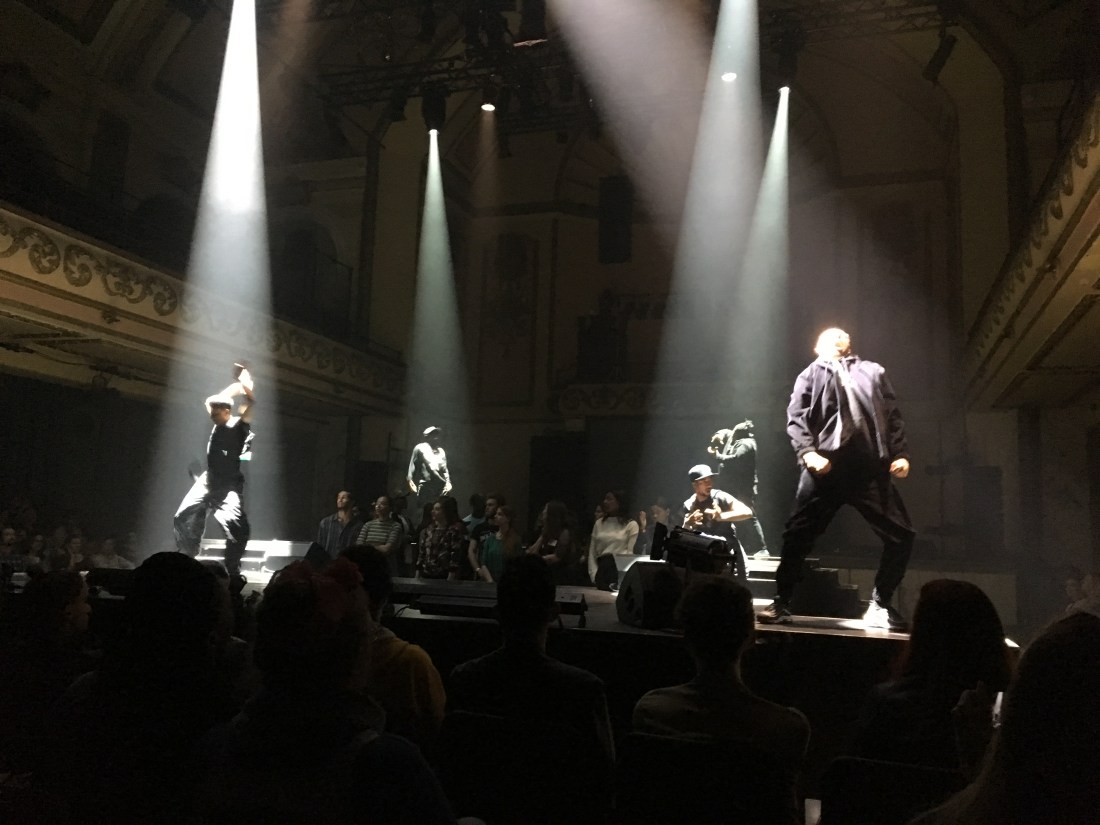
Within four days of us being in London, Rob had started to gather information on events nearby.  There is so much going on in London, and how would you possibly choose something that would be to your liking?  How do you avoid the tourist traps?  One invitation seemed interesting, to experience the alternative and underground forms of dance, style and musical expression of East London Dance’s “IDENTITY” .  This infused hip hop, breaking, voguing, krump and waacking, some of which we’d never heard of.

Again using the iphone we figured out the right bus to catch

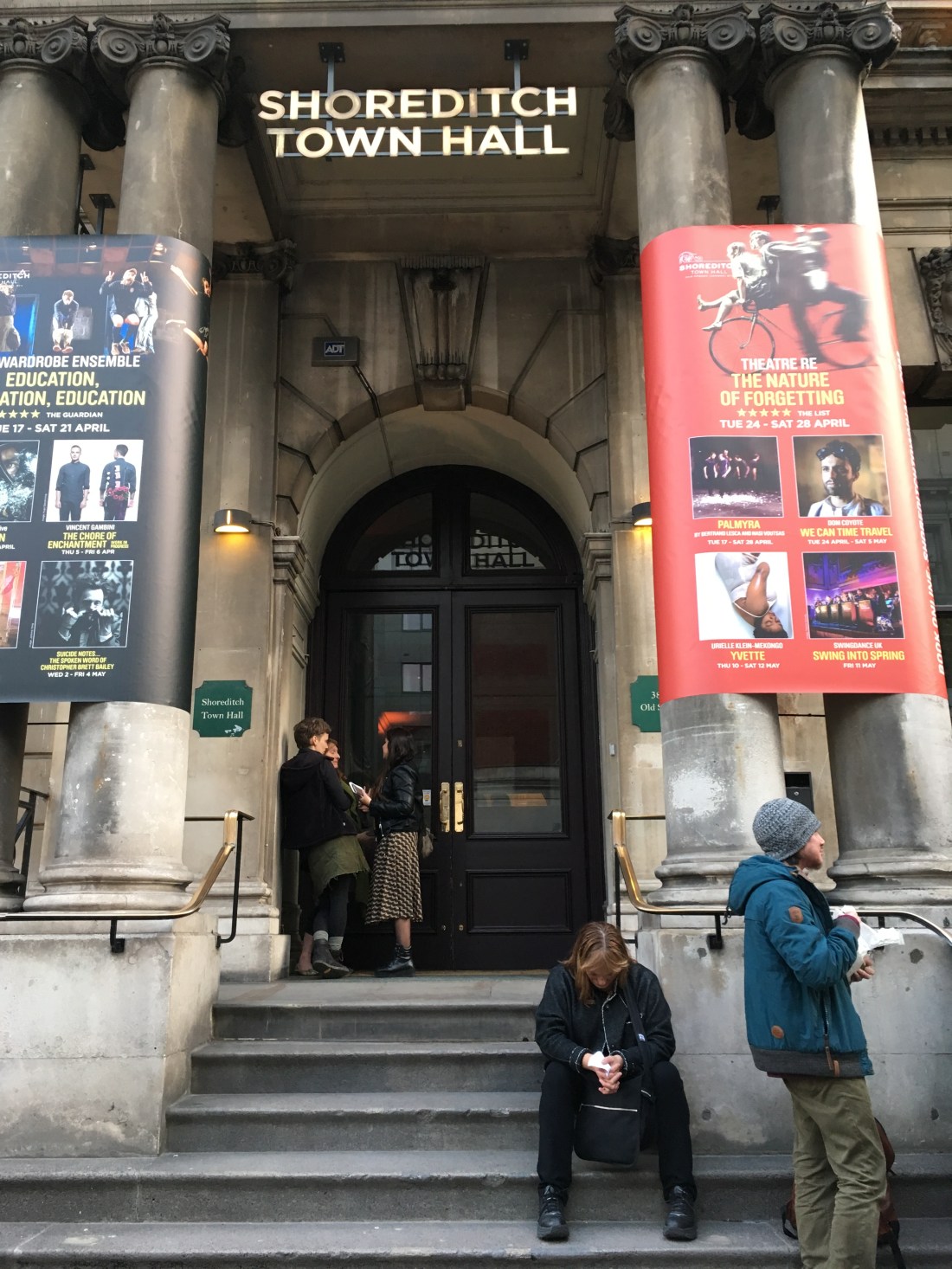
A collaboration East London Dance Groups and Shoreditich Town Hall, a building no longer used as a town hall following Council amalgamations, and fought hard for by the local community to keep as a public space.

IMG_2717
Alex deep in a prayer thanking her Hokas for protecting her feet.

The moment we arrived we felt like we’d arrived into a very special and diverse and inclusive community.  Without social media it could have taken months to have stumbled into such a wonderful event, and to have felt so comfortable within this group of young Londoners.

IMG_2729
All male dancers: full-on testosterone, the crowd started to cheer as if they were at the football

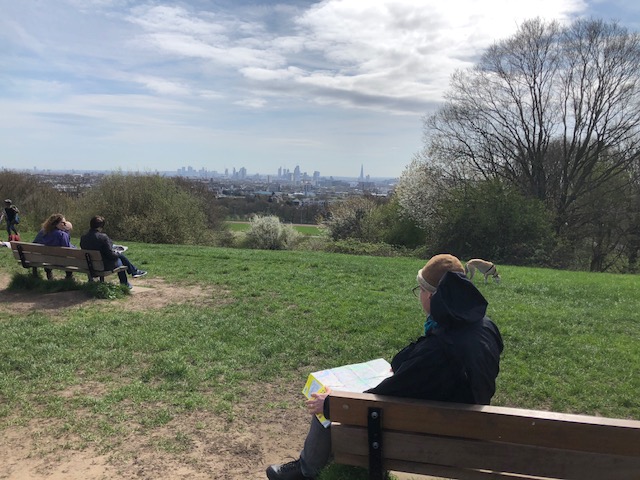
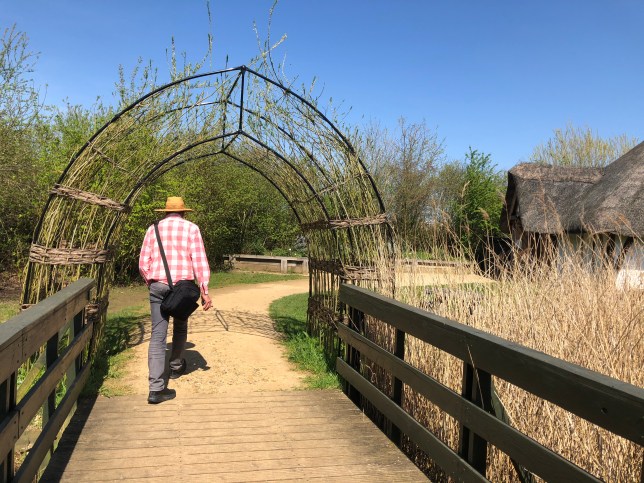
Rob loves a map, and although our 10 days remained in inner London we did extend to the edge of the map twice, both times to some beautiful natural areas. Walking on Hampstead Heath and at London Wetlands

IMG_0657 (1)
Parliament Hill at Hamstead Heath gives a great view overlooking the city to the south
IMG_0670
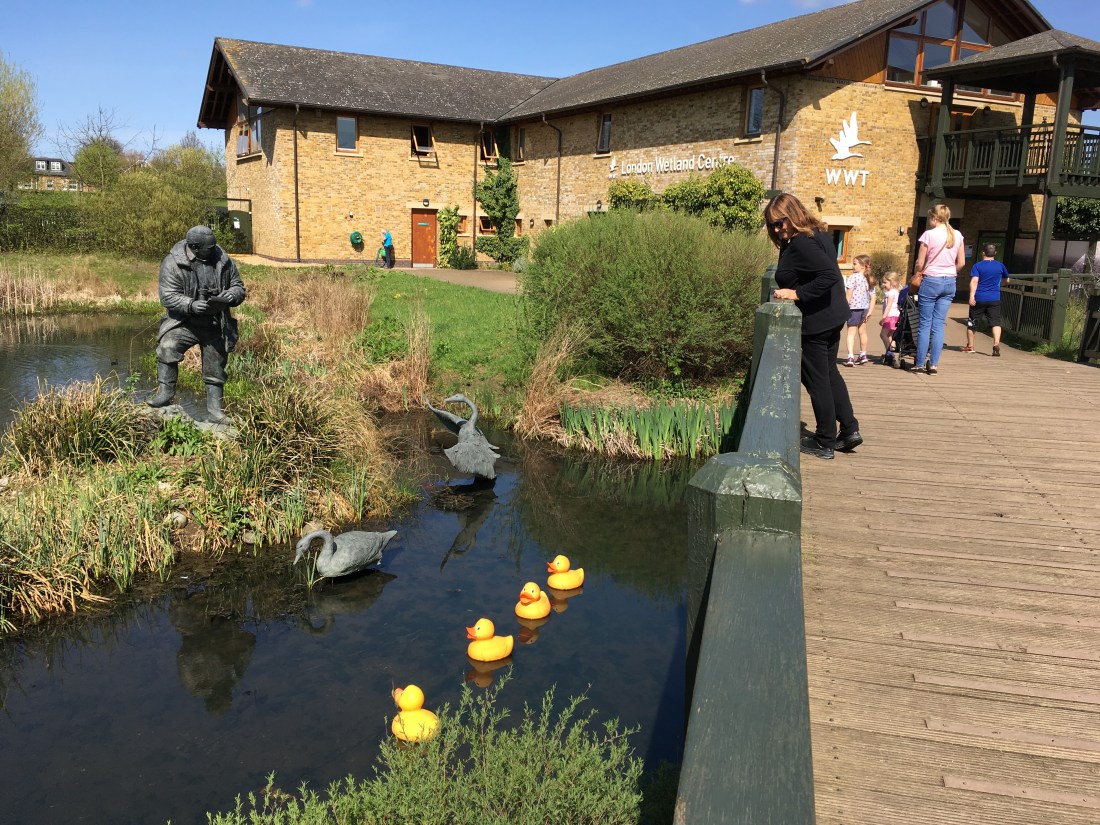
The London Wetlands adjacent to the Thames River upstream of London

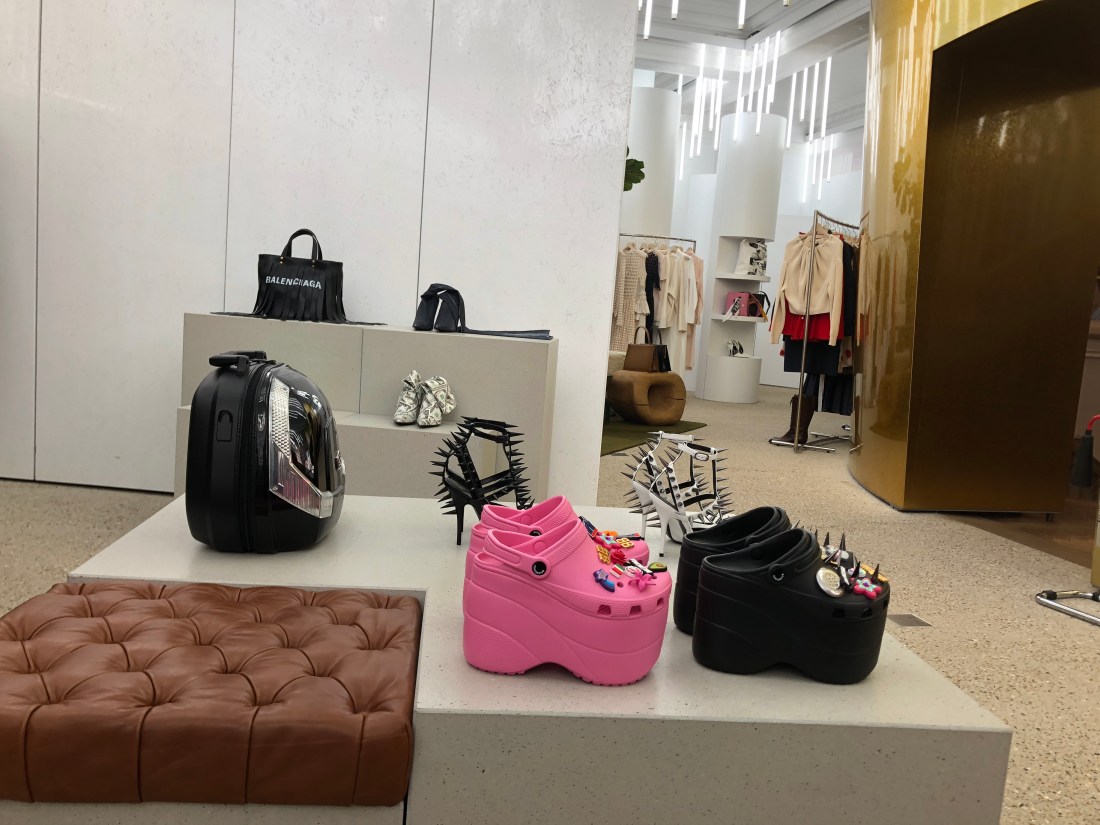
And just in case you think Crocs are “so last year” – these were for sale at the very cool Dover Street Markets

IMG_0683
Dover Street Markets 

We watched a couple of grand old people talk about trees in David Attenborough’s The Queen’s Green Planet.  It was charming but also some soft diplomacy from the Queen on Climate Change.  Beautifully Prince Harry made a joke about the fact that travels the world planting trees, but then turned the conversation to say he couldn’t think of a more important thing to do.  It was a lovely show.

Sadly her corgi Willow, the last in the line of corgis she’s bred since she was 18 died while we were here.  As dog lovers we send our condolences.

IMG_2666 (1)

IMG_0560
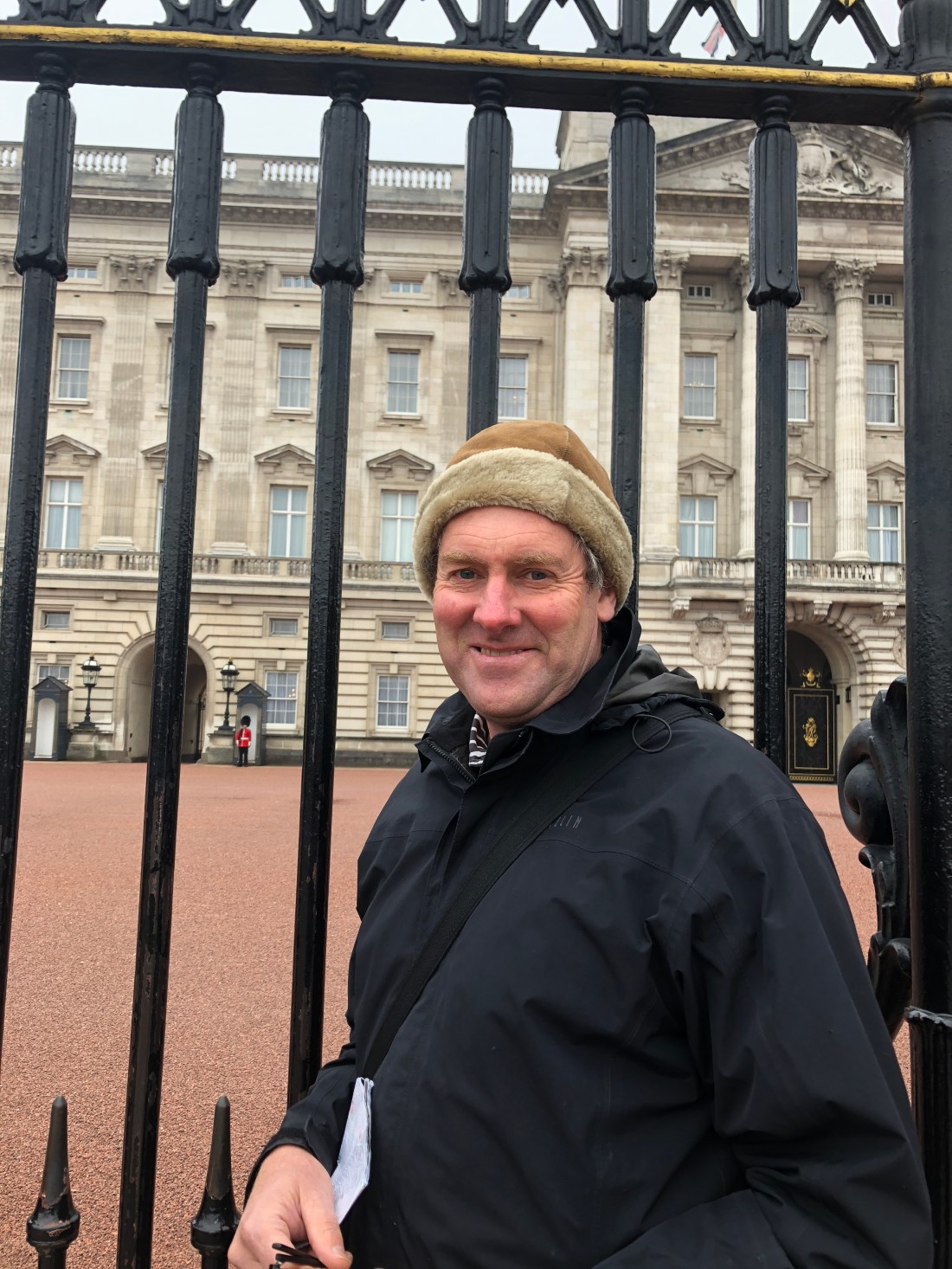
Furry hat competition

Other random pics


IMG_0648
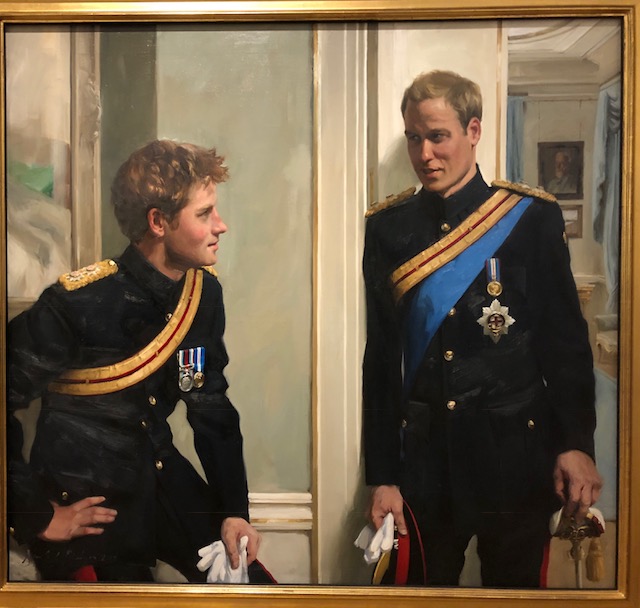
National Portrait Gallery
IMG_0644
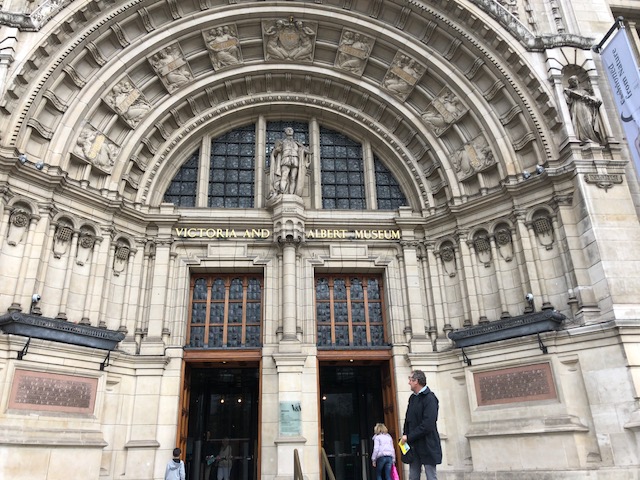
Rob now very keen on decorative arts
IMG_0675
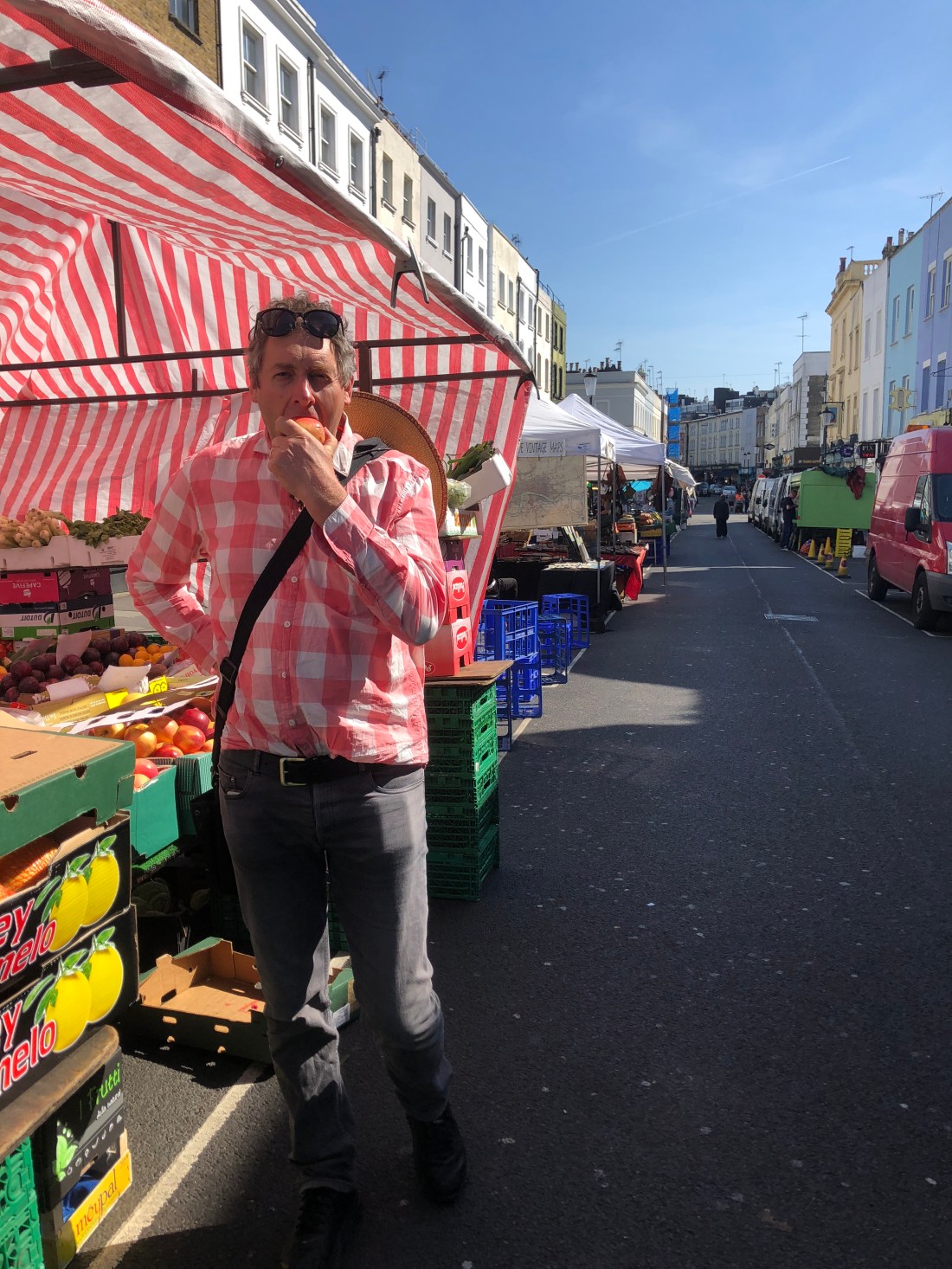
Portobello Road markets Notting Hill
IMG_2821
London Wetlands a statue of Sir Peter Scott
IMG_2652 (1)
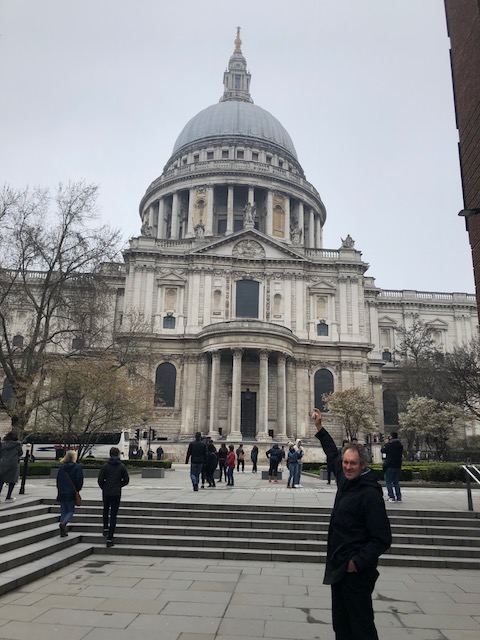
We climbed as high as you can go on St Paul’s
IMG_0527
Yes, right up there

IMG_0608

IMG_2662.JPG
It was cold
IMG_2799
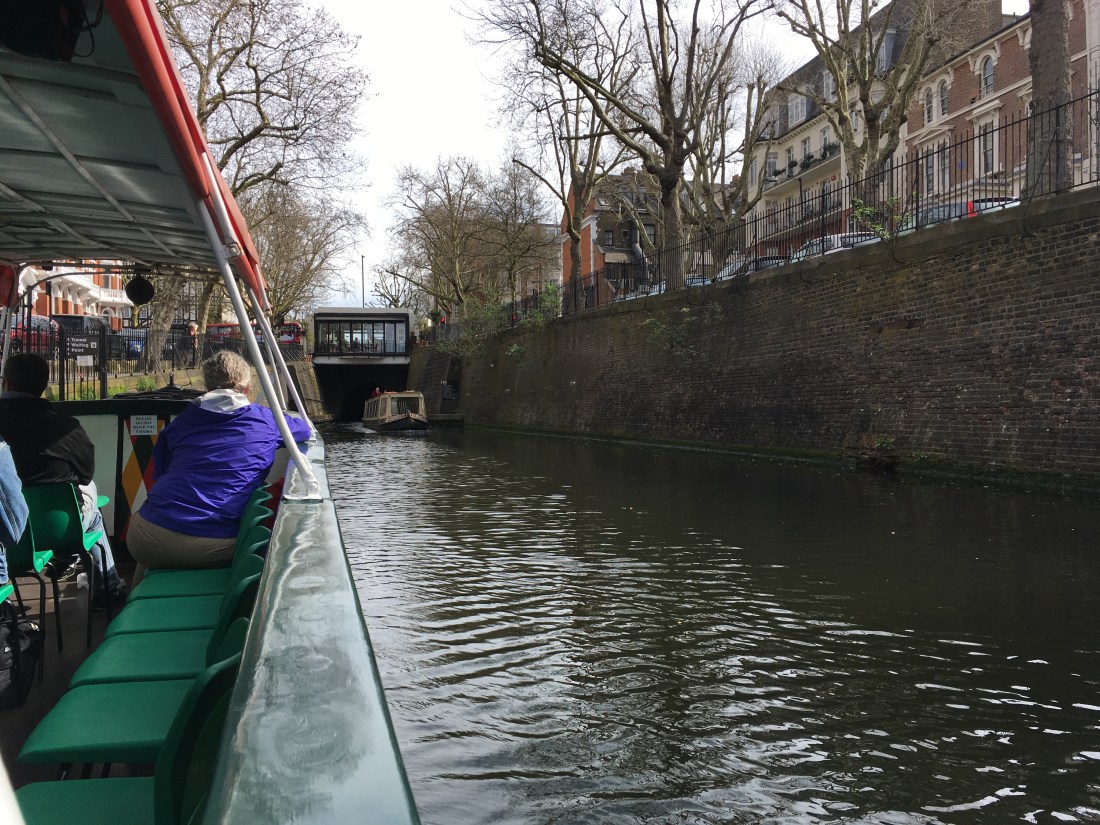
But sun came out for our canal ride on “narrow-boat” Jason to Camden Markets

Singapore today, London tomorrow!

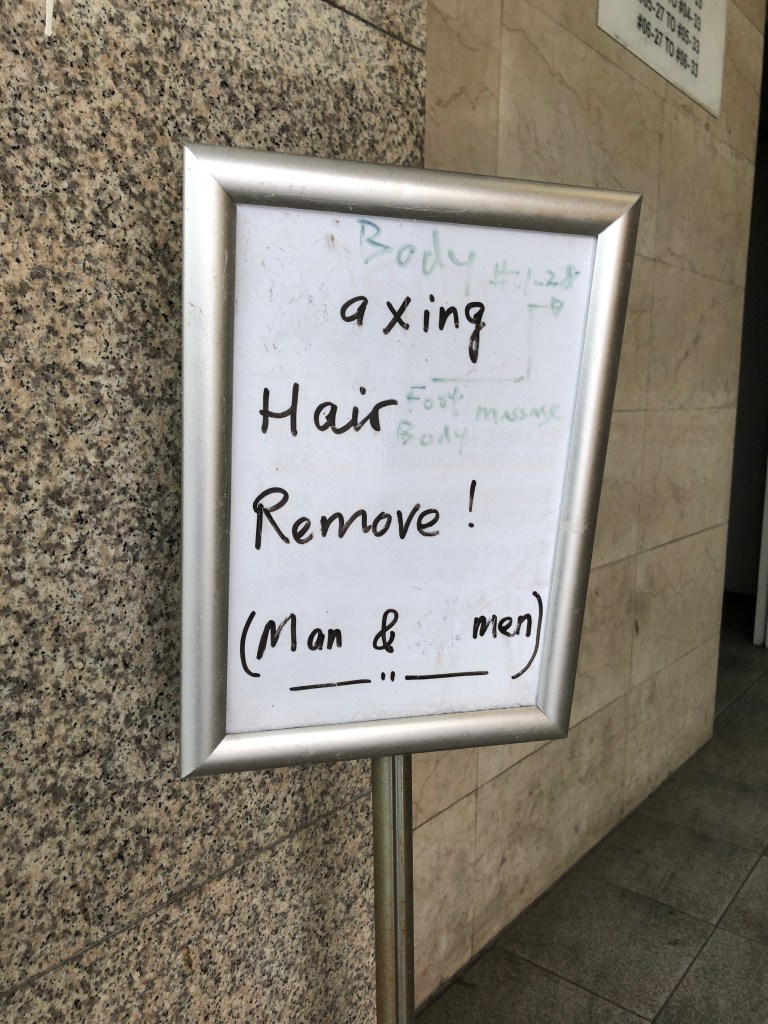
Hot, fragrant, green, swept, imaginative and a stickler for rules.  One of the signs I noticed said: “Safety rules, they’re like your rice bowls, don’t break them” .  I also noticed this slightly alarming street sign:

IMG_0482

We bypassed the “axing” and hopped on the Hippo bus to get our bearings in this interesting city.

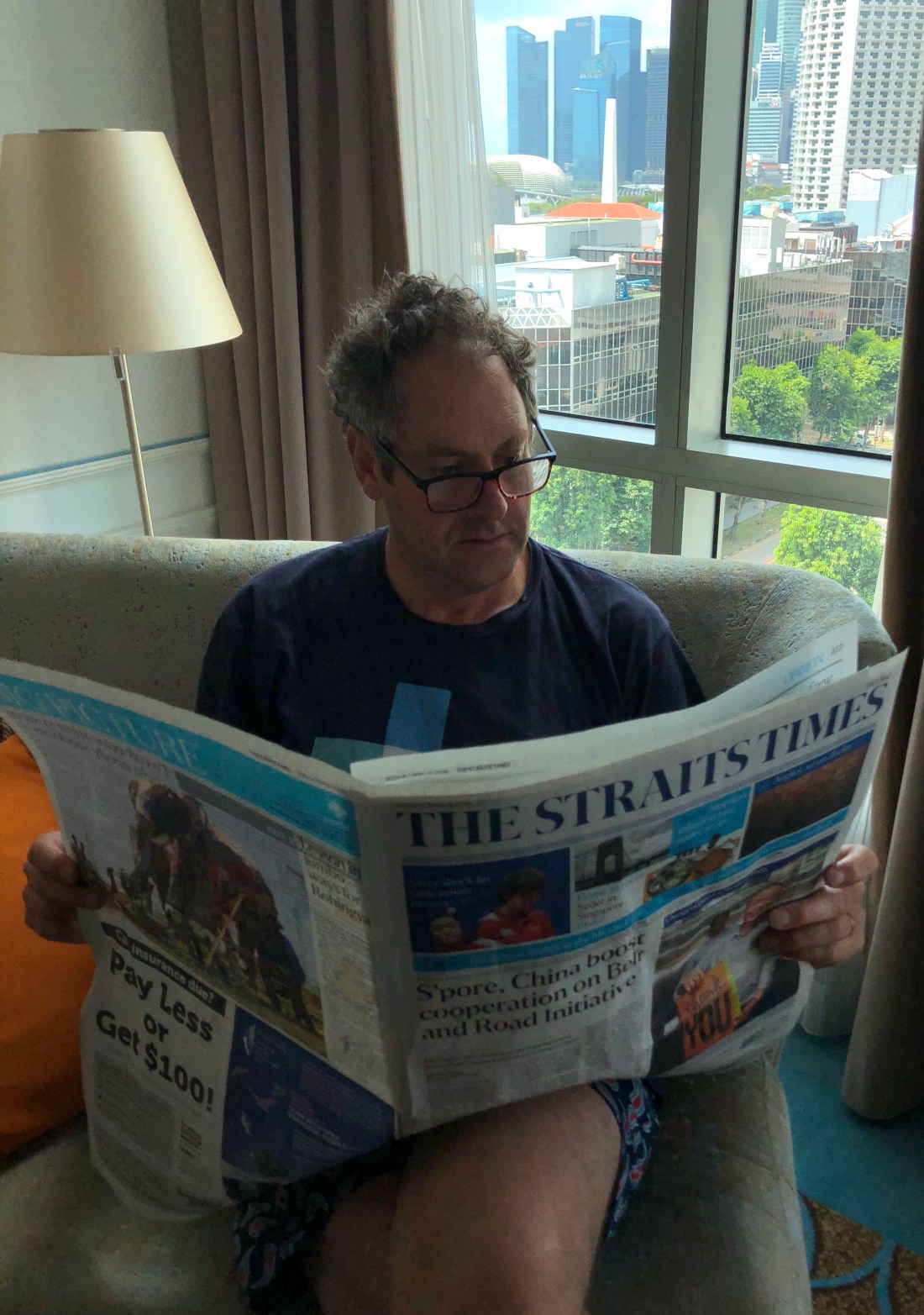
Rob started his day by reading a pretty decent broadsheet newspaper.

IMG_0488

The Straits Times felt like a refreshing quality broadsheet after what we’ve become used to in Australia, with some interesting local news but also solid international reporting and some really good articles addressing the bigs issues.  There’s been a fake news hackathon for tertiary students to come up with ideas to improve fact checking, a collaboration between the Ministry of Education, several Singapore Universities, the Media Literacy Council at the Google Asia-Pacific office. There was a challenging piece on the new rules of data capitalism, is it time for a “data tax” on platforms like Google and Facebook, as the traditional business model for supporting quality journalism becomes obsolete?

There was even a sad reminder of our desolate politics with an article of Malcolm Turnbull’s Liberal Party trailing in opinion polls for the 30th time. Is that really all we have to offer as a nation?

Another article on the challenges of the US’s ageing infrastructure where they are not even able to maintain existing roads and bridges, let alone build for the future because no one dares to raise taxes.  Sounds familiar? As we headed off on our hop-on hop-off bus tour of Singapore, that contrast couldn’t have been starker.  Here there seems to a pride in investing for the common good, from modern and efficient public transport to the quality of the “green infrastructure” – the trees and gardens that permeate the city.

There was some interesting commentary on the bus, including the relatively orderly traffic. They have a world first computer based system that charges motorists according to the distance travelled and the time of use which raises an enormous amount of revenue.  They invest a lot in public transport to discourage car use. They also have a quota limiting the number of cars on the road, the permit only lasts for ten years, explaining the modern car fleet.  Would we ever be able to open a discussion on such an approach in our home town of Canberra, the city of the car?

There were some amusing moments in the commentary as well.  We drove past a park that was modelled on Hyde Park in London, including a speakers corner.  Apparently you need to get a police permit to speak, so needless to say there are never any speakers.

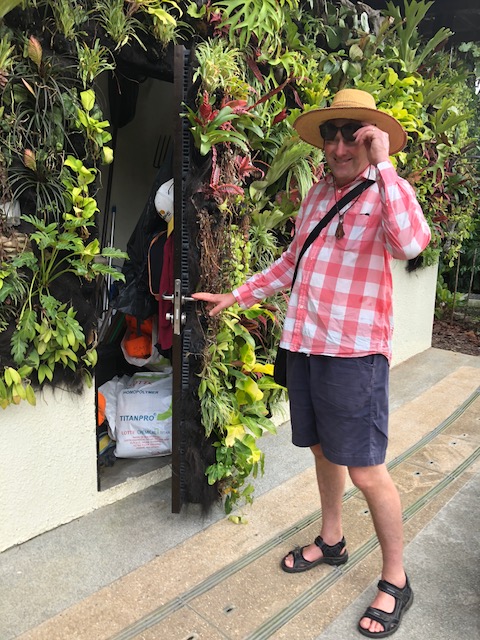
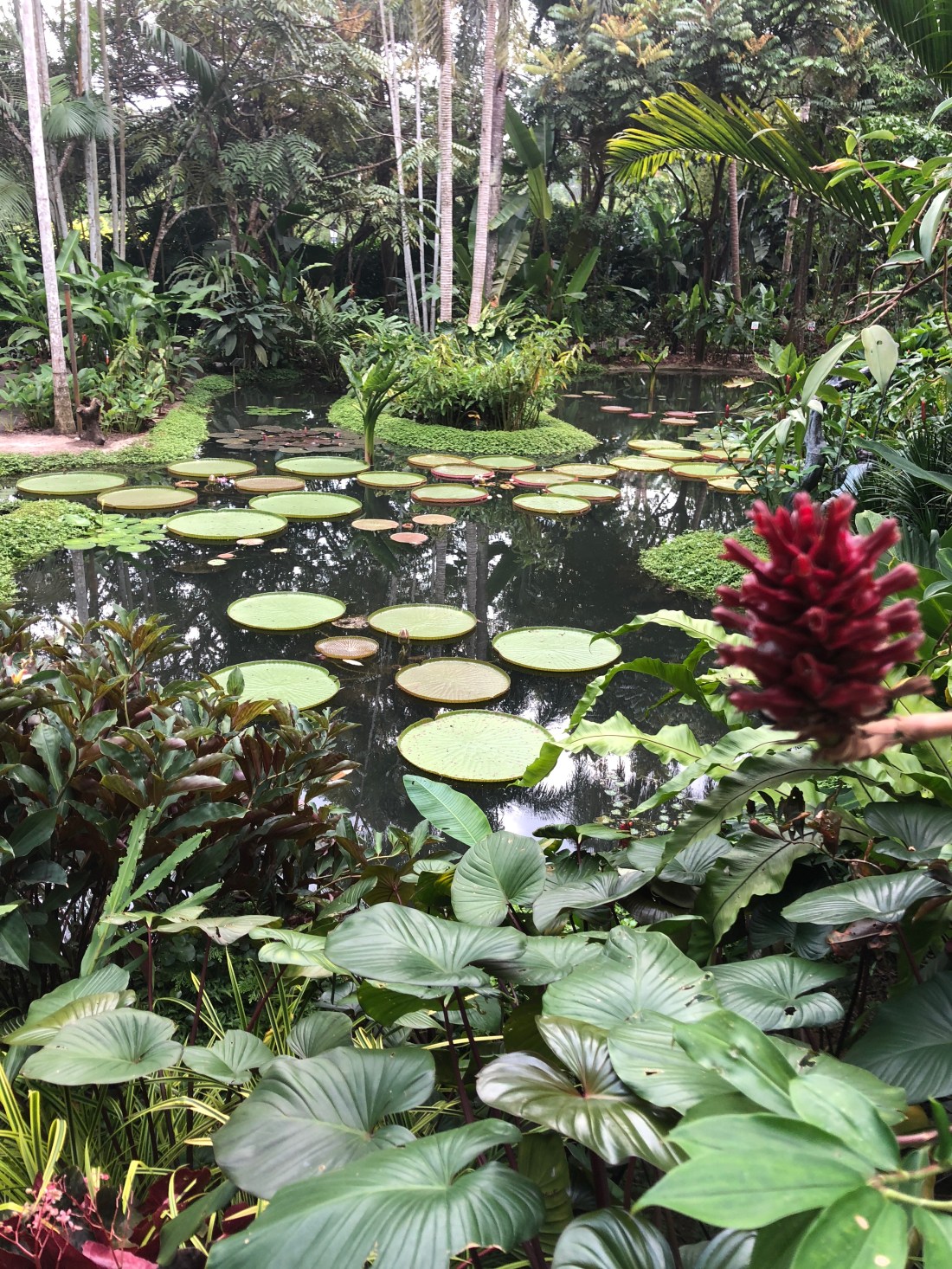
The greenery and gardens are incredible.  We loved the Singapore National Botanical Gardens, a World Heritage site.  Even the tool sheds are green.

IMG_0508

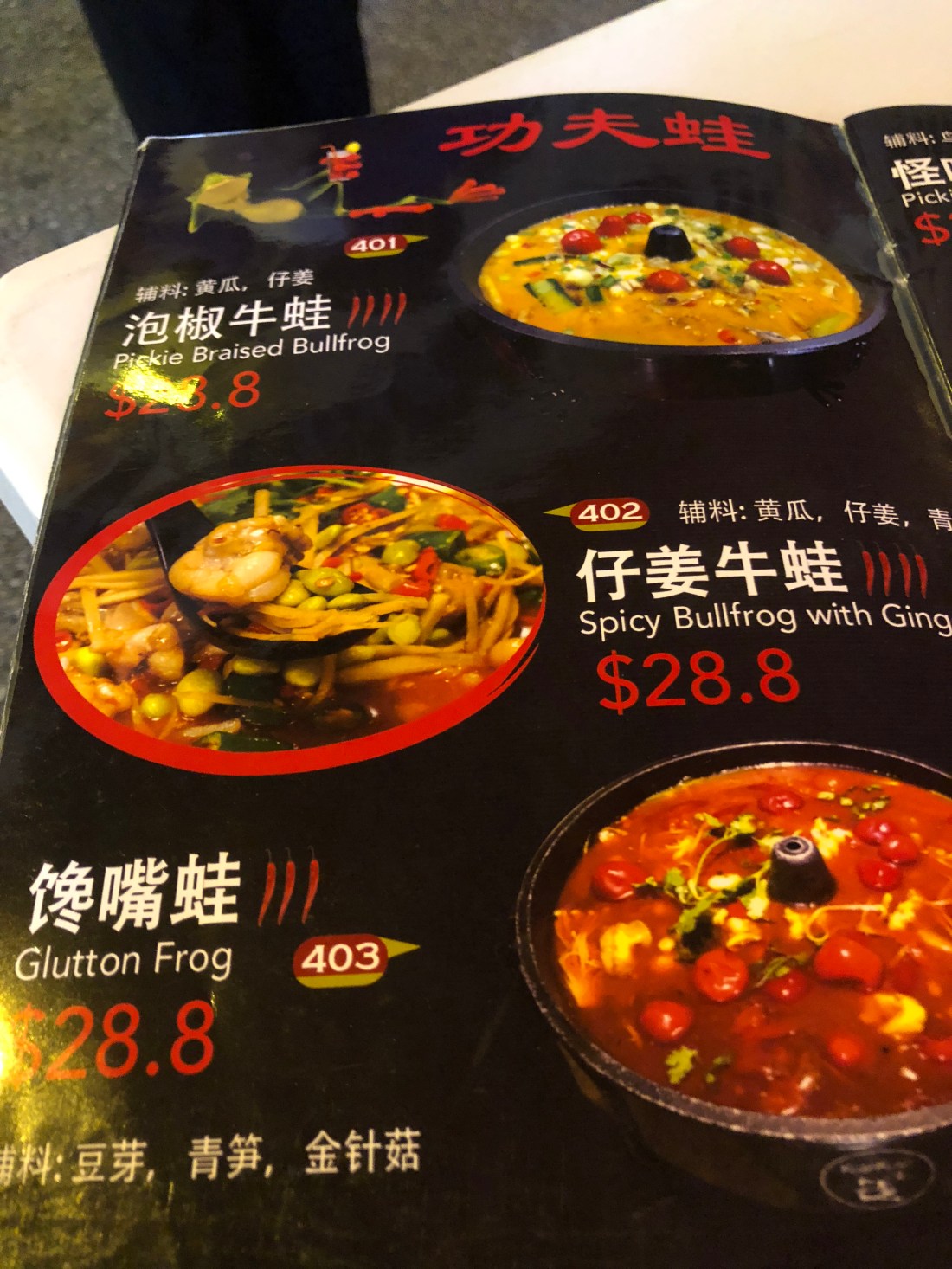
I still worry about the frogs which seem to be on most menus!  Perhaps some safe shelter for them at the Botanic Gardens.  Is that Jeremy Fisher I hear?

IMG_0511

IMG_0464

Talked to an interesting young woman working at Naumi Boutique hotel, directly opposite Raffles Hotel which is still undergoing a major renovation.  She had studied at RMIT in Melbourne and missed out on getting a Permanent Residency in Australia.  I commented that she had a good job and lived in a great place and she said “But Singapore is so stressful, it was much more relaxing in Melbourne”.

IMG_0481

IMG_0462

Reflecting on Canberra’s identity

Canberra’s Identity.  In March this year Alex was asked to give an address on Canberra and Identity at the ANU.

I thought I might throw my speech up on the blog on one of our last nights in Canberra for 5 months.  Have a read if you have the time, or just look at the pics!  xx

A very good morning to you – I’ve been asked to talk about Canberra’s identity which is a pretty big topic.

If I wanted to start with all the clichés, I’d talk about politicians, public servants roundabouts, …but let me park those.  Actually speaking of parking it’s said that Canberrans expect 3 car parks, one at home, one at work and one at the shops.  Another friend, who is Sydney based but spends quite a bit of time here, says he finds Canberra to be a strange mix of public servants, academics and ute-driving tradies wearing fluoro.

IMG_4399
Renowned Danish architect Jan Gehl in Old Braddon, note tradies in fluoro

Canberra’s identity goes back tens of thousands of years with indigenous people.  I am not qualified to talk about that deep and complex history, but I take this moment to acknowledge indigenous people, their custodianship of this land then and now.

Canberra as our national capital is the only capital city in Australia that is named with an Aboriginal word.  Some people claim it is a derivative of Ngambri, after some of the first inhabitants.  So Ngambri, Canberry,  the meaning conjectured to be either meeting place or the cleft between a woman’s breast.  While there is ongoing debate about the meaning, we do know the name possibly stretches back tens of thousands of years. Personally, I’m glad our city has an indigenous name.

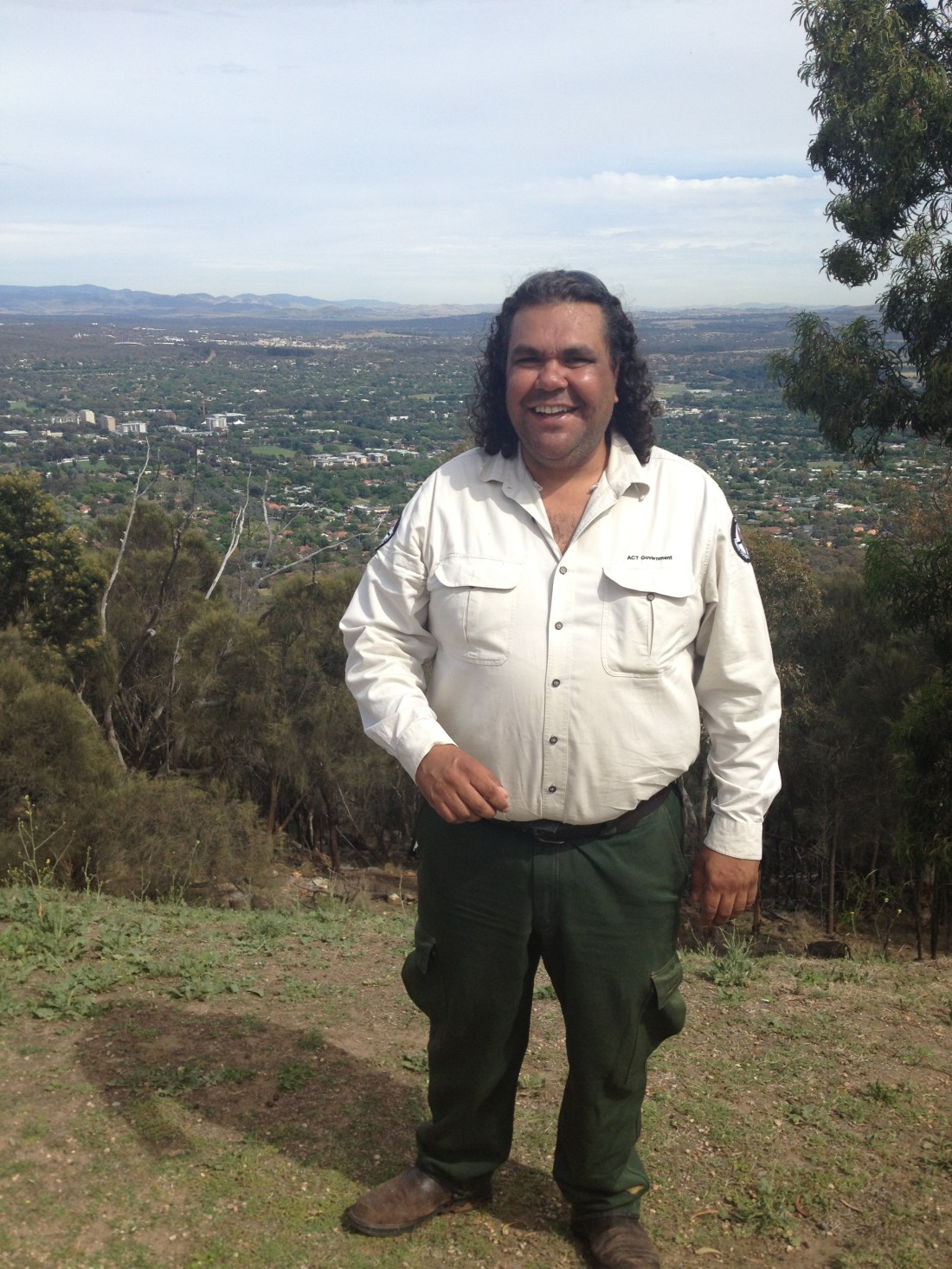
And just one final point about indigenous history, talking to a young ACT public servant who grew up in South Africa, he remarked he was surprised that he was told very little about indigenous history and issues in his job induction.  He felt it is a huge gap and I think he makes a great point.  If we have moved towards acknowledgment of indigenous custodianship, then we should keep moving to dig a bit deeper and learn some more. We’ll all be a bit richer.

I am really just qualified to talk about my own experience of Canberra and why I love living here.

I came to live here in my mid 30s, met my husband and had a beautiful daughter who now tells me she’s pretty keen to get out of the place.  I think that’s healthy, but I predict she’ll be back.  She moves freely around this town and in preparing for overseas travels, as part of her gap-year, has managed to find 3 casual jobs all in her own home suburb.  She walks to work with the cockatoos screeching over-head and the heady smell of eucalypts.

The Bush capital is hugely important in Canberra’s identity.

The site chosen for many reasons one being the Melbourne, Sydney rivalry.  Canberra’s location was determined, in part, by section 125 of the Constitution:

“The seat of Government of the Commonwealth … shall be in the State of New South Wales, and be distant not less than one hundred miles from Sydney.”

Then there was the consideration of water, inland location and climate.

While we are experiencing a warming climate over a 100 years later, it is argued that the frosts and cold of Canberra’s winters were one of the reasons this location was chosen.  “King O’Malley famously said, in defence of Bombala as the national capital … that ‘The history of the world shows that cold climates produce the greatest geniuses.

Perhaps we can read into that a bit of racism, or at very least geographical bias.  It is an unsubstantiated slur that it’s lazy and not very bright people who live in warmer climes by the coast.

But for me, the climate, the location and the way the Griffins so brilliantly linked the hills, are some of things I love about Canberra.  I was once on a panel at a Walkley Journalism function, with journalist and writer Paul Daley and marvellous cartoonist Geoff Pryor.  All of us, unprompted, started talking about our favourite walks in Canberra.    We have such easy access to beautiful bush walks, on hills and ridges and following the water. If you live in the Gungahlin suburb of Forde there is Mulligans Flat where you can walk amongst the bettongs, quolls and hear the startling cries of the bush stone curlews.   Taking a “Forest Bath”.

Recent research finds landscape and walking are crucial for the brain.  A walk in the park may soothe the mind and, in the process, change the workings of our brains in ways that improve our mental health. The Japanese have taken to what they call “Forest Bathing”, to lower heart rate, blood pressure, enhance hormone production.  It’s really is just a walk in the bush that we take for granted.

IMG_0376
Rob “Forest Bathing” with Josie and Sophie on Mt Ainslie
IMG_4781
“Canberra Identity” Emma Pocock.  First time I met this wonderful woman, on a walk on O’Connor Ridge.

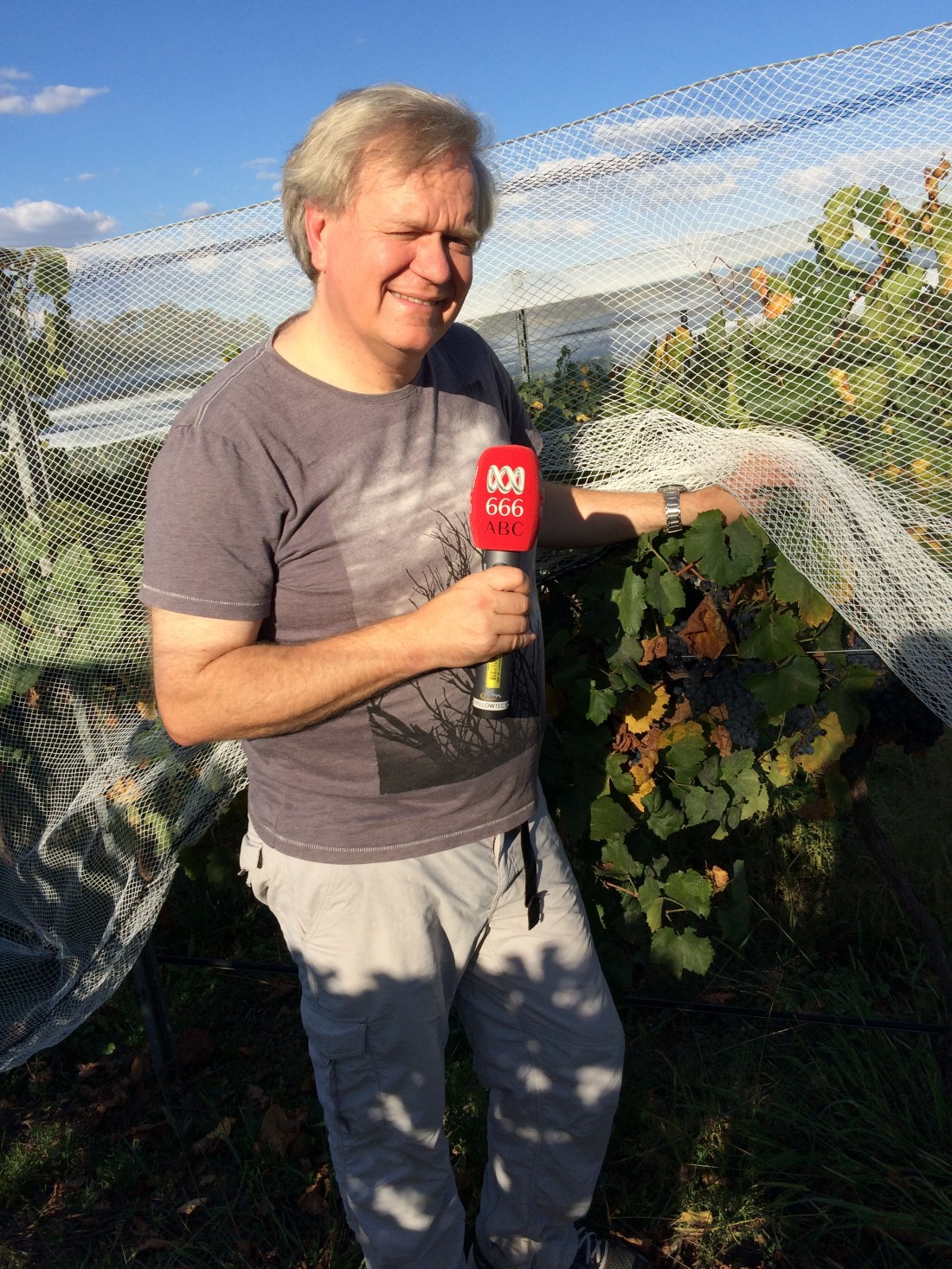
Think about the air quality here, the fact our street lights are a bit on the scarce side makes it a perfect spot for stargazing.  Our role in space exploration is again part of our identity with the work done at Canberra Deep Space Communication Complex.  The Vice Chancellor of the ANU is a Nobel Laureate for his work on astronomy. (He’s a passionate local wine producer).

IMG_4454
ANU VC Brian Schmidt, without the Kangaroos

So these are the physical bones of the place.  But also when people ask me about why I love living in Canberra. ( Why do we Canberrans have to explain ourselves?  I don’t think we ask this of people in Melbourne or Sydney, Brisbane or Adelaide.  We don’t start by talking about how bad their home is and ask them to justify why they live there.  JUST ONE OF MY RANTS.)  But when people ask me why I love living here I include the fact that it’s a multicultural town.  I am lucky enough to have a number of indigenous friends in Canberra.  Most of these fantastic people have come here from other parts of Australia, from Broome, Darwin, Torres Strait Islands, Gippsland.  (Actually one Ngambri friend just called to say hi)

IMG_2512
Hi to you Adrian Brown, thanks for that walk on Mt Ainslie
IMG_3101
Fan “girl” with The incredible Aboriginal tribal dancer Djakapurra Munyarryun

I also tell people that one of the things I love about Canberra is that I have friends with diverse backgrounds.  So how culturally diverse is Canberra?

My former colleague at ABC Canberra Siobhan Heanue looked at the figures in 2016.  I’ll read you a bit of her report:

In the 1911 Census, 179 people in the Federal Capital Territory said they had been born overseas, just 10 per cent of the population. The majority of this group were born in Britain and Ireland. Only 10 people indicated a birthplace outside of Europe.

By 2011 there were 180 different countries of birth represented. Countries in Asia accounted for more than 39 per cent of people born overseas

Just under 45 per cent of all ACT residents said that either their mother, their father or both parents were born overseas.

I have been lucky enough to witness the work of a volunteer group Canberra Refugee Support which is run mainly be retired public servants who want to ensure that newly arrived refugees are welcomed and given help to settle into our community.  Every year they hand out modest, but no doubt vital, education scholarships to an astonishing array of people.   Last year in the beautiful ceremony, in which families are encouraged to come wearing traditional dress,  53 scholarships were handed out.   There were Karen people from Myanmar, Iranians, Afghans,  Sri Lankans, Iraqis, Syrians, Ugandans,  South Sudanese.  Here is one of the citations I read last year (I have changed her name to keep her identity private.)

Lizzie

Lizzie  came to Canberra with four of her children after fleeing from South Sudan to Uganda.

In Uganda, Lizzie and her family were caught up in further fighting and her husband was killed. She also became separated from some of her children. In Kenya, with the help of the Red Cross and her nephew, she was reunited with her children. After further difficulties Lizzie and her four children came to Australia in 2016. 

Lizzie had no schooling, and was not able to read or write, or speak English when she arrived.

Lizzie wants to continue her English studies so that she can understand people, the culture and get a job. Lizzie has made excellent progress in her studies and is a committed student.

Lizzie’s story is just one, but this tall proud beautiful woman threw her hands in the air at the ceremony last year as a sign of joy and victory,  and made us all feel happy but oh so privileged in the face of her harrowing story.

I have also taken time at this ceremony to reflect on my own heritage.  My lot, my Scottish forebears came basically by boat as economic refugees, looking for a better life.  One of them came in chains, a convict and spent time at Port Arthur.

Sometimes you have to leave your home to reflect on your own identity and this was the case for me.  For a couple of years  I worked as an Australian volunteer in Papua New Guinea.  It was there that one of the mission workers (inevitably in remote PNG you find yourself working near a mission), in this case Brother Balthazar, a Bavarian, kept referring to me as a European.  It really rankled.  I thought I’m sixth generation Australia, I have never been to Europe.  But then I had to reflect on that “claim” compared to 50 thousand years of Indigenous history – the 6 generations was not cutting it.  It was quite a moment to reflect on my own identity.

I should have been prompted a lot earlier – as a young child on our family farm, I would spend hours roaming around the Bulabul Creek, where I would find evidence of scar trees, Aboriginal middens and tools.  This land had belonged to someone else. What happened to those families?  It still haunts me.

When I threw a party, at about this time last year, to thank people who had contributed to my radio show over the years it was lovely to look out on my own back yard and see friends from so many different backgrounds.  I did a check of photos and invite list and the quick audit shows friends with indigenous heritage, Samoan, Croatian, Vietnamese,  Iranians, Pakistanis, Danes, American, Greeks, Dutch, Sri Lankans, Indians, Belgians, Hungarians, Chinese, Ghanaians, Ethiopians, Turkish, Northern Irish, Fijians, Philipinos and the Scots, Irish, Welsh and English.

IMG_3461
Hungarian Chris Endrey, The Cashews Pete Lyon and the Belgian Ambassador Jean-Luc Bodson

If I had stayed in Country Victoria or even if I had settled in multicultural Melbourne,  I doubt I would have had the privilege of such a great group of friends from such diverse backgrounds.

To be sure my job at the ABC meant I had privileged access and introductions to a fantastic range of people coming from many walks of life.  I have always been very grateful for that incredible experience. And just on the ABC and the importance of a strong public broadcaster.  We have been so well served, and need to protect, a frank and fearless ABC speaking truth to power.

I like this quote:

No country can have good government, or a healthy public square, without high-quality journalism—journalism that can distinguish a fact from a belief and again from an opinion; that understands that the purpose of opinion isn’t to depart from facts but to use them as a bridge to a larger idea called “truth. In other words, journalism that is grounded in facts while abounding in disagreements.”

But even now in my retired life as I trundle off to pilates classes, I have new young friends whose cultural backgrounds include India, Sri Lanka, France, South Africa.

I hasten to add that I know Canberra is not without its problems.  I think of the acts of vandalism at the Canberra mosque, the court battles to try to stop the  building of a new mosque in Gungahlin.  Reports of overt racism.  I worked with a fabulous person who had emigrated from Pakistan.  She had chosen Canberra, because of its climate, its population size, its employment opportunities.  She is quite simply a model citizen and we were having a conversation about racism.   She said that so far she had not experienced any overt racism.  That very evening she was walking home and noticed a man in a wheel chair had lost his scarf, so she ran after him to return it.  Well she got the full force, the “don’t come near me” “go back to where you came from”.  The next day she reluctantly recounted the experience saying “I didn’t want to tell you”. I’m so glad she did.
I think that is what we should all strive to do, keep an open conversation, learn from one another. Tell the stories warts and all.  Be generous and understanding.

I feel history will not treat us kindly as a nation when it comes to indefinite offshore detention and inhumane treatment. There is no excuse for torture and cruelty.  There has to be a better way.

So to conclude – the bagging of Canberra, the city with no soul tag is so tiresome and not backed up by studies.  I acknowledge there are big problems here, we have the second highest rate of homelessness in the country for instance.
But according to Dr Andrew Leigh, Economist and Politician,  Canberra outstrips other Australian cities in social capital.

Canberrans are more likely to give time and money, engage in the political process, and participate in local sports than residents of Australia’s other major cities.

On virtually every social capital measure, the ACT is at or near the top relative to other states. It has the highest share of charitable donors and the highest volunteering rate.
He says it’s primarily due to short commutes and a conducive physical environment – all those parks, cycle ways and neighbourhood shopping centres.  I don’t know about you, but I do most of my socialising at the local Ainslie shops.

Canberra has many challenges – the population is growing.  The last census revealed Gungahlin to be the second fastest growth in Australia.

I predicted earlier that my daughter will be back, the question is:  will she be able to afford to live here?

I’m wondering too if we can manage to have a civilized debate.  There are real challenges about equity, about education, city planning, housing, transport, energy, climate adaptation.   It would be great if we could have these debates in a forum that doesn’t descend to abuse and hatred.

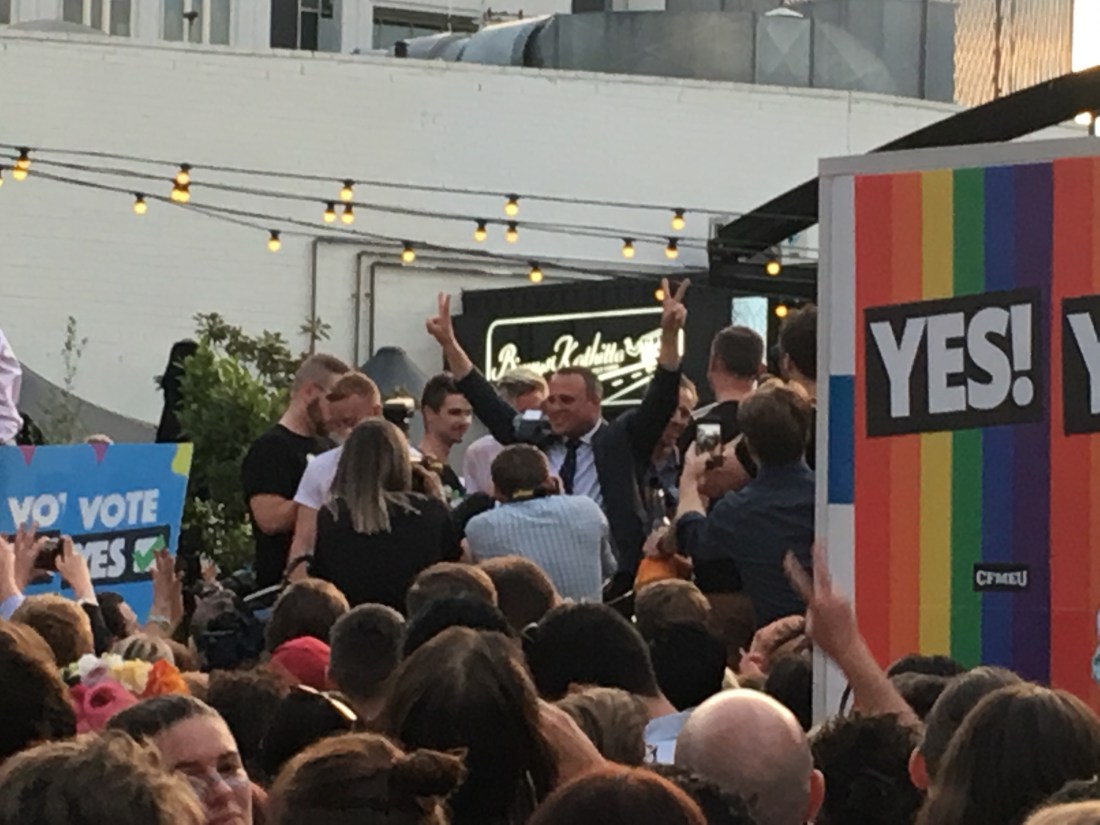
I was so proud to be a Canberran when we led the nation in voting to legalise same-sex marriage, returning 74 per cent support for changing the law.  I’m proud to live in a town which has progressive policies on refugees, disability care, renewable energy, transport, protecting the natural environment.

Next time someone has a go at you for living in Canberra mention some of those things.

IMG_2222 (2)
Street party to celebrate Canberra’s 74% Vote in the Same Sex Marriage Postal Vote.


IMG_0440
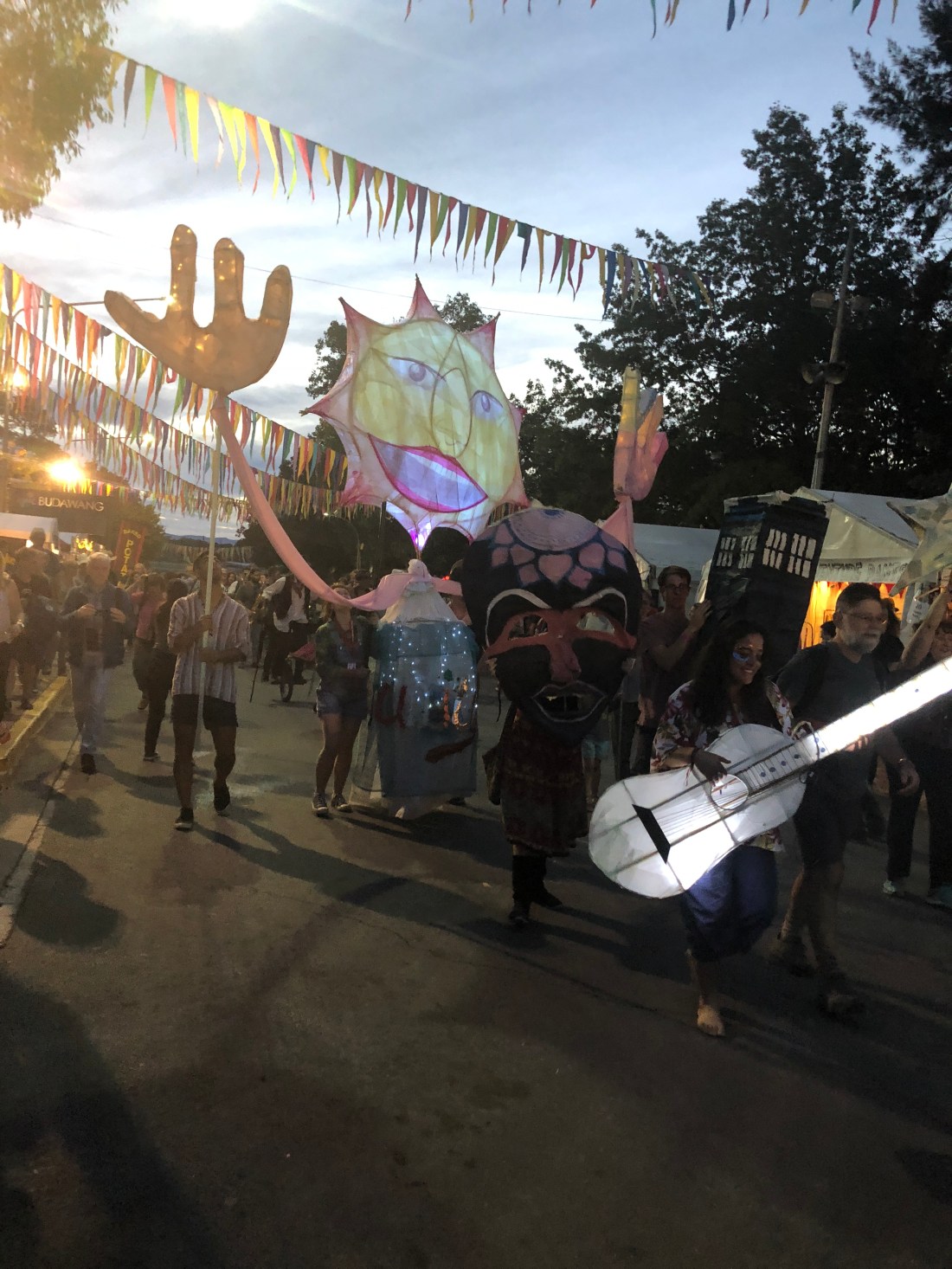
Nightly Parade at the 2018 National Folk Festival.  Thousands of people participate and volunteer each year for this incredible “5 days in a perfect world”

My hope?  When it comes to Canberra’s identity those old clichés of roundabouts and politicians are replaced with a reputation for being a truly progressive community, think roundtable not roundabout.

IMG_0456


Learning the ropes

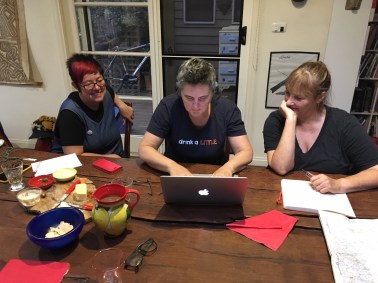
With only two weeks till we fly out, we realised we have no idea how to do a blog. Megan and Fiona to the rescue.

IMG_2494
Megan and Fiona telling it like it is

One of the big areas of advice from seasoned travellers seems to be about carry on luggage. We have decided to take the advice of some of our friends and travel with only carry on baggage as we’re going to be getting on and off a lot of trains and walking up a lot of steps.  It’s rather tragic but we’re bought matching cases that will hold our 7 kgs.