
Canberra’s Identity. In March this year Alex was asked to give an address on Canberra and Identity at the ANU.
I thought I might throw my speech up on the blog on one of our last nights in Canberra for 5 months. Have a read if you have the time, or just look at the pics! xx
A very good morning to you – I’ve been asked to talk about Canberra’s identity which is a pretty big topic.
If I wanted to start with all the clichés, I’d talk about politicians, public servants roundabouts, …but let me park those. Actually speaking of parking it’s said that Canberrans expect 3 car parks, one at home, one at work and one at the shops. Another friend, who is Sydney based but spends quite a bit of time here, says he finds Canberra to be a strange mix of public servants, academics and ute-driving tradies wearing fluoro.
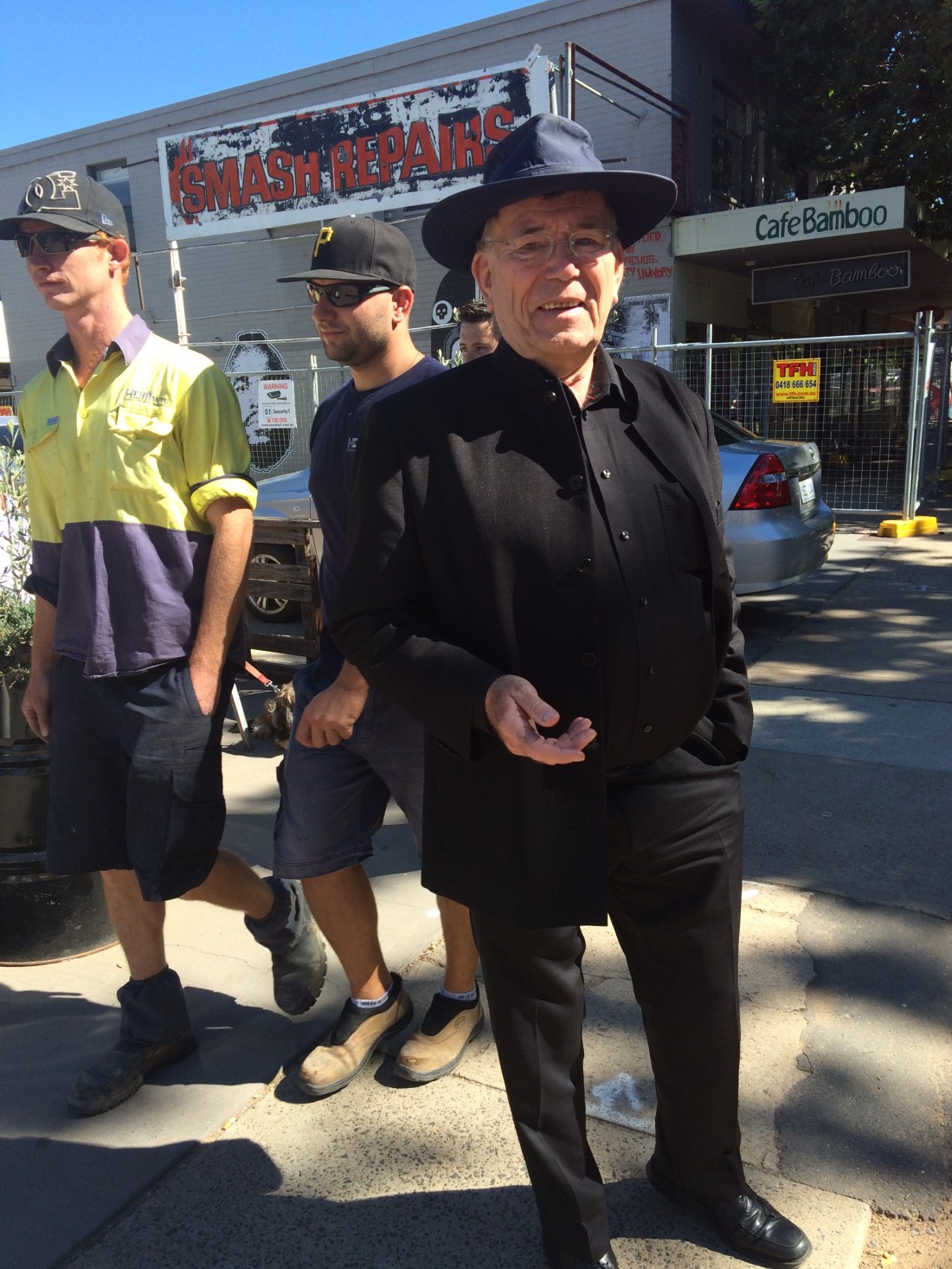
Canberra’s identity goes back tens of thousands of years with indigenous people. I am not qualified to talk about that deep and complex history, but I take this moment to acknowledge indigenous people, their custodianship of this land then and now.
Canberra as our national capital is the only capital city in Australia that is named with an Aboriginal word. Some people claim it is a derivative of Ngambri, after some of the first inhabitants. So Ngambri, Canberry, the meaning conjectured to be either meeting place or the cleft between a woman’s breast. While there is ongoing debate about the meaning, we do know the name possibly stretches back tens of thousands of years. Personally, I’m glad our city has an indigenous name.
And just one final point about indigenous history, talking to a young ACT public servant who grew up in South Africa, he remarked he was surprised that he was told very little about indigenous history and issues in his job induction. He felt it is a huge gap and I think he makes a great point. If we have moved towards acknowledgment of indigenous custodianship, then we should keep moving to dig a bit deeper and learn some more. We’ll all be a bit richer.
I am really just qualified to talk about my own experience of Canberra and why I love living here.
I came to live here in my mid 30s, met my husband and had a beautiful daughter who now tells me she’s pretty keen to get out of the place. I think that’s healthy, but I predict she’ll be back. She moves freely around this town and in preparing for overseas travels, as part of her gap-year, has managed to find 3 casual jobs all in her own home suburb. She walks to work with the cockatoos screeching over-head and the heady smell of eucalypts.
The Bush capital is hugely important in Canberra’s identity.
The site chosen for many reasons one being the Melbourne, Sydney rivalry. Canberra’s location was determined, in part, by section 125 of the Constitution:
“The seat of Government of the Commonwealth … shall be in the State of New South Wales, and be distant not less than one hundred miles from Sydney.”
Then there was the consideration of water, inland location and climate.
While we are experiencing a warming climate over a 100 years later, it is argued that the frosts and cold of Canberra’s winters were one of the reasons this location was chosen. “King O’Malley famously said, in defence of Bombala as the national capital … that ‘The history of the world shows that cold climates produce the greatest geniuses.‘
Perhaps we can read into that a bit of racism, or at very least geographical bias. It is an unsubstantiated slur that it’s lazy and not very bright people who live in warmer climes by the coast.
But for me, the climate, the location and the way the Griffins so brilliantly linked the hills, are some of things I love about Canberra. I was once on a panel at a Walkley Journalism function, with journalist and writer Paul Daley and marvellous cartoonist Geoff Pryor. All of us, unprompted, started talking about our favourite walks in Canberra. We have such easy access to beautiful bush walks, on hills and ridges and following the water. If you live in the Gungahlin suburb of Forde there is Mulligans Flat where you can walk amongst the bettongs, quolls and hear the startling cries of the bush stone curlews. Taking a “Forest Bath”.
Recent research finds landscape and walking are crucial for the brain. A walk in the park may soothe the mind and, in the process, change the workings of our brains in ways that improve our mental health. The Japanese have taken to what they call “Forest Bathing”, to lower heart rate, blood pressure, enhance hormone production. It’s really is just a walk in the bush that we take for granted.

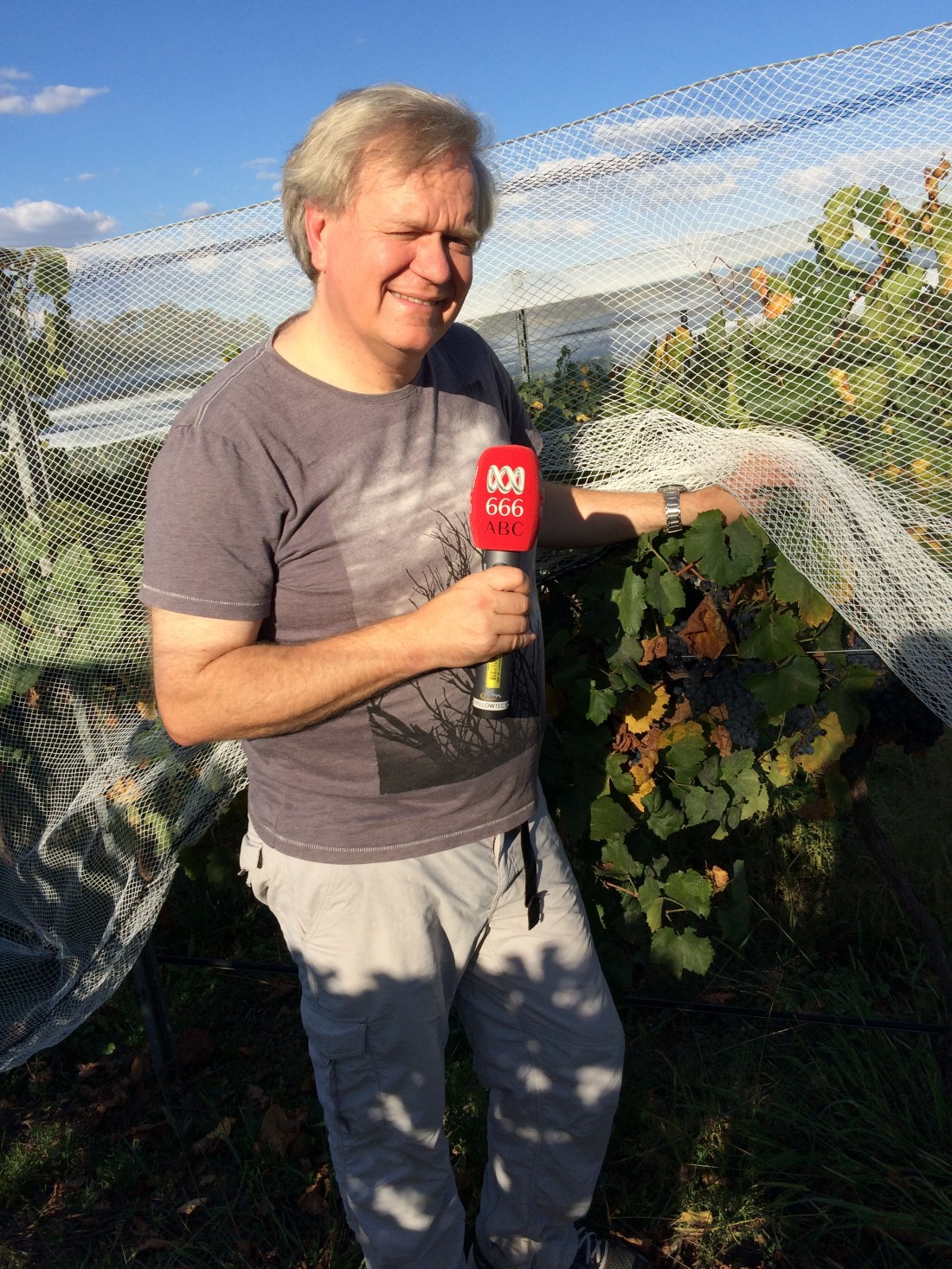
Think about the air quality here, the fact our street lights are a bit on the scarce side makes it a perfect spot for stargazing. Our role in space exploration is again part of our identity with the work done at Canberra Deep Space Communication Complex. The Vice Chancellor of the ANU is a Nobel Laureate for his work on astronomy. (He’s a passionate local wine producer).
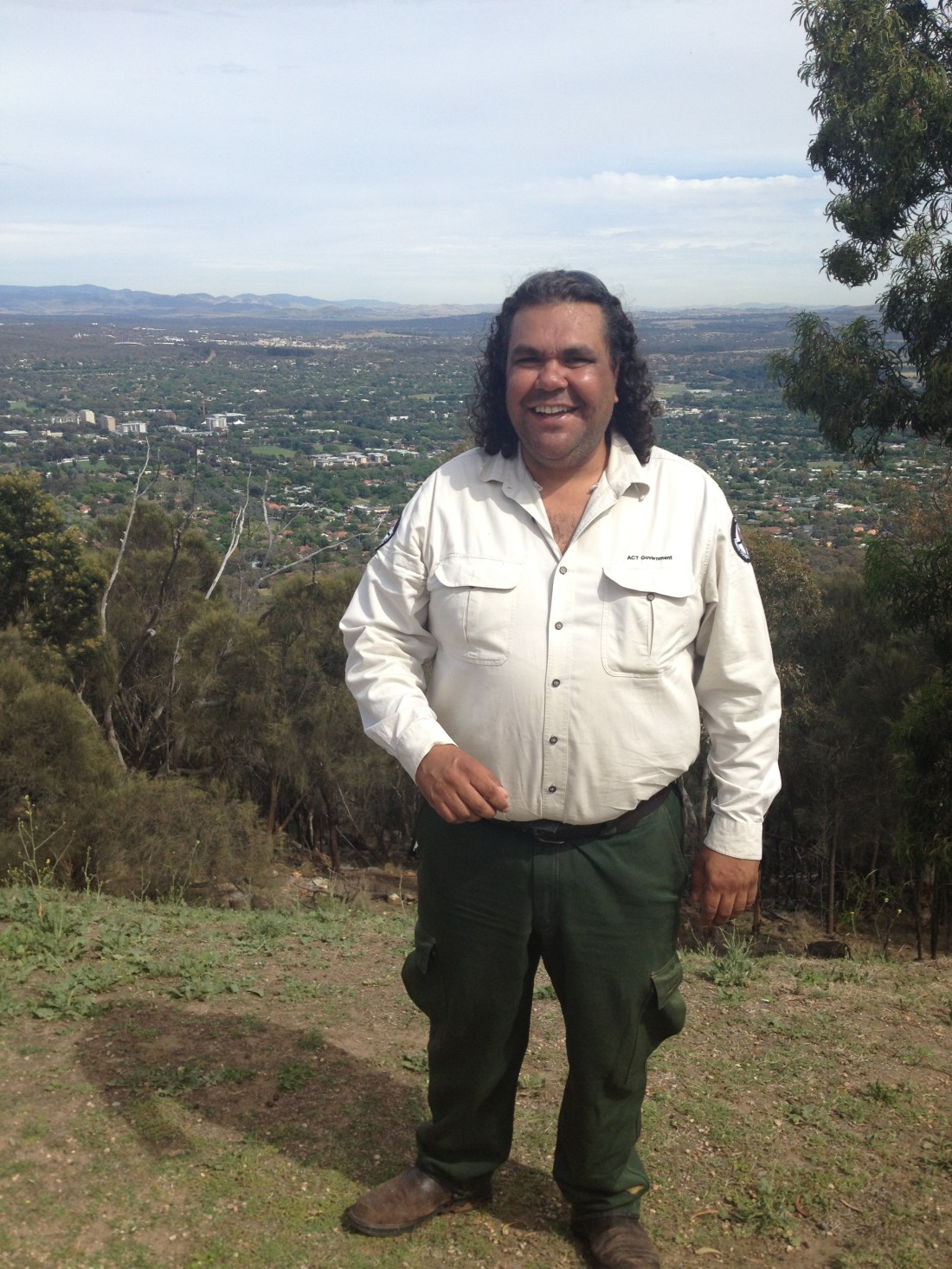
So these are the physical bones of the place. But also when people ask me about why I love living in Canberra. ( Why do we Canberrans have to explain ourselves? I don’t think we ask this of people in Melbourne or Sydney, Brisbane or Adelaide. We don’t start by talking about how bad their home is and ask them to justify why they live there. JUST ONE OF MY RANTS.) But when people ask me why I love living here I include the fact that it’s a multicultural town. I am lucky enough to have a number of indigenous friends in Canberra. Most of these fantastic people have come here from other parts of Australia, from Broome, Darwin, Torres Strait Islands, Gippsland. (Actually one Ngambri friend just called to say hi)

I also tell people that one of the things I love about Canberra is that I have friends with diverse backgrounds. So how culturally diverse is Canberra?
My former colleague at ABC Canberra Siobhan Heanue looked at the figures in 2016. I’ll read you a bit of her report:
In the 1911 Census, 179 people in the Federal Capital Territory said they had been born overseas, just 10 per cent of the population. The majority of this group were born in Britain and Ireland. Only 10 people indicated a birthplace outside of Europe.
By 2011 there were 180 different countries of birth represented. Countries in Asia accounted for more than 39 per cent of people born overseas
Just under 45 per cent of all ACT residents said that either their mother, their father or both parents were born overseas.
I have been lucky enough to witness the work of a volunteer group Canberra Refugee Support which is run mainly be retired public servants who want to ensure that newly arrived refugees are welcomed and given help to settle into our community. Every year they hand out modest, but no doubt vital, education scholarships to an astonishing array of people. Last year in the beautiful ceremony, in which families are encouraged to come wearing traditional dress, 53 scholarships were handed out. There were Karen people from Myanmar, Iranians, Afghans, Sri Lankans, Iraqis, Syrians, Ugandans, South Sudanese. Here is one of the citations I read last year (I have changed her name to keep her identity private.)
Lizzie
| Lizzie came to Canberra with four of her children after fleeing from South Sudan to Uganda.
In Uganda, Lizzie and her family were caught up in further fighting and her husband was killed. She also became separated from some of her children. In Kenya, with the help of the Red Cross and her nephew, she was reunited with her children. After further difficulties Lizzie and her four children came to Australia in 2016. Lizzie had no schooling, and was not able to read or write, or speak English when she arrived. Lizzie wants to continue her English studies so that she can understand people, the culture and get a job. Lizzie has made excellent progress in her studies and is a committed student. |
Lizzie’s story is just one, but this tall proud beautiful woman threw her hands in the air at the ceremony last year as a sign of joy and victory, and made us all feel happy but oh so privileged in the face of her harrowing story.
I have also taken time at this ceremony to reflect on my own heritage. My lot, my Scottish forebears came basically by boat as economic refugees, looking for a better life. One of them came in chains, a convict and spent time at Port Arthur.
Sometimes you have to leave your home to reflect on your own identity and this was the case for me. For a couple of years I worked as an Australian volunteer in Papua New Guinea. It was there that one of the mission workers (inevitably in remote PNG you find yourself working near a mission), in this case Brother Balthazar, a Bavarian, kept referring to me as a European. It really rankled. I thought I’m sixth generation Australia, I have never been to Europe. But then I had to reflect on that “claim” compared to 50 thousand years of Indigenous history – the 6 generations was not cutting it. It was quite a moment to reflect on my own identity.
I should have been prompted a lot earlier – as a young child on our family farm, I would spend hours roaming around the Bulabul Creek, where I would find evidence of scar trees, Aboriginal middens and tools. This land had belonged to someone else. What happened to those families? It still haunts me.
When I threw a party, at about this time last year, to thank people who had contributed to my radio show over the years it was lovely to look out on my own back yard and see friends from so many different backgrounds. I did a check of photos and invite list and the quick audit shows friends with indigenous heritage, Samoan, Croatian, Vietnamese, Iranians, Pakistanis, Danes, American, Greeks, Dutch, Sri Lankans, Indians, Belgians, Hungarians, Chinese, Ghanaians, Ethiopians, Turkish, Northern Irish, Fijians, Philipinos and the Scots, Irish, Welsh and English.
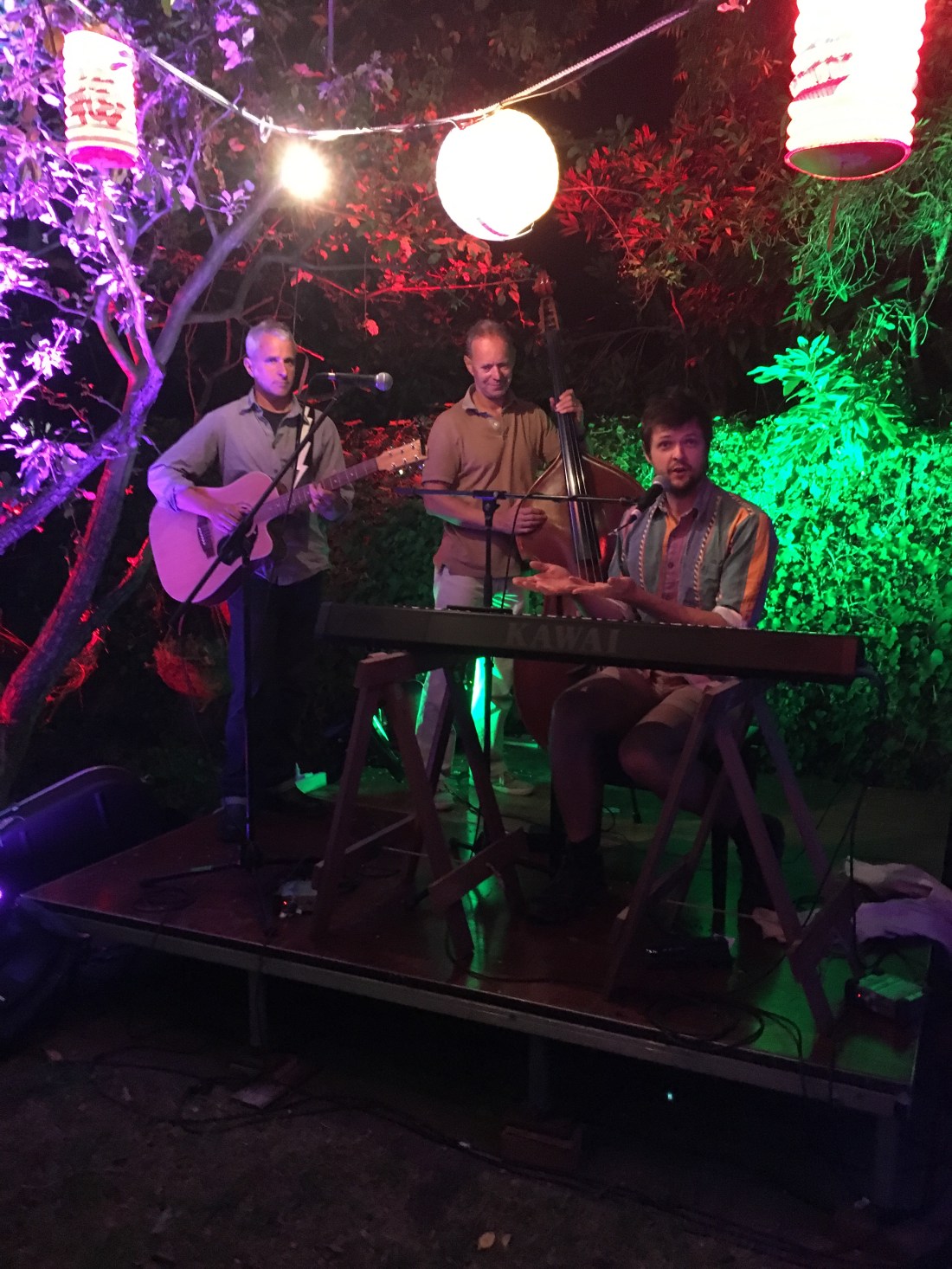
If I had stayed in Country Victoria or even if I had settled in multicultural Melbourne, I doubt I would have had the privilege of such a great group of friends from such diverse backgrounds.
To be sure my job at the ABC meant I had privileged access and introductions to a fantastic range of people coming from many walks of life. I have always been very grateful for that incredible experience. And just on the ABC and the importance of a strong public broadcaster. We have been so well served, and need to protect, a frank and fearless ABC speaking truth to power.
I like this quote:
“No country can have good government, or a healthy public square, without high-quality journalism—journalism that can distinguish a fact from a belief and again from an opinion; that understands that the purpose of opinion isn’t to depart from facts but to use them as a bridge to a larger idea called “truth. In other words, journalism that is grounded in facts while abounding in disagreements.”
But even now in my retired life as I trundle off to pilates classes, I have new young friends whose cultural backgrounds include India, Sri Lanka, France, South Africa.
I hasten to add that I know Canberra is not without its problems. I think of the acts of vandalism at the Canberra mosque, the court battles to try to stop the building of a new mosque in Gungahlin. Reports of overt racism. I worked with a fabulous person who had emigrated from Pakistan. She had chosen Canberra, because of its climate, its population size, its employment opportunities. She is quite simply a model citizen and we were having a conversation about racism. She said that so far she had not experienced any overt racism. That very evening she was walking home and noticed a man in a wheel chair had lost his scarf, so she ran after him to return it. Well she got the full force, the “don’t come near me” “go back to where you came from”. The next day she reluctantly recounted the experience saying “I didn’t want to tell you”. I’m so glad she did.
I think that is what we should all strive to do, keep an open conversation, learn from one another. Tell the stories warts and all. Be generous and understanding.
I feel history will not treat us kindly as a nation when it comes to indefinite offshore detention and inhumane treatment. There is no excuse for torture and cruelty. There has to be a better way.
So to conclude – the bagging of Canberra, the city with no soul tag is so tiresome and not backed up by studies. I acknowledge there are big problems here, we have the second highest rate of homelessness in the country for instance.
But according to Dr Andrew Leigh, Economist and Politician, Canberra outstrips other Australian cities in social capital.
Canberrans are more likely to give time and money, engage in the political process, and participate in local sports than residents of Australia’s other major cities.
On virtually every social capital measure, the ACT is at or near the top relative to other states. It has the highest share of charitable donors and the highest volunteering rate.
He says it’s primarily due to short commutes and a conducive physical environment – all those parks, cycle ways and neighbourhood shopping centres. I don’t know about you, but I do most of my socialising at the local Ainslie shops.
Canberra has many challenges – the population is growing. The last census revealed Gungahlin to be the second fastest growth in Australia.
I predicted earlier that my daughter will be back, the question is: will she be able to afford to live here?
I’m wondering too if we can manage to have a civilized debate. There are real challenges about equity, about education, city planning, housing, transport, energy, climate adaptation. It would be great if we could have these debates in a forum that doesn’t descend to abuse and hatred.
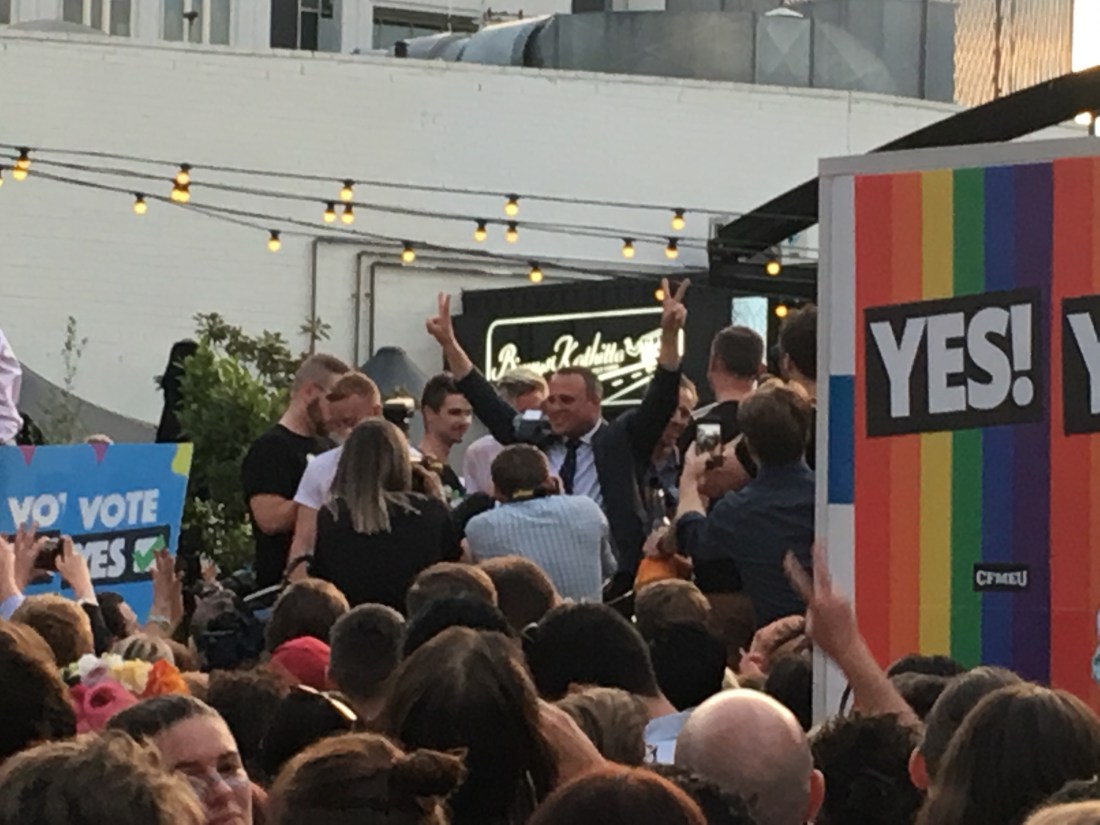
I was so proud to be a Canberran when we led the nation in voting to legalise same-sex marriage, returning 74 per cent support for changing the law. I’m proud to live in a town which has progressive policies on refugees, disability care, renewable energy, transport, protecting the natural environment.
Next time someone has a go at you for living in Canberra mention some of those things.
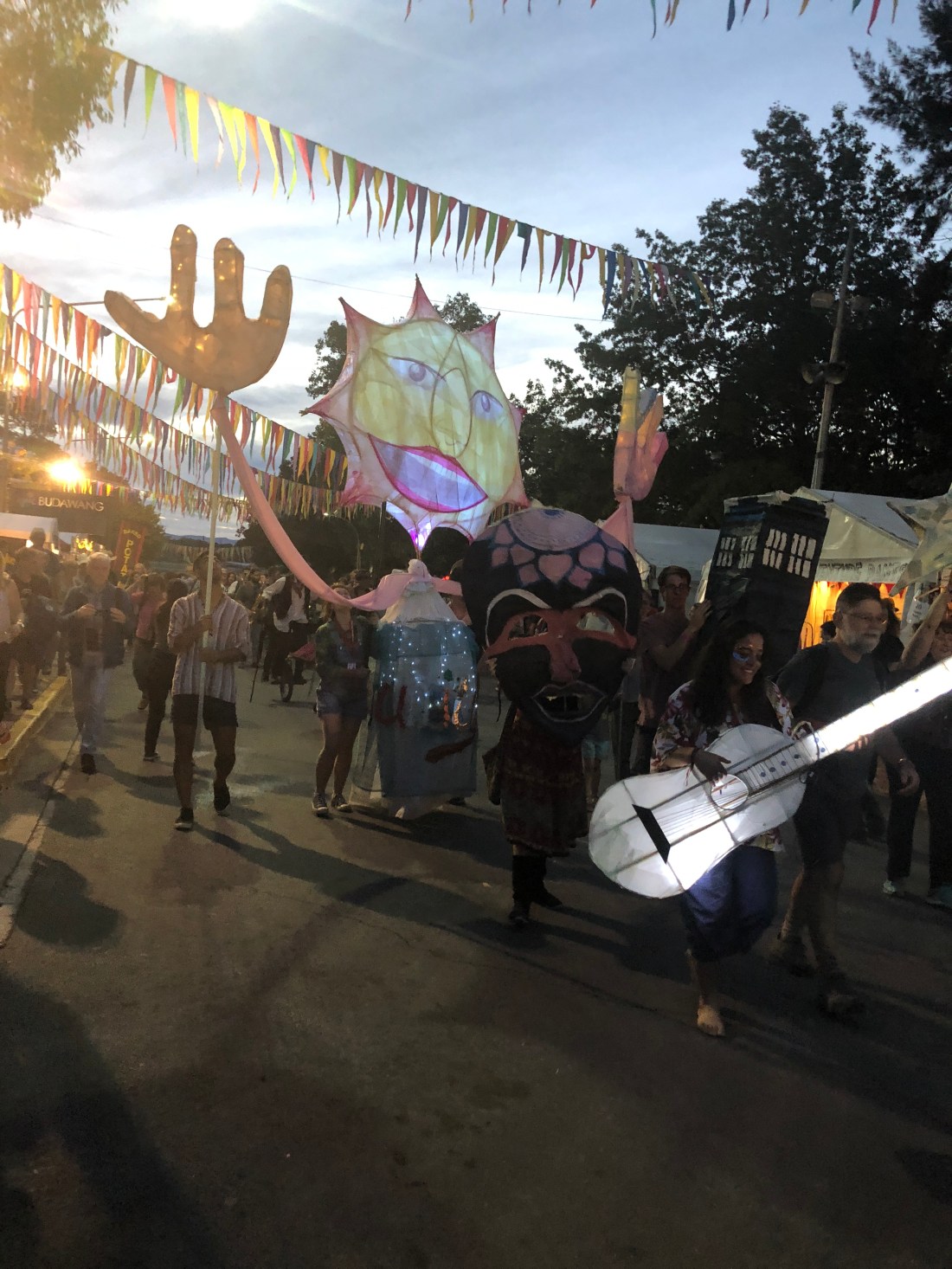
My hope? When it comes to Canberra’s identity those old clichés of roundabouts and politicians are replaced with a reputation for being a truly progressive community, think roundtable not roundabout.

 Parental Gap-Year
I was very lucky to come and live in beautiful and interesting Canberra when my daughter Alex rescued me and have been very happy here where the ACT is very caring of its older citizens. P.S. See the play Corinderrk and the Aboriginal reserve Corinderrk at Healesville to find out about those original inhabitants of Bulabul!
LikeLiked by 1 person
Dearest Mother, one of the great things about living in Canberra is that you are here. Lots of love Alex xxxx
LikeLike
So wonderful to read your contemplations of Canberra as you fly into your next chapter as the nomad. Thank you. Lots to appreciate about being here and I’ll be keeping the seat warm til you and Rob are home
LikeLike