
Visit to Norfolk Island December 14 to 21 2018
Norfolk Island – Part One
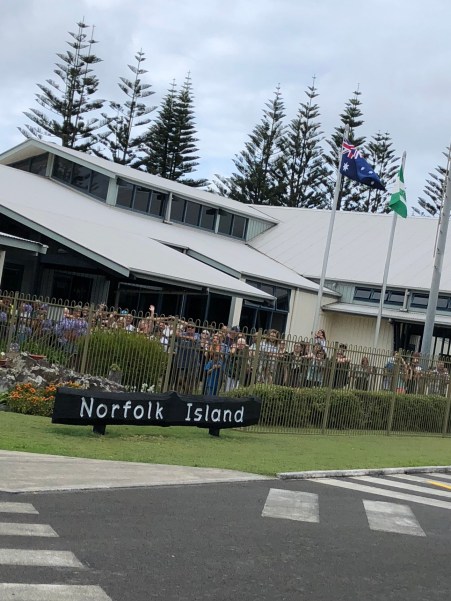
Watawieh! Welkam Tu Norf’k Ailen.
When were you last greeted at an airport by a crowd who have come out not just to pick up friends and relatives but in some cases simply to welcome new arrivals?
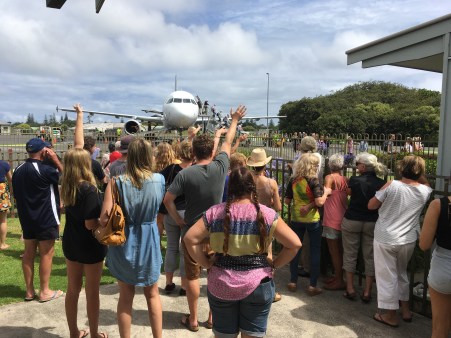
This is our first impression of Norfolk Island, the waving welcome and the Norfolk Pine trees. The ones that impressed James Cook who thought they would be great for ship-building along with the local flax plants, brilliant for ropes and sails. Wrong on both counts but that starts the modern history of Norfolk Island.
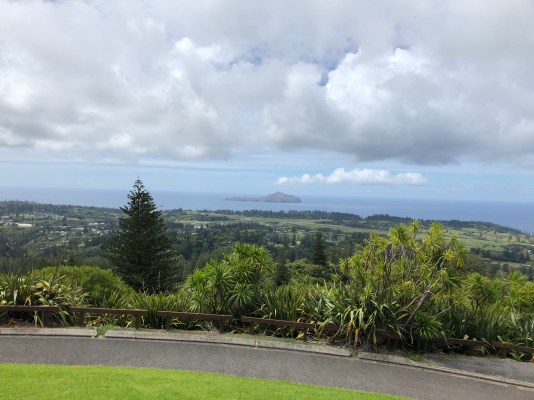
The East Polynesian seafarers are said to have settled on the island in the 14th and 15th century but they were not present when Cook sighted the island in 1774 and claimed it naming it after Mary Howard, Duchess of Norfolk.
The first British colony on Norfolk Island was founded around the same time as Sydney with the arrival of the first fleet in 1788. There were dramatic scenes with the shipwreck of the Sirius and although all aboard made it safely to shore, the starving survivors led to the collapse of the large populations of Turtle and the Petrel that were said to have blackened the skies. The human population may have survived but neither of these species has ever recovered. The convict settlement for a time provided food for the struggling settlement at Sydney. Many convicts chose to remain at the expiry of their sentence, and the population grew to up to 1,500.
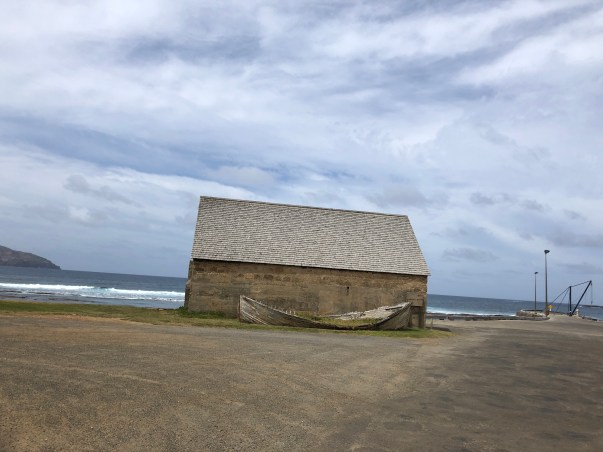
However, due to remoteness, difficulty for shipping and the cost to maintain, the settlers were progressively moved to Van Diemen’s land (Tasmania) between 1805 and 1813, although many settlers were reluctant to move. Stock and all building were destroyed to discourage someone else, particularly the French, from settling on the Island.
From 1814 – 1825 the island lay abandoned with the only connection with the first convict settlement being the headstones in the Graveyard.
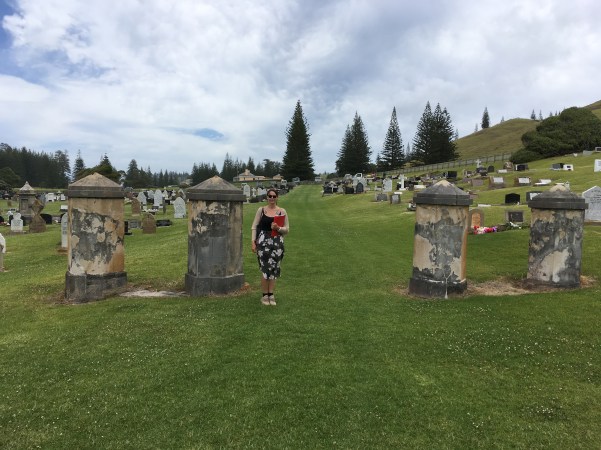
The Second convict settlement commenced in 1825. It was particularly brutal and became the place to send “the worst description of convicts” including those that had been sent to Australia and then reoffended. It was a punishment “short only of death” and there are many tales of brutality and the numerous mutinies. The second penal settlement was wound down after 1847 and the last convicts were removed to Tasmania in 1855. Remnants of the stone buildings constructed during that period remain in Kingston, including prison walls, Government House and officers houses. A caretaker remained.
The next settlement began in June 1856 with the Pitcairners, the descendants of the MHS Bounty Mutineers (Christian, Quintal, Adams, McCoy, Young) and Tahitian mothers, along with others that had later joined the island (Nobbs) including some from passing whaling ships (Buffett, Evans). The Pitcairn Islands had become too small for their growing population. The Pitcairners occupied many of the buildings remaining from the penal settlement.
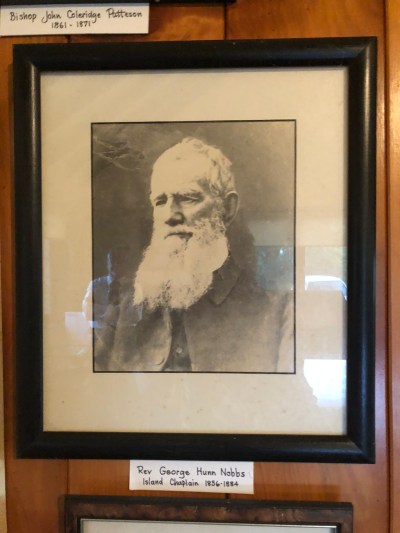
The first chaplain of the community was George Hunn Nobbs, an Englishman who had arrived on Pitcairn in 1828. As pastor and virtual leader of the community, he persuaded the community to resettle on Norfolk Island. Today portraits of George Hunn Nobbs can be seen across the island.
The Pitcairners felt that they had been handed the entire island and its management, while the British had other ideas. The Government allocated 50 acre allotments and maintained control of other lands. Unsatisfied with their new home, some families decided to return to the Pitcairn Islands.
In 1867, the headquarters of the Melanesian Mission of the Church of England was also established on the island and St Barnabas Church was erected. The Mission aimed to educate and introduce people from places like Solomon Islands to “christian civilisation”. It had been based in New Zealand but this was too cold for the Melanesians, so Norfolk Island as seen as a compromise with a climate warmer than NZ but not too extreme for the Anglican Missionaries.
So the Church of England had two separate Churches, one up on the ridge at St Barnabas, and the other All Saints for the Pitcairners was built within the Commissariat Store at the former convict settlement at Kingston.
Rob’s family history
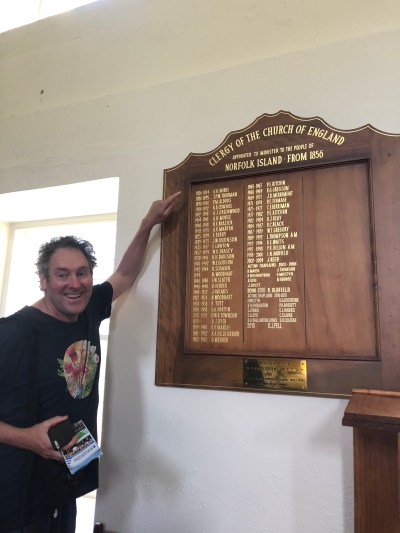
It is around this period that Rob has some family history. After George Hunn Nobbs died in 1864, there was a gap for a couple of years and then Rev. TPW Thorman (Great Grandfather) moved to Norfolk Island and was the rector at All Saints between 1886 – 1895.
My father has compiled a book on the life of my Great Grandfather, who later also lived in other remote places including Jamaica and Telegraph Creek in the far north west of Canada. Dad has pieced together from historical research, letters and writings of his father Tom, who wrote in later life of his childhood adventures travelling with his father. This included stories of him as a boy and young teenager on Norfolk Island. Mum and Dad also visited Norfolk Island twice and talked with people at the museum and reviewed historical documents which are referred to in the book. I took the book with me and ended up photocopying the relevant Norfolk Island pages quite a few times.
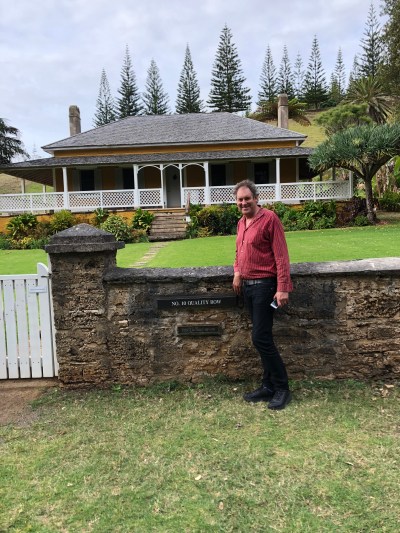
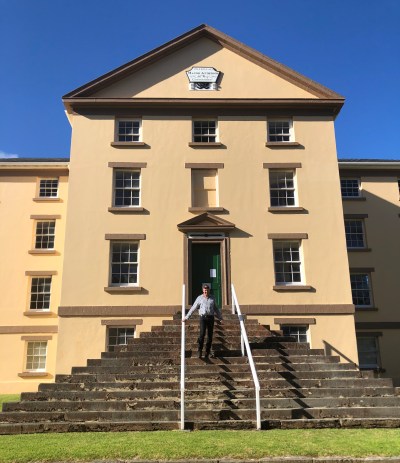
When the family first arrived on Norfolk Island in 1886, they lived for a short time in Government House, they then moved to what is now a house museum at Number 10 Quality Row. We were lucky enough to be able to walk through both houses. The house museum has been restored to the same period as when they would have lived there.
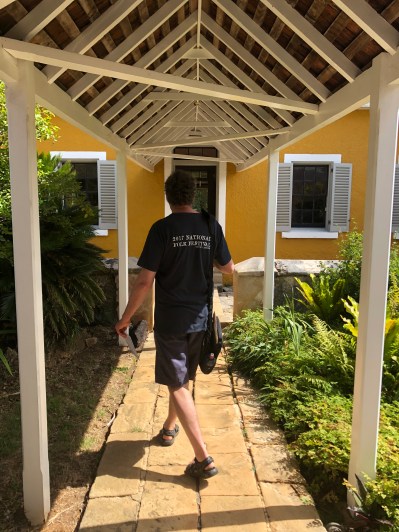
Through Alex’s work with the Churchill Trust, the main reason we were visiting the island, we attended a presentation ceremony at Government House and were taken through the house by the current Administrator (a controversial position, but more on that later)

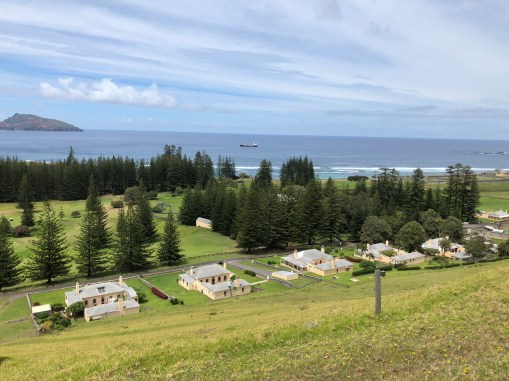
My Grandfather writes about his arrival on Norfolk as a young boy, and it was on Norfolk Island that my Great Grandmother gave birth to three children, including Dad’s Uncle Fred (who gets a mention later)
We were told that Great Grandfather’s old church at All Saints has a unique tradition of singing Pitcairn songs at the Sunday afternoon service. We went to attend the service at All Saints only to find that the Church is currently undergoing repairs of the stain glass windows, and that all services are being held up the hill at St Barnabas and we made our way there.
At the end of the service the unique tradition begins. People introduce themselves and select a song from The Pitcairn Hymn Book. You can hear the influence of the whaling songs, I was able to tell my family connection to the church and selected the Pitcairn Anthem, written by George Hunn Nobbs and Driver Christian. It turned out that this sung at many public occasions, including in school.
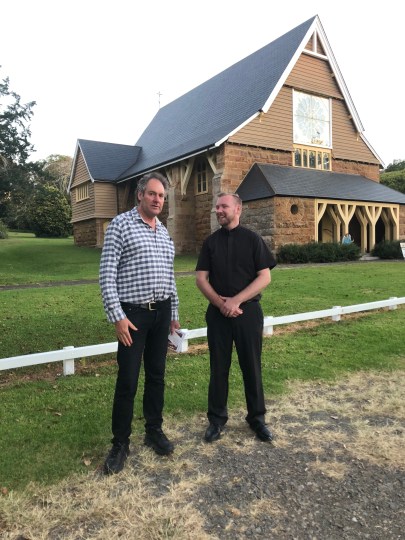
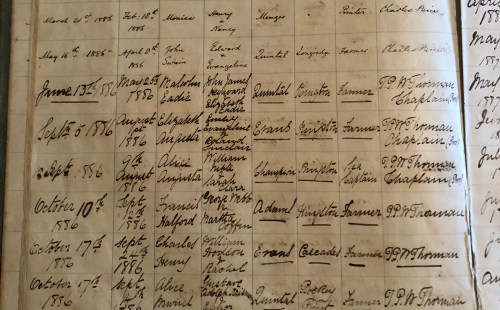
At the end of the service we got talking with the Rector’s assistant David Buffett. He was able to arrange for us to look at the register of Baptisms, which is still the same book used in my Great Grandfathers day, and we could see his signature at his first baptism on the island of Malcolm Quintal in May 1886 through to his last baptism of Edward Evans in April 1895.
When I mentioned Dad’s book David was very interested to read the pages on Norfolk Island. We agreed to meet later in the week at the Olive Cafe, which turned out to be the place where everybody meets.
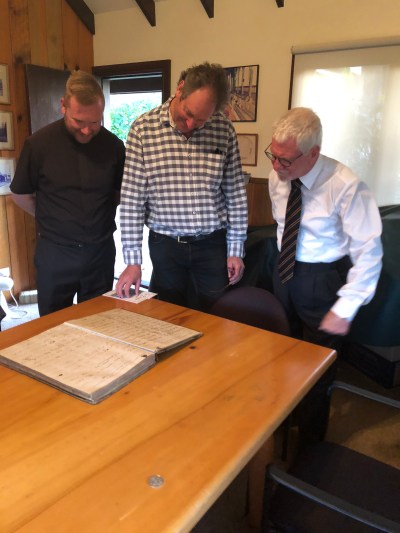
Afterwards we realised that David Buffett was the same person my parents met in 1992, Dad mentions in his book that his full title then was The Hon. David Ernest Buffett AM, President of Norfolk Island Legislative Assembly.
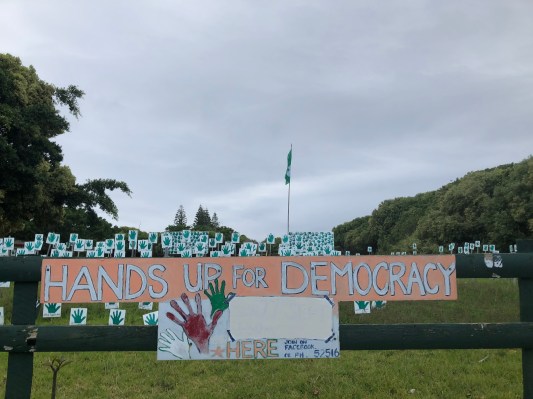
Alex also recalled that this was the same person who had come into the ABC studio with the Norfolk Island Chief Minister Lisle Snell in 2015 to speak about the Remonstrance Motion to the Federal Parliament protesting against the injustice and loss of democracy that had been imposed on the Norfolk Islanders by the Australian Government.
The $30 pass gets you into all of the Museums within the World Heritage Area around Kingston. You also get to join the Tag along Tours. Betty Mathews took us on our tour, it turned out that before she moved to the island some years ago from New Zealand, she’d been great friends with my second cousin Giles. Giles was the Grandson of Fred, the younger brother to my Grandfather Tom and was actually born on the island.
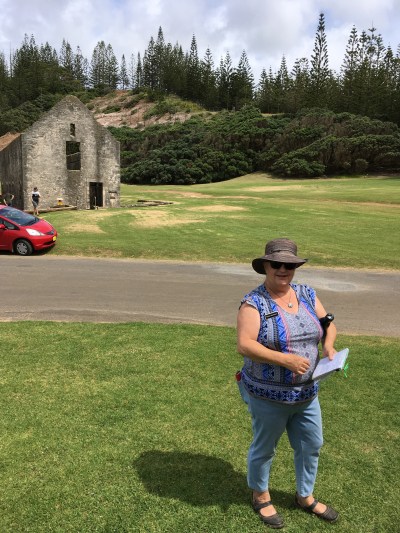
When Giles heard Betty was coming to live on Norfolk Island, he suggested that she may be able to find out something about his Great Grandfather who lived on the island some time ago. It turned out that Betty has been researching Great Grandfather on and off for over six years. She had provided copies of the information she had gathered to Giles, who sadly died earlier in the year. I was able to provide her a copy of the Norfolk Island pages from Dads book and she provided me with photocopies of material she had gathered and a memory stick full of documents and photographs that I have been able to hand over to Dad, who at 90 continues to research and document the family history.
Norfolk Island – Part Two

We had a couple of reasons for coming to Norfolk Island. The main reason was for Alex as a member of the WCMT, Winston Churchill Memorial Trust delegation to award fellowships and meet members of the community. This trip was organised by Sally Campbell senior executive with WCMT.
There has been a recent change on Norfolk known locally as The Take-over.
In 2015 the Federal Government decided to abolish self-government.
“The Take-over” is a pretty good conversation starter on Norfolk. Passions run high on both sides. There is the argument that Norfolk Islanders didn’t pay tax and finally hit financial strife, loss of essential services, with people leaving the island for work. There was a request for an emergency bailout from the Feds.
The other argument is that the Norfolk local government approached the Federal Government with a proposal which required them to pay tax, this in return gave them access to services such as Medicare, Centrelink etc but still allowed them a form of democratically elected self-government. There were quite a few models proposed.
In 2015 the Federal Government with bipartisan backing decided to abolish self-government, appoint an administrator and “bring Norfolk Islanders into the 21st Century”. Some see this as practical common sense prevailing.
Or there is this view: “the fundamental issue of principle is the lack of democratic rights and I will not accept any argument that seeks to rationalise or justify that. There were a range of options or models that could have been adopted that did not result in the removal of any semblance of democracy or genuine community involvement in relation to State type issues. The problem was that the public servants and politicians involved were either lazy and incompetent or simply didn’t care.”
The UN Human Rights Committee has formally registered a complaint lodged by Geoffrey Robertson that Australia had breached the International Covenant on Civil and Political rights by abolishing self-government. Watch this space.
This administrative change was the catalyst for the trip. Alex chairs the ACT Selection committee for the Winston Churchill Memorial Trust. This committee awards Churchill fellowships each year to people from the ACT and to Norfolk Islanders. Norfolk Islanders vote in the Federal seat of Canberra. So it’s been decided that that Norfolk Islanders should apply for fellowships through the ACT Committee.
As mentioned earlier, the trip was organised and headed by Sally Campbell WCMT based in Canberra. David Trebeck National Chair of the Trust was unable to take the trip, so David’s loss was Alex’s gain (thanks David!).
Sally and Alex met with the current Administrator of Norfolk Island Eric Hutchinson ahead of the awards ceremony held at Government House.
The ceremony took place on a truly beautiful Norfolk morning at Government House, complete with cups of tea and cucumber sandwiches.
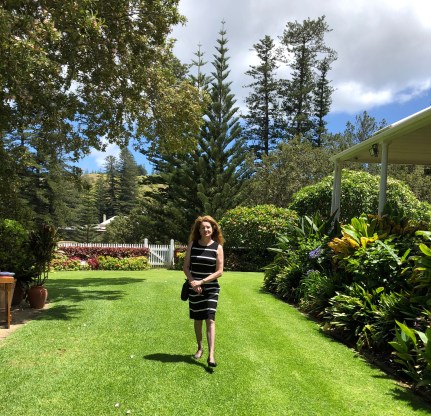
In 2018 two fellowships have been awarded to Norfolk Islanders.
The awardees are: Suzanne Evans: to invigorate the “endangered Norfolk Island Language through a “pre-school language” nest approach.

And Emilee Nicolai: “To investigate agri-tourism opportunities to encourage small farm innovation in isolated areas”.
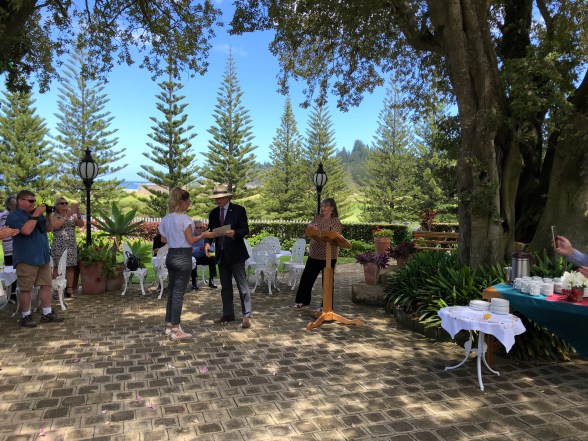
Damien Snell received his medallion for completing his fellowship: Damien went to Pitcairn Island to learn the traditional arts, including carving and language once practised on Norfolk Island.
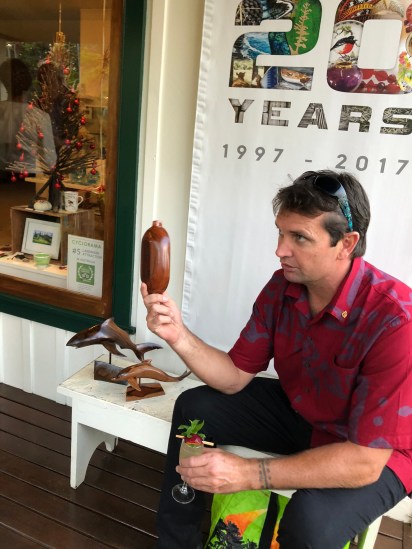
There was a morning awards ceremony at Government House following that evening by a dinner inviting all Norfolk Island Churchill fellows.
Since 1985 there have been 20 fellowships awarded. In the early days these fellowships allowed for travel and study on the Australian mainland. In more recent years these fellowships have been expanded to allow international travel.
We were hosted at Government House by the current administrator Eric Hutchinson. Gorgeous setting in perfect weather. The morning tea included cucumber sandwiches.
Alex made a speech at Government House, including some Norf’k language. It was well received.
In the evening Sally Campbell organised a dinner for Fellows and their partners. Sally gave a lovely speech about the Churchill Trust and we were formally welcomed by the Mayor – Robin Adams.
When dessert was served we made a loose invitation for former and current fellows to speak. We didn’t want to make them feel obligated, no pressure!
Beautifully this part of the evening was kicked off by Darren Nicolai CF, father of Emilee who was awarded a Churchill Fellowship in 2008 to study advanced mushroom and composting in The Netherlands and France.
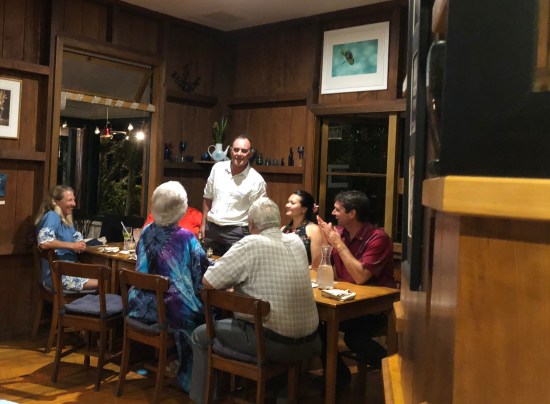
He talked about the Churchill Fellowship opening doors in terms of connections. The value of being able to travel internationally and learn new ways of doing things. Darren was also delighted his daughter Emilee has also been awarded a fellowship.
Suzanne Evans is teacher in the local school and talked about the thrill of being able to contribute to the teaching of the Norfolk language to pre-schoolers. She will visit New Zealand, Hawaii, Finland and Canada.
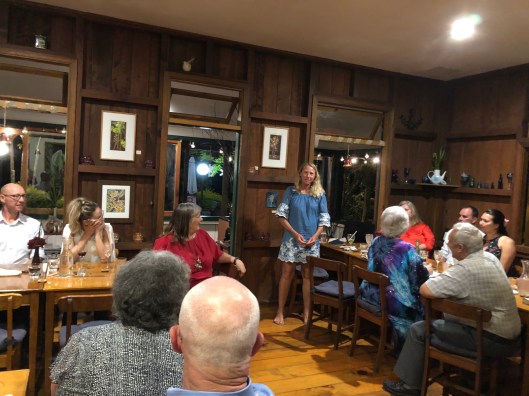
Damien Snell CF travelled to Tahiti and to Pitcairn Island to explore language and wood carving traditions. He talked about the trials and tribulations of getting to Pitcairn Island and how much of the language and crafts are being lost. He absorbed as much as he could and has brought these skills back to Norfolk.
Jodie Williams CF spoke of her trip to the Isle of Man to explore the music heritage of songs and hymns of Norfolk Island. Jodie was grateful she was able to take her 12 year old son with her. She said the experience for both of them was life-changing. In particular that “doors were opened” by being a Churchill Fellow, that she was taken seriously by scholars, and musicians. For her son to meet and engage with young people from another culture was a confidence builder and eye-opener.
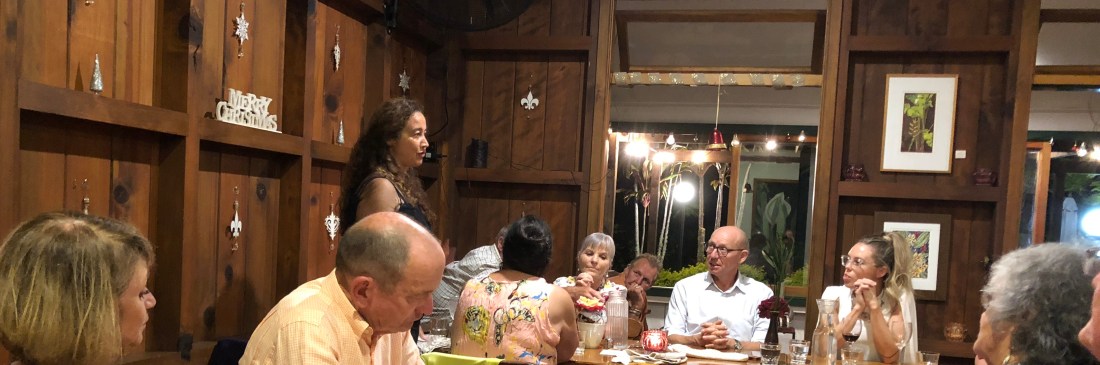
Allan McConnell CF 1990 – Allan was encouraged by Sister Bonnie Quintal CF 1985 to undertake a Churchill Fellowship to further his training through St John’s Ambulance on the Australian mainland. Bonnie Quintal died in recent years and Allan was clearly quite emotional talking the influence she had on him.
While training and travelling in Australia he told his trainers there was no emergency paging system of Norfolk Island. The South Australian team responded saying they had a still working but superseded Motorola system. Allan relayed this news to Bonnie Quintal and within weeks the systems was installed on Norfolk Island. He profoundly thanked the Churchill Trust for the opportunities and life-saving connections.
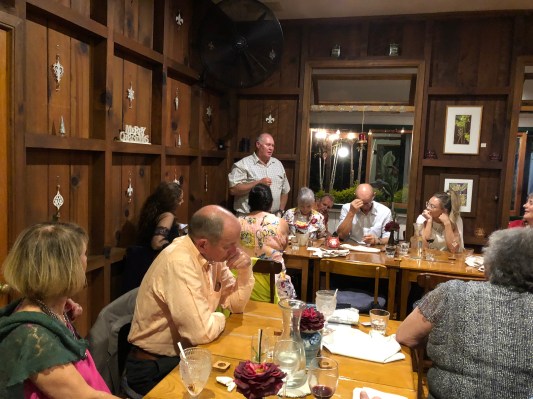
Roderick McAlpine was awarded a Churchill Fellowship in 2003 to study vineyard management, wine making and marketing. Rod spoke about his great experience and invaluable contacts made on the mainland. He also was proud to encourage current ACT Churchill Fellow Amy Jarvis to apply for her fellowship.
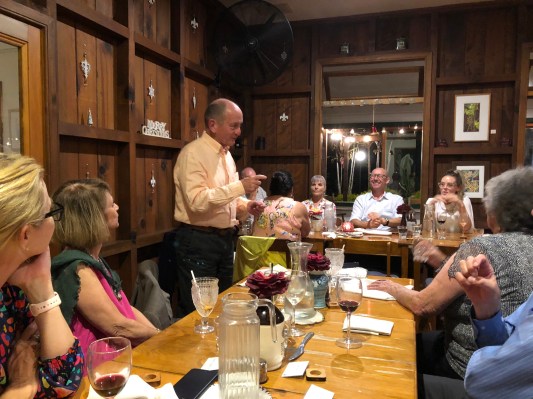
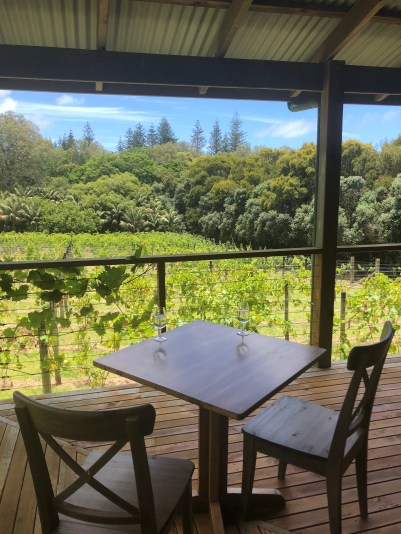
Dids Evans, (David Evans CF 2000) studied traditional woodcarving skills. He talked about the invaluable influence of Canberra artist the late Mathew Harding. Dids received an international commission to make a public sculpture by a Chinese city in the lead up to the Beijing Olympics. He has no idea how they found him and credits his Churchill Fellowship leading to this fantastic opportunity.

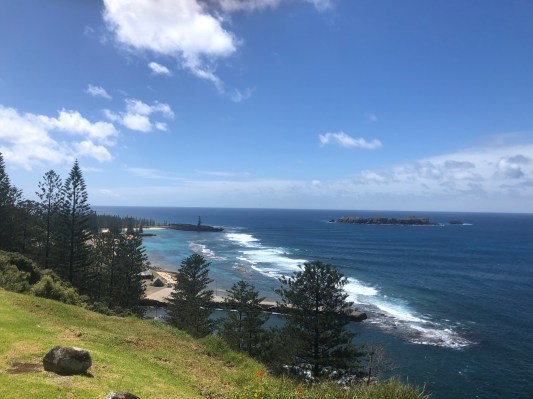
I sincerely thank Sally Campbell and the WCMT (Winston Churchill Memorial Trust) for including me in this great trip. I think our visit was appreciated by the Fellows and many more in this small and fascinating community. A visit is essential to understand this community and its unique history.
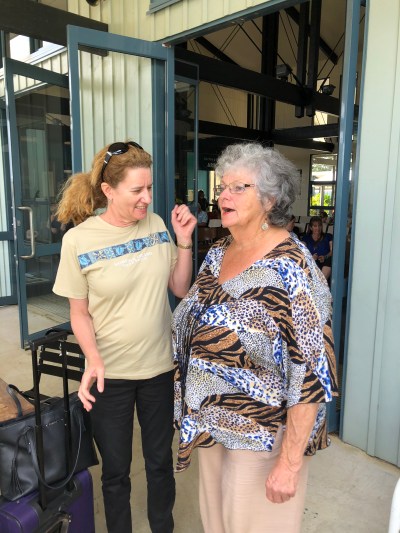
It is a really special community and we were touched the Mayor, Robin Adams who make the effort to farewell us at the airport.
Before we go.
There are so many interesting things about Norfolk Island.
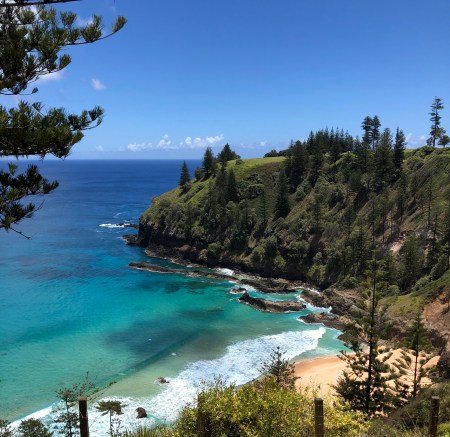
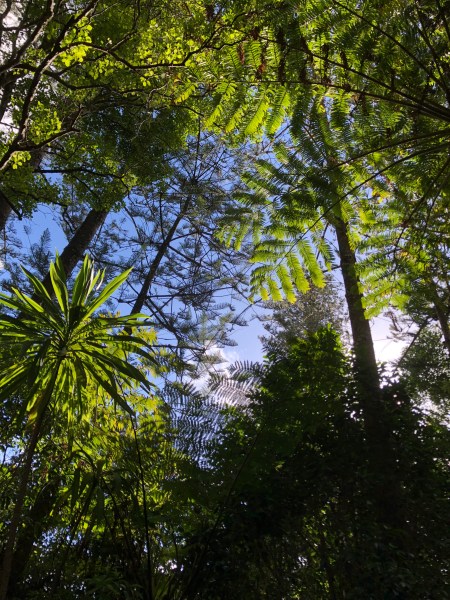
Sheer beauty.
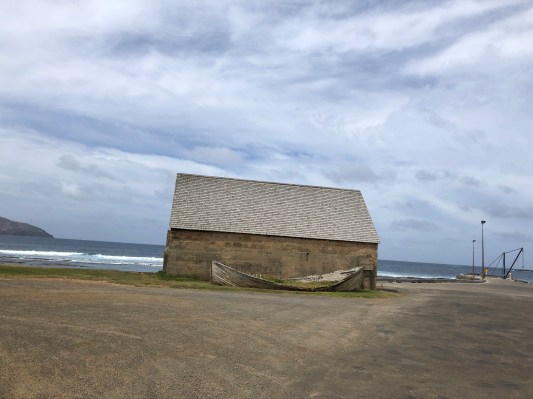
History
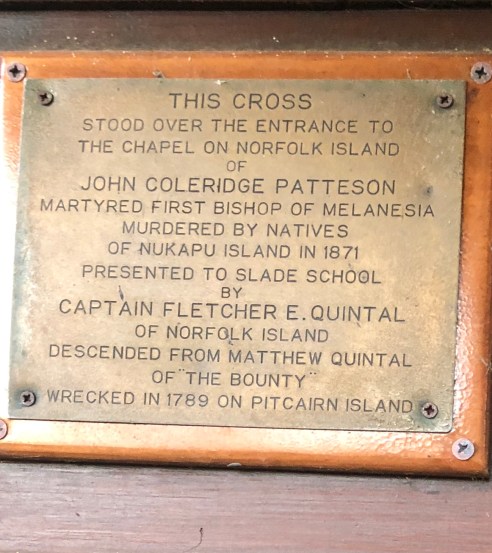
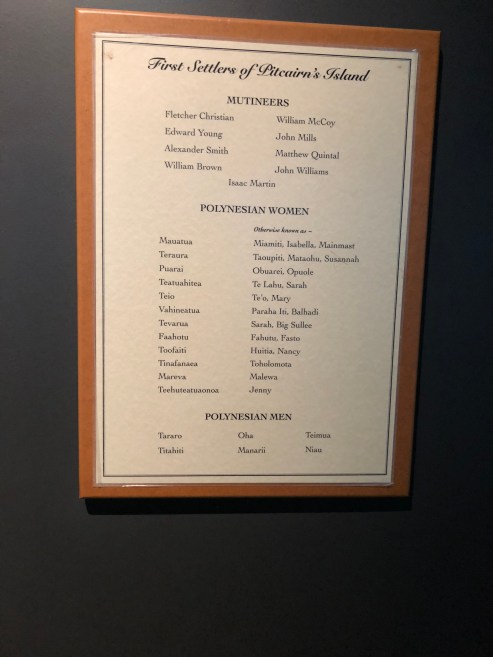
Female descendants of the Bounty mutineers were allowed to vote for their ruling councils on Pitcairn Island from 1838, and on Norfolk Island after they settled there in 1856. https://nzhistory.govt.nz/politics/womens-suffrage/world-suffrage-timeline.
Again from David Buffett, Norfolk Island had compulsory education many years ahead of mainland Australia.
Community
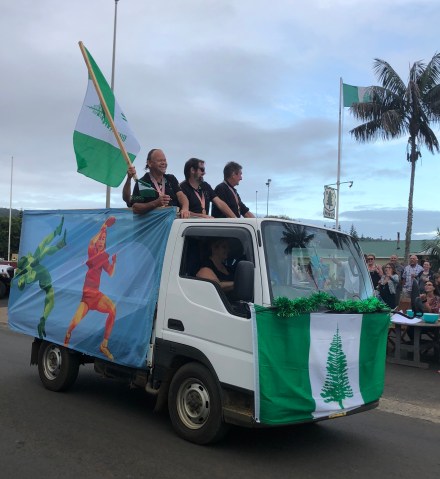
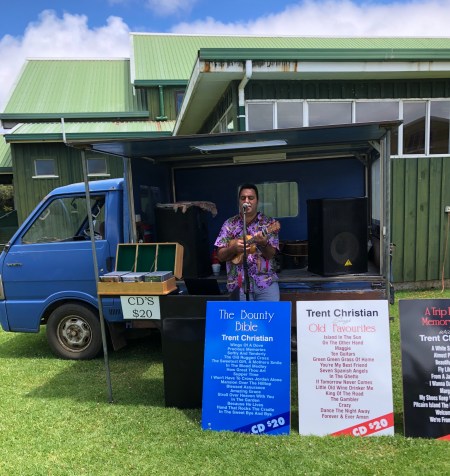

Finally – The Norfolk wave. While driving, everyone waves as you pass. The saying is if someone doesn’t wave they are either “unhappy or not a Norfolk Islander”
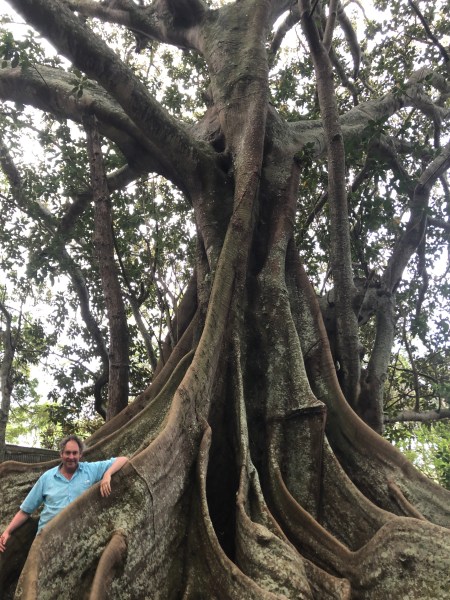
 Parental Gap-Year
Rob, thank you so much for the Norfolk Island story. You have done a really beautiful piece, I have been quite enthralled reading it. It really made we want to go back, you managed to encompass the whole feel of the place. Congratulations a great record to have.
Love MUM
LikeLike
What a fascinating account! Great to have read this Alex and Rob and to hear those details of Great Grandfather’s and Grandfather Fred’s time on Norfolk Island. Also lovely to hear of Betty’s research. Giles would have been so pleased. He did tell me about her when I went to visit in early 2018.
Great work and thanks from England. Hugo Thorman
LikeLiked by 1 person
Only just found this. Very interesting read. Thank you
LikeLike